The German Chancellery is struggling to contain discontent by leaders of key German concerns.
Business heavyweights are making attempts to influence the government’s policy towards Russia, Der Spiegel weekly reported on Sunday.
Bavaria’s Chamber of Commerce and Industry urged the the powers that be to lift sanctions against Russia.
Dr. Eberhard Sasse, President of the Chamber of Commerce and Industry for Munich and Upper Bavaria, said in early October Bavaria’s entrepreneurs want Western sanctions against Russia to be lifted.
“We have about 9,000 members in the Chamber of Commerce and Industry, and we all want the sanctions against Russia to be lifted, enabling business relations between our countries to develop further,” he pleaded.
Sanctions as a foreign policy tool do not always produce the desired effect, Sasse said. “Sanctions create uncertainty in business prospects. This is a political tool and not a business tool,” he warned.
Chancellor Angela Merkel however “is angry over numerous calls by leaders of the DAX companies [Germany’s index] that insist the EU sanctions against Moscow be eased”, the pro-American weekly stated.
“The meeting between businessmen and Russian Prime Minister Dmitry Medvedev in early week aroused less delight,” Der Spiegel said with regards to the session of the Foreign Investment Advisory Council in Russia.
“The last thing we need is companies’ parallel foreign policy,” the weekly lamented.
German officials, who took part in the meeting in Moscow, informed the German Chancellery but not the German Foreign Ministry about their trip to Russia, Der Spiegel said.
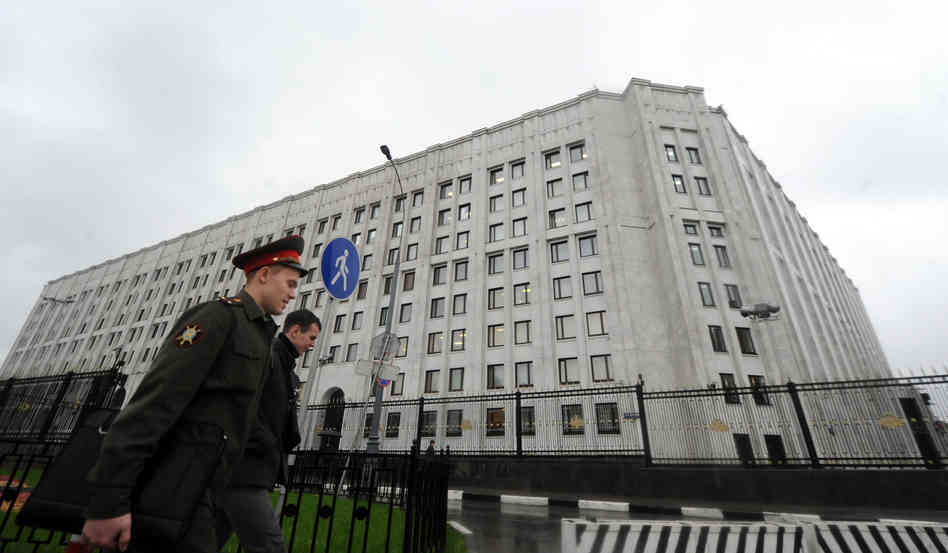
The Russian Defence Ministry will stop receiving foreign inspectors under the New START Treaty and the Vienna Document of 2011, a highly-placed source in the ministry told ITAR-TASS on Saturday, March 8.
“We are ready to take this step in reply to the Pentagon’s statement on the suspension of cooperation between the defence ministries of Russia and the United States,” he said.
“Since such inspections are a confidence-building measure, there can be no normal regular bilateral contacts on compliance with the treaty now that the U.S. has basically announced ‘sanctions’,” the source said. “We take the unjustified U.S. and NATO threats against Russia over its policy with regard to Ukraine as an unfriendly gesture that allows us to declare force majeure,” he added.
New START that entered into force on February 5, 2011 allows each country to have 1,500 deployed warheads and 700 intercontinental ballistic missiles, sea-based ICBMs and bombers on combat duty.
The new START Treaty was signed by President Obama and then Russian President Dmitry Medvedev in Prague on April 8, 2011. The previous Strategic Arms Reduction Treaty (START) expired on December 5, 2009.
The main instrument for mutual control over compliance with the treaty is inspections, during which inspectors have to confirm the declared number of strategic offensive weapons.
The Vienna Document on Confidence and Security-Building Measures and Disarmament in Europe was adopted by the Organisation for Security and Cooperation in Europe (OSCE) in November 2011. It calls for inspections of specific areas and units in order to oversee military activities and make annual assessments of information provided by each member state. The U.S. is a member of the OSCE since 1973, Russia since 1992.
Russian Prime Minister Dmitry Medvedev, also spied upon
Russia, Turkey and South Africa expressed outrage on Monday over revelations that Britain and the United States spied on foreign delegates at G20 meetings in London in 2009.
The Turkish government summoned Britain’s charge d’affaires to explain a newspaper report that London put Finance Minister Mehmet Simsek under surveillance during the talks.
Moscow meanwhile expressed concern that US spies had intercepted communications made by then president Dmitry Medvedev while he was in Britain, and some Russian lawmakers warned it could harm US-Russian ties.
British Prime Minister David Cameron said he would not comment on intelligence matters, but the revelations were likely to be embarrassing as he hosts G8 leaders at a summit in Northern Ireland.
The claims are based on documents leaked by former US spy Edward Snowden, who has already invoked the ire of Washington by lifting the lid last week on a massive US Internet surveillance system.
According to The Guardian newspaper, Britain’s GCHQ electronic eavesdropping agency used “ground-breaking intelligence capabilities” to monitor communications at two G20 meetings in April and September 2009.
Delegates were allegedly tricked into using specially prepared Internet cafes which allowed British spies to intercept and monitor email messages and phone calls through BlackBerry devices.
GCHQ was also able to track when delegates were contacting each other and the agency targeted certain officials, including the finance minister of NATO ally Turkey.
Ankara responded with outrage, contacting the British ambassador and summoning the deputy head of mission to demand an explanation, a foreign ministry diplomat said.
Earlier, the ministry said that if the report was true, “such an action by an ally country is unacceptable”.
“This will constitute a scandal in terms of relations between the two countries if any truth is found in the allegations,” it said.
The British Foreign Office confirmed that its deputy head of mission had met Turkey’s director general for intelligence and security at the foreign ministry in Ankara, but gave no details.
Officials travelling to Northern Ireland with Russian President Vladimir Putin meanwhile expressed concern over claims that US agents spied on his predecessor while he was in London.
“As a country which takes steps to protect its own information, we are worried,” said Russia’s G8 negotiator Alexei Kvasov.
The reaction in Moscow was less diplomatic.
“It’s a scandal!” fumed Alexei Pushkov, the head of the lower house of parliament’s foreign affairs committee, on Twitter.
Senator Igor Morozov, a member of the international affairs committee of the upper house of parliament, said it risked hurting ties with Washington.
“In this situation how can we trust the current announcements of US President Barack Obama, who is talking about a new ‘reset’ (of relations)?” he told the RIA Novosti news agency.
Cameron earlier told Sky News television: “We never comment on security or intelligence issues, and I am not about to start now.”
The Guardian said that South African computers were also singled out for special attention, prompting Pretoria to warn against the abuse of privacy and “basic human rights”.
“We have solid, strong and cordial relations with the United Kingdom and would call on their government to investigate this matter fully with a view to take strong and visible action against any perpetrators,” the foreign ministry said.
The leaked documents suggest that orders to gather intelligence on G20 delegates came from a senior level within the government of Britain’s then prime minister Gordon Brown.
A briefing paper prepared for GCHQ director Iain Lobban, dated January 9, 2009, said the agency’s remit was “to ensure that intelligence relevant to Her Majesty’s government’s desired outcomes for its presidency of the G20 reaches customers at the right time and in a form which allows them to make full use of it”.
Snowden, currently in hiding in Hong Kong, has vowed to fight any attempt by the United States to extradite him, as it pursues a criminal investigation into the Internet surveillance leaks.
In a live question-and-answer session on The Guardian’s website on Monday, he said there were more revelations to come about the US National Security Agency’s access to Internet data. – AFP
This website uses cookies to improve your experience. We'll assume you're ok with this, but you can opt-out if you wish. Cookie settingsACCEPT
Privacy & Cookies Policy
Privacy Overview
This website uses cookies to improve your experience while you navigate through the website. Out of these cookies, the cookies that are categorized as necessary are stored on your browser as they are essential for the working of basic functionalities of the website. We also use third-party cookies that help us analyze and understand how you use this website. These cookies will be stored in your browser only with your consent. You also have the option to opt-out of these cookies. But opting out of some of these cookies may have an effect on your browsing experience.
Necessary cookies are absolutely essential for the website to function properly. This category only includes cookies that ensures basic functionalities and security features of the website. These cookies do not store any personal information.
Any cookies that may not be particularly necessary for the website to function and is used specifically to collect user personal data via analytics, ads, other embedded contents are termed as non-necessary cookies. It is mandatory to procure user consent prior to running these cookies on your website.