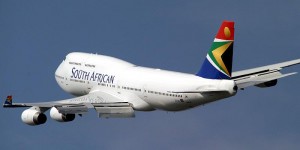
SAA’s CEO resigns

Monwabisi Kalawe has resigned from his position as SAA CEO, with immediate effect.

He had been suspended in 2014 after allegations of “irregularities” had emerged against him.

It had been reported then that SAA chairwoman Duduzile Myeni had asked the Auditor General to investigate Kalawe for allegedly keeping secret attempts to buy shares in an insolvent airline.

While the airline initially stood by Kalawe, it eventually suspended him.

Kalawe came into the chief executive position in April 2013.

Until his appointment Kalawe had served as the MD of Compass Group South Africa.

He had also worked as a General Manager at Cape Town international Airport as well as a CEO at Rheinmetall Denel Munition (Pty) Ltd.

Ironically, Nico Bezuidenhout who had been acting CEO before Kalawe’s appointment, is again filling in the gap as the troubled airline experiences yet another power transition.

Source: eNCA

Mango crew sacked for food fraud

mangoSouth African Airways’ low cost airline Mango has sacked 24 cabin crew members for food fraud, Business Day reported on Monday.

Cabin crew members allegedly defrauded the airline’s in-flight catering services.

Suspicious about the amount of money being made from the sale of food and drinks, Mango placed investigators on flights, said Lihle Lethuli, SA Transport and Allied Workers’ Union representative.

He said the footage purported to show staff pocketing money from the sale of coffee, tea and other beverages. Mango spokesman Hein Kaiser said the carrier’s internal security services handled the investigation that lasted several months.

“It is almost impossible to give an accurate figure of how much (was stolen)… it was a very large amount,” he was quoted as saying.

Lethuli said the union had seen “no evidence” produced by Mango to back up its claims of catering fraud.

Kaiser said the airline had merely implemented a policy of zero tolerance against any form of dishonesty. – Sapa

No white cadets for South African Airways

Solidarity intends campaigning against SA Airways after not a single white man was selected for its cadet programme, the trade union said on Tuesday.

“In August last year, the SAA lifted the ban on applications from white males for its cadet programme after Solidarity launched a major public protest campaign against the SAA,” deputy general secretary Dirk Hermann said.

“It is clear that the lifting of the ban was merely a smoke-screen for continued racial discrimination by the airline.”

The union said SAA announced on Monday that 40 candidates had been admitted to its cadet programme. They would undergo 14 months of theoretical and practical training to enable them to obtain their Airline Transport Pilot Licences.

This would be followed by about three years of internship. The group consisted of 10 black men, four black women, nine coloured men, one coloured woman, seven Indian men, two Indian women and seven white women, it said.

“SAA’s exclusion of white male candidates constitutes subsidised racism… .The taxpayer is forced to pay for the government’s obsession to apply national racial demographics at all levels, everywhere in South Africa,” said Hermann.

Solidarity called on white men who applied for the cadet programme, but were unsuccessful, to contact it so it could investigate taking legal action on their behalf, said Hermann.

SAA said in a statement that the final 40 candidates fell under the category of previously disadvantaged individuals as defined in the Employment Equity Act.

“It is important to note this in the context of the current reality and measures that need to be taken,” spokesman Tlali Tlali said.

“The cadet programme is the airline’s effort to transform not only its own but also the country’s flight deck community, which is nowhere close to reflecting the country’s demographics,” he said.

He said SAA’s transformation strategy was informed by the broad-based black economic empowerment aviation sector charter.

“In the case of this particular programme, when assessing all applications, SAA is obliged to give preference to previously disadvantaged groups,” said Tlali. – Sapa

SAA’s turn-around strategy?

Why is SAA always running at such a huge loss and forever requesting ‘bail outs’ from the government?

The reason appears to be quite simple – they have too many people working for them and the business simply cannot afford it!

Many of these SAA employees fall into the ‘protected employees’ category, (those that simply have a job and do very little to nothing to substantiate their worth, and our Employment Act prevents the SAA from simply ‘getting rid’ of surplus or unnecessary staff.

In any business it is vitally important to keep ones staff numbers to an absolute necessary minimum. This would be in line with the principle of keeping ones overall overheads to a minimum.

A website search was conducted by a member of the public of some random airlines (listed below) in order to gauge the total number of employees at that airline, measured against their total number of aircraft in the fleet. The gentleman simply divided the total number of employees by the total number of aircraft in the fleet which in turn indicated how many employees in the airline are employed per aircraft in the fleet.

It must be noted that his research was not conducted in depth and some of the numbers below reflect from 2010 – 2012.

Interestingly enough, when attempting to download SAA’s 2010 Annual Report, when clicking on it, nothing happens!

Have a look at the ‘shock and horror’ below:

1) QANTAS (Australian) 32 500 employees with a total of 252 aircraft = 129 employees per aircraft

2) American Airlines 87 897 employees with a total of 618 aircraft = 142

employees per aircraft

3) Delta Airlines 106 216 employees with a total of 722 aircraft = 147 employees per aircraft

4) British Airways 36 832 employees with a total of 238 aircraft = 154 employees per aircraft

5) United Airlines 115
149 employees with a total of 710 aircraft = 162 employees per aircraft

6) South African Airways 55 500 employees with a total of 58 aircraft = 957 employees per aircraft

Numbers above are subject to change depending on latest figures.

Board members jump as SAA takes nosedive

Russell Loubser

South African Airways (SAA) was plunged deeper into crisis yesterday when its chairwoman Cheryl Carolus and six other board members resigned. There has been speculation SAA will report a loss of more than R1.5bn and its low-cost carrier Mango a loss of R100m.

This follows a decision by Public Enterprises Minister Malusi Gigaba to cancel SAA’s annual general meeting this week and his request to Parliament for a two-month postponement of the tabling of its annual report.

Ms Carolus said there had been a breakdown in the relationship with the shareholder. She found it frustrating that a “notion continues to exist that there is no strategic vision on the table at SAA”.

Former JSE CEO Russel Loubser was the first board member to quit. He resigned with immediate effect on Wednesday, citing a lack of support from the Department of Public Enterprises.

Of SAA’s 14-member board eight have resigned so far. Carolus suggested that there could be more resignations.

The board members who told Ms Carolus they were leaving with her are Bonang Mohale, David Lewis, Jabulani Ndlovu, Louis Rabbets, Margaret Whitehouse and Teddy Daka.

The Department of Public Enterprises has been lobbying the Treasury on behalf of the SAA for a cash injection of up to R6bn.

She said the delay in the tabling of SAA’s financial statements at Parliament had been blamed on the board, which was not right.

Ms Carolus said she, and other board members, had already indicated to Mr Gigaba that they were not available for another term because of the amount of time required to oversee the airline, however. The board had drawn up a transition plan for a new board, to ensure that their resignations did not hamper the airline.

Mayihlome Tshwete, spokesman for Mr Gigaba, said last night he found it “very interesting that Ms Carolus said her relationship had broken down with the minister in the week when rumours of board changes surfaced.

“We would have liked the regular procedures to be followed.

Gigaba learned that the chairperson and six board members resigned through the media, his office said on Friday.

“We only found out about the resignations through the media. Our main focus is to ensure that SAA remains a national asset for both our economy and country,” Tshwete said.