Arms Inquiry will probably find nothing: Defence analyst

armsdealIndependent  defence analyst , Helmoed-Romer Heitman says it is unlikely that the commission will uncover much. Heitman says those implicated in corruption would have taken measures by now to get rid of the evidence.

“It’s been so long that if anybody is half way clever they would have buried the evidence so deep that nobody is ever gonna dig it out. I think in that sense the commission is really on a sticky wicket. They’ll probably find nothing and that will either mean there was nothing or that it’s well hidden but whatever the case may be people will then accuse it of being just another cover-up,” says Heitman.

The Commission of Inquiry into the multi-billion rand arms deal begins with public hearings in Pretoria on Monday. The Arms Procurement Commission was set up by President Jacob Zuma in 2011. This followed calls from opposition parties to probe allegations of fraud and corruption in the weapons purchases of the 1990s.

Former President Thabo Mbeki, Planning Minister Trevor Manuel and former Ministers Mosiuoa Lekota, Ronnie Kasrils and Alec Erwin are scheduled to appear. The commission’s been hit by the resignation of one of its members, Judge Francis Legodi, and other officials.  Cape Town Mayor Patricia de Lille is regarded as the initial whistleblower on the deal.

Swedish defence group Saab admitted that its erstwhile British partner BAE Systems had paid R24 million in the form of “bonuses and salaries” between 2003 and 2005 for the deal involving 26 JAS Gripen fighters.

The comments came after Sweden’s TV4 television channel said it had evidence Saab had promised to pay Fana Hlongwane, then advisor to the South African defence minister and also serving as a consultant to the Swedish firm, millions of euros in bonuses if Pretoria did not back out of the Gripen deal.

BAE Systems sold its stake in Saab for £152-million.

In 1999, deals were signed to buy 40 Italian Agusta helicopters; frigates and submarines from Germany; and from Britain, 52 Hawk trainer aircraft and Anglo-Swedish Gripen fighters. The British deal, strenuously promoted by the British prime minister Tony Blair and backed by the UK export credit agency, ECGD, was worth an impressive £1.6bn. It eventually emerged that BAE’s Hawks were twice the price of an Italian rival but the deal had been forced through regardless of cost by the South African defence minister Joe Modise.

Most of the bribe money went through BAE’s Red Diamond front company. BAE claimed to the UK government that the payments had no links to politicians, but this was false.

Fana Hlongwane, an adviser to the late defence minister Joe Modise, was a beneficiary. Hlongwane is also linked to Mbeki, some sources say. Another was the business partner of a notorious Berkshire-based arms dealer whose UK premises were raided. It was alleged that payments went to the ANC 1999 election campaign, via bank accounts in Saudi Arabia, Algeria and Mauritius

ANC official, Tony Yengeni, was jailed for taking a Mercedes from arms company EADS. Schabir Shaikh, brother of a senior arms procurement official, has been jailed for fifteen years for involvement in bribery.

Mbeki accused the British prime minister of double standards in singling out Africa over corruption, and insisted that no corruption had taken place in the deal he originally brokered.

BAE Systems is Europe’s biggest arms company. It has a massive presence in the US and sales all over the globe. It dominates the military scene in the UK.

Corrupt arms deals by BAE have now been alleged all round the world, virtually everywhere the company does business.

For more than 40 years the UK government has secretly tolerated, and sometimes actually practised, bribery. It has deliberately colluded with companies such as BAE and allowed them to continue corrupt practices. In 1965, during an economic crisis, Denis Healey launched an official arms sales department in Whitehall. Its remit was to pay bribes.

Healey himself was frank when he was interviewed recently by the Guardian: “Bribery has always played a role in the sale of weapons – I think almost no role in the sale we made to the Americans or the Germans or our western allies. But in the Middle East people couldn’t buy weapons unless you bribed them to do so, and that was particularly true in Saudi Arabia.”

Lulu Xingwana has luxury office but dirty and insect-infested

Minister Lulu Xingwana

Women, Children and People with Disabilities Minister Lulu Xingwana has been told to improve the working conditions at her department’s head office in Pretoria, Beeld reported on Thursday.

According to the newspaper, dirty carpets, insect infestations and other findings were cited in a report by the parliamentary portfolio committee for women, children and people with disabilities, which inspected the premises in March.

In the report, which was tabled in Parliament on Wednesday, the committee reportedly said bathroom facilities in the building were unusable because some toilets and lights had been broken for nearly a year.

Beeld reported that Xingwana was already under fire for overseas trips costing millions, allegedly financed with money shifted from core projects.

She had also reportedly been criticised for spending more than R2 million on luxury furniture for her own office. – sapa

Rogue firms got R900m contracts

corruption2The Limpopo Human Settlements Department has awarded contracts worth R900 million to companies with invalid tax-clearance certificates.

This is according to a forensic investigation commissioned by the provincial Treasury Department into multimillion-rand low-cost housing projects.

Some of the beneficiaries in the controversial procurement were business associates of former premier Cassel Mathale and expelled ANC Youth League leader Julius Malema.

At the time, former human settlements MEC Clifford Motsepe denied any wrongdoing. But in April, the provincial treasury instructed that the contracts must be cancelled.

The Star has not seen a full report by the Joburg-based law firm Edward Nathan Sonnenbergs, which was commissioned to investigate the matter.

Former treasury MEC David Masondo instructed Motsepe to cancel the contracts, saying the procurement process was “seriously flawed”.

He suggested that Human Settlements officials who processed the procurement were incompetent and ordered that an investigation be launched against department head.

The Public Protector and the Public Service Commission are also investigating the matter.

Premier Mathale, who was recently told to resign, claims to have done nothing unlawful. – The Star

Flight of DA Midvaal mayor Timothy Nast was expected

Timothy Nast
Timothy Nast

The resignation from office by Midvaal Mayor Nast was not unexpected at all.

“It is my considered opinion that Nast had no choice but to resign,” says Mr. Corrie Pypers, FF Plus councillor for Midvaal. Nast, contrary to the portrayal of Midvaal as being an above average performer under his leadership, made fatal mistakes resulting in continuous pressure by the FF Plus and revealed mismanagement in the municipality.

Nast was instrumental in the rezoning of land, belonging to close relatives, adjacent to the R59 freeway. A rezoning application, involving industrial rights, was approved by the Mayoral Committee, under his chairmanship, 10 days before the 2011 municipal elections. The rezoning process was marked by major irregularities and the matter is still under investigation.

Nast was instrumental in the persecution of the Meyerton Golf Club management (council owned land and operated as a joint venture between council and the Golf Club management since its creation during the 80’s) which, inter alia, led to legal costs amounting to tens of thousands of rand for the account of the club and council.

Nast, in a personal vendetta aimed at the club chairperson, Corrie Pypers, not only misappropriated tax money through this action, but duped officials to get involved in this action.  Nast and all the councillors and officials involved in this matter should account for these fruitless and wasteful expenses. The cost appropriation principle was handed down in the judgement recently in the Tlokwe-case involving the mayor who refused to vacate the office following a motion of no confidence.

The leader of the DA, Helen Zille, published blasphemous remarks about Pypers and former councillor Hoffman on her website. This disinformation could only have been made available to her by Nast and his predecessor Marti Wenger, as Zille had no knowledge of the persons referred to above.

This action of Zille has resulted in a multi-million rand legal claim against her for slander which was instituted by Mr. Corrie Pypers and former DA MMC, Kobus Hoffman. 

Apparently untouchable, Nast continued to be instrumental in the dismissal of whistle blowers – councillors and officials alike.

Nast was further involved in the name change of a predominately Afrikaans school and instituted proceedings for the changes of various street and place names, similar to actions usually instituted by ANC controlled municipalities.

It is therefore widely expected that Nast will be joining the ANC in due course.

A number of issues, with long term implications for Nast and the DA, are still sub judice and will be made known when possible. Pypers, with all these facts in mind, called for the resignation of Nast two months ago.

ANC councillor charged with selling jobs

Jobs for sale in Buffalo City

An ANC councillor in East London, in the Eastern Cape, has been charged with theft for allegedly selling council jobs, according to a report on Monday.

A jobseeker could reportedly secure work as a cleaner, grass cutter, admin clerk or driver for between R500 and R1 500, said Dispatch Online.

Last week, angry Mdantsane residents visited the home of the councillor to ask about the promised jobs at the Buffalo City metro. They found a bag of job resumes under a bed

Warrant Officer Hazel Mqala reportedly confirmed to the online news site that a docket has been opened.

It reported that the councillor had denied the allegations, and claimed they were part of a political smear campaign.

No arrests had been made yet. – Sapa

Democracy in crisis: South Africa ‘being taken over by crime syndicates’

BriberyFormer director-general in the Presidency and author of Eight Days in September, The Removal of Thabo Mbeki, Reverend Frank Chikane said last year that South Africa’s democracy is in crisis because of compromised leaders running the country to serve the interests of crime syndicates, reports The Sowetan.

Chikane said that some of these syndicates are employed within state security agencies by commanders and some work outside the system but have strong links with political leaders.

Speaking at his book launch seminar at the University of KwaZulu-Natal Pietermaritzburg campus, Chikane also said that corruption levels in the country have increased since the days of Nelson Mandela as president and have worsened under the current leadership.

“If you read articles in the weekend newspapers about [head of police crime intelligence Lieutenant-General Richard] Mdluli, you can see that we are in trouble,” Chikane said.

He said while syndicates were taking over the country, some of the dirtiest people in the world were coming and hiding in South Africa.

Chikane, who focused more on the crisis and vulnerability of democracy during the seminar than his book, said there were people in government who served syndicates instead of the taxpayers.

“If you are compromised as a leader by a syndicate, then you are controlled by them,” he said.

The Reverend said these syndicates have people at the borders as well.

When cars are stolen in the country they easily make their way to other countries for sale, he said.

He said that in 1990 slain mining magnate Brett Kebble “bought a relationship with the ANC” through disgraced former top cop Jackie Selebi by donating money. He said that syndicates decided who was jailed, while others entered into plea bargains with the state.

“In the Kebble matter, murderers gave up their bosses who in turn gave up Glenn Agliotti who in turn gave up Selebi who is in jail now,” he said.

“There must be no person who commits crime and does not go to jail because he is connected.”

Two S. African state officials arrested for taking money for IDs

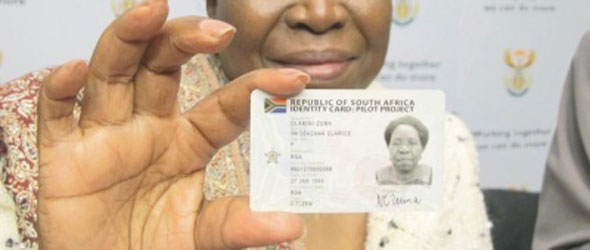
smart-card_IDTwo home affairs officials were arrested for theft in Pretoria on Friday, the Hawks said.

“The suspects were part of the mobile unit tasked with assisting school pupils to get IDs,” said Captain Paul Ramaloko.

According to the Hawks the officials pocketed the R140 paid for identity documents, but did not process the applications.

Home affairs then received complaints, looked on its system, and discovered the applicants’ information was not there.

“The matter was brought to us in June by the department and we started investigating. More arrests are expected,” said Ramaloko.

They two were expected to appear in the Pretoria Magistrate’s Court on Friday on theft charges. – Sapa

Two black policemen in KZN sentenced for murder

sapsTwo KwaZulu-Natal policemen were jailed for 15 years each for murder by the Richards Bay Regional Court, the Independent Police Investigative Directorate (Ipid) said on Friday.

Freeman Masikane and Bhekuyise Dladla of the Hluhluwe uniform branch were sentenced on Tuesday, spokesman Moses Dlamini said.

The officers lied about the events that led to the death of a man during a chase. On September 16, 2009 the officers claimed to have received a report of a stolen vehicle. They gave chase and claimed that the driver, Sandile Dube, 22, refused to stop.

“The members fired shots directed at the driver.”

The car veered off the road and overturned, flinging Dube and his passenger out.

“The police alleged that the driver died as a result of the accident. The Ipid took over the investigation and after investigation found that the police’s version was not true,” he said. – Sapa

Black Johannesburg city official sells state land with forged title deeds

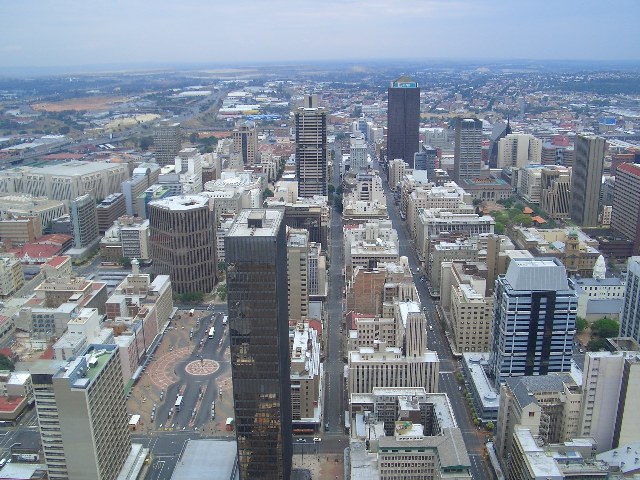
Johannesburg: fine from the air but down there muggings are rife

A City of Johannesburg official and two other people, accused of illegally selling state land in Lenasia, are expected to appear in the Johannesburg Magistrate’s Court on Friday.

Gauteng human settlements department spokesman Motsamai Motlhaolwa said the three allegedly sold land in Lenasia Extension 13 and Extension 4.

“The suspects allegedly defrauded unsuspecting residents of their money by selling them state-owned land,” he said.

“The first suspect will appear before the court for allegedly selling four government-owned stands.”

Official Sifiso Handsome Litau made his first appearance in March and was released on bail.

He was one of seven people arrested for illegally selling state land. The seven were appearing in different courts for selling stands for between R15,000 and R50,000.

Motlhaolwa said an alleged kingpin was arrested by the Hawks in 2010.

“With the help of our department, the Hawks also arrested an alleged kingpin Richard Zikhali, whose case is being heard at the Johannesburg Specialised Commercial Crimes Court,” said Motlhaolwa.

“To date three fraudsters have been found guilty and serving sentences ranging from three to six years in prison. Amongst those found guilty is Pastor Mandla Dlamini, 76, who is serving a three year sentence.”

In November, the Gauteng housing department demolished about 50 houses in Lenasia.

The department said it was acting within the law because the houses were illegally built on government land.

The buyers were given forged deeds of sale with the department’s logo. Following the bulldozing of houses, Lenasia residents held several protests about the demolitions and blockaded roads leading into Lenasia with rocks and burning tyres. – Sapa

Figure revised in police corruption case

Ex-crime intelligence boss Solly Lazarus

The amount two senior police officers are accused of stealing from a crime intelligence fund has been reduced, the Pretoria Magistrate’s Court heard on Wednesday.

Crime intelligence unit chief financial officer Maj-Gen Solly Lazarus and the unit’s head of logistics Colonel Hein Barnard would now face charges relating to the alleged theft of R370,000.

Prosecutor Gerrie Nel submitted the revised figure to the court. Both were suspended and charged with theft, fraud, and corruption initially involving R1.1 million.

The two said, through their lawyer, they would seek to have part of their bail conditions reviewed.

The court turned down their request to have the charges broken down into individual offences.

Nel opposed the suggested amendment to the charges. He said the charges were related, even though they were committed on different occasions over a lengthy period.

“We have one fraudulent action but the same role players.”

The matter was postponed to September 18.

The duo was granted bail of R10,000 each in December. In 2011, the unit’s former head Richard Mdluli was also charged with fraud and corruption following alleged misuse of the unit’s funds.

Mdluli allegedly used the money to purchase luxury vehicles. The charges against him were later withdrawn. – Sapa

Two South African policemen in court on corruption charges

Ex-crime intelligence boss Solly Lazarus

Two police officers accused of benefiting from a crime intelligence fund are expected to appear in the Pretoria Magistrate’s Court on Wednesday.

The two officers are crime intelligence unit chief financial officer Maj-Gen Solly Lazarus and the unit’s head of logistics, Colonel Hein Barnard.

Both have been suspended and charged with theft, fraud and corruption involving R1.1 million.

They appeared in court on April 30 and the matter was postponed because the pair wanted to make “certain applications” to the court when the matter resumed.

On April 11, Lazarus and Barnard were ordered to not contact or discuss the case with politicians or Cabinet members.

They were granted bail of R10,000 each in December last year, and have been suspended from the police.

In 2011, the unit’s former head Richard Mdluli was also charged with fraud and corruption following alleged misuse of the unit’s funds.

Mdluli allegedly used the money to purchase luxury vehicles. – Sapa

The charges against him were later withdrawn. – Sapa

Minister responds to South African police corruption

sapsThere are key factors which have been overlooked in the international corruption survey which states that 47 percent of South Africans paid bribes to government officials, the police said on Sunday.

Three factors had been overlooked, Lieutenant General Solomon Makgale said.

The first, that only 1 000 urban residents were used as a sample group.

“One must wonder if a survey amongst 1 000 urban respondents is a true representation of overall country’s perception,” Makgale said.

The second was the association of the South African police service (Saps) with other government officials including traffic officers, metro police and municipal workers.

And the third, that it takes two to make a corrupt transaction, the corrupter and the corrupted, Makgale said.

On Friday, The Star newspaper reported that the Transparency International Global Corruption Barometer stated that out of the 74 percent of South Africans that had come into contact with a police official in the past year, 36 percent of them had paid a bribe.

The barometer also stated that 74 percent of South Africans viewed public servants as corrupt.

The police were seen as the most corrupt institution in the public sector by 83 percent of South Africans, The Star reported.

On Thursday, national police commissioner General Riah Phiyega launched an anti-corruption unit to fight fraud and corruption in the service.

It would start operating during the current financial year.

“If we are to successfully fight crime in the country, we must first get our house in order. We will therefore not shy away from taking action against our own,” Phiyega said in a statement. – Sapa

SA view police as most corrupt

sapdSouth Africans view the police service as a corrupt institution in the public sector, a report by Transparency International revealed on Wednesday.

In the Global Corruption Barometer 2013, released this week, South Africa was among 36 countries in which the police was seen as the most corrupt institution.

About 83 percent of South Africans believed that police were corrupt. Thirty-six percent admitted to having paid bribes to police.

An average of 53 percent of people sampled during the surveyed globally said they had paid a bribe to police.

The survey was conducted among 114,000 people in 107 countries. It showed corruption was widespread.

In South Africa, 1000 people from urban areas were interviewed.

Corruption Watch executive director David Lewis said the findings confirmed that the increase in corruption was “not a mere perception”.

“We solicit public experiences of corruption and we are getting a significant number of reports of bribery and other acts of corruption, especially from poor communities,” Lewis said.

He said Corruption Watch had received over 4200 complaints on corruption and related matters since its launch in January 2012. He said half of these focused on the abuse of public power and resources, by both the private and public sectors.

Around the world, the survey showed that 27 percent of the respondents had paid a bribe when accessing public services in the last 12 months, revealing no improvement from previous surveys.

Nearly nine out of 10 people surveyed said they would act against corruption, and two-thirds of those who were asked to pay a bribe had refused.

Of the 107 countries, 20 countries viewed the judiciary as the most corrupt. In these countries an average of 30 percent of the people who had come in contact with the judicial system had been asked to pay a bribe.

About 54 percent of the people surveyed globally considered their government to be ineffective in fighting corruption. This lack of confidence in government efforts had grown compared to people’s views in the 2010/2011 survey, where 47 percent of people felt their government was ineffective in fighting corruption.

However, two in three people (67 percent) around the globe believed ordinary people could make a difference in the fight against corruption.

Almost two-thirds (64 percent) of the people around the world thought that personal contacts were important to get things done in the public sector.

This went up to 80 percent in Israel, Italy, Lebanon, Malawi, Morocco, and Russia. – Sapa

Almost R1 billion lost to known government fraud in South Africa

3d man tied with text 'fraud' after committing crime.The Times reports that nearly R1-billion lost through fraud in the public service has not been recovered.

Government departments have managed to get less than R1-million back into the state’s coffers.

The Public Service Commission has found that the public service lost R932.3-million to financial misconduct in the 2010-2011 financial year.

According to the commission, misconduct relates to theft, mismanagement, misappropriation and abuse of funds, fraud, corruption and gross negligence.

North West – where fighting between rival factions in the ruling ANC is rife – was the worst offender.

Financial misconduct by public servants cost the province R673821980.45, but the authorities managed to recover only R4530.

Limpopo, which had several departments placed under administration by the cabinet, performed much better than North West.

Financial misconduct cost it R16123114.64 – but only a measly R1367.37 was recovered.

Figures for the 2011-2012 financial year show that the cost of financial misconduct has dropped dramatically to R230-million but cases monitored by the commission rose to 1243 – up from 1035 the year before.

In 2011-2012, departments in Gauteng misused R14-million of public money.

Only R27000 has been recouped to date.

Gauteng flushed away R18463258 and recovered a mere R4259.

Public Service Commission member Mike Seloane said the drop can be attributed to two factors.

“The systems are becoming effective or departments are simply not declaring financial misconduct. There are departments that have declared no financial misconduct,” he said.

The commission will launch an inquiry into the reasons for the low rate of recovery of misused public money.

In addition to financial misappropriation, the commission observed that efforts to deal with the problem were being frustrated by political heads of department.

It expressed displeasure at the “reluctance by departments to disclose fully the financial misconduct cases”.

And it noted that there were “no concrete plans to ensure that money lost to the state was recovered fully”.

The report detailing the latest national financial misconduct figures is expected to be published and presented in parliament in August or September.