Close to 1500 SA police have criminal records

saps5There are 1,448 criminals on the South African Police Services payroll. This was the shocking admission by police management in Parliament today.

A SAPS audit has found that the 1,448 are guilty of serious offences like rape, attempted murder, corruption, fraud and assault.

They are all still on the beat.

More than 300 of the officers managed to get a job despite having criminal records and it seems they did so by cheating the system.

Nkrumah Mazibuko, SAPS HR management, said: “There are instances where the people who submitted themselves for psychometric assessments were not necessarily the same people who submitted themselves for finger printing.”

Several of the convict cops are highly ranked in positions like captains, majors and colonels — shockingly 10 brigadiers and 1 Major General are also on the list.

A member of Parliament remarked that a SAPS member can have his firearm on his hip until the moment he is marched down to the cells. “That’s how seriously SAPS takes this.”

The law prevents the SAPS from firing those with criminal records until they’ve had an internal disciplinary hearing.

The SAPS has established a board of fitness to assess whether each of the 1448 criminal cops should stay on the job.

The board is expected to start its work this week, but MPs were left fuming when police management couldn’t give them a deadline as to when it’ll finish the process. – eNCA

CCTV captures xenophobic Cape cops

saps4A Cape Town man says he’s been unnecessarily harassed by police – and he’s demanding to know why.

Several dozen policeman burst into Anelechi Sideny’s home in the early hours of Friday morning. They were caught on his CCTV ransacking his home, and allegedly assaulted him without confiscating anything.

The Nigerian national is accusing police of xenophobia.

Police scaled Sideny’s walls, bursting through the kitchen door with firearms in hand.

Sideny  was made to lie face down as the officers searched the premises. With no search warrant, it was unclear what they were looking for.

“When I say can I call 10111, the other one took me up, stood up and took me to the corridor. He showed me a police car. He said you can see this road, left and right is filled with police cars, so we are police. We don’t need search warrant,” Sideny said.

Sideny says this is not the first time he and his South African fiancée have been victimised. He installed CCTV cameras to capture what he and his family regularly have to endure.

Even his five-year-old daughter has started questioning why the family is being targeted.

“I told her, Blessing, it’s because your daddy’s a foreigner, a Nigerian for that matter. Buying a big house, that’s the crime I committed.”

A medical report shows that Sideny suffered soft-tissue injuries to his chest after allegedly being beaten by police in a room where there was no camera.

He now has to pay for the damage to his property,  but he says no amount of money can pay for the trauma his family has experienced.

Police say they were searching for suspects in the recent cop killings in Cape Town. They confirmed that they are investigating, among others, a criminal case of malicious damage to property against the officers involved in this raid. – eNCA

‘Dragging’ cops change legal team

draggingcops
Caught on mobile

The Daveyton policemen implicated in the killing of taxi driver and Mozambique national Emido Macia have ditched their legal team, in a renewed effort to get bail.

Represented by an entirely new legal team, they asked for a postponement in the Benoni Magistrates Court, on July 26.

The defence requested the postponement to allow them time to consult further with their clients, to prepare for a bail application.

They said they will present new facts in the application. South Africa’s police Chief suspended the eight police officers involved in the death of the suspect who had been tied to the back of an official vehicle and dragged for about 500 metres.

The officers were caught on mobile phone footage dragging Mozambican national Mido Macia, a 27-year-old taxi driver, behind their vehicle while driving at full speed. Officials confirmed the man later died of head injuries while in police custody.

The incident occurred in Daveyton, east of Johannesburg, and was apparently sparked by an argument about Macia parking on the wrong side of the road.

Magistrate Sam Makamu granted them their wish, postponing the case to August 13.

The new legal team for accuseds two, three, four, six , seven, eight and nine comprises attorney Benny Ndaba and advocate Marius van Wyngaardt, with attorney Patric Sithole representing accuseds one and five.

Ndaba told the City Times that he believes they stand a chance of being granted bail. – looklocal.co.za

Police bungle another farm attack case

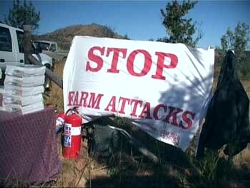
stopfarmattacksAfriForum is considering legal action against a police investigator after a case was thrown out of court and a farm attacker was freed due to gross negligence by the police.

The victims of the attack, Mr Noël McSeveney, and his wife, Alta, were attacked by two men in June 2013 on their farm just outside of Malelane, Mpumalanga. Mr McSeveney was wounded in the attack, and in his efforts to protect himself and his wife, he killed one attacker and wounded the other.

According to Nantes Kelder, Head of the Investigative Unit at AfriForum, the case against the accused took place in absentia. The investigating officer allegedly failed to present a medical report to the court to confirm that the accused was still in hospital, receiving treatment. As a result, the case was thrown out.

The Investigative Unit of AfriForum also made a report available earlier this year on mistakes made by the police during their investigations of farm attacks. “The blatant negligence of the police means that an attacker is now free and the victims have to live in fear. The investigator should be held responsible,” said Kelder.

AfriForum will take on the case on behalf of Mr McSeveney. Kelder added that the incidence of farm attacks and violent crimes is unacceptably high. One would think that such cases would be handled with great care, in order to ensure that justice is served.

A warrant for the arrest of the accused has been issued, but AfriForum has heard that he could not be traced.

Police wars heat up in SA

crimeintelThe shocking new claims against the police’s crime intelligence division include torture, murder, fake hijackings, obstruction of justice and cover-ups.

Allegations of nepotism and corruption against the higher echelons of the division have surfaced since the Hawks and other agencies began probing suspended crime intelligence supremo Richard Mdluli more than two years ago – but a string of damning new statements have deepened the scandal.

They are contained in court documents submitted by the division’s Colonel Johan Roos as part of a labour dispute with the South African Police Service.

Among the claims is the startling implication that suspended intelligence financial officer Major General Solly Lazarus faked two hijackings during which at least R1-million in cash was stolen from him.

The claim is made by a senior crime intelligence officer, referred to only as “Colonel A” for his own protection. According to Colonel A, Lazarus was hijacked “at least” twice and in both incidents he had “various expensive laptops and large amounts of cash in his car”.

Each time, an amount of money “in excess of R500 000” was stolen.

Lazarus’s cellphone was apparently also stolen in the hijackings.

Ordinary procedure
However, according to the colonel’s statement, Lazarus did not report the hijackings and the ordinary procedure for reporting the crimes was ignored – no fingerprints were ever taken from Lazarus’s car and he was never polygraphed in connection with the incidents.

The source claims that a Captain Roger Hinz, using a “grabber” to intercept cellphone signals, was asked to trace Lazarus’s allegedly stolen phone and “he [Hinz] traced the instrument to Major General Lazarus”, who then allegedly claimed he had supplied investigators with the incorrect phone number.

Colonel A also reveals an incident in which a police suspect was allegedly tortured and murdered.

In a February 2012 Hawks progress report on their investigation of crime intelligence, Colonel A refers to an incident in Booysens, Johannesburg, during which a suspect was allegedly tortured and drowned in a bath by a “special crime intelligence unit” created by Lazarus.

Lazarus is facing criminal charges and an internal disciplinary inquiry over his alleged abuse of the secret service account, used to fund covert intelligence operations.

The source notes that, “in most of the cases the special units are involved in or are in charge of, correct procedures are not followed.

“Evidence is usually short or missing, and crime scenes are tampered with and/or staged to suit their stories”.

Referring to the alleged incident in Booysens, for which the date is not given, the source claims: “The suspect was interrogated and tortured at the scene, [and] died (drowned in the bath) under suspicious circumstances. But according to the death certificate, he died due to natural causes.”

The colonel alleges that Lazarus created two “special intelligence units” – allegedly filled with his family members, as well as those of Mdluli and other senior crime intelligence officials – that benefited from unlimited state resources.

The special units appear to have had their own source of funding, drawn not from crime intelligence’s head offices in Erasmuskloof but from a “separate advance office created by Lazarus at his covert premises”.

Lazarus has been on paid suspension since November 2011. His lawyer, Etta Szyndralewicz, said her instructions from her client were that he did not want to comment “until all the matters have been finalised”.

Lazarus appeared again in the Pretoria Magistrate’s Court this week on charges of theft, fraud and corruption, relating to buying cars for friends and family with funds from the secret services account.

Both he and his co-accused, the division’s former head of procurement, Colonel Hein Barnard, celebrated with their lawyers on July 18 after the charge of theft against them was reduced from R1.2-million to R370 000.

But while they grinned and slapped each other on the back, the latest revelations in Roos’s court proceedings have cast further suspicion on both Lazarus and Barnard.

Colonel A’s statement to Hawks investigator Lieutenant Colonel Piet Viljoen goes further than the charges Lazarus and Barnard currently face – that they bought cars for themselves with taxpayers’ money.

Viljoen noted in his 2012 report that the allegations the Hawks received from Colonel A and Roos had been “90% substantiated with our investigations so far”.

Roos uses this evidence to support his claims that his transfer in 2010 from the audit department by Mdluli was a way to stop him from digging any deeper into the nefarious activities allegedly going on in crime intelligence.

When Mdluli was appointed to head up crime intelligence in July 2009, Roos claims he was summoned to meet with Mdluli “out of office hours”, and that the latter wanted to “clean the place up” and charge guilty members. Mdluli allegedly mentioned Lazarus’s name.

Mdluli then appointed him to lead a task team to investigate cases of corruption.

Enquiries
However, “the investigation was suddenly stopped” and Mdluli’s attitude changed, Roos claims.

A few months later, in September 2009, Mdluli “refused to sign a letter authorising [Roos’s] access” to the secret service account.

“He [Mdluli] was suddenly friends with the same people he had tasked us to investigate,” he notes.

Fraud and corruption charges against Mdluli, relating to his own alleged abuse of crime intelligence’s secret service account, were provisionally withdrawn in 2011.

Prior to his dealings with Mdluli, Roos reported to Mphego.

According to Roos, Mphego “got very upset” with him and told him to “stop with his inquiries at once”.

Mphego allegedly instructed Roos not to discuss his findings with anyone, including the audit committee.

Roos says he stopped reporting these issues “as it was evident that certain members, especially in management, were above the law”.

In January 2009 Mphego, who was facing charges that were later struck off the roll, resigned from the police. He could not be reached for comment. – M&G

SA view police as most corrupt

sapdSouth Africans view the police service as a corrupt institution in the public sector, a report by Transparency International revealed on Wednesday.

In the Global Corruption Barometer 2013, released this week, South Africa was among 36 countries in which the police was seen as the most corrupt institution.

About 83 percent of South Africans believed that police were corrupt. Thirty-six percent admitted to having paid bribes to police.

An average of 53 percent of people sampled during the surveyed globally said they had paid a bribe to police.

The survey was conducted among 114,000 people in 107 countries. It showed corruption was widespread.

In South Africa, 1000 people from urban areas were interviewed.

Corruption Watch executive director David Lewis said the findings confirmed that the increase in corruption was “not a mere perception”.

“We solicit public experiences of corruption and we are getting a significant number of reports of bribery and other acts of corruption, especially from poor communities,” Lewis said.

He said Corruption Watch had received over 4200 complaints on corruption and related matters since its launch in January 2012. He said half of these focused on the abuse of public power and resources, by both the private and public sectors.

Around the world, the survey showed that 27 percent of the respondents had paid a bribe when accessing public services in the last 12 months, revealing no improvement from previous surveys.

Nearly nine out of 10 people surveyed said they would act against corruption, and two-thirds of those who were asked to pay a bribe had refused.

Of the 107 countries, 20 countries viewed the judiciary as the most corrupt. In these countries an average of 30 percent of the people who had come in contact with the judicial system had been asked to pay a bribe.

About 54 percent of the people surveyed globally considered their government to be ineffective in fighting corruption. This lack of confidence in government efforts had grown compared to people’s views in the 2010/2011 survey, where 47 percent of people felt their government was ineffective in fighting corruption.

However, two in three people (67 percent) around the globe believed ordinary people could make a difference in the fight against corruption.

Almost two-thirds (64 percent) of the people around the world thought that personal contacts were important to get things done in the public sector.

This went up to 80 percent in Israel, Italy, Lebanon, Malawi, Morocco, and Russia. – Sapa

Top cops bust for huge heists

Crime intelligence policemen – some of whom have the country’s highest security clearances – have been arrested after being linked to deadly cash-in-transit heists involving millions.

The arrests of two crime intelligence officers brings to an end a three-year undercover operation.

Four other crime intelligence officers are being investigated and three civilians have been arrested.

The operation mounted against the officers – whose jobs included the assessment of threats to the state – was led by the Hawks and involved the cooperation of cash-management companies.

The policemen are believed to have planned some of the biggest cash heists in South Africa.

According to police sources, the arrested officers were believed to have been planning what would have been one of South Africa’s biggest heists, on heavily guarded trucks transporting cash and gold bullion to the Reserve Bank, in Pretoria.

The police breakthrough came after a crime intelligence captain known as ”Mr KGB” was arrested on Saturday night near the Durban beachfront, hours before he was to have competed in the Comrades Marathon.

The officer – the ringleader, according to police and cash-in-transit company sources – was wanted in connection with an attack on a Protea Coin cash-in-transit van in the Free State town of Sasolburg in February. In all, R3-million was stolen and none of it has been recovered.

Another officer was arrested last week.

The two will appear in the Sasolburg Magistrate’s Court tomorrow along with three other men wanted for a spate of armed robberies that claimed several lives.

Police sources said yesterday that the arrested officers’ jobs involved intelligence gathering and threat assessments of attacks on cash-in-transit trucks and on vehicles carrying gold or platinum.

Senior police officers said the heads of cash-management companies and the national police commissioner, Riah Phiyega, were scheduled to meet later this week to discuss the implications of the arrest of officers with top security clearances.

Hawks spokesman Captain Paul Ramaloko confirmed the policemen’s arrests on armed robbery and attempted murder charges.

He would not say whether more police officers faced arrest.

“The case is sensitive. We cannot elaborate on what had [been] or is being planned.

“What I can say is that the policemen allegedly used their work knowledge, which involved security assessments, to commit crime,” Ramaloko said. – timeslive.co.za

Drugs sold to primary school children

Children as young as 12 are being sold drugs around school premises, Gauteng police commissioner Lt-Gen Mzwandile Petros said on Wednesday.

“I have met with primary school principals in some of our clusters regarding the drug problem. The situation is severe… some have indicated that they are helpless,” he told reporters in Johannesburg.

“If consumption of drugs happens at schools, then it means the sale of these substances is around school premises.”

Petros was giving an overview of Gauteng crime statistics for 2011/2012.

Some school children were working with the police to thwart the drug trade on school grounds, he said.

“This project has been done successfully in areas such as Klerksdorp: we are rolling it out in schools across the province.”

Serious crime such as murder, armed robbery, rape and hijacking had decreased in Gauteng compared with the previous financial year.

However, crimes such as theft out of vehicles, illegal possession of firearms and ammunition, drug possession, dealing in drugs, and driving under the influence of alcohol or drugs were on the increase.

Police were working hard to make Gauteng citizens feel safe, said Petros.

Rural safety campaigns had been introduced in areas such as Muldersdrift and Midrand. – Sapa

Crime scene tampering at Marikana: Commissioner knew

National police commissioner Riah Phiyega knew there was evidence to suggest that one of the crime scenes where 34 protesters were shot dead by police on August 16 had been tampered with, the Farlam Commission of Inquiry heard on Monday.

Ismael Semenya for the police said: “The national commissioner has instituted an investigation.”

He said the matter came to Phiyega’s attention two weeks ago and that she immediately launched a probe to establish what had happenened.

Semenya said this after it became apparent that photographs taken on the night of August 16 showed more traditional weapons around the bodies of the slain miners than photographs taken earlier that day.

Evidence leader Mbuyisela Madlanga was cross-examining crime scene expert Captain Apollo Mohlaki when it became clear that scene two, in the vicinity of a koppie near Lonmin’s Marikana mine in Rustenburg, had been altered between the times when the pictures were taken.

Madlanga showed Mohlaki three photographs of each of three bodies.

Two were taken in daylight and one by electric light after dark. Mohlaki took the night pictures and admitted his photographs showed more weapons around the bodies than those taken earlier.

Referring to the night-time photograph of the corpse of Henry Mvuyisi Pato, Madlanga asked whether Mohlaki could see a butcher’s knife and an iron rod.

“That weapon is underneath the hand or arm of the deceased?”

Drawing attention to the photographs of the same body taken in daylight, Madlanga asked: “Quite plainly, that butcher’s knife is not there?”.

“It is not appearing, I don’t see it,” Mohlaki replied.

George Bizos, for the Legal Resource Centre, asked: “Who were the people who had the opportunity to really insult the administration of justice in our country?…This came as a big surprise to us.”

Commission chairman, retired judge Ian Farlam, said it came as a surprise “to all of us”.

Last week Semenya said the integrity of the crime scene could have been compromised by the presence of paramedics.

“No blame on your team, but your scene was corrupt?” he asked Mohlaki.

“We will hear evidence that paramedics asked that weapons be removed so they could do their work,” said Semenya.

Also on Monday, Dali Mpofu, the attorney for injured and arrested Lonmin miners, claimed some of the shot miners seemed to be handcuffed in a video entered as evidence.

He asked Mohlaki whether he had seen any protesters — whether dead, injured or arrested — with their hands bound behind their backs.

Mohlaki said he had not, but conceded that on a video shown to the commission it appeared to be the case.

“At the crime scene I never observed that…. I never went to individual bodies to see which one was handcuffed, which one was injured…

“If I am looking at the video there is a person, handcuffed possibly, but on the day I did not observe that.”

The video showed the dead bodies of the miners lying at unnatural angles among large rocks.

Towards the end of the video, loud laughter could be heard, but the group laughing was not visible.

Asked what police might have found so amusing at the scene of so many violent deaths, Mohlaki said: “I have no idea.”

During the afternoon session, the parties debated the usefulness of separating elements of the inquiry into phases.

Semenya objected to the fisrt phase being dominated by the policeºs conduct on August 16.

“From our perspective, it is an open secret that SAPS has been found guilty in the court of public opinion,” he said.

Semenya argued that the contributions of the National Union of Mineworkers, the Association of Mineworkers and Construction Union, Lonmin, the actions of angry crowds, and preceding events needed to be taken into account to contextualise the August 16 shootings. – citizen.co.za