MLK: Obama draws flak for house Negro on his plantation

Cornell West
Cornell West

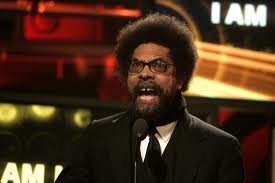
Professor Cornel West, the radio personality and scholar, on Friday lashed out at organizers of Wednesday’s 50th-anniversary commemoration of the March on Washington, saying that it offered scant celebration of Martin Luther King Jr. and his accomplishments, according to Mediaite.

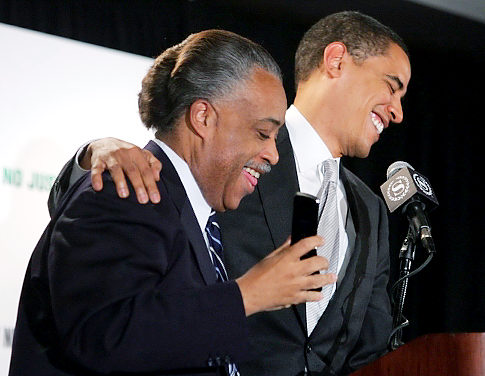
He said the event merely highlighted “the coronation of the bona fide house Negro of the Barack Obama plantation, our dear brother Al Sharpton.”

West lamented that black leadership has become “so sold-out” so as not to have the courage to be a “bull in the china shop,” break rank, and talk about “racism and poverty”.

This is not the first time West has referred to Sharpton as being “on the Obama plantation.” The radio host made the same claim in July when he felt Sharpton did not advocate hard enough for a Department of Justice “civil rights” prosecution against the recently-acquitted George Zimmerman.

Further, he said, the event was unremarkable because black leaders are too fearful to speak out against the nation’s first black president.

Early in the radio show “Smiley and West,” West said of the previous day’s commemoration of the 50th anniversary of Martin Luther King Jr.’s March on Washington, “We saw of course the coronation of the bonafide house negro of the Obama plantation, our dear brother Al Sharpton, supported by the Michael Dysons and others who’ve really prostituted themselves intellectually in a very ugly and vicious way”.

[Transcript]CORNEL WEST: Well, on the one hand as you can imagine, that was a beautiful thing. I was there in D.C. to see the magnificent expression of, like, faces and sparkling eyes of everyday people of all colors, hungry, thirsty for justice, hungry, thirsty for truth. Then you turn to so many of the major organizers and major speakers at the march – not too much truth. Not too much talk about justice. Mainly talking about voting rights, and every once in a while you see a vague reference to jobs.

Now, they had some wonderful speakers earlier in the day, but most of the country didn’t get a chance to hear them. But for the most part, there was, Brother Martin himself, I think, would’ve been turning over in his grave. He wants people to talk about Wall Street criminality, he wants people to talk about war crimes, or drones dropping bombs on innocent people. He wants people talking about the new Jim Crow and the privatization of education, and the various ways in which the well to do, the oligarchs and plutocrats are getting away with murder. You didn’t hear that whatsoever. You not only got a tame Martin Luther King Jr., but a real sense in which who he really was at the end of his life hardly surfaced at all.

And we saw of course the coronation of the bonafide house negro of the Obama plantation, our dear brother Al Sharpton supported by the Michael Dysons and others who’ve really prostituted themselves intellectually in a very ugly and vicious way.

Sharpton and Obama
Sharpton and Obama

‘Even if you don’t use the N-word, you may still be racist’: Oprah

Oprah Winfrey
Oprah Winfrey

On Thursday, CNN’s Anderson Cooper interviewed Oprah Winfrey and Forest Whitaker, stars of Oscar-bait The Butler. During the interview, in which Cooper thoughtfully nodded as Winfrey and Whitaker race-baited, Oprah suggested Emmitt Till and Trayvon Martin were equivalent symbols, and that Americans were racist even if they didn’t have ill will toward black people.

When Cooper cited polls showing that black Americans were upset about Trayvon Martin and whites thought too much had been made of the case, Oprah sighed, “Oh, I know, I know. That’s why I love the film in light of this discussion is because it brings context to this discussion. I mean, look at the film, beginning with that lynching scene and ending with walking into Obama’s office, look at what has happened in the span of one man’s lifetime.”

 Whitaker chimed in, “This movie reminds us of the circular motion of things still trying working themselves is going on, as in Emmitt Till, and we’re looking at Trayvon, we’re looking at Oscar Grant, we’re looking at all these situations and recognizing we have to move ourselves forward with this change.” Oprah said, “Emmitt Till became a symbol for those times as Emmitt Till has become a symbol for this time. I mean, there are multiple Trayvon Martins whose names never make the newspapers or the headlines. The circumstances surrounding that allowed that to be. There were multiple Emmitt Tills, there were multiple lynchings, there were multiple young black boys whose names are not remembered and often not even recorded.”

Cooper asked, “It’s amazing to me how people from different backgrounds see this.” He then talked about a juror “who did not understand, did not feel linked to Trayvon Martin, felt connected to George Zimmerman in a way, but not Trayvon Martin, she felt race was not part of this case at all.”

Oprah couldn’t wait to jump in, blurting, “People don’t feel it’s race because people don’t call it race…A lot of people think if they think they’re not using the n-word themselves, they physically aren’t using the n-word themselves, and do not harbor ill will towards black people that it’s not racist. But to me it’s ridiculous to look at that case and not to think that race was involved.” – breitbart.com

Say hi to the anti-George Zimmerman

trayvonhoodDid you notice during the George Zimmerman trial how the media kept repeating the salacious question “What if Trayvon Martin had been white?” They acted as if this question was the perfect response to Zimmerman defenders. They pretended that this was a question without a “safe” answer, but in reality, the question had already been answered.

In April of 2009 Mr. Roderick Scott awoke at 3am to the sounds of three young men breaking into cars on his street. He called the police and went down to the street to make sure the young men did not flee before the police arrived. He shouted at the three to “freeze” and told them that the police were coming soon. The three boys stood before the big man obviously considering what they should do.

That’s when Christopher Cervini (17) rushed at Mr. Scott uttering “I’ll get you” or “I’ll get him.” Roderick Scott fired twice, killing the teenager. The trial that followed was again a case of prosecutorial overreach, as they tried to charge Mr. Scott with manslaughter. Fortunately for Mr. Scott, a jury of his peers agreed with him that he did only what was needed to protect himself.

Afterwards the prosecutor opined, “I just hope it’s not a message to this community… that you have the right to shoot an unarmed 17-year-old kid for breaking into a car.” The problem is that Mr. Scott did not shoot young Christopher Cervini for breaking into his car, but for attacking him. While the Cervini family may now be in much pain over the loss of their son, he brought himself to his tragic end through a series of terrible choices. Roderick Scott had every right to protect himself; he did what he should have… and a jury of his peers agreed.

Oh, and Roderick Scott was a 42 year old black man about the size of an NFL linebacker. Christopher Cervini was a skinny, 17 year old white kid with a little bit of marijuana in his system. Scott was justified in the killing of the younger man not because of the crime that Cervini had committed, but because Scott rightfully feared for his own safety.

There was no “white uproar” over the shooting of a young white man at the hands of a black man with a “hero-complex.” The NAACP didn’t show up to argue that the shooter should be jailed, or that the Justice Department should pursue charges of civil rights violations against the man for killing Cervini. Jesse Jackson, Al Shartpon, and all of the other race hate baiters stayed home for the trial. The trial was treated as a tragic situation that a young man brought on himself by turning to violence.

Which is exactly how the George Zimmerman case should have been treated. The next time someone tells you, “What if…?” You can tell them it already happened, and the outcome was zero racial tension. laresistance.com

It’s a black thing on Capitol Hill

Tracy Martin
Tracy Martin

The father of Trayvon Martin, who was shot in February last year, will give a speech on Capitol Hill on Wednesday as part of a hearing focusing on the societal challenges faced by African American boys and men.

Tracy Martin will speak at the opening of the inaugural hearing of the recently-formed Congressional Caucus on Black Men and Boys.

Other notable speakers at the event will include president of the NAACP, Kweisi Mfume, executive director of the White House Initiative on Educational Excellence for African-Americans, David Johns, and Georgetown University Sociology Professor Michael Eric Dyson.

George Zimmerman was acquitted of second-degree murder earlier this month after being arrested for shooting 17-year-old Trayvon Martin, who was unarmed.

Tracy Martin spoke to Congressional Democrats on the House judiciary panel last year on racial profiling and hate crimes, according to theHill.com.

The Department of Justice said it is investigating the Zimmerman case to see if any civil rights laws were violated. However, legal experts don’t believe any federal charges will be brought against Zimmerman in the wake of the Florida jury’s verdict. – RT

Juror describes mental anguish to find Zimmerman ‘guilty of something’

trayvonA juror from the trial of George Zimmerman for the death of Trayvon Martin broke into tears as she described the mental anguish she and the other jurors felt as they weighed their decision.

She said the six-women panel was sharply divided when deliberations began.

The juror said ultimately it became a question of whether the events leading up the shooting were legally relevant or if, for self-defence, it is the moment before pulling the trigger that counts.

“It was just so confusing with what and what we could apply to what. Because I mean, there was a couple of them in there that wanted to find him guilty of something,” the juror said.

But “after hours and hours and hours of deliberating over the law and reading it over and over and over again, we decided there’s just no way.”

The jurors ultimately came to a unanimous decision, finding Zimmerman not guilty on charges of second-degree murder and manslaughter in the case that has brought tough questions about racism in the United States back to the fore.

But in an interview on CNN, juror B-37 – who was not named and was shown in deep shadow – said the first vote was split down the middle between those who wanted an acquittal and those who wanted to convict.

“We had three not guilties, one second degree murder and two manslaughters,” the juror said, adding she was one of the ones who voted not guilty.

Zimmerman – who has a white father and a Peruvian mother – said he acted in self-defence when he shot Martin during an altercation on the rainy night of February 26 2012.

But prosecutors said he profiled and stalked Martin, provoking the altercation that led to Martin’s death.

The juror explained her understanding of what happened that night: “I think George got in a little bit too deep … He shouldn’t have been there.”But Trayvon decided that he wasn’t going to let him scare him and get the one up on him or something. And I think Trayvon got mad and attacked him,” the juror said.

“I had no doubt George feared for his life in the situation he was in at the time.”

But she broke into tears as she described the mental anguish she and the other jurors felt as they weighed their decision.

“It’s a tragedy this happened, but it happened. And I think both were responsible for the situation they had gotten themselves in to. I think both of them could have walked away.”

In the aftermath of the verdict, race again came to the fore, with angry protesters asking if the result would have been the same had the teenager been white and Zimmerman black.

“We are all Trayvon,” some cried. – AFP

Four black minors gunned down in Chicago during Zimmerman trial

chicagoviolenceIn the 20-day period of the George Zimmerman trial, four black minors – three teens and a five-year-old boy – were gunned down in Chicago, according to Homicide Watch Chicago, a Chicago Sun-Times publication, which details every murder that takes place in the city.

On June 28, five-year-old Sterling Sims was killed in a double murder that also claimed the life of his mother, 31-year-old Chavonne Brown. Both were shot in their apartment, and police believe the motive was robbery.

On July 1, 16-year-old Antonio Fenner was gunned down on the sidewalk next to the body of a 32-year-old man who had gang ties. No arrests were made, and no suspects have been named. Fenner’s mother believes her son was in the wrong place at the wrong time, because no one in her family knew the other victim or what Fenner’s association was to him.

On July 3, 14-year-old Damani Henard was murdered outside a high school. His body was found next a bicycle.

On July 9, 15-year-old Ed Cooper was shot and killed while spending time with friends at the park. A gunman got out of a black van and began firing as the boys ran away. Cooper was shot in the street and continued running to a vacant lot where he died.

Zimmerman was charged with killing Trayvon Martin, an unarmed black teenager in Sanford, Fla., who was walking through a gated community on his way home from the convenience store. Zimmerman argued that he acted in self-defense.

The trial began on June 24 and ended on July 13 with Zimmerman’s acquittal. See more 

Zimmerman’s parents in hiding from ‘enormous amount of death threats’


The Zimmermans
The Zimmermans

George Zimmerman immediately went back into hiding after being acquitted of murder in the shooting death of Trayvon Martin, his parents told Barbara Walters in an exclusive interview with ABC News, adding that they haven’t seen him since he left the courthouse.

The Zimmermans said that because of “an enormous amount of death threats,” they, too, have remained in hiding and still don’t feel safe enough to return to their home in Orlando, Fla.

Two days after a Florida jury found their 29-year-old son not guilty of second-degree murder and manslaughter charges in the death of Martin, 17, Zimmerman’s parents, Robert Zimmerman Sr. and Gladys Zimmerman, sat down for their first television interview. They opened up about how their son’s murder trial has affected their family and how he and they are struggling to cope with the aftermath.

“Under the circumstances, we have not been able to talk to him,” Gladys Zimmerman told Walters. “To tell you the truth, we don’t trust anything, not even the phones.”

“We have had an enormous amount of death threats. George’s legal counsel has had death threats, the police chief of Sanford, many people have had death threats,” Robert Zimmerman said.”‘Everyone with Georgie’s DNA should be killed’ — just every kind of horrible thing you can imagine.”

George Zimmerman was accused of second-degree murder for shooting Martin on Feb. 26, 2012 inside a gated community in Sanford, Fla. While he admitted to shooting the unarmed teenager, Zimmerman maintained that Martin attacked him and he acted in self defense.

A jury made up of six women found Zimmerman not guilty of both second-degree murder and manslaughter charges Saturday after deliberating for more than 16 hours over two days.

But the family’s celebration of George Zimmerman’s new freedom has been short-lived. His parents said that their son has no job and no health insurance. Gladys Zimmerman said her son has been living off small monthly stipends from his legal defense fund.

“Even for us, we have not been living a normal life for the past months, it is hard,” she said. “We have lost everything, everything — the whole family, not only George. The whole family. We have lost everything.”

When asked if her son could ever live a normal life again, Gladys Zimmerman said, “Only time will tell.”

In the wake of Martin’s death, the case quickly developed racial overtones when Sanford law enforcement declined to arrest Zimmerman, who is a white Hispanic — his father is white and his mother is originally from Peru. Trayvon Martin is black.

George Zimmerman was arrested nearly two months after the incident when the state appointed Angela Corey as a special prosecutor and she brought second-degree murder charges against him.

Outrage and protests have reignited across the country since the not-guilty verdict was announced, something George Zimmerman’s mother said was “hurtful.”

“This is America, and we went through all of this with the judicial system,” Gladys Zimmerman said. “They wanted an arrest for my son. They got an arrest. Now lets, you know, find a verdict … now they have a verdict. … He went through the whole process they were pushing for, and now they are not happy with the verdict, and I pray. I pray for them, for God to touch their heart.”- ABC


Thousands in US protest Zimmerman verdict

George Zimmerman
George Zimmerman

Thousands protested in US cities overnight as President Barack Obama appealed for calm following the acquittal in Florida of a man who gunned down an unarmed black teenager.

The angry protests highlight simmering racial tensions after a jury found volunteer watchman George Zimmerman not guilty of murdering 17 year-old Trayvon Martin.

Demonstrators held noisy rallies in US cities including New York, San Francisco, Boston, Detroit and Chicago.

At least six people were arrested in Los Angeles early Monday when riot police broke up an “unlawful assembly” in Hollywood near the CNN building.

To the chants of “No justice, no peace!” a separate crowd blocked traffic on an important freeway elsewhere in the giant metropolis, local media reported.

Memories are still fresh of the deadly April 1992 riots in Los Angeles, which broke out after a similar racially-tinged trial.

The most numerous rally Sunday was in New York City, where several thousand — including families with children — marched to Times Square under the watchful eye of police.

Zimmerman protest in Washington, DC

Many in the multi-racial crowd brandished signs bearing a portrait of Martin, while some, despite sweltering July heat, wore “hoodie” sweatshirts as the teen did the night he was killed.

“I am appalled,” said Carli VanVoorhis, a 21-year-old hairdresser.

“The man was armed, the kid was not, and the man with the gun got away,” she said. “If we say it was not a racial issue, we would be lying.”

“We have a big problem with race, and another problem is guns,” said protester Rodney Rodriguez. “If Zimmerman didn’t have a gun, he couldn’t have killed Trayvon Martin.”

Fellow protester Derreck Wilson, 46, said the group had come “to say in a peaceful way why we are angry. We are angry, scared and anxious.”

“It’s cathartic,” he said.

“We all have the same desires. I want to be able to have my son to come home,” added Wilson, who came to the protest from the traditionally African-American neighborhood of Harlem.

The case has pitted those who belive that Zimmerman, a 29-year-old Hispanic neighborhood watchman, killed Martin in self-defense, and those who believe it was a murder sparked by racist assumptions.

Obama, the first black US president, urged Americans to step back and accept the trial verdict.

“We are a nation of laws, and a jury has spoken,” the president said in a statement. “I now ask every American to respect the call for calm reflection from two parents who lost their young son.”

Zimmerman was accused of pursuing Martin through a gated community in the town of Sanford and shooting him during an altercation on the rainy night of February 26, 2012.

The defense successfully argued that Zimmerman fired his handgun in self-defense after the teen wrestled him to the ground and was slamming his head against the pavement.

According to Florida’s controversial “Stand Your Ground” law, people who fear for their lives can use deadly force to defend themselves without having to flee a confrontation.

“We should ask ourselves, as individuals and as a society, how we can prevent future tragedies like this,” Obama said. “As citizens, that’s a job for all of us. That’s the way to honor Trayvon Martin.”

Obama last year spoke emotionally about the case, noting that if he had a son he would “look like Trayvon.”

The racial divide was evident in Sanford pastor Valerie Houston’s Sunday sermon.

“Dr (Martin Luther) King (Jr) stated, the daily life of the Negro is still in the basement of the Great Society,” she said. “And today I state, the daily life of my people is still enslaved to a white supremacist society.”

Martin’s parents — father, Tracy, and mother Sybrina Fulton — asked the public before the verdict to respect the trial outcome, and afterwards gave thanks for the outpouring of support they received over the past year.

Martin family attorney Benjamin Crump declined to say whether they would file a civil lawsuit against Zimmerman, but said “they are going to certainly look at that as an option.”

“They deeply want a sense of justice. They deeply don’t want their son’s death to be in vain,” he told ABC News’s “This Week.”

The US Justice Department said Sunday it will resume its probe into whether hate crime charges can be brought against Zimmerman. The probe was put on hold until after the Florida trial.

Federal prosecutors “will determine whether the evidence reveals a prosecutable violation of any of the limited federal criminal civil rights statutes within our jurisdiction,” it said in a statement.

With the acquital, Zimmerman’s lawyers told the Washington Post that they will immediately resume a defamation lawsuit against NBC News for selectively editing a phone call to police which made their client seem like a racist. That case was also put on hold pending the trial results. – AFP

Florida jury finds George Zimmerman not guilty

George Zimmerman
George Zimmerman

A Florida jury on Saturday found George Zimmerman not guilty in the shooting death of unarmed black teenager Trayvon Martin, in a case that sparked a national debate on race and guns.

The panel of six women, which was sequestered, deliberated more than 16 hours over two days until nearly 10 p.m. on Saturday (0200 GMT Sunday).

Zimmerman appeared stoned-faced as the verdict was announced, but then showed a slight smile of relief. His parents embraced each other and his wife was tearful.

Zimmerman, 29, said Martin, 17, attacked him on the night of February 26, 2012, in the central Florida town of Sanford. Prosecutors contend the neighborhood watch coordinator in his gated community was a “wannabe cop” who tracked down the teenager and shot him without justification.

The jury could have convicted him of second-degree murder or manslaughter.

What happened in Sanford that February night may never have gone beyond the back pages of a local newspaper if police had immediately arrested Zimmerman.

But he walked free for more than six weeks after the shooting, because police believed his claim of self-defense, triggering protests and cries of injustice across America.

It also drew comment from President Barack Obama, forced the resignation of Sanford’s police chief, and brought U.S. Justice Department scrutiny to this town of 54,000 residents not far from Disney World in Orlando. – Reuters

Zimmerman acquitted of all charges in Trayvon Martin murder case

George Zimmerman
George Zimmerman

George Zimmerman was acquitted of all charges on Saturday for the fatal shooting of unarmed black teenager Trayvon Martin in this central Florida town in February of last year.

If he had been convicted, the 29-year-old former neighborhood watch volunteer, who claimed he acted in self-defense, could have been sentenced to life in prison for second-degree murder or up to 30 years for manslaughter.

A panel of six women jurors rendered its verdict in the case, which sparked a national debate on issues including race and profiling, after a trial that began in Seminole County court on June 10. Reuters

Law enforcement prepares for riots on Zimmerman verdict

riotszimmermanOn Monday, the Broward County Sheriff’s Office released a video calling on the public not to riot in the wake of the George Zimmerman verdict, expected this week or next in Florida. The Sheriff’s Office released a statement explaining that it was “working closely with the Sanford Police Department and other local law enforcement agencies” to coordinate “a response plan in anticipation of the verdict.”

The video, titled “Raise Your Voice, Not Your Hands,” focuses on attempting to channel reaction into non-violent response. It depicts two youngsters, one black teenage boy, one Hispanic teenage girl. “Raise your voice!” says the girl. “And not your hands!” says the boy. “We need to stand together as one, no cuffs, no guns,” says the girl. “Let’s give violence a rest, because we can easily end up arrested,” says the boy. “I know your patience will be tested,” says the girl, and then both conclude, “but law enforcement has your back!”

“Let’s back up and choose not to act up, and deputies are with us, so no need to act up,” says the boy. “Let it roll off your shoulders,” says the girl, “it’s water off your back, don’t lack composure, because in one instant it could be over.” Both conclude: “So let’s make the choice to raise your voice and not your hands.” Sheriff Scott Israel says, “I’m Sheriff Scott Israel, and law enforcement does have your back.”

“Freedom of expression is a constitutional right,” the Sheriff’s Department states. “While raising your voice is encouraged, using your hands is not. BSO has created a public service announcement with the help of kids from the Jason Taylor Foundation, H.A.N.D.Y. (Helping Abused, Neglected, Disadvantaged Youth) and basketball star James Jones of the championship Miami Heat team urging young people not to let their emotions get the best of them.”

Sheriff Scott Israel said, “We don’t have information about a specific event that might take place at the conclusion of the trial, but we encourage everyone to keep any protests peaceful.”

The Department says that it is keeping its channels of communication open with “community leaders, civic activists, members of the clergy, as well as local, state and federal agencies.” – Breitbart


Disqus seems to be taking longer than usual. Reload?

advertisement

Send A Tip

advertisement

Breitbart Video Picks

Fox News National

advertisement

Sign up for our newsletter

advertisement

Trayvon Martin case shows up American racial divide

(Reuters) – Tracy Martin had been looking for his son Trayvon since the night before. He went to bed figuring the teen must have gone to the movies and turned off his phone. When Trayvon still wasn’t home in the morning, Martin called the police.

After a flurry of phone calls back and forth, an officer told him a police unit was on the way. “So I went outside waiting for Trayvon to show up,” Martin said.

Instead of one squad car with his son in the backseat, three vehicles pulled up: a police cruiser, an unmarked sedan and another official-looking car. Martin would discover the third car belonged to a chaplain.

It was not yet 8 in the morning, barely 12 hours since the shooting that took place about 100 yards away, and Martin was still unaware of the fate of his son.

The February 26 shooting death of Trayvon Martin, 17, at the hands of George Zimmerman, 28, a neighborhood watch captain who said he acted in self-defense, has riveted the nation, largely because of race. Trayvon Martin was black. George Zimmerman is white and Hispanic.

For about 10 days, the story remained obscure. Television news from nearby Orlando aired a few segments. The Orlando Sentinel published two brief articles, and the twice-weekly Sanford Herald ran 213 words. Otherwise, there was media silence. This is an account of what happened before everyone knew Trayvon Martin’s name.

BREAKING THE NEWS

When Tracy Martin greeted the police that morning, a plainclothes detective asked him to describe his son. “He asked me what he last had on. He asked me if I had any recent pictures,” Martin said.

“I showed him a recent picture in the camera and he shook his head and said, ‘OK, let me go to my car and get something.'” The detective returned with a folder.

It was drizzling, and he asked Martin if they could go inside. When they were seated he pulled out a photo. It was Trayvon, dead at the scene – his eyes rolled back, a tear on his cheek, saliva coming from his mouth. “From that point, our nightmare,” Martin said.

“YOU GOT ME”

The night his son was killed, Martin, 45, was out to dinner with his fiancée, Brandy Green. Martin, who was divorced from Trayvon’s mother, Sybrina Fulton, in 1999, is a truck driver from Miami who has a long-distance relationship with Green, a resident of the Retreat at Twin Lakes subdivision in Sanford where Zimmerman also lived.

Martin would visit Green on weekends, making the four-hour drive to the Orlando suburb of Sanford. In late February he was able to bring his son because Trayvon, a junior, was serving a 10-day suspension from Miami’s Dr. Michael M. Krop Senior High School. He’d been caught with a plastic baggie that contained traces of marijuana.

On Wednesday, the day after receiving the news, Martin went to the Sanford Police Department looking for answers – and his son’s body. Police took him to a room and played some of the 911 recordings of neighbors who called to report a disturbance followed by a gunshot.

They did not play an earlier call to a police non-emergency line, during which Zimmerman reported a “suspicious guy” and ignored the operator’s suggestion to quit following him. Investigator Chris Serino then took Martin to another room and told him Zimmerman’s version of events.

Sanford police have stopped talking to reporters about the case, and Serino has never spoken publicly about his role in it, but here is how Martin recalls what Serino said: “He told me Zimmerman’s story was that Zimmerman was of course following him and that Trayvon approached his vehicle, walked up to the car and asked Zimmerman, ‘Why are your following me?’ Zimmerman then rolls his car windows down, tells Trayvon ‘I’m not following you.’ He rolls his car windows up.

“Trayvon walks off. Zimmerman said he started running between the buildings. Zimmerman gets out of his car. He comes around the building. Trayvon is hiding behind the building, waiting on him. Trayvon approaches him and says, ‘What’s your problem, homes?’ Zimmerman says ‘I don’t have a problem.’

“Zimmerman starts to reach into his pocket to get his cellphone, and at that point Trayvon attacked him. He says Trayvon hits him. He falls on the ground. Trayvon jumps on top of him, takes his left hand and covers Zimmerman’s mouth and tells him to shut the F up and continues to pound on him.

“At that point Zimmerman is able to unholster his weapon and fire a shot, striking Trayvon in the chest. Trayvon falls on his back and says, ‘You got me.'” The Martin family has been telling their story as part of a campaign to have Zimmerman arrested. He himself has kept quiet.

Sanford police have declined numerous requests for comment on any aspect of the story, even before a special prosecutor overseeing the case invoked a state law that restricts otherwise public information in the course of an active criminal investigation.

Zimmerman has not spoken publicly, since any statements he makes could affect future litigation against him. Though he is free, he remains in hiding.

His father, brother, and defense lawyer, Craig Sonner, have said in interviews that Zimmerman is not racist and has been unfairly vilified. He feared for his life during his altercation with Trayvon Martin, they say, and was justified in using deadly force. In his conversation with Martin, Serino referred to Zimmerman’s background as “squeaky clean.”

Zimmerman had been arrested in 2005 for shoving a state alcohol agent officer during an argument at a bar. Charges were dropped after he entered a special program for first-time offenders. Later that year, his then-girlfriend took out a restraining order, accusing him of domestic violence.

Sanford police released Zimmerman without charge, but Martin says Serino told him he would challenge Zimmerman’s account. “The detective’s words were, ‘I want to interview him again to catch him in a lie,'” Martin said.

A law-enforcement source, who had been informed of the case by investigators, told Reuters that Serino was eager to bring a charge but encountered resistance from the office of the prosecutor, State Attorney Norman Wolfinger.

“Chris (Serino) would have made a recommendation for manslaughter, but Norm Wolfinger’s office wanted it to be a slam dunk,” said the source, who spoke on condition of anonymity. “They don’t want to hear that this is wrong or that is wrong with the case. That’s the way this county does business.” Wolfinger on Monday broke a long silence about the case, denying reports he quashed police intentions to charge Zimmerman with manslaughter.

Although police found no contradictions within Zimmerman’s story, their decision not to arrest Zimmerman was lambasted by critics and has sparked demonstrations around the country.

For now there is one arbiter who matters. Special Prosecutor Angela Corey, a state attorney from northern Florida appointed by Scott on March 22, has taken over the investigation and will decide whether charges are warranted.

ZIMMERMAN DROPS OUT OF SIGHT

Immediately after the shooting, while waiting for police to arrive, neighbor Selma Mora Lamilla saw Zimmerman pacing back and forth, holding his head in his hands. “He was like, ‘Oh my God, what just happened?'” said Mora Lamilla’s roommate, Mary Cutcher.

Zimmerman understood the magnitude of his situation right away, said Joe Oliver, a family friend and colleague of Zimmerman’s at mortgage risk management firm Digital Risk LCC.

“The day after, he went into his job to let them know what was going on,” said Oliver, who has spoken to Zimmerman at least twice since the shooting. “That is the last I know of anyone seeing George.”

Zimmerman and his wife moved out of the townhouse they rented in the Twin Lakes complex almost immediately, Oliver said, and they are now living in seclusion. Across town in Sanford’s black neighborhood, word spread quickly that a black teenager had been killed.

The shooter, said to be white, had gone free. As in many cities in the South, Sanford has a long history of racial tension, and black mistrust of the police runs deep. In 2011, a previous Sanford police chief was forced out of the job after a white police officer’s son was captured on video sucker-punching a black homeless man outside a bar.

Sanford police did not arrest the assailant until video of the attack surfaced on local TV and provoked an outcry from Sanford civil rights leaders. Now, once again, anger was building. A rumor that superiors had quashed an investigator’s intent to charge Zimmerman had already made the rounds in the black community, said Velma Williams, the only black member of the five-person Sanford city commission.

“People were getting suspicious, saying we knew that was going to happen based on history,” Williams said in an interview. She went to see Police Chief Bill Lee on Thursday, March 1, four days after the shooting.

“I told him, ‘I can see a train coming down the track at 50 miles an hour, and you better get a handle on this,'” Williams said. “He said to me, ‘You can rest assured that it’s a thorough and objective and fair investigation.'”

Three weeks later, on March 22, when there was still no arrest and the city commission had voted “no confidence” in Lee by 3-2, the chief announced his temporary resignation. Lee told a news conference that while he stood by the Sanford Police Department, he was stepping aside.

“It is apparent that my involvement in this matter is overshadowing the process,” he said. “I do this in the hopes of restoring some semblance of calm to the city, which has been in turmoil for several weeks.”

TRAYVON MARTIN AS JOHN DOE

At the time of the shooting, Trayvon Martin was not carrying identification – only $22, a cellphone, and the now familiar bag of candy and can of iced tea. His body, taken to the Volusia County Medical Examiner’s office, was tagged as a John Doe.

Although Martin had identified his son to police on Monday, February 27, and asked Serino the next day to issue police clearance for releasing the body, not until Wednesday was a funeral director permitted to drive it back to South Florida. In Miami, the boy’s mother, Sybrina Fulton, 46, a program coordinator for the Miami Dade Housing Authority, stayed home in bed.

“Every little thing kind of frustrates you, especially if you don’t have the body … Just to know the funeral home had the body gave us some comfort,” Fulton said.

“I cried every day. There was nothing else I could do as a mother. Thank God his dad was able to run around and take care of things,” she said. The family held a viewing on Friday, March 2. The memorial service and interment were Saturday. The painful work of laying Trayvon to rest was complete. Now would begin the more difficult search for justice.

FINDING BEN CRUMP

Tracy Martin and Sybrina Fulton wanted George Zimmerman arrested. They believe he stalked their son because he was black, and they were outraged that Sanford police had accepted Zimmerman’s claim of self-defense.

Lee, the police chief, would contend under Florida’s “Stand Your Ground” law that police could not arrest Zimmerman without evidence to contradict his story. Martin turned to Patricia Jones, his sister-in-law.

An attorney herself, she knew whom to call: Benjamin Crump, the state’s best-known civil rights attorney, based in Tallahassee. Crump and law partner Daryl Parks had previously gained renown representing the family of a black teenager who died in a boot-camp-style youth detention center in 2006, winning the boy’s family $7.2 million in damages from the state of Florida and Bay County.

On Tuesday, February 28, Crump was at the Duval County Courthouse in Jacksonville, about 125 miles north of Sanford, arguing that public records should be released in civil litigation over Antonio Cooks. Cooks, a black bail bondsman, had been shot and killed by Jacksonville Sheriff’s Officer Jason Bailey while Cooks was serving a warrant and Bailey was responding to a burglary call.

During a break in the hearing, Crump noticed messages from Tyrone Williams, another attorney he knows, and Jones. They urgently asked for his help. Soon Jones put him in touch with Tracy Martin.

“I told him to believe in the system,” Crump said of that first call. “I really believed they were going to arrest Zimmerman. I said, ‘He’s a neighborhood watch person with a gun. Of course they are going to arrest him just for that.'” “Then 48 hours passed and they still hadn’t arrested him,” Crump said. “After that we just had to do what we had to do.”

He took the case pro bono. Realizing he needed a lawyer who knew Sanford and Seminole County, Crump turned to Natalie Jackson, a former Navy intelligence officer who founded the Women’s Trial Group, which specializes in cases for women and children. Her mother lives in Sanford.

Now Crump and Jackson needed a media strategy. On March 5, Jackson brought in Ryan Julison, a publicist who had worked with her on a number of high-profile cases. After speaking with Tracy Martin, Julison said he also took the job for free and went to work pitching the story to national media.

Crump knew from his experience on the boot-camp case that publicity could force officials to act, but it would require persuading two people who had never stood before a television camera to withstand the spotlight.

“I got on the phone with Tracy Martin and I told him, ‘It’s not going to be any fun, but this is the only way to find justice,'” Julison said. “You are going to have to bare your soul and express your emotions and your inner grief.” Martin and Fulton agreed. There was only one problem. At first, the media weren’t interested. Julison pitched the story to a long list of media contacts.

Eventually, on March 7, Reuters published a story titled “Family of Florida Boy Killed by Neighborhood Watch Seeks Arrest.” The next day, CBS News aired a segment on “This Morning,” and by 10 a.m. a crowd of reporters gathered at Natalie Jackson’s law office for a news conference with Ben Crump and Tracy Martin. A media firestorm had begun.

EPILOGUE: THE 911 RECORDINGS

The day after the news conference, on March 9, Velma Williams went back to see Police Chief Bill Lee with community activist Kenneth Bentley. “We said, look, chief. Last time I was here I told you a train was coming down the tracks and it was going 50 miles an hour,” Williams recalled.

“I said it’s going 150 miles an hour now. And it doesn’t have any brakes.” Back in New York, civil rights activist Al Sharpton was monitoring events, his interest piqued by an earlier call from Crump.

After the police chief told reporters on March 12 he lacked a probable cause to arrest Zimmerman, Sharpton took up Trayvon Martin’s cause on his MSNBC show, fueling cable television competition.

The twist that catapulted Martin’s shooting into a world story was the release of recorded 911 emergency calls, including one that captures screams for help in the background that end with a gunshot.

Chief Lee had resisted Crump’s requests to make the tapes public, but he was overruled by Sanford Mayor Jeff Triplett. On the night of Friday, March 16, Triplett invited Trayvon Martin’s parents and their legal team into his office to listen to each of the calls, which he played on his computer.

“When we got to the cries for help, that was when Sybrina burst into tears,” recalled Jackson. “She said, ‘That’s Trayvon. That’s our son.’ She ran out of the room crying.” (Zimmerman’s brother, Robert, would later swear the voice belonged to George.)

“The mayor himself started to cry,” Jackson said. “Everybody in the room was in tears.” Mayor Triplett overruled his police chief and distributed disks of the phone calls to the media that night. They have been broadcast unceasingly ever since.

(Reporting by Daniel Trotta; Editing by Lee Aitken and Prudence Crowther)

Racist T-shirt mocks Trayvon Martin’s killer

The T-shirt

Expanding the definition of “cracker,” a t-shirt featuring the photo of the man who shot Trayvon Martin is now available for purchase.

As seen at left, the shirt has a picture of George Zimmerman and the words “Pussy Ass Cracker.” Zimmerman, a 28-year-old Hispanic, killed Martin, 17, last month while acting as a neighborhood watch captain in Sanford, Florida.

The shirt’s “pussy ass cracker” line is apparently a reference to lyrics from the rapper Plies’s song “100 Years,” which bemoans stiff sentences handed out by racist judges.