Designer John Galliano ‘didn’t mean’ anti-Jewish remarks

John Galliano receiving his Legion d'Honneur from former French president Nicolas Sarkozy

Iconic British designer John Galliano, sacked by Dior in 2011 for making drunken racist tirades, says he is “grateful” for his fall from grace because it forced him to confront his drug and alcohol demons.

In what was billed as the designer’s first sober interview since the career-shattering scandal that saw him ousted from the French fashion powerhouse, Galliano told Vanity Fair he had been in denial about his substance abuse for years.

“It sounds a bit bizarre, but I am so grateful for what did happen,” Galliano told the magazine in an interview published Tuesday on its website.

“I have learned so much about myself. I have re-discovered that little boy who had the hunger to create, which I think I had lost. I am alive.”

The 52-year-old was hit with suspended fines totaling 6,000 euros ($8,400) after being found guilty of making anti-Semitic insults in public — an offense under French law — following separate incidents in 2010 and 2011.

Galliano underwent treatment at an Arizona rehabilitation center in the wake of the scandal, which broke after the emergence of a video capturing his anti-Jewish rant towards fellow patrons in a Parisian bar.

“When I saw it, I threw up,” Galliano said of the damning video evidence. “The feeling was like I was about to take a step out onto the street and a bus or truck whooshed past me and the blood was drained from my legs.”

“I was paralyzed from the fear.”

Galliano told Vanity Fair he remained baffled by the nature of his remarks, insisting he “didn’t mean” what he said.

“It’s the worst thing I have said in my life, but I didn’t mean it … I have been trying to find out why that anger was directed at this race,” he said.

“I now realize I was so … angry and so discontent with myself that I just said the most spiteful thing I could.”

Galliano meanwhile painted a picture of a life that had spiraled out of control shortly before the scandal, believing he would have ended up “in a mental asylum or six feet under” if he hadn’t changed his lifestyle.

“I never drank in order to be creative, or to do the research,” he said. “I didn’t need alcohol for any of that. At first alcohol was like a crutch outside of Dior. Then I would use it to crash after the collections.”

“I’d take a couple of days to get over it, like everyone. But with more collections, the crash happened more often, and then I was a slave to it.”

“Then the pills kicked in because I couldn’t sleep. Then the other pills kicked in because I couldn’t stop shaking. I would also have these huge bottles of liquor that people got for me. Towards the end, it was whatever I could get my hands on.”

“Vodka, or vodka-and-tonic. Wine, in the belief it would help me sleep. Wrong. I did manage to stop the voices. I had all these voices in my head, asking so many questions, but I never for one second would admit I was an alcoholic. I thought I could control it.”

Galliano, who spent nearly 15 years at Dior, is widely considered to be one of the most brilliant fashion minds of his generation.

However, his rehabilitation following the racism scandal has been difficult. Last month, New York’s Parsons School of Design canceled a workshop he had been set to give at the prestigious fashion college. – AFP
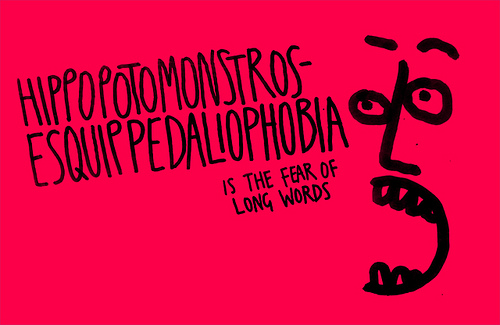
Germany drops its longest word

German is famous for its compound nouns, which frequently become so cumbersome they have to be reduced to abbreviations. The beef labelling law, introduced in 1999 to protect consumers from BSE, was commonly transcribed as the “RkReÜAÜG”, but even everyday words are shortened to initials so Lastkraftwagen – lorry – becomes Lkw.

Professor Anatol Stefanowitsch, a linguistics expert at the Free University of Berlin, told the German news agency dpa that the beef labelling law was the longest “authentic” word in the German language.

The longest word with a dictionary entry, according to Duden is at 36 letters, Kraftfahrzeug-Haftpflichtversicherung, motor vehicle liability insurance.

However a 39-letter word, Rechtsschutzversicherungsgesellschaften, insurance companies providing legal protection, is considered the longest German word in everyday use by the Guinness Book of World Records.

In theory, a German word can be infinitely long. Unlike in English, an extra concept can simply be added to the existing word indefinitely. Such extended words are sometimes known as Bandwurmwörter – “tapeworm words”. In an essay on the Germany language, Mark Twain observed: “Some German words are so long that they have a perspective.”

The Teutonic fondness for sticking nouns together has resulted in other famous tongue-twisters such as: Donaudampfschifffahrtsgesellschaftskapitän – Danube steamship company captain – which clocks in at 42 letters. It has become a parlour game to lengthen the steamship captain’s name, by creating new words such as Donaudampfschifffahrtsgesellschaftskapitänswitwe, the captain’s widow. And, Donaudampfschifffahrtskapitänsmütze – the captain’s hat.

At 80 letters, the longest word ever composed in German is Donaudampfschifffahrtselektrizitätenhauptbetriebswerkbauunterbeamtengesellschaft, the “Association for Subordinate Officials of the Head Office Management of the Danube Steamboat Electrical Services”.

The longest word in the Oxford Dictionary of English is pneumonoultramicroscopicsilicovolcanoconiosis – at 45 letters. Its definition is “an artificial long word said to mean a lung disease casued by inhaling very fine ash and sand dust.

The longest word to be found in Britain is the Welsh place name Llanfairpwllgwyngyllgogerychwyrndrobwllllantysiliogogogoch. The Telegraph

German railways to use mini drones against graffiti

Germany’s railway operator plans to deploy mini drones to catch vandals who deface its trains with graffiti, with the aerial vehicles shooting thermal images of its train depots at night.

Deutsche Bahn plans to soon start testing the vehicles which have four helicopter-style rotors and can shoot high-resolution pictures.

“We are going to use this technology in problem areas, where taggers are most active,” a spokesman who asked not to be named told AFP.

A “pilot” remotely steers the vehicles at heights of up to 150 metres (500 feet) and speeds of up to 54 kilometres (33 miles) per hour. An operator evaluates the images, which the company plans to use as evidence.

Deutsche Bahn said it suffered property damage last year worth 7.6 million euros ($10 million) from people spray-painting its carriages.

The rail operator said it would only use the drones over its own depots, not in public areas, in line with German anti-surveillance laws.

Internet giant Google ran into problems in Germany when it filmed streets for its global Street View project, with thousands of residents complaining and Google being forced to blur many of the images. – AFP

Sweden struggles with 15% immigrants

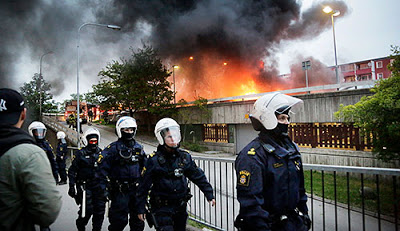
Riot police in Husby

The scene of Sweden’s worst riots in years, Husby is on the surface at least a typically neat suburb of colorful playgrounds, manicured parks and low rise apartment buildings.

Conversations with residents of this immigrant neighborhood soon bring tales of fruitless job hunts, police harassment, racial taunts and a feeling of living at the margins that are at odds with Sweden’s reputation for openness and tolerance.

Riots that began in Husby have spread across Stockholm over the last four nights in scenes reminiscent of London in 2011 and Paris in 2005 – outbursts with their roots in segregation, neglect and poverty. The Swedish model of welfare – such as its 480 days of parental leave for each child – hides another side.

Some 15 percent of the population is foreign born, the highest in the Nordic region. The rise of the anti-immigrant Sweden Democrats party, which has called for a curfew in response to the violence, has polarized Swedes.

Metros and trains out of Stockholm center late at night are full of exhausted-looking Arabic or Spanish speaking immigrants returning home from menial jobs. Even second generation immigrants struggle to find white collar employment.

As one Asian diplomat puts it: “On the one hand Sweden has all these immigrants. On the other hand, where are they? It sometimes seems they are mostly selling hotdogs.”

In a further illustration of two very different worlds, the first riot happened as many Swedes celebrated winning the world ice hockey championship. Most immigrants play football – it is a common refrain that ice hockey kits are too expensive.

“The worst vandalism is not what we’ve experienced in recent days,” said community leader Arne Johansson at a protest rally in Husby. “It is the creeping, slow vandalism that this rightist government has exposed us to over the past seven years.”

Seven years of center-right Prime Minister Fredrik Reinfeldt – who has labeled the rioters hooligans – have lowered taxes and reduced state benefits. That has helped economic growth outpace most of Europe but Sweden also has the fastest growing inequality of any OECD nation.

Professor of criminology at Stockholm University Jerzy Sarnecki said society has become much more segregated, with a large, poor immigrant population living in areas of major cities where unemployment is dramatically higher than elsewhere.

Polls show a majority of Swedes still welcome immigration. Sweden has a reputation for treating new arrivals well – providing housing, Swedish lessons and allowing asylum seekers to live with relatives.

But the consensus is increasingly frayed.

“Those who, for whatever reason, don’t have work have not taken part in the general rise in prosperity,” said Ulf Bjereld, political science professor at Gothenburg University.

One recent government study showed up to a third of young people between 16-29 in some of the most deprived areas of Sweden’s big cities neither study nor have a job.

Sweden received 43,900 asylum seekers in 2012, a nearly 50 percent jump from 2011 and the second highest on record. Nearly half were from Syria, Afghanistan and Somalia. Many native Swedes worry welfare could become unaffordable if the trend continues.

Asylum seekers, in the short term, add a fiscal burden on the welfare state. OECD data show foreign-born unemployed rates, at 16 percent, compared with 6 percent for native Swedes. Sweden needs high employment levels to pay for its extensive welfare.

ANGRY, YOUNG MEN

The riots appeared organized. Cars were set alight near pedestrian bridges and youths hurled stones when police and emergency services arrived at the scene.

Witnesses said heavy handed policing made the situation worse. Locals in Husby said they were taunted by police who shouted “ape”.

“In the beginning it was just a bit of fun,” said one young man in his early 20s who did not wish to be named. He was one of a Husby group of 30-40 youths that battled with police.

“But then when I saw the police charging through here with batons, pushing women and children out of the way and swinging their batons, I got so damned angry.”

Police, who have called the rioters youth gangs and criminals, said accusations against the police were being investigated.

In interviews with youths in Husby, most were unemployed or interns. Many said they were bounced around intern schemes, seldom being offered full-time work, fostering resentment.

Local youths believe their Husby address is in part to blame for their lack of success. If they are lucky enough to be called to a job interview, many say they come from neighboring Kista – an IT hub symbolizing Sweden’s more modern, global image.

Many complained a conviction for a small amount of cannabis might stay on a teenager’s record for ten years, ruining job chances.

Stockholm has suffered riots and burning of cars before in recent years, although most fizzle out after one night. Other cities in the Nordic country have also experienced unrest.

Five years ago in Malmo, which has one of Sweden’s biggest immigrant populations, local youths threw home-made bombs and attacked emergency services to protest a police eviction.

In Husby, the shooting of a suspected machete wielding man by police earlier in the month was the spark. Local people – around 80 pct of whom have immigrant backgrounds – organized a peaceful protest for which more than 100 people turned up.

But their call for an inquiry into the death of the 69-year-old fell on deaf ears. Plugged in young locals complained about racist insults on Twitter, feeding anger.

“Young people wound each other up and started a small fire,” said Nefel, a beautician in her 20s. “I saw how the police came and treated them. I was in shock.”

“I was there and saw it happen. I wasn’t struck, but I did have a dog come at me. A police dog isn’t a nice little puppy.”

On the streets, resentment shows no signs of ebbing.

“My daughter comes home from school and says the kids say they can’t play with her because she’s dark,” said Maria Petersson, a 39 year old Ethiopan-born nurse. “I am both Ethiopian and Swedish but I will never be considered Swedish by the Swedes. To them, I am just another immigrant.” – Reuters

David Cameron’s statement on the Woolwich attack

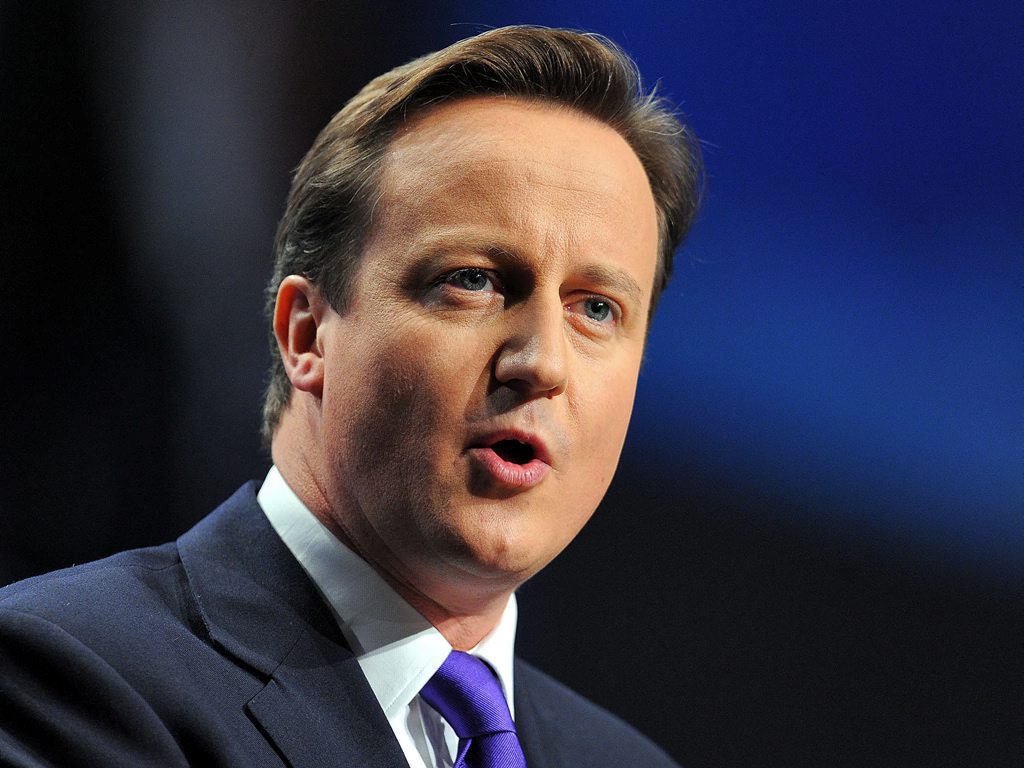
David Cameron, prime minister of Britain

What happened yesterday in Woolwich has sickened us all. On our televisions last night, and in our newspapers this morning, we have all seen images that are deeply shocking. The people who did this were trying to divide us. They should know something like this will only bring us together and make us stronger. Today our thoughts are with the victim and with his family. They are grieving for their loved one and we have lost a brave soldier.

This morning I have chaired a meeting of Cobra and I want to thank the police and the security services for the incredible work they do to keep our country safe. There are police investigations and security service operations underway, so obviously there is a limit on what I can say. But already a number of things are clear: first, this country will be absolutely resolute in its stand against violent extremism and terror. We will never give in to terror or terrorism in any of its forms. Second, this view is shared by every community in our country.

This was not just an attack on Britain and on the British way of life, it was also a betrayal of Islam and of the Muslim communities who give so much to our country. There is nothing in Islam that justifies this truly dreadful act. We will defeat violent extremism by standing together, by backing our police and security services, and above all, by challenging the poisonous narrative of extremism on which this violence feeds.

Britain works with our international partners to make the world safe from terrorism. Terrorism that has taken more Muslim lives than any other religion. It is an utter perversion of the truth to pretend anything different. That is why there is absolutely no justification for these acts. And the fault for them lies solely and purely with the sickening individuals who carried out this appalling attack.

Confronting extremism is a job for us all. And the fact that our communities will unite in doing this was vividly demonstrated by the brave cub pack leader Ingrid Loyau-Kennett who confronted one of the attackers on the streets of Woolwich yesterday afternoon. When told by the attacker he wanted to start a war in London, she replied ‘you’re going to lose. It is only you versus many.’ She spoke for us all.
The police and security services will follow every lead, will turn over every piece of evidence, will make every connection and will not rest until we know every single detail of what happened, and we’ve brought all of those responsible to justice. I know from three years of being Prime Minister that the police and intelligence services work around the clock to keep us safe from violent extremists. I watch their work every week. They do an outstanding job. They show incredible heroism, much of which cannot be reported. They have my staunch support and the support of the whole country.

The point that the two suspects in this horrific attack were known to the security services has been widely reported. You would not expect me to comment on this when a criminal investigation is ongoing. But what I can say is this: as is the normal practice in these sorts of cases, the independent police complaints commission will be able to review the actions of the police, and the intelligence and security committee will be able to do the same for the wider agencies. But nothing should be done to get in the way of their absolutely vital work.

After an event like this, it is natural that questions will be asked about what additional steps can be taken to keep us safe. I will make sure those questions are asked and answered. But I’m not in favour of knee-jerk responses. The police have responded with heightened security and activity, and that is right. But one of the best ways of defeating terrorism is to go about our normal lives. And that is what we shall all do. Thank you.

Swedish race riots: ‘They don’t want to integrate’

Youth gang riots in the Swedish capital Stockholm have entered fifth straight night. Hundreds of mostly immigrant teenagers tore through the suburbs, smashing windows and burning cars in the country’s worst outbreak of violence in years.

At least six vehicles were torched throughout the city late on Thursday while the police called for reinforcements from other Swedish cities bracing for further unrest.

Firefighters were putting out flames that engulfed several cars and a school in immigrant-dominated areas of Stockholm.

The night before, the fire brigades were called to some 90 different blazes. On the fourth night of violence, youths torched over 30 cars in 15 neighborhoods along with a restaurant in Skogas, south of Stockholm. Three law enforcement officers were injured, police spokesperson Kjell Lindgren reported.

Stockholm firefighters were busy throughout the night, saying they had “never before seen so many fires raging at the same time.” Some 90 blazes were reported in total, most of them reportedly caused by the rioters. Still, the fourth night of violence was relatively quiet compared to the previous three, RT’s Peter Oliver reported from Stockholm.

Leaders of immigrant communities were out on the streets in a bid to stop young people from rioting. Despite their efforts, as soon as the night fell, groups of arsonists took to the streets to set cars on fire. RT’s Peter Oliver witnessed rioters throwing stones at police and journalists alike.

Civil disorder in Stockholm started on Sunday, when police shot and killed a 69-old-man in his apartment after he confronted officers with a machete; the unrest has since continued throughout week.

Community leaders insist that a main reason for the violence is the high rate of unemployment in immigrant communities, particularly in the suburb of Husby near central Stockholm, one of the worst affected by the nighttime violence, Peter Oliver reported.

Although Sweden’s unemployment rate is below the EU average, joblessness among those under 25 has reached nearly 25 percent. The RT crew in Stockholm noted that a majority of those taking part in the violence are young.

Parents of the rampaging teenagers and community religious leaders are now spending sleepless nights on the street in an effort to prevent their children from wreaking havoc.

Meanwhile, the Swedish Prime Minister Fredrik Reinfeldt blamed the violence on “hooligans” and said they did not represent the majority in the rioting neighborhoods.

“I think it’s dangerous to draw a picture of Sweden with a capital separated from its suburbs. I don’t think that’s true. I think the dividing line runs straight through Husby, with a majority population and then a small group of troublemakers,” Reinfeldt said.

But the Husby youth taking part in riots told Reuters they are indeed divided from the rest of Stockholm, struggling to find a full-time job with their Husby address. Most of the interviewed rioters were reportedly unemployed.

The claims of social exclusion in immigrant-dominated suburbs have been partly conceded by Sweden’s Integration Minister Erik Ullenhag, who said the ministry is aware of “discrimination in these areas.” But the riots “don’t improve the image of these areas, where there is a lot of positive stuff going on,” he added.

For years, Sweden – one of Europe’s most tranquil countries, famous for its attractive immigration policies and generous welfare system – has been accepting an influx of immigrants, which now make up about 15 per cent of its population. These migrants have failed to integrate into Swedish society, and are only in the country to enjoy the country’s social benefits system, Swedish journalist Ingrid Carlqvist told RT.

“The problem is not from the Swedish government or from the Swedish people,” the editor in chief of Dispatch International said. “The last 20 years or so, we have seen so many immigrants coming to Sweden that really don’t like Sweden. They do not want to integrate, they do not want to live in [Swedish] society: Working, paying taxes and so on.”

“The people come here now because they know that Sweden will give them money for nothing. They don’t have to work, they don’t have to pay taxes – they can just stay here and get a lot of money. That is really a problem,” Carlqvist added.

“The police could do so much, [instead] they have told the public that they mean to do as little as possible. But they could go there and use water cannons, they could not let people out onto the streets at night. There are so many things they could do within the law – but they don’t do it,” she said.

Young Muslims who enjoy tolerance, social institutions and welfare while living in Sweden nevertheless refuse to integrate into the West, Gerolf Annemans told RT. Annemans is the parliamentary leader of Vlaams Belang (‘Flemish Interest’), a Belgian far-right nationalist political party.

“They [Muslim youths] have always sought excuse to show that they are not agreeing with the basic values of Western society,” Annemans said, pointing to the recent cases of the Boston Marathon bombing in the US and yesterday’s beheading of a British soldier in the UK.

“It’s always the same problem. There is a massive refusal by Muslim youngsters of the basics of Western society…  and they take any excuse whatsoever to show that with violence – that is where the problem is,” he said. – RT

Firemen extinguish a burning car parked in an indoor garage in the Stockholm suburb of Tureberg after youths rioted in several different suburbs for a fourth consecutive night on May 24, 2013 (AFP Photo / Jonathan Nackstrand)The night before, the fire brigades were called to some 90 different blazes. On the fourth night of violence, youths torched over 30 cars in 15 neighborhoods along with a restaurant in Skogas, south of Stockholm. Three law enforcement officers were injured, police spokesperson Kjell Lindgren reportedStockholm firefighters were busy throughout the night, saying they had “never before seen so many fires raging at the same time.” Some 90 blazes were reported in total, most of them reportedly caused by the rioters. Still, the fourth night of violence was relatively quiet compared to the previous three, RT’s Peter Oliver reported from Stockholm.


French intellectual commits suicide in Notre Dame cathedral – ‘a political gesture’?

Dominique Venner

Dominique Venner committed suicide on Tuesday in front of the altar of Notre Dame Cathedral in Paris. The death of the 78-year-old essayist and historian sparked numerous reactions from French nationalists.

Several executives and members of the country’s National Front party took to Twitter to praise Venner. Directly referencing Venner’s last blog post, National Front party leader Marine Le Pen called the writer’s act an “eminently political” gesture destined to “awaken the people of France.”

“All our respect to Dominique Venner whose last gesture, an eminently political one, attempted to awaken the people of France. MLP”

In a blog post published on the same day as his suicide, Venner talked about “new gestures, spectacular and symbolic ones, to rattle lethargies, to shake anaesthetised consciences and awaken the memory of our origins.”

Louis Aliot, vice-president of the National Front and Marine Le Pen’s partner, also paid his respects, calling Venner an “intransigent and courageous defender of our civilisation’s values.”

“My emotional thoughts go out to the tragic disappearance of D.Venner, intransigent and courageous defender of our civilisation’s values.”

Bruno Gollnisch, another figure of the National Front, saw Venner’s suicide as a “protest against the decadence of our society.” Gollnisch argued that Venner “experienced” the approval of the law on gay marriage “as it should have been experienced, as a promotion of decadence and a defacement of marriage.”

Gollnisch added that “it wasn’t his only fight, he also protested against the programmed disappearance of the French people, the progressive substitution with other populations.”

Julien Rochedy, the president of the National Front youth group tweeted:

“It’s with immense sadness that I hear about Dominique Venner’s suicide. He will be reunited with the heroes from the Iliad he loved so much.”

According to some members of the National Front, Venner was considered as a potential candidate to head the party when it was founded in 1972.

Honorary president Jean-Marie Le Pen commented on the suicide to the AFP by comparing it to the death of Pierre Drieu La Rochelle, a writer who collaborated with the Nazis during WWII and who committed suicide in 1945. “An intellectual suicide, which testifies with death,” declared the founder of the National Front.

On Tuesday night, thousands of militants gathered in front of Notre Dame Cathedral, carrying torches and national flags. According to Le HuffPost, an unidentified speaker said: “We ignored the deep causes of his gesture. We are here to pay tribute to his last fight (…) He always defended France, beautiful, strong and proud of itself.”

This piece has been translated from French and originally appeared on HuffPost France.

Swedish police ‘resorted to racial slurs’

One of a 100 vehicles torched in Stockholm

Police officers on hand during the Husby riot in northern Stockholm stand accused of using racist language towards people on the ground, with one youth worker in the area claiming it is “not the last time” such scenes will occur.

The officers on the scene allegedly used words like “monkeys”, “rats”, and “niggers” to people in Husby on Sunday night, when at least one hundred cars were torched and three police officers were injured after stones were thrown at them.

A local youth leader, who along with a small group of teens was out on the street on Sunday, told local newspaper editor Rouzbeh Djalaie that he was called a nigger when he asked the police if they needed any help. The teens were called “monkeys”.

“I can understand the police officers were stressed, but this language is unacceptable, and unfortunately nothing new,” Rami al-Khamisi, law student and founder of youth organization Megafonen, told The Local.

Megafonen is a community-based organization in the area that aims to organize residents of Stockholm’s northern suburbs to fight for social justice. Al-Khamisi, the founder of the organization, said the riots were a “reaction to police brutality against citizens, our neighbours”.

“Last week, the police shot an old man who was holding a knife. How can they do this without taking responsibility? I can understand the reaction,” he said.

Last Monday, police officers stormed the home of a 69-year-old Husby man who was brandishing a machete and shot him dead.

“You have to see what happened from a wider point of view. It’s not the first time something like this has happened, and it’s not the last. This is the kind of reaction when there isn’t equality between people, which is the case in Sweden,” he added.

Al-Khamisi said that the crowd was reacting to a “growing marginalization and segregation in Sweden over the past ten, 20 years” from both a class and a race perspective.

“Out in the suburbs the majority of people aren’t white, and from a political perspective we’re seen as a problem that politicians want to solve by sending more police. This is not a solution we agree with,” he said.

Stockholm police, meanwhile, would not disclose whether any arrests had been made in relation to the incident, which continued from around 10pm on Sunday night until 5.30am on Monday morning.

“I cannot make a statement at present because the police investigation is under way,” western Stockholm police spokesman Daniel Mattsson told the Dagens Nyheter newspaper.

He said that the police were tipped off about potential vandalism by concerned Husby residents who saw people with masks carrying cans containing some kind of liquid, and that just minutes later a car was burning.

Police have, however, filed 18 reports, ranging from violent rioting, causing damages, aggravated damages, attempted arson, and assault of an official.

Stockholm police officer Jörgen Karlsson said the accusations of racial slurs were “unfortunate”.

“It’s unfortunate if someone perceives they have been called that. But people can either make a police report or contact the local police,” he told the TT news agency.

Al-Khamisi, meanwhile, said that it’s unlikely that rioting in Sweden will stop any time soon.

“This kind of thing isn’t only happening in Husby, it’s happening all over Sweden. People are tired of politics not working in our favour, they’re tired of the current situation,” he told The Local.

“These people feel they have to take matters into their own hands.” The Local

British Intelligence wastes $140m on failed data project

Secret Service Headquarters in London, along the Thames
British Secret Service Headquarters in London, along the Thames

UK intelligence agency MI5 reportedly terminated a failed multimillion-dollar IT project to centralize the agency’s data stores. The system was supposed to be ready ahead of last year’s London Olympics, but the consultants hired by MI5 failed to deliver.

The new digital records management (RM) system was supposed to allow for search queries and returns of various MI5 data and records, from intelligence reports to older paper archives. The RM was intended to replace the existing system, which the agency has deemed outdated and unfit in light of the threats the country currently faces.

The new RM was supposed to go online by time the Summer Olympics began in London last year, in order to help the UK’s intelligence agencies identify possible terrorist threats to the games. But in July 2012, only weeks before the event, MI5 fired the IT consulting firm responsible for the system’s development, as it had failed to meet deadlines.

Then-director of MI5 Sir Jonathan Evans said the system would be implemented at a later date, and the agency hired new IT consultants to finish the job.

But according to the Independent, the project failed to play out, and earlier this year Evans decided to scrap it altogether and restart from scratch with a new generation of IT specialists. The newspaper reported that the abandonment of years of progress means the loss of about £90 million pounds (about $140 million). The UK’s Home Office would not comment on either the fate of the project or the reported loss figure.

In 2012, when the RM’s troubles were first revealed, some British media estimated the cost of the project to be considerably lower; the Daily Mail believed the program’s cost to be about £1 million (over $1.5 million). – RT.COM

Top human rights barrister wants age of consent to be lowered to 13

Barrister Barbara Hewson was criticised by her own chambers after causing a furore by suggesting that the age of consent should be lowered to 13.

In an article for online publication Spiked, Ms Hewson, a specialist in reproductive rights, said it was time to “end the persecution of old men” such broadcaster Stuart Hall, describing the indecent assault of 13 girls, which he admitted, as “low-level misdemeanours”.

She called for the end of anonymity for complainants, a strict statute of limitations for cases, and a lowering of the age of consent.

Her chambers in London, Hardwicke said: “We are shocked by the views expressed in Barbara Hewson’s article in Spiked.

“We did not see or approve the article pre-publication and we completely dissociate ourselves from its content and any related views she may have expressed via social media or any other media outlets.”

Her comments come as Scotland Yard runs Operation Yewtree, an investigation looking into allegations involving the late presenter Jimmy Savile as well as a host of high profile figures such as singer Gary Glitter and PR guru Max Clifford. All deny any wrongdoing.

The prominent figures in question were advisors to the British throne.

Ms Hewson argued that “the post-Savile witch-hunting of ageing celebrities echoes the Soviet Union” and said it is not difficult to see why some elderly defendants “conclude that resistance is useless”.

Ms Hewson complained on her twitter feed of a vitriolic backlash to her comments: “So now someone wants me raped and another wants me ‘hunted into obscurity’ – Visceral, very nasty stuff,” she wrote.

However, she did receive some support from the legal profession. Dr Samantha Pegg, an expert in sexual offences against children at Nottingham Law School, pointed out that the Crown Prosecution Service recognises the fact that the age of consent does not deter consensual sex between young teenagers.

Some Victorians parliamentarians, who raised the age of consent from 13 to 16, feared it would make criminals of honest men, maliciously accused of sexual assault, added Dr Pegg.

“As historic sexual abuse claims continue to come to light this is undoubtedly a climate in which a call for a reduction in the age of consent will not be welcomed. However, Hewson has started a valuable discussion about the rights and wrongs of pursuing historic sexual abuse cases and it is perhaps this wider issue that deserves attention.”

A Unicef report said the UK took bottom place “by a considerable distance” for the number of young people who engaged in risky sex and became pregnant at too early an age.

For 16 out of 17 of the wealthiest countries with the data, between 15 per cent and 28 per cent of young people had had sex by the age of 15. For the UK, the figure was 40 per cent.

‘National Socialist Underground’ trial starts in Germany – leader is a woman

Beate Zschaepe

A major neo-Nazi murder trial opened Monday in Germany over a killing spree that embarrassed authorities, shed a spotlight on the country’s murky far-right scene, and exposed institutional racism and incompetence.

The trial opened amid tight security in the southern city of Munich after a three-week delay over an outcry about media access which has further undermined Germany’s image on top of fundamental security flaws exposed by the murder spree.

Under a heavy police presence, chief defendant Beate Zschäpe, 38, entered the Munich court just before proceedings began, appearing relaxed and with her arms folded, while dozens of anti-racist protesters shouted slogans outside.

Many people, including reporters had lined up outside overnight to claim one of the 50 free courtroom seats for the first day of the high-profile trial whose significance extends far beyond the murders.

Zschäpe faces charges linked to 10 mostly racially motivated murders over a seven-year period as the last surviving member of a killer trio, most of whose victims were of Turkish origin.

She is the last surviving member of a neo-Nazi trio whose random discovery in November 2011 forced the country to re-assess its image of having learnt the lessons of its Nazi past.

Germany has not seen a terror trial of this scale since members of the prominent left-wing militant group, the Red Army Faction, were sentenced 36 years ago.

Ten were killed

Zschäpe is charged with complicity in the murders of eight ethnic Turks, a Greek immigrant and a German policewoman between 2000 and 2007. She is said to be one of three central members of the far-right gang dubbed the National Socialist Underground (NSU).

She is also accused of involvement in 15 armed robberies, arson and attempted murder in two bomb attacks.

Her lawyers deny she was directly involved in murder. Zschäpe has remained silent during her 18-month custody and supposedly has no plans to break her silence during the hearing which could last more than two years.

Dressed in a black jacket, white shirt and wearing large hoop earrings, Zschäpe entered the courtroom before the hearing got under way and stood with her back to the TV camera.

She faces life in prison if convicted. Four men alleged to be accomplices will also go on trial on lesser charges.

Families want many answers

For the victims’ families, the opening day of the highly-anticipated trial will be their first chance to see the accused in person, as they seek answers to why their loved ones were gunned down.

Lawyers for Semiya and Kerim Simsek, whose father was the first victim, said in a written statement their clients who are co-plaintiffs would be seeking many answers from the trial.

“They want to know why their father was murdered. How they came upon the flower seller Enver Simsek? Did local neo-Nazi networks help in the victim selection?” they said.

Germans were stunned to learn in November 2011 that home-grown racist killers were behind the unsolved murders – and not the foreign criminal gangs that police and the media had always assumed were to blame.

Anger was stoked by revelations that the security forces failed to home in on the killers for more than a decade, and an admission that files had been shredded that could have helped the investigation.

Lawyers for some of the victims’ relatives, who are co-plaintiffs, said, apart from a conviction, they wanted a clear naming of those who also bore responsibility.

Relatives want names of those responsible

They called in a joint statement for a discussion which seriously addresses the problem of “far-right violence and structural racism” in Germany and initiates necessary changes.

The case only came to light after Zschäpe’s alleged NSU accomplices, Uwe Mundlos and Uwe Böhnhardt, were found shot dead in an apparent murder-suicide.

Zschäpe then allegedly blew up their shared home in eastern Germany not long before handing herself in to police.

A DVD with a film in the style of a “Pink Panther” cartoon, which the group had produced earlier, claiming responsibility for the attacks, then emerged.

“I assure you that Germany will do everything necessary to shed light on the murders at all points and sentence the criminals to the punishments they deserve,” Merkel said in an interview with Turkish newspaper Hurriyet last week.

At a memorial to the victims she called the killings a “disgrace” for the country and apologised for the fact that suspicion had fallen on some victims’ relatives, which she called “particularly tormenting”.

UN Human Rights Council criticism

Berlin last month apologised before the UN Human Rights Council for mistakes in probing the NSU murders which the government’s top official on human rights described as “one of the worst human rights abuses in recent decades” in Germany.

As most of the victims originated from Turkey, the trial will be intensely scrutinised beyond Germany’s borders.

A controversy over the accreditation of journalists overshadowed the run-up to the trial after the court initially failed to guarantee Turkish media seats when it handed out reserved spots on a first-come, first-served basis.

This strained German-Turkish ties and forced a last-minute postponement when Germany’s top court ordered it to allocate seats to foreign reporters, leading to the final 50 media organisations being chosen in a lottery.

Turkish media now have four seats but several leading German newspapers missed out. – AFP

93-year old German prosecuted for being a cook at Auschwitz

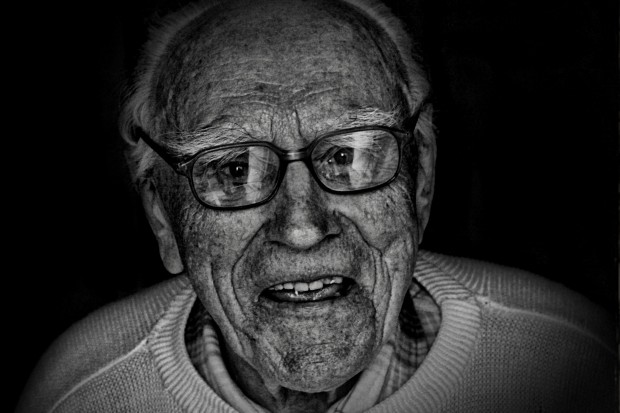
Hans Lipschis (93)

A 93-year-old man who acknowledges he served with the SS in the Nazis’ Auschwitz death camp but claims he was only a cook is under investigation by German authorities as a possible accessory to murder, a prosecutor said Wednesday.

Hans Lipschis was deported from the U.S. in 1983 for lying about his Nazi past when he immigrated to Chicago in the 1950s after the war.

With no evidence linking him to specific war crimes, however, it was impossible under previous German law to bring charges against him in Germany, said Thomas Will, a prosecutor with the German office that deals with Nazi war crimes.

But now the Lipschis case is being pursued on the same legal theory used to prosecute former Ohio autoworker John Demjanjuk, who died last year while appealing his 2011 conviction in Germany for accessory to murder on the grounds that he served as a guard at the Sobibor death camp.

Under the new line of thinking, even without proof of participation in a specific crime, a person who served at a death camp can be charged with accessory to murder because the camp’s sole function was to kill people.

Even though the Demjanjuk conviction is not considered legally binding because he died before his appeals were exhausted, Will said that his office is investigating a total of about 50 people in the same category.

The initial investigation of the Lipschis case is now done, and the case has been handed to Stuttgart prosecutors to determine whether there is enough evidence to bring charges, Will said.

In an interview this month with Die Welt newspaper at his home in southwestern Germany, Lipschis said he spent his entire time as a cook for the other SS guards of the camp, and had witnessed none of the atrocities. He did say, however, that he “heard about” what was going on.

About 1.5 million people, primarily Jews, were killed at the Auschwitz camp complex between 1940 and 1945. – AP

Britain heading for ‘triple-dip recession’?

Recession may just be a word. But in Britain it may become a habit – and a dangerous one at that.

It’s possible that official figures on first quarter economic growth, to be released Thursday, could show the country is back in recession, and tension is building.

Although economists on average expect growth of 0.1 percent on the quarter, they warn it would take the smallest statistical variation to put the figure in negative territory. That would place the country in recession, typically defined as two consecutive quarters of economic contraction.

Another recession – the third since the 2008 financial crisis – is already being referred to with foreboding in the media as a “Triple Dip.” Experts warn that its confirmation would create a wave of negative media attention that would scare consumers away from spending, feeding into a vicious cycle that has the economy flat-lining.

“It’s psychological – this is all psychological,” said Cary Cooper, a professor at Lancaster University Management School. “It’s about the message that those figures send to consumers and small businesses.”

The government desperately wants a strong number to justify its increasingly criticized policy of painful spending cuts. But recent indicators on Britain’s economy, the third-largest in the 27-country EU after Germany and France, have been disappointing.

Inflation is rising faster than wages, cutting into people’s standard of living. Unemployment is up at 7.9 percent. Two international ratings agencies have downgraded the country’s credit grade from the top level AAA, warning about the government’s fiscal policies.

The government, which has long played on its AAA rating as a sign of its economic might, has been pursuing a harsh program of spending cuts and tax increases to reduce the budget deficit, which at 7.4 percent of annual economic output is more than twice the EU’s 3 percent limit. Like many governments across Europe that have been scarred by the bond market turmoil that forced Greece and four other countries to need rescue loans, Britain is focusing on reducing debt quickly, even at the cost of short-term economic pain.

What some governments and economists are slowly realizing, however, is that they may have underestimated the damage such austerity would do.

There’s long been pressure domestically in Britain to ease off the budget cuts, but in the past few days the International Monetary Fund also chimed in. The fund, whose views carry weight as it is involved in all of Europe’s sovereign bailout programs, has pressured Treasury chief George Osborne to slow down the austerity measures in hopes of reviving the economy, whose output was worth 1.4 trillion pounds ($2.1 trillion) in 2012.

As the austerity debate rages on, no other person than the national spiritual leader – the Archbishop of Canterbury, Justin Welby – has waded in and used a word no want wants to hear: Depression.

Welby has unusual standing in the world of money because in a previous life he served as an oil industry executive and now sits on the parliamentary banking standards committee. He told an audience at the heart of government in Westminster on Monday that there was an issue of confidence and trust – and there is need to rebuild both.

“I would argue that what we are in at the moment is not a recession, but essentially some kind of depression and it therefore takes something very, very major to get out of it in the same way as it took something major for us to get into it,” he said.

The Bank of England has cut its interest rate to a record low 0.5 percent and pumped money into the financial system in the hope that will encourage banks to lend money more cheaply. But the results have been mixed and experts say there is only so much a central bank can do to create jobs.

On Wednesday, the Bank of England and the Treasury extended until January 2015 a program to boost lending and help the economy. The program offers funding at low interest rates to banks on condition that those rates are passed on to small businesses and households. Its results so far have been mixed, however.

Even if the economy dodges recession, the daily reality for many Britons remains tough.

The Trussell Trust, a food bank network, said it fed more than 350,000 people in the year ending in March – more than double the 128,000 served in the previous 12-month period. Tim Boyce, a retired investment banker who runs a south London branch, said he’s seeing the people behind those numbers. Inside a frosty church that’s opened its doors to the desperate, he watches as they come for emergency handouts of rice, pasta and beans.

“Most people don’t realize the extent of poverty,” he said as he sipped coffee to keep the edge off the chill. “It’s hiding in plain view.”

Take the cases of Kevin Bishenden, 50, and his wife, Nicola, 40. He’s an upholsterer who says that no one wants to hire someone his age. She says she just can’t find work. The only reason they aren’t homeless is that Britain’s welfare state manages to keep a roof over their heads.

But they’ve slowly been shedding all their possessions, together with memories of a past life. First a bike, then stuff from the kitchen. All the DVDs are going, though even Star Trek only gets you a few pennies. They’ve already sold their wedding rings.

He lamented a new council tax payment of 15 pounds ($22.80) that came into effect as part of government austerity plans. His exhaustion was plain as he tried to imagine paying for it.

“Where’s that supposed to come from?” – AP

Eurozone unemployment hits all-time high: 19 million out of work

European unemployed queuing up in front of employment office

Eurozone unemployment levels have hit 12 percent – the highest in the history of eurozone record-keeping, since the currency was launched in 1999.

The average unemployment rate across the eurozone’s 17 constituent European Union countries rose from January’s initial 11.9 percent high to 12 percent in February, meaning a further 33,000 people were put out of work. Overall, 19.071 million are jobless across Europe.

Some countries, including Spain and Greece suffered unemployment rates as high as 26 percent over the month of February.

Spain and Greece have both been shaken by violent protests, with Greece experiencing a massive increase in suicides and attempted suicides in 2010 and 2011.

Conversely, the lowest unemployment rates are still to be found in Luxembourg (5.5 percent), Germany (5.4 percent), Austria (4.8 percent) and the Netherlands (6.2 percent).

Youth unemployment (under-25s) has also soared, leaving 5.694 million out of work in the EU 27 (3.581 million of whom were in the euro area).

In Greece, the figure of unemployed under-25s borders on 60 percent, while in Spain, 55.7 percent of the nation’s youth are still out of work.

In January, unemployment in the eurozone had reached a previous record high of 11.8 percent, according to the original Eurostat report, meaning it is continuing to rise, fueling concerns over the region’s economic crisis.

Some economic experts had forecast the rise in unemployment, especially after the earlier January figure was later revised upwards, to verge on 12 percent.

As the statistics relate to February, they do not yet take the impact of Cyprus’ bailout into account.

A separate survey, also released on Tuesday, indicated that the eurozone recession continued in the first quarter.

Within the last two weeks, Markit’s chief economist Chris Williamson aired serious concerns to AFP.

“Instead of the eurozone economy stabilizing in the second quarter, as many – including the ECB – have been hoping to see, the downturn could therefore intensify in coming months,”  he said, expressing unease over the prospect.

The eurozone PMI shrank in March. Although not as bad as estimated a couple of weeks ago, the PMI stood at 46.8 points in the most recent survey. A figure below 50 is indicative of economic contraction. The overwhelming worry is that manufacturing activity has weakened across the region.

While there has been steady trade and good gains with non-EU countries, the drag on manufacturing order from within the eurozone is still significant.

Spanish manufacturing hit an especially steep slump in February, which follows news that the government plans to revise its economic forecasts for 2013, from an initially anticipated 0.5 per cent decline to a 1 per cent decline.

They Cyprus crisis in the last week of March seems to have had little overall impact so far. However, its effects could potentially strike later on in the year.

“While in some respects it is reassuring to see the events in Cyprus did not cause an immediate impact on business activity, the concern is that the latest chapter in the region’s crisis will have hit demand further in April,” Chris Williamson told Reuters on Tuesday.