The Obama administration is urging schools to abandon policies that civil rights advocates say “lead to a school-to-prison pipeline that discriminates against black students”.
The wide-ranging series of guidelines issued Wednesday in essence tells schools that they must back down or face strong action if they don’t. The American Civil Liberties Union called the recommendations “ground-breaking.”
“A routine school disciplinary infraction should land a student in the principal’s office, not in a police precinct,” Attorney General Eric Holder said.
Holder said the problem often stems from well intentioned “zero-tolerance” policies that too often inject the criminal justice system into the resolution of problems. Zero tolerance policies, a tool that became popular in the 1990s, often spell out uniform and swift punishment for offenses such as truancy, smoking or carrying a weapon. Violators can lose classroom time or become saddled with a criminal record.
Source: breitbart.com
Police have become a more common presence in American schools since the shootings at Columbine High School in 1999.
In American schools, black students without disabilities were more than three times as likely as whites to be expelled or suspended, according to government civil rights data collection from 2011-2012. Although black students made up 15 percent of students in the data collection, they made up more than a third of students suspended once, 44 percent of those suspended more than once and more than a third of students expelled.
More than half of students involved in school-related arrests or referred to law enforcement were Hispanic or black, according to the data.
The recommendations encourage schools to ensure that all school personnel are trained in classroom management, conflict resolution and approaches to de-escalate classroom disruptions.
Among the other recommendations:
_Ensure that school personnel understand that they are responsible for administering routine student discipline instead of security or police officers.
_Draw clear distinctions about the responsibilities of school security personnel.
_Provide opportunities for school security officers to develop relationships with students and parents.
The government advises schools to establish procedures on how to distinguish between disciplinary infractions appropriately handled by school officials compared with major threats to school safety. And, it encourages schools to collect and monitor data that security or police officers take to ensure nondiscrimination.
The recommendations are nonbinding.
Already, in March of last year, the Justice Department spearheaded a settlement with the Meridian, Miss., school district to end discriminatory disciplinary practices. The black students in the district were facing harsher punishment than whites for similar misbehavior.
Education Secretary Arne Duncan has acknowledged the challenge is finding the balancing act to keep school safe and orderly. But, he said that, “we need to keep students in class where they can learn.”
Research suggests the racial disparities in how students are disciplined are not explained by more frequent or more serious misbehavior by students of color, according to a letter sent to schools with the recommendations by the departments.
“For example, in our investigations, we have found cases where African-American students were disciplined more harshly and more frequently because of their race than similarly situated white students,” the letter said. “In short, racial discrimination in school discipline is a real problem.”
Support for sweeping curbs on immigration to the UK has reached record levels, a major study of public opinion shows, and the BBC now believes it was wrong to downplay the fear of being swamped.
Almost eight out of 10 Britons now believe that the number of new arrivals should be limited and nearly six in 10 want to see major reductions in the number allowed in.
The numbers advocating a large cut have swelled by more than 40 per cent since before the expansion of the European Union, according to the latest findings from the British Social Attitudes survey, which has been charting public opinion for more than 30 years.
Strikingly, it shows that even among those who believe that immigration has boosted Britain’s economy and enriched its culture, clear majorities now want to see it cut.
There is also a sharp divide along class lines, with an elite of highly paid and highly qualified people twice as likely as workers from middle and lower income families to view immigration in positive terms.
Significantly, attitudes have also hardened even among those from immigrant families themselves with less than half now convinced that it is good for the economy and a quarter doubting the cultural benefits.
The findings came as Vince Cable, the Business Secretary, underlined divisions with the Coalition over immigration insisting that the Government “certainly won’t achieve” its target of getting numbers below 100,000 before the General Election next year.
The Blair government had not spelt out the full impact because of a “fear of racism”.
Nick Robinson, the BBC’s political editor, who presents the programme, said at the weekend that the corporation had made a “terrible mistake” in downplaying public concerns over immigration.
The study of more than 3,000 people found that 77 per cent want immigration reduced, with only four per cent favouring an increase.
David Cameron has pledged to reduce net migration to the “tens of thousands” rather than hundreds of thousands . But figures published in November show it rose markedly ni the last year and now stands at 182,000.
The Treasury was convinced that the economic benefits would outweigh the disadvantages earlier.
“We didn’t spell out in words of one syllable what was happening, partly because of a fear of racism” a member said.
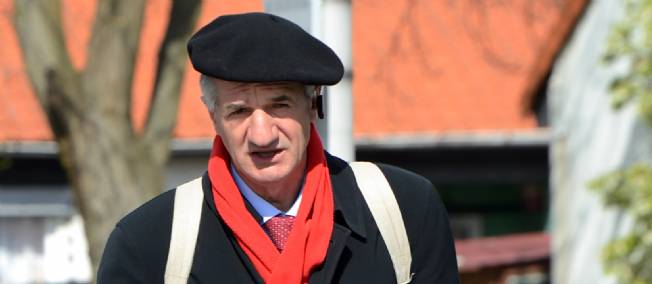
A French lawmaker who spent eight months walking a 6,000km “Tour de France” takes his last symbolic steps in Paris on Sunday. He returns to the capital to report on a country that has “little hope for the future”.
“Everywhere I went I witnessed a crisis in the standard of living, a loss of identity and the loss of a sense of a common destiny,” Jean Lassalle, National Assembly member for the Pyrénées-Atlantiques region in southwest France, told Europe 1 radio.
“People would tell me: ‘look at the state you have left our country in’,” he added. “There is no more industry, farming is in crisis, just one in ten children of farmers grudgingly says they want to carry on in agriculture.
“The countryside has lost its perspective, and it isn’t any better in the cities. We all know the state of France’s suburbs, even those that have been rebuilt.”
Lassalle, 58, set out in April and walked an almost uninterrupted route clockwise around France, flying only from Marseille in the south to northern Corsica, and again from Bordeaux in the southwest to Nantes in the northwest.
He said he “needed to get a feeling” for the country, and wrote on his personal blog that he was impressed by peoples’ willingness to speak frankly with him.
“Once they knew what I was doing, I felt a strong sense that they were expressing themselves as a civic duty, choosing their words carefully,” he wrote. “There was a solemnity and a dignity about it, despite everything they had to say.”
Confusion and racism
And what he found was a France confused about its position in a shrinking world, an uncertainty as to the long-term effects of globalisation and a distrust for politicians who, people told him, “do not listen to us at all”.
“We live in a world that is changing out of all recognition,” he told Europe 1. “We [the government] have failed to find ways of explaining to the citizens of this country exactly what this change means.”
Worryingly, he also encountered “latent racism” almost everywhere, “even in the smallest villages”.
“This is racism that seems totally unashamed,” he told Le Monde on Friday. “It is a wholescale rejection of ‘the other’ and often expressed with excessive aggression.”
Lassalle told Le Monde that he was particularly worried about a return of “anti-Semitic rhetoric” that was particularly “linked to wealth”.
On Saturday, Lassalle will walk his final steps, from Place de la Concorde over the River Seine to the National Assembly building in central Paris.
Hundreds of people he met on his walk are expected to accompany him, and to enter the assembly to start a two-day debate on France’s future.
“I will then prepare a parliamentary report on what I learned on my walk, which I will submit to the president at the end of February,” he wrote in his blog. “Meeting people around the country was a deliberate act as an elected member of France’s parliament, as a resistant [to changes that have eclipsed the lives of ordinary people], and a bid to raise awareness of the issues faced by our citizens.
“Things cannot stay the way they are now.” – France24.com
Clad in a tracksuit with an image of his No1 superhero Spiderman, six-year-old abuse victim Jimmy (not his real name) and his peers play happily on the grounds of the Jakaranda Children’s Home.
They are oblivious of the predicament facing the place they call home – it is not black enough.
Corporate donors that covered 70% of the Pretoria home’s more than R25-million annual running costs have pulled out because, the centre says, the majority of children it houses are white.
Jimmy and 350 other children were removed from their parents because of abandonment, neglect and emotional and physical abuse.
They will soon have to survive without privately funded child development programmes, or worse, they could find themselves without a home.
“There’s nothing we can do about it . it’s a sad situation,” the shelter’s marketing executive Elzane van der Merwe says.
The children are victims of the Broad-Based Black Economic Empowerment Act, she says. The act stipulates that for companies to be allocated BBBEE points, they must donate to charities whose beneficiaries make up at least 75% quota of the previously deprived race groups.
At the Jakaranda shelter, 75% of the children are white.
For the past two years, the shelter received R7.1-million in government funding a year, which has been increased to R9.1-million for this year.
However, Van der Merwe says: “Without corporate funding we cannot continue with therapy and educational and sporting programmes. These are crucial to a child’s proper development but without funding we will have to offer the basics like shelter, schooling, food and clothing.”
She said companies still donate to the home but private funding had declined by 70% in the past three years.
Van der Merwe related an incident in which a company pledged R100 000 but pulled out at the last minute after realising that the majority of children were white.
She said the home did not decide which child was placed at the home. It got applications from social workers and the children were placed at the home according to their needs by the court. – timeslive.co.za
A Coloured DA councillor in the City of Cape Town told a black security guard to go back to a black province. He has been found guilty of racism by a city disciplinary committee and now faces expulsion from the council.
Junade Hoosain, councillor for ward 46, told the guard that “Darkies do not belong in Robertson but in the Eastern Cape.” Hoosain is a member of the city’s health portfolio committee.
The ward includes parts of the coloured Manenberg, Penlyn Estate and New Fields. Hoosain allegedly also used the K-word.
The disciplinary committee said: “After 20 years of democracy, a community leader cannot be excused for uttering such terms in whatever context.”
According to the city’s legal department, Mzoxolo Gqowa of Security SA, the company that provides VIP protection to councillors, complained to his employer last year that Hoosain had made the remark to him.
Hoosain had apologised to Gqowa, who had then withdrawn his grievance, but the withdrawal came to the white Speaker’s attention and Dirk Smit asked Hoosain to “respond to the allegations”.
The disciplinary hearing lasted three days. They found Hoosain guilty of using the term “darkies” but could not, “on a balance of probabilities”, find him guilty of using the k-word.
The committee believes saying “darkie” is “an act of racism” and as such should be regarded in a serious light.
About another DA councillor in the City of Cape Town that appeared in the Bellville Magistrate’s Court on charges of defrauding the social grant system, Smit said earlier the 61-year-old “could face disciplinary action”.
Smit said the party would only comment after it had done its “own investigation”.
Michael Toko was accused of drawing an old age pension even though he earns about R30,000 a month as a full-time councillor.
Government regulations stipulate that those applying for the old age pension of R1270 should not earn more than R49,200 a year.
Toko also enjoys travel and a cellphone allowance.
Black pastor Aubrey Shines hails from Chicago, much like our Fearless Leader, Barack Obama. But that’s where the resemblance ends. Unlike Obama, Pastor Shines has had the courage to point fingers in the deadly trend of “knockout” that is causing injuries and death across the country. In an opinion piece, published on The Blaze, Shines wrote:
The more the media reports these attacks a few things become clear. First, the perpetrators are young black men. […] Second, because the victims are white, the game is also referred to as polar bear hunting. Third, there has been radio silence from black national leaders condemning the acts. Al Sharpton finally condemned the game at one of his weekly National Action Network meetings. But the outrage pales in comparison to the outrage that Sharpton and his fellow Race Warriors are able to muster when it benefits them financially and politically.
Yep, you read that right. A black man is pointing out what the white mainstream media is failing to explain. Knockout is a racially motivated hate crime, but since it is black on white, everyone is dancing around the subject.
When researching these shootings, race is never mentioned. In the alternative media, much of our information comes from mainstream reports. Unless a photo is published of perpetrator and victim, we are generally unable to find out the races of the people involved. Why?
Because it’s politically incorrect to make members of minorities look like criminals, even when they are.
According to Shines’ essay, statistics show that race is a definite factor, whether it’s polite to mention it or not.
You can be sure if those doing the knocking out were white and the victims were black, Sharpton and the Race Warriors would be demanding 24-hour news coverage. The truth is that while the knockout game is a rather new phenomenon, the problem of black-on-white crime is not. Statistics from all credible sources reveal that whites are the victims of crimes committed by blacks far more frequently than the reverse.
The worst culprit of all, according to Shines, is President Obama, who famously said, “You know, if I had a son, he’d look like Trayvon.”
As much as I would love to hear strong reproaches from these black leaders, the most deafening silence comes from President Barack Obama. Some people have argued that Obama should not weigh in on these issues of race because a white president would not. But Barack Obama is not a white president and we all would be wise to stop pretending that his race does not matter…
…The President has weighed in on issues of race that had far less global consequences in the past. Remember the beer summit with Black Professor Henry Louis Gates and James Crowley, the white police sergeant who arrested him as he entered his own home? Remember the recent response to a reporter’s question where President Obama said if he were the owner, he would change the name fromRedskins? Remember after the Trayvon Martin verdict, President Obama reminded us that if he had a son, he would probably look like Trayvon?
I can think of no better reason for him to talk about a race issue than in an attempt to speak directly to the young men who would look like his son, if he had a son.
When he speaks out, other black leaders will join the chorus and speak out. For that reason alone, President Obama must use his influence to create a ground swell against the immoral foolishness that comes with sucker punching a perfect stranger for sport. If he doesn’t speak out, Black America will be the ones that are sucker punched in the end.
Shines is correct – black leaders have been resoundingly silent on this matter. Meanwhile, the criminals are getting younger and younger, and the attacks more brutal.
If this trend was reversed and white kids were punching out elderly black ladies, can you even imagine the hue and cry? The shouts of “hate crime”? The blistering essays on liberal news outlets? No one would say you were a racist for tweeting that a bunch of white thugs beat up an old man with a walker, but in this incidence, we’re supposed to ignore the race of the criminals and the victims. This is every bit as racist as a group of ignorant hillbillies in pointy white hats with a load of gasoline-doused crosses in the back of their pick-up, but we aren’t supposed to make that comparison.
I’m sure that the black leaders feel the same embarrassment that I feel when some white redneck yahoo goes and burns a cross in some decent family’s front yard because of the color of their skin. They probably feel the same cringe of discomfort that I feel when I overhear some bigoted idiot refer to people of other races by derogatory slurs. They most likely want to dissociate themselves from people who behave like uncivilized, sociopathic animals who hate and harm based on race, just like I want nothing to do with people like that.
But when you’re in a position of leadership and influence, you don’t get the luxury of turning a blind eye. Not if you’re truly a leader. By saying nothing and not denouncing it, you’re accepting this behavior. By silently accepting it, you’re saying – “This is acceptable. It is acceptable to punch someone as hard as you can, all in the name of fun, just because they’re white.”
Pastor Shines stands out as a real leader. He is calling out these criminals, and he is calling out these people who are failing to use their influence. He is using his own platform to bring awareness to this situation, and he’s embarrassing a lot of “important” people in the process.
Personally, I have nothing but scorn for the lack of courage shown by these black “leaders” who seem to be blithely oblivious of what these young people are doing.
Way to go, Obama, Sharpton, and Jackson. With your silence, you are just as guilty of the next assault as those participating in the “game”. – www.theorganicprepper.ca
The Knockout Game, as any fool knows, is an activity engaged in by groups of feral Black “youths” whereby they attempt to sucker punch a lone White. It is interesting to see the way that the mainstream media is now tentatively approaching the problem, perhaps spurred by the good work of people like Colin Flaherty, author of White Girl Bleed a Lot, who has done a lot to publicize the ‘game’ to people who haven’t had direct experience of it.
The point of the so-called game is to land a perfect, cartoon-like knockout punch on the victim. Whether or not the victim then hits the ground and dies seems to be of little concern to the high-fiving participants.
There have possibly been cases when other Blacks have been victims, so the mainstream media and establishment can go on pretending that there is no racial component to it. But there obviously is, and not just because Blacks are overwhelmingly attacking Whites in this manner.
The real racial dimension is actually much wider than most people suspect, because the Knockout Game is merely a product of a much more widespread phenomenon, namely the awkward way that Blacks and Whites relate to each other in public spaces in America and the simulated blindness that this encourages. The Knockout Game has sprouted into existence because there is a socio-environmental niche for it.
One of the characteristics of modern urban societies is the way that people politely or not so politely ignore each other. This habit of treating other people as if they are not there is essential to the smooth running of dense urban societies, simply because we don’t have time to treat everyone like a human being.
In well-run homogenous societies, like Japan, where there are high levels of mutual trust, ignoring others or turning your back on them is hardly a problem. You will often find Japanese people asleep on trains and in other public places in complete safety.
It is a different story in multiracial societies, especially those like America, where there is deep-seated animosity and smouldering distrust between the different racial groups. In general, American Blacks harbour resentment and feelings of animosity against Whites, who, in turn and quite sensibly, distrust Blacks.
Where such feelings exist, the natural response is for the antagonistic populations to separate out, and of course this has happened to a considerable degree in America, at the community level with self-segregation and White Flight.
At a street level, the correct natural response when confronted by a potentially dangerous group of young men from a different racial group is to be extremely wary. This should involve such actions as bracing oneself, readying a weapon — concealed or not — for self-defence, and maintaining as much distance as is possible by circling around the group, crossing to the other side of the street, or doing a U-turn.
The problem, however, is that American society is striving quite unnaturally to maintain a myth of racial harmony. This means that any of the above actions would be considered inflammatory and the victims know this.
The only thing for a White to do in such cases is to pretend that nothing is wrong and walk past such groups as if they were all members of the same racial and ethnic trust group. In fact, to counter feelings of fear and discomfort that naturally arise on such occasions, special efforts are made to mask any obvious fear and to appear nonchalant and unconcerned.
The methods used to achieve this include looking at a spot in the distance, staring at the ground, giving an insincere or nervous smile, and, most importantly, simulating trust by showing a lack of positional awareness.
This effort has three consequences. First, he will appear to the group of Blacks to be acting in a forced and unnatural way, which they will construe, quite rightly, as motivated by a sense of racial difference and distrust. Second, he will allow the Blacks to get within punching distance; and third, he will present his blind side to some of the group members, making him an easy target for a sudden punch.
One of the media myths quickly developing about the Knockout Game is that the victims are almost always unsuspecting. Although that may be possible in some cases, it seems likelier that most of the victims are actually intensely aware they are in a dangerous situation but have few options except to “act cool,” open up, and hope for the best.
In the name of the great post-racial myth, American society has been creating countless opportunities for such incidents every day. Look around you in any racially mixed setting, and you will see the telltale body language of the racially aware White playing his own game of racial blindness, a blindness that in other situations has given birth to the Knockout Game. – The Occidental Observer
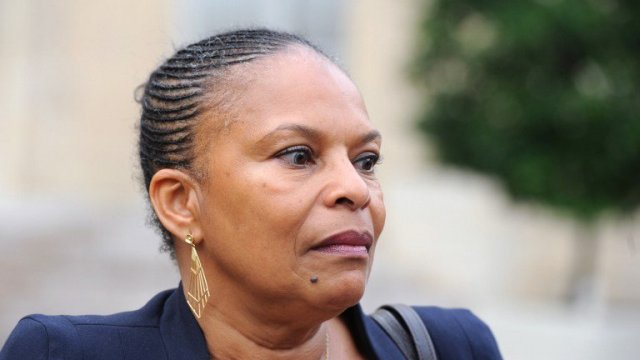
“Is France Racist?” That was the recent headline in a leading French newspaper, after a far-right magazine compared the country’s black justice minister to a monkey. The incident has triggered self-reflection in France, where the far-right National Front party is ahead is some polls, and figures show a 23-percent rise in reported racist incidents last year.
The front cover of the far-right magazine Minute earlier this month depicted Justice Minister Christiane Taubira with a caption that read: “Clever as a monkey, Taubira gets her banana back” – a play on the French slang for smile.
A Paris court has opened an inquiry into the publication.
Deputy Education Minister George Pau-Langevin described it as an attack on French values. She said she thinks all French people care about the republic because it was built on the rejection of discrimination and racism, and on the equality of all people. That’s why everything that goes against those fundamental principles of the republic harms the republic itself.
Christiane Taubira – who is from French Guiana, an overseas department of France – has been subjected to a series of racial slurs, including being compared to a chimpanzee by a candidate for the right-wing National Front. Taubira said she fears a threat to France’s social cohesion.
There has been a recent change of tone in public debate, said Rainbow Murray, an expert in right-wing French politics at Queen Mary University of London. “There’s always been an underlying racism in France shown by the difficulty in ethnic minority people finding employment. But there’s been perhaps more willingness to express that racism openly in recent months.”
Some observers trace France’s current racial tension back to 2005, when riots occurred in the suburbs of Paris and other cities. Former president Nicolas Sarkozy, then France’s interior minister, described the rioters as “racaille” or scum – crossing a rhetorical line in describing the primarily immigrant communities.
Murray said France has never properly integrated its large immigrant communities. “One thing that’s unique about France compared to the UK and the U.S. and similar examples, is that they’re not multiculturalist. They’re integrationalist. So they deny the existence of difference even when it’s really there. And because of that they don’t have explicit policies capable of coping with race. They don’t even acknowledge race in census data.”
Author and blogger Priscilla Lalisse-Jespersen, an American from Alabama who moved to Paris with her French husband, traces the rise in racism to France’s economic woes. She spoke to VOA via Skype. “Unemployment is rising. The president’s approval is dropping steadily; he’s right now the most unpopular president in French history. France is also afraid of globalization, and they also have a national identity crisis.”
President Francois Hollande has condemned the attacks on Taubira. Rights groups accuse him of a lukewarm reaction – and warn that taboos over public displays of racism are collapsing. – Voice of America
The Edinburgh Festival is not the kind of place that tends to attract giggling groupies – but then it has never featured a comedian quite like Trevor Noah.
Not only was he mobbed by gaggles of signature-hungry fans after his debut dates there last year, he has, since then, become the first South African comedian to appear on The Tonight Show.
He also has a unique story to tell: the son of a black Xhosa mother and white Swiss-German father, Noah was ‘born a crime’ under the apartheid regime.
‘But I was lucky growing up,’ says the warm, softly spoken 29-year-old, ‘I was always allowed to question. Some kids were not afforded that luxury. I’m not an angry person by nature. It’s easier to be an abrasive comedian, to be very in-your-face, but I find disarming is more fun. I feel you can get more across if people are laughing with you.
Which is why, even though Noah’s show is called The Racist, white people needn’t be afraid of sitting in the front row when he takes it on tour around Britain next week.
‘I would love everyone to come,’ he says. ‘Everyone in history has some sort of link to racism, somewhere. I guess, in recent history, white people have had the most notoriety when it comes to racism. But funnily enough, racism is almost not a colour thing, but a people thing – people will always find something to be racist about.
‘As the world becomes more and more PC, we don’t tell each other how we really feel – but people are surprised how similar we all are, in terms of what we’re thinking. I live for those moments where I feel like, “ooh, I’m pushing my luck here”.’
The Racist sees Noah go on a journey of identity by attempting to re-invent himself as a black American (the coolest kind of black, in his eyes). It’s a tight, smart, astute show, with Noah oozing charisma.
Even though he seems a natural talent, Noah had to learn his craft his own way. With comedy practically banned in South Africa while he was growing up (‘the first time I watched any was Eddie Murphy on DVD, when I was about 20’), he looked closer to home for inspiration.
‘I definitely get my sense of humour from my mum,’ he smiles. ‘She is wild, she’s crazy, she’s a storyteller. And she laughs a lot.’
He worked as radio and TV host in his home country before focusing on comedy. In 2011, he was taken under Eddie Izzard’s wing after the legendary Europhile spotted Noah (who had ‘no clue who Izzard was’) performing at London’s Comedy Store. Izzard went on to produce Noah’s subsequent, storming stints in Edinburgh and London last year.
‘Stand-up in the UK is a very old art form,’ notes Noah. ‘It’s a very cultured comedy society, and very calmed down.
In South Africa, on the other hand, it has only been legal since the start of democracy, so there’s still a huge excitement – it’s very big, very boisterous.’
Now, Noah says, the country has a thriving, evolving comedy scene. ‘There’s a sense of belief now. The comedy is growing with the country, which is good – we are learning what free speech means. We haven’t gotten to the level of PC yet, so it’s still very raw and unrefined, which is great to watch and be a part of.’
Noah hopes that South Africa’s government leaders start thinking as progressively. ‘There’s still a lot of fixing to be done,’ he says, ‘but we’re waiting for a time when politics is less defined by race and history, and more about what the country needs going forward.’
Whatever the future has in store for South Africa, Noah’s looks glittering – but he’s also taking things as they come. ‘I never make plans that are definitive,’ he says. ‘The only plan is to be the best comedian I can be and to enjoy it. I feel that everything that comes after that is a blessing, a bonus. If I can pay my bills, live a good life and make people laugh while doing that, what more could you ask for?’
Trevor Noah’s British tour begins at Warwick Arts Centre on Nov 26. www.trevornoah.com – metrro.co.uk
Ah, the tenets of Libthink, one of which is that anyone opposed to the policies of one President Obama is, by definition, a racist.
A second is that only whites can be racist. Another is that no black person, anywhere, at any time and under any circumstances, can be a racist.
And now, courtesy of none other than Oprah Winfrey, those white racists need to die for America to enter racial Shangri La.
Oprah’s on a tour. She was recently in Great Britain to promote her movie “Lee Daniels’ The Butler.”
A correspondent for the BBC asked her if she felt that racism was the reason some Americans opposed Obama and his policies. Oprah, the one person responsible, more than any other, for Obama being president, of course said yes.
But she said much more than that. Specifically, she said this when asked if the problem of racism in America had been solved:
“Of course the problem [of racism] is not solved. … As long as there are people who still— there’s a whole generation — I say this, you know, I said this, you know, for apartheid, South Africa, I said this for my own, you know, for my own community in the South — there are still generations of people, older people, who were born and bred and marinated in it, in that prejudice and racism, and they just have to die.”
In one quick, thoughtless breath, Oprah added another tenet to Libthink: Not only are all racists white, but they also need to “just die,” every last one of them.
Once all those old, white racists “who were born and bred and marinated in it” have died, then America will be forever purged of racism.
Make that “white racism,” and remember, according to Libthink doctrine, that’s the only racism worth mentioning.
The racism that blacks might hold for non-blacks, that Latinos might hold for non-Latinos and that Asians might hold for non-Asians won’t go away of course, no matter how much adherents of Libthink doctrine might wish it were so.
There will continue to be the attacks that black thugs make against white victims, some of which (if not all) have to be at least partially motivated by race.
That black vs. Latino racist conflict won’t end after all those old white folks “bred and marinated in racism” die.
Said conflict has been going on for years. You might have seen an episode about it on Oprah’s show when it was on the air.
What’s that? You never heard about what happened to Cheryl Green on Oprah’s show? Well, there might be a reason for that.
Oprah, her brain steeped in Libthink as it is, probably didn’t figure this tale of Latino-on-black violence was worth doing a show about.
Green was only 14 years old when a Latino gang member fatally shot her in the Harbor Gateway area of Los Angeles on Dec. 15, 2006.
Four years later, Jonathan Fajardo was found guilty of Green’s murder. He was also found guilty of a hate crime, which means Green’s murder was racially motivated.
This wasn’t a murder carried out by some old, “bred and marinated”-in-racism white person Oprah holds in such disdain. At the time of Green’s murder, Fajardo, a Latino man, was only 18 years old.
So Oprah’s notion that racism is the exclusive worldview of the old and the white appears to be utter nonsense.
In the early 1990s, a Korean-American named Joel Lee was fatally shot on the streets of Baltimore.
Witnesses identified a distinctly not old and distinctly not white African American male as the shooter. At his trial, witnesses also told of the utter hatred he had for Asians.
A predominantly black jury acquitted him. In spite of Oprah’s delusions, racism won’t end once all those old, “bred and marinated in racism” whites die.
Gregory Kane, a Washington Examiner columnist, is a Pulitzer Prize-nominated news and opinion journalist who has covered people and politics from Baltimore to the Sudan.
Did you know that eating or even talking about a peanut butter and jelly sandwich could be considered racist?
That’s right.
Apparently, it’s because people in some cultures don’t eat sandwich bread. Verenice Gutierrez, principal of Harvey Scott K-8 School in Portland explained in and interview with the Portland Tribune:
“Take the peanut butter sandwich, a seemingly innocent example a teacher used in a lesson last school year,” the Tribune said.
“What about Somali or Hispanic students, who might not eat sandwiches?” Gutierrez asked. “Another way would be to say: ‘Americans eat peanut butter and jelly, do you have anything like that?’ Let them tell you. Maybe they eat torta. Or pita.”
…The Tribune noted that the school started the new year with “intensive staff trainings, frequent staff meetings, classroom observations and other initiatives,” to help educators understand their own “white privilege,” in order to “change their teaching practices to boost minority students’ performance.””Last Wednesday, the first day of the school year for staff, for example, the first item of business for teachers at Scott School was to have a Courageous Conversation — to examine a news article and discuss the ‘white privilege’ it conveys,” the Tribune added.
Gutierrez completed a week-long seminar called “Coaching for Educational Equity,” a program the Tribune says focuses “on race and how it affects life.” She also serves on an administrative committee that focuses on systematic racism.
“Our focus school and our Superintendent’s mandate that we improve education for students of color, particularly Black and Brown boys, will provide us with many opportunities to use the protocols of Courageous Conversations in data teams, team meetings, staff meetings, and conversations amongst one another,” she said in a letter to staff.
Next time you’re in the bread aisle at the grocery store, you may want to think twice. Sensitive liberal educators are now recommending the “torta” or the “pita” as a more culturally inclusive alternative.
Now that you’ve been made aware of the evil of PB&J, there’s only one question left to answer: Is white bread more racist than whole wheat? -thecollegefix.com
“Every action has an equal but opposite reaction” – Sir Isaac Newton
In life, actions (physical or otherwise) also have reactions. Somehow, an unknown number of actions, reactions and re-reactions got us to where we are today, causing this RedOctober march, the allegations of white genocide and outrage over farm murders. A large section of social media describes these activists and supporters as racists, without questioning how we got to this point. I’ll attempt to apply Stephen Covey’s 5th Habit of Highly Successful People, “Seek first to understand, then to be understood”, so doing some research before shouting insults and proclaiming these people to be racists.
Crime
I’ve written numerous articles about crime on this country, so I’ve done a lot of research. Hopefully all the readers will know that we are the crime capital of the world. If you need reminding, here’s our wall of shame, 1994 to 2012:
376,627 reported murders (57 per day)
597,900 reported homicides (91 per day)
443,551 reported attempted murders (67 per day)
4,175,178 reported serious assaults (635 per day)
1,111,425 reported rapes (169 per day)
22,228,500 estimated rapes (3,383 per day)
Our crime is at crisis levels, no doubt, and with these high levels it’s impossible that every region, race, sex, group, religion etc is not affected.
Hate crime vs normal crime
It seems that a large number of RedOctober detractors are using the “crime affects all” reasoning for shooting down RedOctober. With the extreme levels of crime in our country it would be easy for hate crime to be hidden in the enormous sea of crime that taking place. Taking this “crime affects us all” approach would mean denying the existence of hate crime, which is absurd. Besides the fact that hate crime is difficult to identify, quantify and prove there is an obvious difference between hate crime and normal crime. The latter lacks the element of hatred by the perpetrator(s) towards the victim(s) and the level of violence is often exaggerated. I never really thought about how the psychological effects would vary, so I did some research. According to research, hate crimes have more serious psychological effects than other crime. Also, survivors of hate crime show more signs of psychological distress than survivors of non-biased crime and this distress was found to last longer in hate crime survivors due to the fact that the crime leaves lasting feelings of personal danger and vulnerability associated with their identity. A high level of outrage would thus make sense, as members of the victim’s group would feel this same personal danger and vulnerability that the victim felt.
So we’ve seen outrage by Afrikaner groups over social media, we’ve seen the RedOctober march taking place, all against farm murders in particular. While these Afrikaners may speak a different language to us, be a different colour to the majority of the country, have different interests and cultures, they are not immune to the same feelings of vulnerability and persecution that all other groups affected by hate crimes feel. In other words, they are also human. The next big question would then be: Are these feelings of vulnerability and persecution, which is causing their reaction of outrage, justified or merely perceived?
These activists present a long list (thousands) of victims murdered on their farms in interracial murders, and they claim that the murder rate on farms is far higher than the national average. Now without going into the actual numbers, because I feel they are irrelevant for purposes of this discussion, I’d like to make a few points:
A number like this can create a perception
The aggravating circumstances surrounding these attacks strengthens the perception
However, proving hate crime on an individual basis is near impossible, as will be further discussed in the next paragraph, which can strengthen critics’ claims that the perception is false
Proving and prosecuting hate crime
South Africa is set to bring into law the Hate Crimes Bill in 2014. Long overdue to say the least, the Bill is set to address how hate crime is tried and prosecuted. What may be a first for our country is old news for many first world countries like the USA, which has several hate crimes statutes. But even with all their legislation, they have serious challenges in proving that a crime is hate crime, especially proving racial motives. The (US) Journal of Criminal Law and Criminology contains a discussion as to why this difficulty exists, and these same reasons are relevant in our context.
“The fact that an individual’s motive lies peculiarly within his or her knowledge undermines the ability of prosecutors and plaintiffs to prove racist motives in hate crimes cases”
So without the accused’s own admission, it is virtually impossible to prove hate crime. Prosecutors will have to rely on circumstantial evidence. Other difficulties in proving motive are:
“Inferences about motive which are drawn from circumstantial evidence may be highly inaccurate given the inherent ambiguity of motive itself” – The defendant may have acted out of paranoia rather than racism
“Multiple motives may impel an individual to act” – The defendant may claim that he or she acted out of some other motivation
To sum up the document: “Prosecutors often find it impossible to demonstrate by proof beyond a reasonable doubt that the accused acted out of racist motives”. These are the exact same problems that RedOctober activists like Steve Hofmeyr face when pushing their cause, and the exact same problem our courts will face when the Hate Crimes Bill comes into force.
There are cases that pop up which are undoubtedly hate crime such as the Rawstorne family murder by William Kekana, who testified that he brutally wiped out the family “because they were white”, or the Lotter women murders where the perpetrators left behind their motive, “Kill the Boer” daubed in the victims’ blood. These cases further strengthen the perception that many other farm murders have a racial motive behind them but these cases are generally ignored by critics. Activists thus have an uphill battle to prove hate crime when motive is so difficult to prove for the vast majority of cases. But although the motives behind hate crime are almost impossible to prove in court, it is very successfully proven outside of court.
The media and social media commentators (SMC’s)
In most cases of interracial violence and cases involving violence against minorities, the media and SMC’s are quick to attach a motive to the crime, classifying the crime as a hate crime. These accusations are deemed to be true by consumers as if the motive was actually proven in a court of law. Also, the media and SMC’s tend to be very inconsistent when classifying crimes as hate crimes, creating the impression amongst some that they are biased or trying to censor. To give an example:
A recent case of a horrific rape and murder of a lesbian. The media and SMC’s immediately classified the crime as a corrective rape hate crime, although no anti-gay motive was obtained from the perpetrator. The motive was assumed because the victim was lesbian and due to the aggravating circumstances.
A recent case of a brutal torture and murder of an elderly farm couple. Although this was an interracial crime and aggravating circumstances existed, the media and SMC’s declined to attach a racial motive to the crime.
When the latter is called a “racist farm murder” or “white genocide”, critics are quick to claim “crime affects all”, “we have a high murder rate so obviously these farmers will be murdered” and “farmers are more vulnerable because they are isolated” etc. Then why is it that when a lesbian is raped it’s called “corrective rape”? Doesn’t “crime affect us all”? When we have over 3000 rapes per day isn’t it obvious that lesbians will also be victims of rape? Are lesbians not vulnerable because men are usually more powerful and often hunt their victims in packs? Yet both cases are not treated the same.
Pure double standards in my book and most probably one of the reasons why the likes of Steve Hofmeyr go to extreme lengths to protest and create awareness regarding farm murders and white genocide.
White genocide
Just to touch on the main misconceptions about genocide:
Numbers don’t matter. According to the definition of genocide, “an individual criminal may be guilty of genocide even if he kills only one person, so long as he knew he was participating in a larger plan to destroy the group [or part of a group]”.
It only takes ONE individual to kill ONE person, if that individual knew he was participating in a larger plan to destroy the people. That means that if only ONE individual interprets a statement like “Shoot the Boer” by his commander and chief for instance, to be an order to commit genocide and acts on it, that individual will be guilty of committing genocide, plain and simple.
There are indicators that genocide could be happening on a larger scale, for example, widespread rape, torture and executions of Afrikaners on their farms, with perpetrators stealing few or no valuables. However the existence of an organised plan to commit genocide is unknown and will be extremely difficult to prove. Regardless, individuals can be perpetrators of genocide by definition. In the two cases I mentioned before, the Rawstorne family and the Lotters, it can easily be debated that these are cases of genocide. After a healthy debate, you will at best prove that these cases are racist hate crimes, which I’m afraid is not much worse than genocide.
Conclusion
There are a high number of Afrikaners being murdered on their farms. Often there is rape and torture involved and in many cases nothing is stolen. There are numerous death threats posted on Facebook, Twitter and even at political rallies, mostly directed at this group. On top of this, there are cases where the racist motive cannot be denied. Although few of these cases exist, they further strengthen the perception that farm murders in general are racially motivated and that white genocide may exist. There is clear evidence for the Afrikaner minority group to feel vulnerable and threatened and it appears that their fears and outrage of unjustly treated by the media, social media commentators and even the government. Besides the compelling evidence in their favour, even their human nature is criticised and they are persecuted for this.
Oprah Winfrey, one of the wealthiest people in the world, is throwing the race card again.
During an interview with the BBC Friday, she not only said that President Obama is treated with disrespect because he’s black, but also that entire generations of white racists are going to have to die for racism to end
WILL GOMPERTZ, BBC: The issue of the civil rights movement, and the way that black people around the world are treated, particularly I suppose in, around the world…
OPRAH WINFREY: Around the world.
GOMPERTZ: Around the world. Look at place like Russia, it’s, you know…
WINFREY: Around the world.
GOMPERTZ: So is this, is this, I suppose from a movie point of view, what the movie and the messages hold and the other movies we were discussing, and “Scottsboro Boys,” are these historical comments or are we still looking at a contemporary issue?
WINFREY: Good question. Well phrased. Good job. It would be foolish to not recognize that we have evolved in that we’re not still facing the same kind of terrorism against black people en masse as was displayed with the Scottsboro boys. It’s gotten better. Are there still places where people are terrorized because of the color of their skin, because of the color of their black skin? Yes. But there are laws that have allowed us to progress beyond what we saw in the Scottsboro boys and beyond the even the prejudice we see in “The Butler.”
Notice that Winfrey added “color of their black skin.” Why not just leave it as “color of their skin?”
Why do folks such as her only see racism through the prism of how blacks are treated? By looking at the problem so narrowly, doesn’t it make matters worse?
The US is by far the most diverse nation in the world containing more ethnic and religious groups than any other on the planet.
Likely each of them has at times rightly or wrongly felt mistreated for the color of their skin or their religious beliefs.
When we as a nation look at this problem more honestly and not just as it pertains to one group, racism will have a chance of being solved.
Unfortunately, Winfrey has another solution:
GOMPERTZ: Are you saying problem solved?
WINFREY: I’m saying problem not solved. I’m saying that, you know, that’s the beauty of a film like “The Butler,” and it’s the beauty of a film like “12 Years a Slave,” and it’s the beauty of what we’re seeing on stage with “Scottsboro Boys” is that it allows people to see where the root of the problem started. It allows people to see, “Oh, that’s where it all started, this is how far we’ve come, and now this is how much farther we need to go.” Of course problem is not solved. You know, as long as people can be judged by the color of their skin, problem’s not solved. As long as there are people who still, there’s a whole generation – I say this, you know, I said this, you know, for apartheid South Africa, I said this for my own, you know, community in the south – there are still generations of people, older white people, who were born and bred and marinated in it, in that prejudice and racism, and they just have to die.
So in Winfrey’s view, it’s older white people that are the problem, and once they die, racism ends.
Yet three months ago, she said of the George Zimmerman verdict, “It’s ridiculous to look at that case and not to think that race was involved.”
Zimmerman’s only 30 years old and is Hispanic.
It is patently absurd to suggest that racism is caused by old white people when racism and religious bigotry cut across all generations and ethnicities.
But folks such as Winfrey don’t want to look at it that way, for they have a different agenda:
GOMPERTZ: Do you think, has it ever crossed your mind that some of the treatment of Obama and the challenges he’s faced and some of the reporting he’s received is because he’s an African-American, and if he wasn’t an African-American, if he was a white guy, those wouldn’t have happened, he wouldn’t have been treated in quite the same way, he wouldn’t have to deal with quite the same confrontations?
Some question, huh? You’d think Obama was the first president to ever have challenges and confrontations. Was Gompertz on another planet when George W. Bush was regularly being attacked by his opponents?
With the race card nicely placed on the tee, Winfrey predictably hit it a long way:
WINFREY: Has it ever crossed my mind? It’s crossed my mind probably as many times as it’s crossed your mind. Probably it’s crossed my mind more times than it’s crossed your mind. Just the level of disrespect. When the Senator yelled out, “You’re a liar.” Remember that? Yeah, I think that there is a level of disrespect for the office that occurs, and that occurs in some cases and maybe even many cases because he’s African-American.
What Winfrey conveniently ignores is that she endorsed and campaigned for Obama BECAUSE he was an African-American. He wouldn’t have gotten her support or been elected if he wasn’t.
More importantly, if he was just some white guy from Chicago that nobody had ever heard of, he never would have beaten Hillary Clinton in 2008.
How sad that she forgets that.
But that’s not the saddest part about folks like Winfrey throwing the race card this way.
What’s sadder is that as an African-American woman that has attained a level of success and notoriety greater than 99.99 percent of the people that have or ever will walk on this planet, she could be a positive role model concerning racism rather than helping to fuel it.
Why doesn’t someone of Winfrey’s obvious intellectual prowess understand that?
Imagine how much better it would have been for all Americans including blacks if she answered Gompertz’s racially charged question this way:
Is some of the treatment of Obama because he’s an African-American? Maybe some. But I think that’s exaggerated. The President of the United States is the most powerful person on the planet receiving greater scrutiny than any other. As a result, he’s challenged by people on both sides of the aisle, and that’s a good thing because it acts to prevent him or her from becoming too powerful.
Unlike other nations, our President is not a king or dictator, and although many claim the treatment of Obama is harsher because he’s black, I would say that for the most part, he isn’t being treated any differently than George W. Bush before him or Bill Clinton before him. In fact, I would make the case that because he’s black, he’s been treated far better by most of the media than any President in my lifetime.
So let’s not be so quick to throw the race card all because Obama has his critics. That comes with the territory, and if you don’t have big enough shoulders to take the hits, you should have never campaigned for the job.
Imagine the headlines and the positive example Winfrey could have set by telling people the truth.
Is that just too difficult for her? Doesn’t she know that every time she dishonestly throws the race card, she’s undermining a solution?
Oh. That’s right. Her solution is that generations of racists have to die to solve the problem.
Unfortunately, with folks like her out there fanning the fires of discontent, they’re inculcating new generations with racist thoughts thereby making it necessary for A LOT of generations to die off before this problem ever gets solved.
Oprah Winfrey is going around the world telling everyone that Americans are racist while she promotes her new race-baiting film.
Oprah Winfrey has been a prominent supporter of Barack Obama. She thinks that both he and the Office of President have been treated with contempt because of the colour of his skin.
“There’s a level of disrespect for the office that occurs. And that occurs in some cases and maybe even many cases because he’s African American. There’s no question about that and it’s the kind of thing nobody ever says but everybody’s thinking it.”
Meanwhile Senators have dug up new report of an Obamacare failure so dismal it is hard to believe.
Among four major insurance companies, a total of only five people have enrolled in the president’s health plan in Washington, D.C.
Delaware reported only four people had enrolled in Obamacare as of Tuesday, even though the state used a $4 million grant to hire four community organizations to provide marketplace guides. That worked out to $1 million spent on each enrollee.
The worst numbers from any state to report is actually just a single number, as in the number one. Just one person has reportedly enrolled in Obamacare in North Carolina. And even that person is technically still not enrolled, having yet to pay. So, zero people enrolled in Obamacare as of Oct. 15.
This website uses cookies to improve your experience. We'll assume you're ok with this, but you can opt-out if you wish. Cookie settingsACCEPT
Privacy & Cookies Policy
Privacy Overview
This website uses cookies to improve your experience while you navigate through the website. Out of these cookies, the cookies that are categorized as necessary are stored on your browser as they are essential for the working of basic functionalities of the website. We also use third-party cookies that help us analyze and understand how you use this website. These cookies will be stored in your browser only with your consent. You also have the option to opt-out of these cookies. But opting out of some of these cookies may have an effect on your browsing experience.
Necessary cookies are absolutely essential for the website to function properly. This category only includes cookies that ensures basic functionalities and security features of the website. These cookies do not store any personal information.
Any cookies that may not be particularly necessary for the website to function and is used specifically to collect user personal data via analytics, ads, other embedded contents are termed as non-necessary cookies. It is mandatory to procure user consent prior to running these cookies on your website.


 The Obama administration is urging schools to abandon policies that civil rights advocates say “lead to a school-to-prison pipeline that discriminates against black students”.