A tale of two Marylands: Western Maryland and the rest of the state. Fed up with high taxes and gun control, some people want to break away and go it alone.
Mary Bubala explains why they’re trying to form their own state.
There’s a storm brewing over the beautiful mountains and valleys of Western Maryland. More and more people in those five counties say Governor Martin O’Malley is out of touch and they want to break away from the rest of the state.
“I can’t imagine Maryland without Western Maryland,” said Governor Martin O’Malley.
“Do you actually care about your citizens?” questioned Rob Parr.
“I certainly don’t live in a bubble and I go around the state all the time,” O’Malley said.
“Why don’t you want to listen to people that you don’t agree with?” said Suzanne Olden.
“I spend my whole day listening,” O’Malley said.
Scott Strzelczyk, Suzanne Olden and Rob Parr are part of a growing group that wants to rip Maryland in two, creating the nation’s 51st state. They met recently at O’Lordan’s Irish Pub in Westminster to tell WJZ they’re fed up with politics as usual in Annapolis.
“If your vote doesn’t count, it’s the same as having no vote. We’re not free,” Strzelczyk said. “We’re doing exactly what they did in 1776. I just simply want to live as a free human being with limited government intrusion in my life and that’s really why I do this.”
They claim Maryland’s lawmakers don’t listen to their concerns so they want to form a state more in sync with their beliefs.
“I’ve gone down to Annapolis. I’ve complained; I’ve been in rallies,” said Parr. “It all falls on deaf ears.”
“The attitude is sit down, shut up, we don’t care what you think,” said Olden.
“We are enslaved to this government in Maryland that we want nothing to do with. All we simply want to do is peacefully leave,” Strzelczyk said.
“It’s a free country. People are allowed to express those opinions but we’re one Maryland and we’re stronger together,” O’Malley said.
Maryland isn’t the only state where frustrated citizens want to break away. It’s happening in Colorado, California, Arizona and Michigan.
“Republican counties are becoming more emphatically Republican; Democratic counties are becoming more emphatically Democratic, which means the divisions between Republican and Democratic counties are becoming all the more sharp,” said Johns Hopkins University professor Matthew Crenson.
Now the movement here is picking up steam. More than 8,000 people like the Facebook page for the Western Maryland Initiative and more than a thousand have signed petitions–but could they really form a new state?
“This is a peaceful way to resolve irreconcilable differences,” Strzelczyk said. “Lots of people out there feel like there is no recourse, there is no hope.”
But they know their chances of success are slim to none.
“Maryland’s my home. I was born here. It’s my home,” Olden said.
“If we leave and other people come in our place, buy our homes or whatever the case, these problems still exist,” Strzelczyk said.
“A diversity of perspectives and a diversity of people. That’s what makes us one Maryland,” O’Malley said.
“Why would anyone want to deny us our right of self-determination when that’s the basis of how all our governments are formed in this country? Why would anyone want to deny us that?” Strzelczyk said.
The Western Maryland Initiative is still working on a name for its proposed state. So far, the choices include Liberty, Antietam and Augusta.
A popular gifted-student program at a New York City elementary school is getting the ax after school officials decided it lacked diversity.
PS 139 Principal Mary McDonald told parents in a letter Jan. 24 that Students of Academic Rigor, or SOAR, would no longer accept applications for incoming kindergartners, the New York Daily News reported.
“Our Kindergarten classes will be heterogeneously grouped to reflect the diversity of our student body and the community we live in,” Miss McDonald said in the letter posted on Flickr.com.
One parent described SOAR as largely white.
Another conceded that the program had a lot of white students, but worried gifted students now won’t be challenged enough.
“Where are they going to put the higher-level students? Sometimes, there are different levels, and teachers can’t handle all the levels in one class,” she told the Daily News.
In a follow-up letter sent to parents Monday, Miss McDonald wrote: “At PS 193, we believe that all children can learn and achieve high standards. We also know that we want all children at PS 193 to have equal access to high quality, challenging curriculum, and to have ample opportunities to master complex material and build academic and personal self-confidence. We also want our classes to reflect the diversity of our community. We believe we can have both: classrooms characterized by rigor and diversity.”
The following are extracts from a speech by the then British foreign secretary, Robin Cook, to the Social Market Foundation in London during April 2001 in which he defines Britain as a multicultural country, with chicken tikka masala as its national dish. These extracts were published in The Guardian newspaper on 19 April 2011.
Tonight I want to celebrate Britishness. As Foreign Secretary I see every day the importance of our relations with foreign countries to the strength of our economy, to the security of our nation, to the safety of our people against organised crime, even to the health of our environment. A globalised world demands more foreign contacts than even Britain has experienced in the past.
I also know that we are likely to make our way more successfully in the world if we are secure in our British identity, and confident about its future. That security and confidence is important for the inner strength it gives us in our conduct of business with others. I want to argue the case why we can be confident about the strength and the future of British identity.
Sadly, it has become fashionable for some to argue that British identity is under siege, perhaps even in a state of terminal decline. The threat is said to come in three forms.
First, the arrival of immigrants who, allegedly, do not share our cultural values and who fail to support the England cricket team. Few dare to state this case explicitly, but it is the unmistakable subliminal message.
Second, our continued membership of the European Union, which is said to be absorbing member states into a country called Europe.
Third, the devolution of power to Scotland, Wales and Northern Ireland, which is seen as a step to the break-up of the UK.
This evening, I want to set out the reasons for being optimistic about the future of Britain and Britishness. Indeed, I want to go further and argue that in each of the areas where the pessimists identify a threat, we should instead see developments that will strengthen and renew British identity.
Multicultural Britain
The first element in the debate about the future of Britishness is the changing ethnic composition of the British people themselves. The British are not a race, but a gathering of countless different races and communities, the vast majority of which were not indigenous to these islands.
In the pre-industrial era, when transport and communications were often easier by sea than by land, Britain was unusually open to external influence; first through foreign invasion, then, after Britain achieved naval supremacy, through commerce and imperial expansion. It is not their purity that makes the British unique, but the sheer pluralism of their ancestry.
London was first established as the capital of a Celtic Britain by Romans from Italy. They were in turn driven out by Saxons and Angles from Germany. The great cathedrals of this land were built mostly by Norman Bishops, but the religion practised in them was secured by the succession of a Dutch Prince. Outside our Parliament, Richard the Lionheart proudly sits astride his steed. A symbol of British courage and defiance. Yet he spoke French much of his life and depended on the Jewish community of England to put up the ransom that freed him from prison.
The idea that Britain was a pure Anglo-Saxon society before the arrival of communities from the Caribbean, Asia and Africa is fantasy. But if this view of British identity is false to our past, it is false to our future too. The global era has produced population movements of a breadth and richness without parallel in history.
Todays London is a perfect hub of the globe. It is home to over 30 ethnic communities of at least 10,000 residents each. In this city tonight, over 300 languages will be spoken by families over their evening meal at home.
This pluralism is not a burden we must reluctantly accept. It is an immense asset that contributes to the cultural and economic vitality of our nation.
Legitimate immigration is the necessary and unavoidable result of economic success, which generates a demand for labour faster than can be met by the birth-rate of a modern developed country. Every country needs firm but fair immigration laws. There is no more evil business than trafficking in human beings and nothing corrodes social cohesion worse than a furtive underground of illegal migrants beyond legal protection against exploitation. But we must also create an open and inclusive society that welcomes incomers for their contribution to our growth and prosperity. Our measures to attract specialists in information technology is a good example.
Our cultural diversity is one of the reasons why Britain continues to be the preferred location for multinational companies setting up in Europe. The national airline of a major European country has recently relocated its booking operation to London precisely because of the linguistic variety of the staff whom it can recruit here.
And it isn’t just our economy that has been enriched by the arrival of new communities. Our lifestyles and cultural horizons have also been broadened in the process. This point is perhaps more readily understood by young Britons, who are more open to new influences and more likely to have been educated in a multi-ethnic environment. But it reaches into every aspect of our national life.
Chicken Tikka Massala is now a true British national dish, not only because it is the most popular, but because it is a perfect illustration of the way Britain absorbs and adapts external influences. Chicken Tikka is an Indian dish. The Massala sauce was added to satisfy the desire of British people to have their meat served in gravy.
Coming to terms with multiculturalism as a positive force for our economy and society will have significant implications for our understanding of Britishness.
The modern notion of national identity cannot be based on race and ethnicity, but must be based on shared ideals and aspirations. Some of the most successful countries in the modern world, such as the United States and Canada, are immigrant societies. Their experience shows how cultural diversity, allied to a shared concept of equal citizenship, can be a source of enormous strength. We should draw inspiration from their experience.
Britishness and European integration
To deny that Britain is European is to deny both our geography and our history. Our culture, our security, and our prosperity, are inseparable from the continent of Europe.
Underlying the anti-European case is the belief that there is an alternative future available to Britain. It used to be argued that the European Union is not Europe and that Britain could exist perfectly comfortably as one of a number of European countries maintaining a loose association with Brussels. But with the majority of non-EU states now clamouring for full membership, the changing geopolitics of Europe have consigned that argument to the past.
Some anti-Europeans now argue that Britain’s destiny lies outside Europe, as part of the English-speaking world and a member of NAFTA.
Yet Britain trades three times more with the rest of the EU than we do with NAFTA. The reason why over four thousand US companies have located here is because they want to export to Europe. If they only wanted to sell to NAFTA, they would have stayed at home.
Europe is where our domestic quality of life is most directly at stake, whether the issue is environmental standards, the fight against organised crime, policy on asylum or stability on the continent.
But it is not simply a question of economic and political realism that ties Britain to Europe, compelling as those arguments are. Britain is also a European country in the more profound sense of sharing European assumptions about how society should be organised. The last international survey of social attitudes put Britain squarely within the European mainstream on our approach to social justice and public services, such as health.
There are strong ties of kinship between Britain and North America. These are an immense asset to us in the modern world. The US and the UK are each others closest allies. But our value as an ally to our friends in Washington is in direct proportion to our influence with our partners in Europe.
I do not accept that to acknowledge our European identity diminishes our Britishness. Nor do I accept that membership of the European Union is a threat to our national identity.
None of our European partners, with their own proud national traditions, seem afflicted by this self-doubt and insecurity. The idea that the French, the Germans or the Spanish are attempting to erase their national identities by constructing a country called Europe is the mother of all Euromyths. On the contrary, our partners see their membership of a successful European Union as underwriting, not undermining, their assertion of national identity.
For France, Germany and Italy, the European Community was central to the renewal of their nations and the regeneration of their economies in the post-War period. To Spain, Portugal and Greece, joining the European Community was an affirmation of their freedom from fascism and a guarantee of a democratic future. To Austria and Finland, joining the European Community was a celebration of the end of the Cold War, which enabled them to make a free choice in their national orientation.
The same is true of the dozen new candidates for membership from the former communist bloc. All of them aspire to membership of the European Union because it will be an affirmation of their regained independence. None of them see it as a threat to their national identity.
Ireland joined at the same time as Britain. Its period of membership has transformed Ireland into a country with a dynamic economy and a cosmopolitan society. The result has been a new assertiveness of national identity, and confidence in their culture. We can see that for ourselves in Britain through the new affection for Irish music and dance, and the attachment to Irish pubs.
Britain has everything to gain from being a leading partner in a strong Europe. All we have to lose is the timidity which prevents us from embracing our European destiny and from recognising that it is a source of confidence in our nations future.
In the aftermath of Nice, it is clearer than ever that a strong Europe requires strong nations. With the accession of up to twelve new member states, the European Union is set to become even more diverse. In the next Inter-Governmental Conference, the challenge is to find the right balance between European and national decision-making and to enhance the EU’s legitimacy by harnessing the democratic traditions of its member states.
This is a debate that Britain can play a pivotal role in shaping. But we can only do so if we reject insular nationalism and the politics of fear by engaging fully and confidently in Europe.
Britishness and devolution
The last of the three perceived threats to Britishness is the new flexibility in our modern constitution.
The devolution of power to Scotland, Wales and Northern Ireland will stand the test of time as one of this Governments most radical and significant achievements. The creation of a Scottish Parliament and Welsh Assembly allows both nations to choose the policies that are right for them through their own democratic structures. In Northern Ireland, devolution was needed for a different reason – to enable the communities of a divided society to share power and to work together to build a common future. In all three cases, I am convinced that our reforms were essential.
Let us put to bed the scare stories about devolution leading to the Death of Britain. Devolution has been a success for Scotland and for Wales, but it has also been a success for Britain. The votes for devolution in the referendums were not votes for separation. They were votes to remain in the United Kingdom with a new constitutional settlement. By recognising the United Kingdoms diversity, devolution has guaranteed its future. It is striking that today opinion polls in Scotland show that support for separation from the rest of Britain is lower than at the time of the referendum four years ago.
Centuries of living together and working together have created enduring bonds between each of the constituent nations that make up Britain. Our future together in a single state is all the more secure if we each respect the distinctive identity that makes some of us Scottish and others Welsh or English. That mutual respect strengthens our common identity as British.
Our peoples already practise this subsidiarity of identity in their expressions of sporting loyalty. They watch Scotland, England, Wales or Northern Ireland at football. They cheer for the British team in the Olympics. And they support Europe at golf in the Ryder Cup. In context, each is a valid expression of our identity.
We should not fear the consequences of applying this principle in political life. In Scotland, the legal and educational systems are important expressions of Scottishness. At a British level, there is a strong attachment to institutions such as the National Health Service, the BBC and the armed forces. In Europe, we work with fourteen other nations to build the Single Market and to use our joint strength in trade negotiations. Action at one level does not invalidate our commitment to work at the other levels. On the contrary, they reinforce each other.
I get impatient when I see opinion polls that ask respondents whether they feel more Scottish or English than British, or more British than European, as if these choices were mutually exclusive. Identity is not a finite substance to be shared out between competing loyalties. It embraces numerous dimensions, each of which serves to amplify and reinforce the others.
Conclusion
In our thousand years of history, the homogeneity of British identity that some people assume to be the norm was confined to a relatively brief period. It lasted from the Victorian era of imperial expansion to the aftermath of the Second World War and depended on the unifying force of those two extraordinary experiences. The diversity of modern Britain expressed through devolution and multiculturalism is more consistent with the historical experience of our islands.
Far from making Britishness redundant, it makes the need for a shared framework of values and institutions all the more relevant. To act as a unifying force, that framework must be one that reflects the realities of contemporary Britain.
It is natural for every nation to be proud of its identity. We should be proud to be British. But we should be proud of the real Britain of the modern age.
Proud that the strength of the British character reflects the influences of the many different communities who have made their home here over the centuries. Proud that openness, mutual respect and generosity of spirit are essential British values.
We should be proud that those British values have made Britain a successful multi-ethnic society. We should welcome that pluralism as a unique asset for Britain in a modern world where our prosperity, our security and our influence depend on the health of our relations with other peoples around the globe.
Tolerance is important, but it is not enough. We should celebrate the enormous contribution of the many communities in Britain to strengthening our economy, to supporting our public services, and to enriching our culture and cuisine. And we should recognise that its diversity is part of the reason why Britain is a great place to live.
The United States Department of Housing and Urban Development (HUD) is a Cabinet department in the Executive branch of the United States federal government.
To ensure that “every American is able to choose to live in a community they feel proud of,” HUD has published a new fair-housing regulation intended to give people access to better neighborhoods than the ones they currently live in.
The goal is to help communities understand “fair housing barriers” and “establish clear goals” for “improving integrated living patterns and overcoming historic patterns of segregation.”
“This proposed rule represents a 21st century approach to fair housing, a step forward to ensuring that every American is able to choose to live in a community they feel proud of–where they have a fair shot at reaching their full potential in life,” said HUD Secretary Shaun Donovan.
“For the first time ever,” Donovan added, “HUD will provide data for every neighborhood in the country, detailing the access African American, Latino, Asian, and other communities have to local assets, including schools, jobs, transportation, and other important neighborhood resources that can play a role in helping people move into the middle class.”
According to HUD, long-term solutions include “helping people gain access to different neighborhoods and channeling investments into under-served areas.” The mapping tool may guide development and zoning decisions, for example.
In a July 16 speech to the NAACP, Donovan said the American Dream still isn’t within equal reach of all communities. He lamented the lack of diversity in America’s boardrooms, schools, and the nation’s “strongest neighborhoods.”
Donovan said HUD’s new neighborhood mapping tool, which uses Census data, will “expand access to high opportunity neighborhoods and draw attention to investment possibilities in under-served communities.”
“Make no mistake, this is a big deal,” Donovan said. “With the HUD budget alone, we are talking about billions of dollars. And as you know, decades ago, these funds were used to support discrimination. Now, they will be used to expand opportunity and bring communities closer to the American Dream.”
Under the proposed rule, the neighborhood data provided by HUD will be used to evaluate patterns of integration and segregation, racial and ethnic concentrations of poverty, and access to “valuable community assets.” HUD wants to know if existing laws and policies–such as zoning, financing, infrastructure planning and transportation–create, perpetuate or alleviate segregation. – CNS News
It seems increasingly popular to speak of racial and ethnic diversity as a civic strength. From multicultural festivals to pronouncements from political leaders, the message is the same: our differences make us stronger.
But a massive new study, based on detailed interviews of nearly 30,000 people across America, has concluded just the opposite. Harvard political scientist Robert Putnam — famous for “Bowling Alone,” his 2000 book on declining civic engagement — has found that the greater the diversity in a community, the fewer people vote and the less they volunteer, the less they give to charity and work on community projects. In the most diverse communities, neighbors trust one another about half as much as they do in the most homogenous settings. The study, the largest ever on civic engagement in America, found that virtually all measures of civic health are lower in more diverse settings.
“The extent of the effect is shocking,” says Scott Page, a University of Michigan political scientist.
The study comes at a time when the future of the American melting pot is the focus of intense political debate, from immigration to race-based admissions to schools, and it poses challenges to advocates on all sides of the issues. The study is already being cited by some conservatives as proof of the harm large-scale immigration causes to the nation’s social fabric. But with demographic trends already pushing the nation inexorably toward greater diversity, the real question may yet lie ahead: how to handle the unsettling social changes that Putnam’s research predicts.
“We can’t ignore the findings,” says Ali Noorani, executive director of the Massachusetts Immigrant and Refugee Advocacy Coalition. “The big question we have to ask ourselves is, what do we do about it; what are the next steps?”
The study is part of a fascinating new portrait of diversity emerging from recent scholarship. Diversity, it shows, makes us uncomfortable — but discomfort, it turns out, isn’t always a bad thing. Unease with differences helps explain why teams of engineers from different cultures may be ideally suited to solve a vexing problem. Culture clashes can produce a dynamic give-and-take, generating a solution that may have eluded a group of people with more similar backgrounds and approaches. At the same time, though, Putnam’s work adds to a growing body of research indicating that more diverse populations seem to extend themselves less on behalf of collective needs and goals.
His findings on the downsides of diversity have also posed a challenge for Putnam, a liberal academic whose own values put him squarely in the pro-diversity camp. Suddenly finding himself the bearer of bad news, Putnam has struggled with how to present his work. He gathered the initial raw data in 2000 and issued a press release the following year outlining the results. He then spent several years testing other possible explanations.
When he finally published a detailed scholarly analysis in June in the journal Scandinavian Political Studies, he faced criticism for straying from data into advocacy. His paper argues strongly that the negative effects of diversity can be remedied, and says history suggests that ethnic diversity may eventually fade as a sharp line of social demarcation.
“Having aligned himself with the central planners intent on sustaining such social engineering, Putnam concludes the facts with a stern pep talk,” wrote conservative commentator Ilana Mercer, in a recent Orange County Register op-ed titled “Greater diversity equals more misery.”
Putnam has long staked out ground as both a researcher and a civic player, someone willing to describe social problems and then have a hand in addressing them. He says social science should be “simultaneously rigorous and relevant,” meeting high research standards while also “speaking to concerns of our fellow citizens.” But on a topic as charged as ethnicity and race, Putnam worries that many people hear only what they want to.
“It would be unfortunate if a politically correct progressivism were to deny the reality of the challenge to social solidarity posed by diversity,” he writes in the new report. “It would be equally unfortunate if an ahistorical and ethnocentric conservatism were to deny that addressing that challenge is both feasible and desirable.”
. . .
Putnam is the nation’s premier guru of civic engagement. After studying civic life in Italy in the 1970s and 1980s, Putnam turned his attention to the US, publishing an influential journal article on civic engagement in 1995 that he expanded five years later into the best-selling “Bowling Alone.” The book sounded a national wake-up call on what Putnam called a sharp drop in civic connections among Americans. It won him audiences with presidents Bill Clinton and George W. Bush, and made him one of the country’s best known social scientists.
Putnam claims the US has experienced a pronounced decline in “social capital,” a term he helped popularize. Social capital refers to the social networks — whether friendships or religious congregations or neighborhood associations — that he says are key indicators of civic well-being. When social capital is high, says Putnam, communities are better places to live. Neighborhoods are safer; people are healthier; and more citizens vote.
The results of his new study come from a survey Putnam directed among residents in 41 US communities, including Boston. Residents were sorted into the four principal categories used by the US Census: black, white, Hispanic, and Asian. They were asked how much they trusted their neighbors and those of each racial category, and questioned about a long list of civic attitudes and practices, including their views on local government, their involvement in community projects, and their friendships. What emerged in more diverse communities was a bleak picture of civic desolation, affecting everything from political engagement to the state of social ties.
Putnam knew he had provocative findings on his hands. He worried about coming under some of the same liberal attacks that greeted Daniel Patrick Moynihan’s landmark 1965 report on the social costs associated with the breakdown of the black family. There is always the risk of being pilloried as the bearer of “an inconvenient truth,” says Putnam.
After releasing the initial results in 2001, Putnam says he spent time “kicking the tires really hard” to be sure the study had it right. Putnam realized, for instance, that more diverse communities tended to be larger, have greater income ranges, higher crime rates, and more mobility among their residents — all factors that could depress social capital independent of any impact ethnic diversity might have.
“People would say, ‘I bet you forgot about X,'” Putnam says of the string of suggestions from colleagues. “There were 20 or 30 X’s.”
But even after statistically taking them all into account, the connection remained strong: Higher diversity meant lower social capital. In his findings, Putnam writes that those in more diverse communities tend to “distrust their neighbors, regardless of the color of their skin, to withdraw even from close friends, to expect the worst from their community and its leaders, to volunteer less, give less to charity and work on community projects less often, to register to vote less, to agitate for social reform more but have less faith that they can actually make a difference, and to huddle unhappily in front of the television.”
“People living in ethnically diverse settings appear to ‘hunker down’ — that is, to pull in like a turtle,” Putnam writes.
In documenting that hunkering down, Putnam challenged the two dominant schools of thought on ethnic and racial diversity, the “contact” theory and the “conflict” theory. Under the contact theory, more time spent with those of other backgrounds leads to greater understanding and harmony between groups. Under the conflict theory, that proximity produces tension and discord.
Putnam’s findings reject both theories. In more diverse communities, he says, there were neither great bonds formed across group lines nor heightened ethnic tensions, but a general civic malaise. And in perhaps the most surprising result of all, levels of trust were not only lower between groups in more diverse settings, but even among members of the same group.
“Diversity, at least in the short run,” he writes, “seems to bring out the turtle in all of us.”
The overall findings may be jarring during a time when it’s become commonplace to sing the praises of diverse communities, but researchers in the field say they shouldn’t be.
“It’s an important addition to a growing body of evidence on the challenges created by diversity,” says Harvard economist Edward Glaeser.
In a recent study, Glaeser and colleague Alberto Alesina demonstrated that roughly half the difference in social welfare spending between the US and Europe — Europe spends far more — can be attributed to the greater ethnic diversity of the US population. Glaeser says lower national social welfare spending in the US is a “macro” version of the decreased civic engagement Putnam found in more diverse communities within the country.
Economists Matthew Kahn of UCLA and Dora Costa of MIT reviewed 15 recent studies in a 2003 paper, all of which linked diversity with lower levels of social capital. Greater ethnic diversity was linked, for example, to lower school funding, census response rates, and trust in others. Kahn and Costa’s own research documented higher desertion rates in the Civil War among Union Army soldiers serving in companies whose soldiers varied more by age, occupation, and birthplace.
Birds of different feathers may sometimes flock together, but they are also less likely to look out for one another. “Everyone is a little self-conscious that this is not politically correct stuff,” says Kahn.
. . .
So how to explain New York, London, Rio de Janiero, Los Angeles — the great melting-pot cities that drive the world’s creative and financial economies?
The image of civic lassitude dragging down more diverse communities is at odds with the vigor often associated with urban centers, where ethnic diversity is greatest. It turns out there is a flip side to the discomfort diversity can cause. If ethnic diversity, at least in the short run, is a liability for social connectedness, a parallel line of emerging research suggests it can be a big asset when it comes to driving productivity and innovation. In high-skill workplace settings, says Scott Page, the University of Michigan political scientist, the different ways of thinking among people from different cultures can be a boon.
“Because they see the world and think about the world differently than you, that’s challenging,” says Page, author of “The Difference: How the Power of Diversity Creates Better Groups, Firms, Schools, and Societies.” “But by hanging out with people different than you, you’re likely to get more insights. Diverse teams tend to be more productive.”
In other words, those in more diverse communities may do more bowling alone, but the creative tensions unleashed by those differences in the workplace may vault those same places to the cutting edge of the economy and of creative culture.
Page calls it the “diversity paradox.” He thinks the contrasting positive and negative effects of diversity can coexist in communities, but “there’s got to be a limit.” If civic engagement falls off too far, he says, it’s easy to imagine the positive effects of diversity beginning to wane as well. “That’s what’s unsettling about his findings,” Page says of Putnam’s new work.
Meanwhile, by drawing a portrait of civic engagement in which more homogeneous communities seem much healthier, some of Putnam’s worst fears about how his results could be used have been realized. A stream of conservative commentary has begun — from places like the Manhattan Institute and “The American Conservative” — highlighting the harm the study suggests will come from large-scale immigration. But Putnam says he’s also received hundreds of complimentary emails laced with bigoted language. “It certainly is not pleasant when David Duke’s website hails me as the guy who found out racism is good,” he says.
In the final quarter of his paper, Putnam puts the diversity challenge in a broader context by describing how social identity can change over time. Experience shows that social divisions can eventually give way to “more encompassing identities” that create a “new, more capacious sense of ‘we,'” he writes.
Growing up in the 1950s in a small Midwestern town, Putnam knew the religion of virtually every member of his high school graduating class because, he says, such information was crucial to the question of “who was a possible mate or date.” The importance of marrying within one’s faith, he says, has largely faded since then, at least among many mainline Protestants, Catholics, and Jews.
While acknowledging that racial and ethnic divisions may prove more stubborn, Putnam argues that such examples bode well for the long-term prospects for social capital in a multiethnic America.
In his paper, Putnam cites the work done by Page and others, and uses it to help frame his conclusion that increasing diversity in America is not only inevitable, but ultimately valuable and enriching. As for smoothing over the divisions that hinder civic engagement, Putnam argues that Americans can help that process along through targeted efforts. He suggests expanding support for English-language instruction and investing in community centers and other places that allow for “meaningful interaction across ethnic lines.”
Some critics have found his prescriptions underwhelming. And in offering ideas for mitigating his findings, Putnam has drawn scorn for stepping out of the role of dispassionate researcher. “You’re just supposed to tell your peers what you found,” says John Leo, senior fellow at the Manhattan Institute, a conservative think tank. “I don’t expect academics to fret about these matters.”
But fretting about the state of American civic health is exactly what Putnam has spent more than a decade doing. While continuing to research questions involving social capital, he has directed the Saguaro Seminar, a project he started at Harvard’s Kennedy School of Government that promotes efforts throughout the country to increase civic connections in communities.
“Social scientists are both scientists and citizens,” says Alan Wolfe, director of the Boisi Center for Religion and American Public Life at Boston College, who sees nothing wrong in Putnam’s efforts to affect some of the phenomena he studies.
Wolfe says what is unusual is that Putnam has published findings as a social scientist that are not the ones he would have wished for as a civic leader. There are plenty of social scientists, says Wolfe, who never produce research results at odds with their own worldview.
“The problem too often,” says Wolfe, “is people are never uncomfortable about their findings.”
Michael Jonas is acting editor of CommonWealth magazine, published by MassINC, a nonpartisan public-policy think tank in Boston.
Congressional Black Caucus Chairwoman Marcia L. Fudge is escalating her campaign to urge President Barack Obama to pick African Americans for his cabinet, publicly releasing a letter that slams the first black president for a lack of diversity among his closest advisers.
“The people you have chosen to appoint in this new term have hardly been reflective of this country’s diversity,” the Ohio Democrat said in the March 11 letter.
Fudge adds that CBC members’ offices have received phone calls from angry constituents questioning why Obama hasn’t nominated anyone with the ability “to speak to the unique needs of African Americans. Their ire is compounded by the overwhelming support you’ve received from the African American community.”
By releasing the letter, Fudge is escalating a campaign by the CBC to push Obama on his cabinet diversity and continuing to demonstrate her willingness to push Obama aggressively to embrace her group’s priorities.
The Ohio Democrat previously moved to promote three CBC members for open Cabinet positions, highlighting a long-standing sore spot in the relationship between the CBC and the president, who was a member of the group during his one Senate term.
Obama, in turn, dispatched top aide Valerie Jarrett for her first Capitol Hill meeting of the second term to meet with the CBC for a State of the Union preview and listening session with members.
White House officials have assured CBC leaders that they will be pleased with future decisions. But Fudge apparently has lost patience, hence the letter Monday.
In the letter to Obama, Fudge said the CBC “looks forward to meeting with you to discuss this and other pressing issues.” CBC spokeswoman Ayofemi Kirby said a meeting with Obama has been requested, but no answer has yet come back from the White House.
Privately, the relationship between Obama and the CBC has been complicated for a long time, with members complaining about social snubs and Obama’s reluctance to address the high black unemployment rate head on.
The rift over Obama’s Cabinet is a case in point. For example, there was some jealousy in Obama’s first term that a member of the Congressional Hispanic Caucus, then-Rep. Hilda L. Solis, D-Calif., was chosen to lead the Labor Department but that no member of the CBC was even vetted for a Cabinet slot. Rep. Sanford D. Bishop Jr. of Georgia was discussed for Agriculture secretary but not formally vetted. – Roll Call Staff
More than 200 people visited Towson University to hear Jared Taylor, a self-described “racial realist.”
A prospective White Student Union at Towson University added to its own controversial history when it brought an advocate for white interests to speak Tuesday at the group’s first meeting.
Jared Taylor, editor of the “racial realism” online news site American Renaissance, said he hoped to spread a message about the importance of racial separateness.
“I believe in complete freedom of association, and when given that choice most people prefer the company of people of their own race,” said Taylor, when reached by phone Wednesday. “We’re always being told to celebrate diversity and I think diversity is a source of tension.”
Many people, including a Patch reporter and other media, were denied admission to the Tuesday night event by campus security after the venue, which holds about 200, filled to capacity. Still, about 50 individuals stood outside the doors as Taylor spoke.
Taylor said his presentation centered around his support for the White Student Union and speaking out against diversity. He acknowledged that the audience reception was lukewarm—”some liked it, some didn’t.”
The White Student Union began recruiting members at Towson University a few months ago.This occurred shortly after Youth for Western Civilization, a group headed by current White Student Union President Matthew Heimbach, disbanded following allegations that its members scrawled “white pride” in chalk at locations around campus.
Youth for Western Civilization’s faculty advisor Richard Vatz, who is also a Patch blogger, resigned from his post after the chalk-writing incident, noting in his resignation letter that he “cannot in good conscience advise a group that attacks people or groups personally or tactlessly or does not recognize their dignity and the value of dignified argument in the marketplace of ideas.”
Heimbach, who did not return calls for comment on this article, previously said both groups were about celebrating white heritage and advocating for white interests, not supremacy.
“It’s a spectacular double standard that only whites are singled out and told they can’t have a race-based organization,” said Taylor, who argued that the group is necessary as demographics change making whites a minority.
Taylor said he presented evidence showing problems raised by diversity, such as data indicating that approximately 100,000 job grievances are related to racial matters. He also pointed to racial riots that occur in prisons. Taylor empathized with whites who felt the need to join gangs in prison because he said there are many black and Hispanic gangs existing outside of prison whose networks extend to jails.
But he did admit there was one benefit to diversity.
“I do enjoy ethnic food,” he said.
Many attendees were not impressed with Taylor’s presentation.
During his speech, Taylor said several people sneaked inside the venue through a fire escape and shouted an obscenity at him. Gay Pinder, a Towson University spokeswoman who was in attendance, said she just heard one person yell at the end of the presentation. She said the individual left through the rear door immediately after making the proclamation.
“It was generally a well-behaved crowd,” Pinder said.
Raymond Winbush, the director of The Institute for Urban Research at Morgan State University, said the presentation was deceptive.
“[Taylor’s] lying,” said Winbush, who is black. “He’s good at manipulating words and says he’s not racist. It’s like the white collar Ku Klux Klan.”
Towson University senior Ignacio Evans, who is also black, thought Taylor was well-spoken but called his speech “absolutely disgusting.”
“He was eloquent, put together, but inherently racist,” Evans said. “He was very anti-diversity and made assertions that people of color are inferior.”
Taylor dismissed the claims of racism as “name-calling.”
“[Calling someone racist is] something someone will say when they don’t have an argument,” he said.
Frankie Knight, a white senior family science student who didn’t know much about the White Student Union, came to the meeting after hearing about it from her professor.
“I thought it was very negative and very offensive,” she said.
Knight and Evans both noted that Taylor said blacks are genetically inferior. He denied making the statement.
“I have said the races are different….there are unquestionable differences,” Taylor said.
And Taylor was not without supporters. Johns Hopkins University engineering professor Dennis Nagle, who is white, said he believes there is truth to Taylor’s teachings.
“He’s got some interesting views on diversity that aren’t popular,” said Nagle, who was not able to get inside the event. “But he’s got evidence and documentation to back it up.”
The White Student Union is not a university-recognized student organization, but the group’s leaders are working to make it approved. Because they don’t yet have that status, the White Student Union had to book the Towson University venue for the presentation as an outside entity. – TowsonPatch
The next news item is unremarkable. “The U.S. government,” reports Fox News, “paid a Chicago consultant hundreds of thousands of dollars to put on diversity training workshops that, according to one watchdog, included an exercise in which employees were told to chant ‘our forefathers were illegal immigrants.’”
What do you expect from “the U.S. government”? It’s a criminal gang out to erase every vestige of a history that might rekindle in a pliant people the quest for freedom. The government, and its excrescences, do these things reflexively rather than as a matter of collusion and conspiracy. Like a big amorphous amoeba—a simple, single-celled organism—government will instinctively act to preserve its own integrity.
The people to condemn in his story are the “Conservative group Judicial Watch.” While we are grateful to JW for uncovering the bestialities of bureaucrats—in the substance of their complaint, they are almost as complicit as government. They complain that,
“Instead of being diversity-oriented or tolerance-oriented, it’s more about adopting a mindset,” said Lisette Garcia, a senior investigator with the group.
Garcia of Judicial Watch is quite fine with the government conducting mind-control workshops on taxpayers’ dime, so long as these indoctrination sessions transmit true “diversity and tolerance,” as promised.
What kind of a conservatism is this? The watchdogs are worse than the dogs in power (my apologies to dogs). At least the people who dreamed up the “diversity intelligence advantage course” know what they are after. What do Garcia and her friends want?
A truly conservative watch dog would, first, object to the unconstitutional appropriation of taxpayer funds. Second, they would reject the diversity doxology. Americans should not relinquish their birthright for a mess of pottage.
The settlers spilt their own blood “in acquiring lands for their settlement,” he wrote with pride in A Summary View of the Rights of British America. “For themselves they fought, for themselves they conquered, and for themselves alone they have right to hold.” Thus they were “entitled to govern those lands and themselves.”
In a video obtained exclusively by The Daily Caller, then-presidential candidate Barack Obama tells an audience of black ministers, including the Rev. Jeremiah Wright, that the U.S. government shortchanged Hurricane Katrina victims because of racism.
“The people down in New Orleans they don’t care about as much!” Obama shouts in the video, which was shot in June of 2007 at Hampton University in Virginia. By contrast, survivors of Sept. 11 and Hurricane Andrew received generous amounts of aid, Obama explains. The reason? Unlike residents of majority-black New Orleans, the federal government considers those victims “part of the American family.”
The racially charged and at times angry speech undermines Obama’s carefully-crafted image as a leader eager to build bridges between ethnic groups. For nearly 40 minutes, using an accent he almost never adopts in public, Obama describes a racist, zero-sum society, in which the white majority profits by exploiting black America. The mostly black audience shouts in agreement. The effect is closer to an Al Sharpton rally than a conventional campaign event.
Obama gave the speech in the middle of a hotly-contested presidential primary season, but his remarks escaped scrutiny. Reporters in the room seem to have missed or ignored his most controversial statements. The liberal blogger Andrew Sullivan linked to what he described as a “transcript” of the speech, which turned out not to be a transcript at all, but instead the prepared remarks provided by the campaign. In fact, Obama, who was not using a teleprompter, deviated from his script repeatedly and at length, ad libbing lines that he does not appear to have used before any other audience during his presidential run. A local newspaper posted a series of video clips of the speech, but left out key portions. No complete video of the Hampton speech was widely released.
Obama begins his address with “a special shout out” to Jeremiah Wright, the Chicago pastor who nearly derailed Obama’s campaign months later when his sermons attacking Israel and America and accusing the U.S. government of “inventing the HIV virus as a means of genocide against people of color” became public. To the audience at Hampton, Obama describes Wright as, “my pastor, the guy who puts up with me, counsels me, listens to my wife complain about me. He’s a friend and a great leader. Not just in Chicago, but all across the country.”
By the time Obama appeared at Hampton, Jeremiah Wright had become a political problem. Wright told The New York Times earlier that year that he would no longer be speaking on the campaign’s behalf because his rhetoric was considered too militant. And yet later in the Hampton speech Obama explicitly defends Wright from unnamed critics, a group he describes as “they”: “They had stories about Trinity United Church of Christ, because we talked about black people in church: ‘Oh, that might be a separatist church,’” Obama said mockingly.
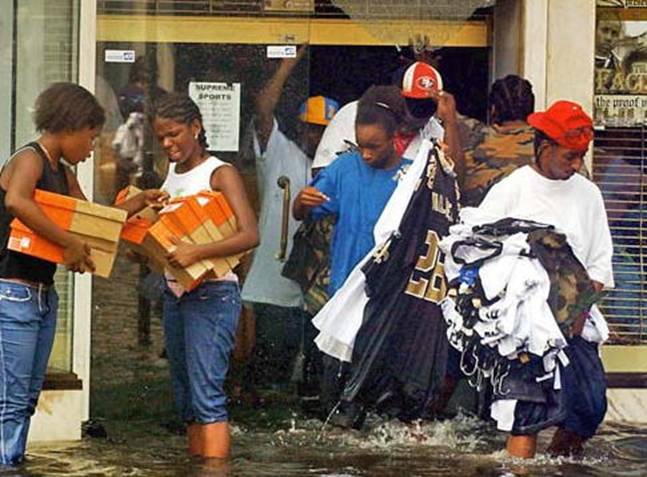
There was an article in the US World Report regarding the orderly behavior of the Japanese citizens and the absence of looting after the earthquake, tsunami and nuclear nightmare.
Social scientists were baffled by the total non-existence of looting and savage behavior in Japan considering the magnitude of this catastrophe. They conferred with human study organizations as well as sociology experts throughout the United States. Japan lacks diversity, was the conclusion.
This website uses cookies to improve your experience. We'll assume you're ok with this, but you can opt-out if you wish. Cookie settingsACCEPT
Privacy & Cookies Policy
Privacy Overview
This website uses cookies to improve your experience while you navigate through the website. Out of these cookies, the cookies that are categorized as necessary are stored on your browser as they are essential for the working of basic functionalities of the website. We also use third-party cookies that help us analyze and understand how you use this website. These cookies will be stored in your browser only with your consent. You also have the option to opt-out of these cookies. But opting out of some of these cookies may have an effect on your browsing experience.
Necessary cookies are absolutely essential for the website to function properly. This category only includes cookies that ensures basic functionalities and security features of the website. These cookies do not store any personal information.
Any cookies that may not be particularly necessary for the website to function and is used specifically to collect user personal data via analytics, ads, other embedded contents are termed as non-necessary cookies. It is mandatory to procure user consent prior to running these cookies on your website.


 A tale of two Marylands: Western Maryland and the rest of the state. Fed up with high taxes and gun control, some people want to break away and go it alone.