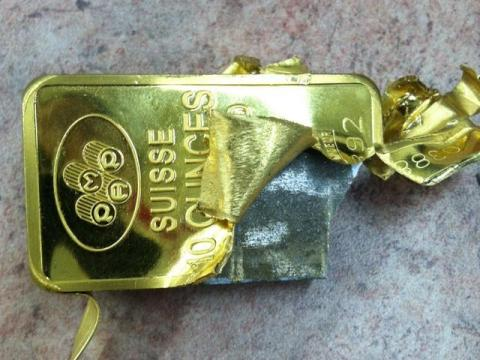
On Feb. 16, a Bank of America analyst announced that the global economy is giving out clear warning signs that the dollar is entering into serious trouble, which adds more credence to John Williams recent assertion that 2014 will be the year of a dollar panic.
Global financial and commodity markets are warning that the US Dollar is in for a bout of trouble, warns BofAML’s Macneil Curry. Across asset classes, Curry points out that Gold was the first to make its low against the US Dollar, doing so back on Dec-15. The second market to turn against the US Dollar was US Treasuries, with Ten year note futures turning bullish back on Dec-26. Currently, the FX market – most specifically GBP – is breaking out and pressuring the US Dollar. Finally, the Japanese stock market continues to suffer, putting downward pressure on USDJPY and thus US Dollar weakness. – Zerohedge
Over the past month, the dollar has fallen over 120 basis points (bps), from 81.30 to hovering just above 80 as economic weakness continues to place the currency at the forefront of financial backlash. In that same time, gold has climbed more than $100 from $1220 on Jan. 9, to now over $1324 on Feb. 16, validating the increasing cracks showing up in the dollars ability to hold global value.
Additionally, the dollar is dealing with a deteriorating economy in Japan, as well as a backlash from the emerging markets as hedge funds pull out their investments due to the Fed tapering their cheap money programs.
Nearly every alternative economist has put 2014 as the primary year for a crucial change in both the dollar, and its reserve currency status. And as the recession that never ended begins to pick up steam after so many years of cheap money infusion, chances continue to increase for the dollar to either collapse, or become persona non grata, to the rest of the world each passing day.
The dollar soared Thursday as global markets reeled from the US Federal Reserve’s signal it may start to taper its massive stimulus this year.
News of a cash crunch in China also sent jitters through the market, driving investors into the safe-have dollar.
The euro fell to $1.3223 around 2200 GMT from $1.3297 late Wednesday.
The dollar jumped against the Japanese currency, to 97.27 yen from 96.39 yen, while the euro rose to 128.62 yen from 128.24.
“The price action in the US dollar today confirms that yesterday’s Federal Reserve meeting marked a major turning point for the greenback,” said Kathy Lien of BK Asset Management.
Stock markets across the globe and commodity prices swooned after Federal Reserve Chairman Ben Bernanke said Wednesday that the central bank could begin to wind down its $85 billion-a-month stimulus program as early as this year if the US economy continues to improve.
Analysts said the markets focused on the timetable for the tapering instead of the Fed’s statement that any move is conditional on the economic outlook.
The world’s reserve currency also benefited from renewed concerns about slowing growth in China, the world’s second largest economy, after weak manufacturing data.
Lien noted that interbank overnight lending rates in China had spiked to a record high in a rise that began two weeks ago, but the central bank has refrained from injecting money into the system.
The situation was made worse by weakening economic data, she said.
“Now China finds itself in a liquidity crunch begging for the central bank to step in,” Lien said.
“The central bank however refuses to do because they want to punish speculators and are in the midst of reforming the economy but the longer they hold off, the more disruption it will have on China’s economy and the global financial markets.”
The dollar rose to 0.9275 Swiss franc from 0.9277 late Wednesday.
The pound, however, was stronger against the greenback, fetching $1.5501, up from $1.5483. – AFP
President Jacob Zuma denied on Thursday being responsible for the sharp decline in the value of the rand.
Responding to the Presidency Budget Vote debate, Zuma roasted opposition parties for linking his news briefing more than two weeks ago on the state of the economy to the depreciation of the rand, hours after he spoke.
“The fact is that markets were very volatile on the day of the media briefing on the economy,” Zuma said.
“Traders responded to news from the United States on quantitative easing, a form of very lax monetary policy in the United States. This led to the strengthening of the dollar,” said Zuma.
The rand plummeting was as a result of a stronger dollar and lower commodity prices.
Zuma conceded that labour unrest and the weak GDP would have added to the situation.
“There had been an expectation that growth would be between one and two percent. When the 0.9 percent growth figures were released, there was a sell-off of the rand,” he said.
Zuma warned opposition parties to steer clear of statements which could make matters worse.
Instead, parties should “put the country first” and work with the government to help build confidence in the economy.
The president said concerns in the mining sector, which has been hard hit by labour unrest, were being dealt with.
Deputy President Kgalema Motlanthe would meet players in the sector on Friday to discuss disputes in an attempt to bring an end to the instability.
While there appeared to be some recovery in the mining sector this year, following a tumultuous 2012, it was far from out of the woods.
“It is for this reason that we place a high premium on restoring stability in the mining sector.”
Zuma asked opposition parties to support the government’s efforts to broker a peace deal between unions in the sector.
“The bottom line is that we should exercise caution when dealing with such matters, and avoid uninformed or loose talk that may exacerbate the situation.”
The US dollar was beaten by major currencies in a week that saw extreme volatility, especially around the yen. Rate decisions in Japan and NZ, and US Federal Budget Balance, Retail Sales and inflation figures are the top events this week. Will this kind of market action continue? Here is an outlook on the main market-movers awaiting us.
The US economy gained 175K jobs in May, exceeding Analysts’ Forecast of a 167,000 job addition , following a series of weak readings.
Furthermore, this was the third straight month that payrolls increased less than 200,000, indicating the US job market is not strong enough to be turning the corner, especially in light of the government’s austerity measures, weighing in the economy.
This enabled only a partial recovery of the US dollar after a major crash, following the mediocre US data and the ECB decision: Draghi practically put the negative deposit rate on the backburner.
Standing out from the crowd were the New Zealand and Australian dollars. The Aussie dollar is getting close to critical support. – SAPA
For years now, the collapse of the dollar has been in the cards. Recent developments show mounting pressure on the dollar’s reserve currency status. With a major international deflation going on, the threat of inflation through money printing is unreal. However, should the dollar’s reserve currency status end, the repatriation of trillions of petro- and eurodollars could lead to a strongly inflationary scenario.
The roles of a reserve currency are to finance international trade and to function as a store of value for Governments. Until the second world war it used to be the British pound, but with the demise of the British Empire, the pound lost its international relevance and was overtaken by the dollar. This was formalized in the 1944 Bretton Woods system. All other currencies were fiat currencies, but pegged to the dollar, which in turn was pegged to Gold at 40 dollars an ounce and redeemable for international trading partners.
The Eurodollar
With the dollar as the reserve currency, the US had to export dollars. In the early years after the war especially for Europe, the famous Eurodollars. This sounds great: print money and buy whatever you like. But with the Gold window it was also risky: overprinting could mean excess dollars would be exchanged back to Gold, depleting US Gold reserves.
This was also a weakness that those annoyed with American Hegemony could exploit. In 1967 the leftist press mogul Jean-Jacques Servan-Schreiber penned a famous screed called ‘le défi Américain’ (the American challenge’), arguing Europe was being colonized economically by superior American competition.
France, at the time, was run by de Gaulle, who never was impressed with Anglo-American supremacy. He made a point of exchanging every dollar he could lay his hands on as a means to undermine it.
In the late sixties the situation got badly out of hand because of the Great Society and the Vietnam war, very costly projects that were deficit financed, leading to serious inflationary pressures. Inflation that the US tried to export, leading to an excess of dollars abroad. Especially the resurging Deutschmark’s appreciation became untenable. The Europeans started pressuring the US to fix its deficits, provoking the US Treasury Secretary John Connally famous cry ‘the dollar is our currency and your problem’.
But the situation had become unsustainable and Nixon was forced to close the Gold window to stop the depletion of US gold. This was the end of the Bretton Woods system and from then on the major currencies were floated freely in the international currency markets.
The Petrodollar
But it did not end the dollar reserve currency status, as the Empire had been found another basis for it: they reached an agreement with the House of Saud, to accept only dollars for its oil. The Sauds agreed to invest their dollar wealth on Wall Street, making the deal even more powerful for the Empire. Saudi Arabia controlled OPEC and the dollar was saved: international oil trading is financed with dollar only. Since then we have been on an informal Black Gold standard, known as the petrodollar.
This situation was better than before, because overprinting of the dollar for international trade or to finance all sorts Empire projects could no longer be punished by depleting Gold reserves and would result only in rising prices.
In the last decade the problem of over printing was solved by artificially raising oil prices through the Peak Oil hoax, and ending Iraqi oil production. It must be understood that the Empire is not looking for more oil production. There is so much oil in the world that should it be drilled for freely, it would end the Money Power’s energy monopoly. The Iraq invasion and the quest for control of the Middle-East is to keep a lid on oil production. Saddam’s suicidal decision to accept euro for his oil only hastened his demise.
Even today Iraqi oil production is not even half of what it was before 1991. With the Western Oil companies now in charge, it will most likely never fully recover. By raising the price for oil, the oil market has mopped up excess dollar supplies, which are now needed for the oil trade. As a result, the dollar has remained relatively stable in its value. Of course, it fits well with the agenda of decapitating the middle classes and under this agreement higher oil prices also means ever more oil profits invested in Wall Street.
Of course, the great boon of this for the Empire is that it can pay with worthless paper for real goods. It can eternally finance a major trade deficit.
Trade deficits are incorrectly understood as problematic.
From a nation’s point of view, the goal of trade is not to export, but to import. We export to give back for what we need from others. If you run the reserve currency, you don’t need to export as much as you import, because you can partially finance your imports with money printing. For all other nations this is impossible and trade deficits are lethal in the long run, as it leads to net capital outflow.
But the US Empire is in trouble. Its infrastructure is crumbling, its manufacturing base gone, it’s badly over extended. It needs ever more virulent threats to coerce the nations into dollar submission and just like Connally failed in 1971, the US is failing today. The Money Power is done with the Empire and the dollar and it is moving to the next phase. The dollar will have to step back and we are seeing a realignment.
The new currency order
China is moving towards a Gold backed yuan that will be very powerful in the international arena. Recently Australia, which is already completely dependent on China, with 30% of its exports going there, is preparing direct convertibility between the yuan and the Australian dollar, meaning they will no longer use US dollar to finance bilateral trade. This means less US dollars are needed in its reserve currency role.
In 2001 Goldman Sachs executive Jim O’Neill invented the BRIC’s. South Africa was later added, representing Africa and emphasizing its globalist agenda. Russia and China, as two powerful neighbors, obviously have long standing and important bilateral relations. But equally obviously, have little in common with Brazil, India and South Africa. India and China are actually sworn enemies. However, in 2009 they organized a first summit. Just a week ago we all of the sudden hear the BRICS are planning to open up a competitor to the IMF. They’re still working out the details and it’s not a done deal yet, but the move looks very serious.
And there is of course the euro, which, make no mistake, is in great shape. True, Eurocrat legitimacy is suffering because of the euro crisis, even in Germany the currency is losing support. But the euro crisis is purely for internal consumption, to sucker the nations into surrendering budget responsibility to Brussels. This is the final frontier for a full blown EU federalist Super State. While the euro is deeply hated, this is not really a problem for the Money Power: it isn’t in this business to make friends and it does not mind a big fight. It only fears real alternatives and these are nowhere to be seen. There is nobody proposing anything real, people are just letting off steam. Once they get their fiscal union, the crisis will quickly end. People have a short memory.
The euro was designed to be eventually backed by Gold and the ECB has enough of the stuff to be ready for the coming transition.
Conclusion
We are seeing the advent of the new currency order. There will be a number of more or less equal blocks: a dollar zone, a Yuan/BRICS zone and the euro, with the Yen and the Pound as lesser entities. These will later be able to converge to even more ‘cooperation’, in the Money Power’s relentless march towards World Currency.
These units will be at least partially Gold backed, implying long term deflationary pressures. Central Banks are buying Gold in major quantities, creating the interesting question why Gold prices have not risen in the last 18 months.
The problem for the United States will be to manage the transition. Trillions of dollars that will no longer be needed will have to be repatriated and this will lead to very strong inflationary pressures at home. It is unclear how the Fed is going to deal with that. It probably can’t. Furthermore, the US is probably in the worst of positions to deal with a new Gold standard. They claim to have 8,000 tonnes of Gold in Fort Knox, but nobody really believes that.
The hyperinflation scare that the Austrians have been promoting because of ‘money printing’ is ridiculous: we are in a stagflationary depression and prices are rising because of speculation, not because of excess money. But when the dollar loses its current status, long term price rises will become the norm.
I was the first to point out that the Federal Reserve was rigging all markets, not merely bond prices and interest rates, and that the Fed is rigging the bullion market in order to protect the US dollar’s exchange value, which is threatened by the Fed’s quantitative easing. With the Fed adding to the supply of dollars faster than the demand for dollars is increasing, the price or exchange value of the dollar is set up to fall.
A fall in the dollar’s exchange rate would push up import prices and, thereby, domestic inflation, and the Fed would lose control over interest rates. The bond market would collapse and with it the values of debt-related derivatives on the “banks too big too fail” balance sheets. The financial system would be in turmoil, and panic would reign.
Rapidly rising bullion prices were an indication of loss of confidence in the dollar and were signaling a drop in the dollar’s exchange rate. The Fed used naked shorts in the paper gold market to offset the price effect of a rising demand for bullion possession. Short sales that drive down the price trigger stop-loss orders that automatically lead to individual sales of bullion holdings once their loss limits are reached.
According to Andrew Maguire, on Friday, April 12, the Fed’s agents hit the market with 500 tons of naked shorts. Normally, a short is when an investor thinks the price of a stock or commodity is going to fall. He to sell the item in advance of the fall, pocket the money, and then buy the item back after it falls in price, thus making money on the short sale. If he doesn’t have the item, he borrows it from someone who does, putting up cash collateral equal to the current market price. Then he sells the item, waits for it to fall in price, buys it back at the lower price and returns it to the owner who returns his collateral. If enough shorts are sold, the result can be to drive down the market price.
A naked short is when the short seller does not have or borrow the item that he shorts, but sells shorts regardless. In the paper gold market, the participants are betting on gold prices and are content with the monetary payment. Therefore, generally, as participants are not interested in taking delivery of the gold, naked shorts do not need to be covered with the physical metal.
In other words, with naked shorts, no physical metal is actually sold.
People ask me how I know that the Fed is rigging the bullion price and seem surprised that anyone would think the Fed and its bullion bank agents would do such a thing, despite the public knowledge that the Fed is rigging the bond market and the banks with the Fed’s knowledge rigged the Libor rate. The answer is that the circumstantial evidence is powerful.
Consider the 500 tons of paper gold sold on Friday. Begin with the question, how many ounces is 500 tons? There are 2,000 pounds to one ton. 500 tons equal 1,000,000 pounds. There are 16 ounces to one pound, which comes to 16 million ounces of short sales on Friday.
Who has 16 million ounces of gold? At the beginning gold price that day of about $1,550, that comes to $24,800,000,000. Who has that kind of money?
What happens when 500 tons of gold sales are dumped on the market at one time or on one day? Correct, it drives the price down. Investors who want to get out of large positions would spread sales out over time so as not to lower their sales proceeds. The sale took gold down by about $73 per ounce. That means the seller or sellers lost up to $73 dollars 16 million times, or $1,168,000,000.
Who can afford to lose that kind of money? Only a central bank that can print it.
I believe that the authorities would like to drive the gold price down further and will, if they can, hit the gold market twice more next week and put gold at $1,400 per ounce or lower. The successive declines could perhaps spook individual holders of physical gold and result in actual net sales of physical gold as people reduced their
holdings of the metal.
However, bullion dealer Bill Haynes told kingworldnews.com that last Friday bullion purchasers among the public outpaced sellers by 50 to 1, and that the premiums over the spot price on gold and silver coins are the highest in decades. I myself checked with Gainesville Coins and was told that far more buyers than sellers had responded to the price drop.
Unless the authorities have the actual metal with which to back up the short selling, they could be met with demands for deliveries. Unable to cover the shorts with real metal, the scheme would be exposed.
Do the authorities have the metal with which to cover shorts? I do not know. However, knowledgeable dealers are suspicious. Some think that US physical stocks of gold were used up in sales in efforts to disrupt the rise in the gold price from $272 in December 2000 to $1,900 in 2011. They point to Germany’s recent request that the US return the German gold stored in the US, and to the US government’s reply that it would return the gold piecemeal over seven years. If the US has the gold, why not return it to Germany?
The clear implication is that the US cannot deliver the gold.
Andrew Maguire also reports that foreign central banks, especially China, are loading up on physical gold at the low prices made possible by the short selling. If central banks are using their dollar holdings to purchase bullion at bargain prices, the likely results will be pressure on the dollar’s exchange value and a declining market supply of physical bullion. In other words, by trying to protect the dollar from its quantitative easing policy, the Fed might be hastening the dollar’s demise.
Possibly the Fed fears a dollar crisis or derivative blowup is nearing and is trying to reset the gold/dollar price prior to the outbreak of trouble. If ill winds are forecast, the Fed might feel it is better positioned to deal with crisis if the price of bullion is lower and confidence in bullion as a refuge has been shaken.
In addition to short selling that is clearly intended to drive down the gold price, orchestration is also indicated by the advance announcements this month first from brokerage houses and then from Goldman Sachs that hedge funds and institutional investors would be selling their gold positions. The purpose of these announcements was to encourage individual investors to get out of gold before the big boys did. Does anyone believe that hedge funds and Wall Street would announce their sales in advance so the small fry can get out of gold at a higher price than they do?
If these advanced announcements are not orchestration, what are they?
I see the orchestrated effort to suppress the price of gold and silver as a sign that the authorities are frightened that trouble is brewing that they cannot control unless there is strong confidence in the dollar. Otherwise, what is the point of the heavy short selling and orchestrated announcements of gold sales in advance of the sales?
Paul Craig Roberts is a former Assistant Secretary of the Treasury for Economic Policy and associate editor of the Wall Street Journal. His latest book, The Failure of Laissez Faire Capitalism and is now available. http://www.paulcraigroberts.org/
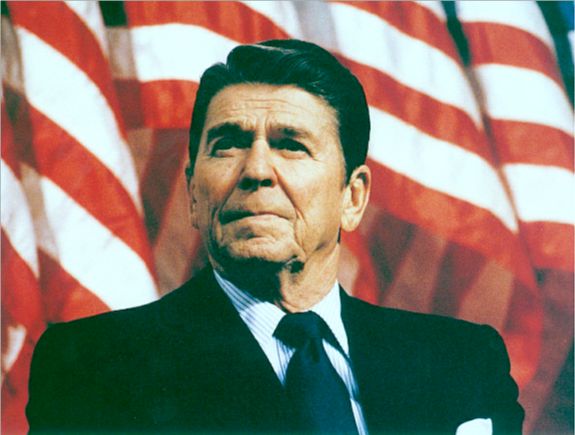
Pravda.Ru interviewed Paul Craig Roberts, an American economist, who served as an Assistant Secretary of the Treasury in the Reagan Administration and became a co-founder of Reaganomics – the economic policies promoted by the U.S. President Ronald Reagan during the 1980s. We asked Mr. Roberts to share his views about the current state of affairs inside and outside the United States.
Pravda.Ru: Mr. Roberts, you are known in Russia as the creator of Reaganomics, which helped the country overcome stagflation. What were the key aspects of that policy and how would you estimate its results today? Do you think your faith in free market has shattered?
Paul Craig Roberts: Free market means the freedom of price to adjust to supply and demand. It does not mean the absence of regulation of human behavior.
Reaganomics was a political word for supply-side economics, a new development in economic theory. In the post World War 2 western world, governments used Keynesian demand management economic policy to control inflation and to boost employment. John Maynard Keynes was the British economist who explained the Great Depression in the West as a consequence of insufficient aggregate demand to maintain full employment and stable prices.
Keynesian demand management relied on government budget deficits and easy monetary policy (money creation) to stimulate demand for goods and services. To control inflation from too much demand for goods and services, high tax rates were used to reduce disposable income.
The problem that developed is that the high tax rates on income made leisure inexpensive in terms of lost current earnings from not working, and made current consumption inexpensive in terms of lost future income from not saving and investing. In other words, high tax rates on income made leisure and current consumption cheap in terms of foregone present and future income. Thus, high tax rates on income depressed the supply of labor and capital.
Using the UK’s 98% tax rate on investment income (pre-Thatcher), the Nobel economist Milton Friedman illustrated the problem with this example. You are an Englishman with $100,000. Shall you invest it for future income, or shall you purchase a Rolls Royce and enjoy life? The true price of the Rolls Royce (or Bentley, or Ferrari or Maserati) is not the purchase price. The price of the exotic car is the foregone future income from not investing the $100,000.
Suppose you could earn 10% on the $100,000. That would be $10,000 per year as the cost of purchasing the luxury car. But after tax (98%) the car would only cost $200 per year, a very cheap price.
The same example works for labor and salary income. Because of the high marginal tax rates, many professionals such as medical doctors closed their practices on Fridays and went to the golf course.
By changing the policy mix, that is by tightening monetary policy and reducing marginal tax rates (the tax rate on increases in income), the supply-side economic policy of the Reagan administration caused aggregate supply to increase. Thus output expanded relative to demand, and inflation declined.
This supply-side policy was instrumental as Reagan’s first step toward ending the cold war with the Soviet Union. As long as the US economy was afflicted with stagflation–the simultaneous rise in both inflation and unemployment, the Soviet government saw capitalism failing along with communism. But when Reagan corrected the economic problem, it made the Soviet government unsure that it could withstand an arms race.
Reagan’s next step was to bring the Soviet government to the negotiating table to end the cold war. The cold war was an economic drain on both societies and always had the risk of a miscalculation that would result in nuclear war, wiping out life on earth. Gorbachev, an intelligent person aware of the risk, came to agreement with Reagan.
This was a great accomplishment for the Americans and for the Russians. Friendship and cooperation was now possible.
But it was not to last. Reagan’s successors took advantage of the good will between the countries that Reagan and Gorbachev had created to achieve American hegemony over the world.
Q: During the 80s, relying on the revived economic power of the United States, Ronald Reagan managed to convince the Soviet government to end the Cold War. All those agreements, as you believe, were destroyed by Reagan’s successors. Russia shares a completely different opinion about Reagan. The Russians think of him as the man, who resumed the arms race, designed the space shield and “cut out the cancer of communism” having won (or maybe bribed) Gorbachev over to his side for cooperation. Maybe one shouldn’t strike him out of the list of the authors of today’s American “idiotism?”
A: Reagan was not a member of the Republican Establishment. He defeated the Establishment’s candidate, George H. W. Bush (father of George W. Bush) for the Republican presidential nomination. By appealing to Democratic as well as Republican voters, Reagan had a great electoral victory. Reagan had two goals: one was to end stagflation, the other was to end the cold war. Hewas not much interested in anything else. The “arms race” and the “anti-ballistic missile defense–star wars” were never real. They were threats used to bring Gorbachev to negotiate the end of the cold war. Unlike the present Republican Party, Reagan wanted peace, not war.
I know this because when I succeeded in establishing the new economic policy that cured stagflation, President Reagan appointed me to a super-secret presidential committee that had subpoena power over the CIA.
The CIA opposed Reagan’s effort to end the cold war, as did the powerful military-security complex, about which President Dwight Eisenhower warned the American people in his last address to the American nation. The end of the cold war threatened the profits of the powerful military industries and the power of the CIA.
The CIA said that the Soviet Union would win an arms race, because the Soviet Union could control investment, unlike the US, and could allocate the entire Gross Domestic Product of the Soviet Empire to the military. Reagan’s secret committee over-ruled the CIA.
I had been a member of the US-USSR student exchange program to the Soviet Union in 1961 and had observed the situation. My first book (1971) said that the Soviet economy had failed. When decades later I addressed the Soviet Academy of Sciences in Moscow in 1989 and 1990, members of the Economic Institute brought me copies of my book to be autographed. And I had thought that censorship existed in the Soviet Union.
The Soviet Union collapsed three years after Reagan left office. It came as a surprise to those of us who had helped Reagan to end the cold war and dispose of the nuclear war threat.
Myself and many other Reagan supporters opposed the extension of NATO to Russia’s reduced borders. What the world seems to be unaware of is that the Soviet collapse unleashed a new, highly dangerous ideology in the US known as neoconservatism.
Q: You wrote that the insane and criminal government in Washington, no matter Democratic of Republicans, no matter the outcome of the next elections, is the biggest threat to life on Earth ever. How would you describe this threat, what is it made of and who represents it in the US?
A: The threat is the neoconservative ideology, unleashed by the Soviet collapse. It is a form of Marxism in which American “democratic capitalism” instead of the proletariat has won history’s verdict–“the end of history.” Americans are the “indispensable people,” and the US is the “indispensable nation” with the right and responsibility to establish its hegemony over the world. Adolf Hitler called the same thing “Aryan Superiority.” Now Washington asserts the superiority. The neoconservative ideology threatens the world with nuclear war.
Q: What would you say about the Russian law, according to which political parties funded from abroad should be registered as foreign agents?
A: The US has laws that require foreign interests to register as foreign agents. This law does not always apply to all Israeli lobby groups, such as AIPAC.
There are no political parties in the US that are funded by foreign interests. No such thing would be permitted. It would be regarded as high treason. What is surprising is that the Russian government permitted for 20 years its political opposition to be funded by Washington and still permits that today as long as the opposition registers as an American agent. The ability of Washington to fund the Russian government’s political opposition and also protest groups, perhaps including Pussy Riot, allows Washington free access to destabilize Russia.
[ad 1]
Q: What role do so-called non-governmental organizations play in the US? The National Endowment for Democracy, for example?
A: NGOs play no role inside the US. NGOs are Washington’s means of interfering in the internal affairs of other countries, such as funding and organizing “color revolutions” in Georgia and Ukraine. The National Endowment for Democracy is a principle funder of political opposition and protest groups in countries with governments to which Washington is opposed. Despite its original purpose, the National Endowment for Democracy has been converted into an agent for US hegemony.
Q: You wrote a lot about the fate of Pussy Riot. As you said, “they were brutally deceived and used by the Washington-financed NGOs that have infiltrated Russia.” What is the goal of such stunts?
A: It might be the case that Pussy Riot’s assaults on Russian probity are independent protests. On the other hand, the offending stunts could be provoked and funded by NGOs that are funded from Washington. Regardless, it is the result that is important. The result is that the controversy over Pussy Riot has shifted criticism from Washington’s destruction of Syria to Putin, “the suppressor of free speech.” It is folly for Russians to ally with Washington’s propaganda against their own government. If this folly continues, Russia will end up as another American puppet state.
Q: If an act like that of Pussy Riot took place in America, in a location of national significance, how would the general public and the government react? What do common people say about the Pussy Riot scandal in Russia?
A: Ordinary Americans know nothing about Pussy Riot. Despite the propaganda from Washington, most Americans have never heard of the incident. The importance of Washington’s propaganda about Pussy Riot is to send the signal to Washington’s European puppet states that Russia is to be demonized for opposing Washington’s destruction of Syria and Iran. It was the Russian and Chinese governments that blocked Washington’s UN resolution that would have allowed an opening for NATO to bomb Syria as it did Libya. Instead of being praised for its concern with life, human rights, and international law, Russia has been damned.
The consequence in the US of an act like those performed by Pussy Riot would vary depending on state and local laws. Also, depending on where the act takes place–a Jewish synagog for instance–the US Department of Justice could declare the act a hate crime or a form of discrimination against a “preferred minority” and bring a federal case.
Q: You wrote that the US government was full of determination to have the war on three fronts: Syria, Lebanon and Iran – in the Middle East, China – in the Far East and Russia – in Europe. Does the country have financial possibilities for that?
A: The US is bankrupt. However, the US dollar remains the world reserve currency. This means that the US can print money to pay its bills. As long as the world accepts the dollar as world reserve currency, the US will be able to continue its wars.
Q: Being in the insular situation, the USA experiments on other countries hoping that war will never come to the US territory. The US spends a lot more on defense of its forward-based forces in Europe and in the Middle East than it does on defense of its own borders. Maybe Russia should be more active and put the threat closer to the US borders by deploying a sea-based missile defense system near the shores of a friendly Latin American country?
A: Like President Reagan, I am in favor of peace. I believe that Americans, Russians, Chinese, Iranians, and everyone else should spend their resources in getting along with one another, not in trying to dominate one another. I believe that Washington is forcing Russia and China to spend resources on military preparedness that the countries could better use in economic development and in protecting the environment. It is my belief that Washington’s drive for world hegemony is driving the world toward nuclear war. I have no way of knowing how the Russian and Chinese governments might respond to Washington’s drive for hegemony.
Q: What stops Russia and China from uniting to oppose the USA?
A: This question is outside my knowledge. Perhaps suspicion of one another, like the suspicion between Sunni and Shia that allows the US to dominate the Middle East.
Q: You said that the US is a police state, which was set up in the name of mystification of the “war on terror.” Can you give a clear explanation as to what the American Big Brother is doing?
A: The Bush/Cheney regime rammed through the PATRIOT Act, which assaulted the US Constitution and took away US civil liberties. The Bush regime established that the president did not have to obey either statutory US law, such as the Foreign Intelligence Surveillance Act which requires a court warrant for spying on US citizens. President Bush violated the law, a felony, and was not held accountable.
Bush asserted and established by assertion, the power to negate Constitutional protections, such as habeas corpus, and confined US citizens to indefinite detainment (life in prison) without any evidence or court proceedings. Nothing was done about this violation of constitutional order. President Obama has declared that he has the power to execute US citizens on suspicion alone without evidence or due process of law. These are the most extreme police state measures of modern times.
The Department of Homeland Security has announced that it has shifted its focus from Muslim terrorism to “domestic extremists,” an undefined term. Recently the Department of Homeland Security has purchased more than one billion rounds of deadly ammunition, such as hollow point bullets, enough to shoot the entire US population several times. There are also reports that detainment camps have been constructed, allegedly for such events as hurricane evacuation. Congress and the media are not asking questions about these developments.
Q: President Barack Obama said that one of the principles to resume peace talks between Israel and Palestine was about the retrieval of 1967 borders. How could the Jewish lobby let him say that?
A: President Obama has been declared by Israeli prime minister Netanyahu and the Israel Lobby to be a lackluster friend of Israel, because Obama has not yet launched a military attack on Iran. Obama, perhaps believing himself to be the president of the world’s only superpower, and not a puppet of the Israeli prime minister, has taken offense at the public bullying to which he has been subjected by the far right-wing Israeli government. Obama’s statement referring to the 1967 borders was Obama’s way of letting the Israeli government know that it was going too far and pushing too hard.
Q: You see the basic problems of the US economy in moving production to China. If you were invited to serve as an advisor to the president, what would be your plan for taking America out of the crisis?
A: I will never again be permitted to serve as an advisor to the president of the US. Since the Clinton presidency, the only permitted advisors are those who lie for the government. I will not do that.
I an unsure that America can be taken out of economic crisis. Much of the most productive part of the US economy has been moved offshore in order to increase corporate profits, the performance-based bonuses for executive compensation and capital gains to equity owners. The US has lost critical supply chains, industrial infrastructure, and the knowledge of skilled workers.
Theoretically, the US could bring its corporations back to America by taxing their profits according to the geographical location in which value is added to their product. If value is added abroad, in China or India, for example, the tax rate would be high. If value was added domestically in the US, the tax rate would be low.
The US could also resort to the protective tariffs that were responsible for its rise as an economic power.
These changes would be difficult to enact as the changes are contrary to the material interests of the one percent.
The US today is ruled by an oligarchy of private interests. The US government is not very independent of the powerful interest groups that fund political campaigns. The US ceased being a democracy during the Clinton administration.
This website uses cookies to improve your experience. We'll assume you're ok with this, but you can opt-out if you wish. Cookie settingsACCEPT
Privacy & Cookies Policy
Privacy Overview
This website uses cookies to improve your experience while you navigate through the website. Out of these cookies, the cookies that are categorized as necessary are stored on your browser as they are essential for the working of basic functionalities of the website. We also use third-party cookies that help us analyze and understand how you use this website. These cookies will be stored in your browser only with your consent. You also have the option to opt-out of these cookies. But opting out of some of these cookies may have an effect on your browsing experience.
Necessary cookies are absolutely essential for the website to function properly. This category only includes cookies that ensures basic functionalities and security features of the website. These cookies do not store any personal information.
Any cookies that may not be particularly necessary for the website to function and is used specifically to collect user personal data via analytics, ads, other embedded contents are termed as non-necessary cookies. It is mandatory to procure user consent prior to running these cookies on your website.


 On Feb. 16, a Bank of America analyst announced that the global economy is giving out clear warning signs that the dollar is entering into serious trouble, which adds more credence to John Williams recent assertion that 2014 will be the year of a dollar panic.