Relocation of Aboriginals sparks outrage

Australian Prime Minister Tony Abbott raised eyebrows for saying indigenous people in the country’s remote areas are making a lifestyle choice as opposed to preserving cultural heritage, the Australian Broadcasting Network (ABC) reported Wednesday.

Abbott’s comments came Tuesday as he voiced support for a plan to shut down over 100 Aboriginal communities and relocate some 1,000 Aboriginal Australians closer to more populated areas with more accessible public services.

“I think it is a very disappointing and hopeless statement by the Prime Minister,” Noel Pearson, an Aboriginal Australian lawyer and land rights activist, told the broadcaster.

According to Pearson, the Australian government’s proposal is part of a policy “thought bubble” that has not been expressed in writing and does not contain a sustainable plan for the community’s future.

“There was time in our history when they kicked us out of town and now they want to bring us back in just by a flick of the policy switch,” Pearson said.

Although Aboriginal Australians retain unique status in the country, they remain unacknowledged by the Australian constitution and Canberra does not recognize the legal force of the UN Declaration on the rights of indigenous peoples.

Source: Sputnik News

Fork stuck in man’s penis after bizarre sexual mishap

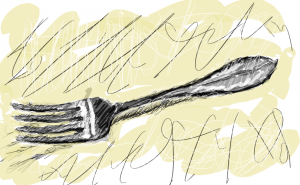
forkCanberra doctors removed a 10-centimetre fork from inside an elderly man’s penis after a bizarre sexual mishap.

The 70-year-old arrived at the Canberra Hospital emergency department with a bleeding sexual organ.

He told doctors he had inserted the 10cm dining fork into his urethra almost 12 hours earlier in an attempt to achieve sexual gratification.

But the utensil became stuck.

Advertisement

The fork was not visible but doctors were able to feel it from the outside and X-rays showed its position.

Doctors considered several retrieval options before deciding to pull the fork free using forceps and “copious lubrication” while the patient was under a general anaesthetic.

The elderly patient was then sent home.

The medical emergency was so rare the team of three doctors published the case in The International Journal of Surgery last month.

The paper, titled “An Unusual Urethral Foreign Body”, said it was rare to see objects lodged in the lower urinary tract.

It went on to list strange objects found inside other parts of the body, including needles, pencils, wire, allen keys, toothbrushes, light bulbs, thermometers, plants and vegetables, leeches, snakes, cocaine and glue.

“It is apparent that the human mind is uninhibited let alone creative,” the authors wrote.

The medical team – Krishanth Naidu, Maurice Mulcahy and Amanda Chung – said the fork case was published to create discussion among the medical fraternity “given the great management challenge faced by the oddity and infrequency with which a fork is encountered in the penile urethra”.

The doctors said the motives for inserting objects into the sensitive region were difficult to comprehend.

“The practice manifests primarily during states of pathological masturbation, substance abuse and intoxication and as a result of psychological compounders.

“Autoerotic stimulation with the aid of self-inserted urethral foreign bodies has been existent since time immemorial and have presented an unusual but known presentation to urologists.”

They said embarrassed patients usually attempted to retrieve the item themselves, risking urethral injury and foreign body migration.

The real danger was infection leading to death, because ashamed patients often delay medical treatment, they said.

Doctors generally try to avoid surgery in such situations, instead choosing an option that would minimise urothelial trauma and preserve erectile function.

The authors said self-inserted male urethral foreign bodies are rare emergencies that urological and general surgeons face on occasion.

While the insertions are unusual, the paper said “any imaginable object is known to be implicated”. – Canberra Times

Unlucky kick dashes Cheetah hopes in dying moments

Riaan Smit of the Cheetahs

Cheetahs five-eighth Riaan Smit hit the post with a conversion attempt after the siren to give the Brumbies a 15-13 win in their Super Rugby qualifying final in Canberra.

While the Cheetahs scored the only two tries of the match, the Brumbies dominated the kicking duel and were amply rewarded with prime territory throughout the game.

The Brumbies had the lion’s share of the possession in the first half, yet the Cheetahs’ trademark scrambling defence proved up to the task.

A hotly contested breakdown battle also stilted momentum for both teams, referee Glenn Jackson warning both captains to clean up their sides’ acts midway through the second half.

The Cheetahs were seven points down when replacement Ryno Benjamin crossed in the left corner in the final minute to give Smit a chance to send the game into extra time.

But the kick hit the left post and the Brumbies escaped with the narrow victory to book a semi-final against the Bulls in Pretoria early next Sunday morning (AEST).

While the home side arguably had the rub of the green on scrum penalty decisions from Jackson in the first half, Brumbies loose-head prop Scott Sio was clearly dominant in the second half.

Man-of-the-match George Smith was also outstanding for the Brumbies, his presence at the breakdown a constant thorn in the side of the Cheetahs.

The Brumbies were rewarded for a blitzing start with an early penalty goal, but the Cheetahs hit back in the 16th minute when their first attacking set-piece yielded a try to outside centre Johann Sadie.

Sharp-shooting goal-kicker Christian Lealiifano then uncharacteristically missed two penalty shots before finding his range again to give the Brumbies a 6-5 lead at the break.

The Cheetahs drew first blood after the break with a penalty goal to Smit, but the Brumbies hit back with three of their own to gain the seven-point lead which would eventually help them hold on for victory. – AP

Smith, Rathbone to face Cheetahs

George Smith
George Smith

Wallabies George Smith and Clyde Rathbone will return to the ACT Brumbies starting team for this weekend’s Super Rugby qualifier against South Africa’s Central Cheetahs, the club said Friday.

The players are making an unlikely finals appearance in Canberra on Sunday after Rathbone came out of retirement this year and Smith was loaned by his Japanese club Suntory Sungoliath.

Making way for winger Rathbone is Joe Tomane, who played for the Wallabies against the British and Irish Lions this month, while Colby Faingaa also goes to the bench with flanker Smith taking the number seven jersey.

Scrum-half Nic White also returns to the starting side for the first time since injuring his shoulder with Ian Prior returning to the bench.

“Bringing two guys like Clyde and George into our starting side will give us experience when we need it. Those two guys have both won championships at Canberra Stadium and it’s exciting to have them involved,” coach Jake White said.

“The Cheetahs are a side which has made huge improvements over the last two seasons and it’s a credit to them that they are now a competition threat.”

It will be the Brumbies first finals match since they won the Super Rugby title in 2004. – AFP

Australia to deal with its boatpeople this week

Australian Immigration Minister Chris Bowen on Monday said he hoped to begin sending asylum-seekers who arrive by boat to the tiny Pacific nation of Nauru later this week.

With Australia facing a record influx of asylum-seekers arriving by sea, Canberra last month announced plans to send them to Nauru and Papua New Guinea’s Manus Island in a policy aimed at stemming the flow.

Bowen tabled a document in parliament Monday designating Nauru as a regional processing country under the Migration Act so boatpeople can be sent to the small state to await their visa decision.

“Subject to both houses (of parliament) passing a resolution approving the designation, the designation will allow for the transfer of irregular maritime arrivals who arrived after 13 August to Nauru,” Bowen said.

Canberra announced its intention to transfer asylum-seekers to Nauru and Papua New Guinea in mid-August as part of a tough new policy to deter them from paying people-smugglers to attempt the dangerous sea voyage.

Since then 2,087 asylum-seekers have arrived by boat — close to capacity for the camps on Manus and Nauru, which will accommodate a total of 2,100 once completed.

Bowen would not comment on who would be part of the first transfer to Nauru or whether children would be sent but said that he hoped the first group would be transferred within days.

“Construction work on the temporary facility is nearing completion and the government expects to be able to begin transferring people to Nauru later this week,” Bowen said in a statement.

More than 9,796 asylum-seekers have arrived in Australia on boats in 2012, many of them Afghans, Iraqis and Iranians who have paid people-smugglers to ferry them from Indonesia to Australia.

Offshore processing is a sensitive issue in Australia, with Prime Minister Julia Gillard adopting the policy after months of bitter political debate and after several boats capsized en route, drowning scores of people.

The policy signals a return to the practice of the previous conservative government, which sent asylum-seekers to Nauru and Manus, that centre-left Labor rolled back soon after taking office in late 2007.

The opposition supports offshore processing but said the government’s promise that asylum-seekers won’t be resettled quicker just because they are processed on Nauru or PNG will see them stranded in the Pacific for years.

“The policy that (they) have adopted means people could expect to wait on Nauru for five years,” opposition spokesman Scott Morrison said. – AFP