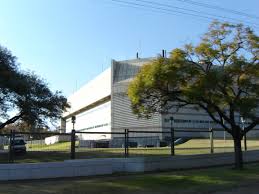
The South African government is monitoring a number of people linked to a reported threat to US interests, but was satisfied that no one faced any imminent danger, the security minister said.
The US Embassy warned its citizens on Tuesday of a possible attack by militants, a rare security alert in a stable democracy seldom associated with Islamist militancy.
State Security Minister David Mahlobo said the US Embassy had shared information linked to the warning with his officials.
“This is not a new information, the information has been shared over the past few days, the information has been acted upon,” he said.
“In terms of our own threat analysis, we had to do a threat analysis, who is the source and what is happening, and came to the conclusion that there is no immediate danger.”
In Washington, a State Department official said the security message was to inform US citizens that militants may be targeting US interests in South Africa, including US government facilities and businesses.
“There is no additional information as to timing or potential targeting,” the official said.
“US citizens should be vigilant and take appropriate steps to enhance their personal security.”
The embassy and consulates in Johannesburg, Durban and Cape Town closed for several days in 2009 after what US officials described as a specific threat to diplomatic missions in South Africa.
Israel has closed its embassies around the world as about 1 200 foreign ministry employees declare a strike over low salaries.
The strike by Israeli diplomats has affected Israel’s 102 missions abroad.
Israeli diplomats launched an unprecedented strike on Sunday, forcing the complete closure of embassies around the world as they escalated a dispute over pay, officials said.
The industrial action has already threatened to postpone a visit by Pope Francis to Israel planned for May – one of 25 trips by foreign officials affected by a work slowdown the diplomats began on March 5 when wage talks broke down.
By escalating the action to a full strike – the first by the diplomatic corps since the country’s establishment in 1948 – the diplomats will close all of Israel’s 102 missions abroad, paralysing most diplomatic work with other countries and the United Nations.
“We are completely shutting down the [foreign ministry] office and missions abroad. This is the first time ever,” ministry spokesperson Yigal Palmor said.
Another ministry official said: “As of now, the foreign ministry doesn’t exist. It’s not possible even to submit complaints”.
Foreign Minister Avigdor Lieberman called the strike “irresponsible” and “a wretched decision and a display of a loss of control on union’s part.”
“We shall do whatever possible to minimise the damage to the country and its citizens,” Lieberman said.
Diplomats said the strike – involving around 1 200 foreign service employees – was open-ended and had been called after the treasury failed to present any acceptable proposals.
They are demanding an increase in monthly salaries, which they put at 6 000 to 9 000 shekels (R18 800 to R28 200), and want compensation for spouses forced to quit jobs owing to foreign postings. They say about a third of their number has quit in the past 15 years because of poor wages.
Yacov Livne, spokesperson for the diplomats’ union, said: “the treasury is determined to destroy the foreign ministry and Israeli diplomacy.” –
The unusual US decision to close its diplomatic missions en masse in the Middle East Sunday was prompted by intercepts of high-ranking Al-Qaeda operatives signaling a major attack, US lawmakers said Sunday.
Lawmakers briefed on the intelligence called the threat reporting among the most serious they’ve seen in recent years, reminiscent of the intelligence chatter that preceded the September 11, 2001, attacks.
“There is a significant threat stream and we’re reacting to it,” General Martin Dempsey, the chairman of the Joint Chiefs of Staff, said in an interview with ABC.
Dempsey said the specific locations and targets were not known but “the intent is to attack Western, not just US interests.”
At least 25 US embassies and consular offices were ordered closed Sunday, most of them in the Middle East and North Africa, in response to the threat.
Representative Dutch Ruppersberger, the ranking Democrat on the House Intelligence Committee, told ABC’s “This Week” that Al-Qaeda’s “operatives are in place.”
He said the United States knows this “because we’ve received information that high level people from Al-Qaeda in the Arabian Peninsula are talking about a major attack and these are people in the high level.”
ABC News cited an unnamed US official as saying there was concern that Al-Qaeda might deploy suicide attackers with surgically implanted bombs to evade security.
The chairman of the House Homeland Security Committee, Michael McCaul, said the United States was in a high state of alert, calling it “probably one of the most specific and credible threats I’ve seen, perhaps, since 9/11.”
He said an attack appeared to be “imminent,” possibly timed to coincide with the last night of Ramadan, the Muslim holy month.
The suspected plot comes against the backdrop of a series of recent prison breaks in Iraq, Libya and Pakistan in which thousands of inmates have escaped, he said, creating additional risks.
US sensitivity to embassy security also has been heightened by the Al-Qaeda attack on the US mission in Benghazi, Libya, last September 11 that claimed the life of the US ambassador and three other Americans.
It also dovetailed an intensifying US debate over electronic surveillance by the National Security Agency following bombshell leaks by fugitive former intelligence contractor Edward Snowden.
The NSA’s congressional supporters were quick to point to the role of electronic intercepts in obtaining the latest intelligence, while dismissing suggestions it also served to divert attention from the agency’s role in scooping up Americans’ phone and Internet data.
“If we did not have these programs, then we simply wouldn’t be able to listen in on the bad guys,” said Saxby Chambliss, the ranking Republican on the Senate Intelligence Committee.
However, he pointed out that the latest threat warnings did not stem from controversial domestic electronic surveillance programs, but from NSA’s monitoring operations outside the United States.
“And that’s where all the planning is taking place, we think that’s where the activities is planned for,” he said on NBC’s “Meet the Press.”
Representative Peter King, a Republican member of the House Intelligence Committee, said the intelligence was specific “as to how enormous it was going to be, and also there’s certain dates were given.”
“And, you know, the assumption is that it’s probably most likely to happen in the Middle East at or about one of the embassies, but there’s no guarantee of that at all,” he said on ABC.
“It could basically be in Europe, it could be in the United States, it could be a series of combined attacks,” he said.
Chambliss likened the stream of information to the intelligence chatter that preceded the 9/11 attacks in New York and Washington.
“What we have heard is some specifics on what’s intended to be done and some individuals who are making plans such as we saw before 9/11,” he said.
“Whether they’re going to be suicide deaths that are used or whether they’re planning on vehicle-born bombs being carried into an area, we don’t know,” he said. – AFP
This website uses cookies to improve your experience. We'll assume you're ok with this, but you can opt-out if you wish. Cookie settingsACCEPT
Privacy & Cookies Policy
Privacy Overview
This website uses cookies to improve your experience while you navigate through the website. Out of these cookies, the cookies that are categorized as necessary are stored on your browser as they are essential for the working of basic functionalities of the website. We also use third-party cookies that help us analyze and understand how you use this website. These cookies will be stored in your browser only with your consent. You also have the option to opt-out of these cookies. But opting out of some of these cookies may have an effect on your browsing experience.
Necessary cookies are absolutely essential for the website to function properly. This category only includes cookies that ensures basic functionalities and security features of the website. These cookies do not store any personal information.
Any cookies that may not be particularly necessary for the website to function and is used specifically to collect user personal data via analytics, ads, other embedded contents are termed as non-necessary cookies. It is mandatory to procure user consent prior to running these cookies on your website.