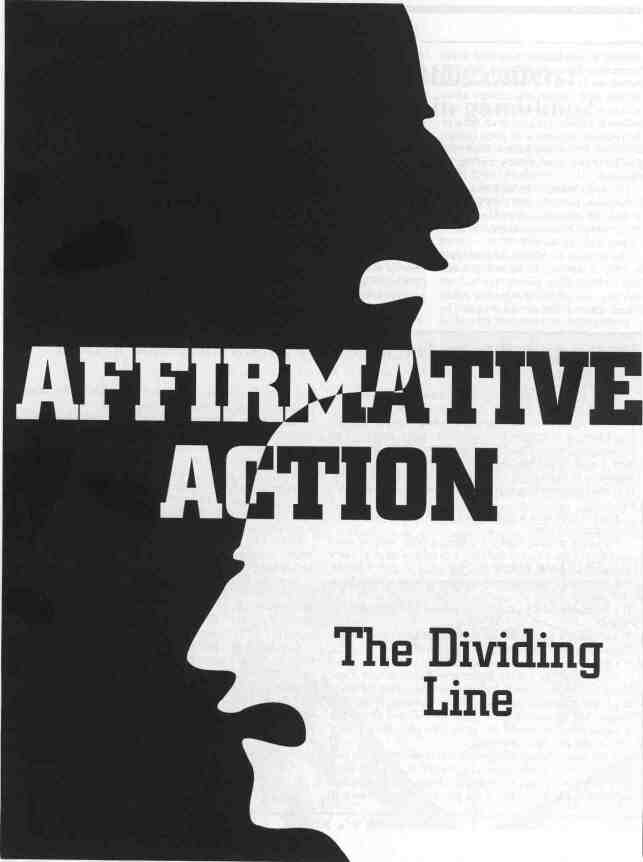
 OKLAHOMA CITY (AP) — Oklahoma voters will decide in November on a Republican-backed proposal to wipe out all affirmative action programs in state government, a move that many opponents say is designed only to stoke racial tensions and drive white, conservative voters to the polls.
The GOP-controlled Legislature voted in 2011 to send the proposal to a vote of the people over the objection of Democrats who argued there already was a prohibition on racial or gender quotas in state government and that such a change was unnecessary.
“I think as a state we need to take the lead in showing that we don’t look at the color of people’s skin; we look at their qualifications,” said state Sen. Rob Johnson, R-Kingfisher, who sponsored the proposal. “The only way we’re going to get past racism and get people not to see the color difference is to get our government to lead by example.”
The bill drew fierce opposition from Democrats during spirited debate in the Legislature and led to a formal reprimand of Republican state Rep. Sally Kern who, during debate in support of the bill, questioned whether there were disproportionately high numbers of blacks in prison because “they didn’t want to work hard in school.” Kern also said women don’t work as hard as men because they “tend to think a little bit more about their families.”
Kern later delivered a tearful apology on the House floor, and then voted for her own reprimand.
Democrats maintain placing such a hot button state question on the ballot is a political ploy to draw more conservative voters to the polls.
“(Republicans) have obviously had success in past election cycles where they’ve put some contentious issue on the ballot which generated excitement or fear from their base and created a big turnout from their side,” said Oklahoma Democratic Party Chairman Wallace Collins. “I think they’re trying to utilize that tactic to basically influence elections across the state.”
But Johnson disputes that claim.
“That’s absolutely ridiculous,” Johnson said. “It doesn’t have anything to do with elections or trying to get people out to vote. This issue isn’t a Republican versus Democrat kind of issue.
“I think this is something the people of Oklahoma should decide, and I think it’s important enough to put on the ballot.”
State officials say even if the proposal passes, it won’t have an impact on any state hiring or bidding practices, although it could lead to the elimination of some scholarships at public universities that target minority students and women.
An annual report on the demographic profile of state employees versus the general population still will be produced and the state’s Human Capital Management division will continue to recruit a diverse and inclusive workforce, said Shelly Reeves, a spokeswoman for Office of Management and Enterprise Services, the agency formerly known as the Office of State Finance.
“Whether the state question passes or not, we will not change those practices,” Reeves said.
But the proposal has riled many in Oklahoma’s minority community who contend that racism is alive and well in the state and that the ballot proposal only serves to enflame racial tension.
“If we’re living in a post-racial society, then why do minorities and women continue to be at the top of every bad list and at the bottom of every good list?” Lawrence Ware, a philosophy professor at Oklahoma State University and a pastor of Prospect Missionary Baptist Church, asked a mostly African-American audience during a forum last week at Langston University’s Oklahoma City campus. “If we are in a post-racial society, why is it African-Americans make up 13 percent of the U.S. population but over 40 percent of the prison population?
“No, we’re not living in a post-racial society. Just because there is a black face in a high place, it does not mean that we have overcome.”
Evidence suggests women and minorities in Oklahoma do face discrimination in employment, home ownership and education, according to a 2012 study by the Henderson Center for Social Justice at the University of California’s Berkeley Law.
According to the study, the African-American unemployment rate in Oklahoma was more than double that of white Oklahomans in 2010, and white women, and minority men and women all earn “substantially less” per year than white men. The poverty rates for blacks and Hispanics also is more than double the rate for whites, and minority children are more likely to attend low-performing schools, the study shows.
“There is ample evidence that disparity is still prevalent in the state of Oklahoma,” the study concludes. “While there are some promising trends in the public sector, it is clear that discrimination and disparity have not yet been fully remedied in housing, education, employment and other sectors.”
The study also cites research from other states that have enacted similar bans, including California, Washington, Nebraska and Michigan, that suggests “affirmative action bans limit the opportunities available to people of color and women.”


 PRINCETON, N.J. — Two-thirds of Americans think college applicants should be admitted based solely on merit, yet most approve of affirmative action, a Gallup poll indicates.