Documentary on Herero massacre by Germany on SABC

The German parliament threw out an opposition motion calling on the government to acknowledge that a massacre committed by German troops in what is now Namibia more than 100 years ago was genocide in 2012.

The massacre was the subject of a documentary film shown on the SABC on Sunday.

An order, issued by General Lothar von Trotha on October 2, 1904, saw more 70,000 Herero and 10,000 Nama, most of the tribal populations, killed as an anti-colonial uprising was crushed.

Namibian victims’ groups and German NGOs have been saying for some time that these German colonial massacres should be recognized as genocide. Christian Kopp from Berlin Postkolonial says the term genocide is appropriate “because there was a clear intent to wipe out the Herero and the Hama.”

Niema Movassat is a deputy for the opposition Left Party in the German parliament. He says hundreds of thousands were shot or hanged, or deprived of water and left to die of thirst in the desert. Or put into camps for forced labour. “One has to take responsibility for this,” he told DW. At the end of February, the Left Party brought a motion before parliament calling for the murderous campaign in what was then German South West Africa to be declared as genocide. “There has never been an official apology,” said Movassat.

It wasn’t until 2006 that the Ovambo people, who formed the majority in the Namibian parliament, gave backing to Herero and Hama claims for restitution.

Little has happened on the German side, says Christian Kopp from Berlin Postkolonial, because the political elite is afraid of the legal and moral consequences that a clear definition of this crime might bring in its wake. “The state could be forced to pay reparations,” Kopp explains.

In 2004, Heidemarie Wieczorek-Zeul, the then Social Democrat minister for development, travelled to Namibia to mark the centenary of the Herero genocide. She delivered a moving speech which contained a clear reference to German guilt. “But it was later dismissed a purely personal remark, not representing government policy,” said the Left Party’s Niema Movassat.

Henning Melber also believes Germany does not wish to anger its European partners. “I can well imagine that France, Great Britain and Portugal are following very closely how Germany is tackling this issue. If Germany were to agree to hand over millions of euros, that could set a precedent which could trigger negotiations elsewhere. Germany’s European partners might well advise it behind closed doors to let matters rest.

At the end of 2011, a gesture of reconciliation between Germany and Namibia ended in a diplomatic incident. A Namibian delegation had travelled to Germany to collect a number of Namibian skulls which had been found in Berlin’s Charite hospital. They dated back to the time of the Herero massacre. But the occasion was ruined by a faux-pas in which German government representatives left the room while the African delegates were still speaking.

Source: Deutsche Welle
Multichoice, SABC deal raise hackles

A controversial five-year, R550 million deal between Multichoice and the SABC has drawn sharp criticism from some industry stakeholders

A R550 million deal between Multichoice and the SABC, which will hand over a large deal of control over the SABC’s news operations to the DStv owner, is being challenged by industry stakeholders.

Three groups – Caxton Publishers, Media Monitoring Africa and SOS: Support Public Broadcasting Coalition – have approached the Competition Tribunal saying that the deal is not in the public interest.

In a press statement by Media Monitoring Africa, it said that the deal entered into between the SABC and Multichoice, in which Multichoice acquired control over part of the SABC business, constitutes a mandatory notifiable merger.

Media Monitoring Africa (MMA) started in 1993 and is a non-profit organisation that aims to promote democracy and a culture where media and the powerful respect human rights and encourage a just and fair society.

“We are not aware of any attempt to notify the Competition Tribunal of such a merger. If the deal is proven to be a notifiable merger it will enable us to oppose the merger on the basis that it is not in the public interest for it to take place,” MMA said.

“When news of the deal broke in 2013, both MMA and SOS expressed deep concern as to the nature of the deal. We both believe it fundamentally works against the best and long term interests of the SABC and the people it serves.”

Media Monitoring Africa expressed three main concerns with the deal:

Handing over the SABC archive: The SABC has handed over power and control of its archives to Multichoice. The archives are an invaluable public asset, and giving control and access of the archive to a commercial player SABC has sold off the family jewels.

Encryption turnaround: The SABC effectively ceded its power to determine its policy on set-top box control to a commercial broadcasting entity that is also its competitor.

Best programming veto: The deal sets out terms for a future channel to be developed by the SABC, where Multichoice may veto some programmes and select only the best ones to be broadcast exclusively on the SABC-Multichoice platform. The deal therefore ensures the best future local programming is aired on DStv, and that citizens who do not subscribe to the Multichoice services will be denied viewing of the programmes.

A report by The Sunday Independent newspaper, titled “Diabolical and secret SABC TV deal exposed”, said that the Multichoice-SABC “Commercial and Master Channel Distribution Agreement” has been kept from public view under a confidentiality provision.

The report further stated that even the SABC board was kept in the dark regarding the deal which was signed in July 2013.

However, because it forms part of the Competition Tribunal case, and thanks to the Supreme Court of Appeal ruling in the City of Cape Town versus Sanral case, it is now a public document.

SABC spokesman Kaizer Kganyago told The Sunday Independent that the SABC would never allow its news operations to be influenced by another broadcaster.

Multichoice in turn said that it has not exerted any influence on SABC news. They added that they have many news channels on its DStv platform, and that performance requirements come standard with such agreements.

Source: mybraodband.co.za

SABC scraps Afrikaans for minority killer language

The SABC will do away with Afrikaans news bulletins on its 24 hour news channel on DStv.

Black indigenous South African language bulletins, including Zulu, Siswati, Tsonga, Xhosa, isiNdebele, Sotho and Venda will also be scrapped.

As from April 1, all bulletins will be done in English.

SABC spokesperson Kaizer Kganyago says the decision was informed by the fact that the channel has to compete with other international English language channels.

Kganyago maintains that the channel “lost viewers each time indigenous language news bulletins were aired”, but satellite competitors StarSat and OpenView HD don’t have any local news channels.

Some SABC TV news bulletins in other languages actually grab a larger slice of the audience than the flagship.

The news in isiZulu on SABC1 commands a staggering average of 3.6 million viewers, while the isiXhosa news, also on SABC1, pulls in 3.4 million people. The Afrikaans news has more than 1.5 million viewers.

The one-size-fits-all approach that South Africans are now stuck with, is really only for the benefit of the tiniest minority of English speakers, a clear indication of the killer language at work once more.

Meanwhile the wage bill of the SABC is set to soar by close to R100 million. The increase is a result of bigger board member fees, salaries and filled vacancies.

The increase comes in the wake of a strained economic climate, less advertising spending and a drop in viewers.

SABC denies ‘marginalising Afrikaans’

According to the South African Press Assocation (SAPA), the SABC on Thursday denied claims it is preparing to “dump” almost all its Afrikaans language shows on SABC2 and move the language’s programming to SABC3.

Kaizer Kganyago, spokesman for the SABC, said the public broadcaster had not marginalised any language and would not do so in future. The SABC subscribed to the Broadcasting Act to ensure all languages were treated equally.

Kganyago said the broadcaster had revealed on 29 May how programming would be affected due to the Soccer World Cup.

“The Xitsonga, SiSwati, IsiNdebele, and Venda news have also been moved from SABC2.We strongly believe that all South Africans are equally important,” Kganyago said.

“This week, the most watched current affairs programme on SABC2, Leihlo la Sechaba, will not be playing. One of our flagship programmes, Generations, has been moved to SABC2 from SABC1,” Kganyago said.

He was puzzled as to why programming was an issue only when the Afrikaans shows were affected.

SAFM fined R20 000 for ‘Islam connections’

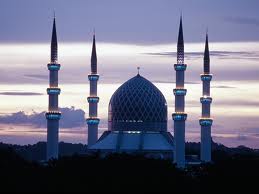
mosqueSAfm has been fined R20,000 for making an “unjustifiable connection with Islam” during two news bulletins, the Broadcasting Complaints Commission of SA (BCCSA) said on Monday.

Making the connection was “unfair”, the BCCSA said in its ruling, which was handed down on Friday.

A fine of R10,000 was imposed in each case.

But the BCCSA rejected a claim that the broadcasts amounted to Islamophobia on the part of the SABC.

“It must be stated at the outset that this tribunal does not lightly come to the conclusion that a broadcaster appears to be following a certain trend, such as a tendency to Islamophobia,” the ruling stated.

“A phobia suggests the existence of a persistent fear that is not justified. It would, however, not be fair to use the term Islamophobia simply because two news items included unjustifiable inferences with regard to Islam…”

The SA Muslim Network (Samnet) complained about a May 24 news clip about immigrants protesting in Switzerland over employment and other issues. In the clip it was stated that the protesters were not linked to any religion even though some Muslims were present among the protesters.

Samnet submitted that by inference there must have been members of other religious groups among the protesters and questioned why there was no mention of their religious affiliation.

It argued that this was “blatant prejudicial reporting”.

“We believe that this was an unnecessary clip, the terminology used casts Muslims in a negative light and together with other stories aired, reflect an Islamophobia pattern of the SABC news,” Samnet said in its complaint.

“This story would not have made headline news had there been no Muslims involved in the protests.”

SAfm submitted that the clip was sourced from the BBC and included a reference by a BBC reporter to the presence of Muslims among the protesters.

The broadcaster agreed that this should not have been stated.

The second complaint related to a 4pm news bulletin on the same day.

News reader Greg Gouws informed the public that British police had arrested two men on suspicion of endangering an aircraft after a flight from Pakistan to the United Kingdom was diverted to Stansted Airport outside London.

Samnet said most radio stations and newspapers carried the story, which reported the men were British nationals and the incident was treated as a criminal offence, and did not mention a terrorism angle.

“Greg Gouws, however, drew a link between the airplane diversion to the Woolwich murder. He went on to comment that the murder was perpetrated by two Islamic extremists,” said Samnet in its complaint.

On May 22, a British Army soldier, Drummer Lee Rigby, was attacked and stabbed to death by two men near the Royal Artillery Barracks in Woolwich, south-east London, in what was described as an Islamic terrorist attack, according to Wikipedia.

SAfm said its story was sourced from the BBC and Reuters, and was written in a factual and unbiased manner, and was not compared to the Woolwich murder.

It said the London stabbing was added to reflect that the plane incident came shortly after the stabbing which authorities were “grappling with”.

SAfm argued there were widespread reports on the two British nationals with references to their Muslim faith. SAfm said the British government regarded the incident as an act of terrorism, which led to them being referred to as “Islamic terrorists” in the story.

“We concede, however, that despite being made in good faith, this might have been an unfair inference,” the broadcaster submitted.

“SABC News has a policy of not making such references unless authoritatively confirmed, and this was an unfortunate deviation from this policy.” – Sapa

Task team to deal with SABC’s financial mess

SABC465_3dA task team has been established to sort out the financial problems at the SABC, Communications Minister Yunus Carrim said on Tuesday.

“We have decided to set up a high-level team made up of the SABC, the department of communications, National Treasury, and the auditor general of South Africa to set a firm foundation for financial stability of the public broadcaster,” Carrim said in a statement.

“The team will ensure that all the challenges emanating out of the government guarantee targets are addressed within reasonable means and that the SABC is appropriately skilled at the right levels.”

This was a resolution informed by the progress made by the joint task team (JTT) set up two weeks ago between the department and the SABC.

Carrim and his deputy Stella Ndabeni-Abrahams met the SABC board and management on Tuesday to take forward issues discussed at a meeting on July 17.

In April, President Jacob Zuma approved the interim board, which was installed after the resignations of most of the previous board’s members in March, and its eventual dissolution by Parliament.

Their departure came after a reported clash between previous chairman Ben Ngubane and the board about the tenure of previous acting chief operating officer Hlaudi Motsoeneng.

At the meeting earlier this month, Carrim said the board and management had agreed to settle problems relating to digital migration and to urgently fill senior management posts.

Carrim said Tuesday’s meeting also took note of the progress made on Digital Terrestrial Television (DTT) readiness.

The JTT would continue to work to ensure the launch of DTT.

The SABC would launch a 24-hour news channel on August 1.

Carrim said a degree of consensus had been reached about the launch and how to deal with the outstanding finances, and legal and other aspects of the launch.

“South Africans need to have access to a constant stream of news, information and entertainment.

“The SABC has a responsibility to ensure that,” he said.

SABC board chairwoman Ellen Tshabalala said the national broadcaster was using the launch to fine-tune its readiness for the DTT launch.

“I am satisfied with the progress made in addressing the issues at the SABC.

“We remain committed to playing our full role in turning the SABC around,” she said. – sapa

No more SABC for Zim


Watching Isidingo
Watching Isidingo

Zimbabweans make no secret of their intense hatred of local broadcaster Zimbabwe Television (ZTV). But now they have no alternative but to watch it after the South African Broadcasting Corporation (SABC) switched off access to its channels.

For years, about three million locals have used free-to-air decoders to watch all three SABC channels, mainly in protest against programmes on ZTV that they say amount to propaganda and are also of poor quality.

ZTV, the sole television station operating in the country, is state-controlled and is owned by the Zimbabwe Broadcasting Corporation (ZBC).

Decoders, including Wiztech, Philibao, Fortec and Vivid, became especially popular among low-income groups. The decoders allowed free access to certain channels, including the SABC’s channels, with no subscriptions.

The decoders are a common site in rural areas, farming communities and urban townships. In Mbare, Harare, one can find as many as 50 satellite dishes at one hostel. South African soaps such as Generations and Isidingo enjoy a huge following in Zimbabwe.

The disconnection followed a ruling by the Johannesburg High Court last year ordering Sentech, a South African television signal carrier, to encrypt its signal within three months after eBotswana, a subsidiary of South Africa’s e.tv, asked Sentech to scramble its signal due to signal piracy.

Complaints
The move left viewers with no choice but to revert to watching ZTV. Those who can afford it will move to the more expensive Digital Satellite Television (DStv), which is offered by Multichoice.

A large number of Zimbabweans this week took to social media sites to express their displeasure over the withdrawal of the South African channels on the free-to-air decoders.

“It came as a complete shock. Of course, last year there were rumours that SABC 1, 2, and 3 would be cut off but as time lapsed we thought the rumours were false. I’m totally gutted. I had become a keen follower of Generations, Muvhango and Zone 14, so it will be difficult to adjust to ZTV,” said Mildred Mhondera, a resident in Mabvuku who said she had been watching South African channels since 2008.

“The channels were withdrawn at a terrible time — just before elections — so you can imagine the amount of propaganda we will be subjected to. Zanu-PF will be rejoicing because of this move,” she said.

In addition to complaints of propaganda, people who spoke to the Mail & Guardian also complained that ZTV airs too many talk shows on limited subjects of farming and histories of ethnic groups, bland Korean movies, little international news and has an obsession with Chinese news channels.

Media Institute of Southern Africa Zimbabwe director Nhlanhla Ngwenya said the SABC had become not only a major source of quality entrainment for millions of Zimbabweans, but an outlet of alternative news on events taking place in Zimbabwe.

Demans for alternative channels
“And as the country heads for elections, the free-to-air satellite dish would have provided another angle on the management of the process than that provided by ZTV. SABC is also a potential channel through which political parties and civil society could air their advertisements given the tight controls and manipulation of ZBC,” said Ngwenya.

Ngwenya said the timing of the switching off could not have come at a worse time due to pending polls.

“I am sure those in authority and those accused of obstructing the free flow of information to distort the realities on the ground are overjoyed by this turn of events because it snugly fits in with their tyrannical schemes”.

Harare Residents’ Trust co-ordinator Precious Shumba also said switching off the SABC channels was unfortunate and leaves the locals at the mercy of the ZTV monopoly.

“For years, Zimbabwe’s civil society has been demanding the freeing of the airwaves to allow for the operation of private and independent broadcasters, and this decision by the SABC has increased the demand for alternative channels of broadcasting services,” she said.

Shumba said that residents are already stressed about having to “endure long periods of partisan reporting and broadcasting services from ZBC’s radio and television stations, which have a traceable history of denying citizens a platform to air their political views”.

Shumba said few could afford DStv due to a stagnant economy. The cheapest DStv package costs $10 a month, and the most expensive is $75.

The unity government had resolved to end ZTV’s broadcasting monopoly, but Zanu-PF has resisted implementing the agreement. The reform of the state broadcaster is one of the outstanding issues the opposition wants resolved before an election is held. – M&G

National broadcaster looted since black rule

It seems that we are really heading for ‘Mzansi fo sho’. A continuous looting spree at the SABC, has been laid bare in explosive forensic reports, board minutes and internal correspondence obtained by the Sunday Times.

The newspaper has established that the cash-strapped public broadcaster:

  • Spent R196-million on a deal with Siemens which the SABC’s internal auditors deemed an “irregular contract” that “delivered no significant value”. SABC spokesman Kaizer Kganyago owns 10% of Siemens BEE partner Sedibeng, but says the deal was done before he arrived in 2006 and that he recused himself fromdiscussions involving Siemens;
  • Was guilty of “irregular expenditure” in giving the scandal-plagued ICT Indaba R3-million in sponsorship, including R1-million cash;
  • Agreed to give the Guptas’ New Age newspaper free exposure worth millions on its Morning Live show, flood Auckland Park with thousands of newspapers staff don’t want, and pay the paper R147251 to run advertorials;
  • Blew R1.6-million on a July Handicap extravaganza for 200 people, including 46 SABC staff, this year, even after claims surfaced that its directors embarrassed the broadcaster at last year’s event by demanding extra booze be served worth R32000;
  • Bent its own rules to appoint politically connected Hlaudi Motsoeneng as chief operating officer at an annual salary of R1.6-million, then tried to suppress a report which found he had lied about failing matric twice;
  • Hired Justice Ndaba as its turnaround-strategy head and allowed him to keep working even after discovering he’d apparently forged three degrees, including an MBA, until he quit after reportedly becoming involved in a prostitution scandal when in London on SABC business; and
  • Has been told by the Special Investigating Unit to take disciplinary action against more than 300 staff for failing to declare their interests, while recommending criminal action in nine other cases.

In an interview with the Sunday Times, board chairman Ben Ngubane said they are still struggling with these issues.

However, e-mails show that forged qualifications were flagged in May 2011, but the culprits were still used by the SABC, including as an acting company secretary in July 2011.

Ndaba, a former employee at BHP Billiton, denies forging his qualifications or that he was caught with his pants down in London, claiming it was another unnamed person.

Ngubane was implicated in trying to bury an internal audit report that said Motsoeneng lied on an application form for an SABC job in 1995, when he claimed to have passed matric.

He admitted it was “definitely policy” at the SABC for senior executives to have a matric, but said the board had the discretion to waive this requirement.

“In a COO, you are not looking for a theoretician,” he said.

The revelations of new holes at the broadcaster come at a time when the SABC is looking for another R6-billion from taxpayers to implement its digital broadcast strategy, after getting an earlier R1.4-billion guarantee from the Treasury so it could borrow cash from Nedbank. Taxpayers already fund it to the tune of R1-billion in licence fees and government grants.

In a letter sent in April, Finance Minister Pravin Gordhan rejected the SABC’s request to change the conditions of the guarantee, because the SABC had already broken its promises by not meeting profit targets, which he said “increases the risk to government arising from the guarantee”.

Gordhan pointed out that the SABC’s salaries had soared to R1.95-billion, while it had received only R388-million in sponsorship revenue, just more than half its target. “The initial issues that were the cause of the financial instability – cost escalations in excess of revenue growth – have not been adequately addressed,” he said.

This week, the SABC released its annual report, which showed it was given a “qualified audit”. Its failings included poor internal controls, unreliable financial information and meeting only 31% of 89 “delivery targets” it had set itself, ranging from skills retention to financial health.

Though the SABC posted a profit of R343-milliom, after making a R129-million loss last year, this appeared to be the result of slashing the amount it spent on buying film and programme rights from R1.7-billion to R1.3-billion.

Yet, the SABC still managed to spend R136-million on “irregular, or fruitless and wasteful expenditure” this year.

One thing the SABC didn’t skimp on was striking a deal to buy New Age newspapers for its staff, a newspaper owned by the wealthy Gupta family, a benefactor of Jacob Zuma.

Motsoeneng, who entrenched his hold over the SABC this week by taking control of news, radio and sport, admitted he had met Nazeem Howa, CEO of New Age, to discuss buying the newspapers.

He agreed to buy 1800 copies a day. “As a person, I want everyone to read,” he said, adding that the SABC “will only take newspapers according to our needs”.

The Sunday Times has also seen an uncensored version of a report by the Special Investigating Unit, the redacted version of which was presented to parliament last month. The report mostly covers wrongdoing predating the current SABC leadership. It found the SABC guilty of blowing R438.2-million in fruitless, irregular and wasteful expenditure between 2004 and 2009, and detailed nine criminal investigations.

investigations@sundaytimes.co.za