
India broke with the international community in acknowledging that Russia has legitimate interests in Ukraine.
On Thursday a senior Indian official endorsed Russia’s position in Ukraine in recent days, even as Delhi urged all parties involved to seek a peaceful resolution to the diplomatic crisis.
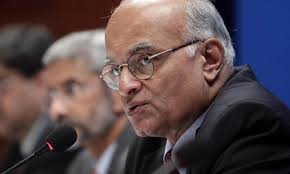
When asked for India’s official assessment of the events in Ukraine, National Security Adviser Shivshankar Menon responded:
“We hope that whatever internal issues there are within Ukraine are settled peacefully, and the broader issues of reconciling various interests involved, and there are legitimate Russian and other interests involved…. We hope those are discussed, negotiated and that there is a satisfactory resolution to them.”
The statement was made on the same day that Crimea’s parliament voted to hold a referendum for secession from Ukraine.
India is the second major nation to publicly lean toward Russia after China’s public statements.
Ukraine’s puppet government reacted to India’s endorsement of Russia’s legitimate interests with hostility.
India and Russia have long-standing ties and Moscow is Delhi’s top arms provider. Moreover, Russia and the former Soviet Union has been nearly alone in the international community in continue to back India during crucial moments such as following its 1974 and 1998 nuclear tests.
Delhi believes Russia’s intervention offers the best chance of stabilizing Ukraine. India’s Foreign Ministry on Thursday also released a statement noting that there are “more than 5,000 Indian nationals, including about 4,000 students, in different parts of Ukraine.” At the same time, India’s overall interest in Ukraine is fairly negligible—certainly less than China’s, for instance—and thus Delhi might assess that it has more to gain by publicly sticking by Moscow at a time when it desperately needs support.
India also has plenty of interests in certain regions along its peripheral, and at certain times—such as during the Sri Lanka Civil War—has intervened to protect various societal groups with strong ties to India.
Indian officials have told Telegraph India that, in the newspaper’s words, Delhi is “convinced that the West’s tacit support for a series of attempted coups against democratically elected governments — in Egypt, Thailand and now Ukraine — has only weakened democratic roots in these countries.”
This rationale would be consistent with India’s long-standing, deep-seated abhorrence to anything that merely resembles Western imperialism. At the same time, India has not historically made supporting democracy abroad a central tenet of its foreign policy.
Source: The Diplomat