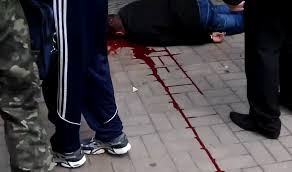
Mercenaries are part of a lucrative cycle between corporations profiting from conflict and those in Washington who favor American power and intervention.
The United States uses private defense contractors to serve military first expansionist policies, former marine captain and State Department officer Matthew Hoh told RIA Novosti.
“To continue an interventionist policy in Muslim countries, the United States needs to have forces in place. For domestic political reasons US ground troops are not practical or an option, so security contractors, as they are not ‘troops,’ are usable,” Hoh, who is also a Senior Fellow at the Center for International Policy (CIP), said Thursday.
Hoh’s comments come a day after a federal jury found four ex-Blackwater contractors guilty of a deadly 2007 mass shooting in Baghdad that killed 17 Iraqi civilians.
“I expect that there will be legislation put in place by Congress to indemnify and protect security contractors in the future,” Hoh said.
Hoh believes there is too much money to be had in fielding private contractors, which has led to a lucrative cycle between corporations profiting from conflict and those in Washington who favor American power and intervention.
The Iraq veteran also pointed out how leveraging contractors have helped the United States in concealing war costs, both in terms of dollars and body count.
“The other aspect of this is that it hides the cost of the war. We simply do not know how many contractors were killed in the Iraq or Afghan wars. The US relies upon claims made to the Department of Labor and Department of Defense, but that number is partial as many of the killed and wounded contractors, particularly TCNs, or Third Country Nationals, don’t ever have claims filed,” Hoh added.
The Blackwater military firm took part in the Iraq war under a contract it signed with the government of the United States. In 2010, Blackwater changed its name to Academi after being implicated in a number of crimes, including shooting civilians and arms smuggling.
In what is becoming a weekly ritual, the German press continues to demolish the US case of “idealistic humanitarian” Ukraine intervention.
A week ago the German tabloid Bild am Sonntag, reaching the broadest audience, reported that dozens of CIA and FBI agents were “advising the Ukraine government.”
This conclusion is hardly a stretch and certainly based on facts considering the recent semi-secret jaunt by CIA head Brennan to Kiev.
The same Bild has now reported that about 400 elite mercenary commandos of the private US security firm, Academi, f/k/a Xe Services, f/k/a Blackwater “are involved in a punitive operation mounted by Ukraine’s new government” against east Ukraine separatists.
Bild cites sources who report that on April 29, Germany’s Federal Intelligence Service (BND) informed the Angela Merkel government about Academi commandos’ involvement in Kiev’s military operations in eastern Ukraine.
Spiegel adds that “the information originates from U.S. intelligence services and was presented during a meeting chaired by the Chancellor’s Office chief Peter Altmaier (CDU). At the meeting were present the president of the intelligence agencies and the Federal Criminal Office, as well as the intelligence coordinator of the Chancellor’s Office and senior Ministry officials.”
Bild am Sontag did not have information about who was paying the Blackwater commandos: it is well-known they do not come cheap.
The German press is aware of the emerging China-Russia axis. The relationship between Russia and Germany is the most notable story in the entire Ukraine conflict.
A resident of Donetsk has posted a photo of soldiers on a social networking service site. The soldiers, outside a local military enlistment office, were armed with sub-machineguns and light-weight machineguns and spoke English. They wore the uniform that was obviously not Ukrainian.
The coordinator of the Self-Defence of Donbass united organization of the activists of Donetsk told reporters earlier that a plane with 200 foreign mercenaries had landed at Donetsk airport. According to him, the legionnaires speak neither Russian, nor Ukrainian.
Meanwhile, the Russian Foreign Ministry said on April 7th that Kiev is amassing Interior Ministry troops and Ukraine’s National Guards, as well as fighters of the ‘Right Sector’ illegal armed group, in the southeast of Ukraine, including in Donetsk. The Russian Foreign Ministry points out that it is especially concerned over the fact that taking part in the forthcoming operation are some 150 US experts from the Greystone private military organization, dressed in the uniform of the Sokol (Falcon) police task force.
The White House has refuted the report, insisting in its Tuesday’s statement with reference to a Greystone official that US mercenaries are not involved in suppressing unrest in the south-east of Ukraine, Interfax reports.
The Foreign Ministers of Russia, Ukraine, the US and the EU are due to meet for talks on Ukraine next week, according to the press service of the EU High Representative for Foreign Affairs and Security Policy, Catherine Ashton.
Peace initiatives do in no way prevent the US from beefing up its military presence off Ukraine’s coast. Another US naval ship, USS Donald Cook, has entered the Black Sea, according to Rossiya-24 TV channel.
According to The Daily Telegraph British newspaper, the objective of the ship, armed with an air defence system and Tomahawk cruise missiles is to show support for Kiev. Another US naval ship has been in the area since March this year.
Russia is not conducting any unusual or unplanned military activities on its territory in the area of the Ukrainian border, the Russian Foreign Ministry said.
“The US and Ukraine have no reasons for concerns. Russia has said many times that it is not conducting any unusual or unplanned activities significant in terms of military issues on its territory in the area of the Ukrainian border,” the Russian Foreign Ministry said in a commentary posted on its website.
“The daily activities by the Russian troops on its national territory do not threaten the security of the US and other OSCE countries. The attempts to accuse Russia of beefing up its armed forces are groundless,” the ministry said.
Washington employs thousands private military contractors (PMCs). They’re mercenaries. They’re hired guns.
Peter Dale Scott once said they’re “authorized to commit violence in the the name of their employers.” They’re “predatory bandits.”
They operate extrajudicially. They’re unrestricted by US, international, or local governments’ laws. They’re free from civil or criminal accountability.
Under Article 47 of the 1977 Protocol I to the Geneva Conventions:
“A mercenary is any person who:
(a) is specially recruited locally or abroad in order to fight in an armed conflict;
(b) does, in fact, take a direct part in the hostilities:
(c) is motivated to take part in the hostilities essentially by the desire for private gain and, in fact, is promised, by or on behalf of a Party to the conflict, material compensation substantially in excess of that promised or paid to combatants of similar ranks and functions in the armed forces of the Party;
(d) is neither a national of a Party to the conflict nor a resident of territory controlled by a Party to the conflict;
(e) is not a member of the armed forces of a Party to the conflict; and
(f) has not been sent by a State which is not a Party to the conflict on official duty as a member of its armed forces.”
Washington substitutes them for Pentagon forces however. At multiples more in cost. Using them gives US authorities cover for whatever crimes they commit. Doing so avoids accountability.
They’re an integral part of America’s imperial agenda. Apparently they’re operating in Ukraine. Perhaps hundreds will increase to thousands.
Maybe in other Ukrainian cities. Maybe covertly in Crimea. If not now, maybe later. Expect East/West tensions to escalate. Expect the risk for open conflict to increase.
The former Navy Seal Erik Prince who founded the private security group Blackwater is pitching to run logistics for Chinese mining and energy companies in Africa. Blackwater became controversial for its role providing private security in Iraq.
Prince is now chairman of Hong Kong-listed Frontier Services Group, which is backed by Citic Group, the Chinese state-owned investment company, and Hong Kong entreprenuer, Johnson Ko Chun Shun.
He remains the largest individual shareholder having sold an east African aviation start-up company he owned to what was essentially a shell company.
China builds schools, hospitals and railways as a quid pro quo for getting access to raw materials without interfering in local politics and is expected to invest up to $1tn over the next decade in Africa.
This comes on top of the billions it has put in to finance mines, power plants and other infrastructure, which have helped it generate trade of $185bn with the continent.
Defending Blackwater’s record, Prince said its tactics were sanctioned by the US government and that ultimately it was made a political scapegoat for wider errors in an unpopular war.
“Nearly being killed in a plane incident about a year and a half ago as we were up looking at a mine site in Burkina Faso, I thought if this is the best that is available here and [people] are going to spend a lot of money building a mine, there’s got to be a better way than this,” he told beyondbrics.
The incident in question was an accident rather than an attack of some kind and Prince plays down the security aspect of the new company. “When you look at the spend of a $3bn mine, think of the costs of logistics in that – our ability to compress some of those costs for our customers and still make very good money in the process, that’s what we’re about.”
His aim is to build a multi-billion dollar “austere logisitics” company, with aviation to transport people, goods and equipment under either scheduled or emergency conditions and to conduct surveillance.
Blackwater founder Erik Prince personifies the hidden hand in America’s terror wars.
His company secretly armed and maintained drones in Pakistan, trained CIA hit teams and collected $2 billion as a U.S. government security contractor.
Mr. Prince said he looks back on that adventure as “13 lost years.” The billions of dollars are gone now, and he blames the U.S. government.
After a series of federal investigations, government contract battles and critical congressional hearings, Mr. Prince sold Blackwater in 2010. In the wake of continued controversy over his most recent pursuits while based in Abu Dhabi, Mr. Prince has returned to Virginia to write a new chapter of his life—as an entrepreneur buying oil, land and minerals in Africa.
In interviews, Mr. Prince and former Blackwater officials provided previously unreported details of the company’s dealings with the CIA and its former director, Leon Panetta. Blackwater’s fortunes, which dimmed as the Iraq war dragged on, sank markedly when President Barack Obama took office in 2009 and sought distance from President George W. Bush’s war policies.
A chief target of Mr. Prince’s ire is Mr. Panetta, who in 2009 shut down the covert training operation for CIA “hit teams” that former Blackwater officials said took place on Mr. Prince’s Virginia property.
At the time, former Blackwater officials said, the company also was working on America’s clandestine drone program. Former company officials said that a few dozen Blackwater employees, taking the place of American military forces, maintained drones armed with Hellfire missiles in Pakistan. The company didn’t fly them, but prepared them to launch attacks.
When that information became public in 2009, right after Mr. Panetta canceled the Blackwater hit-team training, the CIA director ended the company’s role in maintaining the drones.
Mr. Prince said he is convinced that Mr. Panetta outed him as a CIA “asset” at a closed congressional hearing that year, adding that it was unthinkable for a CIA director to reveal the real name of a covert operative to lawmakers.
“No one was out to scapegoat anyone in the relationship with Blackwater, but there were some issues that arose that prompted a serious look at contracts with the company,” said one former CIA official involved in the discussions. “There was a perception that they were trying to run some of their own operations untethered from agency oversight.”
Along with its clandestine work, Blackwater had a much more public role providing security for American diplomats and CIA personnel in Iraq and Afghanistan. Blackwater guards were caricatured as war-zone cowboys.
Blackwater convoys were feared in Iraq. The drivers were under State Department orders to do everything necessary to protect the department’s workers—directives that Mr. Prince alleges forced Blackwater to use aggressive tactics.
The State Department didn’t comment on the allegation.
Paul Bremer, the Neo-Con American diplomat who oversaw the U.S. government’s early invasion in Iraq liked them. “Their job was to keep me alive,” said Mr. Bremer. “I can say they never fired a shot in my presence, so they weren’t a bunch of cowboys running around shooting at people.”
Blackwater guards were involved in a series of deadly shooting incidents that alienated Iraqi citizens and the government. In September 2007, they killed 17 Iraqis in Baghdad’s Nisour Square.
Last month, the Justice Department renewed the prosecution of four Blackwater guards involved in the shooting, which still generates anger in Iraq.
“On balance, I think [Blackwater] operated in irresponsible ways which led to a lot of hostility toward our country,” said Rep. Henry Waxman, a California Democrat and former chairman of the House Committee on Oversight and Government Reform, who grilled Mr. Prince during a 2007 hearing. “They were overpaid for their work, and there was little, if any, accountability to the U.S. or the Iraqi governments.”
Following the Nisour Square shooting, the U.S. tightened its oversight and training of contractors to try to prevent another such incident, said Alex Gerlach, a State Department spokesman.
After the Obama administration cut most ties with Blackwater, Mr. Prince sold the company and moved to Abu Dhabi, where he quickly became embroiled in further controversy. Mr. Prince said he served as an adviser in setting up a privately trained antipiracy security force in Somalia that was accused of violating a United Nations arms embargo. And he was a consultant on a failed effort to set up a security force in Abu Dhabi made up largely of former Colombian soldiers.
In August 2012, Blackwater – now called Academi – paid a $7.5 million fine relating to allegations of arms smuggling when Prince was in charge.
Now, Mr. Prince said, he is done working for the U.S. government. He has invested millions in setting up Frontier Resource Group, a private-equity firm that operates in more than a dozen African countries. The company raised $100 million to invest in infrastructure Africa in conjunction with Chinese companies.
The firm is building an oil refinery in South Sudan, owns a cement factory in the Democratic Republic of Congo, conducts aerial gas and oil surveys across the continent, and is looking at taking over idle oil wells damaged by insurgents in Nigeria, he said.
“Africa is so far the most unexplored part of the world, and I think China has seen a lot of promise in Africa,” Prince, who served with SEAL Team 8 in Haiti and the Balkans, said during a visit to Hong Kong, later telling the South China Morning Post: “The problem is if you go alone, you bear the country risk on your own. You have to get support and maintenance there.”
Which means exactly what? Well, no one really seems to know. Prince’s objectives in Africa are obscured, while FRG’s goals are vague and convoluted.
“The view of his new company is very limited, and very opaque. If you look at his website it seems like a front for funding and training local security forces to provide security for resource projects in African nations, particularly for the Chinese,” Geoffrey Ingersoll, a former member of the Marine Corps and a Military and Defense reporter for Business Insider, told Guyism.com.
Will FRG’s new business partners care how the company achieves its goals? Not really, no.
“The Chinese are cut-throat capitalists. They’re much more concerned with their workers not getting kidnapped, and with making money. the over-arching concern is that they want to dominate Africa, geopolitically and economically,” Ingersoll said.
“What I think he wants to do is bring in contractors to employ and train organic security forces. That way, you only need a handful of former SEALs to command 200 men, and those 200 men you can pay small salaries because they’re from sub-Saharan Africa The tactic is called a ‘force multiplier’ – and comes straight out of the Marine Corps ‘small wars’ manual.”
FRG could face competition from… Blackwater.
“Academi is supposedly moving it’s operation to Africa, because the Americans have grown tired of their uncontrollable, heavily subsidized child acting like a rich kid addicted to cocaine and crashing Lamborghinis,” Ingersoll said.
As it turns out, Prince might need more than an army to conquer Africa. WSJ/guyism.com
Colombia’s defense ministry is alarmed about an exodus of top soldiers to the United Arab Emirates to join a highly paid U.S.-led mercenary force organized by Erik Prince, billionaire founder of the security firm Blackwater.
Prince, who sold Blackwater in 2010 after it was involved in killings and scandals in Iraq, went to Abu Dhabi, capital of the Persian Gulf federation, in 2011.
He signed on to form an 800-man battalion of mercenaries for what emirati officials termed “anti-terrorism operations” inside and outside the country.
But it’s widely believed in Gulf security circles the force, being assembled under considerable secrecy by Prince’s Reflex Responses registered in the emirates, will be used for undisclosed special operations for the seven desert emirates that make up the federation.
That’s expected to include putting down “internal unrest” that might challenge the ruling families, as happened in Egypt, Libya, Tunisia and Yemen, and which is growing in Kuwait and Bahrain.
The Reflex Responses force, which is officially described in a contract leaked to the New York Times in 2011 as “independent of formal command and support structures throughout the United Arab Emirates,” will have its own air wing, with fixed wing aircraft and helicopters, plus its own private navy.
The naval wing’s tasks will primarily be “small boat operations … maritime interdiction operations and securing oil delivery platforms.”
The mercenaries have a custom-built high-security base in the desert where troops live and train.
U.S. military analyst Spencer Ackerman says Prince’s new project “might run afoul of U.S. laws prohibiting citizens from training foreign militaries,” which requires a government license. The State Department has not said whether Reflex Responses has one.
But it’s unlikely that Prince, who sold off Blackwater amid a blizzard of adverse publicity over his men’s excesses in Iraq where the company was accused of wantonly killing civilians, would embark on this new project without making sure he wasn’t open to legal action, particularly if he found himself having to send troops to fight Muslims seeking sweeping democratic reform from rulers who are U.S. allies.
The Sunni Muslim Arab monarchies of the gulf are increasingly concerned about their future amid the political upheaval and conflict sweeping the Arab world, fueled, they claim, by Shiite Iran.
The emirates currently are trying 94 citizens for sedition and seeking to overthrow the political system. The defendants, including two prominent human rights lawyers, face a possible 15 years in prison.
But the over-riding security threat is widely perceived to be Iran, 100 miles across the gulf and which occupies several islands claimed by the Emirates.
Prince’s mercenary force is made up largely of Colombian soldiers, including senior officers and men with a Special Forces background
There are also many veterans of Executive Outcomes, a South African security firm that became notorious in the 1990s for suppressing rebellions in mineral-rich African dictatorships and staging coups to gain control of such assets.
EO personnel included many veterans of Britain’s Special Air Service and special operations units in South Africa’s apartheid-era military.
Prince, an ex-U.S. Navy SEAL, is setting up his new force under a reputed $529 million contract with the royal family of oil-rich Abu Dhabi, the emirates’ leader and economic powerhouse. The contract expires in 2015.
Analysts say soldiers from Colombia’s 450,000-strong U.S.-trained military are held in high regard in the emirates and other gulf states because of their combat experience fighting leftist guerrillas and because they’re not as expensive as Western veterans.
Colombian officials estimate 500 soldiers, including pilots of Black Hawk helicopters widely used in special operations, have gone to join Prince’s force, where they earn $3,000 a month against $600 back home.
Bogota has complained to Abu Dhabi to stop hiring its best soldiers, so far without any apparent result.
“These are soldiers with a lot of experience, and it took a great effort to train them,” Jorge Bedoya,Colombia’s deputy defense minister, told The Financial Times.
The gulf monarchies are used to paying foreigners to do their dirty work. They have traditionally hired foreigners, mainly Pakistanis and Baluchis, to stiffen their armed forces. – UPI
This website uses cookies to improve your experience. We'll assume you're ok with this, but you can opt-out if you wish. Cookie settingsACCEPT
Privacy & Cookies Policy
Privacy Overview
This website uses cookies to improve your experience while you navigate through the website. Out of these cookies, the cookies that are categorized as necessary are stored on your browser as they are essential for the working of basic functionalities of the website. We also use third-party cookies that help us analyze and understand how you use this website. These cookies will be stored in your browser only with your consent. You also have the option to opt-out of these cookies. But opting out of some of these cookies may have an effect on your browsing experience.
Necessary cookies are absolutely essential for the website to function properly. This category only includes cookies that ensures basic functionalities and security features of the website. These cookies do not store any personal information.
Any cookies that may not be particularly necessary for the website to function and is used specifically to collect user personal data via analytics, ads, other embedded contents are termed as non-necessary cookies. It is mandatory to procure user consent prior to running these cookies on your website.