53 Cellphone towers shut down in South Africa due to theft, vandalism

South Africa’s infrastructure is being stolen. The latest casualty is mobile-phone company MTH, which has announced that it has lost 53 cellphone towers in Gauteng, the country’s industrial heartland and had to shut them down.

The company said it was losing millions due to the vandalism and theft of tower batteries. The 53 towers have been completely destroyed.

In the first half of 2019, the cost to the industry has reached an unsustainable tipping-point with MTN General Manager: Network Operations, Ernest Paul, saying the damage to towers and infrastructure is far exceeding the cost of repairing and replacing batteries and equipment.

Another major problem is that some acts of vandalism are so severe that hundreds of towers around the country are at risk of being permanently shut down, putting strain on the network and potentially diminishing the quality of the service provided to customers.

Cellular companies have in recent times been hit by rising incidents of theft of tower batteries, causing network disruptions for customers.

MTN said it managed to recover batteries valued at nearly R1 million in the past week alone with help of la enforcement authorities and whistleblowers. The company lost 73 batteries across the country in April. One battery reportedly costs between R30,000 and R40,000.

Paul said as many as 89 cell towers across the country were currently on hold as they await replacement batteries and fixing. Of the 53 towers being shut down, 39 are in Pretoria and 15 in Johannesburg.

“This situation leaves many South Africans without access to network services either because of downtime caused by repeated maintenance and repairs or in the extreme case of towers being terminated, where the regular theft and vandalism renders towers unsustainable. This impacts on consumer’s access to emergency services, effective business operations and connecting with loved ones,” said Paul.

“This is a national problem and more communities and people need to realise they may experience no service at some point if this continues, as loss of services and network quality can range from a 2 to 5km radius to 15km on some sites and affect 5,000 to 20,000 people at any given time.”

According to Paul, the cost of fixing towers so they can be brought back online can be as much as R350 million, adding that his company has already fixed 100 sites at a high cost.

“Cellular companies cannot do this alone. A broader initiative needs to be driven by communities, the private sector, police and prosecutors. We have therefore adopted a 360-degree plan that permeates across our business and have noticed that when combined with greater community awareness and involvement, an immediate dent is made in criminal activities.”

Israel sets free Jewish settlers after arson attack on Christian church

A group of young Jewish settlers suspected of torching the Catholic Church of the Multiplication, on the spot where Jesus is believed to have performed a Biblical miracle, have been released without charge.

The church, located on the banks of the Sea of Galilee, was set ablaze early Thursday morning. Graffiti saying, “The false gods will be eliminated,” in Hebrew – a quote from a Jewish prayer – was also daubed on a wall.

The church was marking the Biblical story of the Feeding of the 5,000, in which Jesus fed a crowd with five loaves and two fish, and has been rebuilt several times since the fifth century.

The building suffered extensive damage, with the roof partly collapsed and stone walls charred. Several members of the clergy suffered smoke inhalation, and one 80-year-old monk was reportedly hospitalized. The altar of the Catholic church is said to have been left intact, despite the damage to its other rooms. A church shop with Bibles and prayer books was completely destroyed in the fire.

Sixteen Jewish youths visiting the area from the West Bank were detained for questioning following the arson. The group, which included several seminary students and legal minors, were set free with no conditions after their testimonies were taken.

It’s a crime to deface statues says jugde

The High Court in Pretoria granted an urgent application on Tuesday interdicting the EFF or any other members of the public to deface monuments and statues across the country.

Neither the EFF nor its leader filed papers to oppose the application, and as no council for the EFF were in court, Judge Eben Jordaan granted the order.

The application came in the wake of several monuments and statues being vandalised and defaced across the country, including the statue of Paul Kruger on Church Square in Pretoria.

Judge Jordaan remarked that it remained a crime to vandalise and deface statues.

Source: IOL

Learning takes a backseat in Limpopo

Education facilities in Limpopo – including four schools – built at a cost of R143-million are standing empty and being vandalised despite a desperate need for proper infrastructure in the province.

The provincial department of education allocated R106-million for the construction of three circuit offices in 2012 – one in Bochum (R33-million), another in Tshipse (R45-million) and a third in Mapela (R28-million).

The offices were to double as teacher-training facilities. But the buildings are still empty and thieves have begun scavenging metal from them.

A new school for the blind in Mankweng, 40km outside Polokwane, is covered in weeds and vandals have broken doors and windows, and stripped the building of its fittings.

The school has 20 classrooms, two blocks of hostels, two residences, a kitchen and a dining hall. Building was completed in June, and pupils and teachers of Setotolwane School, which had been declared “unfit”, were expected to move in.

Statistics SA released its Focus on Schooling in Limpopo report yesterday, showing that of the 154351 pupils who started school in 2001, only 53.4% wrote matric in 2013. Only 38.3% of them passed the National School Certificate.

In 2012, the department was unable to provide textbooks on time. Deliveries were finally made after the department was taken to court.

Provincial department spokes-man Paena Galane failed to explain why the three circuit offices remained unoccupied.

Asked why the department abandoned the schools in Giyani, Galane said there were not enough teachers or pupils to occupy them.

Source: timeslive.co.za

Ferguson launches race war

Monday night on MSNBC’s “The Last Word with Lawrence O’Donnell,” Missouri State Sen. Maria Chappelle-Nadali (D) said of the riots after the grand jury announcement that Ferguson police officer Darren Wilson will not face charges for fatally shooting Michael Brown, “This is St. Louis’s race war. We didn’t have a race war like other cities throughout the U.S. This is our race war.”

Sen. Maria Chappelle-Nadali is black. “I have to tell you that there has been systematic racism, institutionally in state government for decades, including my own state party. So what we are looking at right now is a symptom of racism that has been swept under the rug for decades. and I am so glad now that the truth is out, and I’m very grateful to your network for telling the truth in reporting the truth of what’s going to go down in the coming days.

“As it was said earlier today, and because of the systematic racism that we have in our state government, and our state party, and we do not bring the truth to bear, then we will not recover from what we are going on. What we are experiencing right now, and I have to tell you, this is St. Louis’s race war. We didn’t have a race war like other cities throughout the this is our race war. country. and people have to be open, and they have to be honest. and they have to earnest, and they have not been earnest for decades. I know people in my own party, in my own government structure who disregard things that we say and how we feel, and we are not going to allow it anymore,” she added.

A crowd gathered around a car from which the verdict was being broadcast on a stereo. When the decision was announced, Michael Brown’s mother, Lesley McSpadden, who was sitting atop the car, burst into tears and began screaming before being whisked away by supporters.

The crowd erupted in anger, converging on the barricade where police in riot gear were standing. They pushed down the barricade and began pelting police with items, including a bullhorn. Police stood their ground.

As the night when on, at least seven Ferguson-area businesses were set on fire. Several more were hit by looters. Fires were reported at the Fashions R Boutique, Title Max loan center, AutoZone, Walgreen’s, Public Storage, Little Caesars and others.

The county police department is also saying that officers reported heavy automatic gunfire. Police cars were been vandalized and several gunshots were heard on the streets.

A KMOX News vehicle was also damaged while covering protests in south St. Louis.Ferguson Police responded to protesters with smoke and pepper spray.

Protesters insisted it was tear gas. Video shows protesters setting fires and breaking store windows. Protesters were also throwing bottles and rocks at officers.

Video shows protesters setting fires and breaking store windows. Protesters were also throwing bottles and rocks at officers.

Demonstrations are also taking place in a number of large cities across the country, including outside the White House in Washington, DC.

New York protesters are causing havoc to the city’s transport systems and have already taken over three bridges, which have all been shut down.

Despite sub-zero temperatures in the Windy City Chicago, protesters are out in force and have already shut down a major intersection in the city center.

There are reports that protests in the West Coast city of Oakland are beginning to turn violent. They have started to light fires on the city’s main streets, while police are maintaining a heavy and visible presenc

S. African cabinet condemns protest vandalism

Collins Chabane
Collins Chabane

There is no logic in destroying one service in the course of demanding another, Minister in the Presidency Collins Chabane said on Thursday.

Briefing the media following Cabinet’s fortnightly meeting on Wednesday, he said the destruction of private and public property, seen in recent service delivery protests around the country, served nobody’s interests.

“Cabinet condemns the recent spate of violence, destruction of private and public properties, and looting of goods in Gauteng, the Eastern Cape, and Western Cape… [and] commends the police for intervening and quelling the situation.”

The destruction of public property deprived communities of much-needed services.

“Government will not allow criminals to destroy structures and amenities where vital services are rendered. Vandalism helps no one, and there is no logic to destroying one service in the course of demanding another,” he said. – Sapa

Banished to Amsterdam’s ‘concentration camp’

Scumvillage
Scumvillage

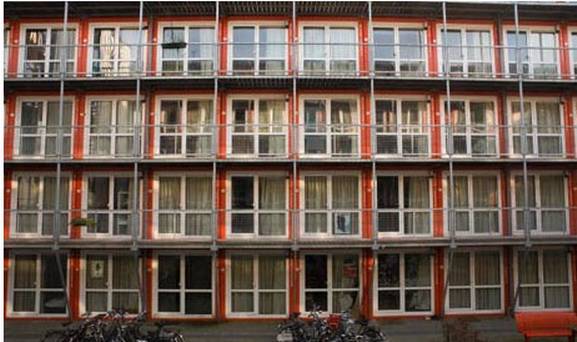
The Dimitrovs are the first nuisance neighbours to be moved forcibly to police-supervised accommodation as crowded Amsterdam steps up measures against anti-social behaviour.

Eberhard van der Laan, Amsterdam’s mayor, admitted that the removal of the family was a draconian measure but insisted that bullying and violent behaviour had left him with no choice.

“The family has been causing problems for years and has a history of vandalism, noise nuisance and threatening behaviour,” he said.

The eight members of the gypsy family have compared their container homes, numbers 48a and 48b, to a concentration camp and accused Amsterdam council of “pure racism”.

Francois Lonis, an ex-boyfriend of one of the Dimitrov daughters who still lives with the family, criticised Mr van der Laan for commemorating the Holocaust while “discriminating” against Roma. “The mayor talks about Auschwitz but sends us to this place,” he said.

“Where is my mother-in-law supposed to do the shopping. Our television does not fit inside.”

The housing camps have been nicknamed “scum villages” because their establishment follows a 2011 proposal from Geert Wilders, the leader of a populist Dutch right-wing party, for special units to deal with persistent troublemakers.

“Repeat offenders should be forcibly removed from their neighbourhood and sent to a village for scum,” he argued at the time. – Daily Telegraph