Senior journalist calls Libération shooting ‘good news’

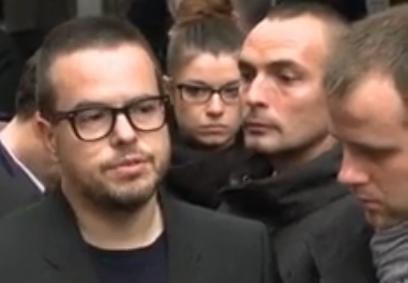
Nicolas Demorand, Liberation Editor-in-Chief, looks rather relaxed
Nicolas Demorand, Liberation Editor-in-Chief

A gunman opened fire in the lobby of a French newspaper office in Paris on Monday, gravely wounding a photographer’s assistant before fleeing.

“Blood in the hall of this newspaper may be some good news,” Annette Lévy-Willard, a senior staff writer at Libération told the New York Times. “This outrage could break France’s racist and anti-Semitic fever.”

Police and representatives of the ultra-left Liberation say a 27-year-old photographer’s assistant is in serious condition after being shot in the chest and arm.

The culture minister of the increasingly unpopular leftwing Socialist government called the newspaper founded by Jean-Paul Sartre, a “pillar of our democracy.”

The paper supports François Hollande who has become the most unpopular French president on record. Only 26% of French people have a positive opinion of the Socialist president, a BVA poll showed. It was the worst score for a French leader since BVA began polling 32 years ago.

The poll shows Hollande’s near-unanimous unpopularity among right-wing voters: 97% have a bad opinion of the Socialist leader, a level never reached by any president among supporters of other parties, even Sarkozy who deeply antagonised many left-wing voters.

Some 84% French people believed government policy was not efficient and 74% felt it was not fair. Meanwhile, in the run up to crucial local and European elections next spring, the far-right Front National is rising in popularity and now has the same level of approval ratings as the Socialist party.

Libération has been struggling with financial difficulties and layoffs in recent years as many readers shun the paper as a result of it’s support for the unpopular French president.

Benny Lévy (aka Pierre Victor) was a philosopher, political activist and author as well as a political figure of May 1968 in France, and the personal secretary of Jean-Paul Sartre from 1974 to 1980. Along with him, he helped founding the French newspaper Libération in 1972.

Benny Lévy is known for his unusual itinerary from Maoism to Judaism, or “from Mao to Moses”.

Editorially, the paper is supportive of gay marriage, a recent controversy in France. Earlier this month, the newspaper ran a long interview with Christiane Taubira, France’s black minister of justice, who had promoted the government’s new law permitting same-sex marriage.

“It is a very serious attack on a media outlet, on Liberation,” minister Aurelie Filipetti said. President Hollande, on an official visit to Israel, sent a strong message home about the attack: “It’s always freedom of information that is threatened.”

Nicolas Demorand, Liberation Editor-in-Chief, also gay, expressed his concern over what he says is an increase in the number of attacks in Paris.

“There is a high level of violence that compromises the work of many newsrooms and can have tragic consequences as the ones that occurred this morning,” Demorand said.

“We need to launch an alert a collective alarm in the face of the new stage in the rise of violence in Paris,” Demorand urged.

Soon afterward, shots were fired at the headquarters of a major French bank west of Paris, and a gunman briefly took a man hostage nearby.

The Paris police headquarters said that it is not clear whether the three incidents are linked, but that authorities are increasing security in all three places as well as media offices around Paris.

As police hunt for the attacker or attackers, a helicopter was seen flying over the neighbourhood that includes the French president’s office and the nearby Champs-Elysees avenue.


Union Buildings will get Mandela statue in December

The Union Buildings in Pretoria

A statue of Nelson Mandela will be unveiled at the Union Buildings by the end of the year, President Jacob Zuma said on Monday.

This would be part of the marking of the building’s centenary.

Zuma was speaking in Houghton, at the official opening of the Nelson Mandela Centre of Memory’s public facility and the permanent exhibition on the life and times of Mandela.

“These resources are an integral part of our nation’s heritage,” Zuma said.

“They are our nation’s treasures and they indeed need to be preserved. [The centre] is making a major contribution to integrating liberation heritage and cultural heritage.”

Zuma urged South Africans to continue the values for which Mandela stood in their everyday lives and not just on Mandela Day, when people are asked to give of their time to help others.

He said exhibitions about Mandela’s life were underway in Paris, France and in Washington, in the US.

“The exhibition continues to attract record attendances, proving once more that Tata [Mandela] is indeed a global icon,” Zuma said.

“We are doing these things to thank people of the world for standing with us against apartheid.”

He wished Mandela well in his recuperation at home.

Earlier this year, Mandela spent almost three months in hospital for a recurring lung infection before being discharged on September 1 to continue receiving treatment at home.

Nelson Mandela Foundation trustee Tokyo Sexwale said the centre was dependent on donations and he asked South Africans to contribute what they could.

“This legacy needs to live forever. A time will come when Madiba has to go, but the name lives on.

“Forget the millions of dollars [from other funders], every cent counts.”

Regional radio station Kaya FM, the British soccer club Sunderland, clothing company Edcon and the US Embassy had joined the centre as new sponsors.

The centre, which contains archives collected by the former president’s foundation over the years, will be open to the public.

The exhibition includes a view of Mandela’s old office, a number of the publications in which he has been published, the Nobel Peace Prize he was awarded in 1993 and a number of other artefacts. – Sapa

Mandela has no birth certificate, say archivists

Valentine's Day letter from Mandela
Valentine’s Day letter from Mandela

By Christopher Torchia

Most of Nelson Mandela’s handwriting is neat, but it harbors a few mysteries. Archivists sometimes struggle to decipher words in the vast body of documents that Mandela penned, and he often jotted an acronym that nobody, not even the former South African president in later years, has been able to explain.

Now, some of the words that Mandela wrote, which help define the man who led the fight against white rule and became president after apartheid, are on display at the Nelson Mandela Foundation, which on Monday unveiled a public facility.

Mandela, now 95 and critically ill, wrote prolifically during his storied career.

In jail, Mandela’s associates wrote some things in tiny script, reducing the amount of paper used so that it could be smuggled out of prison more easily. In his autobiography, “Long Walk to Freedom,” Mandela notes his copy of the book manuscript was confiscated by authorities, but applauds fellow prisoners with “unique calligraphic skills” who helped get the original manuscript out of prison.

Mandela was a lawyer early in his career, and some letters to family from prison balance sadness with hope and optimism, with carefully chosen words.

“He doesn’t shoot from the hip,” said Razia Saleh, a senior archivist at the foundation.

Mandela, also known by his clan name Madiba, was released in 1990 after 27 years in apartheid prisons, and many of the notes he wrote since then include the initials KLM. Nobody at the foundation can figure out its meaning.

“Madiba hasn’t been able to tell us what it means,” Saleh said. “So that’s a mystery. Maybe somebody can solve it at some point.”

The former president’s orderly handwriting stems from his education in Christian mission schools, though it’s sometimes hard for archivists to make out letters such as “s” and “h” in Mandela missives.

“We’ve transcribed his desk calendars, and sometimes we battle to make out words,” Saleh said.

The display at the non-profit Nelson Mandela Foundation is open by appointment and includes a small piece of stone from the hut where Mandela was born in the rural village of Mvezo in Eastern Cape province. The hut was demolished a few years ago to make way for new construction.

“There isn’t much that survived from his early childhood. There’s no photograph. We don’t have a birth certificate,” said Saleh. The stone, she added, is “one of the few things that’s tangible, that links us to Madiba’s early life.”

The opening of the public facility coincides with the 20th anniversary of the approval of an interim constitution and an electoral bill that set the stage for South Africa’s first all-race elections in 1994.

Mandela now stays in a big house in a Johannesburg neighborhood near the center named after him, attended by doctors. President Jacob Zuma visited him on Monday, and the president’s office said Mandela remains in stable but critical condition.

The Sunday Independent, a South African newspaper, quoted Mandela’s former wife, Winnie Madikizela-Mandela, as saying he is unable to speak because of tubes that keep his lungs clear of fluid. Mandela has been in intensive medical care at his home since Sept. 1, when he was discharged after nearly three months in a hospital for a recurring lung infection. – AP

Zimbabwe’s factories grinding to a halt due to mandatory black ownership

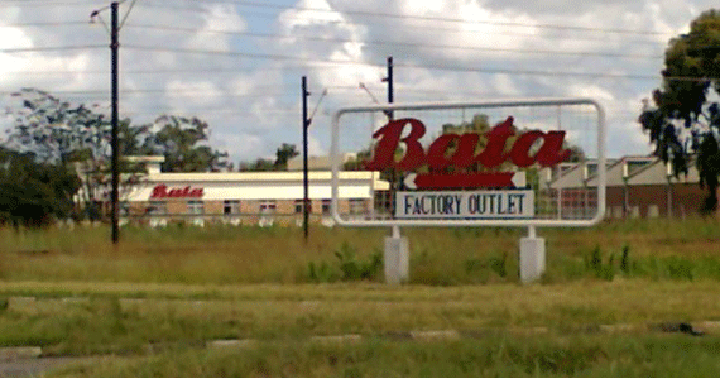
The Bata shoe factory in Gweru, Zimbabwe

by Chris Chinaka

Across Zimbabwe, dozens of factories lie idle with peeling paint, rusting machines and broken roofs in once bustling industrial districts, symbols of the huge economic challenge facing President Robert Mugabe and his ZANU-PF party.

On the surface, things look rosy after Mugabe’s landslide election victory in July: growth forecasts are looking more positive as agriculture recovers, inflation has been tamed and the stock market is starting to buzz again after some listless post-election trading.

But look behind the headlines and the landlocked southern African nation’s manufacturing heartlands, which accounted for a quarter of the economy a generation ago, are now wastelands – and some fear the decay is permanent.

From Harare in the north to the second city of Bulawayo in the south, companies are working at a third of capacity, down from 55 percent a year ago, according to the Confederation of Zimbabwe Industries (CZI).

“Businesses are collapsing, and the economy will need a real big push-start to get going again,” said an accountant winding down tube-making firm BMA Fasteners and Tube and Pipe in Harare. He declined to be named for professional reasons.

“At this rate, it’s frightening to think what the future holds,” the 42-year-old said, scratching his head. “I don’t think it is an exaggeration to say it might just be hell.”

Although they are careful not to blame politics, industry bosses say business confidence has fallen since the 89-year-old Mugabe was declared the overwhelming victor in the July 31 election, which the opposition MDC rejected as rigged.

New finance minister Patrick Chinamasa expects the economy to grow 6.1 percent in 2014 from 3.4 percent this year but that will make no dent in unemployment estimated at over 80 percent.

Zimbabwe’s economy shrank by 45 percent during a decade-long crisis blamed on ZANU-PF, but bounced back in 2009 after Mugabe was forced to share power with arch rival Morgan Tsvangirai after violent and disputed elections the previous year.

The July election put paid to that coalition, and with it what some critics saw as the MDC’s moderating influence on Mugabe and ZANU-PF nationalism.

FOREIGN INVESTMENT

In its most blatant form, that nationalism was manifest in Mugabe’s “indigenisation” push, under which foreign-owned firms have been forced to sell majority stakes to local blacks.

However, with the economy so desperate for capital – some estimates put domestic credit demand at $12 billion, more than double total bank deposits – Mugabe may be forced to soften his anti-foreigner stance.

“We are likely to see a more pragmatic approach by the politicians,” said Grant Flanagan of Amigo Partners, which manages a Zimbabwe-focused investment fund, noting some faint signs of a softening of policy.

Most notably, in his new cabinet, Mugabe swapped combative indigenisation minister Saviour Kasukuwere for a mild-mannered technocrat who has already suggested the government is open to discussion about the extent and timing of black ownership.

However, there are no details and when asked by Reuters about indigenisation, another member of the government, Industry and Commerce minister Mike Bimha, declined to discuss something he said was outside his remit.

Without a decent period of clarity and consistency, investors are unlikely to be writing any cheques.

“ZANU-PF must realise they are in trouble over the economy,” independent economic commentator John Robertson said. “Investors, particularly in mining, where they have an opportunity, will want to see whether there really is any softening. If there is, then definitely the economy stands some chance.”

DAUNTING CHALLENGE

Even then, turning the ship round will be difficult.

The African Development Bank estimates that fixing the infrastructure needs $14 billion, a sum that in reality can only be met by the World Bank and IMF, which stopped lending to Harare in 1999 because of unpaid debts.

Private investors will then have to address a manufacturing vacuum filled by cheap imports, mostly from China.

Nowhere is the evidence more glaring than at David Whitehead, a large textile firm that used to employ 2,500 people in Chegutu, 100 km (60 miles) southwest of Harare, but which collapsed two years ago and stands empty today.

A handful of people are contracted to maintain machinery. Most of the time, only a couple of guards are on patrol.

Elsewhere, the factory sector built during the years of isolation imposed on white-minority Rhodesia has lost makers of everything from shoes to medicines, carpets to building materials and chemicals to food.

In 1986 manufacturing contributed 26 percent of GDP. Today it is just over 2 percent.

The industrial graveyard includes Ziscosteel, once the largest integrated steel works in the region, which shut in 2008 due to what analysts said was gross mismanagement and a failure by the state-owned firm to upgrade its equipment.

The government has been struggling to revive it with a number of foreign firms, including lately Essar from India.

“There is a long way to go and the starting point for our companies is retooling. There is no other way. There is idealism, and then there is reality,” says economist Prosper Chitambara, a leading private economic consultant.

WAIT AND SEE

The Harare tube firm, which used to employ 300 people, says it was a victim of a range of factors – price controls, foreign currency problems, power cuts, and then cheaper imports from India and China.

“Everything that could go wrong went wrong,” said the accountant in charge of its burial rites.

For ZANU-PF, the absence of the MDC as a coalition partner means it has no-one to blame and nowhere to hide.

Robert Mugabe taking a nap

After the July election, it launched a Zimbabwe Agenda for Sustainable Social Economic Transformation, although the document was culled from the black empowerment parts of its manifesto, leading many to see it as more of the same from a party well-known for its empty economic blueprints.

However, aides say Mugabe himself is taking greater interest in the economy in a bid to rebuild a legacy tarnished by the hardships and hyperinflation of the last 13 years.

A glimmer of hope lies in tobacco farming, where state and private support for small-scale farmers is expected to push production to 200,000 tonnes from 45,000 in 2008, the pit of a slump blamed on Mugabe’s seizures of white commercial farms.

Many also see huge potential in mining and diamonds if the government can assuage concerns over forced sales of stakes to locals.

“We have to wait and see,” said the security guard manning the entrance to the David Whitehead factory in Chegutu, echoing a refrain heard in boardrooms from Harare to Johannesburg, London and New York. – Reuters

(Additional reporting by Pascal Fletcher in Johannesburg; Editing by Ed Cropley and Giles Elgood)

Thousands march against mainstream media

mammThousands of people in the UK and US united in their rejection of mainstream media in a mass protest. Protesters targeted the headquarters of media giants like Fox News, the BBC and NBS, decrying their narrow coverage of world affairs.

The March Against Mainstream Media (MAMM) organized the international protest via social media and challenged the established media to cover it.

In a statement posted on the MAMM website, the organization said big media outlets had two options:“report on the fact that thousands of people are currently protesting outside of their buildings because they are keeping important news from the public’s eyes,” or ignore them.

Across America people turned out brandishing banners, condemning established news channels.

“Boycott the media!” one banner read in High Point California, while in Kansas city supporters of the movement wearing Anonymous masks delivered the message “America deserves the truth!”

A recurrent theme that cropped up a number of times in the US protests was the media’s coverage of the stricken nuclear plants in Fukushima Japan that were damaged in the 2010 earthquake-triggered tsunami.

“The radiation from that plant is going to reach us and affect us, not just in California but worldwide. How is it going to affect us, how is it going to affect our water, our food supply, and our way of life?” said one protester to KMPH Fox 24.

in London, supporters of the anti-establishment movement gathered outside the offices of the BBC in a sit-in-style protest.

Jet Barnett, one of the organizers of MAMM spoke to RT and said the march was a sign that people were beginning to look for their news in alternative media.

“We want mainstream media to listen, to let them know that the people are finally coming together and influence them to make a change,” said Barnett to RT, adding that the organization is fighting to restore journalist integrity.

Confidence in US mainstream media has been declining sharply over the past couple of years with only 44 percent of Americans trusting mass media, according to a Gallup poll in September. The figures for this year are a slight improvement on 2012 when the survey saw trust in the media fall to a record low of 40 percent.

However, a large amount of Americans (46 percent) believe media has become too liberal, compared to only 13 percent who regard mainstream news coverage as overly conservative.

Gallup’s statistics show the steady decline in media trust in America from 2005, with Democrats reportedly having the most confidence in American news outlets. – RT

Why does Toronto hate Rob Ford so much?

Marion Barry caught red-handed

There are no doubt dozens of mayors and other local officials in the US and Canada who are awash in wrong-doing and very bad habits.

Take the infamous black DC mayor Marion Barry who was elected to the city council in 1992 and ultimately returned to the mayoralty in 1994, serving from 1995 to 1999 after he was caught smoking crack.

In January 1990 Barry was videotaped smoking crack cocaine and arrested by FBI officials on drug charges. Barry made a comeback after he served six months in a federal prison.

But why no wall-to-wall coverage of other foibles? The revelations must be serving some purpose to rid the city of Ford.

Since the 1970s, Toronto has been home to the largest Jewish population in Canada and a centre of Jewish Canadian culture. Why do Toronto’s elites, and by extention the media, really hate Rob Ford so much? CNN gives a clue:

Part of that building has been a heavy emphasis on being accessible to constituents: Mayor Ford even gives out his cell phone number to voters, to call him any time about problems with city services or taxes.

He eschews a chauffeur and other city perks, all in the name of keeping spending down for the average taxpayer. He’s even been photographed reading work documents while driving on an expressway.

“I don’t believe in wasting taxpayer’s money,” he later said about the controversial photo.
…
Upon winning his first election, Rob Ford immediately garnered a reputation for keeping taxes and city expenses down. In 2001, he advocated cutting limousines as a city perk and slashing each councilor’s $200,000 budget, used for travel and club memberships. “If we wiped out the perks for council members, we’d save $100 million easy,” he said, according to the Toronto Globe and Mail.
…
In 2006, then-Councilor Ford offended the gay community when he questioned $1.5 million for an anti-AIDS program: “It is very preventable,” Ford said about the disease, according to City News Toronto. “If you are not doing needles and you are not gay, you wouldn’t get AIDS probably, that’s bottom line.”

Linux admits NSA demanded backdoor

Linus Tovalds
Linus Torvalds

Speaking at the keynote LinuxCon panel this year, Linus Torvalds, who created the open-source Linux operating system 22 years ago, revealed that the US government had approached him about installing a backdoor into system’s structure. Linux is the preferred operating system for the privacy conscious infosec community.

It’s just the latest in a string of revelations illustrating how the NSA have for a number of years attempted to intervene in the very structuring of online communications and cryptography to enable easier surveillance.

EWeek.com reported on Torvalds’ panel admission (although the suggestion is that the Linux creator resisted government pressure):

Torvalds was also asked if he had ever been approached by the U.S. government to insert a backdoor into Linux. Torvalds responded “no” while [nodding] his head “yes,” as the audience broke into spontaneous laughter. – salon.com

Oprah: White racists have to die for racism to end

'All white racists must die'
‘All white racists must die’

Oprah Winfrey, one of the wealthiest people in the world, is throwing the race card again.

During an interview with the BBC Friday, she not only said that President Obama is treated with disrespect because he’s black, but also that entire generations of white racists are going to have to die for racism to end

WILL GOMPERTZ, BBC: The issue of the civil rights movement, and the way that black people around the world are treated, particularly I suppose in, around the world…
OPRAH WINFREY: Around the world.
GOMPERTZ: Around the world. Look at place like Russia, it’s, you know…
WINFREY: Around the world.
GOMPERTZ: So is this, is this, I suppose from a movie point of view, what the movie and the messages hold and the other movies we were discussing, and “Scottsboro Boys,” are these historical comments or are we still looking at a contemporary issue?
WINFREY: Good question. Well phrased. Good job. It would be foolish to not recognize that we have evolved in that we’re not still facing the same kind of terrorism against black people en masse as was displayed with the Scottsboro boys. It’s gotten better. Are there still places where people are terrorized because of the color of their skin, because of the color of their black skin? Yes. But there are laws that have allowed us to progress beyond what we saw in the Scottsboro boys and beyond the even the prejudice we see in “The Butler.”

Notice that Winfrey added “color of their black skin.” Why not just leave it as “color of their skin?”

Why do folks such as her only see racism through the prism of how blacks are treated? By looking at the problem so narrowly, doesn’t it make matters worse?

The US is by far the most diverse nation in the world containing more ethnic and religious groups than any other on the planet.

Likely each of them has at times rightly or wrongly felt mistreated for the color of their skin or their religious beliefs.

When we as a nation look at this problem more honestly and not just as it pertains to one group, racism will have a chance of being solved.

Unfortunately, Winfrey has another solution:

GOMPERTZ: Are you saying problem solved?
WINFREY: I’m saying problem not solved. I’m saying that, you know, that’s the beauty of a film like “The Butler,” and it’s the beauty of a film like “12 Years a Slave,” and it’s the beauty of what we’re seeing on stage with “Scottsboro Boys” is that it allows people to see where the root of the problem started. It allows people to see, “Oh, that’s where it all started, this is how far we’ve come, and now this is how much farther we need to go.” Of course problem is not solved. You know, as long as people can be judged by the color of their skin, problem’s not solved. As long as there are people who still, there’s a whole generation – I say this, you know, I said this, you know, for apartheid South Africa, I said this for my own, you know, community in the south – there are still generations of people, older white people, who were born and bred and marinated in it, in that prejudice and racism, and they just have to die.

So in Winfrey’s view, it’s older white people that are the problem, and once they die, racism ends.

Yet three months ago, she said of the George Zimmerman verdict, “It’s ridiculous to look at that case and not to think that race was involved.”

Zimmerman’s only 30 years old and is Hispanic.

It is patently absurd to suggest that racism is caused by old white people when racism and religious bigotry cut across all generations and ethnicities.

But folks such as Winfrey don’t want to look at it that way, for they have a different agenda:

GOMPERTZ: Do you think, has it ever crossed your mind that some of the treatment of Obama and the challenges he’s faced and some of the reporting he’s received is because he’s an African-American, and if he wasn’t an African-American, if he was a white guy, those wouldn’t have happened, he wouldn’t have been treated in quite the same way, he wouldn’t have to deal with quite the same confrontations?

Some question, huh? You’d think Obama was the first president to ever have challenges and confrontations. Was Gompertz on another planet when George W. Bush was regularly being attacked by his opponents?

With the race card nicely placed on the tee, Winfrey predictably hit it a long way:

WINFREY: Has it ever crossed my mind? It’s crossed my mind probably as many times as it’s crossed your mind. Probably it’s crossed my mind more times than it’s crossed your mind. Just the level of disrespect. When the Senator yelled out, “You’re a liar.” Remember that? Yeah, I think that there is a level of disrespect for the office that occurs, and that occurs in some cases and maybe even many cases because he’s African-American.

What Winfrey conveniently ignores is that she endorsed and campaigned for Obama BECAUSE he was an African-American. He wouldn’t have gotten her support or been elected if he wasn’t.

More importantly, if he was just some white guy from Chicago that nobody had ever heard of, he never would have beaten Hillary Clinton in 2008.

How sad that she forgets that.

But that’s not the saddest part about folks like Winfrey throwing the race card this way.

What’s sadder is that as an African-American woman that has attained a level of success and notoriety greater than 99.99 percent of the people that have or ever will walk on this planet, she could be a positive role model concerning racism rather than helping to fuel it.

Why doesn’t someone of Winfrey’s obvious intellectual prowess understand that?

Imagine how much better it would have been for all Americans including blacks if she answered Gompertz’s racially charged question this way:

Is some of the treatment of Obama because he’s an African-American? Maybe some. But I think that’s exaggerated. The President of the United States is the most powerful person on the planet receiving greater scrutiny than any other. As a result, he’s challenged by people on both sides of the aisle, and that’s a good thing because it acts to prevent him or her from becoming too powerful.

Unlike other nations, our President is not a king or dictator, and although many claim the treatment of Obama is harsher because he’s black, I would say that for the most part, he isn’t being treated any differently than George W. Bush before him or Bill Clinton before him. In fact, I would make the case that because he’s black, he’s been treated far better by most of the media than any President in my lifetime.

So let’s not be so quick to throw the race card all because Obama has his critics. That comes with the territory, and if you don’t have big enough shoulders to take the hits, you should have never campaigned for the job.

Imagine the headlines and the positive example Winfrey could have set by telling people the truth.

Is that just too difficult for her? Doesn’t she know that every time she dishonestly throws the race card, she’s undermining a solution?

Oh. That’s right. Her solution is that generations of racists have to die to solve the problem.

Unfortunately, with folks like her out there fanning the fires of discontent, they’re inculcating new generations with racist thoughts thereby making it necessary for A LOT of generations to die off before this problem ever gets solved.

newsbusters.org

Glonass to compete with GPS

glonassThe US Department of Defense and Central Intelligence Agency have been trying to persuade the US State Department not to let Roscosmos build several GLONASS ground-based measuring stations in the United States, alleging that they could be used for military purposes.

They fear that these structures could help Russia spy on the United States and improve the precision of Russian weaponry, the officials said. These monitor stations, the Russians contend, would significantly improve the accuracy and reliability of Moscow’s version of the Global Positioning System, the American satellite network that steers guided missiles to their targets and thirsty smartphone users to the nearest Starbucks.

The Pentagon argues that if the State Department sanctions the GLONASS stations’ deployment, Russia might be able to significantly increase the accuracy of its guided missiles and might also use those stations for intelligence activity from US territory. The arguments have prompted the White House to postpone decision-making on the issue until Russia provides additional information, according to anonymous sources in the US Administration and Department of State.

US congressman Michel Rogers, who earlier requested the Pentagon’s estimates of the consequences of the GLONASS stations’ deployment for US national security, said that he didn’t understand why the US should be interested in encouraging GLONASS, a competitor of the American GPS system, when the use of GPS worldwide gives the US obvious advantages in many respects.

Moscow rejects the structures have anything to do with surveillance operations, contending they are designed to improve the accuracy of Russia’s version of the Global Positioning System (GPS), the American satellite network that steers guided missiles to their targets and helps passengers with navigation.

“They don’t want to be reliant on the American system and believe that their systems, like GPS, will spawn other industries and applications,” said a former senior official in the State Department’s Office of Space and Advanced Technology.

The monitor stations have been a high priority of Russian President Vladimir Putin for several years as a means to improve Glonass not only to benefit the Russian military and civilian sectors but also to compete globally with GPS.

Earlier this year, Russia positioned a station in Brazil, and agreements with Spain, Indonesia and Australia are expected soon, according to Russian news reports. The United States has stations around the world, but none in Russia.

In May 2012, Moscow requested that the United States allow the ground-monitoring stations on American soil. American technical and diplomatic officials have met several times to discuss the issue and have asked Russian officials for more information, said Ms. Harf, the State Department spokeswoman.

In the meantime, CIA analysts reviewed the proposal and concluded in a classified report this fall that allowing the Russian monitor stations here would raise counterintelligence and other security issues.

The State Department does not think that is a strong argument, said an administration official. “It doesn’t see them as a threat.”

Voice of Russia, RIA, Press TV, NY Times

Planned nuclear emergency exercise rated a ‘success’

pelindabaThe preliminary evaluation by the National Nuclear Regulator (NNR) of the planned nuclear emergency exercise held in September at the South African Nuclear Energy Corporation (Necsa) complex at Pelindaba, west of Pretoria, was deemed favorable it was reported earlier. However, there has been no in-depth analysis of the exercise.

“The exercise was successful,” said NNR manager: nuclear technology and waste projects Thiagan Pather. “From what I’ve seen, Necsa seems to have activated its emergency structures and procedures and managed the situations well.”

The exercise also involved the Madibeng local authority, based in the town of Brits in the North West province. The local authority activated its emergency centre (with representatives from a number of municipal departments, including the fire department, as well as the provincial traffic police).

“Madibeng was also quite good, but there were some glitches and there is room for improvement,” Pather added.

The exercise was concluded in the early afternoon.

The holding of the exercise, to test nuclear emergency procedures at the country’s various nuclear facilities, is one of the responsibilities of the NNR, under the National Nuclear Regulator Act, No 47 of 1999.

Responding to a nuclear emergency requires coordinated action by the nuclear licensee (in this case, Necsa) and the relevant local and provincial authorities and emergency services. Consequently, coordinated emergency plans must be drawn up, funded and tested. The NNR must ensure that these plans are effective.

The scenario for the exercise is that an explosion has occurred in Necsa’s Safari-1 reactor building, inflicting mechanical damage on spent fuel elements in the reactor core and in the spent fuel pool. The reactor, which is cooled by water, springs a leak and loses cooling. Radiation is then released into the atmosphere and spread westward by the wind. (This is an exercise, not an actual emergency). The responses of Necsa and the other relevant authorities are being tested and will be evaluated.

The NNR stated that this scenario is not very likely to happen in reality. The exercise includes simulated casualties (both injuries and radiation exposure), the physical evacuation of personnel, the testing of transport and communication and other procedures. – engineeringnews.co.za

Stoning of teenager divides community

pemmyScores of residents from East London and surrounding areas braved the rain and gathered at Nompumelelo Township to bid farewell to a learner who was stoned to death by a mob that accused him of child snatching.

Mbuyiselo Ayanda Mtati was a Grade 12 learner at Sakhikamva Senior Secondary School at the time of his death. At least eight suspects, all of them women, are still in police custody in connection with his murder.

Social Development MEC Pemmy Majodina has described the incident as gruesome.

“ I feel very much depressed, demotivated and hurt because I fight for the rights of women but today it’s women who have turned against that and killed their own child. If you are a mother you are supposed to protect a child but today I see something very different and I regret what has been done by these mothers.”

The MEC highlights that the law must take its course and they must not get bail as that has been the case in other similar incidents.

“A murder is a murder and we must treat everyone equally,” Majodina says.

Family spokesperson, Lunga Gqotso, says that the family is still hurt and wants the suspects to face the full might of the law.

“We want justice; the law must take its course. If they find them guilty, they must lock them and throw the keys away so that we can be relieved. We don’t want the culprits to be with the people of Nompumelelo,”

However, Gqotso says that the family is worried because the community may take the law into their own hands.

“We don’t want the community of Nompumelelo to be divided. We want justice.”

Did JPMorgan buy influence in China?

Wen Ruchan
Wen Ruchun

To promote its standing in China, JPMorgan Chase turned to a seemingly obscure consulting firm run by a 32-year-old executive named Lily Chang.

Ms. Chang’s firm, which received a $75,000-a-month contract from JPMorgan, appeared to have only two employees. And on the surface, Ms. Chang lacked the influence and public name recognition needed to unlock business for the bank.

But what was known to JPMorgan executives in Hong Kong, and some executives at other major companies, was that “Lily Chang” was not her real name. It was an alias for Wen Ruchun, the only daughter of Wen Jiabao, who at the time was China’s prime minister, with oversight of the economy and its financial institutions.

JPMorgan’s link to Ms. Wen — which came during a time when the bank also invested in companies tied to the Wen family — has not been previously reported. Yet a review by The New York Times of confidential documents, Chinese public records and interviews with people briefed on the contract shows that the relationship pointed to a broader strategy for accumulating influence in China: Put the relatives of the nation’s ruling elite on the payroll.

New York Times reporter Ben Protess, who has been reporting on the story, says it’s common for banks in China to try and gain influence by hiring the children of the ruling elite. But what’s unusual in this case, he says, was that it was the child of the prime minister — and she chose to use an alias, rather than her real name.

So what did Wen do? Protess and his colleague obtained a letter outlining how Wen and her consulting firm helped broker an underwriting deal for the bank in China at a state-owned railway company. She also helped advise the bank on the macro-economic policies in China.

“The idea is, you had on tap, on the payroll, somebody who was able to help you navigate this booming country and that could potentially open the door to big business,” Protess says.

In the US, it’s part of a multi-faceted government investigation into JPMorgan’s hiring practices in China that might involve dozens, or perhaps hundreds, of current and former Chinese government officials and their families.

“This is a major investigation that presents an important threat to the bank,” Protess adds.

Oprah: Americans hate Obama because he’s black

Explaining failure by blaming whites

Oprah Winfrey is going around the world telling everyone that Americans are racist while she promotes her new race-baiting film.

Oprah Winfrey has been a prominent supporter of Barack Obama. She thinks that both he and the Office of President have been treated with contempt because of the colour of his skin.

“There’s a level of disrespect for the office that occurs. And that occurs in some cases and maybe even many cases because he’s African American. There’s no question about that and it’s the kind of thing nobody ever says but everybody’s thinking it.”

Meanwhile Senators have dug up new report of an Obamacare failure so dismal it is hard to believe.

Among four major insurance companies, a total of only five people have enrolled in the president’s health plan in Washington, D.C.

Delaware reported only four people had enrolled in Obamacare as of Tuesday, even though the state used a $4 million grant to hire four community organizations to provide marketplace guides. That worked out to $1 million spent on each enrollee.

The worst numbers from any state to report is actually just a single number, as in the number one. Just one person has reportedly enrolled in Obamacare in North Carolina. And even that person is technically still not enrolled, having yet to pay. So, zero people enrolled in Obamacare as of Oct. 15.


FBI: Cyber-attacks worse threat than terrorism

James Comey
James Comey

Cyber-attacks are increasingly becoming the primary threat against the United States, according to the head of the FBI.

During his first testimony as the new FBI director, James Comey told Congress on Thursday that while the threat of traditional terrorist strikes inside the United States is now lower than it was before 2001, the potential threat from cyber-attacks continues to rise.

“That’s where the bad guys will go,” Comey said, as quoted by the Guardian. “There are no safe neighborhoods. All of us are neighbors [online].”

Comey’s comments were echoed by Rand Beers, the acting secretary for the Department of Homeland Security, and Matt Olsen, the director of the National Counterterrorism Center, both of whom also testified before the Senate Homeland Security and Government Affairs Committee.

The three officials agreed that while the potential for an attack on the scale of 9/11 is more likely to occur overseas, Congress should be wary of rolling back surveillance programs like the one employed by the National Security Agency. Over the next decade, cyber-attacks are likely to become the primary domestic threat, they said.

The officials added that any changes to the US surveillance program should be on the “margins,” and not directly affect the agencies’ “core capabilities.”

In fact, Beers and Comey both pushed Congress to expand the government’s power to gain access to data held by privately owned companies, with Beers suggesting that new legislation grant corporations liability protection for sharing sensitive information with federal agencies.

According to the Guardian, at least one senator, Tom Coburn (R-Okla.), expressed concern over the suggestion, saying that companies should have the chance to willingly cooperate with the government before being told to hand over data.

In 2008, the US passed legislation protecting telecommunications companies and internet providers helping the government conduct warrantless surveillance from privacy lawsuits.

USA Today reported that the officials noted how difficult it is to detect self-radicalized terrorists, and that Americans are urged to report something suspicious when they see it.

“The challenge of the home-grown violent extremist is that [the person] really doesn’t hit all the trip wires,” Olsen said. – RT