MLK: Obama draws flak for house Negro on his plantation

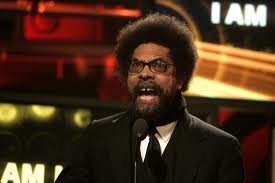
Cornell West
Cornell West

Professor Cornel West, the radio personality and scholar, on Friday lashed out at organizers of Wednesday’s 50th-anniversary commemoration of the March on Washington, saying that it offered scant celebration of Martin Luther King Jr. and his accomplishments, according to Mediaite.

He said the event merely highlighted “the coronation of the bona fide house Negro of the Barack Obama plantation, our dear brother Al Sharpton.”

West lamented that black leadership has become “so sold-out” so as not to have the courage to be a “bull in the china shop,” break rank, and talk about “racism and poverty”.

This is not the first time West has referred to Sharpton as being “on the Obama plantation.” The radio host made the same claim in July when he felt Sharpton did not advocate hard enough for a Department of Justice “civil rights” prosecution against the recently-acquitted George Zimmerman.

Further, he said, the event was unremarkable because black leaders are too fearful to speak out against the nation’s first black president.

Early in the radio show “Smiley and West,” West said of the previous day’s commemoration of the 50th anniversary of Martin Luther King Jr.’s March on Washington, “We saw of course the coronation of the bonafide house negro of the Obama plantation, our dear brother Al Sharpton, supported by the Michael Dysons and others who’ve really prostituted themselves intellectually in a very ugly and vicious way”.

[Transcript]CORNEL WEST: Well, on the one hand as you can imagine, that was a beautiful thing. I was there in D.C. to see the magnificent expression of, like, faces and sparkling eyes of everyday people of all colors, hungry, thirsty for justice, hungry, thirsty for truth. Then you turn to so many of the major organizers and major speakers at the march – not too much truth. Not too much talk about justice. Mainly talking about voting rights, and every once in a while you see a vague reference to jobs.

Now, they had some wonderful speakers earlier in the day, but most of the country didn’t get a chance to hear them. But for the most part, there was, Brother Martin himself, I think, would’ve been turning over in his grave. He wants people to talk about Wall Street criminality, he wants people to talk about war crimes, or drones dropping bombs on innocent people. He wants people talking about the new Jim Crow and the privatization of education, and the various ways in which the well to do, the oligarchs and plutocrats are getting away with murder. You didn’t hear that whatsoever. You not only got a tame Martin Luther King Jr., but a real sense in which who he really was at the end of his life hardly surfaced at all.

And we saw of course the coronation of the bonafide house negro of the Obama plantation, our dear brother Al Sharpton supported by the Michael Dysons and others who’ve really prostituted themselves intellectually in a very ugly and vicious way.
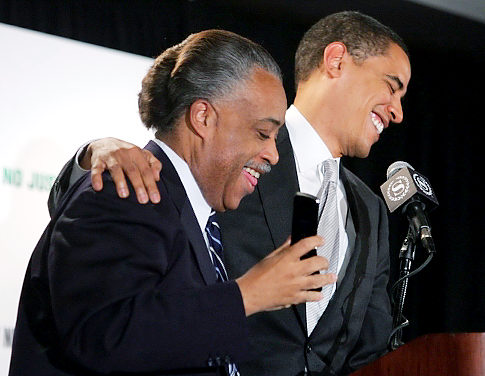
Sharpton and Obama
Sharpton and Obama

‘US attack on Syria would be gross violation of international law’

Putin says US claims of Syrian responsibility for chemical attack is 'utter nonsense'
Putin: US claims that Syria is responsible for chemical attack is utter nonsense

Russia dramatically escalated its denunciations of American threats to attack Syrian military targets on Saturday, with President Vladimir Putin saying it would have been “utter nonsense” for the Syrian government to use chemical weapons as the Obama administration alleges.

The Foreign Ministry said a U.S. attack would be a “gross violation” of international law.

Speaking out for the first time since an apparent chemical weapons attack near Damascus on Aug. 21, Putin called on President Obama to find a nonviolent way out of the crisis.

“I would like to address Obama as a Nobel Peace Prize laureate: Before using force in Syria, it would be good to think about future casualties,” Putin told Russian news agencies in Vladivostok during a tour of the country’s flood-stricken Far East.

“Russia is urging you to think twice before making a decision on an operation in Syria,” he said.

Putin said he was sure the attack was the work of rebels trying to provoke international — and especially American — involvement in the Syrian conflict. The government of Bashar al-Assad, he said, would have had no reason to use chemical weapons at a time when it had gained the upper hand in the fighting.

Doing so, he said, would have been “utter nonsense’’ – with the clear implication that that is how he would characterize the American allegations.

On top of that, he said, the Obama administration’s “claims that proof exists, but is classified and cannot be presented to anybody, are below criticism. This is plain disrespect for their partners.”

Putin’s comments were soon underlined by a stern statement from the Foreign Ministry. After U.S. Ambassador Michael McFaul had finished a meeting with Deputy Foreign Minister Sergei Ryabkov on Saturday, the ministry declared, “Russia has expressed its conviction that any forceful action against Syria that the U.S. could carry out in circumvention of the U.N. Security Council would be an act of aggression and a gross violation of international law.”

Putin said he was surprised by the vote in Britain’s Parliament on Thursday not to join a U.S. attack on Syrian military targets. “It shows that there are people guided by common sense there,” he said.

Obama arrives in St. Petersburg for the G20 meeting on Thursday and leaves on Friday. The purpose of the gathering is to discuss economic growth, but the White House acknowledges there will be plenty of conversation about Syria on the side. There are currently no plans for a one-on-one meeting between Putin and Obama, who earlier this month decided not to attend a Moscow summit with the Russian president.

On Friday, the head of the foreign affairs committee of the lower house of parliament, Alexei Pushkov, said the Nobel committee should strip Obama of his 2009 Peace Prize if he launches an attack on Syria. – Washington Post

US Fast food strike makes no impact on eaters

fast-food-strikeOn Friday thousands of fast food workers went on strike for higher wages.

The strike has been touted by organizers as the industry’s largest in history. The workers are seeking wages of $15 an hour.

But despite demonstrations in 58 cities, the strikes appeared to do little to rattle the industry today.

Judging by dozens of tweets and photos about the event, most protesters were outside. This left customers free to order inside.

While restaurants in some places temporarily shut down because they had too few employees, many targeted restaurants operated under normal conditions, according to the Associated Press.

In New York, things appeared to business as usual. The AP wrote:

In New York, City Council Speaker Christine Quinn joined about 300 to 400 workers and supporters Thursday in a march before the group flooded into a McDonald’s near the Empire State Building. Shortly after the demonstration, however, the restaurant seemed to be operating normally, and a few customers said they hadn’t heard of the movement. The same was true at a McDonald’s a few blocks away.

The AP noted that since the organizers had made their plans public in an effort to get workers to participate in the strike, managers had time to adjust their staffing levels prior to today’s events.

Despite the relatively low impact of the strikes, a protesting worker interviewed by Business Insider said he wasn’t deterred. 

“It’s something I’m doing for my coworkers and out of respect for myself,” Nick Williams, a 28-year-old McDonald’s worker from Indianapolis, said. “My voice will be heard no matter what.” – Business Insider

Snowden reveals US ‘Black budget’

blackbudgetU.S. spy agencies have built an intelligence-gathering colossus since the attacks of Sept. 11, 2001, but remain unable to provide critical information to the president on a range of national security threats, according to the government’s top-secret budget.

The $52.6 billion “black budget” for fiscal 2013, obtained by The Washington Post from former ­intelligence contractor Edward Snowden, maps a bureaucratic and operational landscape that has never been subject to public scrutiny. Although the government has annually released its overall level of intelligence spending since 2007, it has not divulged how it uses the money or how it performs against the goals set by the president and Congress.

Tables detail spending requests for agencies, as well as personnel breakdowns by pay grade, language expertise, and years of service.

The 178-page budget summary for the National Intelligence Program details the successes, failures and objectives of the 16 spy agencies that make up the U.S. intelligence community, which has 107,035 employees.

The summary describes cutting-edge technologies, agent recruiting and ongoing operations. The Post is withholding some information after consultation with U.S. officials who expressed concerns about the risk to intelligence sources and methods. Sensitive details are so pervasive in the documents that The Post is publishing only summary tables and charts online.

“The United States has made a considerable investment in the Intelligence Community since the terror attacks of 9/11, a time which includes wars in Iraq and Afghanistan, the Arab Spring, the proliferation of weapons of mass destruction technology, and asymmetric threats in such areas as cyber-warfare,” Director of National Intelligence James R. Clapper Jr. wrote in response to inquiries from The Post.

“Our budgets are classified as they could provide insight for foreign intelligence services to discern our top national priorities, capabilities and sources and methods that allow us to obtain information to counter threats,” he said.

Among the notable revelations in the budget summary:

●Spending by the CIA has surged past that of every other spy agency, with $14.7 billion in requested funding for 2013. The figure vastly exceeds outside estimates and is nearly 50 percent above that of the National Security Agency, which conducts eavesdropping operations and has long been considered the behemoth of the community.

●The CIA and the NSA have begun aggressive new efforts to hack into foreign computer networks to steal information or sabotage enemy systems, embracing what the budget refers to as “offensive cyber operations.”

●Long before Snowden’s leaks, the U.S. intelligence community worried about “anomalous behavior” by employees and contractors with access to classified material. The NSA planned to ward off a “potential insider compromise of sensitive information” by re-investigating at least 4,000 people this year who hold high-level security clearances.

●U.S. intelligence officials take an active interest in friends as well as foes. Pakistan is described in detail as an “intractable target,” and counterintelligence operations “are strategically focused against [the] priority targets of China, Russia, Iran, Cuba and Israel.” The latter is a U.S. ally but has a history of espionage attempts against the United States. – Washington Post

Town mobilizes to halt Aryan enclave

leithIn a tree-fringed grassy lot with a lone picnic bench in the tiny North Dakota farming town of Leith, Craig Cobb sees the perfect venue for a white power music festival.

Across a gravel intersection between two abandoned buildings, he envisions a park, perhaps with a swimming pool, dedicated to a neo-Nazi and white supremacist activist. He pictures the town decorated with fluttering flags and banners bearing the swastika, the symbol of Nazism.

“They would have to be approved by the town council, of course,” Cobb said, gazing out over Leith’s sparse downtown from his overgrown, weed-infested front yard.

Cobb, 61, a self-described white supremacist, has purchased about a dozen lots in the community about 60 miles southwest of Bismarck. Over the past year he has invited fellow white supremacists to move there and help him to transform the town of 16 people into a white enclave. No one has come.

Still, the community is mobilizing to fight out of fear that Cobb could succeed, and the mayor has vowed to do whatever it takes to ensure Cobb’s dream remains just that.

Last week, while news of Cobb’s plan was being splashed across the front pages of The Bismarck Tribune and The Forum, about two dozen people, mostly residents of Leith and concerned friends from neighboring towns, showed up for an impromptu meeting in nearby Carson.

“We all share kind of the same concerns that people living in the community of Leith have, just the unknown,” said Kathy Hoff, who lives just south of the town and attended the meeting.

Cobb spends his days in his ramshackle two-story home with no running water, posting online comments advocating for white supremacists to join his settlement.

“I only need 17 people,” he said with a chuckle. “You have to have a majority to win an election. If we get 22 we’ve got a landslide.”

Cobb’s neighbors across a back alley are Sherrill Harper, who is white, and her husband Bobby, who is black. Bobby Harper, a 52-year-old welder, said he has spoken to Cobb only once, and that Cobb’s plans don’t bother him much.

“The most extreme thing you can do is hate another man because of the color of his skin, (but) I don’t think we should get too excited,” he said. “I believe right will prevail.”

Officials are considering enforcing health codes and ordinances relating to the upkeep of Cobb’s run-down property. A proposal to disband Leith’s government and turn over control to the county is even on the table.

“He would still own his property,” said Mayor Ryan Schock, a 38-year-old farmer and lifelong Leith resident. “But … he can’t control the city if there’s no city government.”

No decisions have been made, but the six-member town council that usually convenes once a month might call a special meeting to discuss the matter soon, Schock said.

Ryan Lenz, a writer with the Alabama-based civil rights nonprofit Southern Poverty Law Center, said his organization has long tracked Cobb, who is wanted in Canada for willfully promoting hatred in Vancouver in 2010 via a blog.

“It’s a pipe dream for white nationalists to have an entire area in which their neighbors are Aryan,” Lenz said.

That’s hard to achieve, Lenz said, but Cobb has made strides because he has gobbled up land _ even transferring some to Tom Metzger, a former grand wizard of the Ku Klux Klan and founder of the White Aryan Resistance.

That doesn’t mean he’s any closer to enacting his plan. Metzger said he likes Cobb but that declared plans for white enclaves never work and that he will not be joining Cobb in Leith.

“I think it’s better just to have people move in quietly, have a job, operate a regular daily life and get along with their neighbors,” he said. “I wouldn’t go into a town pushing my weight around.”

Cobb, a native of Missouri, fled prosecution in Canada and chased the promise of high-paying jobs in the booming western North Dakota oil fields. He said he was fired from a job because of a dispute with a co-worker and that he lost a job with a Fargo-based paving company after media coverage of his settlement plans.

Canadian authorities have not approached the U.S. to extradite Cobb. Cpl. Normandie Levas of the Royal Canadian Mounted Police said the white supremacist can’t be extradited because the charge against him in Canada doesn’t exist under U.S. law.

Deputy North Dakota Attorney General Tom Trenbeath said authorities are aware of Cobb, and the Grant County Sheriff’s Office has increased patrols in the area. But Cobb hasn’t broken any laws there, and Schock acknowledges that he has a right to live in Leith, no matter his views.

Cobb’s comments and writings indicate he believes in a superior white race, distrusts both Jews and Christians, and questions the intelligence of women. He declines to talk about his upbringing and gives no indication as to why he adopted his supremacist platform.

In an interview outside his house, he was calm, cheerful and even jovial, making comments that raised questions about whether he believes his plan could succeed, or if he’s just seeking publicity.

“If I’m the only one in Leith forever, white consciousness has already been raised,” he said. – breitbart.com

British Parliament vote against Syrian attack

David Cameron
David Cameron

The British vote against military strikes in Syria is a tough blow to Prime Minister David Cameron’s domestic political fortunes.

Since taking office in 2010, he has on numerous occasions been undercut not just from opposition parties, but also from elements within both his own Conservative Party and the Liberal Democrats, the junior member of the UK’s governing coalition.

That was the combination that once again hurt Cameron late Thursday. The government lost a vote—by a tally of 285 to 272—that would have supported in principle military intervention in Syria. Members of all major parties—including his own Tories—opposed the measure.

Mr. Cameron said it is clear that the British Parliament, reflecting the view of the British people, doesn’t want to see the UK get involved in military action and “the government will act accordingly.”

The outcome marks a significant moment in British politics—it is highly unusual for a prime minister to be defeated on foreign policy and raises the prospect of whether the UK’s role on the world stage going forward.

It is also a rare setback for Anglo-American relations that will spur questions about the so-called “special relationship” between the two nations. In recent decades, the UK. has rarely if ever parted ways with the US on such a significant strategic issue.

While the government doesn’t require parliamentary approval to take military action, it would now be politically difficult to do so. A further parliamentary vote had been due to take place early next week on whether the UK should be directly involved in that action. A spokesman for the prime minister confirmed that the UK now won’t take part in the Syrian action.

The outcome of the UK. vote could make it more difficult for President Barack Obama and other Western allies—already weary from years of difficult military intervention in the Middle East—to convince their own publics of the need for intervention in Syria.

The defense secretary, Philip Hammond, said America “will be disappointed that Britain won’t be involved.” Mr. Hammond, speaking in an interview with BBC, said he still expected other countries to continue to look at a response.

The setback also raises questions about Cameron’s authority. The prime minister, who wasn’t required to hold a parliamentary vote but chose to, had personally laid out his case at length to parliament earlier in the day about why military action was needed and why it would be justified, citing humanitarian grounds and the need to prevent the use of chemical weapons in the future.

US officials said Mr. Obama is prepared to act in coming days without Britain. They added that unlike U.S. involvement in the 2011 military operations in Libya, the options being considered in Syria are on a smaller scale and wouldn’t require a coalition to be effective.

Britain’s about turn leaves France as the last European country still considering conducting air attacks on the Assad regime. French officials have said the country’s military had prepared plans for possible action in Syria but repeated on Thursday that no final decision had been made yet.

The French government can engage force overseas without prior Parliamentary approval.


Zuma warns West that bombing won’t solve Syrian crisis

Syrian child
Syrian child

South African President Jacob Zuma hit out at what it called “dangerous rhetoric” concerning possible strikes against Syria and warned any military action must have United Nations backing.

“We are concerned by the rhetoric pointing to the possibility of a military intervention,” said Zuma while condemning “the chemical weapons attack” in Damascus.

“South Africa does not believe that bombing the already suffering people and crumbling infrastructure of Syria, will contribute to a sustainable solution.”

“Military intervention will serve no other purpose than hurting the possibility of a speedy diplomatic solution to the conflict.”

South Africa, the continent’s largest economy and a G20 member, has largely opposed non-UN Western military intervention since becoming a fully democratic state in 1994, with the fall of apartheid.

“Any attack on Syria without the UN Security Council authorisation would constitute a grave violation of international law and dangerously undermine international order,” Zuma said.

South Africa has long sought a seat on the United Nations Security Council, but has irked Western powers with its stance on Zimbabwe and Libya — where it backed authoritarian rulers’ bids to remain in power.

In recent years South Africa has moved to deepen ties with China and Russia, long-time supporters of the ruling ANC during the anti-apartheid struggle.

Zuma was speaking during a meeting with his counterpart from Sao Tome and Principe, Manuel Pinto da Costa. – Sapa/AFP

Fort Hood shooter Nidal Hasan gets death sentence

Nidal Hasan
Nidal Hasan

A military jury sentenced a US Army officer to death Wednesday for carrying out an Al-Qaeda inspired mass shooting on the Fort Hood base in Texas that left 13 dead.

After a short deliberation, the forewoman of a jury of military officers said it was their unanimous verdict that 42-year-old Major Nidal Hasan should be executed.

“It is my duty as president of this jury to inform you that… the court martial in closed session in a secret ballot of all members concurs to the sentences, to forfeit all pay and allowances, to dismissal from service, to be put to death,” said the forewoman, a colonel.

Hasan, who elected to conduct his own defense during the trial but who called no witnesses and gave no testimony, sat in his wheelchair staring ahead of himself the verdict was read.

Under US military justice, death penalty verdicts are automatically reviewed under an appeals procedure that could take years.

It can then be appealed through the civilians courts, and any execution would have to be approved by the US president.

Death penalty verdicts are often overturned, and no soldier has been executed since 1961.

Hasan has nevertheless made no attempt to deny the charges and court appointed defense attorneys had expressed concern that he is seeking execution.

The US-born Muslim of Palestinian descent is the first member of the army to receive a death sentence since the 2005 conviction of Hasan Akbar, who killed two in an attack on fellow soldiers in Kuwait in 2003.

On November 5, 2009, Hasan opened fire at a medical facility in the sprawling Fort Hood base in Texas that serves as a staging point for soldiers to deploy to combat zones.

Twelve of the dead and 30 of the wounded were soldiers. Hasan was himself shot by a civilian police officer who responded to the attack and he is now partially paralyzed.

The court had heard that Hasan was opposed to the US military’s occupations of Iraq and Afghanistan, and that he had spoken online with an alleged Al-Qaeda figure, radical cleric Anwar al-Awlaki, an American citizen subsequently killed in a US drone strike in Yemen.

Following the sentence, Hasan was rushed quickly out of the military courtroom, which is in Fort Hood, to be transported back to a local civilian jail where he has been held for more than three years.

He is to be taken to military death row in Fort Leavenworth, Kansas, to await execution.

Seven relatives of victims slain in the shooting held back tears during the sentencing after repeatedly being warned not to not make any public declarations of support or opposition to the sentence.

“We are thankful for the just verdict that has finally been rendered. However, we are also dissatisfied with the media attention to Hasan and his extremist views,” Melissa Czemerda, daughter of Hasan’s victim Lieutenant Colonel Juanita Warman, said after the hearing.

“These types of murderers thrive on media attention. It promotes violence from other disturbed individuals seeking a platform for their sick and twisted views.”

Former Fort Hood police officer Sergeant Kimberly Munley, who was wounded in a gun battle with Hasan, immediately took to Twitter to welcome the sentence.

“He will wither away to nothing in his jail cell while waiting on the appellate courts!” she wrote

And Teena Nemelka, mother of slain Private First Class Aaron Nemelka, said: “We have all heard that Hasan believes with the death penalty that we will be seen as a martyr, but I feel that he is a coward, a traitor and a murderer.”  – AFP

Al Qaeda from Benghazi attack trains Jihadists for Syrian rebels

alqaedaU.S. intelligence agencies earlier this month uncovered new evidence that al Qaeda-linked terrorists in Benghazi are training foreign jihadists to fight with Syria’s Islamist rebels, according to U.S. officials.

Ansar al-Sharia, the al Qaeda-affiliated militia that U.S. officials say orchestrated the Sept. 11 attacks on the U.S. diplomatic compound and a CIA facility in Benghazi, is running several training camps for jihadists in Benghazi and nearby Darnah, another port city further east, said officials who discussed some details of the camps on condition of anonymity.

The officials said the terror training camps have been in operation since at least May and are part of a network that funnels foreign fighters to Syrian rebel groups, including the Al-Nusra Front, the most organized of the Islamist rebel groups fighting the Bashar al-Assad regime in Damascus.

The officials said the jihadist training is a clear indication that Ansar al-Sharia continues to conduct terrorist activities and is linked to jihadists in both Syria and North Africa.

Disclosure of the terror training camps also bolsters earlier intelligence assessments that Libya, following the death of Muammar Qaddafi, is now a focal point for al Qaeda terrorist activity in North Africa.

Information about the terrorist training camps in northeastern Libya was uncovered after the arrest of several jihadists near the port city of Darnah in early August.

Other information about the camps appeared online at jihadist social media outlets around the same time.

Two men identified as Tunisians disclosed the existence of the training camps in Benghazi after they were interrogated by a local militia group in northern Libya.

At the time of their arrest, the Tunisians stated that they were trained in small arms use and were on their way to join Syria rebels by traveling first to Benghazi, then Istanbul, and over land across Turkey and into northern Syria.

According to the officials, the Tunisians were arrested Aug. 3. Inside their car, the militia found six passports, an AK-47 assault rifle, and foreign currency. A total of four people traveling in the car, including two Libyans, clashed with guards at a security checkpoint at the time of the arrest.

One of the men said he was an associate of Ansar al-Sharia’s leader Sufian Ben Qumu, an al Qaeda terrorist released from the U.S. prison in Guantanamo Bay, Cuba, in 2007.

Details of the number of jihadist training camps and jihadists was not disclosed, but the officials said there are several training camps.

The Ansar al-Sharia Brigade in Benghazi was formed in early 2012 from several Islamist militias that fought during the 2011 revolution that ousted Libyan leader Muammar Qaddafi. The group was forced to relocate its operating bases based on local opposition to the group’s role in attacks on the U.S. diplomatic compound.

Ansar al-Sharia is engaged in overt charitable activities and armed patrols in Benghazi, in addition to the covert terrorist training. The group has sought to play down its role in jihadist activities to avoid both the Libyan government and international scrutiny.

Ansar al-Sharia in Darnah was founded by former members of the terrorist Salim Martyrs Brigade and operates a base west of Darnah.

Libyan officials told Britain’s Arabic language newspaper Al Sharq al Awsat earlier this month that some type of covert U.S. military action was taken against al Qaeda bases in Darnah. However, Pentagon spokesmen said they had no information about such attack that reportedly took place Aug. 11.

U.S. intelligence agencies believe Libya has produced more jihadist rebels for the Syrian conflict than any other outside nation. Some 20 percent of foreign jihadists in Syria came from Libya and that several hundred are currently in the country.

Over 100 Libyans were reported killed in Syrian fighting for such rebel groups as Al-Nusra Front, the Islamic State in Iraq and the Levant, Umma Brigade, Muhajirin Brigade, and Ahrar al-Sham, an Al-Nusra offshoot.

The jihadist training highlights the danger that Libya is becoming a breeding ground for al Qaeda terrorists. Officials said the weak central government in Tripoli has allowed Islamist militias to flourish, including in Benghazi and Darnah where the two factions Ansar al-Sharia groups operate.

The Ansar al-Sharia Brigade was blamed by U.S. officials for carrying out the deadly Benghazi terrorist attack Sept. 11.

The Obama administration sought to cover up the terrorist attack in the weeks before the presidential election by initially claiming the action was the result of a spontaneous demonstration triggered by an anti-Islamic Internet video.

Four Americans were killed in the attack, including U.S. Ambassador to Libya Christopher Stevens.

A Pentagon report from August 2012 published by the Library of Congress stated that al Qaeda senior leaders and the group al Qaeda in the Islamic Maghreb (AQIM) “have sought to take advantage of the Libyan Revolution to recruit militants and to reinforce their operational capabilities in an attempt to create a safe haven and possibly to extend their area of operations to Libya.”

The report said al Qaeda is developing a “clandestine network” in Libya that could be used in the future to destabilize the government and offer logistical support for al Qaeda activities in the region.

The report said that AQIM has formed sleeper cells that “are probably connected to an al Qaeda underground network in Libya, likely as a way, primarily, to secure the supply of arms for its ongoing jihadist operations in Algeria and the Sahel.”

“The al Qaeda clandestine network is currently in an expansion phase, running training camps and media campaigns on social-media platforms, such as Facebook and YouTube,” the report said. “However it will likely continue to mask its presence under the umbrella of the Libyan Salafist movement, with which it shares a radical ideology and a general intent to implement sharia in Libya and elsewhere.”

To avoid attacks, Ansar al-Sharia in Libya “could be the new face of al Qaeda in Libya despite its leader’s denial.” – Washington Free Beacon

‘Reconcile Egypt’ but bomb Syria

Chuck Hagel
Chuck Hagel

Defense Secretary Chuck Hagel said on Wednesday that he opposes cutting off US military aid to Egypt but vowed Washington would keep pressing for “reconciliation” in the country.

The United States earlier this month condemned Egyptian security forces for firing on protesters backing ousted president Mohamed Morsi, in a crackdown that left nearly 1,000 people dead.

“The interim government has to get back on the path to reconciliation, stop the violence, put Egypt back on the path of economic, democratic reform,” Hagel said in an interview with the BBC aired Wednesday.

“Now do you do that best by cutting off all aid? Maybe eventually that happens, but I don’t think you can take that approach initially, you have to respond and we’ve made it clear what we’d like to see happen,” said Hagel, in Brunei for a meeting of regional defence ministers.

Hagel did not rule out eventually shutting off the flow of $1.3 billion in annual military aid to Cairo, but he stressed the importance of maintaining the decades-long alliance with Egypt, calling it a source of stability that had reinforced US interests.

“We’ve had strong partnerships with Egypt for many years starting with the peace treaty between Israel and Egypt that the US brokered in 1979 that essentially prevented the region from breaking out into a regional war,” he said.

The United States “wouldn’t necessarily agree with the forms of government, the dictatorships, but… we would not want to see the disintegration of a relationship with a large important country like Egypt,” he said.

Echoing similar remarks he made earlier this month, Hagel said America’s influence with Egypt had limits.

“So we’ve tried to help where we can, within the boundaries where we can affect influence where we can,” Hagel said. “You can’t go in and impose. It’s up to the Egyptian people what kind of future they want and what kind of government they want.” – Sapa/AFP

West acting ‘like a monkey with a grenade’

Dmitri Rogozin
Dmitry Rogozin

Russia has begun to evacuate its citizens from Syria and its deputy prime minister, Dmitry Rogozin, has said the West is acting in the Islamic world like “a monkey with a grenade”.

Envoys from the US and its allies have told rebels fighting President Bashar al-Assad that Western powers might attack Syria within days.

US forces in the region are “ready to go”, US Defence Secretary Chuck Hagel said, as Washington and its European and Middle East partners honed their plans for punishing Assad for a major poison-gas attack last week that killed hundreds of civilians.

Several sources who attended a meeting in Istanbul on Monday between Syrian opposition leaders and diplomats said that the rebels were told to expect military action and get ready to negotiate a peace.

“The opposition was told in clear terms that action to deter further use of chemical weapons by the Assad regime could come as early as the next few days, and that they should prepare for peace talks in Geneva,” one of the sources said.

Ahmad Jarba, president of the Syrian National Coalition, met envoys from 11 states in the Friends of Syria group, including Robert Ford, the US ambassador to Syria, at an Istanbul hotel.

UN chemical weapons investigators, who finally crossed the frontline to take samples on Monday, put off a second trip to rebel-held suburbs of Damascus.

But Washington said it already held Assad responsible for a “moral obscenity”.

However, with Russian and Chinese opposition complicating efforts to satisfy international law – and Western voters wary of new, far-off wars – world leaders might not pull the trigger just yet. British Prime Minister David Cameron called parliament back from its summer recess for an emergency session on Syria tomorrow.

He and US President Barack Obama, as well as French President Francois Hollande, face tough questions about how an intervention, likely to be limited to air strikes, will end – and whether they risk handing power to anti-Western democracy Islamists if Assad is overthrown.

In an indication of support from Arab states that might help the Western powers argue the case for war against UN vetoes by Moscow and Beijing, the Arab League issued a statement holding Assad’s government fully responsible for the chemical-weapons attack.

Asked if US forces were ready to strike Syria just “like that”, Hagel told the BBC: “We are ready to go, like that. We have moved assets in place to be able to fulfil and comply with whatever option the president wants to take.”

Hagel said the US would have intelligence to present “very shortly” about last week’s mass poisoning. But he noted, after speaking to his British and French counterparts, that there was little doubt among US allies that “the most basic … international humanitarian standard was violated”.

Turkey, Syria’s neighbour and part of the US-led Nato military pact, called the Damascus deaths a “crime against humanity”.

The Syrian government, which denies using gas or obstructing the UN inspectors, said it would press on with its offensive against the rebels. Foreign Minister Walid al-Moualem said: “We have means of defending ourselves; we will surprise them.”

Russia has criticised Washington for cancelling bilateral talks on Syria that were set for today. A Russian aircraft is about to evacuate Russians and citizens of former Soviet states from Syria. The jet landed at the Latakia airport with 20t of humanitarian aid .

About 180 people who “have expressed a desire to leave Syria”, 100 of them Russian, are to be flown out. Russia evacuated its defence personnel from Syria in June.

Homeland Security official ran racist website

kimathiThe Department of Homeland Security said Friday that an employee who runs a racist website predicting and advocating a race war has been put on paid administrative leave.

Ayo Kimathi, an acquisitions officer for Immigration and Customs Enforcement who is in charge of buying weapons and ammunition for the government, operates the website named “War on the Horizon.” It includes descriptions of an “unavoidable, inevitable clash with the white race.” Kimathi is black.

Kimathi, who calls himself the “Irritated Genie,” told his supervisors that the website was set up to sell concert and lecture videos.

Kimathi has been with the department since 2009. His website criticizes whites, gays, those of mixed race, and blacks who integrate with whites. The Southern Poverty Law Center, which monitors hate groups, earlier this week reported on Kimathi’s role in running the site.

The report showed the site’s content strayed far beyond concert promotion, warning about a coming race war. The website declares, “in order for Black people to survive the 21st century, we are going to have to kill a lot of whites – more than our Christian hearts can possibly count,” the Alabama-based SPLC said in its report.

One of Kimathi’s former supervisors at DHS told SPLC’s Hatewatch that, “Everybody is the office is afraid of him,” and that his co-workers are “afraid he will come in with a gun and someday go postal.”

The supervisor, who was not named, continued, “I am astounded he’s employed by the federal government, let alone Homeland Security.”

Kimathi reportedly got the go-ahead from the government to create and maintain his website. That’s because as a law enforcement agency employee, he is required to get permission in writing if he engages in outside activities which includes everything from working a second job to volunteering.

The SPLC says Kimathi obtained official permission but did it by misrepresenting the true nature of his site.

“He told management that it was an entertainment website selling videos of concerts and lectures,” the report said. “He called it simply WOH, never saying that WOH stood for War on the Horizon.”

ICE spokeswoman Gillian Christensen said in a written statement this week that the agency “does not condone any type of hateful rhetoric or advocacy of violence of any kind against anyone.”

Kimathi hasn’t responded to email and phone calls requesting comment. – AP


CIA: US helped Saddam as he gassed Iran

Sadam Hussein
Saddam Hussein

The U.S. government may be considering military action in response to chemical strikes near Damascus. But a generation ago, America’s military and intelligence communities knew about and did nothing to stop a series of nerve gas attacks far more devastating than anything Syria has seen, Foreign Policy has learned.

In 1988, during the waning days of Iraq’s war with Iran, the United States learned through satellite imagery that Iran was about to gain a major strategic advantage by exploiting a hole in Iraqi defenses. U.S. intelligence officials conveyed the location of the Iranian troops to Iraq, fully aware that Hussein’s military would attack with chemical weapons, including sarin, a lethal nerve agent.

The intelligence included imagery and maps about Iranian troop movements, as well as the locations of Iranian logistics facilities and details about Iranian air defenses. The Iraqis used mustard gas and sarin prior to four major offensives in early 1988 that relied on U.S. satellite imagery, maps, and other intelligence. These attacks helped to tilt the war in Iraq’s favor and bring Iran to the negotiating table, and they ensured that the Reagan administration’s long-standing policy of securing an Iraqi victory would succeed. But they were also the last in a series of chemical strikes stretching back several years that the Reagan administration knew about and didn’t disclose.

U.S. officials have long denied acquiescing to Iraqi chemical attacks, insisting that Hussein’s government never announced he was going to use the weapons. But retired Air Force Col. Rick Francona, who was a military attaché in Baghdad during the 1988 strikes, paints a different picture. – Foreign Policy

Expert casts doubt on Syria chemical weapons footage

syria2As videos of an alleged chemical attack in Syria were shown to the world, some experts cast doubt on their authenticity.

Stephen Johnson is an expert in weapons and chemical explosives at Cranfield Forensic Institute. He said there were inconsistency among the patients’ symptoms.

“There are, within some of the videos, examples which seem a little hyper-real, and almost as if they’ve been set up. Which is not to say that they are fake but it does cause some concern. Some of the people with foaming, the foam seems to be too white, too pure, and not consistent with the sort of internal injury you might expect to see, which you’d expect to be bloodier or yellower,” Johnson said.

Johnson said that although much of the video showed injuries consistent with trauma to the nervous system, it was too early to conclude that it was from chemical weapons.

“At this stage everyone wants a ‘yes-no’ answer to chemical attack. But it is too early to draw a conclusion just from these videos,” he added.

Syrian anti-government activists claim regime forces targeted eastern suburbs of Damascus with a toxic gas.

France and Britain have called for UN inspectors, who are already in the country, to be allowed immediate access to the site. – euronews.com