SANDF readies to fight M23

M23
M23

Hundreds of South African soldiers deployed to the volatile east of the Democratic Republic of Congo are likely to be involved in violent clashes with thousands of battle-hardened rebels.

The UN has given the M23 rebels 48 hours to demobilise and surrender their weapons. The deadline expires today and if the rebels fail to meet it the UN intervention force of which the South Africans are a part will move in to forcibly disarm them.

About 900 South African soldiers from the SANDF’s 6 Infantry Battalion are deployed in and around the town of Goma as part of the UN’s intervention brigade.

Tens of thousands of civilians are said to be fleeing from war-ravaged Goma in anticipation of the blood-letting likely to come.

The South African troops are trained to deploy into battle zones from helicopters.

The brigade was formed to engage and attack the M23 rebels terrorising the region, allegedly with the backing of the Rwandan government and military.

The brigade, which also has troops from Malawi and Tanzania, will from today attempt to disarm the M23 rebels, an action they say they will oppose.

There is growing concern that there will be a repeat of the killing of South African soldiers as in the Central African Republic earlier this year. Dozens of SANDF soldiers were wounded and 15 killed in clashes between South African paratroops and Seleka rebels in March.

SANDF spokesman Brigadier-General Xolani Mabanga said: “We have competent troops with the equipment necessary to carry out their tasks.”

But Mabanga admitted that not all the troops were in place.

“As to when this will happen it is difficult to say … It is a highly sensitive operation, not only involving us.”

Institute for Security Studies senior researcher Andre Roux said: “The [South Africans] underwent three months of combat-readiness training and two months of mission-readiness training, and are now training intensively for combat operations.

“Deployed with specialist weapons capabilities, such as heavy machine guns and armoured vehicles, the troops are a very capable fighting force that can defeat the rebels.” – timeslive.co.za

DRC conflicts have worsened since passage of Dodd-Frank 1502 Act

Genl Amisi
Genl Amisi

One of the leading advocacy groups for the conflict minerals campaign Global Witness, a British NGO, published a report last week detailing the massive failure of the Dodd-Frank 1502 Act to achieve any of its intended goals.

The report documents how the conflicts have worsened since passage of the law and the SEC’s promulgation of the implementing regulations. And it reveals how, by driving the trade underground, the law has benefited the very worst elements in the Kivus: rogue military groups and armed militia.

Other NGOs had already revealed their fealty to the US Chamber of Commerce by publishing reports highly critical of Dodd Frank 1502, but none had previously positioned itself as a leader in the campaign.

Here are some of the report’s highlights:

Up to 10 tonnes of gold from South Kivu is being laundered each year through Burundi and exported to Dubai–with an “almost complete absence of checks” on the trade;

FARDC forces redeployed to fight M23 rebels left a security void filled by armed groups moving in on the mineral trade;

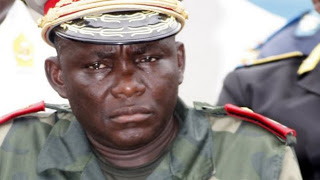
General Gabriel Amisi, who was fired last year as the army chief of staff for selling arms to the M23 rebels, controls one of the richest gold mines in South North Kivu;

Changes in security dynamics in the past year have provided rebels and FARDC with opportunities to take control of mining sites previously considered candidates for conflict-free sourcing;

Formal exports of the three Ts–tin, tantalum, and tungsten–are low in South Kivu and virtually non-existent in North Kivu. The majority of these minerals are smuggled out of eastern Congo, laundered through Rwandan tagging system, and exported as domestic Rwandan product.

The financial incentives to smuggle Congolese tin ore across the border outweigh the risks of getting caught, since “tagged” tin sells for $9/kilo, compared to a mere $3 or $4/kilo for untagged ore.

The government-led initiative to certify mining sites initiated in 2011 is already out of date and defunct;

The conflict-free tin initiative at Kalimbi in Nyabibwe, widely viewed as a test case for responsible sourcing, is being exploited by a military-led smuggling racket.

To be sure, the report concludes with the standard advocacy-based recommendations, to wit: that companies implement OECD due diligence procedures in full; that the Congolese government enforce domestic due diligence law, remove and prosecute army officers involved in the mineral trade, and formalize the gold trade; and that the donor governments support capacity building for mining authorities.

But the report convincingly demonstrates that the government has neither the will nor the capacity to bring the illicit trade to heel, and provides overwhelming evidence that Dodd-Frank has exacerbated the very problems it was meant to resolve. The sparse recommendations tacked on to the conclusion of the report tacitly acknowledge the nature of the problem: A government capable of making the recommended reforms would not need to be told to undertake them in the first place. To put it another way: A government that is unable and unwilling to govern its territory or protect its people is not a likely candidate to administer a complex and dynamic mineral trade regime.

With the publication last month of the Pole Institute’s highly critical No Kivu, No Conflict report, which concluded that the Kivus are “being asphyxiated” economically by Dodd-Frank 1502, this leaves The Enough Project as the law’s sole remaining cheerleader. In late February, Enough’s co-founder and public face,  John Prendergast, wrote this about the mineral campaign:

“For decades all of the benefits of eastern Congo’s vast mineral resource wealth have gone to those with the biggest guns — the Congolese army, local militias or neighboring countries. These minerals include, among others, gold, cobalt, copper, tin, industrial diamonds and coltan, used in cell phones, laptops and other electronic devices.

But U.S. and European consumer demands for a conflict-free minerals trade, congressional legislation, International Monetary Fund aid suspensions, U.N. experts’ reports, responsible investors and other influential voices are making it harder to profit violently and illegally from mineral smuggling.”

Further analysis from the Pole Institute:

“Thus, a pattern is emerging in which Kivu’s mining sector is being asphyxiated in the name of reform. Before 2010, Kivu’s mineral traders had willingly participated in moves to strengthen formal and legal channels and to safeguard Kivu livelihoods by creating “conflict-free” production and trading chains within Eastern Congo. The mining ban killed this off, and today the focus has moved to Katanga and Maniema, increasingly apparently favouring a nexus of mining firms closely linked to the power-holders in Kinshasa. Because they do not finance armed groups, these firms are seen as “conflict‐free,” but no criteria exists to judge the wider political ramifications of their activities, their benefits for local development and the possible exacerbation of local conflict caused by favouring certain firms in collusion with international partners to the detriment of others.”

– David Aronson

SA troops caught between fighting factions in DRC

Hercules C-130 with Monusco cargo

South African soldiers are caught between M23 rebels and government forces in the Democratic Republic of the Congo.

Fighting erupted anew in the war-torn east of the DRC on Sunday and continued yesterday after about 100 armed men disguised in women’s clothing entered the country from Rwanda, said local sources.

Soldiers of 6 SA Infantry Battalion have been deployed in the DRC in a United Nations “intervention brigade”.

The intervention brigade consists of 2069 soldiers, of whom 850 are South African, and falls under the authority of the UN’s broader 19000-strong Monusco peacekeeping mission in the Congo.

Unlike the peacekeeping force, the brigade, which also has Tanzanian and Malawian contingents, has been mandated to engage any group that tries to destabilise the region.

Lieutenant-Colonel Felix Prosper Basse, a spokesman for the Monusco force, said yesterday that the South Africans were ”in the middle” of the fierce fighting around Goma, the provincial capital.

“The [Monusco] operational base in Monigi has always been a South African base. It is on a hill dominating Goma,” said Basse.

The South African troops have been involved in two other clashes in the past week, sparked when another rebel group, the Mai Mai, attacked a nearby M23 base.

“The M23 repelled the attack and the Mai Mai turned and started to shoot at civilians and the blue helmets [UN soldiers] to intimidate them. The blue helmets fired warning shots but when they kept on coming we engaged them,” said Basse.

One rebel was killed in the fighting and two others were wounded.

Heavy calibre weapons were used, including multiple-rocket launchers, mortars and artillery. DRC government forces have been involved in heavy fighting against the M23 rebels since Sunday.

SA Defence Ministry spokesman Siphiwe Dlamini said the fighting was taking place in the areas where the South African troops are deployed.

“We are not involved,” he said.

The South African base was formerly held by M23 rebels but was taken by Monusco after the two M23 factions started fighting each other, leaving a gap for the UN force to move in. – Sapa-AP, AFP

SA will ‘enforce’ peace in DRC

On the ready to enforce peace

Tight security has been thrown around the deployment of more than 1000 heavily armed South African troops to the Democratic Republic of Congo.

In the past 72 hours, 1300 soldiers from 6 SA Infantry Battalion, including paratroops, special forces and engineers, have left for the eastern DRC as part of a UN peace enforcement mission.

 The troops are part of a brigade deployed to target the M23 rebel group waging war on the DRC government.

Defence Ministry spokesman Siphiwe Dlamini dismissed the issue of troop movements as “speculative” and refused to comment further.

But defence analyst Helmoed Heitman said: “There has been a lot of activity [at the weekend]. Not only at Bloemspruit, in the Free State, where the troops are deploying from, but also in Pretoria, where Waterkloof air force base has been a hive of activity.

“After the Central African Republic situation, South Africa is taking this far more seriously than the UN. There is a big concern that the UN sees this as a peacekeeping, and not a peace enforcement, mission.” – timeslive.co.za

SA going to war in DRC

As South African troops prepare for deployment to the violence-racked east of the Democratic Republic of Congo, the enemy is gearing up for full-scale war.

M23 welcomed in Goma

As South African troops prepare for deployment to the violence-racked east of the Democratic Republic of Congo, the enemy is gearing up for full-scale war.

A 1000-strong South African contingent is expected to be deployed to the region within a month as part of an African intervention force. It will almost certainly be drawn into conflict with the heavily armed and battle-hardened M23 rebel group after the collapse of peace talks between the rebels and the central government in Kinshasa.

One of 33 rebel groups in the region, the M23 has 40t of munitions looted from DRC army armouries in clashes in the east of the country last year.

The M23 routed DRC government forces in November in a fight for the capital of the country’s eastern region, Goma, where South African peacekeepers were deployed. In the battle for Goma, South African soldiers were caught by surprise and the M23 forces – whose officers have over 20 years of jungle combat experience – were able to take the town within days.

Reported to have access to T55 and T72 Soviet-era tanks, and armed with anti-tank and surface-to-air missiles, anti-aircraft guns, heavy machine guns, armoured vehicles and rocket-propelled grenades, the M23’s 5500-strong force is in the final stages of preparing for war.

The rebels have upped their propaganda war against the South Africans since warning President Jacob Zuma last month of a “catastrophic and apocalyptic” response if the SANDF engaged them.

The group has since revealed that it plans to kidnap SANDF troops to force South Africa to about-turn on the deployment.

The rebels are said to be backed by Rwandan and Ugandan military advisers and special forces, a claim both countries deny.

In March, the UN Security Council authorised the deployment of a 3000-man intervention force to the DRC to work alongside 17000 UN peacekeepers. The intervention force, which will comprise South African, Malawian and Tanzanian troops, is expected to arrive in the DRC within a month.

As opposed to the peacekeeping force, the new intervention force’s mandate will see troops being able to engage rebel forces regardless of provocation in order to bring stability to the region.

The SANDF has limited heavy-lift air transport capability, its Rooivalk attack helicopters’ Makopa anti-tank missiles are not yet certified, and it is most unlikely that the air force’s Gripen fighter jets will be deployed to the DRC. Knowing all this, South African soldiers are gravely concerned about the impending battle.

An army officer, who has knowledge of the mission’s planning, said: “We train and fight hard. We know our job and are capable, but with little air support, this fight is difficult. We learned good lessons in CAR but, make no mistake, this will not be easy.

“The M23 are well-armed and have good intelligence. They will not fight conventionally. It will be guerrilla-style attacks preying on our weaknesses, and our lack of cohesion and joint training with the other forces.”

SANDF spokesman Brigadier-General Xolani Mabanga declined to comment other than to say: “We are awaiting the UN’s force deployment orders.”

Defence analyst Helmoed Heitman said: “The M23 are not a bunch of ragtag rebels. They are superior in their jungle-fighting capabilities with backing from neighbouring countries [that are] running proxy military forces in the region.

”Our biggest problem is lack of air capabilities. We have the Rooivalk attack helicopter and Oryx troop-carrying helicopters, but we have no proper heavy-lift transport aircraft to get our equipment and troops in and out safely.

“The Rooivalk’s anti-tank missile is not certified, meaning it will have to get dangerously close to the enemy for its rockets to be effective.

“We are taking our long-range G5 cannon and various armoured vehicles but these vehicles will not withstand the M23’s fire-power. Their 37mm anti-aircraft guns are lethal both to air and ground targets and they have the support of tanks and special forces.”

Heitman said major hindrances included the lack of intelligence. “Our defence intelligence is what got us into trouble in CAR.

“Added to this is the UN’s view that this is just another peacekeeping mission. Instead of additional forces, they divided the current peacekeeping force, transferring the South African brigade to the intervention force and creating a vacuum for the rebels to capitalise on. This is not peacekeeping. It will be aggressive counter-guerrilla warfare in which people, including civilians, will die. You need numbers that are not there to bring about peace.”

Heitman said the M23 rebels knew the SANDF’s capabilities.

“They will not pick on us. They will pick on the possible weak links – Malawi and Tanzania – who have little battle experience. They will harass, divide and conquer.” He added: “They have the strong possibility of tank and special forces support.”

Sources from the DRC however, say there is little evidence that the different parties involved understand the real issues in the country. According to the dominant ethnic group, the Lingala, the president is happy about the diversion that both Malawi and Rwanda have created in order to bolster his power. – timeslive.co.za/PRAAG


SA to deploy reservists in Mali, DRC

Civilians who have undergone military training could soon be called up for active service and be deployed on potentially deadly peace-keeping operations.

The South African army – already overstretched by peacekeeping deployments across the continent – is fast preparing for the deployment of hundreds of additional troops, including civilian reservists, to peacekeeping missions. There are some 15000 army reservists.

Prior to yesterday’s announcement, President Jacob Zuma said he would strongly consider deploying soldiers to Mali on an African Union peacekeeping mission. If Zuma gives the go-ahead, the deployment could happen early next year.

Army chief Lieutenant-General Amos Masondo yesterday confirmed the urgent requests by Mali and the Democratic Republic of the Congo.

“We are waiting to hear what needs to be done,” he said.

Masondo said the appointment of Nkosazana Dlamini-Zuma as AU Commission chair would lead to increased demands for South African forces to be deployed elsewhere Africa.

“Unfortunately, we are limited by our numbers. If the request is approved, the forces will have to include lots of reservists.

“We simply do not have enough permanent force members. We are already overstretched in Africa, with hundreds of our troops deployed internally on our borders.”

Masondo said vast amounts of money were currently being spent on training, and that the upgrading of equipment was a priority.

Mali’s government is currently embroiled in violent confrontations with al-Qaeda linked groups trying to overthrow the state.

The government of the Democratic Republic of the Congo, along with the UN, is currently involved in bloody battles against rebel forces who are armed with heavy artillery and tanks.

The proposed deployments are being considered while 3000 South African soldiers take part in an exercise at the combat training centre in the Northern Cape.

A senior officer – deployed to the Democratic Republic of the Congo in 2010 – said the missions would require more than just a few hundred troops.

“These rebels are not playing around. They have serious numbers and serious fire-power. They are battle-hardened and have been at war for years. If we don’t do this right we will be bringing body bags home,” he said. – timeslive.co.za

Rwanda on Security Council despite funding rebels

A country littered with dead bodiesRwanda – along with Australia, Argentina, Luxembourg and South Korea – won a seat on the U.N. Security Council on Thursday, despite accusations by a U.N. panel that Rwanda’s defense minister commands a rebellion in Democratic Republic of Congo.

Rwanda was unopposed in its bid for the African seat on the council that South Africa will vacate at the end of December, but still needed approval from two-thirds of the U.N. General Assembly members present to secure the two-year term. It won 148 votes in the 193-nation assembly.

Argentina also was elected to the council unopposed, winning 182 votes. Australia won a seat with 140 votes, Luxembourg with 131 votes and South Korea with 149.

Cambodia, Bhutan and Finland failed to secure two-year seats on the council.

There are five veto-holding permanent members of the council – the United States, Britain, France, Russia and China – and 10 temporary members without veto power. Thursday’s election was for the term from Jan. 1, 2013, to Dec. 31, 2014.

Rwanda’s government said that it would work with all members of the council to ensure “it is responsive and reflective of the views & aspirations of the developing world.”

“Rwanda’s troubling and tragic past allows it to bring to the UNSC a unique perspective on matters of war and peace,” it posted on a Twitter account created for its Security Council term (@RwandaUNSC).

Before the vote, the Congolese delegation told the General Assembly it objected to Rwanda joining the Security Council, accusing its neighbor of harboring “war criminals operating in the eastern part of the DRC and who are being sought by international justice.”

A confidential U.N. report, seen by Reuters on Tuesday, cast a shadow over Rwanda’s election to the 15-member U.N. power center – which has the ability to impose sanctions and authorize military interventions.

The Security Council’s “Group of Experts” said that Rwanda and Uganda – despite their strong denials – continued to support M23 rebels in their six-month fight against Congolese government troops in the east of the country.

BLATANT VIOLATIONS?

Rwandan President Paul Kagame posted a declaration on Twitter welcoming the result: “No matter what haters say … justice&truth will prevail!!! Sometimes it just requires a bit of good fight for all that…!!!”

Speaking to reporters in New York, Rwandan Foreign Minister Louise Mushikiwabo complained about the timing of the leak of the experts report to Reuters two days ahead of the Security Council vote, but added that the leak was “predictable.”

She also sought to assure Congo that Rwanda would be a responsible council member. “I believe the Democratic Republic of Congo should see Rwanda on the Security Council as value addition,” she said after the vote.

Philippe Bolopion of the advocacy group Human Rights Watch criticized the inclusion of Rwanda on the Security Council

“After blatantly violating the Security Council’s arms embargo and undermining the work of the U.N. by propping up the abusive M23 rebels, Rwanda is rewarded with a seat at the table,” he said.

“Kigali is now in a position to try to shield its own officials implicated in abuses from U.N. sanctions, which is a flagrant conflict of interest,” Bolopion said in a statement. “Other Security Council members now have an even greater responsibility to hold Rwanda to account.”

Britain’s Deputy U.N. Ambassador Philip Parham put a more positive spin on Rwanda’s election, saying: “We look forward to working with them on issues of international peace and security including the efforts to try to end the cycle of violence in the eastern DRC.”

Australian Foreign Minister Bob Carr described Australia’s election as a “big juicy, decisive win” that endorsed the country as a good global citizen.

“For us as a middle power a long way from the centers of clout in the world, the centers of power in the world, this is a lovely moment,” Carr told reporters after the vote.

South Africa, Colombia, Germany, India and Portugal are leaving the Security Council in December. Azerbaijan, Guatemala, Pakistan, Togo and Morocco will remain until the end of 2013.

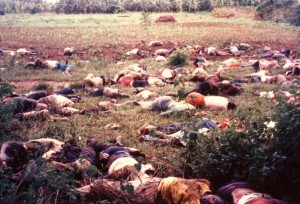
The last time Rwanda was on the council was in 1994-95. That coincided with a genocide in which 800,000 people were killed when Rwanda’s Hutu-led government and ethnic militias went on a 100-day killing spree, massacring Tutsis and moderate Hutus.

The Congolese government on Wednesday demanded targeted sanctions against Rwandan and Ugandan officials named in the U.N. experts report.

According to the U.N. experts, who monitor compliance with sanctions and an arms embargo on the Congo, Rwandan Defense Minister General James Kabarebe was ultimately commanding the rebellion and both Rwanda and Uganda were providing weapons, troops and military and political aid to the insurgency. – Reuters

Many civilians massacred in Congo, say U.N. officials

Rival armed groups may have killed hundreds of civilians in massacres and other “incomprehensibly vicious” attacks in eastern parts of the Democratic Republic of Congo (DRC), senior U.N. officials said on Wednesday.

The violence is focused in North Kivu province near the border with Rwanda where warring groups have targeted villages seen as supporting their opponents, while the national army has been diverted to fight a movement of mutineers known as M23.

“The deterioration of the overall security situation in North Kivu following the M23 mutiny and related ruthless attacks against civilians is extremely alarming,” said Roger Meece, special representative of U.N. Secretary General Ban Ki-moon.

Meece was cited in a United Nations report issued in Geneva as saying a new round of systematic killings of villagers appeared to have occurred in early August.

U.N. High Commissioner for Human Rights Navi Pillay said allegations of hundreds of killings were still being verified, but preliminary investigations suggested that a large number of people, mainly women and children, had been slaughtered.

“The sheer viciousness of these murders is beyond comprehension,” she said.

The Congo government in Kinshasa this month rejected calls by other countries in the region for an exclusively African force to tackle the insurgency in the east.

Congo says some of the insurgent groups have support from countries such as Rwanda and Uganda – a charge both those governments deny – and wants an expansion of the 17,000-member U.N. peacekeeping force in the vast, mineral-rich state.

Pillay’s office in Geneva said its mission in Congo had recorded 45 attacks on 30 North Kivu villages since May by a group dubbing itself “Democratic Forces for the Liberation of Rwanda” or FDLR, and another called Raia Mutumboki.

The FDLR is largely composed of ethnic Hutus, many of whom fled into the Congo after the defeat of a Hutu government widely viewed as responsible for the massacre of up to a million Tutsis and opponents of its policies in Rwanda in 1994.

The movement sometimes stages attacks in alliance with another armed group, Nyatura, the United Nations says.

Raia Mutumboki is a local militia group that says it is protecting the local population. It targets FDLR members and their families, and has been linked to other attacks against people in Congo perceived to be from Rwanda.

Marie Claire Bangwene Mwavita, administrator of North Kivu’s Masisi territory where much of the fighting has taken place, said that she did not know how many civilians had died so far in the violence, but that there was a risk of growing ethnic conflict.

“I can confirm there are several armed groups operating in Masisi, but I cannot confirm that hundreds have been killed,” she said. “As the armed groups are ethnically motivated, there’s a risk (of growing conflict). But the provincial government is already organizing meetings between different communities to put an end to the problem.”

The U.N. force, known as MONUSCO, focuses on protecting civilians but has been forced to divert resources to tackle the fallout from fighting between the Congolese army and M23.

That conflict has displaced nearly half a million people since the mutiny in April led to the formation of the rebel group that accuses Kinshasa of violating a 2009 peace accord. – Reuters