Uganda tabloid ‘names and shames’ gays

redpepperThe Ugandan tabloid, Red Pepper, has named the country’s 200 top homosexuals, a day after President Yoweri Museveni signed into law a bill toughening penalties for gay people.
The list appeared under the headline: “Exposed”. Western governments have condemned Mr Museveni’s decision to approve the bill, but South Africa would not be drawn into the debate.

Homosexuality is also frowned upon by most South African blacks. The ANC fears that an open debate would upset their voters ahead of the coming elections.

Although same-sex relationships are legal in South Africa, the black majority are against such unions.

The Ugandan bill includes life sentences for gay sex and same-sex marriage, but a clause criminalising those who do not report gay people was removed as well as a proposed sentence of up to 14 years for first-time offenders.

But the passing of the bill has been popularly received in Uganda, where Museveni — in power for 28 years — faces reelection in 2016..

Earlier, government spokesman Ofwono Opondo told Reuters news agency Mr Museveni wanted “to demonstrate Uganda’s independence in the face of Western pressure and provocation”.

Uganda is a deeply conservative society where most people oppose homosexuality.

Homosexual acts were already illegal in Uganda, but the new law bans the promotion of homosexuality and covers lesbians for the first time.

There was applause when Yoweri Museveni spoke out againts gays: “Society can do something about it to discourage the trend”.

Last year the Red Pepper published photographs of retired gay British man Bernard Randall, taken from his stolen laptop, who then arrested and deported last month. The new list also includes some Ugandans still in the closet, the Associated Press news agency reported.

On Monday, US Secretary of State John Kerry said Mr Museveni’s decision would launch an internal review of US assistance programmes to Uganda.

Uganda receives a reported $400m in annual aid from the US.

Sweden’s Development Assistance Minister Hillevi Engstrom called Mr Museveni’s decision “terrible” and said that direct aid to Uganda, worth about $10.8m, could be withdrawn.

As a result of the new law, the Netherlands has stopped a $9.6m subsidy to Uganda’s judicial system.

Norway and Denmark said they would transfer direct aid – together totalling about $17m – to non-governmental organisations.

Sweden’s Finance Minister Anders Borg, who is visiting Uganda for meetings on trade and economic issues, has met with gay rights activists.

Homophobia is widespread in Uganda, where evangelical Christianity is on the rise.

Museveni earlier this month also signed into law anti-pornography and dress code legislation which outlaws “provocative” clothing.

Obama warns Uganda about anti-gay bill

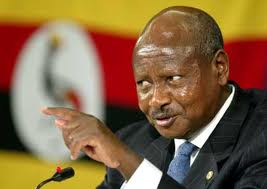
Yoweri Museveni
Yoweri Museveni

Ugandan President Yoweri Museveni plans to sign a very popular bill into law that prescribes life imprisonment for some homosexual acts, officials said Friday, in a country where homosexuality already has been criminalized.

Museveni announced his decision to governing party lawmakers, said government spokesman Ofwono Opondo. Opondo said the legislators “welcomed the development as a measure to protect Ugandans from social deviants.”

homosexual acts,warned Museveni on Sunday that enacting an anti-gay law would complicate U.S. relations with Uganda and would be a “step backward for all Ugandans.”

His national security adviser, Susan Rice, said via Twitter that she had spoken by phone to Museveni on Saturday night to protest after he told members of his party that he would sign the law.

“As we have conveyed to President Museveni, enacting this legislation will complicate our valued relationship with Uganda,” Obama said.

Museveni’s decision was based on a report by medical experts presented at the retreat, saying that “homosexuality is not genetic but a social behavior,” said Opondo.

Evelyn Anite, a spokeswoman for the governing party, said the report, which had been requested by the president, was prepared by more than a dozen scientists from Uganda’s Health Ministry.

Homosexuality already is illegal in Uganda under a colonial-era law that criminalizes sex acts “against the order of nature.”

The bill is popular in Uganda, one of many sub-Saharan African countries where homosexuals face severe discrimination if not jail terms. A new law in Nigeria last month increased penalties against gays.

After the Ugandan bill was passed late last year, Museveni called for a “scientifically correct” position on homosexuality, ordering the team of government scientists to investigate whether homosexuality is a lifestyle, according to Anite.

Their report led Museveni to believe homosexuality should be punished, she said.

Museveni believes gays should be “rehabilitated”.

Museveni has been under pressure within his own party to sign the legislation, which has wide support among Christian clerics and lawmakers who say it is needed to deter white homosexuals from recruiting Ugandan children.

Nigeria signs law banning gay marriage

gayblackNigeria’s President Goodluck Jonathan has signed a bill banning gay marriage into law.

Jonathan approved a bill banning gay marriage and same-sex partnerships earlier this month.

A spokesperson for the president says he signed the Same Sex Marriage (Prohibition) Bill 2013 as it was consistent with the attitudes of most people towards homosexuality in the west African nation.

“More than 90 percent of Nigerians are opposed to same sex marriage. So, the law is in line with our cultural and religious beliefs as a people,” he added.

Under the terms of the law, anyone who enters into a same-sex marriage or civil union can be sentenced to 14 years in prison.

Gay partnerships entered into abroad are deemed “void”.

It also warns that anyone who registers, operates or participates in gay clubs, societies and organisations or who directly or indirectly makes a public show of a same-sex relationship will break the law, and could lead up to 10 years in prison.

The anti-gay law follows similar legislation in Uganda that was condemned by US President Barack Obama as “odious” and compared to apartheid by South African peace icon Archbishop Desmond Tutu.

Indian Court reinstates law against gays

indiangayIndia’s Supreme Court on Wednesday overturned a lower court’s ruling that had decriminalized gay sex, a surprise setback for the gay-rights movement in this largely conservative country.

In 2009, the Delhi High Court ruled that a 19th-century provision in the nation’s penal code that effectively banned gay sex shouldn’t apply to consensual acts.

On Wednesday, the Supreme Court rejected that decision, saying the old law was still constitutionally valid and could only be changed or erased by Parliament, not the courts.

Rights groups say the law—known as Section 377 for its place in a 150-year-old Indian penal code—had been used for decades to harass homosexuals.

“We hold that Section 377 IPC does not suffer from the vice of unconstitutionality and the declaration made by the Division Bench of the High court is legally unsustainable,” the two supreme-court judges who presided over the case said in their 98-page judgment, released late Wednesday.

Gays across India were shocked by the decision. Most had expected the country’s highest court to uphold the landmark decision, which had been seen as a crucial first step in empowering India’s gay community.

“I think this is a dark day for the constitution,” said Gautam Bhan, a gay-rights activist and Delhi-based urban planner who came to India’s Supreme Court on Wednesday expecting to celebrate. “Never before has a Supreme Court taken away an expansion of rights to Indian citizens and reversed a move toward inclusion.”

The Indian government had no official reaction to the judgment Wednesday. Some officials said they needed more time to study the court decision.

“India’s reputation is taking a beating,” Madhu Mehra, the executive director of Partners for Law in Development, a New Delhi-based legal-advocacy group, said. “This is the last thing we needed, particularly after the movement for greater freedom and equality in India.”

The colonial-era law at the heart of the decision Wednesday has existed since 1860. It prohibits people from engaging in “carnal acts against the order of nature,” and was used against same-sex couples.

Many Commonwealth countries inherited the Victorian-era law during British colonial rule. Countries such as Malaysia, Indonesia, Pakistan and Sri Lanka, among others, still have some version of it on their statute books, said Meenakshi Ganguly, the South Asia director of the U.S.-based Human Rights Watch.

Australia, Fiji, Hong Kong and New Zealand are among Commonwealth countries that had the law, but abolished it, she said.

“Human-rights advocates were looking to India to take the lead on this so that similar changes could be made in other countries,” said Ms. Ganguly.

India’s retreat on the rules now in effect makes consensual sex between same-sex adults punishable by a fine and a prison term of up to 10 years. – WSJ

Gulf states to introduce medical testing to detect gays

arabgaysBahrain, Kuwait, Qatar, Oman, Saudi Arabia and the UAE already outlaw homosexuality, but are toughening their stance.

A medical test being developed by Kuwait will be used to detect homosexuals and prevent them from entering the country – or any of the Gulf Cooperation Countries (GCC), according to a Kuwaiti government official.

GCC member countries – Bahrain, Kuwait, Qatar, Oman, Saudi Arabia and the United Arab Emirates – already deem homosexual acts unlawful.

This stance is being toughened, according to Yousouf Mindkar, the director of public health at the Kuwaiti health ministry.

He told Kuwait newspaper Al Rai: ‘Health centres conduct the routine medical check to assess the health of the expatriates when they come into the GCC countries. However, we will take stricter measures that will help us detect gays who will be then barred from entering Kuwait or any of the GCC member states.’

Those taking part in homosexual acts in Kuwait, if they’re under 21, can receive a jail sentence of up to 10 years.

Earlier this month Oman newspaper The Week was suspended over an article that was deemed to be sympathetic to homosexuals, according to the BBC.

It’s illegal to be gay in 78 countries, with lesbianism banned in 49. Five countries mete out the death penalty to gay people – Iran, Saudi Arabia, Sudan, Yemen and Mauritania.

Iran: Since 1979, the government has executed more than 4,000 people charged with homosexual acts. A non-adult who engages in consensual sodomy is subject to a punishment of 74 lashes.

Saudi Arabia: Although the maximum punishment for homosexuality is execution, the government tends to use other punishments – such as fines, prison sentences, and whipping – unless it feels that homosexuals have challenged state authority by engaging in social movements.

Sudan: For homosexual men, lashes are given for the first offence, with the death penalty following the third offence. 100 lashes are given to unmarried women who engage in homosexual acts.For lesbian women, stoning and thousands of lashes are the penalty for the first offence. Today, the issue has divided some religious communities. In 2006, Abraham Mayom Athiaan, a bishop in South Sudan, led a split from the Episcopal Church of Sudan for what he regarded as a failure by the church leadership to condemn homosexuality sufficiently strongly.

Yemen: Homosexuality is still illegal in Yemen in accordance to the country’s Shari’ah legal system. Punishment ranges from flogging to death.

Mauritania: The Shari’a law applies in Mauritania. The penal code states that, since 1983,any adult Muslim caught engaging in an ‘unnatural act’ with a member of the same sex is punishable with the death sentence by public stoning.

Gays try to claim friendly Russian kiss

kissrussiaA Russian gold medalist from the Moscow World Athletics Championships on Tuesday said she was insulted by Anglo-Saxon media claims that she had kissed a fellow female athlete on the lips in defiance of Russia’s new law against gay “propaganda”.

The incident highlighted certain Anglo-Saxon cultural attitudes. In Russia it is common for friends to kiss each other on the lips. In France even heterosexual male family members or friends may kiss.

Ksenia Ryzhova and Yulia Gushchina, members of Russia’s victorious 4×400 women’s relay team that provided one of the great moments of the championships, kissed each other on the podium after receiving their gold medals.

Some activists saw the kiss as a brazen show of defiance in support of gays and lesbians and against President Vladimir Putin after the championships were shadowed throughout by controversy over the law.

But Ryzhova on Tuesday insisted that she was married and made clear she was none too happy that people suspected that she and Gushchina might be more than just good friends.

“Yesterday, I was telephoned 20 times by various publications and instead of congratulating me they decided to insult me with these questions,” she fumed, quoted by the ITAR-TASS news agency.

“Myself and Yulia are both married and we are not having any kind of relationship,” she added, saying the two were very good friends after having trained together for eight years.

“It was a storm of emotions (after winning). And if at that moment we touched lips… I don’t know in whose fantasy this all gets thought up.

“This insults not just us but our trainers,” she added. – France24

Obama’s gay ambassador pick freaks Dominicans

Cardinal Nicolás de Jesús López Rodríguez

Opposition to President Obama’s nominee for U.S. ambassador to the Dominican Republic reached a fever pitch this week as religious organizers stage a “Lunes Negro” or Black Monday protest against James “Wally” Brewster.

If confirmed, Brewster will be the first openly gay ambassador to the country, a prospect that is not going over well with some segments of this conservative Christian country of 9 million people. Local reports indicate that church leaders are pressuring the government to reject Brewster’s nomination and calling on the faithful to dress in black on Monday in solidarity against him.

Praise Christian Church Pastor Sauford Medrano is quoted in Diario Libre as saying that Brewster could cause “the U.S. promotion of gender beliefs in the country.” That supposedly violates a general education law in the country that “all the Dominican education system is based on Christian principles.”

The report was flagged by Cable reader and Dominican expat Will Williams, an architect in New York City. He said he witnessed the animosity toward the ambassador in a visit last weekend. “I could confirm myself that the opposition has been even worse from what have been reflected in the news,” he said. “As a Dominican, I feel ashamed this is happening in my country … The evangelical church is convoking the general public to reject this ambassador … [It’s] asking the public to show a black band, black banner or ribbon on cars or dress showing rejection.”

In a statement to The Cable, Monica Trasandes, director of Spanish Language Media at GLAAD, defended the president’s pick. “We stand with LGBT advocates in the Dominican Republic, who are calling on leaders to quit categorizing their country’s population as homophobic,” she said. “We hope that James Brewster will help educate those still adversely affected by homophobia and applaud the work of LGBT advocates in the Dominican Republic.”

When news of opposition to Brewster first began, the Dominican embassy in Washington told The Cable that the country supports the president’s pick. “The Dominican Republic is a democracy with a vibrant media and a wide diversity of opinions on every conceivable topic,” the statement read. “However, it is the position of the Government of the Dominican Republic that a person´s sexual preference is strictly a personal matter and it looks forward to working constructively with Mr. Brewster in his official capacity once his nomination is approved by the U.S. Senate.”

In June, the AP spoke with Catholic and evangelical church leaders who opposed the nomination. “If he arrives, he’ll suffer and will be forced to leave,” Vicar Pablo Cedano, told the AP. He said the pick showed “a lack of respect, of consideration, that they send us that kind of person as ambassador.” Rev. Cristobal Cardozo, leader of the Dominican Evangelical Fraternity, said the appointment was offensive. “It’s an insult to good Dominican customs,” he said.

Catholic Cardinal Nicolás de Jesús López Rodríguez called Brewster a “maricón” — a Spanish word usually translated as “faggot.”

Brewster was a fundraiser for Obama and currently works at the Chicago consulting firm SB&K. – Foreign Policy

‘Gays are the next Jews’

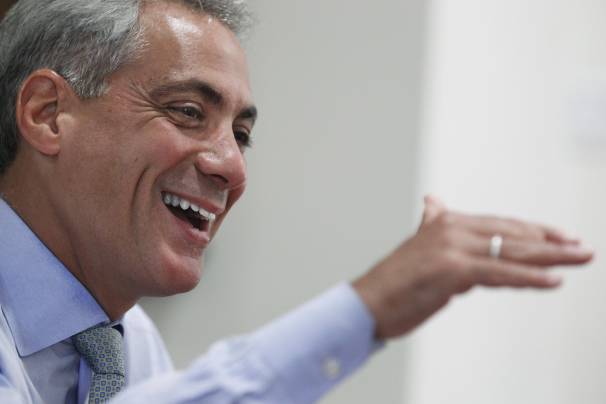
Rahm Emanuel
Rahm Emanuel

By Timothy P. Carney

While raising money for Bill Clinton (who signed the Defense of Marriage Act) in 1992, Rahm Emanuel proclaimed “Gays are the next Jews of fundraising.”


I’m not 100 percent sure what he meant by that, but Democrats have certainly grabbed onto gay issues as a fundraising lever. Democrats today are using the gay marriage ruling as a way to raise money, Paul Bedard writes.


Obama’s core network of fundraisers included many gay men and women who were also gay-marriage activists. I wrote on this after Obama spurred a fundraising boom by announcing his support for gay marriage.

“About 20 percent of Obama’s bundlers — volunteer fundraisers — are gay, according to media reports, with many of them being gay rights activists. For example, Sally Susman has raised at least $500,000 for Obama’s re-election.

Millionaire banking mogul Eugene Sepulveda is another gay half-million-dollar Obama bundler. Rufus Gifford is the finance director for Obama’s re-election campaign, and Andrew Tobias is treasurer of the Democratic National Committee — and both are gay.” – The Washington Examiner


Boy Scouts to accept gays

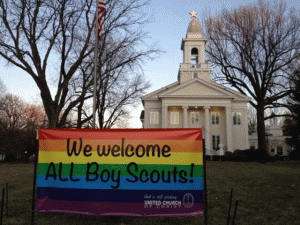
After lengthy and wrenching debate, local leaders of the Boy Scouts of America have voted to open their ranks to openly gay boys for the first time, but heated reactions from the left and right made clear that the BSA’s controversies are far from over.

The Scouts’ longstanding ban on gay adults remains in force, and many liberal Scout leaders – as well as gay-rights groups – plan to continue pressing for an end to that exclusion even though the BSA’s top officials aren’t ready for that step.

Meanwhile, many conservatives within the Scouts are distraught at the outcome of the vote and some are threatening to defect. A meeting is planned for next month to discuss formation of a new organization for boys.

The vote was conducted by secret ballot Thursday during the National Council’s annual meeting at conference center not far from Boy Scout headquarters in suburban Dallas. Of the roughly 1,400 voting members of the council who cast ballots, 61 percent supported the proposal drafted by the governing Executive Committee. The policy change takes effect Jan. 1.

“This has been a challenging chapter in our history,” the BSA chief executive, Wayne Brock, said after the vote. “While people have differing opinions on this policy, kids are better off when they’re in Scouting.”

However, the outcome will not end the membership policy debate, as was evident in the reactions of leaders of some of the conservative religious denominations that sponsor Scout units.

“We are deeply saddened,” said Frank Page, president of the Southern Baptist Convention’s executive committee. “Homosexual behavior is incompatible with the principles enshrined in the Scout oath and Scout law.”

The Assemblies of God said the policy change “will lead to a mass exodus from the Boy Scout program.” It also warned that the change would make the BSA vulnerable to lawsuits seeking to end the ban on gay adults.

John Stembeger, a conservative activist and former Scout from Florida, founded a group called OnMyHonor.net to oppose the policy change. He assailed the BSA executive committee for its role in gaining a “Yes” vote.

“What kind of a message are we sending to young people about being brave when its top adult leaders don’t even have the courage to stand up to the pressure of a militant lobby when the bullies in Washington D.C., Hollywood or even some of their own renegade councils start pressuring and harassing them?” he asked.

He said OnMyHonor.Net and other like-minded organizations and individuals would meet in Louisville, Ky., next month to discuss the creation of “a new character development organization for boys.”

Texas Gov. Rick Perry also expressed dismay.

“While I will always cherish my time as a Scout and the life lessons I learned, I am greatly disappointed with this decision,” he said.

The result was welcomed by many liberal members of the Scouting community and by gay-rights activists, though most of the praise was coupled with calls for ending the ban on gay adults.

“I’m so proud of how far we’ve come, but until there’s a place for everyone in Scouting, my work will continue,” said Jennifer Tyrrell, whose ouster as a Cub Scout den leader in Ohio because she is lesbian launched a national protest movement.

Tyrrell recalled having to tell her son she had been forced out as den mother.

“He doesn’t deserve to be told that we’re not good enough,” she said. `’We’re not going to stop until this is over.”

Pascal Tessier, an openly gay 16-year-old Boy Scout from Maryland, had mixed emotions after the vote.

“I was thinking that today could be my last day as a Boy Scout,” he said. “Obviously, for gay Scouts like me, this vote is life-changing.”

Tessier is on track to receive his Eagle Scout award – he only needs to complete his final project – but said he is troubled that on his 18th birthday he could transform from someone holding Scouting’s highest rank to someone unfit to be a part of the organization.

“That one couple hours (between 17 and 18) will make me not a good person,” he said.

Tessier has been an exception – an openly gay Scout whose presence was quietly accepted by local Scout leaders. In general, the Scouts’ policy has been to avoid any questioning of would-be Scouts as to their sexual orientation, but to dismiss boys who did speak openly about being gay.

For example, Scout officials refused to grant the Eagle Scout rank to Ryan Andresen, an 18-year-old Californian, after he came out as gay last year.

The vote followed what the BSA described as “the most comprehensive listening exercise in Scouting’s history” to gauge opinions, including a survey sent out starting in February to members of the Scouting community.

Of the more than 200,000 leaders, parents and youth members who responded, 61 percent supported the current policy of excluding gays, while 34 percent opposed it. Most parents of young Scouts, as well as youth members themselves, opposed the ban.

The proposal approved Thursday was seen as a compromise, and the Scouts stressed that they would not condone sexual conduct by any Scout – gay or straight.

“The Boy Scouts of America will not sacrifice its mission, or the youth served by the movement, by allowing the organization to be consumed by a single, divisive and unresolved societal issue,” the BSA said in a statement.

Among those voting for the proposal to accept openly gay youth was Thomas Roberts, of Dawsonville, Ga., who serves on the board of a Scout council in northeast Georgia.

“It was a very hard decision for this organization,” he said. “I think ultimately it will be viewed as the right thing.”

The BSA’s overall “traditional youth membership” – Cub Scouts, Boy Scouts and Venturers – is now about 2.6 million, compared with more than 4 million in peak years of the past. It also has about 1 million adult leaders and volunteers.

Of the more than 100,000 Scouting units in the U.S., 70 percent are chartered by religious institutions.

Those include liberal churches opposed to any ban on gays, but some of the largest sponsors are relatively conservative denominations that have previously supported the broad ban – notably the Roman Catholic Church, the Church of Jesus Christ of Latter-day Saints and Southern Baptist churches.

While the Southern Baptists were clearly upset by the vote to accept openly gay youth, the Utah-based Mormon church – which has more Scouting troops than any other religious denomination – reacted positively.

“We trust that BSA will implement and administer the approved policy in an appropriate and effective manner,” an LDS statement said.

Utah’s largest Boy Scout councils supported the change.

“This is a win for youth and a win for the community,” said John Gailey, spokesman for the Utah National Parks Council, which covers central and southern Utah. “It gives all youth the opportunity to take advantage of the values instilled by Scouting.”

The National Catholic Committee on Scouting responded cautiously, saying it would assess the possible impact of the change on Catholic-sponsored Scout units. – AP