Fears grow in Britain of a “constitutional crisis” which would put the election in doubt, as legal expert warns that Scottish independence could bring down the next government
The 2015 general election will be thrown into turmoil if Scotland votes for independence in September’s referendum, according to government legal advice.
An election is scheduled to be held on May 7 next year but by then Scotland could already be preparing to separate from the rest of the United Kingdom.
The leading lawyer who wrote the Westminster government’s legal advice on Scottish independence is now warning that a “Yes” vote in the referendum would have major ramifications for the election, and could destabilise the next British government.
Cabinet ministers fear that if Alex Salmond’s independence campaign succeeds, the general election would be in grave doubt, plunging Britain into an unprecedented “constitutional crisis”.
In a memorandum for the House of Lords, Professor Alan Boyle, a specialist in international law at Edinburgh University, outlined two options for the election if Scotland chooses independence on September 18.
The Arab Spring, and to a lesser extent the overthrow of Saddam Hussein, were touted as the catalysts for a major historic shift in the region. From Egypt to Syria to Iraq, the Middle East’s dictatorships would be succeeded by liberal, democratic regimes. Years later, however, there is very little liberality or democracy to show. Indeed, what these upheavals have bequeathed to history is a baleful, and barely noticed legacy: The near-annihilation of the world’s most ancient communities of Christians.
The persecution of Christians throughout the Middle East, as well as the silence with which it has been met in the West, are the subject of journalist Ed West’s Kindle Single “The Silence of Our Friends.” The booklet is a brisk and chilling litany of horrors: Discriminatory laws, mass graves, unofficial pogroms, and exile. The persecuted are not just Coptic and Nestorian Christians who have relatively few co-communicants in the West, but Catholics, Orthodox, and Protestants as well.
Throughout the Middle East the pattern is the same. Christians are murdered in mob violence or by militant groups. Their churches are bombed, their shops destroyed, and their homes looted. Laws are passed making them second-class citizens, and the majority of them eventually leave.
The world’s most ancient Christian communities are being destroyed.
In Egypt, a rumor that a Muslim girl was dating a Christian boy led to the burning of multiple churches, and the imposition of a curfew on a local Christian population. Illiterate children were held in police custody for urinating in a trash heap, because an imam claimed that pages quoting the Koran were in the pile and had been desecrated. Again, the persecution resulted in Christian families leaving their homes behind.
In Syria, the situation is even worse. In June 2013, a cluster of Christian villages was totally destroyed. Friar Pierbattista Pizzaballa reported that “of the 4,000 inhabitants of the village of Ghassanieh… no more than 10 people remain.”
Two Syrian bishops have been kidnapped by rebel groups. Militants expelled 90 percent of the Christians in the city of Homs. Patriarch Gregorios III of Antioch says that out of a population of 1.75 million, 450,000 Syrian Christians have simply fled their homes in fear.
In Iraq, the story is the same but more dramatic. According to West, between 2004 and 2011 the population of Chaldo-Assyrian Christians fell from over a million to as few as 150,000. In 2006, Isoh Majeed, who advocated the creation of a safe haven for Christians around Nineveh, was murdered in his home. The number of churches in Iraq has declined to just 57, from 300 before the invasion. The decline of Iraq’s Christian population since the first Gulf War is roughly 90 percent, with most of the drop occurring since the 2003 invasion.
The U.S. and the U.K. bear the responsibility in this catastrophe, since they oversaw the creation of Iraq’s postwar government and did little to protect minority faiths.
The clueless and callous behavior of Western governments in these episodes are obvious. U.S. reconstruction aid to Iraq is distributed according to Iraqi laws that discriminate against Christian Iraqis. The U.S. pours billions of foreign aid into Egypt, and yet the Christians in that country are not allowed to build churches (or even so much as repair toilets in them) without explicit permission from the head of state, almost never granted. Last September, the U.S and Britain attempted to make their support of Syrian rebel groups explicit and overt, but at the same time some of these militias were executing a pogrom against Christians.
A Christian shopkeeper in Ma’loula summed it up in a quote to the BBC: “Tell the EU and the Americans that we sent you Saint Paul 2,000 years ago to take you from the darkness, and you sent us terrorists to kill us.”
Picture of Romanian gypsies ‘setting up camp’ on London’s Park Lane
The London Daily Mail reports that Romania’s prime minister has told Britain not to treat Romanians as ‘second-rate citizens’ when curbs on Romanian and Bulgarian workers are lifted on January 1.
Victor Ponta said last night that research showed no evidence that there would be large numbers of migrants moving from his country to the UK, despite mounting fears.
And he reiterated the claim, made elsewhere, that Romanians were more likely to seek work in southern European states like Italy and Spain, where the language is far more similar to Romanian.
David Cameron this week announced measures to toughen welfare rules for migrants from the European Union amid concern that migrants from Romania and Bulgaria would exploit the benefits system.
He has claimed that one million people from Central and East Europe are living in Britain with migration at a level not seen since wartime.
But, in a statement released last night, Mr Ponta slammed the move. He said people should be punished for abusing the welfare system, but restrictions should not be used to ‘generate or justify abuse or discrimination’.
‘We will not accept being treated as second-rate citizens,’ Mr Ponta said, adding that research showed ‘there is no reason for concern regarding a migrant wave’ from Romania to Britain.
Millions of Romanians had already chosen to work abroad in ‘southern Latin states’, referring to Spain and Italy which have a Latin-based language like Romanian.
He said he hoped Cameron was not trying ‘to attack the fundamental principles of the EU, among which the freedom of movement is one of the most important values’.
Mr Cameron’s benefits proposals were criticised on Wednesday by European employment commissioner Laszlo Andor as an ‘unfortunate over-reaction’.
Warning that Britain risked becoming the ‘nasty country of Europe, he said plans to curb benefits for migrants were were fuelling ‘hysteria’ and accused the PM of distorting the truth about immigration.
‘The point is that the British has not been given all the truth and the full truth about this subject,’ Mr Andor told Radio 4’s Today programme.
Brussels is facing a growing revolt over its no-borders immigration policy, with France and Germany also suggesting they want curbs on EU migrants’ rights.
Mr Cameron, who has been criticised for refusing to give an estimate of how many Romanians and Bulgarians will come to Britain next year, has outlined plans to limit the rights of temporary workers to housing benefit, and a 12-month bar on those fund begging and sleeping rough.
The measures were announced shortly after the Daily Mail published the results of a poll which suggests that four in five Britons do not want unrestricted access to the UK for Romanians and Bulgarians. – dailymail.co.uk
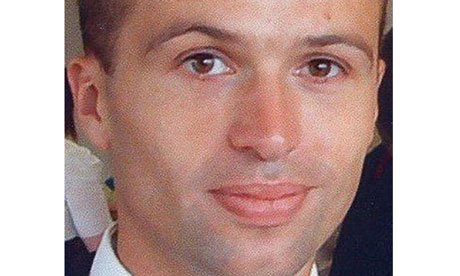
More than three years after the naked, decomposing body of British spy Gareth Williams was discovered stuffed inside a locked gym bag at the bottom of his bathtub, the mystery over his bizarre death lingers, and a police investigation has done little to clear it up.
London’s Metropolitan Police said Wednesday that their investigation had found that Williams likely died in an accident with no one else involved. But the tentative conclusion, which the police hedged by acknowledging many gaps haven’t been filled in, is unlikely to calm conspiracy theories surrounding the case.
Metropolitan Police Deputy Assistant Commissioner Martin Hewitt said Williams, whose remains were discovered in August 2010, was “most probably” killed in an accident, a verdict which conflicts with a coroner’s inquest that concluded last year that Williams was probably killed by another person in a “criminally meditated act.”
Hewitt said the police position “is that, on balance, it is a more probable conclusion that there was no other person present when Gareth died.”
“But the reality is that for both hypotheses, there exist evidential contradictions and gaps in our understanding,” he said.
Hewitt told reporters at Scotland Yard headquarters that his conclusion was based on the fact that investigators found little evidence of foul play in a death that has spawned a host of theories, from assassination to sexual adventure gone awry.
Williams, a cyberwarfare expert, worked for Britain’s GCHQ eavesdropping service and was attached to the overseas espionage agency MI6 when he died.
Some have raised the possibility that Williams locked himself in the bag as part of a sex act gone wrong or an experiment in escapology – the Houdini-like art of wriggling out of restraints or traps. Investigators found that he had visited bondage and sadomasochism websites, including some related to claustrophilia – a desire for confinement in enclosed spaces.
Police concluded – after several reenactments – that it was possible for Williams to climb inside the sports bag and lock it.
However, police couldn’t find Williams’ DNA on the lock, palm prints on the rim of the bath, or footprints in the bathroom itself. The coroner, Fiona Wilcox, said that pointed to another person having taken the bag into the bathroom, noting that if Williams had been “carrying out some kind of peculiar experiment, he wouldn’t care if he left any foot or fingerprints.”
She was also critical in her inquest verdict of MI6, which failed to pass evidence to investigating police, and said that while it seemed unlikely that British intelligence agencies were involved in Williams’ death, it was a “legitimate line of inquiry.”
Hewitt said there was no evidence that the apartment had been cleaned to remove forensic traces and nothing to suggest a struggle or a break-in.
And he dismissed the idea that Britain’s secretive intelligence services had carried out a cover-up, noting that a total of 27 members of staff from both MI6 and GCHQ had been interviewed and that police were given full access to Williams’ vetting and personnel file.
“I do not believe that I have had the wool pulled over my eyes,” Hewitt said. “I believe that what we are dealing with is a tragic unexplained death.”
He added that there was “no evidence to support the theory that Gareth’s death was in any way related to his work.”
Williams’ relatives said in a statement that they were disappointed that the facts remain unclear, but still believed it was likely he had been the victim of foul play.
“We consider that on the basis of the facts known at present the coroner’s verdict accurately reflects the circumstances of Gareth’s death,” the statement said. – AP
Britain has relaxed stringent rules for Chinese banks willing to set up in London. Beijing in turn opened up its markets to British-based investors, marking the latest move to establish the yuan as one of the world’s key currencies.
“A great nation like China should have a global currency,” said UK Chancellor of the Exchequer, George Osborne, during his official five day visit to China. And the UK is gladly willing to contribute “through the international center of finance: London”.
Under the agreed pilot program, China sanctioned London-based investors to buy up to 80 billion yuan ($13.1 billion) of stocks, bonds and money market instruments directly, avoiding Hong Kong transactions, Reuters reports.
Meanwhile, Britain will let Chinese banks set up wholesale branches in London, easing regulations the country had imposed after the financial crisis broke out. Since 2008, Britain has insisted that most foreign lenders should set up their UK operations as “subsidiaries” rather than branches, which provides greater protection for depositors and taxpayers. Less regulation will be welcomed by Chinese lenders who have always complained the rules made it hard to operate in Britain, prompting them to move much of their business to Luxembourg.
On top of that, London and Beijing will trade the yuan against the dollar directly, avoiding the dollar.
“The Chinese currency, the renminbi, is not terribly well known in Britain at the moment. But over my lifetime I think it’s going to become almost as familiar as the dollar, and I want British businesses involved in trading it, investing in it,” Osborne told BBC television in China.
Currently London accounts for 62 percent of yuan trades outside China and Hong Kong, according to data from financial services provider SWIFT. The latest move will give the renminbi a firmer footprint in Europe and strengthen London’s platform to develop the offshore RM (renminbi) bond market.
According to an HSBC forecast, within 5 years a third of China’s total trade will be in yuan, which will make it fully convertible and elevate it into the top 3 exchange currencies. According to data compiled by Bloomberg, the yuan has already strengthened 36 percent against the dollar and 47 percent versus the pound since 2005. – RT
The white American exchange student, Amy Elizabeth Biehl, died just over 20 years ago on August 25, 1993. The circumstances of her death read like a chronicle foretold to the current racial animosity in South Africa where singing struggle songs like “Kill a Boer” and attacking white farms continue unabated.
The graduate from Stanford University and anti-Apartheid activist was murdered by black Cape Town residents while a black mob shouted racial slurs. The four men convicted of her murder were released as part of the Truth and Reconciliation process.
Biehl was a student at the University of the Western Cape in Cape Town as a scholar in the Fulbright Program.
As she drove a friend home to the black township of Guguletu, outside Cape Town, on August 25, 1993, a black mob pulled her from the car and stabbed and stoned her to death. She probably tried to remind them how much she hated white Afrikaners while she was dying.
The attack on the car driven by Amy Biehl was one of many incidents of general lawlessness in NY1, blamed on the “lack of opportunity as a result of Apartheid” as was fashionable then. These days the reigning anarchy in NY1 is attributed to lacking “service delivery”. Any explanation which ignores a racial motive will do.
To sane South Africans Biehl’s death was simply the result of ignoring the racial divide. Had she gone into NY1 last week, she probably would have met with the same fate. But blinding ideology comes at a price, everywhere in Africa, also in places where no one has ever heard of Apartheid.
Bands of toyi-toying black youths threw stones at delivery vehicles and cars driven by whites. One delivery vehicle was toppled over and set alight and only the arrival of the police prevented more damage. A quick scrutiny of any South African newspaper today would inform the reader of the lasting legacy that Mandela’s release had on black urban violence.
Black urban youths, born well after Apartheid, do not suffer from Mandela’s oft cited “terrible past”. They suffer instead from a terrible example set by the likes of Biehl: Proof that killing whites are rewarded, hate crimes are lauded.
Amy Biehl’s possessions in her car were stolen. According to Rex van Schalkwyk, in his 1998 book One Miracle is Not Enough: “Supporters of the three men accused of murdering [her] … burst out laughing in the public gallery of the Supreme Court today when a witness told how the battered woman groaned in pain.” (pp. 188–89.)
Four people were convicted of killing her. In 1998, all were pardoned by South Africa’s Truth and Reconciliation Commission, a travesty to hide the ANC’s past crimes and future intentions.The usual suspects, Britain and the US, gave their firm support to the shameless whitewash.
Amy Biehl’s killing was pardoned at the TRC when the four stated that their actions had been “politically motivated.”. Biehl’s family supported the release of the killers,and her father shook the murderers’ hands, smiling.
“Among those we remember today is young Amy Biehl. She made our aspirations her own and lost her life in the turmoil of our transition, as the new South Africa struggled to be born in the dying moments of apartheid. Through her, our peoples have also shared the pain of confronting a terrible past, as we take the path towards the reconciliation and healing of our nation.”
There was no “terrible past” however. There was only bad faith in depicting a system designed to protect minorities. The smiling handshake would sadly be a prescient gesture of our terrible future, the one that the Biehls enabled by their bought forgiveness.
In 1994, Biehl’s parents, Linda and Peter, founded the Amy Biehl Foundation Trust “to develop and empower youth in the townships, in order to discourage further violence.” The money must have eased the pain of losing a child to such a useless cause.
Two of the men who had been convicted of her murder also received money from the foundation. In 1999, Biehl’s parents were honored with the Aline and Norman Felton Humanitarian Award.
In his speech accepting the Congressional Gold Medal on 23 September 1998, Nelson Mandela said:
“Among those we remember today is young Amy Biehl. She made our aspirations her own and lost her life in the turmoil of our transition, as the new South Africa struggled to be born in the dying moments of apartheid. Through her, our peoples have also shared the pain of confronting a terrible past, as we take the path towards the reconciliation and healing of our nation.”
There was never a path towards reconciliation, never any healing. Mandela simply rubberstamped racial hate crimes.
On August 25, 2010, on the 17th anniversary of Biehl’s death, a bronze plaque mounted on a stone was unveiled by the U.S. Ambassador, Donald Gips, and Biehl’s mother, Linda Biehl, at the Cape Town site where she was killed. It was yet another effort by the US to displace the blame, but this time with little enthusiam.
The faces of laughing black killers had been visited on too many by 2010.
The British vote against military strikes in Syria is a tough blow to Prime Minister David Cameron’s domestic political fortunes.
Since taking office in 2010, he has on numerous occasions been undercut not just from opposition parties, but also from elements within both his own Conservative Party and the Liberal Democrats, the junior member of the UK’s governing coalition.
That was the combination that once again hurt Cameron late Thursday. The government lost a vote—by a tally of 285 to 272—that would have supported in principle military intervention in Syria. Members of all major parties—including his own Tories—opposed the measure.
Mr. Cameron said it is clear that the British Parliament, reflecting the view of the British people, doesn’t want to see the UK get involved in military action and “the government will act accordingly.”
The outcome marks a significant moment in British politics—it is highly unusual for a prime minister to be defeated on foreign policy and raises the prospect of whether the UK’s role on the world stage going forward.
It is also a rare setback for Anglo-American relations that will spur questions about the so-called “special relationship” between the two nations. In recent decades, the UK. has rarely if ever parted ways with the US on such a significant strategic issue.
While the government doesn’t require parliamentary approval to take military action, it would now be politically difficult to do so. A further parliamentary vote had been due to take place early next week on whether the UK should be directly involved in that action. A spokesman for the prime minister confirmed that the UK now won’t take part in the Syrian action.
The outcome of the UK. vote could make it more difficult for President Barack Obama and other Western allies—already weary from years of difficult military intervention in the Middle East—to convince their own publics of the need for intervention in Syria.
The defense secretary, Philip Hammond, said America “will be disappointed that Britain won’t be involved.” Mr. Hammond, speaking in an interview with BBC, said he still expected other countries to continue to look at a response.
The setback also raises questions about Cameron’s authority. The prime minister, who wasn’t required to hold a parliamentary vote but chose to, had personally laid out his case at length to parliament earlier in the day about why military action was needed and why it would be justified, citing humanitarian grounds and the need to prevent the use of chemical weapons in the future.
US officials said Mr. Obama is prepared to act in coming days without Britain. They added that unlike U.S. involvement in the 2011 military operations in Libya, the options being considered in Syria are on a smaller scale and wouldn’t require a coalition to be effective.
Britain’s about turn leaves France as the last European country still considering conducting air attacks on the Assad regime. French officials have said the country’s military had prepared plans for possible action in Syria but repeated on Thursday that no final decision had been made yet.
The French government can engage force overseas without prior Parliamentary approval.
South African President Jacob Zuma hit out at what it called “dangerous rhetoric” concerning possible strikes against Syria and warned any military action must have United Nations backing.
“We are concerned by the rhetoric pointing to the possibility of a military intervention,” said Zuma while condemning “the chemical weapons attack” in Damascus.
“South Africa does not believe that bombing the already suffering people and crumbling infrastructure of Syria, will contribute to a sustainable solution.”
“Military intervention will serve no other purpose than hurting the possibility of a speedy diplomatic solution to the conflict.”
South Africa, the continent’s largest economy and a G20 member, has largely opposed non-UN Western military intervention since becoming a fully democratic state in 1994, with the fall of apartheid.
“Any attack on Syria without the UN Security Council authorisation would constitute a grave violation of international law and dangerously undermine international order,” Zuma said.
South Africa has long sought a seat on the United Nations Security Council, but has irked Western powers with its stance on Zimbabwe and Libya — where it backed authoritarian rulers’ bids to remain in power.
In recent years South Africa has moved to deepen ties with China and Russia, long-time supporters of the ruling ANC during the anti-apartheid struggle.
Zuma was speaking during a meeting with his counterpart from Sao Tome and Principe, Manuel Pinto da Costa. – Sapa/AFP
The South African Depression and Anxiety Group (SADAG) says South Africa has an extremely high suicide rate that needs to be addressed urgently.
According to SADAG, 23 people commit suicide every day countrywide and a further 230 attempt to.
That is more suicides than America and the UK.
SADAG spokesperson Cassey Chambers says the fact that one in every five South Africans suffer from a mental illness could be one of the major contributors to this problem.
She says different factors contribute to the country’s high suicide rate.
“We’ve got so many external stresses and triggers. We are exposed to so much trauma, crime and violence. We also see a breakdown of the family unit, so there’s more separation, divorce and abuse.”
Chambers says the issue could be addressed with more recourses and access to help.
“We run the country’s only suicide crisis line. We get about 400 calls a day of people looking for help. That number of 400 calls per day has increased over the last two years.” – EWN
The elevation of Mrs Doreen Lawrence to Britain’s highest parliamentary chamber, the House of Lords, should come as no surprise to seasoned observers of the British political elite.
Baroness Lawrence
For as the mother of arguably the most important murder victim in modern British history, she occupies a special place in the political firmament somewhere beside Bob Geldof and the late Princess Diana — perhaps equivalent to Rosa Parks or the parents of the sainted Trayvon Martin.
While no-one can put a name to any of the dozens of teenage Blacks murdered every year in London since then, Doreen’s son Stephen Lawrence was different — he was killed by Whites and his death was an opportunity to create the most potent weapon that has ever been aimed at the British people: mass demonization.
In an earlier age, tactical area bombing was used to deliver a relentless, sustained and never-ending barrage to cow a civilian population. But instead of the RAF this time the propaganda barrage was delivered by the media and Doreen Lawrence played a vital role as a living symbol of the evils of White racism.
So in a sense, her ennoblement is for services to the political elite, the human-rights industrial complex, the bureaucratic class, the media and for everyone else who has benefited from the murder which took place twenty years ago this year.
Several hundred miles to the north in the Lancashire seaside resort of Blackpool another mother Mrs Karen Downes could be forgiven for allowing herself a smile of bitter resignation at this latest accolade.
It is unlikely that Doreen Lawrence and Karen Downes will ever meet but the two mothers have much in common. Both had children murdered by racists and both have had to fight long battles against police incompetence and official indifference.
But there the similarity ends. For while Jamaica-born Mrs Lawrence has become a national heroine, lionised by the establishment, feted by the media and showered with honours, Mrs Downes is a shunned and marginalised figure who does not know if the killers of her daughter will ever be brought to justice.
The discrepancy in the treatment of the two cases can only be understood through the prism of the victimhood hierarchy. While Mrs Lawrence is the mother of a Black teenager, Mrs Downes and her daughter both belong to the despised White working class.
It is hard to overestimate the importance of the events that followed the knifing to death of Stephen Lawrence in a random attack at a bus stop in Eltham south east London in 1993 and it could well be argued that the crime was the single most transformative event in the creation of the new settlement imposed on the country.
A botched police investigation and collapsed trial triggered a full scale judicial inquiry in 1999 led by Lord McPherson and this had two effects. The first was the branding of the Metropolitan Police in perpetuity as guilty of vague and ill-defined “institutional racism”.
The second was the demonization of the White working class as irredeemably racist and hate-filled bigots who had no more call on the sympathies of right-thinking citizens than did the German people in the aftermath of World War II.
The elevation of this blood libel to a central place in the new settlement had one overriding political purpose — it meant the objections of working class Whites to mass immigration or multiculturalism could be safely cast aside as of no account.
The case was swiftly picked up by the media, politicians and human rights lawyers and barristers who smelled a winning cause célèbre and began jostling furiously for the anticipated glory.
In their pursuit of the five suspects in the killing of Stephen Lawrence normal conventions such as the assumption of innocence and contempt of court were ignored — and it was apparent that their White working class aspect produced an additional frisson of loathing.
As the media bombardment followed — the acres of newsprint, TV documentaries the TV dramas, the feature film — one message was unmistakeable; all working class Whites had to share the blame for what happened to Stephen Lawrence.
Finally in 2011, after an estimated 16 separate inquiries and a failed trial, the House of Commons decided to overturn the centuries-old law of double-jeopardy solely for the purpose of prosecuting the Stephen Lawrence killers. Convictions were duly obtained on two of the five suspects in what was condemned as a showtrial.
But there was far too much political capital to be had from the saga to leave it at that and, like a medieval religious play, there are now frequent re-enactments of the martyrdom of Stephen Lawrence in which self-aggrandising politicians, loudmouthed race-hustlers, sanctimonious journalists and grandstanding human-rights lawyers — and Doreen Lawrence — all play their appointed parts.
This summer’s passion play has not disappointed. The Prime Minister, the Deputy Prime Minister, the Home Secretary, the Shadow Home Secretary, the Commissioner of the Metropolitan Police and the chairman of the Commons Home Affairs Committee were all arguing furiously about how best to satisfy Mrs Lawrence’s demands for yet another public inquiry. They duly obliged and in July two new reviews were launched into the conduct of the police in 1993.
It is enlightening to compare all this activity with the experience of Mrs Karen Downes whose 14-year old daughter Charlene went missing on 1st November 2003 while apparently making her way home from Blackpool’s north pier after school.
She had been in the habit of hanging out at the Funny Boyz kebab shop in Dickson Road ran by Iyad Albattikhi and Mohammed Reveshi who were known to target young White girls by plying them with cigarettes and alcohol.
But initially the police were reluctant to take action or even provide the family with basic information. It was only when Karen approached the local newspaper that things began to move. The main suspects were reported boasting to friends that the body had been put into kebabs, and a proper investigation was launched. Eventually surveillance recordings produced apparently damning statements and the men were duly arrested and tried.
In one conversation Mr Reveshi was reported to have said to Mr Albattikhi: “Well, hopefully I [done] it properly you know . . . he thought he saw me cutting her body up…
“Do you remember she was bleeding to death?” “Yes,” replied Mr Albattikhi. “So that she made a mess,” Mr Reveshi allegedly added. Later in the transcript Mr Reveshi allegedly says: “The last one then, it was the last deep one and then it was the [heart] . . . that finally killed her.” …
At one point Mr Reveshi said: “I’m so worried and you was the one who killed her.” …
But the case sensationally collapsed in court because the prosecution had botched the presentation of the evidence. The jury were unable to reach a unanimous decision, and instead of requesting a re-count with a majority decision, the judge dismissed the case.
The two Muslims received half a million pounds in compensation for their ordeal but despite this the police have admitted there are no other suspects in the frame.
Since then there has been no movement in the Charlene Downes case despite reports of compelling fresh evidence, new witnesses, allegations of jury-tampering and the fact that the double-jeopardy law is no longer an obstacle to another prosecution of the same men.
Meanwhile, down south Mrs Doreen Lawrence is still receiving more accolades and awards to add to the OBE she received in 2003 for her services to community relations.
The gleaming £10 million Stephen Lawrence Centre was opened five years ago and is the base for the Stephen Lawrence Charitable Trust, set up by Doreen in 1998. This body, of which Doreen is a director, has become one of London’s largest training providers, not least because of the millions poured in by local and national government and corporate sponsors.
For Baroness Lawrence — as we must learn to call her — the awards, the accolades, the public appearances and the praise just never seem to stop rolling. Last summer, in front of an international television audience of millions, she was an Olympic flagbearer, alongside Muhammad Ali and former UN secretary general Ban-Ki Moon.
And then she received the lifetime achievement award in the UK media’s nationally televised “Pride of Britain Awards” to a standing ovation in November 2012. Her portrait “No Woman No Cry” rendered by one of our most fashionable modern artists, hangs in the Tate Gallery.
The Stephen Lawrence Trust has become one of the biggest brands in the charity sector. There is the Memorial Service — attended by the Prime Minister — the Woman of the Year Award, the star-studded concert at London’s largest venue, the O2 Arena — all in the name of Stephen Lawrence. Not to mention the Memorial Lecture which has been given by Prince Charles, the Prince of Wales.
For any ambitious young politico on the make a photo-opportunity with Doreen is not to be passed by. There is every possibility thanks to the Stephen Lawrence Legacy black tie gala dinners which have become prime networking events for the great and good.
The Dorchester Hotel in Park Lane will be the venue for the next one. Recent dinners have featured the Home Secretary, the Leader of the Opposition, the editor of the Daily Mail and the editor of the Mirror not to mention the Commissioner of the Metropolitan Police again.
As if all this did not keep Doreen busy enough, she has been awarded honorary degrees by the Universities of East Anglia, Bradford, Staffordshire, Greenwich, York, East London and Bishop Grosseteste University College, Lincoln. She also received an Honorary Fellowship from Goldsmith’s College.
She has a seat on important government panels and charity boards. Her autobiography is called, without irony, And Still I Rise.
Despite being nominally above the political fray, Mrs Lawrence has waded in when it suits her, and her statements that the police are still institutionally racist are guaranteed to dominate the headlines. In fact her supposed special insights into every subject from schooling to knife crime are given special weight by an ever doting media.
It is educational to compare this with the disappearance of Charlene Downes. It could hardly have happened at a more sensitive time. Despite undeniable evidence of organised grooming of White underage girls by Muslims in towns across the north of England the authorities refused to act or even speak out on the matter.
Instead the mainstream parties together with the police, the BBC, local papers and social services, closed ranks and refused to discuss the matter. The only politician speaking out was the British National Party’s Nick Griffin, and it was on the back of this issue that the BNP won four local elections in Bradford.
Then only months after Charlene disappeared, the BBC broadcast secretly recorded public speeches by the BNP leader and his colleague Mark Collett in which they vociferously spoke out against Muslim grooming gangs and the authorities refusal to act on the matter.
The BBC handed footage to the police and the two were duly charged with “using words or behaviour intended or likely to stir up racial hatred,” only to be sensationally acquitted after a retrial at Leeds Crown Court in 2006.
As for Karen Downes and her family, it would be fair to say that the intervening years have not treated them kindly. Karen has been on the receiving end of a campaign of vile abuse mounted by local left-wingers who crowed their delight at the collapse of the trial of the men accused of killing her daughter. A commemorative bench inscribed to Charlene and placed in her favourite park was thrown into a pond, and the police do not even return her phone calls any more.
She has taken to mounting ad hoc protests outside the kebab bar in Dickson Street but the police have issued her with a harassment order banning her from approaching the takeaway and warning her if she does not stop she could be jailed for racial harassment.
Most weekends Karen Downes can be found forlornly searching among the arcades of the north pier in a vain attempt to catch sight of the daughter she last saw ten years ago this November. – The Occidental Observer
Britain’s government on Monday defended a controversial campaign featuring vans with billboards urging illegal immigrants to “go home or face arrest”, after criticism from a senior minister.
Two trucks, each displaying a huge poster with a number for migrants to text if they wish to return to their country of origin, were driven around six London boroughs for a week in a pilot scheme by the interior ministry.
Posters, leaflets and advertisements in local newspapers will run for a further month.
Business Secretary Vince Cable, a member of the Liberal Democrat party which is the junior partner in the coalition government with Prime Minister David Cameron’s Conservatives, called the campaign “stupid and offensive”.
But Cameron’s spokesman defended the vans, saying it was “clear that this is already working” and that getting illegal immigrants to leave voluntarily was the most cost-effective solution.
The interior ministry had already received a “great deal of interest” as a result of the campaign, the spokesman added.
The government will decide whether or not to roll out the vans nationwide after the ministry has collected all the necessary information, he added.
Immigration is a key issue with less than two years until Britain’s next general election, as the centre-right Conservatives fear a growing threat from the UK Independence Party, which campaigns for migration curbs and an exit from the European Union.
But the “go home” campaign has revived tensions in the coalition government, with the office of Liberal Democrat Deputy Prime Minister Nick Clegg reportedly saying he had not been told about the van plan in advance.
The posters feature a huge picture of a pair of handcuffs together with a number said to represent the number of arrests in the local area and the words: “In the UK illegally? Go home or face arrest.”
It tells people to text the word “HOME” to the displayed number to get help.
The trucks were driven through several areas of London with large ethnic minority populations.
A Home Office spokesman said the cost of the entire campaign, £10,000 ($15,000, 11,500 euros), was less than the £15,000 cost to forcibly remove one illegal immigrant from Britain.
The opposition Labour Party’s home affairs spokeswoman, Yvette Cooper, said the scheme was “ludicrous”.
UKIP leader Nigel Farage said ethnic communities would take the billboards as a “sign of open warfare”.
“I think it’s very Big Brother, very state-ish, very sort of East Germany circa the 1980s, it’s just a horrid way of doing it,” the member of the European parliament told LBC radio.
There was also a backlash from British commentators and on social media.
In a commentary on the Guardian newspaper website, user “Pukkah Punjabi”, a graphic designer from London, described how she had called the Home Office and asked them to help her go “home” — to her house in the suburb of Willesden Green.
She said “go home” had been a racist slogan of abuse against migrants when she was growing up in the 1970s.
The Twitter hashtag #racistvan drew a series of other users saying they had texted the ministry to ask for train times and lost keys, while there was even a spoof Twitter account @theracistvan, with the sole message “RT (retweet) if you’re in the UK illegally.”
The Conservatives in particular have been trying to shore up their right-wing credentials on the immigration issue in recent months, with centre-left Labour being seen as weaker on the issue.
In June Britain said it would charge “high-risk” adult visitors from Nigeria, India, Pakistan, Bangladesh, Sri Lanka and Ghana a refundable bond of £3,000 for a six-month visa. – AFP
The success of British Prime Minister David Cameron’s flagship immigration policy was called into serious question on Sunday, dealing him a potential blow ahead of 2015 elections by playing into the hands of a populist anti-immigration party.
A report by lawmakers from across the political spectrum concluded that Britain’s migration statistics were grossly unreliable and “not fit” for purpose, undermining the credibility of Cameron’s assertions about the issue.
Immigration is a hot button issue in Britain, where Cameron is trying to stop an exodus of voters to the UK Independence Party (UKIP) before a parliamentary election in two years’ time, and polls show the issue is one that worries voters the most.
Concerns have been fuelled by warnings in the right-leaning press about “hordes” of Romanians and Bulgarians moving to Britain next year when EU freedom of movement restrictions lapse, at a time when Britons face rising competition for jobs.
To compound Cameron’s problems on immigration, a government pilot scheme that involves vans driving around London with billboards telling illegal immigrants to “go home or face arrest” has angered his junior coalition partner, the Liberal Democrats, and prompted allegations of racism.
Questioning immigration was for years regarded as racist in Britain, but all three main parties have started to talk tough about the subject in response to rising public anxiety, campaigns in the country’s popular tabloid press, and the popularity of the anti-immigration UKIP.
Cameron’s ruling Conservatives, who are trailing the opposition Labour party in the polls, have promised a far-reaching immigration crackdown and say they have cut net migration – the numerical difference between people coming in and out of the country – by a third.
They have also pledged to cut that figure to tens of thousands of people a year from over 100,000 now.
Data ‘too uncertain’
But the report, by the lower house of parliament’s Public Administration Committee, said that government migration data was neither systematically nor rigorously collected.
“We are struck by the advice of the Migration Advisory Committee to the Government that it should aim for net migration of only 50,000 as the only means of being certain that net migration is in fact below 100,000,” it said.
Bernard Jenkin, a Conservative lawmaker who oversaw the report, told local media government statistics were “little better than a best guess and could be out by tens of thousands.”
Chris Bryant, a Labour lawmaker, said the report showed the government’s assertions on immigration could not be trusted.
“We should be able to count people in and out of this country,” he told Sky TV. “If the government is going to boast about having cut net migration then you would think that the statistics would be reliable ones. The truth is they’re not.”
Cameron’s Conservatives are trailing Labour in the polls, but several surveys show Labour’s lead, which until recently had been fairly steady at ten percentage points, is narrowing.
One opinion poll published earlier this month put the Conservatives in joint first place with Labour for the first time in over a year.
UKIP, which campaigns for Britain to leave the European Union and for a halt to “open door immigration,” made sweeping gains in May local elections, winning almost one in four votes.
But its poll rating has since fallen from a high of 22 percent. Some polls suggest it has lost one or two percentage points. Others suggest its fall in support may be more serious.
A spokesman for Britain’s Home Office (interior ministry) said the government was confident it was on the right track.
“We disagree with the report’s conclusions,” he said. “Government reforms on immigration are working and the statistics do show that net migration is at its lowest level for a decade.” – Reuters
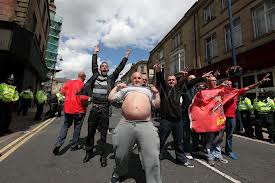
Protesters have been injured and a police officer hospitalised with concussion after police and far-right demonstrators clashed at an English Defence League (EDL) rally in Birmingham.
Hundreds of EDL supporters gathered in the city’s Centenary Square on Saturday, with Unite Against Fascism members forming a counter-protest in nearby Chamberlain Square.
Soon after EDL leader Tommy Robinson began his speech to the crowd, protesters started tussling with police, with some pulling down fences around a new University of Birmingham construction site and hurling smashed cobble-stones and bottles at officers.
Several protesters were seen with blood pouring from their heads after police equipped with riot gear and armed with batons confronted the crowd.
“Police injured, Broad St bar doors smashed, building site materials thrown at police, shops closed, work lost. Another peaceful EDL protest,” tweeted Birmingham Labour MP Ian Austin.
West Midlands Police said that four arrests had been made and that 1,000 extra officers had been drafted in before the demonstration to help cope with any disorder.
The EDL said they were marching for the reintroduction of CCTV cameras in the Washwood Heath and Sparkbrook areas of the city. The cameras were originally installed as a counter-terrorism measure, but removed in 2011. – ibtimes.com
For weeks now, officials at intelligence services around the world have been in suspense as one leak after another from whistleblower Edward Snowden has been published. Be it America’s National Security Agency, Britain’s GCHQ or systems like Prism or Tempora, he has been leaking scandalous information about international spying agencies. In an interview published by SPIEGEL in its latest issue, Snowden provides additional details, describing the closeness between the US and German intelligence services as well as Britain’s acquisitiveness when it comes to collecting data.
In Germany, reports of the United States’ vast espionage activities have surprised and upset many, including politicians. But Snowden isn’t buying the innocence of leading German politicians and government figures, who say that they were entirely unaware of the spying programs. On the contrary, the NSA people are “in bed together with the Germans,” the whistleblower told American cryptography expert Jacob Appelbaum and documentary filmmaker Laura Poitras in an interview conducted with the help of encrypted emails shortly before Snowden became a globally recognized name.
Snowden describes the intelligence services partnerships in detail. The NSA even has a special department for such cooperation, the Foreign Affairs Directorate, he says. He also exposes a noteworthy detail about how government decision-makers are protected by these programs. The partnerships are organized in a way so that authorities in other countries can “insulate their political leaders from the backlash” in the event it becomes public “how grievously they’re violating global privacy,” the former NSA employee says.
SPIEGEL reporting also indicates that cooperation between the NSA and Germany’s foreign intelligence service, the BND, is more intensive than previously known. The NSA, for example, provides “analysis tools” for the BND to monitor signals from foreign data streams that travel through Germany. Among the BND’s focuses are the Middle East route through which data packets from crisis regions travel.
BND head Gerhard Schindler confirmed the partnership during a recent meeting with members of the German parliament’s control committee for intelligence issues.
But it’s not just the BND’s activities that are the focus of the interview with Snowden.
The 30-year-old also provides new details about Britain’s Government Communications Headquarters (GCHQ). He says that Britain’s Tempora system is the signal intelligence community’s first “full-take Internet buffer,” meaning that it saves all of the data passing through the country.
The scope of this “full take” system is vast. According to Snowden and Britain’s Guardian newspaper, Tempora stores communications data for up to 30 days and saves all content for up to three days in a so-called Internet buffer. “It snarfs everything in a rolling buffer to allow retroactive investigation without missing a single bit,” Snowden says.
Asked if it is possible to get around this total surveillance of all Internet communication, he says: “As a general rule, so long as you have any choice at all, you should never route through or peer with the UK under any circumstances.”
In other words, Snowden says, one can only prevent GCHQ from accessing their data if they do not send any information through British Internet lines or servers. However, German Internet experts believe this would be almost impossible in practice.
The attempt to conduct total data retention is noteworthy because most of the leaks so far in the spying scandal have pertained to so-called metadata. In the interview, Snowden reiterates just how important metadata — which can include telephone numbers, IP addresses and connection times, for example — really are. “In most cases, content isn’t as valuable as metadata,” Snowden says.
Those in possession of metadata can determine who has communicated with whom. And using the metadata, they can determine which data sets and communications content they would like to take a closer look at. “The metadata tells you what out of their data stream you actually want,” Snowden says.
It is becoming increasingly clear to recognize the way in which surveillance programs from the NSA and GCHQ — including Prism, Tempora and Boundless Informant — cooperate. The metadata provides analysts with tips on which communications and content might be interesting. Then, Snowden says, with the touch of a button they can then retrieve or permanently collect the full content of communications that have already been stored for a specific person or group, or they can collect future communications. But a person can also be “selected for targeting based on, for example, your Facebook or webmail content.” – Der Spiegel
This website uses cookies to improve your experience. We'll assume you're ok with this, but you can opt-out if you wish. Cookie settingsACCEPT
Privacy & Cookies Policy
Privacy Overview
This website uses cookies to improve your experience while you navigate through the website. Out of these cookies, the cookies that are categorized as necessary are stored on your browser as they are essential for the working of basic functionalities of the website. We also use third-party cookies that help us analyze and understand how you use this website. These cookies will be stored in your browser only with your consent. You also have the option to opt-out of these cookies. But opting out of some of these cookies may have an effect on your browsing experience.
Necessary cookies are absolutely essential for the website to function properly. This category only includes cookies that ensures basic functionalities and security features of the website. These cookies do not store any personal information.
Any cookies that may not be particularly necessary for the website to function and is used specifically to collect user personal data via analytics, ads, other embedded contents are termed as non-necessary cookies. It is mandatory to procure user consent prior to running these cookies on your website.


 Fears grow in Britain of a “constitutional crisis” which would put the election in doubt, as legal expert warns that Scottish independence could bring down the next government