Soweto — the true story of 16 June 1976

June 16, 1976 was a normal working day. It was cold and cloudless sunny winter weather. At the time I was working as a social-worker supervisor for the West Rand Development Council in Soweto and my office was in Diepkloof, which is located near Baragwanath Hospital. The hospital is located on the outskirts of Soweto. There were quite a few white social workers working in Soweto at the time, as well as many black social workers under our supervision. They had offices in their respective areas in and around Soweto. Our direct head was Dr. Melville Edelstein who was also the first person and the first white person to be killed in Soweto on June 16.

There were quite a few black social workers under my supervision whose offices were in Klipspruit, Chiawelo, Dlamini, Pimville, Senoane, Orlando East and Orlando West, Dube, Jabulani, Morocco and Jabavu.

As usual, I was at my office in Diepkloof at eight am on June 16, 1976. After completing some administrative tasks, I drove to Jabulani around 10:30 am to deliver a cheque to that office. At that point, everything was quiet and everyone seemed to be going about their business normally. Around 11 am on my way back to my office in Diepkloof I drove through Jabavu. I noticed black children in their school uniforms (black dresses, grey long pants and white shirts) running along the roads and in between the houses. They did not carry posters or give any indication why they were running. Further on to my right I saw a small brown sedan with four white officers inside who looked like South African policemen in their blue uniforms. They were travelling in the same direction as me,  at a high speed. The situation seemed tense. Fortunately I wore a black leather jacket that stood high against my neck, with black leather gloves and dark glasses. Because I was driving against the sun, no one from outside could see that I was a white woman. We were always instructed not to stop anywhere. I was thus able to reach my office in Diepkloof in one piece through the unruly mass of school children.

After returning to my office, I immediately went to the Chief Village Management’s office and told the manager what I had seen. After a short while he told me to leave the area immediately. He asked another Village Manager to escort me out of Soweto. It was 12 noon and I went to my apartment in Hillbrow. Because there were no cell phones at that time, I had no idea what was going on in Soweto. I didn’t have a TV or a radio either. From then on I was never able to return to my office in Diepkloof. I subsequently reported to the salary office in Eloff Street Extension, Johannesburg.

At around 5 pm, a Soweto work colleague visited me and told me Soweto was burning and that there was total chaos everywhere. On that same morning this colleague who worked in Zola was also instructed to leave the area by midday. Needless to say, he could never return again to his Zola office. The orderly system where white village managers had successfully managed the city of Soweto for many years ceased to exist from 16 June 1976. If a Soweto resident wanted to see a white official who had been replaced by a black village manager, a fee would have to be paid to the new black official just to make an appointment! This fee went into the official’s pocket.

During the riots, the Zola office was completely destroyed. Roving black mobs came with chains, surrounded the buildings and the large built-in safe was removed in the plundering. In addition the mob carried away all the roofing sheets and bricks. Some years later we drove past what had been a large, well-maintained edifice, with a vegetable market and parking, and now there was just grass. They had removed everything.

The formerly neat Diepkloof offices and the complex remained standing, but the library building was occupied by blacks who made it their headquarters. The buildings had deteriorated. Other town offices in Soweto were also looted and destroyed. Before the riots, rumours among whites working in Soweto had circulated that one day there would be trouble, but we had no indication when it was expected and what form it would take.

Arrogance and insubordination increased. One black social worker whose office was also in Diepkloof proved this point. She was never on time at 8 am, and sometimes only arrived at 10 am. Her black clients, mostly elderly people,  had been patiently waiting in the sun outside for hours for her arrival. I spoke to her on numerous occasions about her tardiness and discussed the matter with Dr. Edelstein. He did nothing about it. One morning she informed me she didn’t have a car like me, so could not arrive on time. At that point, she was on the same salary scale as me, while no tax was deducted from her annual bonus. Tax was deducted from my bonus. When I asked why she didn’t buy a car, she replied because she was black and nobody would sell her a car. I told her this was nonsense — she was playing the race card. But she turned around and left the office.

Dr. Melville Edelstein, with his family

Until his death, the 56-year old Dr. Edelstein had worked for eighteen years firstly in Soweto as a social worker/philanthropist and later as Chief Social Worker at the West Rand Development Council. He obtained his doctor’s degree from the left-liberal University of the Witwatersrand studying and researching the black youth in Soweto. He devoted his life to the upliftment of Soweto’s black youth and he could see nothing wrong with them. His daughter later said that “he loved the people of Soweto almost like he did his own family”. He attended his synagogue every morning before going to his office in Jabavu. On the morning of his death, he opened a project / program at the Protected Workshop in Orlando East. When he heard that there were problems at the Jabavu office,  he rushed back there despite warnings and pleas from myself and his other colleagues not to return. At his office he was met by the riotous young blacks who caught him under his desk. Despite the pleas of a black lady social worker not to attack Dr. Edelstein, they shouted at him “bleddy white k..…r, today you are going to die”.  They dragged him from under his desk and brutally killed him, smashing his head to a pulp and assaulting him with knives.

Jou bleddie wit k*****, vandag vrek jy. You bloody white k***** [n*****], today you are going to die [like an animal]

To my knowledge, he was known to these black thugs as he had worked with them daily for many years. In the media it was reported that had they known who he was, they would not have killed him. A note left behind on Dr. Edelstein’s body read  “preserving Afrikaans is the most dangerous drug for our future”. The black youth who killed him knew that he was not Afrikaans.

The “forcing students to learn Afrikaans” story is totally untrue. Afrikaans as a subject in the black schools was voluntary and no student was forced to take Afrikaans as a subject. White Afrikaans teachers in the black schools offered their respective subjects in English. All reports, interviews and so forth conducted by Village Managers or Social Workers or any other official in Soweto were conducted in English.

Because of the shortage of qualified black teachers, white women teachers were sent to the schools. Most of them were Afrikaans speakers, but all of course spoke English. Many of them were already teaching in English. The story that was spread around the world that Afrikaans was “forced” on black pupils is absolute nonsense. No one was forced to learn anything other than what they chose to learn. Afrikaans as a subject was listed with other subjects from which to choose. If you didn’t want to learn Afrikaans, no one forced you to do so.

It should be remembered that before the National Party came to power in 1948, there was no formal education system for blacks. So those in South Africa and overseas who complain about “Bantu education” should remember that for thousands of years while they lived in Africa, none of the black tribes created an education system. It was the whites who brought modern education to South Africa. Firstly it was the British and German missionaries who opened a few schools, then white farmers set up schools on their farms for the children of their workers, but until the Verwoerd government came to power, there was no formal education whatsoever for blacks. So those black critics who complain about Bantu education, we ask: what education system did you create for your own people? The answer is none.

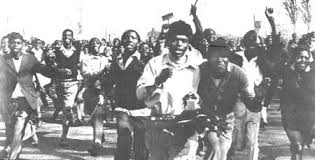
Protests against education in Afrikaans broke out at seven Soweto schools. In six of them however no subjects were taught in Afrikaans. Before long, 20 000 students went on a rampage through the streets, burning, destroying, killing and looting. Other whites working in Soweto, including women, were surrounded and assaulted. One white official (J.N.B. Esterhuizen) was stopped in his car and hacked to death! Police detachments were sent in to restore order but achieved little. They were attacked by stone-throwing crowds which also set police dogs alight.

At one of the riot scenes, a large group surrounded and closed in on a few policemen. The police opened fire and several hundred rioters, including rioting children, were shot in the mayhem which spread to the rest of the country and continued for months. (Die Burger, 16 June 2000).

This gratuitous violence gave the world the opportunity to brand South Africa as a “brutal police state” and a host of new international punishment measures were imposed on the country, which sanctions lasted until the late eighties. All of this is based on a false story, sent around the world by an antagonistic media. Will the truth of this day 16 June in South Africa ever prevail, and will the truth about the real George Floyd ever prevail as America’s racial hysteria sends out an inflamed message to the world?

—Salomé Oosthuizen
Bantu education was better, says Wits academic

An uprising against Afrikaans...
An uprising against Afrikaans ended Bantu education

The apartheid-era Bantu education system was much better than the current education regime, a Wits academic said in Pretoria on Thursday.

“It was far better in terms of quality than the education that our kids are receiving nowadays. That is where the problem is,” Rabelani Dagada, a lecturer at Wits Business School, told a debate on affirmative action.

“Affirmative action should be about empowerment. The best way to empower is not to take from those who have and give to those who don’t have. It won’t work.”

Dagada said South Africans could only be empowered through proper education.

“After 20 years of democracy, the education levels have plunged. It’s worse than the so-called Bantu education. The best way to do transformation, empowerment is to provide quality education.”

Former foreign affairs minister Pik Botha said South Africa, under the ANC’s leadership, had moved away from former president Nelson Mandela’s principles. He said the country’s affirmative action policies were mainly hurting the black majority.

“How much further down must all of us go before we say this is enough now? Our education is far behind, it is the worst in Africa, (but) it has the highest per capita expenditure.”

Botha said Zimbabwe’s education system was better than South Africa’s.

“When is this going to change? At state hospitals black patients must wait for three years for an operation.”

Botha said when Mandela became president, he was careful not to lose skilled white people.

“He said we must not lose the proficiency of the whites. They must not leave the public service, but they should help us to train people to achieve that same proficiency,” said Botha.

“They have now removed all those people.” – Sapa

School knew of rape

Barbara Creecy, in charge of Gauteng schools

Eleven-year-old Sam (not his real name) went to school on Wednesday, as on any other day. But he returned home scarred for life.

The Grade 6 pupil at Refilwe Primary School, in Winterveldt, north of Pretoria, was allegedly raped by a Grade 7 pupil.

The school allegedly tried to cover up the assault.

According to the school governing body, 12 complaints, including the groping of female pupils, have been made against the teenager who allegedly assaulted Sam – but the governing body learned of this only on Wednesday.

Sam’s mother said her son was traumatised. “He screams at night and does not want to be touched. Now he sleeps in my bed and he jumps every time I try to cuddle him.”

The mother of three is furious that the principal wanted the matter to be settled internally, saying she would not have known about the incident if a concerned teacher had not alerted her. She had arrived at the school to find police officers talking to the principal and the father of the alleged assailant.

“My son has been violated and when I demanded answers the principal just grinned and walked away,” she said.

The woman said she had had to walk, with her 11-year-old son strapped to her back, to the local clinic 10km away, only to be referred to another clinic.

“At Block BB clinic I was told to open a case first before he could be examined but it was already late and I went home.”

School governing body deputy chairman Ace Choko said four boys aged between 15 and 17 had been suspended pending disciplinary proceedings.

“We are shocked by the incident but we are more concerned with the fact that one of the boys had a string of complaints against him but we were not told. He should not be at the school,” he said.

Gauteng education department spokesman Charles Phahlane said the police had visited the school but Loate police spokesman Captain Llifi Ramatlo said the police could not investigate because a case had not been opened.

Earlier charges against two boys who allegedly drugged and raped a Johannesburg schoolgirl have been dropped due to a lack of evidence, the National Prosecuting Authority said on Tuesday.

“As much as we appreciate the sensitivity of the matter there is just not enough evidence hence the decision not to proceed with the matter at this stage,” spokesperson Mthunzi
Mhaga told Sapa.

“Due to the sensitivity and age of the complainant we cannot discuss the details in respect of the nature of evidence which is in police possession.”

Three boys allegedly gave “date rape” drugs to two girls on Thursday and then gang-raped one of them, aged 15, while filming it on their cell phones.

The alleged attack occurred on the premises of Jules High School in Jeppestown, during school hours. The girl only identified two of the boys and they were arrested on Monday.

Both boys are grade nine pupils. One of them is a pupil at the school where the alleged attack occurred and the other is a pupil at New Nation School near Auckland Park.

The NPA has requested that the police continue to conduct a thorough investigation and obtain more statements.

Once the investigation had been completed the NPA would decide whether to reconsider its decision or not, Mhaga said. – M&G/timeslive.com

‘Apartheid made maths difficult for blacks’ and other myths – historian Hermann Giliomee defends Bantu Education

By Hermann Giliomee

Bantu Education: Destructive intervention or part reform?

As the crisis of education in black schools has worsened, or rather become more evident, so the tendency to “Blame Verwoerd” has intensified.

Senzo Mchunu, MEC for Education in Kwazulu-Natal, declared in late July: “One of the points we found was a problem in Maths and Science. It was Verwoerd who made the subjects difficult because he thought blacks would be a threat to him’.[1]

Addressing the Limpopo textbook crisis on Talk Radio 702, President Jacob Zuma said: “What is happening today is what Verwoerd did, where the black majority were historically not given education. We are dealing with a system that had put black people back for centuries.” According to Zuma, Verwoerd created the textbook crisis in Limpopo. [2]

Redi Tlhabi, who interviewed Zuma on Talk Radio 702, expressed outrage over the president’s remark that he did not know who was to blame for the textbook scandal, but agreed with him about Verwoerd. “The president was right in that Verwoerd worked to create a system that was intent on stifling the black child and making sure that she or he did not thrive.” She added: ‘Today, in 2012, I did not expect that the ‘liberation party [the ANC] would want to further Verwoerd’s goals: to keep the black child poor, uneducated and deprived.” [3]

President Zuma’s comments attracted a retort from Mamphela Ramphele, a product of Bantu education and a previous UCT Vice-Chancellor. Speaking at an education conference she commented on the current state of black education: “The monumental failure in South Africa was not Hendrik Verwoerd’s fault but that of the current government”. She continued: “Children under apartheid’s ‘gutter education’ were better educated than children are today.”[4]

Hendrik Verwoerd, National Party Minister of Native Affairs from 1950 to 1958 and Prime Minister from 1958 to his assassination in 1966, remains one of the most complex figures in South African history. In the contemporary debate, he is, however, little more than a demonic figure, denounced and excoriated as the architect of all our misfortunes.

Equally, while his policy of Bantu Education looms large in the popular imagination it is very poorly understood. Despite the significant work that has recently been done by historians in this area, many opinion-formers’ knowledge of this policy does not stretch much beyond a notorious single quote by Verwoerd in a 1953 speech.

Although the Bantustans and Bantu education were inextricably linked, Bantu education could, to a considerable degree, also be considered on its own merits. This article attempts to focus only on some of the aspects of this system, such as funding and the relative value of mother tongue education, and not on the more ideological aspects like the attempt to use the schools to foster distinctive ethnic identities.

Verwoerd’s Bantu education signalled the introduction of mass education in South Africa. After 1994 a new regime has removed all forms of racial privilege, but black public schools remained in a state of crisis. It is important to go back to the founding years of the system to establish to what extent the roots of the crisis could be traced back to these years.

The indictment

The indictment of the education system Hendrik Verwoerd, Minister of Native Affairs, introduced in 1954 consists of several charges. The most important are:

  • He closed down a functioning system of black education that included some good mission schools like Lovedale and Healdtown
  • His policy based on ‘the assumption of an inferior potential of African minds’ was ‘explicitly designed to prepare blacks for a subordinate place in society.’[5]
  • He discouraged the teaching of Mathematics and Science
  • The policy deliberately starved black education of funds

Closing down a functioning system?

Missionary societies dominated the provision of black and coloured education before the accession of the National Party to power in 1948. In 1939 the Minister of Education in the United Party government admitted that two-thirds of black children were without any school experience whatsoever.[6] During the war years the government improved the provision of education to blacks considerably, but by 1950 less than half of black children between the ages of 7 and 16 were attending school, and only 2.6% of black pupils were enrolled in post-primary standards. The average black child spent only four years in school.

Among the mission schools there were a few excellent high schools, but, as a historian commented, the renowned reputation of these schools ‘should not obscure the fact that most mission schools were poor primary schools with large dropout rates’ and that the ‘mission system was breaking down at all levels.’[7] With the demand for education growing rapidly, schools had to take in far more children than they could teach effectively.

The state helped by providing salaries for approved teaching posts, but overall state aid was insufficient in a modernising economy. School buildings were dilapidated and classes overcrowded. Most schools were understaffed and there was a severe shortage of competent teachers.

In the mid-1940s both the United Party government and the Natives Representative Council, the main body for articulating black opinion, sensed that the system of black education was in need of drastic overhaul. The main sticking points lay elsewhere. There was firstly the question of funding.

ZK Matthews, the leading black authority on education and a prominent member of the ANC, demanded the modernisation in terms that, implicitly at least, meant apportioning resources for equal educational opportunities. But whites baulked at the expense. RFA Hoernlé, a leading liberal, observed that while a large number of the white voters do not mind  ‘native education’ as such, it would be suicide in most constituencies for a Member of Parliament ‘to advocate, let alone vote for, the proposal that whites should be taxed in order that natives could be educated.’[8]

Another major point of conflict was over the extent to which traditional black culture had to be made part of the school syllabus. Matthews argued for the ‘preservation of the African heritage and for using the powers of the vernacular languages to effect social rejuvenation.[9] Some ANC leaders, however, rejected any ‘Bantuization of native education’. Blacks had to be educated ‘to live side by side with Europeans’.[10] Developing proficiency in English was generally regarded as much more desirable than using the Bantu languages as media for instruction.

In 1954 the government took over the coloured and black schools that the state partly funded and moved control of black and coloured education from the provinces to central government. As part of his ambitious plan to overhaul black education Verwoerd insisted that black education had to be rooted in the ‘native community’. ‘It is in the interest of the Bantu that he be educated in his own circle. He must not become a black Englishman in order to be used against the Afrikaner.’[11]

To the extent that the policy tried to foster different ethnic identities in the black community it was a dismal failure, but that was not the sole rationale of the policy.[12] In , the decades that followed, however, the issues of promoting the Bantustan policy through the education policy and mother tongue education became hopelessly confused.

Both Werner Eiselen who headed the commission that laid the groundwork for Verwoerd’s policy, and Verwoerd himself, firmly believed in mother tongue education as the best form of education  A Professor of Anthropology before he became a chief inspector of native education in the Transavaal, Eiselen had a great respect for the particularity of blacks and genuine concern for the preservation of Bantu language and culture.[13] To him there was little doubt that blacks would learn better through their own languages.

Verwoerd received his secondary school education in the medium of English in Milton Boys School in Bulawayo before enrolling at the University of Stellenbosch. He became the first student in the country to write his doctoral dissertation in Afrikaans. In 1924 he received his doctoral degree, a year before Afrikaans was proclaimed an official language. Afrikaans quickly developed from a low-status language to one that could be used in all walks of life. Afrikaans-speakers, along with English speakers, now began to experience the benefits of what language expert Neville Alexander called “mother-tongue education from cradle to university.”[14]

Bantu education, as introduced by Verwoerd in 1954, entailed the provision of eight years of mother tongue medium education (MTE). In addition well-trained teachers and competent speakers of English and Afrikaans taught these languages as second languages. In the ninth year of school, students were expected to switch to learning through the two second languages, Afrikaans and English.

The department laid down the principle that it would not use African languages as media of instruction in secondary school until the black community requested it. An education advisory council, which was established in terms of the policy, polled the boards of control of black school all over the country to asses their support for different options: It provided the following result[15]:

1 Afrikaans and English 64%
2 Only Afrikaans 5%
3 Only English 31%
4 Mother tongue 1%

The scant support for mother tongue as medium of instruction in the two highest school standards is an important indication the black population – unlike the Afrikaans one – were not convinced of the merits of mother tongue instruction.

Yet Bantu education was not out of line with what many Western scholars regard the best educational practice. Developed countries teach their children in the mother tongue because they are convinced that such a policy is pedagogically much sounder. They also believe that it improves people’s ability to make a contribution to the economy than those taught in a second or third language. Many developing countries, by contrast, tend to use the colonial language of instruction because they believe, incorrectly as it happens, that it is a short cut to a good education and job opportunities.

In South Africa the results of Bantu education between the mid-1950s and mid-1970s was positive, measured by pass rates. Kathleen Heugh, an acknowledged authority on language use in education, writes: “Between 1955 and 1975, there was a steady improvement in the achievement in literacy and numeracy… Eight years of MTE resourced with terminological development, text-book production, competent teacher education and competent teaching of English, resulted in a school-leaving pass rate of 83.7% for African students in 1976. This is the highest pass rate to date.”[16]

One of the reasons for the disastrous downturn in black education after 1976 is the introduction of a policy that limited mother tongue education to the first three years, which is generally accepted as quite inadequate. Heugh concludes: apartheid’s education policy consisted of two phases. The first part, up to 1976, worked to the educational advantage of black students; the second part, from 1976 on, to their disadvantage, with mother tongue education limited to three or four years.[17]

Based on racist assumptions?

Those who charge Verwoerd with implementing a policy with racist assumptions usually base it on a reading of his speech in parliament in 1953 when he introduced the policy. Here Verwoerd attacked the existing policy, which, in his words, showed the black man ‘the green pastures of the European but still did not allow him to graze there’. By that he meant pupils were provided with skills that employers did not want from black workers.

He criticised the existing policy as uneconomic, because money was spent on education with no clear aim. This frustrated educated blacks, who were unable to find the jobs they wanted. He said: ‘Education should have its roots entirely in the Native areas and in the Native environment and the Native community … The Bantu must be guided to serve his own community in all respects. There is no place for him in the European community above the level of certain forms of labour. Within his own community, however, all doors are open.’

This comment is quoted in virtually every article on the subject. It is often distorted by quoting only the first part – ‘There is no place for him in the European community above certain forms of labour’ – and by omitting the qualifier that Verwoerd added: ‘Within his own community, however, all doors are open.’ [18]

Today the first part of the quote sounds very harsh, but it was not out of line with existing policy. A study states: ‘The overwhelming demand among urban employers was for workers with basic literacy, who could be employed as unskilled labour. In most cases “tribal labour” was preferred.’[19] There was little demand for blacks who had completed the more advanced standards.

The previous United Party government had also seen little need for the training of large numbers of black artisans for employment in the common area. The policy emphasised the training of whites for skilled labour in the so-called “white areas”. Blacks could only expect to do skilled work in the reserves. In terms very similar to those Verwoerd would use later, the secretary of the Department of Native Affairs told the De Villiers Commission on Technical and Vocational Training in 1947 that ‘the unfolding of extensive government development schemes’ in the reserves would produce a large number of skilled posts.[20]

White supremacy was clearly incompatible with a steadily rising, better educated, urbanized black population moving up to strategic levels of the economy. Recognizing this, J.G. Strijdom, Transvaal NP leader, warned D.F Malan in 1946 that it would be impossible to maintain racial discrimination if the quality of education of the subordinate people was steadily improved. ‘Our church ministers,’ he added, ‘were far too eager to compete with other missionary societies in trying to provide the most education to blacks.’ If the state in the future tried to withhold equal rights from educated people it would lead to ‘bloody clashes and revolutions.’[21]

To put it in non-racist terms, by modernizing the provision of education to the subordinates, however incompletely, the apartheid state ran the risk of sowing the seeds of its own destruction. An opinion survey conducted in 1981 showed that black children’s rejection of segregation steadily increased with higher education levels. About half of the children with only 4 years of schooling said whites could keep their own housing areas and schools, against only a third of those in Standards 7 to 9, and only one tenth of those in Std 10 and higher. See Table 1.[22]

Table 1: Black political responses (%) according to level of education – 1981

Whites can have their own… Std 2 or below Std 3-6 Std 7-9 Std 10 and above
Laws against mixed marriages

70

65

45

18

Own housing areas

62

52

32

15

Own schools

53

34

26

13

Farmlands

47

38

29

11

Recreation facilities

41

27

13

9

Transport and Buses

36

26

18

2

Note: Only percentages accepting segregation are given

Source: Hermann Giliomee and Lawrence Schlemmer, From Apartheid to Nation-building, p.119

Read the whole article here.

‘Education system worse than under apartheid’ – black academic

South Africa’s education system is worse today than the “gutter education” the country had under the apartheid government, said an academic and struggle heroine Mamphela Ramphele, The Star reported on Friday.

“Maths literacy… what is that? It’s worse than the arithmetic I did under Bantu education,” Ramphele was quoted saying.

She was addressing the sixth annual Solomon Mahlangu lecture at the University of Johannesburg.

Ramphele criticised the much praised matric pass rate saying it was deceptive, consigning thousands to a life that promised neither further education nor employment.

She lashed out at the 30 percent pass benchmark, saying it degraded education standards and was used for political purposes.

“Kader Asmal [former education minister] fell for micropolitics when, under his watch, a 40 percent pass rate suddenly became 70 percent.”

Ramphele also criticised the 70.2 percent pass rate achieved by last year’s matriculants.

“There was a great razzmatazz about the ‘historic’ 70.2 percent, but this performance was deceptive – less than 500,000 people showed up to write their matric exams; 539,102 students [who were in grade 1, 12 years prior] disappeared from the system. The department of education must tell us what happened to those children.”

– Sapa