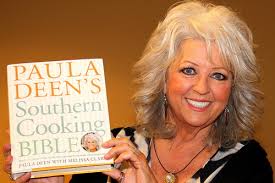
Paula Deen’s forthcoming cookbook, Paula Deen’s New Testament, has surged past best-sellers by the likes of Dan Brown, Stephen King and Game of Thrones writer George R.R. Martin to take the top spot on Amazon’s sales charts.
The book charted in the 1,500s on Monday and by Wednesday it was at No. 18.
The Southern TV cook has faced widespread outrage and dwindling endorsement deals since a deposition was released last week in which she admitted to using a racial slur for African-Americans in the past, and discussed her wish to mount a “true Southern plantation-style” wedding.
Scheduled to hit shelves on Oct. 15, the book is Deen’s first with Random House. Another Deen cookbook, 2011’s Paula Deen’s Southern Cooking Bible, currently resides at No. 7 on the best-sellers list.
In addition, five of the Top 10 books on the Amazon’s movers and shakers list of books that have jumped the most in the past 24 hours are Deen-related. – hollywoodreporter.com
US officials have been working flat out for the past month to secure Robben Island for Barack and Michelle Obama on Sunday.
Fields were cleared for five helicopters to land, US security personnel installed new telephone lines and the museum’s VW sedan emblem was covered for the visit.
Robben Island Museum tourism manager Thulani Mabaso, a former political prisoner, said he didn’t know how many US security officials had been deployed.
On Thursday, he helped two men in civilian clothes with American accents board the ferry to the island.
Helicopters, believed to be part of a security detail that included three CH-46 Sea Knights and two SH-60 Seahawks, landed at the Union Buildings in an exercise in preparation for the official visit of Obama.
The two men didn’t talk to each other or other passengers on the way to the island. They were more concerned about a trolley loaded with five black plastic containers they brought with them.
Mabaso later mentioned to the Cape Times that the men were working for the US government. “The Americans are creating their own communication line between the island and Cape Town,” he said.
Obama’s administration has organised for five helicopters to land on the day, while two will circle the island. Obama will travel in a Volkswagen sedan vehicle, owned by the museum, but Mabaso said they were ordered to cover the car’s emblem. The other officials would travel in mini-buses that also belonged to the museum.
“When president (Bill) Clinton came here the Americans wanted to bring their own two buses, but when they airlifted it with a helicopter from Cape Town the one chain broke and the bus fell in the ocean.”
Mabaso said the SANDF had offered to bring a fire engine and medical equipment to the island. Only 27 of the 280 museum staff would be on the island when the Obamas visited. “We are here to support, but the US handles all the security,” said Mabaso.
The Washington Post reported the US is to use its own aircraft carrier, complete with medical trauma centre, stationed offshore on the Obama visit.
Military cargo planes will bring 56 support vehicles, including 14 limousines, to the country. cobus.coetzee@inl.co.za
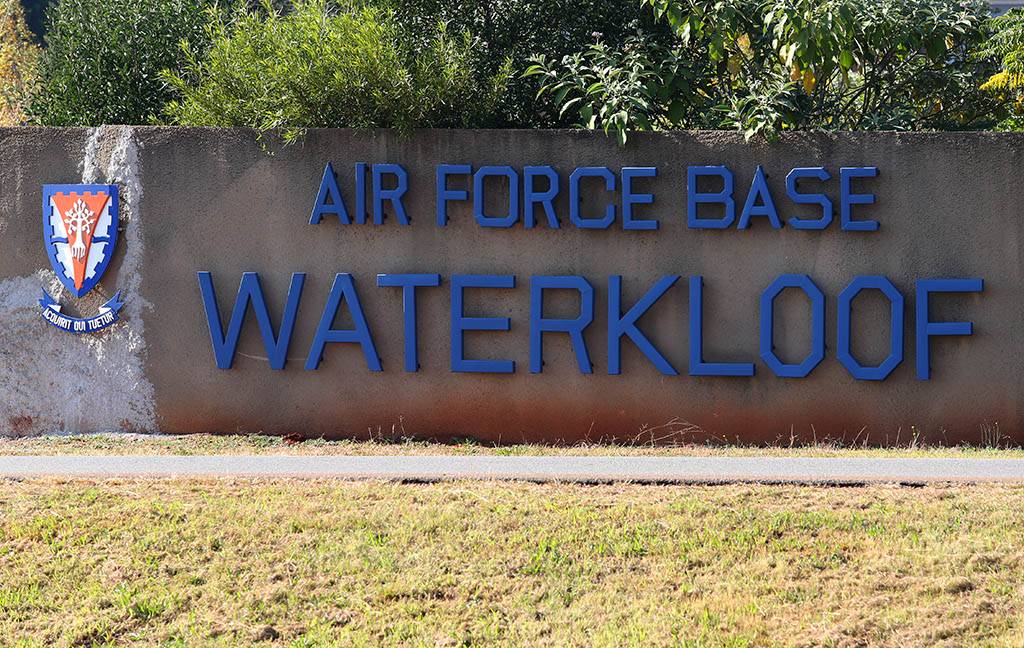
Anyone flying into the Waterkloof Air Force Base near Pretoria without authorisation should expect to be intercepted and escorted out or, at worst, shot down.
That is the official procedure for dealing with unauthorised aircraft.
Minister of Defence and Military Veterans Nosiviwe Mapisa-Nqakula told Parliament in a written response released on Wednesday that there were “standard operation procedures” for intercepting non-compliant aircraft.
“Acting against non-compliant aircraft will normally be limited to escorting them out of the Waterkloof Air Force Base and, in very specific instances, may entail the aircraft being instructed to proceed to a predetermined ‘force-down’ airfield (could be a military air base) under military aircraft escort, where they would then be instructed to land and be handed over to the relevant state authorities for further processing.
“Acting against non-compliant aircraft in a lethal manner will only be considered in very extreme circumstances,” she added.
“The air force’s responsibilities are to force down non-compliant aircraft under military aircraft escort, and under exceptional circumstances we may shoot down the non-compliant aircraft.”
Mapisa-Nqakula said that, after landing, non-compliant aircraft would be handed over to relevant authorities such as the police, the SA Civil Aviation Authority, Sars, or Customs and Excise.
She was responding to questions from Cope MP Mlindi Nhanha.
The questions followed the controversial use of the Waterkloof base by the Gupta family’s wedding guests, which involved the landing of an airliner with questionable authorisation.
In that case, the aircraft was not intercepted or seized, although it was issued with a fine by the Civil Aviation Authority for not having a foreign operator permit.
The minister said air bases did not have critical zones that couldn’t be used by private aircraft.
“Military air bases are not currently registered as national key points,” she explained.- IOL
Obama fully supported protests to overthrow the relatively friendly Egyptian Government of Mubarak. U.S. support paved way for an Islamist takeover by the oppressive and violent Muslim Brotherhood.
Now those suffering the most under this brutal Islamist rule want to protest, and the Obama Administration is trying to prevent it.
As Egyptians of all factions prepare to demonstrate in mass against the Muslim Brotherhood and President Morsi’s rule on June 30, the latter has been trying to reduce their numbers, which some predict will be in the millions and eclipse the Tahrir protests that earlier ousted Mubarak. Among other influential Egyptians, Morsi recently called on Coptic Christian Pope Tawadros II to urge his flock, Egypt’s millions of Christians, not to join the June 30 protests.While that may be expected, more troubling is that the U.S. ambassador to Egypt is also trying to prevent Egyptians from protesting—including the Copts. The June 18th edition of Sadi al-Balad reports that lawyer Ramses Naggar, the Coptic Church’s legal counsel, said that during [Anne W.] Patterson’s June 17 meeting with Pope Tawadros, she “asked him to urge the Copts not to participate” in the demonstrations against Morsi and the Brotherhood. […]
So why is the Obama administration now asking Christians not to oppose their rulers–in this case, Islamists–who have daily proven themselves corrupt and worse, to the point that millions of Egyptians, most of them Muslims, are trying to oust them?
What’s worse is that the human rights abuses Egypt’s Coptic Christians have been suffering under Muslim Brotherhood rule are significantly worse than the human rights abuses that the average Egyptian suffered under Mubarak–making the Copts’ right to protest even more legitimate, and, if anything, more worthy of U.S support.
Among other things, under Morsi’s rule, the persecution of Copts has practically been legalized, as unprecedented numbers of Christians–men, women, and children–have been arrested, often receiving more than double the maximum prison sentence, under the accusation that they “blasphemed” Islam and/or its prophet. It was also under Morsi’s reign that another unprecedented scandal occurred: the St. Mark Cathedral–holiest site of Coptic Christianity and headquarters to the Pope Tawadros himself–was besieged in broad daylight by Islamic rioters. When security came, they too joined in the attack on the cathedral. And the targeting of Christian children–for abduction, ransom, rape, and/or forced conversion—has also reached unprecedented levels under Morsi.
SAPA, the South African Press Association, is bent on anti-white propaganda, it appears. A steady stream of misleading information flows freely from most of its press reports on the ailing health of Mandela.
Here are some of the snippets from SAPA that indicate that the Association is less concerned with news than it is with spreading naked anti-white vitriol. These SAPA reports were written by one Shabtai Gold.
The most recent report includes this gem: “His lungs were damaged during his imprisonment for 27 years under the white-minority regime.”
Mandela, however, lived to be 94 on a continent where the median age is 38 for African men.
Earlier we were treated to this: “Mandela was kept in prison for 27 years by white racist regime”. Mandela was actually in prison for inciting violence, armed struggle and high treason.
The then premier, PW Botha repeatedly stated that he would pardon Mandela if he agreed to a peacefully negotiated settlement.
Mandela plotted instead with fellow communists to violently overthrow the government. Remember the Cold War?
A while ago SAPA reported that “Mandela’s eyes were damaged during his 27 years of imprisonment on Robben island.” But at the ripe old age of 94 Mandela still does not wear glasses.
Obama called Mandela, South Africa’s first black president, a “personal hero” during a visit to Senegal this week at the start of his three-country whistle-stop tour through Africa.
US officials says they will comply with the Mandela family’s wishes with regard to Obama visiting the ailing 94-year-old icon or meeting his relatives.
“If and when he passes from this place, one thing I think we’ll all know is that his legacy is one that will linger on throughout the ages,” said Obama, who is due to land in the evening.
Makaziwe Mandela, the former president’s eldest daughter, told SABC television that her father was “waning” but is still responding to his children’s voice and touch.
“When you touch him he still responds, and for us as his progeny as long as tata (father) is still responding when we talk to him and touch him, I think that gives us hope,” she said.
South Africans have been laying wreaths of flowers outside the Pretoria clinic where Mandela is hospitalized and also near his home in Johannesburg.
Candles burned late into the night as people, often emotional, held vigils at the gate to the Pretoria clinic.
Mandela family members have thanked the public repeatedly for their prayers and well-wishes, saying it is giving them strength during a difficult time.
Mandela was hospitalized on June 8 for a recurring lung infection. His situation turned critical on Sunday. He has been hospitalized several times in recent years.
President Jacob Zuma on Thursday said Mandela’s condition was “critical but is now stable.”
A steady stream of family members and relatives have visited Mandela in hospital this week. – SAPA
ident Barack Obama, the Senate on Thursday passed comprehensive immigration reform that would put 11 million undocumented people on a path to earning citizenship.
Chants of “Yes we did!” erupted from the public galleries after senators voted 68-32 to approve the landmark legislation, which pours unprecedented resources into border security, revamps legal immigration and requires a 13-year wait before those without papers can apply to become US citizens.
Fourteen Republicans joined a unanimous Democratic side in what Senate Majority Leader Harry Reid deemed a historic vote.
As Vice President Joe Biden presided over the chamber, Reid took the rare move of calling on members to cast votes from their Senate desks.
“We’ve taken giant steps forward towards solving our immigration problem today,” an elated Senator Chuck Schumer, one of the four Democrats who crafted the bill with four Republicans in the so-called “Gang of 8,” told reporters.
The measure now faces a rocky road in the Republican-led House of Representatives, but Schumer and Republican Gang of 8 Senator John McCain made a direct appeal to their colleagues on the other side of the US Capitol: work with us to achieve the most important immigration reform in a quarter century.
“To our friends in the House, we ask for your consideration, and we stand ready to sit down and negotiate with you,” McCain said.
“We may have different views on different aspects of this issue but we should all of us here have the same goal, and that is to take 11 million people out of the shadows, secure our borders, and make sure this is a nation of opportunity and freedom.”
Obama welcomed the Senate vote and urged the House to follow suit.
“Today, with a strong bipartisan vote, the United States Senate delivered for the American people, bringing us a critical step closer to fixing our broken immigration system once and for all,” Obama said.
But the president warned the bill’s supporters to “keep a watchful eye” on efforts to scupper reform, saying “now is the time when opponents will try their hardest to pull this bipartisan effort apart.”
The bill’s authors spent months crafting the 1,000-plus-page document, which pours $46 billion into border security and other efforts, including electronic employment verification and a modernized entry-exit system.
It requires immigrants to pass background checks, pay fees, fines and back taxes, learn English, gain employment, and as Reid said, “stay out of trouble.”
The bill was debated for three weeks on the Senate floor and dozens of amendments were added as Republicans squared off against one another over the merits of the legislation.
Obama hopes to sign immigration reform into law this year, but several House Republicans have said the bill will be dead in the water without significant changes, particularly on border security.
“The House is not going to take up and vote on whatever the Senate passes,” Republican House Speaker John Boehner told reporters.
“We’re going to do our own bill, through regular order, and it’ll be legislation that reflects the will of our majority and the will of the American people.”
Opponents have said the bill is too costly, or argue that loopholes will prevent authorities from gaining full operational control of the border before the citizenship process begins.
“The one thing people are going to be very unhappy with is if they vote for this bill, we document all of these undocumented workers, but then we get 10 million more come into the country,” Senator Rand Paul told AFP.
Shortly before the vote, Senator Marco Rubio, perhaps the legislation’s most forceful advocate and a potential 2016 presidential candidate, made the closing arguments.
Rubio cited his own parents’ flight from Cuba to Florida as reflective of a journey millions of immigrants have taken to a new life in a country whose work ethic, rule of law and opportunity quickly changes them for the better.
“Because well before they became citizens, in their hearts they had already become Americans,” Rubio said.
Mexico welcomed passage of the bill, with the foreign ministry saying in a statement that it had the potential to improve the lives of millions of Mexicans living in the United States.
Earlier this week however Foreign Minister Jose Antonio Meade criticized provisions that would tighten security along the US-Mexico border.
Building more “walls” would not solve the immigration issue, he argued. – AFP
US President Barack Obama flies to South Africa Friday hoping to pay homage to the legacy of his critically ill hero Nelson Mandela, who is fighting for his life in hospital.
Mandela’s ill health means the two men, who shattered racial boundaries on either side of the Atlantic, are not expected to have a long-anticipated meeting for the cameras.
Still, reflections on Mandela’s extraordinary journey from prisoner to president are likely to permeate Obama’s three-day stay.
Mandela, who turns 95 next month, was rushed to hospital three weeks ago with a recurrent lung disease and has since appeared close to death.
On the eve of the visit, South Africa’s first black president was said to be in a critical condition, but had stabilised since a scare forced his successor Jacob Zuma to cancel a trip to neighbouring Mozambique.
“He is much better today,” said Zuma after seeing Mandela on Thursday for the second time in less than 24 hours.
Yet South Africans, including Mandela’s family, remain braced for the worst.
“I won’t lie. It doesn’t look good,” daughter Makaziwe Mandela said. But “if we speak to him he responds and tries to open his eyes — he’s still there.”
“Anything is imminent, but I want to emphasise again that it is only God who knows when the time to go is,” she told local radio.
Meanwhile Obama, the United States’s first black president, led a chorus of support for the man he dubbed a “hero for the world.”
Mandela’s plight has lent a deeply poignant tone to the visit, around which Obama has built a three-nation Africa tour, and his plans could yet be upended by sudden developments in the ex-president’s condition.
“The president will be speaking to the legacy of Nelson Mandela and that will be a significant part of our time in South Africa,” said deputy national security advisor Ben Rhodes.
“The president will treasure any opportunity he has to celebrate that legacy.”
The White House says it is in the hands of the Mandela family and the South African authorities on any aspect of the visit.
“We will obviously be very deferential to the developments that take place and the wishes of the family and the South African government,” Rhodes said.
A visit by Obama to Mandela’s former jail cell on Robben Island, off Cape Town on Sunday would now take on extra “profundity”, he added.
Speaking in Senegal on the first leg of his long-awaited African trip, Obama described Mandela as “a personal hero.”
“I think he is a hero for the world, and if and when he passes from this place, one thing I think we all know is that his legacy is one that will linger on throughout the ages.”
The US president recalled how Mandela had inspired him to take up political activity, when he campaigned for the anti-apartheid movement as a student in the late 1970s.
South Africans have also been marking the life of a man who led their country out of centuries of white rule.
Outside Mandela’s hospital a wall of messages and flowers has become the focal point for a nation saying a long goodbye to one of the greatest figures of the 20th century.
“There is no sadness here. There is celebration. He is a giant,” said Nomhlahla Donry, 57, whose husband served time with the revered leader.
Mandela has been hospitalised four times since December, mostly for a stubborn lung infection.
The man once branded a terrorist by the United States and Britain walked free from prison near Cape Town in 1990.
He went on to negotiate an end to white minority rule and won South Africa’s first fully democratic elections in 1994.
He forged a path of racial reconciliation during his single term as president, before taking up a new role as a roving elder statesman and leading AIDS campaigner.
He stepped back from public life in 2004 and has not been seen in public since the football World Cup finals in South Africa in 2010.
But Mandela still draws vast global interest, interest which now appears to be wearing on his family.
Mandela’s oldest daughter Makaziwe on Thursday slammed the “crass” media frenzy around her critically ill father, likening the press to vultures.
“They violate all boundaries,” she said accusing the foreign press of “a racist element” by crossing cultural boundaries.
“It’s like truly vultures waiting when a lion has devoured a buffalo, waiting there you know for the last carcasses.”
With his health now fading, Mandela’s supporters are starting to show signs of resignation — while preparing to celebrate his legacy.
In the rural village of Qunu where he grew up amid cattle and mud-walled huts, 93-year-old Keqane Keledwane said she was not ready to say goodbye to her neighbour.
“I want him to get well. I don’t want to be the only one left behind,” said Keledwane, who lives across the road from Mandela’s house. “I wish him a long life, my old friend.” – AFP
Mozambican and Swazi citizens who illegally receive social grants in South Africa are causing congestion at pay points in Mpumalanga.
Provincial Health and Social Development MEC Clifford Mkasi raised the problem at the launch of Social Development Month in Mbombela.
“People who are coming from neighbouring countries to collect social grants are becoming a nightmare in our department. These people are also sleeping over at the pay points because they don’t have a place to sleep, making the queues very long,” said Mkasi.
He said the problem was serious because more than 1.3 million people in Mpumalanga rely on social grants.
An interdepartmental campaign involving Home Affairs, Agriculture, Rural Development and Land Administration and the South African Police Service is to crack down on the offenders and ensure that only deserving people receive social grants.
“We have identified programmes aimed at ensuring that families stand on a solid ground of sustainable growth. In all activities, we will ensure that we bring a basket of programmes and services from the Department of Social Development, South African Security Social Agency and the National Development Agency,” said Mkasi.
Mkasi said the programmes include early childhood development, foster care, youth development, victim empowerment, HIV and Aids and older persons and people with disabilities.
“We are encouraging everyone in the rural villages to stay alert and engage with the department. This month creates an opportunity for the department to intensify dialogue with communities,” he said.
The MEC also promised to reinstate legitimate social grant beneficiaries who were temporarily cut off when their grants were reviewed.
“We need to review more than 100 000 beneficiaries annually so that we can be sure that there are no ‘ghost’ beneficiaries and it sometimes takes months,” he explained.
Social Development Month starts at the beginning of October and aims to take social development services to rural areas.
Some of the events lined up this month include the celebration of International Day for Older Persons in Mashishing and the International Day for Eradication of Poverty in Barberton. – Buanews
President Barack Obama on Thursday praised the Supreme Court’s ruling on same-sex marriage as a “victory for American democracy” but clashed with his African host over gay rights in a sign of how far the movement has to go internationally.
Obama said recognition of gay unions in the United States should cross state lines and that equal rights should be recognized universally. It was his first chance to expand on his thoughts about the ruling, which was issued Wednesday as he flew to Senegal, one of many African countries that outlaw homosexuality.
Senegalese President Macky Sall rebuffed Obama’s call for Africans to give gays equal rights under the law.
“We are still not ready to decriminalize homosexuality,” Sall said, while insisting that the country is “very tolerant” and needs more time to digest the issue without pressure. “This does not mean we are homophobic.”
Obama said gay rights didn’t come up in their private meeting at the presidential palace, a mansion that looks somewhat similar to the White House. But Obama said he wants to send a message to Africans that while he respects differing personal and religious views on the matter, it’s important to have nondiscrimination under the law.
“People should be treated equally, and that’s a principle that I think applies universally,” he said.
A report released Monday by Amnesty International says 38 African countries criminalize homosexuality. In four of those – Mauritania, northern Nigeria, southern Somalia and Sudan – the punishment is death. These laws appear to have broad public support. A June 4 Pew Research Center survey found at least nine of 10 respondents in Senegal, Kenya, Ghana, Uganda and Nigeria believe homosexuality should not be accepted by society.
“Senegal is one of the most stable democracies in Africa and one of the strongest partners that we have in the region,” Obama said. “It’s moving in the right direction with reforms to deepen democratic institutions.”
But such people-powered democratic transitions are not always the story of the African experience. Fighting and human rights abuses limited Obama’s options for stops in his first major tour of sub-Saharan Africa since he took office more than four years ago. Obama is avoiding his father’s homeland, Kenya, whose president has been charged with war crimes, and Nigeria, the country with the continent’s most dominant economy. Nigeria is enveloped in a bloody struggle and military crackdown. – AP
The Israeli branch of McDonald’s says it won’t open a restaurant in a Jewish settlement to protest Israel settlement policy.
Irina Shalmor, spokeswoman for McDonald’s Israel, said the owners of a planned mall in the Ariel settlement asked McDonald’s to open a branch there about six months ago. The chain refused because it is the policy of McDonald’s Israel’s owner to stay out of the occupied territories.
The decision was not coordinated with McDonald’s headquarters in the U.S., she said.
Israeli lawmakers have protested the decision, reported in local media Thursday. One says she’ll boycott the chain.
Tzahi Nehimias, co-owner of the mall, says Burger King and an Israeli burger chain both offered to open branches at the mall.
Former president Nelson Mandela’s condition has improved, the presidency said on Thursday.
“President Jacob Zuma visited former president Nelson Mandela in hospital in Pretoria today, 27 June, and was informed by the medical team that Madiba’s condition has improved during the course of the night.
“He remains critical, but is now stable.”
Zuma added: “I cancelled my visit to Mozambique today so that I can see him and confer with the doctors. He is much better today than he was when I saw him last night.
“The medical team continues to do a sterling job. We must pray for Tata’s health and wish him well. We must also continue with our work and daily activities while Madiba remains hospitalised.”
The presidency’s update contrasted with remarks by Mandela’s eldest daughter that her father did not look well and that the family was living in uncertainty.
“Yes. Tata’s [father] situation is critical. I’m not going to lie. He does not look good,” Makaziwe Mandela said.
She told SABC television she last visited Mandela on Wednesday.
“I can reiterate that Tata is very critical, that anything is imminent, but I want to emphasise again that it is only God who knows when the time to go is.” – Sapa
South Africans prayed and waited on Thursday after another downturn in the condition of ailing anti-apartheid leader Nelson Mandela forced President Jacob Zuma to cancel a trip to neighboring Mozambique.
Zuma had been due to attend a summit in Maputo of the Southern African Development Community (SADC) to discuss regional infrastructure, but pulled out after visiting the 94-year-old former president in hospital late on Wednesday.
“Over the past 48 hours, the condition of former president Madiba has gone down,” presidential spokesman Mac Maharaj told state broadcaster SABC, using the clan name by which Mandela is affectionately known.
On Thursday morning, Mandela’s eldest daughter Makaziwe led a group of his grandchildren to see the retired statesman in the Pretoria hospital where he has been receiving treatment since June 8 for a lung infection.
Makaziwe told SABC radio after her visit that Mandela was responding to touch.
“I won’t lie, it doesn’t look good. But as I say, if we speak to him, he responds and tries to open his eyes. He’s still there. He might be waning off, but he’s still there,” she said.
One granddaughter, Ndileka, described him as “stable” and thanked well-wishers from around the world for their support.
Maharaj had earlier declined to comment on media reports that South Africa’s first black president was on life support, saying his privacy should be respected.
Mandela’s fourth hospitalization in six months has forced a growing realization among South Africans that the man regarded as the father of their post-apartheid “Rainbow Nation” will not be among them forever.
“Mandela is very old and at that age, life is not good. I just pray that God takes him this time. He must go. He must rest,” said Ida Mashego, a 60-year-old office cleaner in Johannesburg’s Sandton financial district.
Mandela is admired around the world as a symbol of resistance to injustice for the way he opposed his country’s apartheid system, spending 27 years in jail, more than half of them on notorious Robben Island.
He is also respected for the way he preached reconciliation after the 1994 transition to multi-racial democracy following three centuries of white domination.
“CELEBRATING HIS LIFE”
U.S. President Barack Obama is due to visit South Africa at the weekend as part of a three-nation Africa tour he has already started in Senegal. Maharaj said it was too early to say whether Obama’s schedule in Johannesburg and Cape Town on Saturday and Sunday might be affected by Mandela’s worsening condition.
Well-wishers’ messages, bouquets and stuffed animals have piled up outside Mandela’s Johannesburg home and the wall of the hospital compound where he is being treated in the capital.
As they headed to work on Thursday, South Africans seemed resigned to the prospect of losing their hero.
“We are all going to feel bad when he passes, but at the same time we will be celebrating his life. He has done so many great things for this country,” said John Ndlovu, a 25-year-old office worker.
Mandela stepped down in 1999 after one five-year term in office.
Since then he has played little role in public life, dividing his time in retirement between his home in the wealthy Johannesburg suburb of Houghton and Qunu, the village in the impoverished Eastern Cape province where he was born.
The public’s last glimpse of him was a brief clip aired by state television in April during a visit to his home by Zuma and other officials from the ruling African National Congress.
At the time, the 101-year-old liberation movement said Mandela was “in good shape”, although the footage showed a thin and frail old man sitting expressionless in an armchair. – Reuters
The throng outside the Medi-clinic Heart Hospital in Pretoria
A convoy of four luxury vehicles fitted with blue lights arrived at the Pretoria hospital on Thursday where former president Nelson Mandela remains critically ill.
Three BMWs and a Mercedes-Benz Vito minivan passed through a security checkpoint at one of the hospital’s entrances. It could not immediately be confirmed whether President Jacob Zuma was in one of the cars.
The convoy arrived not long after Mandela’s relatives left the hospital.
The family members broke their usual visit routine and collected flowers well-wishers had placed outside the Medi-Clinic Heart Hospital.
Ndileka Mandela, a granddaughter of the anti-apartheid icon, said he was in a critical, but stable condition.
Another grandchild, Zoleka Mandela, said it had been a tough time for the family.
“He’s stable, and we’d like to thank everyone for their support,” Zoleka Mandela said.
Ndileka Mandela said the public exposure had not been easy for the family to deal with.
“They’re [the family] anxious; he’s critical but stable. Lots of comfort from the messages of support. It’s harder going through this in the public eye.” – Sapa
This website uses cookies to improve your experience. We'll assume you're ok with this, but you can opt-out if you wish. Cookie settingsACCEPT
Privacy & Cookies Policy
Privacy Overview
This website uses cookies to improve your experience while you navigate through the website. Out of these cookies, the cookies that are categorized as necessary are stored on your browser as they are essential for the working of basic functionalities of the website. We also use third-party cookies that help us analyze and understand how you use this website. These cookies will be stored in your browser only with your consent. You also have the option to opt-out of these cookies. But opting out of some of these cookies may have an effect on your browsing experience.
Necessary cookies are absolutely essential for the website to function properly. This category only includes cookies that ensures basic functionalities and security features of the website. These cookies do not store any personal information.
Any cookies that may not be particularly necessary for the website to function and is used specifically to collect user personal data via analytics, ads, other embedded contents are termed as non-necessary cookies. It is mandatory to procure user consent prior to running these cookies on your website.