Clashes with police as Spain announces more austerity measures

Spanish protest scene

Protesters clashed with police in Spain’s capital on Tuesday as the government prepares a new round of unpopular austerity measures for the 2013 budget that will be announced on Thursday.

Thousands gathered in Neptune plaza, just a few meters away from El Prado museum in central Madrid where they formed a human chain around parliament, surrounded by barricades, police trucks and more than 1,500 police in riot gear.

Police fired rubber bullets and beat protesters with truncheons, first as several protesters were trying to tear down barriers and later to clear the square. The police said at least 15 people had been arrested and at least 6 injured.

The protest, promoted over the Internet by different activist groups, was younger and more rowdy than recent marches called by labor unions. Protesters said they were fed up with cuts to public salaries and health and education.

“My annual salary has dropped by 8000 euros and if it falls much further I won’t be able to make ends meet,” said Luis Rodriguez, 36, a firefighter who joined the protest. He said he is considering leaving Spain to find a better quality of life.

With this year’s budget deficit target looking untenable, the conservative government is now looking at such things as cuts in inflation-linked pensions, taxes on stock transactions, “green taxes” on emissions or eliminating tax breaks.

The 2013 budget is the second one conservative Prime Minister Mariano Rajoy has had to pass since he took office in December. Spain must persuade its European partners that it can cut the budget shortfall by more than 60 billion euros by 2014.

Rajoy has already passed spending cuts and tax hikes worth slightly more than that over the next two years, but half-year figures show the 2012 deficit target slipping from view as tax income forecasts will not be hit due to economic contraction.

He said earlier this month the 2013 budget would cut spending further in all areas of government apart from pensions and borrowing costs.

Spain is at the centre of the euro zone debt crisis on concerns the government cannot control its finances and those of highly indebted regions, bitten by a second recession since 2009 which has put one in four workers out of a job.

Regional tension

On the regional front, Catalonia, which generates about 20 percent of the national output, announced on Tuesday it would hold early elections on November 25 after its call for more tax autonomy was rejected last week by Rajoy.

Political uncertainty in cash-strapped Catalonia, along with an announcement from southern region Andalucia it might seek a 4.9 billion euros credit line from the central government, will pile more pressure on Madrid to seek European aid.

Rajoy is holding back from applying for help, which would activate a European Central Bank bond-buying programme and bring down Spain’s punishing debt premiums.

With the threat of the plan alone reducing 10-year yields by around 2 percentage points, the cautious leader, known for keeping his cards close to his chest, is playing for time.

Rajoy says he is mulling the conditions of a bailout application, but suspicion that he may wait until after regional elections on October 21 pushed short-term yields higher at auction on Tuesday.

The government is also expected on Thursday or Friday to set a fresh timetable for economic reforms, seen as an attempt to pre-empt strict EU-imposed conditions for aid.

“Let us in, we want to evict you,” protesters chanted outside parliament. Evictions have soared in Spain as thousands of people have defaulted on bank loans.

Demonstrators said they were angry that the state has poured funds into crumbled banks while it is cutting social benefits.

“We’re protesting against the cuts. I’ve had to give up my apartment,” said Ondina, a 30-year-old fine arts graduate who is without a job. She said she can’t survive on an unemployment benefit of 260 euros ($340) a month.

Running out of options

Half-year deficit data indicate national accounts are already on a slope that will drive Spain into a bailout. The deficit to end-June stands at over 4.3 percent of gross domestic product, including transfers to bailed out banks, making meeting the 6.3 percent target by the end of the year almost impossible.

On Tuesday, the treasury ministry said the central government deficit to end-August had reached 4.77 percent of GDP, already above its year-end target of 4.5 percent of GDP.

“Its going to be difficult keeping the deficit to around 2 percent in the second half, when the first half was closer to 4 percent, especially since traditionally, the second half deficit is higher than the first,” said Juan Ignacio Conde-Ruiz, economist at Madrid’s Complutense University.

For 2012, the measures aim to reap savings of over 13 billion euros, but economists see the deficit missing the target by almost 1 percentage points implies further saving needs of up to 10 billion euros for this year alone.

Rajoy has been careful to highlight the importance of next year’s deficit target of 4.5 percent of GDP though any shortfall this year will weigh on 2013’s accounts. After slashing civil servants’ wages, raising value added tax and cutting health and education spending, Rajoy is running out of options. – Reuters

The world has gone mad

by Yolande du Plessis

I truly believe that the world is going mad. I was reading a news site the other morning and besides the “normal” stories of corruption, murder and other crimes, I came across two very disturbing articles.

The first was Boy, 7, ‘battered by Grade 1 classmates’. Now, what is wrong with that heading? Grade ones. What the hell is going on? A young boy of 7, grade one, was asked by the teacher to report noise-makers while she stepped out. When he reported the boys who had made noise, they viciously attacked him, damaging his liver, kidneys and spine. This boy will not be able to walk properly again. To make this even more bizarre, the teacher requested the boy’s family to amicably resolve the issue with the wrong-doers’ families. I ask you – amicably?

These boys need a good lashing. Six of the best. That will make them think twice about committing such an act again. With that I also believe that punishment in the form of community work would be good, but only after the lashings.

Now I know there are some of you who would think it child abuse, but it is not. Even government is attempting to put in place laws to prevent parents to give their children hidings. I say that is wrong. How will kids learn if they don’t feel the result of their actions? Sometimes, talking will not do the trick. We will be raising killers in our society if we take away the basic form of punishment, namely a good hiding when the occasion calls for it. And frankly, the occasion is screaming for those boys.

The other article, which could be seen as the possible result of not giving out hidings when they are due, is South African black jailed for raping and killing his own grandmother. Again I will ask: what is wrong with that sentence? Raping and killing his own grandmother, 92 years old. What in the world could this man have been thinking? Maybe if he had had a few hidings in his youth, he would not even have contemplated such an act. Now the question is: how long will he actually spend in jail for his life sentence? A few years and then he could be released on parole. With board, lodgings, studies and DSTv paid for by our tax monies? Sounds like a fair punishment. Not!

This is where the old forms of punishment could make a good example of this criminal – and don’t think he is anything other than a criminal. How about the good old-fashioned cat o’ nine tails? Now that would make him think of his rape. And then the good old noose for the killing. Or firing squad, whatever is cheaper on us as tax payers.

[ad 1]

Yes, I am angry, but aren’t you? Why are we allowing these acts to be committed? Why are we not standing up and demanding – demanding being one of the things some people in this country have got down to a tee – these criminals to get their just punishment, instead of living off our monies that are suppose to help the poor and upgrade our roads, etc. I mean, if you take the amounts lost in corruption each year, then surely we should cut the head off somewhere. We pay for corruption, we pay for crimes, but we never see our hard-earned money go to those who truly need it. And don’t come with human rights to me. Human rights should only be applied to those who have not taken the human rights of others away. In my opinion you give up your human right when you have so outrageously disregarded the rights of another human being.

Think about it and see if you don’t feel the same… We can still try to make a difference in this country. We should just stand up and fight for what is right!

Yolande du Plessis is a blogger from Pretoria. Read her opinions here.

South African black jailed for raping and killing his own grandmother

Sipho Oupa Kubeka (left), sentenced to life imprisonment

A KwaMhlanga man was jailed for life on Wednesday 5 September for raping and strangling his 92-year-old grandmother.

The High Court in Pretoria imposed two life sentences on Sipho Oupa Kubeka, 38, for attacking his grandmother Konzaphi Elizabeth Kubeka at her home near Buhlebuzile, in KwaMhlanga, in September last year.

Kubeka wiped away tears and tried to hide his face while being sentenced, but said he “did not have a problem” with it.

He pleaded guilty to the murder and rape, and begged his family’s forgiveness, but told the court he did not know why he did it.

Kubeka was with his aunt Anna Sibiya when she found the woman dead in her bedroom, but he pretended to be surprised at the discovery.

Judge Selby Baqwa said Kubeka appeared to be less than credible when he testified in mitigation.

Kubeka claimed he supported two children, but could not remember their ages, and contradicted himself about the amounts he paid.

His aunt testified he had not shown remorse when they found the body. It was only when his trial started a year later that he expressed remorse.

Baqwa said Kubeka’s aunt had painted a negative picture of him.

It appeared the elderly Mrs Kubeka had a premonition that she would die at the hands of her grandson.

[ad 1]

“There are two most aggravating factors regarding the actions of the accused that fateful night,” Baqwa said.

“The first one is that the victim was a defenceless 92-year-old woman who was sleeping peacefully in her own bed. She was raped and killed in the sanctity of her own home, a place where she was entitled to be safe and secure. This was clearly a vicious rape, which was confirmed by the accused,” he said.

Kubeka admitted in his statement he changed his clothes afterwards, because there were blood stains on his shirt and trousers.

Referring to numerous media reports about attacks on the elderly, Baqwa said the reports underlined the need to protect the most vulnerable members of society.

“The most prized possessions of any human being are human life and human dignity,” the judge said.

“These ought to be treated as sacrosanct, in line with our Constitution.” – Sapa

Wouter Basson hearing postponed

Dr. Wouter Basson

Cardiologist Dr Wouter Basson’s professional conduct hearing was postponed on Tuesday because presiding Judge Frikkie Eloff was ill.

The matter was being heard before the Health Professions Council of SA (HPCSA) tribunal.

A witness in the case, former surgeon general of the defence force Neil Knobel, who was scheduled to be cross-examined on Tuesday, could also not make it as he had open heart surgery earlier this month.

Knobel gave evidence before the inquiry was postponed in March.

Chairman of the inquiry, Prof Jannie Hugo, postponed the matter to December 6 and 7. Parties will hold a consultative meeting in October where the health of the two would be reviewed.

Earlier, Basson’s defence counsel Jaap Cilliers suggested the matter be deferred until March next year.

Hugo indicated that a replacement for Judge Eloff would have to be found, if he is not ready to take up the matter in December.

He said if a new adjudicator is brought on board, that person will be given time to become familiar with the long-running case.

Eloff was said to be suffering from pneumonia.

Basson faces four charges of unprofessional and unethical conduct.

The charges relate to his conduct as a medical doctor, when he headed the country’s chemical and biological warfare research programme for the defence force in the 1980s and early 1990s during the apartheid era.

He is accused of acting unethically in the 1980s by co-operating in the large-scale production of Mandrax and cocaine, and for ‘weaponising’ teargas and supplying it to rebel leader Jonas Savimbi in the Angolan war.

He is also accused of acting unethically by providing disorientating substances for cross-border kidnappings and making cyanide capsules available for distribution to operatives for suicide purposes. – Sapa

ANC Youth League condemns Malema charges

The ANC Youth League has condemned what it terms the use of state resources to settle political scores, in reference to charges brought against its former president Julius Malema.

“We were shocked by these developments as the warrant was timely executed to coincide with a long weekend,” the ANCYL said in a statement on Tuesday.

“This, in our view, was meant to ensure that he spends the whole weekend in jail.”

It also condemned leaks to the media regarding the arrest and a report prepared by Public Protector Thuli Madonsela.

“Such lack of restraint and conniving was meant to feed further into the court of public opinion that is in session in the media,” it said.

South Africa’s legal system upheld the presumption of innocence until proven guilty.

However, what had recently happened was not in line with this principle.

“The fact that even some ministers intimated knowledge of the charges points to political interference in the administration of justice and it must be condemned,” the ANCYL said.

State institutions should not be used to settle political scores.

The ANCYL trusted that the criminal justice system would carry out its work with integrity and credibility.

It had to be freed from political interference.

“All South Africans are called upon to defend the Constitution and the principle as contained in the Constitution that every individual is innocent until proven guilty.”

Malema’s lawyer said on Sunday a date and venue for his court appearance had not been confirmed.

“We have not received confirmation from authorities on a date or venue,” said Malema’s lawyer Nicqui Galaktiou.

City Press reported that Malema was to appear in the Polokwane Regional Court on Wednesday on fraud and money laundering charges.

The Sunday Times said he would appear with five other people and four companies.

However, Galaktiou said that “even though the media has been publishing all this information”, his camp did not even know what charges Malema might face.

“We do not have charges,” she said.

An arrest warrant was issued for Malema on Friday.

City Press reported that Malema faced charges of money laundering, corruption and fraud relating to his Ratanang Family Trust and its shareholding in On-Point Engineering, a company which allegedly made millions from Limpopo government tenders.

On Sunday, National Prosecuting Authority spokeswoman Bulelwa Makeke refused to comment on a possible court appearance.

“Until he appears in court, then we can talk about it,” she said.

Also on Sunday, City Press reported that Public Protector Thuli Madonsela had found that Malema made his millions from a fraudulent tender.

[ad 1]

Although Madonsela could not find evidence that Malema interfered in the tender process, she found that his Ratanang Family Trust benefited “improperly”, the newspaper reported.

This was according to a copy of Madonsela’s provisional report into the R52 million tender won by On-Point Engineers from the Limpopo roads and transport department.

Malema’s family trust was one of the two shareholders in On-Point.

The newspaper also reported, in another article, that the SA Revenue Service (Sars) had obtained a R16m judgment against Malema for unpaid taxes.

Sars spokesman Adrian Lackay confirmed that the judgment was obtained in the High Court in Pretoria on September 11.

He told the newspaper the amount included unpaid taxes, penalties and interest. – Sapa

No arrest in Corrie Sanders murder case

Corrie Sanders

North West police were still searching on Tuesday for the killers of former world heavyweight boxing champion Corrie Sanders.

“No arrests have been made. Police are busy investigating the case,” Brigadier Thulani Ngubane said.

The 46-year-old Sanders was at the Thatch Haven Country Lodge, in Brits, on Saturday celebrating his nephew’s 21st birthday when armed men arrived and randomly fired shots.

Sanders, who was shot in the hand and stomach, died at the Kalafong hospital on Sunday.

The gunmen apparently took several personal belongings from restaurant patrons.

Sanders, who was nicknamed ‘The Sniper’ in his fighting days, was one of South Africa’s most successful boxers on the global stage.

[ad 1]

He won the WBO title and held his own against some of the most respected boxers in the world.

The heavyweight southpaw, who was trained by Harold Volbrecht, fought 46 times in his career, losing only four bouts. – Sapa

Malema’s business partner to appear in Pietersburg Magistrate’s Court

Expelled ANC Youth League president Julius Malema’s business partner Lesiba Gwangwa will appear in the Pietersburg (ANC name: Polokwane) Magistrate’s Court on Tuesday.

Gwangwa, who is chief executive of On-Point Engineers, will appear on accusations of tender fraud with other Limpopo businessmen and government officials.

According to a City Press report, Public Protector Thuli Madonsela has said Malema made millions from a R52 million fraudulent tender by On-Point Engineers.

The newspaper reported that Malema’s Ratanang Family Trust was one of two shareholders in On-Point.

Although Madonsela could not find any evidence that Malema interfered in the tender process, she found that he benefited “improperly” from the contract, City Press reported.

Her investigation found that On-Point acted corruptly.

Madonsela recommended that the tender be immediately cancelled, and that the National Prosecuting Authority and the Asset Forfeiture Unit consider criminal action and that the Master of the High Court investigate the flow of money into Malema’s trust.

Malema is scheduled to appear in the same court on Wednesday for alleged fraud and money-laundering related to the On-Point tender.

On Tuesday, the police cordoned off streets surrounding the courthouse.

The accused were to hand themselves over to the police before their court appearance.

[ad 1]

Brigadier Hangwani Mulaudzi said the police were implementing their security plan the day before Malema’s appearance.

He said they wanted to be prepared for a planned night vigil for Malema, and ensure people were safe. – Sapa

15 000 expected at Malema night vigil

Julius Malema
Julius Malema

More than 15,000 people are expected to attend a night vigil on Tuesday for expelled ANC Youth League president Julius Malema ahead of his corruption trial, The Sowetan reported.

Limpopo ANCYL spokesman Klaas Mabunda told the newspaper it had arranged buses to take members and Malema supporters to the night vigil.

“I can confirm that after lengthy articulations, the provincial executive committee of the ANCYL has mandated to organise transport for members and Malema’s supporters,” Mabunda said.

The buses would transport people from all 10 sub-regions of the province to the Jack Botes hall.

According to The Sowetan, Mabunda said the buses would be paid for by businesspeople and “some” ANC leaders.

The branch was also printing posters and T-shirts in support of Malema.

ANCYL deputy president Robert Lamola and provincial chairman Rudzani Ludere would address the gathering. – Sapa

Death toll rising from Coloured gangs in Cape Town

Cape Coloured ganster
Cape Coloured gangster. Sometimes residents have to stay indoors when they flash their guns in broad daylight

Initiations into gangs and the release of gang members from prison may be causing a surge of shootings in Cape Town, it was reported on Tuesday.

The Cape Times reported that at least nine men had been killed in apparent gang-related shootings around the city in about two months.

Manenberg Community Police Forum spokesman Kader Jacobs said that in the past six to eight weeks, roughly five shootings had been reported in his area.

He said one of the reasons for this could be that “high-flyer gangsters” had been released from prison, had returned to their power base, and needed to “stamp their authority”.

He reportedly said another factor could be the gang initiation process, in which a person had to kill someone to get into a gang.

In the latest attack, Rashied Fortune, 20, was killed in Manenberg in a drive-by shooting on Saturday.

Gangsterism is particularly high on the Cape Flats where Coloureds live and it does not involve the organised crime syndicates of the Godfather with Armani-suited men saying “kapeesh” but more a volatile mess of street-gangs, hungry for blood and the next ego trip. Status and fear is the driving force behind these gangs, where moving up the ranks involves killing a rival gang member or even your own mother. It’s brutal.

[ad 1]

Sometimes gang members rule whole neighbourhoods and residents are put on ‘lockdown’ by police, due to gang members whipping out their guns and going trigger-happy in broad daylight.

But is there really a solution to this mess? Police and local government have tried in vain to clamp down on gangsterism, but it goes hand-in-hand with poverty and drugs so where does one even begin to find an end? As always it is a vicious cycle with the youth on the Cape Flats seeing nothing but glamourised gangsterism. To these kids joining a gang is an admirable and predestined thing for them to do.  With a lack of role models due to mostly absent fathers, children growing up on the streets of the ‘ghetto’ are impressionable and often misguided. Many of them claim to see gangs as a sort of family structure that they’ve never had.  It has become a culture, a way of life with its own lingo ‘logo’s and hand signals. One could argue that joining a gang is a means of survival for these men. But even thinking of it that way makes it all seem more hopeless. – Sapa and other sources

Johannesburg official in Public Works Dept fired for receiving kickbacks

Public Works Minister Thulas Nxesi fired an official for accepting a car and payments from companies doing business with the department, according to a report on Tuesday.

The Star reported that Thabo Thomas Moagi became the first department of public works official to be dismissed since Nxesi made public his plans to root out corruption in his office.

Moagi was dismissed after being found guilty, in a disciplinary hearing, of accepting payments of R260,000 and a vehicle worth R254,000 from companies of a business man who was awarded 11 lease tenders three years ago.

Moagi was originally charged with his colleague Desmond Simamane for having private dealings with the businessman, but Simamane resigned when the disciplinary hearing started.

[ad 1]

Moagi was employed as senior administration officer and project manager in the Johannesburg regional office. He was earning less than R10,000 a month.

Moagi, who started working for the department on March 1, 2004, occasionally served on the bid evaluation committee that participated in the process of adjudicating and awarding lease tenders. He pleaded not guilty to four counts of misconduct. – Sapa

Wouter Basson investigation by HPCSA to continue today

Dr. Wouter Basson

The investigation of Doctor Wouter Basson by the  Health Professionals’ Council of South Africa is expected to be continuing today in Pretoria. Basson, a biological weapons expert, has to answer to four charges before the council, including participating in the manufacture of the drugs Mandrax and Ecstacy and that he supplied former government spies with cyanide capsules.

During a previous hearing, Wouter Basson said that the drugs were manufactured for research purposes and were never used during riots or a war situation.

One of the witnesses against Basson during a previous hearing of the HPCSA, Professor Steven Miles, gave a lecture at Wits University in April. He is described as “an expert in medical ethics and an advocate for human rights”.

[ad 1]

He is a Professor of Medicine at the University of Minnesota Medical School and a Faculty member at its Centre for Bioethics. Miles is the author of Oath Betrayed, “a book based on the profound betrayal of traditions that have shaped the medical corps of the US armed forces and of America’s abdication of its leadership role in international human rights”.

Anti-Islamic campaign in New York subway

Anti-Islam campaign in NYC

Anti-Islamic advertisements will go up across New York City’s subway system next week after a federal judge ruled that the city’s Metropolitan Transportation Authority could not legally refuse to host the signs on the basis of “demeaning” language.

As early as next Monday, ten NYC subway stations will showcase adverts declaring, “In any war between the civilized man and the savage, support the civilized man. Support Israel. Defeat Jihad.” The campaign was created by the American Freedom Defense Initiative (AFDI), an organization considered a hate group by the Southern Poverty Law Center watch group.

Pamela Geller, the executive director of the AFDI, stands by her signage despite rampant complaints circulating before the campaign has even begun.

“I will not abridge my freedoms so as not to offend savages,” Geller tells Sky News

Geller has long advocated against so-called “Islamist propaganda” in America and has campaigned in the past to call for the shutting down of a Washington, DC museum exhibit that highlighted Muslim contributions to science. The installation was declared “Best Touring Exhibit” by the Museum Heritage Awards in 2011, but Geller claimed “It has indoctrinated hundreds of thousands of children into a rosy and romanticized view of Islam that makes them less appreciative of their own culture’s achievements and more complacent about Islamization in the West.”

For her overt actions waged against Islamic culture, the pro-Israel Anti-Defamation League has said Geller “fuels and fosters anti-Muslim bigotry in society.”

Those ideals will be brought to New York subway stations next week despite a legal battle that ended in July with a Manhattan federal judge agreeing that the First Amendment allowed Geller to have her ads run in the metro system.

“I live in America and in America we have the first amendment,” Geller tells Sky News.

[ad 1]

Ibrahim Hooper, spokesman for the Council on American Islamic Relations, responded to the outlet by condemning Geller’s actions, but agreeing with the federal judge’s decision regardless.

“Our basic position is that the first amendment means that everyone is free to be a bigot or even an idiot like Pamela Geller,” Hooper tells Sky. “We wish she wasn’t provoking and inciting hatred, but in America that’s her right.”

“We encourage Muslims to exercise the same right to publicly denounce such adverts. The real danger is the spread of hatred in our society, which can lead to attacks on innocent people.”

On the website for the AFDI, Geller critiques a journalist who has labeled her efforts as anti-Muslim, insisting that such a label “implies that every Muslim is a jihadi who wants to impose sharia and ‘eliminate and destroy Western civilization from within and sabotage its miserable house.’”

Defending her advertisements to KQED News last month, Geller said it was right to refer to Islamic worshipers as “savage,” because “any targeting of innocent civilians is savagery.”

“Mothers and children on a bus are targeted, and that is savagery. Kidnapping and murdering is savagery. The U.S. does not conduct war that way, and neither does Israel. Now, there is sometimes the accidental death of civilians, which is far different than the targeting of innocent civilians,” she said.

Previously, Geller told Huffington Post of her ads, “If I had my way, they’d be in every city in the United States of America and if I can get the funding, that’s exactly what’s going to happen.”

She has successfully campaigned to have the adverts included in San Francisco and is all but certain to expand to New York in the coming days. In California, San Francisco’s transit authority promised to donate the $3,400 Geller spent on advertising fees to the Human Rights Commission.

‘Racism’ ends Terry’s international career

Wrong move. Terry grabs black player

Former England Football captain John Terry has called time on his international career. He informed ‘Three Lions’ boss Roy Hodgson of his decision in a telephone call on Sunday evening.

The 31 year old faces a Football Association disciplinary hearing charged with using racist language against Queens Park Rangers defender Anton Ferdinand on Monday.

Terry was cleared of racially abusing Ferdinand in court in July and says the FA’s decision to pursue charges against him makes his position “untenable”.

Terry made his England debut in 2003 against Serbia and Montenegro and was initially made captain in 2006. He was one of the team’s star performers during recent years, but the end of his international career was mired in controversy.

“I would like to thank the England managers who have selected me for my 78 caps,” Terry said. “I have had great pleasure in sharing that honor with all the players that I’ve played with.”

[ad 1]

“I would like to thank them, the fans and my family for their support and encouragement during my international career. Representing and captaining my country is what I dreamed of as a boy and it has been a truly great honor,” he added.

The Great California Exodus

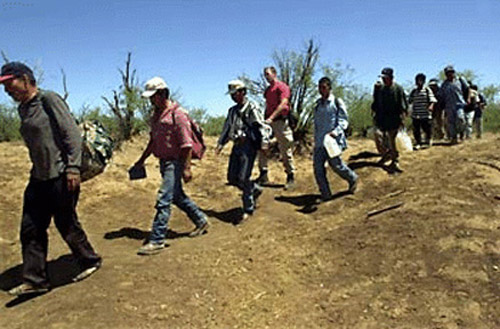
Mexicans heading for the Golden State

For decades after World War II, California was a destination for Americans in search of a better life. In many people’s minds, it was the state with more jobs, more space, more sunlight, and more opportunity. They voted with their feet, and California grew spectacularly (its population increased by 137 percent between 1960 and 2010). However, this golden age of migration into the state is over. For the past two decades, California has been sending more people to other American states than it receives from them. Since 1990, the state has lost nearly 3.4 million residents through this migration.

This study describes the great ongoing California exodus, using data from the Census, the Internal Revenue Service, the state’s Department of Finance, the Bureau of Labor Statistics, the Federal Housing Finance Agency, and other sources. We map in detail where in California the migrants come from, and where they go when they leave the state. We then analyze the data to determine the likely causes of California’s decline and the lessons that its decline holds for other states.

The data show a pattern of movement over the past decade from California mainly to states in the western and southern U.S.: Texas, Nevada, and Arizona, in that order, are the top magnet states. Oregon, Washington, Colorado, Idaho, and Utah follow. Rounding out the top ten are two southern states: Georgia and South Carolina.

A finer-grained regional analysis reveals that the main current of migration out of California in the past decade has flowed eastward across the Colorado River, reversing the storied passages of the Dust Bowl era. Southern California had about 55 percent of the state’s population in 2000 but accounted for about 65 percent of the net out-migration in the decade that followed. More than 70 percent of the state’s net migration to Texas came from California’s south.

What has caused California’s transformation from a “pull in” to a “push out” state? The data have revealed several crucial drivers. One is chronic economic adversity (in most years, California unemployment is above the national average). Another is density: the Los Angeles and Orange County region now has a population density of 6,999.3 per square mile—well ahead of New York or Chicago. Dense coastal areas are a source of internal migration, as people seek more space in California’s interior, as well as migration to other states. A third factor is state and local governments’ constant fiscal instability, which sends at least two discouraging messages to businesses and individuals. One is that they cannot count on state and local governments to provide essential services—much less, tax breaks or other incentives. Second, chronically out-of-balance budgets can be seen as tax hikes waiting to happen.

[ad 1]

The data also reveal the motives that drive individuals and businesses to leave California. One of these, of course, is work. States with low unemployment rates, such as Texas, are drawing people from California, whose rate is above the national average. Taxation also appears to be a factor, especially as it contributes to the business climate and, in turn, jobs. Most of the destination states favored by Californians have lower taxes. States that have gained the most at California’s expense are rated as having better business climates. The data suggest that many cost drivers—taxes, regulations, the high price of housing and commercial real estate, costly electricity, union power, and high labor costs—are prompting businesses to locate outside California, thus helping to drive the exodus.

Population change, along with the migration patterns that shape it, are important indicators of fiscal and political health. Migration choices reveal an important truth: some states understand how to get richer, while others seem to have lost the touch. California is a state in the latter group, but it can be put back on track. All it takes is the political will.