Putin topples Obama in Forbes power ranking

Top of the heap
Top of the heap

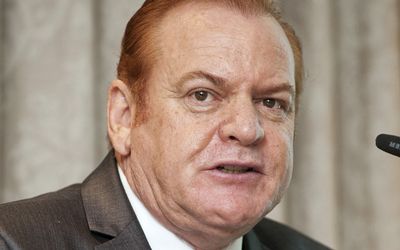
Having outfoxed him on Syria, Russian President Vladimir Putin has pipped Barack Obama to the title of the world’s most powerful leader as ranked by Forbes on Wednesday.

It was the first time in three years that the US president has dropped to second place on the magazine’s list and came as US-Russia relations slid to a new low.

Putin, who has enjoyed 13 years of dominant rule over Russia, was again elected president in March 2012.

Obama, on the other hand, has just emerged scathed from an embarrassing 16-day US government shutdown caused by a budget and debt crisis in Washington.

“Putin has solidified his control over Russia, while Obama’s lame duck period has seemingly set in earlier than usual for a two-term president — latest example: the government shutdown mess,” wrote Forbes.

In August, Russia granted asylum to former National Security Agency contractor Edward Snowden, wanted in the United States over a mammoth intelligence leak.

A month later, Putin played the trump card again by averting Obama’s threatened missile strikes on Syria with a plan for Damascus to hand over chemical weapons.

“Anyone watching this year?s chess match over Syria and NSA leaks has a clear idea of the shifting individual power dynamics,” Forbes wrote.

The 2013 list of 72 powerbrokers was chosen to reflect one for every 100 million lesser mortals on Earth.

Third prize went to Chinese President Xi Jinping, who is expected to rule for a decade in which China is set to eclipse the US as the world’s largest economy.

Pope Francis made his debut at number four and German Chancellor Angela Merkel rounded out the top five.

Among 13 newcomers were Samsung Chairman Lee Kun-Hee at number 41 and Nigerian billionaire Aliko Dangote, the richest man in Africa, in at number 64.

There were 17 heads of state who run nations with a combined GDP of $48 trillion and 27 CEOs and chairs who control over $3 trillion in annual revenues.

Only nine women made the cut despite representing half the world’s population. – breitbart.com

Billionaires manufacturing consent on open borders

Soros
Soros

The Soros-funded National Immigration Forum (NIF) organized today’s “fly-in” of some 600 people to lobby the American House Republicans to pass the Schumer-Rubio amnesty bill (which Senator Rubio himself has now disavowed). It started with a two-hour teach-in at the U.S Chamber of Commerce, with the usual suspects saying the usual things.

I couldn’t stomach the whole thing, but there were some amusing bits: Al Cardenas, head of the American Conservative Union, said that we need immigration because our population is declining (in fact, even with zero immigration — zero — our population would continue to increase for generations, beyond which projections are meaningless). Also, Tony Massif, lobbyist for California agribusiness, said that if we we don’t import more stoop labor from abroad, then we’ll have to import more food, meaning our enemies would “control our food supply.” (You know, because all that corn and wheat in the Midwest is being hand-harvested by Guatemalan peasants.) Speakers were also pretending that amnesty and increased immigration were conservative initiatives by claiming that environmentalists and labor unions are responsible for the opposition to the Schumer-Rubio bill when, obviously, they’re among the bill’s chief backers.

Anyway, that’s all boilerplate and hardly worth commenting on, as much as it might irk me. But I got to thinking about the groups hosting this thing and thought it’d be interesting to match up their principals and supporters with the Forbes 400 list. Turns out that “Billionaires for Open Borders” isn’t just a catchy name — it’s the reality. Joining Soros (#19 on the Forbes 400) in backing today’s lobbying effort are a broad collection of his fellow billionaires. One of the co-hosts was Partnership for a New American Economy. Among the group’s co-chairmen: Michael Bloomberg (#10 on the Forbes 400), Steve Ballmer (#21), Rupert Murdoch (#30), Douglas M. Baker Jr. (#161), and Bill Marriott (#296).

Another co-host was Fwd.us, founded by Mark Zuckerberg (#20) and including among its supporters Bill Gates (#1), Eric Schmidt (#49), Reid Hoffman (#103), John Doerr (#184), Stanley Druckenmiller (#184), John Fisher (#193), Barry Diller (#260), Sean Parker (#273), Jim Bryer (#352), Mark Pincus (was #212 in 2011, but fallen off since), Matt Cohler (worth a measly $400 million, but on the Forbes Future 400 list), Fred Wilson (#16 on Forbes Midas List of top tech investors), Ron Conway (#41 on the Midas List), and Richard Kramlich (#73 on the Midas List). That’s not to mention a whole list of mere multi-millionaires and even billionaires who didn’t make the cut.

To adapt WFB’s famous quip, I’d rather be governed by the first 400 names in the Boston phone directory than the Forbes 400 List. – nationalreview.com

‘Mining execs sitting [expletive] pretty’

nickholland
Nick Holland

Speakers at the inaugural Investing in Resources and Mining in Africa conference in Johannesburg tackled executives’ remuneration, with fund managers in particular scathing about the way chief executives are rewarded, said Business Day.

Gold Fields chief executive Nick Holland’s R45 million pay packet last year was a case in point, the newspaper reported.

“The mining industry is heading in the wrong direction and very rapidly I shall say,” Old Mutual gold fund portfolio manager Mike Schroder said.

Mining executives’ pay is not consistent with their companies’ performance and should be reviewed, according to a report on Thursday.

“My advice to the CEOs: Julle bly fokken lekker. R45m? Bliksem! (You’re sitting fucking pretty. Damn!) Your personal greed is the biggest obstacle for the turning of this trend. Come down with the pay packages or get out.”

Conference chairman and former Harmony chief executive Bernard Swanepoel, said pay packets were “exorbitant and over the top”.

A new pay determination formula was needed.

“The credibility of executive management gets undermined by pay which is disproportionate to performance of companies,” Swanepoel reportedly said. – Sapa

Outrage at Zapiro’s cartoon goes global

hinduThe controversy over Zapiro’s Lord Ganesha cartoon is causing outrage among the world’s 1 billion Hindu devotees, who are calling for an international apology and the removal of the cartoon from the internet.

As South African Hindus prepare to hold mass meetings and demonstrate at the Sunday Times offices in Durban, the Hindu community abroad has added its voice to the growing furore.

President of Universal Society of Hinduism, Rajan Zed, in a statement from Nevada in the US on Wednesday, said Zapiro’s cartoon of Ganesha was hurtful and a trivialisation of a highly revered deity.

Zed urged Sunday Times editor, Phylicia Oppelt, as well as cartoonist Jonathan Shapiro to issue a formal apology immediately and remove the cartoon from their websites. He also urged the Hindus on the Times Media Group board to resign if no apology was offered.

The Sunday Times and Zapiro said they would not apologise for the cartoon.

Shapiro said his cartoon was not about religion and the image of Lord Ganesha was used as a metaphor.

Phylicia Oppelt, editor of the Sunday Times, said the cartoon made no comment on Hinduism or on Ganesha, but rather on the issue of CSA’s decision to sacrifice Lorgat to secure a lucrative Indian tour to South Africa later this year.

The cartoon depicts Lord Ganesha – as the Board of Control for Cricket in India (BCCI) – offering money to Cricket SA (CSA) in return for the sacrifice of its chief executive, Haroon Lorgat.

Zed said unnecessarily tying Ganesha in with the BCCI, depicting human sacrifice at his feet, and him holding a cricket bat and wads of money in his hands, instead of usual objects, like conch shell, was “highly inappropriate”.

He said Hinduism was the oldest and third-largest religion of the world, and was rich in philosophical thought.

“Symbols of any faith, larger or smaller, should not be mishandled,” he said.

Ashwin Trikamjee, president of the South African Hindu Maha Sabha, agreed.

He said he had been interviewed by a number of Indian media houses, including The Times of India.

“I have also spoken to the president of the BCCI and sent him a copy of the article, so I’m expecting a reaction soon.”

Trikamjee said the Hindu community was insulted by the refusal to apologise.

“We’re looking at pursuing legal action. The reaction from the Hindu community has been that of outrage. I don’t know if Shapiro is just pig-headed or doesn’t realise the impact on the community, particularly a week before Diwali. Lord Ganesha is revered by Hindus and is the object of prayer during Diwali.”

President for the Hindu Dharma Sabha, Ram Maharaj, said a mass meeting would be held next Wednesday at the Durban Hindu Temple at 7pm.

He said Shapiro’s refusal to apologise was “fuelling the fire of fury”.

“We will not allow anyone to trample upon Hindu insensitivities with impunity. We will take this to the constitutional court if we have to,” he said.

On Thursday, the Hindu Youth Network plans to hold a peaceful demonstration outside the Sunday Times offices in Durban where it intends to hand over a memorandum of its concerns.

Pregasen Pillay of the youth network said he was not surprised by the international response to the cartoon.

“To us, Lord Ganesha is like your best friend and when someone says something bad about your best friend, you will get upset. We would like Zapiro and the Sunday Times to reflect on what they have done and hopefully apologise. Our peaceful demonstration will reflect the values of Hinduism and we hope the Sunday Times will see that,” he said.

The Freedom of Expression Institute said it was concerned by the outrage over the cartoon.

“In advancing rights we see as due to us by the constitution we must not be forgetful of other rights that are crucial to the functioning of our democracy, key to which the Right to Freedom of Expression is. Included in this right is artistic expression. The importance of artistic expression is the provocation and facilitation of crucial debate that is often ignored or ‘brushed under the table’, as it inspires engagement on subjects that would otherwise not be spoken widely of, yet they are of key public interest, the importance of this to democratic discourse cannot be emphasised enough,” the organisation said in a statement.

“It is therefore important that such manner of expression is not censored in favour of personal interests that are far outweighed by the public good. In a manner of speaking we cannot have topics being ‘out of bounds’.

“Further a continued sacrifice of artistic expression to the wishes of some sections of society at the expense of the public’s right to be informed and having informed conversation and debate, may set a crippling precedent to the right of freedom of expression and journalistic freedom as it may advance to shield issues of concern such as corrupt practices and political malfunction. – Daily News

Niger migrants’ bodies found

saharaRescue workers in Niger say they have found the bodies of 87 people who died of thirst after their vehicles broke down as they tried to cross the Sahara.

Rescue worker Almoustapha Alhacen said the corpses were in a severe state of decomposition and had been partly eaten, probably by jackals.

Those found are thought to be migrant workers and their families. Most were women and children.

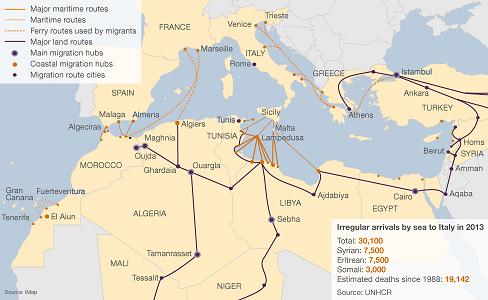
Niger lies on a major migrant route between sub-Saharan Africa and Europe.

But among those who make it across the desert, many end up working in North African countries.

According to Mr Alhacen, one of the vehicles that the migrants were travelling in broke down some time after they left Arlit at the end of September or beginning of October.

Continue reading the main story
Analysis

image of Thomas Fessy
Thomas Fessy
BBC West Africa correspondent
Thousands attempt to cross this stretch of Sahara desert to reach the coasts of North Africa, and from there Europe. I remember the exhaustion of migrants whom I met in Agadez in 2011.

Most were in their 20s and determined to continue their journey – despite the war in Libya at the time. “In our country, our talent is useless,” one young Nigerian said. “But in Europe, we’ll be able to thrive on it,” he added.

Agadez is still several hundred kilometres from either Libya or Algeria. There is nothing in between but sand – a perilous desert where the extreme heat can kill. Traffickers extort large sums of money from migrants seeking a one-way ticket for a better life. They all know that death may be on the way, but they’re ready to risk it, clinging onto hope.

Security officials have said the second vehicle broke down as it was on its way back to Arlit to get spare parts.

It appears that some of the group set out on foot, including up to 10 people who made it back to Arlit and raised the alarm, he said.

It was reported on Monday that five bodies had been found.

On Wednesday, volunteers and soldiers working in searing heat found other corpses about 10km (six miles) from the Algerian border.

Speaking from Arlit, a centre for uranium mining north of Agadez, Mr Alhacen said he had experienced the worst day of his life when he found the bodies.

“The corpses were decomposed; it was horrible,” he said.

“We found them in different locations in a 20km (12mile) radius and in small groups, often under trees, or under the sun. Sometimes a mother and children, but some lone children too,” AFP news agency quoted him as saying.

They were given Muslim burials where they were found, he added.

Given that at least 48 of those found were children or teenagers, Mr Alhacen said it was possible they were on their way to low paid jobs in neighbouring Algeria.

It is not clear which countries the migrants came from.

About 80,000 migrants cross the Sahara desert through Niger, according to John Ging, director of the UN Office for the Coordination of Humanitarian Affairs.

“They are basically economic migrants. They are in search of work. They are so impoverished that they have to make these hazardous journeys,” he told the BBC’s Newsday programme.

Niger is one of the world’s poorest countries and frequently suffers from drought and food crises.

– BBCmedmigrants2

Why all rural tech projects in SA fail

computersHigh profile initiatives like Microsoft’s digital villages died a death years’ ago, whilst large scale project, Gauteng online finally petered out this week. Kathryn Cave investigates what is really going on with South Africa’s rural tech initiatives.

On 9th March 1997 Bill Gates visited the sprawling black township of Soweto, an area catapulted into world consciousness 20 years’ prior by its mass uprising. This township, above all, symbolised Apartheid.

When Gates visited in ’97 the Spokesman Review reported that in Soweto “a computer could cost as much as a house” and few people would think of going online.

This was South Africa’s first free-access “digital village,” an initiative orchestrated by Microsoft in conjunction with local computer companies and US development organisation, Africare. The idea was that by providing a $100,000 computer package, housed in the Chiawelo Community Center, it would give the township’s poor residents a link to the information age. As part of the grand opening, Gates observed a class from the local Elsie Ngidi primary school playing with computers for the first time, before telling a crowd of 200: “Soweto is a milestone. There are major decisions ahead about whether technology will leave the developing world behind. This is to close the gap.”

Today there is little evidence of the “digital villages” across South Africa. “[They] worked well for a while but collapsed as soon as the sponsors stopped funding the activities – the community had failed to make the use of technology self-sustaining.” Adrian Schofield, Vice Chairman, Africa ICT Alliance tells me: “What should have been a model for others to follow became a failure. This is a common outcome, where there is no long-term follow through.”

The same is true of numerous online projects to get rural communities connected. The Centre for Appropriate Rural Technology (C.A.R.T) has not issued any news since 2010. The Independent Online reported on Wednesday that “R1bn later, Gauteng Online is no more.” While the Computers for Schools project, which is massive across other parts of Africa, is simply not to be found in SA.

In fact many aid agencies often bypass South Africa in favour of more receptive markets. Schofield stresses: “South Africa is losing out – to Kenya, Ghana, Nigeria, Botswana, Rwanda… losing out to countries where there is an appreciation that grasping the opportunities afforded by adopting technology is the only way to grow their economies and become an attractive investment destination.”

Sub-Saharan Problems & Mass Scale Government Failure
Last year, Douglas Cohen presented stats that stated 89% of the people of Limpopo live in rural areas and quoted: “A woman leaving school in Limpopo stands a one in eight chance of ever getting a job.” And the harsh truth is across sub-Saharan Africa, 91% of households are off the electricity grid entirely, meaning that the majority don’t have access to proper light in the evenings, let alone the power for laptops and other technological equipment.

“Very often, technology in schools fails because there is no (reliable) electricity or network,” explains Schofield “the teachers are not sufficiently skilled, the equipment is kept locked away (or is stolen if not locked away). Companies and NGOs continue to seek opportunities to make technology and training available to communities, but it is more scratching the surface than building a foundation.”

At the root Schofield tells me: “South Africa is a divided country, working against itself. For every community-building initiative, there is a group decrying it or even sabotaging it. Corruption is rife and the nation’s infrastructure (electricity, water, roads, railways, government buildings) is decaying from lack of investment and maintenance.”

“A succession of ineffective Ministers of Communications has meant the failure of our network infrastructure to be as accessible and affordable as it should be,” Schofield continues. This includes last week’s news that the Cape Chamber of Commerce and Industry has called for current communications minister Dina Pule to be suspended in the light of a number of large scale accusations, including the channelling of R6m of sponsorship funds for the ICT Indaba in Cape Town in 2012 to her alleged boyfriend.

“The integrity of the communications ministry is critical to the economic wellbeing of the country and must be fiercely protected against corruption, profiteering and undue influence,” Viola Manuel, chamber executive director said in a statement. Yet the entire system appears to suffer from internal corrosion: “The National Development Plan (NDP) launched this year offered hope,” says Schofield “but has already been attacked from within the government that produced it.”

NDP provides a blueprint for eliminating poverty and reducing inequality in South Africa by 2030. As part of its mission it identifies the key constraints to faster growth and presents a clear roadmap to a more inclusive economy. Yet in May, Deputy Public Works Minister Jeremy Cronin said, in a public debate to the National Planning Commissioner, that the plan was fatally flawed and impossible to implement.

The National ICT Plan is another big dream for South African IT, yet again Schofield is sceptical: “[This] will be another five years in the making. Nearly every government plan talks about what will be achieved at the end of 10, 20, 40 years – none of them is held to account for steps along the way.”

“[South Africa is] small on delivery, poor at executing the plans, lousy at monitoring progress and ironing out the problems that arise along the way,” Schofield continues. “We are bad at taking the seedlings planted by social responsibility programmes and nurturing them into full growth and harvest. We are bad at applying funds in productive and accountable ways. Too many public servants see themselves as having rights and no responsibilities, serving the ‘ruling party’ rather than the citizens.”

Take the Universal Service and Access Agency (USAASA) for example. This State Owned Entity of government aims to ensure that “every man, woman and child whether living in the remote areas of the Kalahari or in urban areas of Gauteng will be able to connect, speak, explore and study using ICT’s.” Yet it is sitting on billions of Rands that it does not know how to spend… and what has been spent has achieved little.

Pistorius, South Africa & the Big Image Problem
Many people believe that since the fall of Apartheid itself, South Africa has suffered from a monumental image problem. This has led the country to bluster and postulate more than most, heightening both internal and external tensions. In one advancement of this theory, the Guardian Weekend Magazine ran an article in May: “Oscar Pistorius: the end of the rainbow” which argued that “Oscar Pistorius was more than a national hero. His success came to symbolise South Africa’s triumph over apartheid. Then he shot his girlfriend and left the nation’s self-image in tatters.”

It was an interesting hypothesis and quoted journalist, Gerald Imray who wrote: “During his Olympic preparations in Italy, Pistorius pulled out his cellphone to show me pictures of his bleeding leg stumps, rubbed raw from the friction of pounding around the track on his blades… Until that moment, I hadn’t fully realised what Pistorius went through every time he slipped on his prosthetic blades to compete or train. Not many people had, I guess.”

At this point, Jonny Steinberg, in the Guardian, drew national parallels: “So, too, with South Africa. We are no miracle. We, too, have had to grind our stumps raw. We, too, have had to bury our shame. And so, when we heard what Oscar had done, we felt something like deja vu. As if we always knew that his story was not quite right.” This is an interesting point, if perhaps excessive, but really does ram home the message that whilst image is important to any country, it probably is even more so to South Africa.

And this appears to be a large part of the problem for rural schemes in South Africa: “There are no ‘big initiatives’ [for driving connectivity to the rural area, at present],” Schofield tells me: “They have faded into obscurity for all the wrong reasons. South Africa is big on policy and plans, big on subscribing to the global ‘good stuff’ and being seen on the right platforms, hosting the ‘world events’. We use imported skills and resources to do the big ‘image’ projects.”

The ‘big initiative’ of the Square Kilometre Array will again try focus attention on South Africa’s “potential”, and rural communities will soon see the next high image, Microsoft driven initiative. – zerodistance.za.com

Chaos errupts as black masses flood Cape Town CBD to riot

ctcbd2Chaos erupted in the Cape Town CBD as hundreds of people allegedly protesting against the provincial government flooded the streets and started rioting.

According to the People’s Post, a large police contingent was present outside the government building where protesters vowed to stay until Premier Helen Zille addressed the crowd.

The protest then took a turn for the worse when some of the crowd broke away and began looting stalls and shops in St George’s Mall.

Shop owners and traders were forced to pack away their goods and stop trading in fear of being attacked by a mob of protesters.

A reporter hid in a food store as protesters trashed and looted shops and smashed windows. A shop owner was assaulted by the protesters.

Cape Times reporter Caryn Dolley said loud bangs might have been stun grenades and not petrol bombs. Police sirens could be heard in the city.

People in the CBD have been advised to not venture onto the streets.

The protesters appear to be protesting the provincial government.

Vendors on St George’s Mall are in shock after they were left to fend for themselves when a group of breakaway protesters tore through the mall on Wednesday afternoon. They are now asking where police and security guards were when they were being robbed.

Sitting breathless and traumatised in the foyer of Newspaper House, where a vendor had taken sanctuary with some of his salvaged inventory, he clutched his back as water dripped from his brow where a hard lump of ice had hit him.

Moments earlier he had been in the middle of an angry mob.

“Why are you still open?” they shouted at him and his brother, while throwing packets of Nik Naks, chocolates and torn cartons of cigarettes. He said for every item they threw, the mob snatched and fled with three times as much.

“When we tried to fight them off, they were throwing cans at us. They hit me in the back, the neck, legs… all over,” he said, wincing.

The vendor’s first attempts to escape from the looters were difficult. The 33-year-old is an amputee, who makes do with a rigid prosthetic leg. He slipped and fell twice among the pushing crowds.

“We asked the police before, should we pack up the stall, but they told us ‘no, no, it’s fine’,” he said. “Then when (the protesters) started running down here it was too late.”

He was not the only vendor who questioned how police had managed the protest. Frank Masina, who sells wooden sculptures and novelty chessboards from his stall, said there was no one to help him when the mob began destroying his goods.

“They were throwing my stuff around, smashing my chessboards and chess pieces.”

Brandishing a carved wooden cane, he described how he had desperately swung it at the looters.

“My shop is still standing but I have lost R3 500. I don’t understand. I pay to be here, but nobody looks after us.”

Other vendors said all they could do was stand by as their stalls were plundered. One vendor, who did not want to be named, said a group of looters grabbed handfuls of cigarettes, with some even lighting up as they casually walked away.

As protesters continued to rush through the mall, some shopkeepers picked up the steel poles that held up their stalls and brandished them as makeshift weapons.

One stall owner says his shop was raided three times in the space of one hour by running mobs.

Police officers stepped in the first time he was being looted, dispersing the angry crowd around his stall. But as soon as the police left, his stall was looted again.

According to the vendor, a police vehicle even passed his stall as it was being plundered, and the officers inside chose to ignore it.

“I lost R25 000 in merchandise,” he said.

He questioned why police seemed powerless to stop the looters, and why they had not anticipated the breakaway protest and warned vendors to pack up shop.

Police spokesman captain FC van Wyk said he was not going to comment on claims by vendors that they were left to fend for themselves.

“I will say this, I’m going to ask those shopkeepers to go to the nearest police station and lay charges so we can start investigating.”

The city’s mayoral committee member for safety and security, JP Smith, said the police were unable to handle the situation alone, and metro police and Law Enforcement were dispatched to help contain the breakaway protests.

“The breakaway march was illegal. Therefore police did not have enough staff to deal with it.”

SA wants to blacken cricket by throwing money at it

cricket
Too white

Nearly two decades after the fall of apartheid, a black South Africa is struggling to sell high-profile, white-dominated cricket and rugby teams as “non-racial”.

Sporting authorities have reintroduced racial quotas for domestic professional teams in a bid to encourage more black Africans to emerge through the ranks

The latest to adopt quotas is cricket with the country’s six franchises ordered to field at least one black African in each starting line-up.

Teams that field more than one black player will get a cash bonus.

The only black African coach among the domestic professional teams, Geoff Toyana of the Highveld Lions, backs the idea of quotas.

“It’s not a bad thing, it’s spot-on,” Toyana said.

“Hopefully, more players will be exposed and more will play. Hopefully, in the next two to three years we will see a black African batsman playing for South Africa … or guys like Mangaliso Mosehle [of Titans] might come in as a wicketkeeper.

“You cannot explain that a population of 80% black African people cannot produce one Test player – it doesn’t make sense,” said Toyana.

Cricket officials speak of a “huge drop out” of black African players between under-19 and franchise levels.

“Black African players need to get quality and meaningful opportunities and, therefore, the incentive-based transformation policy was introduced,” said Corrie van Zyl, general manager of Cricket South Africa (CSA).

But the restoration of a quota system, two decades into democracy, is seen by observers as a sign of failure by both sporting administrators and government to develop sport among previously disadvantaged racial groups.

The problem, according to Frans Cronje of the South African Institute of Race Relations is that “we are not investing in young people”.

“How do you think players are going to be produced when the best you produce is a dusty sports field? Unless you learn to bat with a soccer ball in some dust of the Eastern Cape, you are not going to do it,” said Cronje.

Only five black Africans have played for South Africa’s national cricket side since 1991 when the country was accepted into international competitions.

“It is not a statistic that we are proud of,” admitted Van Zyl. “It shows just how important it is for us to bring many more African players through the system.”

“Next year we celebrate 20 years of democracy in our land and it is simply not acceptable for 80-plus percent of the population not to feel represented in one of our national sides.”

Previously, racial quotas generated heated debate in South Africa, but now there appears to be a general consensus.

The majority of players accept that “transformation is imperative”, said Tony Irish, chief executive of the South African Cricketers’ Association.

A quota system was introduced in 1999 but scrapped in 2007. Blacks remain under-represented in cricket and rugby, but dominate in football, where the national team is faring terribly.

The latest round of quota systems were adopted at a 2011 meeting of all sporting bodies and government.

Rugby quotas will take effect next year and seven players in each 22-man Vodacom Cup (a second-tier competition below the Currie Cup) squad must be black, including at least two forwards.

But the move has brought into question the possibility of sidelining other racial groups – Coloureds and Indians. Van Zyl said the early attempt at quotas was “a huge success” for the development of Coloured and Asian cricketers. – AFP


The race-hustlers among us

bumblebeesBy Thomas Sowell.

Years ago, someone said that according to the laws of aerodynamics, bumblebees cannot fly. But the bumblebees, not knowing the laws of aerodynamics, go ahead and fly anyway.

Something like that happens among people. There have been many ponderous academic writings and dour editorials in the mainstream media lamenting that most people born poor cannot rise in American society anymore. Meanwhile, many poor immigrants arrive here from various parts of Asia, and rise on up the ladder anyway.

Often these Asian immigrants arrive not only with very little money, but also very little knowledge of English. They start out working at low-paid jobs but working so many hours, often at more than one job, that they are able to put a little money aside.

After a few years, they have enough money to open some little shop, where they still work long hours, and still save their money so that they can afford to send their children to college. Meanwhile, these children know that their parents not only expect, but demand, that they make good grades.

Some people try to explain why Asians and Asian-Americans succeed so well in education and in the economy by some special characteristics that they have. That may be true, but their success may also be a result of what they do not have; namely, “leaders” who tell them that the deck is so stacked against them that they cannot rise, or at least not without depending on “leaders.”

Such “leaders” are like the people who said that the laws of aerodynamics showed that the bumblebee cannot fly. Those who have believed such “leaders” have, in fact, stayed grounded, unlike the bumblebees.

A painful moment came for me years ago, when I was on the lecture circuit, after a talk at Marquette University, when a young black student rose and asked: “Even though I am graduating from Marquette University, what hope is there for me?”

Back in the 1950s when I was a student, I never encountered any fellow black student who expressed such hopelessness, even though there was far more racial discrimination then. We knew that there were obstacles for us to overcome, and we intended to overcome them.

The memory of that Marquette student came back to me, years later, when another black young man said that he had wanted to become a pilot, and had even planned to join the Air Force in order to do so. But then, he said, he now “realized” that “the Man” would never allow a black guy to become a pilot.

This was decades after a whole squadron of black fighter-plane pilots made a reputation for themselves in World War II as the Tuskegee Airmen. There have been black generals in the Air Force.

Both these young men — and many others — have learned all too well the lessons taught by race hustlers, in their social version of the laws of aerodynamics, which said that they could not rise.

You don’t hear about racial “leaders” such as Al Sharpton and Jesse Jackson among Asians or Asian-Americans. Here and there, you may see some irresponsible academics peddling that line in the classroom — some of whom are of Asian ancestry, since no race of human beings is completely lacking in fools.

But they do not get the same attention, or draw the same following, as race hustlers operating in black or Hispanic communities. By and large, Asian youngsters rise and fly.

Other groups in times past also arrived on these shores with very little money and often with very little education, at least during the immigrant generation.

A poem by Carl Sandburg, back during that era, referred to a Jewish fish peddler in Chicago: “His face is that of a man terribly glad to be selling fish, terribly glad that God made fish, and customers to whom he may call his wares from a pushcart.”

This fish peddler probably had not gone to college, and so had no one to tell him that he couldn’t make it, and that his children couldn’t rise, because this was such a terrible country.

No one can claim that there was no anti-Semitism in America, any more than they can claim that there was never any anti-Asian discrimination. There was plenty of both. But that is very different from following “leaders” whose message would only keep them grounded, after the skies were open to them as never before.

This piece appeared in the Washington Times. Thomas Sowell is a senior fellow at the Hoover Institution at Stanford University.

Mrs. Pretorius cries inconsolably after harsh Boeremag sentences

Dr. Lets Pretorius and his wife Minnie

Boeremag leader Tom Vorster and five members of its bomb squad which blew up numerous targets in 2002 were sentenced to in effect 25 years’ imprisonment by the High Court in Pretoria on Tuesday.

Vorster shrugged and told reporters he had not expected such a severe sentence, as he had already been in prison for over a decade.

Bombers Herman van Rooyen, Johan and Wilhelm Pretorius, and Rudi Gouws received the same sentences as Vorster.

The third Pretorius brother, master bomb maker Kobus Pretorius, was sentenced to 20 years’ imprisonment, of which 10 years were suspended.

This was because Pretorius had a change of heart during the trial, broke away from his past and expressed remorse for what he did.

The members of the bomb squad were sentenced to an additional 13 years imprisonment on charges of culpable homicide and conspiring to murder former president Nelson Mandela.

Soweto mother Claudia Mokone was killed when a piece of steel dislodged by a bomb the Boeremag planted on a railway landed in her shack.

Judge Eben Jordaan said Mandela would have been killed by a landmine planted by the Boeremag bomb squad if he had not arrived by helicopter to open a school in Bolobedu, Limpopo.

This would have caused chaos and bloodshed in the country. He said the Boeremag’s aim had been to destroy democracy in South Africa.

How dangerous they were was shown by the fact that they carried on committing violent crimes some had said were incapable of being carried out.

The bombers already had five large car bombs ready for targets in the city centres of Pretoria and Johannesburg and were planning further bomb attacks when they were caught.

Boeremag leaders Mike du Toit, Dirk Hanekom and the Pretorius brothers’ father, Dr Lets Pretorius, were each sentenced to 30 years’ imprisonment, of which 10 years were conditionally suspended for five years.

Mike du Toit’s right-hand man, Andre du Toit, and Dion van den Heever were sentenced to 20 years’ imprisonment of which 10 years were suspended.

Rooikoos du Plessis and Jurie Vermeulen, who also played important roles in planning the coup, got 15 years’ imprisonment, of which 10 were suspended.

One of the Boeremag’s most active members and the Boeremag chaplain, 74-year-old Vis Visagie, was sentenced to five years of correctional supervision.

Five of the Boeremag members who played a lesser role, including the youngest member Jacques Jordaan, walked out of the court free men after being given suspended sentences.

They are the Boeremag “weakling” Adriaan van Wyk and former defence force officers Giel Burger, Jacques Olivier, and Pieter van Deventer.

The sentences were met with outrage by some, but acceptance by others.

Dr Lets Pretorius’s wife Minnie cried inconsolably. Friends shielded her from the cameras.

Van Wyk’s wife expressed relief that her husband would be coming home. – Sapa

Vietnamese activist convicted for Facebook posts

Dinh Nhat Uy
Dinh Nhat Uy

A Vietnamese activist received a 15 month suspended prison sentence Tuesday for “abusing democratic freedoms” through his Facebook posts –part of an escalating crackdown on dissent by the communist regime.

Dinh Nhat Uy, 30, was convicted at the end of a one-day trial in the southern province of Long An on charges related to an Internet campaign against his brother’s imprisonment for spreading anti-government propaganda, his lawyer said.

Uy’s case was apparently the first time a Vietnamese activist has gone on trial only for comments made on social media.

In Vietnam, convicts serving suspended sentences are effectively placed under house arrest, with severe restrictions on their movements and a requirement to check in regularly with police.

“Uy was given a 15 month suspended sentence,” his lawyer Ha Huy Son told AFP, adding that he would have to serve an additional year of house arrest after completing his probation.

“I told the court that Uy was innocent, that the charges against him were not objective,” he said, adding that he had called for Uy’s immediate release.

“He is the victim of an injustice,” he added.

Uy was sentenced for violations of article 258 of the penal code, which covers “abusing democratic freedoms against the interests of the state”.

The charges, regularly used by authoritarian Vietnam to silence dissidents and activists, carry a maximum sentence of seven years in prison.

A handful of supporters, wearing printed t-shirts and waving signs calling for his release, gathered near the Long An court but were met with a heavy security presence, photos posted online showed.

Vietnam, branded an “enemy of the Internet” by Reporters Without Borders, is a one-party state that bans private media and controls all newspapers and television channels.

According to Uy’s indictment — a copy of which was posted online on the banned but popular blog Dan Lam Bao — he was charged solely for Facebook postings. Usually charges for dissidents and activists relate to blog postings.

In June Uy’s brother Dinh Nguyen Kha, a computer technician, was sentenced to eight years in prison — reduced to four years on appeal –for anti-government propaganda.

His co-defendant, Nguyen Phuong Uyen, was sentenced to six years in jail but freed on appeal after widespread public disapproval over the harsh sentence for the 21-year-old, who was shown hugging a teddy bear in photographs posted online.

After his brother’s trial Uy began campaigning online for his release.

The indictment said Uy “posted bad and false information about the state, organisations and individuals”.

“Those above-mentioned images and articles were seen and read by many people. Many people shared, pressed ‘like’, and gave comments, of which many comments smeared and insulted the state, organisations and citizens,” it added.

New York-based Human Rights Watch — which had called for Uy’s immediate release — noted that at least 61 activists and dissidents have been jailed this year — up from roughly 40 in 2012.

“Vietnam has significantly intensified its repressive tactics against peaceful activists, pursuing what is essentially a scorched earth policy against prominent public dissidents,” HRW’s deputy Asia director Phil Robertson said.

Vietnam recently introduced a sweeping new Internet law that bans bloggers and social media users from sharing news stories online, in a move seen as a further crackdown on online freedom.

However, Uy has not been charged under the new legislation and it remains unclear how it will be implemented. – AFP

Two Eastern Cape children found dead in car

rape_girls_feetTwo children were found dead in a car in Zwide, Port Elizabeth, on Tuesday morning, Eastern Cape police said.

The two boys, aged three and four, were discovered in Scheepers Street just after 1am, said Warrant Officer Thembi Gwe.

They were found after a search by residents and police.

Gwe said one of the boys’ grandmother visited a house in the area with them on Monday.

“They wanted to play with vehicles that were parked outside. She ordered them to go back home,” said Gwe.

When she arrived home a few hours later the boys were not there.

A search was initiated and the boys were found in a vehicle parked in a yard in the street near the house they went to visit.

“The vehicle has been standing there for two months as it had mechanical problems. It is not clear how the children got into the vehicle.”

It was not known how the children died. Police were waiting for post-mortem results, she said. – Sapa

Mob justice for Ethiopians

saps4A foreigner has been beaten to death by a group of men in Secunda, Mpumalanga police said on Monday.

The 30-year-old Ethiopian was attacked at his place of work on Saturday by a group of men who forced him into a taxi, Brigadier Selvy Mohlala said in a statement.

“The group attacked him with sticks and sjamboks… The men forced him into their kombi and drove with him to the taxi rank in Secunda,” Mohlala said.

They apparently accused the man of raping the six-year-old daughter of one of the men.

“Upon arrival at the taxi rank, they continued to assault the victim until he was unconscious… The victim sustained serious injuries.”

He was taken to hospital and died of his injuries on Sunday. No arrests had been made by Monday afternoon.

A foreign owned supermarket was also targeted in a botched robbery in Diepsloot. The incident has left another Ethiopian dead.
Four armed robbers entered the Diepsloot supermarket late on Tuesday afternoon.
A brief struggle ensued and the shop owner was shot dead. The cost of his life was the day’s takings at R450.
The incident is not uncommon on the township’s crime ridden streets, but it has left residents questioning the police’s ability to fight the scourge.
Police are investigating a case of robbery and murder. No arrests have yet been made.
With the shop now indefinitely closed, plans are underway to return the victim’s body to Ethiopia. – Sapa/eNCA

Sexwale’s detention signals US terror watch list still active

Church Street bombing

A former black South African government Minister has been detained in New York apparently because his name is on a terrorism watch list.

Tokyo Sexwale became a member of the Black Consciousness Movement in the late 1960s and a local leader of the radical South African Students’ Movement. In the early 1970s, he joined the African National Congress’s armed wing to wage a terror campaign against white civilians.

Sexwale, a former Robben Island prisoner turned billionaire businessman, was stopped for questioning at John F. Kennedy airport for a second time while attempting to enter the United States on a recent business trip. He was also stopped for the same reason in 2002.

Sexwale has become a major player in the diamond industry, with his company reportedly being the third biggest after De Beers and JFPI Corporation. He was praised by no less a figure than Harry Oppenheimer, the patriarch of the Anglo-American and De Beers corporations, as having an understanding of the South African and international diamond mining industry that few can equal.

In the 1970s and 80s, the African National Congress (ANC) and various other groups were officially designated terrorist organisations as a result of waging a racial terror campaign against unarmed civilians, as well as women and children.

Other countries, including the U.S., followed suit. After the end of apartheid in 1994, certain names remained on the U.S. terrorism watch list. Even Nelson Mandela was only removed in 2008.

Ebrahim Rasool, the South Africa Ambassador to the U.S., was forced to intervene this week with the U.S. State Department to secure Sexwale’s release, according to a tweet by the South African public broadcaster SABC’s US correspondent, Sherwin Bryce-Pease.

Sexwale now intends to take legal again action through the American courts, the national broadcaster SABC reported. In 2002, when he was refused a visa to enter the United States, for the first time, it later transpired that he, along with many prominent South African anti-apartheid figures such as Nelson Mandela and South African cabinet minister Sidney Mufamadi, were still on the global terror list.

After initiating legal action, going so far as to having papers served on the U.S. Department of State and following personal intervention by Condoleezza Rice, Sexwale and the others received ten-year waivers from the Immigration and Naturalization Service and the Department of Homeland Security, as the US felt that permanently delisting them would mean changing the law, which would be a “lengthy process”.

In April 2008 the waiver was lifted and the ANC members along with the ANC were removed from the terrorist list in the USA. However it seems that Sexwale remains on the terror list.

Soweto-born Sexwale is one of the country’s richest men, although he is a sworn Marxist. In 1975 he went into self-imposed exile to the then Soviet Union and received military training there to launch a terror campaign in South Africa.

A year later, on his return to South Africa, he was arrested, charged with conspiracy to overthrow the government and sentenced to 18 years in prison. After his release in 1990 he pursued careers in both politics and business.

The Church Street bombing, a car bomb attack on 20 May 1983 by Umkhonto we Sizwe, the terror group, in Pretoria, killed 19 and wounded 217, and was one of the largest attacks against whites.

A further black mark against Sexwale is the appearance of his name in a United Nations report on illegal transactions under the Oil-for-Food Programme. Sexwale’s Group 5 has received criticism for their involvement with corrupt tender contracts in South Africa.

The ANC reacted angrily to Mr. Sexwale’s treatment by U.S. authorities. “If indeed it is true, we think it is totally unacceptable,” said Jackson Mthembu, the party’s national spokesman.

“We would have thought the Americans would have taken all credible struggle heroes off the list. This is very disappointing. It makes us very worried. If Tokyo can be arrested, who will not be?

In 2008 Condoleezza Rice, the then U.S. Secretary of State, described it as “embarrassing” that Nobel peace laureate Mandela remained on the terrorist watch list and needed special permission to visit the country.

Later that year Mandela was removed under a bill signed by President George Bush but it is unclear if this applied to other ANC leaders.

A former US diplomat said on Sunday: “During the apartheid era the ANC and other organisations ended up being listed as terrorist organisations and it was difficult to get them removed because of various senatorial pressures. I was not aware there were still people whose names are specifically listed on such an index.”

Clayson Monyela, spokesman for South Africa’s international relations department, said it had been told that a resolution is needed in the U.S. Congress to remove all the names.