Russia’s President Vladimir Putin says Edward Snowden, who has been stuck in a Moscow airport for weeks, will leave Russia as soon as he is able to.
Putin on Monday also accused Washington of preventing the fugitive, US intelligence leaker Edward Snowden, from leaving Russia after he arrived from Hong Kong on June 23. “He arrived on our territory uninvited, he did not fly to us,” Russian news agencies quoted Putin as saying.
“They themselves [Washington] scared off all the other countries, no one wants to take him, and therefore they essentially themselves trapped him on our territory,” added the president, according to the agencies.
Meanwhile, Putin said on Monday that he saw signs that Snowden was shifting towards stopping “political activity” directed against the United States.
Putin, who previously refused to hand Snowden over to the US authorities, said the fugitive’s situation remained unresolved after Washington had blocked his further movements.
Asked on an island in the Gulf of Finland about Snowden’s future, Putin said: “How do I know? It’s his life, his fate.”
Putin has stated Snowden should stop activity harmful to the United States if he wanted refuge in Russia, and said he saw signs that the former contractor with the National Security Agency was moving in this direction.
“As soon as there is an opportunity for him to move elsewhere, I hope he will do that. The conditions for granting political asylum are known to him. And judging by his latest actions, he is shifting his position. But the situation has not been clarified yet,” Putin said.
Breaking weeks of silence, Snowden on Friday said at a Moscow airport where he has been camped since late June that he was seeking temporary asylum in Russia before he can safely travel to Latin America. Venezuela, Bolivia and Nicaragua have offered him asylum. – AFP, Reuters
One of the leading advocacy groups for the conflict minerals campaign Global Witness, a British NGO, published a report last week detailing the massive failure of the Dodd-Frank 1502 Act to achieve any of its intended goals.
The report documents how the conflicts have worsened since passage of the law and the SEC’s promulgation of the implementing regulations. And it reveals how, by driving the trade underground, the law has benefited the very worst elements in the Kivus: rogue military groups and armed militia.
Other NGOs had already revealed their fealty to the US Chamber of Commerce by publishing reports highly critical of Dodd Frank 1502, but none had previously positioned itself as a leader in the campaign.
Here are some of the report’s highlights:
Up to 10 tonnes of gold from South Kivu is being laundered each year through Burundi and exported to Dubai–with an “almost complete absence of checks” on the trade;
FARDC forces redeployed to fight M23 rebels left a security void filled by armed groups moving in on the mineral trade;
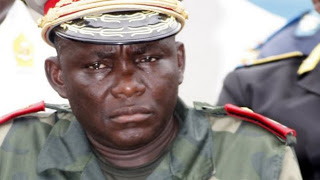
General Gabriel Amisi, who was fired last year as the army chief of staff for selling arms to the M23 rebels, controls one of the richest gold mines in South North Kivu;
Changes in security dynamics in the past year have provided rebels and FARDC with opportunities to take control of mining sites previously considered candidates for conflict-free sourcing;
Formal exports of the three Ts–tin, tantalum, and tungsten–are low in South Kivu and virtually non-existent in North Kivu. The majority of these minerals are smuggled out of eastern Congo, laundered through Rwandan tagging system, and exported as domestic Rwandan product.
The financial incentives to smuggle Congolese tin ore across the border outweigh the risks of getting caught, since “tagged” tin sells for $9/kilo, compared to a mere $3 or $4/kilo for untagged ore.
The government-led initiative to certify mining sites initiated in 2011 is already out of date and defunct;
The conflict-free tin initiative at Kalimbi in Nyabibwe, widely viewed as a test case for responsible sourcing, is being exploited by a military-led smuggling racket.
To be sure, the report concludes with the standard advocacy-based recommendations, to wit: that companies implement OECD due diligence procedures in full; that the Congolese government enforce domestic due diligence law, remove and prosecute army officers involved in the mineral trade, and formalize the gold trade; and that the donor governments support capacity building for mining authorities.
But the report convincingly demonstrates that the government has neither the will nor the capacity to bring the illicit trade to heel, and provides overwhelming evidence that Dodd-Frank has exacerbated the very problems it was meant to resolve. The sparse recommendations tacked on to the conclusion of the report tacitly acknowledge the nature of the problem: A government capable of making the recommended reforms would not need to be told to undertake them in the first place. To put it another way: A government that is unable and unwilling to govern its territory or protect its people is not a likely candidate to administer a complex and dynamic mineral trade regime.
With the publication last month of the Pole Institute’s highly critical No Kivu, No Conflict report, which concluded that the Kivus are “being asphyxiated” economically by Dodd-Frank 1502, this leaves The Enough Project as the law’s sole remaining cheerleader. In late February, Enough’s co-founder and public face, John Prendergast, wrote this about the mineral campaign:
“For decades all of the benefits of eastern Congo’s vast mineral resource wealth have gone to those with the biggest guns — the Congolese army, local militias or neighboring countries. These minerals include, among others, gold, cobalt, copper, tin, industrial diamonds and coltan, used in cell phones, laptops and other electronic devices.
But U.S. and European consumer demands for a conflict-free minerals trade, congressional legislation, International Monetary Fund aid suspensions, U.N. experts’ reports, responsible investors and other influential voices are making it harder to profit violently and illegally from mineral smuggling.”
Further analysis from the Pole Institute:
“Thus, a pattern is emerging in which Kivu’s mining sector is being asphyxiated in the name of reform. Before 2010, Kivu’s mineral traders had willingly participated in moves to strengthen formal and legal channels and to safeguard Kivu livelihoods by creating “conflict-free” production and trading chains within Eastern Congo. The mining ban killed this off, and today the focus has moved to Katanga and Maniema, increasingly apparently favouring a nexus of mining firms closely linked to the power-holders in Kinshasa. Because they do not finance armed groups, these firms are seen as “conflict‐free,” but no criteria exists to judge the wider political ramifications of their activities, their benefits for local development and the possible exacerbation of local conflict caused by favouring certain firms in collusion with international partners to the detriment of others.”
Thousands protested in US cities overnight as President Barack Obama appealed for calm following the acquittal in Florida of a man who gunned down an unarmed black teenager.
The angry protests highlight simmering racial tensions after a jury found volunteer watchman George Zimmerman not guilty of murdering 17 year-old Trayvon Martin.
Demonstrators held noisy rallies in US cities including New York, San Francisco, Boston, Detroit and Chicago.
At least six people were arrested in Los Angeles early Monday when riot police broke up an “unlawful assembly” in Hollywood near the CNN building.
To the chants of “No justice, no peace!” a separate crowd blocked traffic on an important freeway elsewhere in the giant metropolis, local media reported.
Memories are still fresh of the deadly April 1992 riots in Los Angeles, which broke out after a similar racially-tinged trial.
The most numerous rally Sunday was in New York City, where several thousand — including families with children — marched to Times Square under the watchful eye of police.
Zimmerman protest in Washington, DC
Many in the multi-racial crowd brandished signs bearing a portrait of Martin, while some, despite sweltering July heat, wore “hoodie” sweatshirts as the teen did the night he was killed.
“I am appalled,” said Carli VanVoorhis, a 21-year-old hairdresser.
“The man was armed, the kid was not, and the man with the gun got away,” she said. “If we say it was not a racial issue, we would be lying.”
“We have a big problem with race, and another problem is guns,” said protester Rodney Rodriguez. “If Zimmerman didn’t have a gun, he couldn’t have killed Trayvon Martin.”
Fellow protester Derreck Wilson, 46, said the group had come “to say in a peaceful way why we are angry. We are angry, scared and anxious.”
“It’s cathartic,” he said.
“We all have the same desires. I want to be able to have my son to come home,” added Wilson, who came to the protest from the traditionally African-American neighborhood of Harlem.
The case has pitted those who belive that Zimmerman, a 29-year-old Hispanic neighborhood watchman, killed Martin in self-defense, and those who believe it was a murder sparked by racist assumptions.
Obama, the first black US president, urged Americans to step back and accept the trial verdict.
“We are a nation of laws, and a jury has spoken,” the president said in a statement. “I now ask every American to respect the call for calm reflection from two parents who lost their young son.”
Zimmerman was accused of pursuing Martin through a gated community in the town of Sanford and shooting him during an altercation on the rainy night of February 26, 2012.
The defense successfully argued that Zimmerman fired his handgun in self-defense after the teen wrestled him to the ground and was slamming his head against the pavement.
According to Florida’s controversial “Stand Your Ground” law, people who fear for their lives can use deadly force to defend themselves without having to flee a confrontation.
“We should ask ourselves, as individuals and as a society, how we can prevent future tragedies like this,” Obama said. “As citizens, that’s a job for all of us. That’s the way to honor Trayvon Martin.”
Obama last year spoke emotionally about the case, noting that if he had a son he would “look like Trayvon.”
The racial divide was evident in Sanford pastor Valerie Houston’s Sunday sermon.
“Dr (Martin Luther) King (Jr) stated, the daily life of the Negro is still in the basement of the Great Society,” she said. “And today I state, the daily life of my people is still enslaved to a white supremacist society.”
Martin’s parents — father, Tracy, and mother Sybrina Fulton — asked the public before the verdict to respect the trial outcome, and afterwards gave thanks for the outpouring of support they received over the past year.
Martin family attorney Benjamin Crump declined to say whether they would file a civil lawsuit against Zimmerman, but said “they are going to certainly look at that as an option.”
“They deeply want a sense of justice. They deeply don’t want their son’s death to be in vain,” he told ABC News’s “This Week.”
The US Justice Department said Sunday it will resume its probe into whether hate crime charges can be brought against Zimmerman. The probe was put on hold until after the Florida trial.
Federal prosecutors “will determine whether the evidence reveals a prosecutable violation of any of the limited federal criminal civil rights statutes within our jurisdiction,” it said in a statement.
With the acquital, Zimmerman’s lawyers told the Washington Post that they will immediately resume a defamation lawsuit against NBC News for selectively editing a phone call to police which made their client seem like a racist. That case was also put on hold pending the trial results. – AFP
Holed up in Moscow airport for the past three weeks, Edward Snowden has only had a limited impact on the political debate about surveillance in the US that he wanted to ignite.
Yet the self-confessed National Security Agency leaker has managed to orchestrate a very different political phenomenon: the biggest bout of anti-Americanism since the Iraq war.
When he first revealed his identity a month ago while in Hong Kong, Mr Snowden used selective disclosures about US global surveillance to rally public opinion in China and Russia. Since then, he has managed to create uproar in Europe with information about the bugging of EU offices and over the past week he has created a new international stir in Latin America.
According to reports this week in the Brazilian newspaper O Globo based on documents provided by the 30-year-old former NSA contractor, the US has been using telecoms infrastructure in Brazil to absorb huge volumes of communications and to spy on governments in the region.
With the US economy looking robust for the first time since the financial crisis, the US is again being seen as an over-weaning superpower that brushes aside smaller nations.
“It sends chills up my spine when we learn they are spying on all of us through their intelligence services in Brazil,” said Cristina Fernández, Argentina’s president.
Making his first public appearance on Friday since he arrived in Moscow, Mr Snowden told human rights activists and politicians that he was applying for temporary asylum in Russia, which would give him the legal basis to travel to one of the three left-leaning Latin American countries that have offered asylum.
“I have been made stateless and hounded for my act of political expression,” he said, according to a statement later released by WikiLeaks, which suggested that he ultimately wants to travel to Venezuela.
The Snowden saga has prompted starkly different responses in the US and in the rest of the world. In the US, the revelations have set off a debate about surveillance in the media, but the broader political impact has been muted by Mr Snowden’s flirtations with governments that are viewed as unfriendly to the US, leading some previously sympathetic members of Congress to denounce him.
At the same time, rightwing critics have used the failure to secure his extradition as evidence of the Obama administration’s weak foreign policy. As Eliot Cohen, a former George W Bush administration adviser, said of the president: “Nobody’s afraid of this guy.”
Outside the US, however, the revelations have revived a narrative about the dangers of a world dominated by an untrustworthy superpower that had been dormant as debate raged instead about American decline. Already criticised for its extensive use of drones, the international image of the administration has taken another heavy hit by the documents about extensive US surveillance.
Many Latin American governments were angered when the plane carrying Evo Morales, Bolivia’s president, was diverted to Vienna airport on suspicion that Mr Snowden was on board – a tip that Spanish officials said this week came from the US.
The disclosures about US surveillance in Brazil have prompted a new round of indignation in a region with a strong anti-US sentiment. “Any attack on the sovereignty of one country must be answered with great firmness, because if we lower our heads, they will walk all over us,” said Gilberto Carvalho, a senior aide to Dilma Rousseff, Brazil’s president.
For some governments, Snowden has provided an opportunity to shift public debate from domestic problems. French president François Hollande, whose popularity has slumped, denounced the US snooping as “unacceptable”, while the Brazil revelations came as the government was reeling from the biggest popular protests in two decades.
“It has given Brazil’s government a great opportunity to change the conversation,” says Paulo Sotero, director of the Brazil Institute at the Wilson Center, a Washington think-tank. He said part of the government’s support base has “a traditional anti-Americanism which is always near the surface”.
However, by asking the United Nations to look into the alleged eavesdropping, he said Brazil was “trying to deflect the issue in a way that does not damage relations with the US”.
US officials believe the sentiments aroused by Mr Snowden will dissipate. “Great powers all engage in espionage. That includes China, Russia and the US,” says Jim Lewis, a former intelligence official now at the Center for Strategic and International Studies in Washington. “It’s not war, it’s not an attack, it’s not use of force, it’s not even coercion.” – FT
As the Department of Justice resumes its review of the Trayvon Martin killing to determine whether criminal civil rights charges should be filed against George Zimmerman, the federal probe could be hampered by the observations of the state’s lead investigator that the fatal shooting was not based on Martin’s skin color, nor was Zimmerman considered to be a racist.
In an interview last year with two FBI agents, Chris Serino, the Sanford Police Department detective who headed the shooting probe, said that he believed that “Zimmerman’s actions were not based on Martin’s skin color.” Rather, Serino told the agents, the deadly confrontation was triggered by the 17-year-old Martin’s “attire, the total circumstances of the encounter and the previous burglary suspects in the community.”
Serino (seen above testifying at the Zimmerman trial) was interviewed at the outset of the federal review of the February 2012 shooting. That investigation was shelved to allow Florida state prosecutors to pursue a second-degree murder case against Zimmerman, who was acquitted Saturday evening by a Florida jury.
In the wake of that “not guilty” verdict, the Justice Department today announced that federal investigators were resuming their review, and that “experienced federal prosecutors will determine whether the evidence reveals a prosecutable violation.”
As detailed in an FBI interview report, Serino described Zimmerman to agents as “overzealous and as having a ‘little hero complex,’ but not as a racist.” Serino noted that he had interviewed Zimmerman on numerous occasions and “feels like he knows him fairly well,” reported FBI agents Elizabeth Alexander and Matthew Oliver.
Referring to the “faulty conclusion” Zimmerman drew about the unarmed Martin, Serino said that local street gang members–known in the community as “Goons”–“typically dressed in black and wore hoodies.” Serino added that he believed “when Zimmerman saw Martin in a hoody, Zimmerman took it upon himself to view Martin as acting suspicious.”
Serino also told the FBI that he did not think Zimmerman wanted to be a police officer “because cops have a bad reputation and are bullies, but he wants to be a judge.” He also described Zimmerman as a “soft guy.” – The Smoking Gun
The acquittal of George Zimmerman in the death of Trayvon Martin reverberated from church pulpits to street protests across the country on Sunday in a renewed debate about race, crime and how the American justice system handled a racially polarizing killing of a young black man walking in a quiet neighborhood in Florida.
Lawmakers, members of the clergy and demonstrators who assembled in parks and squares on a hot July day described the verdict by the six-person jury as evidence of a persistent racism that afflicts the nation five years after it elected its first African-American president.
“Trayvon Benjamin Martin is dead because he and other black boys and men like him are seen not as a person but a problem,” the Rev. Dr. Raphael G. Warnock, the senior pastor at Ebenezer Baptist Church in Atlanta, told a congregation once led by the Rev. Dr. Martin Luther King Jr.Dr. Warnock noted that the verdict came less than a month after the Supreme Court voted 5 to 4 to void a provision of the Voting Rights Act of 1965.
“The last few weeks have been pivotal to the consciousness of black America,” he said in an interview after services. “Black men have been stigmatized.
”Mr. Zimmerman, 29, a neighborhood watch volunteer, had faced charges of second-degree murder and manslaughter — and the prospect of decades in jail, if convicted — stemming from his fatal shooting of Mr. Martin, 17, on the night of Feb. 26, 2012, in Sanford, a modest Central Florida city. Late Saturday, he was acquitted of all charges by the jurors, all of them women and none black, who had deliberated more than 16 hours over two days.
President Obama, calling Mr. Martin’s death a tragedy, urged Americans on Sunday to respect the rule of law, and the Justice Department said it would review the case to determine if it should consider a federal prosecution.
As dusk fell in New York, a modest rally that had begun hours earlier in Union Square grew to a crowd of thousands that snaked through Midtown Manhattan toward Times Square in an unplanned parade. Onlookers used cellphones to snap pictures of the chanting protesters and their escort by dozens of police cars and scores of officers on foot.
Hundreds of bystanders left the sidewalks to join the peaceful demonstration, which brought traffic to a standstill.
In Sanford, the Rev. Valarie J. Houston drew shouts of support and outrage at Allen Chapel A.M.E. as she denounced “the racism and the injustice that pollute the air in America.”“Lord, I thank you for sending Trayvon to reveal the injustices, God, that live in Sanford,” she said.
Mr. Zimmerman and his supporters dismissed race as a factor in the death of Mr. Martin. The defense team argued that Mr. Zimmerman had acted in self-defense as the 17-year-old slammed Mr. Zimmerman’s head on a sidewalk. Florida law explicitly gives civilians the power to take extraordinary steps to defend themselves when they feel that their lives are in danger.
Mr. Zimmerman’s brother, Robert, told National Public Radio that race was not a factor in the case, adding: “I never have a moment where I think that my brother may have been wrong to shoot. He used the sidewalk against my brother’s head.”Mr. Obama, who had said shortly after Mr. Martin was killed that if he had a son, “he’d look like Trayvon,” urged the nation to accept the verdict.
“The death of Trayvon Martin was a tragedy,” Mr. Obama said in a statement. ”Not just for his family, or for any one community, but for America. I know this case has elicited strong passions. And in the wake of the verdict, I know those passions may be running even higher. But we are a nation of laws, and a jury has spoken.
”Mayor Michael R. Bloomberg of New York, one of the country’s leading advocates of gun control, said the death of Mr. Martin would continue to drive his efforts.
“Sadly, all the facts in this tragic case will probably never be known,” he said. “But one fact has long been crystal clear: ‘Shoot first’ laws like those in Florida can inspire dangerous vigilantism.
Many blacks, and some whites, questioned whether Mr. Zimmerman, who is part Hispanic, would have been acquitted if he were black and Mr. Martin were white.
“He would have been in jail already,” Leona Ellzy, 18, said as she visited a monument to Mr. Martin in Sanford. “The black man would have been in prison for killing a white child.”
Jeff Fard, a community organizer in a black neighborhood in Denver, said Mr. Martin would be alive today if he were not black. “If the roles were reversed, Trayvon would have been instantly arrested and, by now, convicted,” he said. “Those are realities that we have to accept.”
But even race’s role in the case became a matter of a debate. One of Mr. Zimmerman’s lawyers, Mark O’Mara, said he also thought the outcome would have been different if his client were black — but for reasons entirely different from those suggested by people like Mr. Fard.
“He never would have been charged with a crime,” Mr. O’Mara said.“This became a focus for a civil rights event, which again is a wonderful event to have,” he said. “But they decided that George Zimmerman would be the person who they were to blame and sort of use as the creation of a civil rights violation, none of which was borne out by the facts. The facts that night were not borne out that he acted in a racial way.”
A number of churches nationwide declared today ‘Hoodie Sunday’ in honor of Trayvon Martin. Reverend Tony Lee of the Community of Hope A.M.E. Church in Temple Hills, Maryland delivered his sermon in a hooded sweatshirt. While the six women of the jury in Florida said George Zimmerman was acting in self-defense when he shot Martin, many in Lee’s congregation are not convinced. There is outrage and disappointment among many members of the black community.
Civil unrest followed the acquittal of George Zimmerman in California, with demonstrators smashing windows, attacking police cars, overturning dumpsters and setting fires in downtown Oakland.
One police car was daubed with the words “Kill Pigz” as American flags were torched. “Kill Zimmerman” was also scrawled on the Alameda County Court.
Following a wave of threats to riot in major cities if Zimmerman was cleared of all charges, trouble flared up almost immediately after the verdict was announced late last night.
Unrest appears to be confined to Oakland for the time being, with more peaceful protests taking place in San Francisco, Washington, DC, New York and Chicago.
A Zion, Illinois teen known was slapped with felony charges after allegedly saying he’d ’cause a mass homicide’ at his high school should George Zimmerman be acquitted.
After jurors in Sanford, Fla., said Zimmerman was not guilty of second-degree murder or manslaughter in the death of 17-year-old Trayvon Martin, black football player Victor Cruz said Zimmerman wouldn’t last a year on the streets.
The Giants star tweeted: “Thoroughly confused. Zimmerman doesn’t last a year before the hood catches up to him.”Cruz deleted the controversial tweet before apologizing in the afternoon.
Beyonce called for a moment of silence for Trayvon Martin during a concert just hours after George Zimmerman was found not guilty by a Florida jury.
The pop star took a moment to honor the teen during her concert Saturday night at Bridgestone Arena in Nashville, Tenn. – NYT/NYP/Prison Planet
A Florida jury on Saturday found George Zimmerman not guilty in the shooting death of unarmed black teenager Trayvon Martin, in a case that sparked a national debate on race and guns.
The panel of six women, which was sequestered, deliberated more than 16 hours over two days until nearly 10 p.m. on Saturday (0200 GMT Sunday).
Zimmerman appeared stoned-faced as the verdict was announced, but then showed a slight smile of relief. His parents embraced each other and his wife was tearful.
Zimmerman, 29, said Martin, 17, attacked him on the night of February 26, 2012, in the central Florida town of Sanford. Prosecutors contend the neighborhood watch coordinator in his gated community was a “wannabe cop” who tracked down the teenager and shot him without justification.
The jury could have convicted him of second-degree murder or manslaughter.
What happened in Sanford that February night may never have gone beyond the back pages of a local newspaper if police had immediately arrested Zimmerman.
But he walked free for more than six weeks after the shooting, because police believed his claim of self-defense, triggering protests and cries of injustice across America.
It also drew comment from President Barack Obama, forced the resignation of Sanford’s police chief, and brought U.S. Justice Department scrutiny to this town of 54,000 residents not far from Disney World in Orlando. – Reuters
George Zimmerman was acquitted of all charges on Saturday for the fatal shooting of unarmed black teenager Trayvon Martin in this central Florida town in February of last year.
If he had been convicted, the 29-year-old former neighborhood watch volunteer, who claimed he acted in self-defense, could have been sentenced to life in prison for second-degree murder or up to 30 years for manslaughter.
A panel of six women jurors rendered its verdict in the case, which sparked a national debate on issues including race and profiling, after a trial that began in Seminole County court on June 10. Reuters
Microsoft worked hand-in-hand with the United States government in order to allow federal investigators to bypass encryption mechanisms meant to protect the privacy of millions of users, Edward Snowden told The Guardian.
According to an article published on Thursday by the British newspaper, internal National Security Agency memos show that Microsoft actually helped the federal government find a way to decrypt messages sent over select platforms, including Outlook.com Web chat, Hotmail email service, and Skype.
The Guardian wrote that Snowden, the 30-year-old former systems administrator for NSA contractor Booz Allen Hamilton, provided the paper with files detailing a sophisticated relationship between America’s intelligence sector and Silicon Valley.
The documents, which are reportedly marked top-secret, come in the wake of other high-profile disclosures attributed to Snowden since he first started collaborating with the paper for articles published beginning June 6. The United States government has since indicted Snowden under the Espionage Act, and he has requested asylum from no fewer than 20 foreign nations.
Thursday’s article is authored by Glenn Greenwald and Laura Poitras, two journalists who interviewed Snowden at length before he publicly revealed himself to be the source of the NSA leaks. They are joined by co-authors Ewen MacAskill, Spencer Ackerman and Dominic Rushe, who wrote that the classified documents not only reveal the degree in which Microsoft worked with the feds, but also detail the PRISM internet surveillance program. The US government’s relationships with tech companies are also included in the documents, according to the journalists.
“The latest NSA revelations further expose the tensions between Silicon Valley and the Obama administration,” the journalists wrote. “All the major tech firms are lobbying the government to allow them to disclose more fully the extent and nature of their cooperation with the NSA to meet their customers’ privacy concerns. Privately, tech executives are at pains to distance themselves from claims of collaboration and teamwork given by the NSA documents, and insist the process is driven by legal compulsion.”
In the case of Microsoft, however, it appears as if the Bill Gates-founded tech company went out of its way to assist federal investigators.
Among the discoveries made by the latest Snowden leaks, Guardian journalists say that Microsoft specifically aided the NSA in circumventing encrypted chat messages sent over the Outlook.com portal before the product was even launched to the public.
“The files show that the NSA became concerned about the interception of encrypted chats on Microsoft’s Outlook.com portal from the moment the company began testing the service in July last year,” they wrote. “Within five months, the documents explain, Microsoft and the FBI had come up with a solution that allowed the NSA to circumvent encryption on Outlook.com chats.”
According to internal documents cited by the journalists, Microsoft “developed a surveillance capability” that was launched “to deal” with the feds’ concerns that they’d be unable to wiretap encrypted communications conducted over the Web in real time.
“These solutions were successfully tested and went live 12 Dec 2012,” the memo claims, two months before the Outlook.com portal was officially launched.
In a tweet, Greenwald wrote that “the ‘document’ for the Microsoft story is an internal, ongoing NSA bulletin over 3 years,” and that The Guardian “quoted all relevant parts.” The document is not included in the article.
The Guardian revealed that Microsoft worked with intelligence agencies in order to let administrators of the PRISM data collection program easily access user intelligence submitted through its cloud storage service SkyDrive, as well as Skype.
“Skype, which was bought by Microsoft in October 2011, worked with intelligence agencies last year to allow Prism to collect video of conversations as well as audio,” the journalists wrote.
That allegation comes in stark contrast to claims made previously by Skype, in which it swore to protect the privacy of its users. RT reported previously that earlier documentation supplied by Snowden showed that the government possesses the ability to listen in or watch Skype chats “when one end of the call is a conventional telephone and for any combination of ‘audio, video, chat and file transfers’ when Skype users connect by computer alone.”
RT earlier acknowledged that Microsoft obtained a patent last summer that provides for “legal intercept” technology. The technology allows agents to “silently copy communication transmitted via the communication session” without asking for user authorization. In recent weeks, however, Microsoft has attacked the government over its secretive spy powers and even asked the Foreign Intelligence Surveillance Court if it could be more transparent in discussing the details of FISA requests compiling tech companies for data.
“We continue to believe that what we are permitted to publish continues to fall short of what is needed to help the community understand and debate these issues,” Microsoft Vice President John Frank wrote last month.
“In the past, Skype made affirmative promises to users about their inability to perform wiretaps,” Chris Soghoian of the American Civil Liberties Union told The Guardian. “It’s hard to square Microsoft’s secret collaboration with the NSA with its high-profile efforts to compete on privacy with Google.”
Earlier this week, Yahoo requested that the FISA court unseal documents from its own FISA battle. The court ruling in 2008 compelled Yahoo – and later other Silicon Valley entities – to supply the government with user data without requiring a warrant.
“Blanket orders from the secret surveillance court allow these communications to be collected without an individual warrant if the NSA operative has a 51 percent belief that the target is not a US citizen and is not on US soil at the time,”The Guardian reporters wrote. “Targeting US citizens does require an individual warrant, but the NSA is able to collect Americans’ communications without a warrant if the target is a foreign national located overseas.”
During a March press conference, FBI general counsel Andrew Weissman said that federal investigators plan on being able to wiretap any real-time Internet conversation by the end of 2014.
“You do have laws that say you need to keep things for a certain amount of time, but in the cyber realm you can have companies that keep things for five minutes,” he said. “You can imagine totally legitimate reasons for that, but you can also imagine how enticing that ability is for people who are up to no good because the evidence comes and it goes.”
Former CIA officer Ray McGovern expanded further on the subject to RT, remembering the Bush presidency and how unsurprising it is that this sort of breach of rights continues to exist.
“If you look at what happened when Bush, Cheney and General Hayden – who was head of the NSA at the time – deliberately violated the law to eavesdrop on Americans without a warrant, did the telecommunications companies cooperate? Verizon, AT&T…All the giants did…the one that didn’t was Quest. And what happened to Quest? Well, the CEO ended up in jail – and he still might be in jail – on some unrelated charges.”
Later the Congress voted to hold everyone in an innocent light, including the companies who were complicit in the spying. So there is absolutely no disincentive not to engage in violating people’s rights, McGovern warns.- RT
Opposition to President Obama’s nominee for U.S. ambassador to the Dominican Republic reached a fever pitch this week as religious organizers stage a “Lunes Negro” or Black Monday protest against James “Wally” Brewster.
If confirmed, Brewster will be the first openly gay ambassador to the country, a prospect that is not going over well with some segments of this conservative Christian country of 9 million people. Local reports indicate that church leaders are pressuring the government to reject Brewster’s nomination and calling on the faithful to dress in black on Monday in solidarity against him.
Praise Christian Church Pastor Sauford Medrano is quoted in Diario Libre as saying that Brewster could cause “the U.S. promotion of gender beliefs in the country.” That supposedly violates a general education law in the country that “all the Dominican education system is based on Christian principles.”
The report was flagged by Cable reader and Dominican expat Will Williams, an architect in New York City. He said he witnessed the animosity toward the ambassador in a visit last weekend. “I could confirm myself that the opposition has been even worse from what have been reflected in the news,” he said. “As a Dominican, I feel ashamed this is happening in my country … The evangelical church is convoking the general public to reject this ambassador … [It’s] asking the public to show a black band, black banner or ribbon on cars or dress showing rejection.”
In a statement to The Cable, Monica Trasandes, director of Spanish Language Media at GLAAD, defended the president’s pick. “We stand with LGBT advocates in the Dominican Republic, who are calling on leaders to quit categorizing their country’s population as homophobic,” she said. “We hope that James Brewster will help educate those still adversely affected by homophobia and applaud the work of LGBT advocates in the Dominican Republic.”
When news of opposition to Brewster first began, the Dominican embassy in Washington told The Cable that the country supports the president’s pick. “The Dominican Republic is a democracy with a vibrant media and a wide diversity of opinions on every conceivable topic,” the statement read. “However, it is the position of the Government of the Dominican Republic that a person´s sexual preference is strictly a personal matter and it looks forward to working constructively with Mr. Brewster in his official capacity once his nomination is approved by the U.S. Senate.”
In June, the AP spoke with Catholic and evangelical church leaders who opposed the nomination. “If he arrives, he’ll suffer and will be forced to leave,” Vicar Pablo Cedano, told the AP. He said the pick showed “a lack of respect, of consideration, that they send us that kind of person as ambassador.” Rev. Cristobal Cardozo, leader of the Dominican Evangelical Fraternity, said the appointment was offensive. “It’s an insult to good Dominican customs,” he said.
Catholic Cardinal Nicolás de Jesús López Rodríguez called Brewster a “maricón” — a Spanish word usually translated as “faggot.”
Brewster was a fundraiser for Obama and currently works at the Chicago consulting firm SB&K. – Foreign Policy
On Wednesday, CNN once again referred to Hispanic defendant George Zimmerman as a “white Hispanic who is on trial for last year’s shooting death of Trayvon Martin, a black teen, in Sanford city.”
The term “white Hispanic” was coined by the media after outlets wrongly labeled Zimmerman white; Zimmerman’s father is white, and his mother is Hispanic.
On March 8, 2012, the Associated Press wrote, “The neighborhood watch leader is white.” When it came out that he was not, media outlets including CNN began labeling Zimmerman a “white Hispanic” in order to maintain the false narrative that the killing was race-based.
CNN has biased its case against Zimmerman before. During the original case controversy, CNN isolated audio that made it sound as if Zimmerman used a racial slur about “f—ing c—ns.”
Mediaite repeated that falsehood.
CNN called legal expert Jeffrey Toobin, who said that the tape was “extremely significant” and could lead to hate crimes prosecution.
When the tape was clarified, however, it turns out that Zimmerman had said it was “f—ing cold.” – Breitbart
US President Barack Obama, meeting senior Chinese officials who were in Washington for annual wide-ranging talks, “expressed his disappointment and concern” over the Snowden case, the White House said in a statement.
Deputy secretary of state William Burns, one of the main US officials in the talks, said Obama and Chinese President Xi Jinping agreed at their summit last month at the California resort of Sunnylands to cooperate over problems.
“That is why we were very disappointed with how the authorities in Beijing and Hong Kong handled the Snowden case, which undermined our effort to build the trust needed to manage difficult issues,” Burns said.
“We have made clear that China’s handling of this case was not consistent with the spirit of Sunnylands or with the type of relationship – the new model – that we both seek to build,” Burns said at a joint press event.
State councilor Yang Jiechi, speaking next to Burns, defended decisions on Snowden, whose allegations of US snooping in Chinese internet networks caused a stir in Beijing.
“The central government of China has always respected the Hong Kong Special Administrative Region government’s handling of cases in accordance with the law,” he said.
Hong Kong “handled the Snowden case in accordance with the law and its approach is beyond reproach”, said Yang, a central figure in Chinese foreign policy.
Snowden was allowed to leave Hong Kong, a territory of China that enjoys a large amount of autonomy, for Russia.
“The Americans are just trying to save face,” said Hong Kong pro-democracy lawmaker Claudia Mo, dismissing the rebuke from Washington as “diplomatic talk”.
“The Chinese didn’t exactly invite Snowden to come to Hong Kong,” Mo said.
Hong Kong executive council member Bernard Chan was also critical of Washington, saying “Hong Kong and China were not the ones at fault”.
“It was the US, not Hong Kong, that decided to operate a global electronic spying operation, which even some Americans now believe is out of control,” Chan wrote in the South China Morning Post.
“It was the US, not Hong Kong, that decided directly or via outsourcing to use the services of a young man who turned out to be disloyal.”
Earlier on Thursday, Russia’s Interfax news agency said the US had stopped pressing Russia to extradite Snowden, quoting a source close to the situation.
“There has not been any request either through official or unofficial channels for several days now,” the source told the agency.
Snowden has applied for asylum in 27 countries.
Although many of them have already turned down his request, Venezuela’s President Nicolas Maduro offered “humanitarian asylum” to Snowden last week.
But the country’s foreign minister Elias Jaua said on Thursday that Snowden had yet to accept his country’s offer.
Speaking on the sidelines of the Mercosur trade bloc summit in Montevideo, he said his government had had no contact with Snowden.
Earlier, Jaua said that Mercosur leaders, when they meet on Friday, would release a resolution denouncing the diversion of the jet carrying Bolivia’s President Evo Morales home from Moscow last week.
Morales, who accused four European nations – France, Italy, Portugal and Spain – of denying their airspace because they believed Snowden was hiding on his plane, has been invited to the Mercosur summit. – AFP
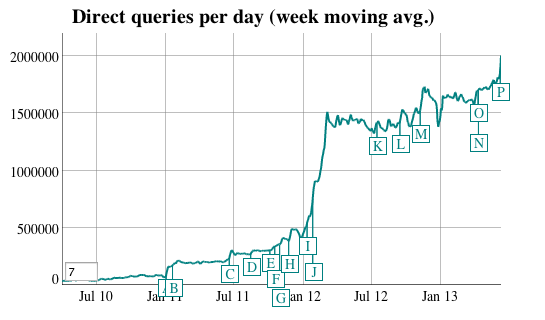
For DuckDuckGo founder Gabriel Weinberg, the numbers are proof yet again that people are eager to find and use viable alternatives to popular web services, which are prime targets for government snooping. “We offer that in web search, and there are others that offer it in other verticals. As people find out about these alternatives, they make that choice,” Weinberg said via email today.
DuckDuckGo was launched in 2008 and has since become the foremost search engine for those concerned about not just snooping by the government but Google as well. When visitors search via DuckDuckGo, the search engine doesn’t track them; it just gives them the search results they request. (Like Google, DuckDuckGo does serve contextual ads, which is how it makes its money.)
While interest in the search engine has climbed over the past year, fears over PRISM surveillance have made DuckDuckGo look significantly more important and necessary seemingly overnight.
“I believe the surveillance story is paramount right now, and people are talking about it. DuckDuckGo users are telling their friends and family about the private alternatives,” Weinberg said.
On a similar note, this week designer Peng Zhong launched PRISM Break, a comprehensive site that lists private alternatives to popular web services. – Venturebeat.com
US defence and Army attaché Colonel Daniel L Hampton (right) with Major General Luvuyo Nobanda of the SANDF
The South African and US armed forces will conduct a joint exercise in the Eastern Cape, the SA National Defence Force said on Thursday.
SA Navy Captain Jaco Theunissen said the militaries would share technical expertise during the exercise, which would start on July 24 and end on August 5, and would involve 5000 soldiers.
“We are exercising to do a human support intervention in an unstable country,” said Theunissen.
“What we simulate is what is currently happening in a lot of countries in the world, especially in the African continent.
“You’ve got warring factions destabilising the country…. We are exercising the war fight, where you will fight against rebel groups.”
Medical units would also practice giving basic medical healthcare to a local population in an unstable warring environment.
All branches of the SANDF — the army, air force, navy, and health –would participate. – Sapa
This website uses cookies to improve your experience. We'll assume you're ok with this, but you can opt-out if you wish. Cookie settingsACCEPT
Privacy & Cookies Policy
Privacy Overview
This website uses cookies to improve your experience while you navigate through the website. Out of these cookies, the cookies that are categorized as necessary are stored on your browser as they are essential for the working of basic functionalities of the website. We also use third-party cookies that help us analyze and understand how you use this website. These cookies will be stored in your browser only with your consent. You also have the option to opt-out of these cookies. But opting out of some of these cookies may have an effect on your browsing experience.
Necessary cookies are absolutely essential for the website to function properly. This category only includes cookies that ensures basic functionalities and security features of the website. These cookies do not store any personal information.
Any cookies that may not be particularly necessary for the website to function and is used specifically to collect user personal data via analytics, ads, other embedded contents are termed as non-necessary cookies. It is mandatory to procure user consent prior to running these cookies on your website.


 Russia’s President Vladimir Putin says Edward Snowden, who has been stuck in a Moscow airport for weeks, will leave Russia as soon as he is able to.