Ed Snowden: I have more

US whistleblower Edward Snowden yesterday vowed to stay in Hong Kong to fight any extradition bid, and promised new revelations about US surveillance targets, the South China Morning Post reported.

In a teaser posted online before it publishes the full interview, the newspaper reported that the former contractor for the National Security Agency would offer “more explosive details on US surveillance targets”.

Snowden will also discuss his fears for his family and his immediate plans, the newspaper said after it interviewed the former CIA analyst earlier yesterday at a secret location in Hong Kong.

“People who think I made a mistake in picking Hong Kong as a location misunderstand my intentions.

“I am not here to hide from justice; I am here to reveal criminality,” he told the newspaper.

Snowden also vowed to fight any extradition attempt by the US government, the newspaper said, after he went to Hong Kong on May 20 and leaked a global eavesdropping operation by the NSA to The Guardian and The Washington Post.

“My intention is to ask the courts and people of Hong Kong to decide my fate. I’ve been given no reason to doubt your system.”

Snowden revealed a top secret court order issued on April 25 by the Foreign Intelligence Surveillance Court that granted a three-month renewal for the large-scale collection of American phone records.

That programme allows the NSA to gather hundreds of millions of US phone records to search for possible links to terrorists abroad. Snowden also disclosed another programme that allows the government to tap into nine US internet companies and gather all communications to detect suspicious behaviour that begins overseas.

The American Civil Liberties Union sued senior US government officials on Tuesday to strike down the NSA’s broad telephone surveillance.

The lawsuit filed in US District Court for the Southern District of New York claims the US government’s collection of vast communications records violates rights to free speech and privacy as guaranteed by the US constitution.

After stories from Snowden’s leaks appeared in The Guardian of Britain and The Washington Post, US National Intelligence director James Clapper declassified some details of the programme, acknowledging it existed. – Sapa-AFP-AP-Reuters

Peaceful role for drones?

Unmanned drones, instead of being harbingers of death, should become a vital technological tool in the conservation fight and in delivering vital goods to remote areas, the TEDGlobal conference in Edinburgh heard Wednesday.

Biologist and science-fiction fan Lian Pin Koh told the conference about his fleet of environmental drones which have been used to monitor the Orangutan population in the remote Indonesian forest of northern Sumatra.

The aircraft have a two-metre wingspan, weigh less than two kilogrammes and cost just $4,000.

Equipped with a mini-computer, a GPS, a compass and an altimeter, they can be easily programmed using Google Maps and are able to fly autonomously for between 40 and 60 minutes, travelling up to 50 kilometres.

Their high resolution cameras can “establish a map of the forest”, generate 3D images of the site and “monitor illegal activities harmful to nature,” explained the speaker.

Since January, 200 vehicles have been built and are being used by environmental protection groups in Switzerland, Indonesia, Madagascar, Congo, the United States and Greenland.

“We believe that the drones have a huge potential not only to fight crimes against nature but also for studying biodiversity and animal life,” said Lian Pin Koh.

TED (Technology, Entertainment, Design) is a global set of conferences that presents speakers with an 18-minute window to promote their “ideas worth spreading”.

Greek businessman, Andreas Raptopoulos, now settled in Silicon Valley, saw another role for drones in delivering essential goods such as drugs and vaccines to otherwise inaccessible areas.

He hopes a network of drones will help the “one billion people” who are completely cut off for part of the year due to impassable roads and conducted a test mission into a Haitian refugee camp in 2012.

But Raptopoulos also envisages drones having “a significant impact” in bottle-necked “megacities”, saying they could deliver packages across town for as little as 24 US cents.

But drones today are seen almost exclusively as a weapon of war, a theme explored by science fiction author Daniel Suarez.

“I’m not here to talk about fiction but real robot-killers,” he said, citing robot-snipers located on the border of the two Koreas which are able to “automatically identify a human target and shoot him from over a mile away.

“Currently, there are still men in the loop but they are not required technically, it is a choice,” he explained, adding that 70 nations are currently on the path to developing similar weapons.

He called for the establishment of an international treaty and a “ban the manufacture of robots-killers.”

“There are tonnes of great uses for unmanned drones but we need a framework for robotic weapons as it puts too much power into too few hands,” he said.

Suarez also warned that amount of footage currently being produced by surveillance drones was “outstripping the human ability to review it all”.

Previous TED speakers include U2 singer Bono, Microsoft mastermind Bill Gates and former US president Bill Clinton. – AFP

U.S. Ambassador to Belgium denies sex with minors allegations

In a fast-developing story, U.S. ambassador to Belgium Howard Gutman has been named as the diplomat accused of soliciting “sexual favors from both prostitutes and minor children,” according to State Department documents obtained by NBC News. Gutman denied the allegations, in a statement to The Cable and other outlets.

“I am angered and saddened by the baseless allegations that have appeared in the press and to watch the four years I have proudly served in Belgium smeared is devastating,” he said. “At no point have I ever engaged in any improper activity.”

Gutman came under the spotlight on Monday after CBS obtained an internal memo from the department’s inspector general detailing eight examples of alleged misconduct by staff or contractors ranging from soliciting prostitutes to obtaining narcotics from an “underground drug ring.” The report also alleged that the agency tried to cover up instances of misconduct, something State Department spokeswoman Jen Psaki called “preposterous.”

According to one veteran Brussels reporter speaking to The Cable, Gutman “is something of a legend here.”  He’s known as “the American guy who goes to shitty little Belgian towns even Belgians haven’t heard of,” in an effort to strengthen ties with the locals. “He’s pretty much always on Belgian TV apparently.”

Speaking of the two allegations — solicitation of prostitutes and minors — the source said: “The first charge is unsurprising in ‘like, whatever’ Belgium. But the second is shocking and out-of-character if proved.” He said the ambassador is known for his “sharp and wicked humor.”

“[He] lives in a gigantic pad between Royal Palace and Parliament,” the source said. “Florid reception room, which I imagine gets a lot of use — could easily hold 100.”

Gutman is also a big supporter of President Obama. Formerly a Washington lawyer, Gutman bundled at least $500,000 for Obama’s 2008 campaign committee and $275,000 for his inauguration committee, according to Open Secrets.

After allegations of Gutman’s misconduct arose, the ambassador was called back to Washington to meet Undersecretary of State for Management Patrick Kennedy, but kept his job.

According to the New York Post, which also obtained State Department memos, Kennedy ordered the investigation ceased. Kennedy, in a statement to The Cable, denied allegations that he inhibited the State Department investigation.

“The Foreign Service has been my life for over forty years and through several Secretaries of State,” he said. “I have always acted to honor the brave men and women I serve, while also holding accountable anyone guilty of wrongdoing.  In my current position, it is my responsibility to make sure the Department and all of our employees-no matter their rank-are held to the highest standard, and I have never once interfered, nor would I condone interfering, in any investigation.”

On Monday, Psaki announced that the department’s Bureau of Diplomatic Security requested a “review by outside, experienced law enforcement offices … to make expert assessments about our current procedures.”

The allegations surfaced with claims by Aurelia Fedensin, a former investigator with the State Department’s internal watchdog agency, who told CBS that higher ranking State Department officials discouraged allegations of misconduct. “We expect to see influence, but the degree to which that influence existed and how high up it went was very disturbing.”

On Monday, a State Department official told The Cable that investigations sometimes result in disciplinary actions that aren’t made public. At a briefing, Psaki said the department “would never condone any undue influence on any report or investigation,” Psaki said.

Republican Congressman Ed Royce, chairman of the House Foreign Affairs Committee, issued a statement Monday saying he was “appalled” at the alleged misconduct. “The notion that any or all of the cases contained in news reports would not be investigated thoroughly by the Department is unthinkable,” he said. – Foreign Policy

Ron Paul: US might kill Edward Snowden with drone

During an interview with FOX Business, former Rep. Ron Paul explained that he was concerned about the well-being of National Security Agency whistle-blower Edward Snowden.

“I’m worried about somebody in our government might kill him with a cruise missile or a drone missile,” Paul explained. “I mean we live in a bad time where American citizens don’t even have rights and that they can be killed, but the gentlemen is trying to tell the truth about what’s going on.”

Paul added that there were no signs of Snowden defecting to a foreign country, which meant that he was not really a threat.

“It’s a shame that we are in an age where people who tell the truth about what the government is doing gets into trouble,” he concluded.


Washington braces for death of Nelson Mandela

Officials in Washington and around the world are bracing for the death of longtime civil rights leader and former South African President Nelson Mandela, who is hospitalized again in serious condition for a lung condition. His aides have asked for prayers.

“It looks bad,” said one U.S. official who added: “Washington is keeping a close eye on the former leader and civil rights hero.”

Expectations are that President Obama and possibly former Presidents Jimmy Carter, Bill Clinton and George W. Bush would attend a funeral. No travel plans have been made, however.

Mandela, in prison for 27 years before being freed and eventually winning the presidency, has been in a Pretoria hospital since Saturday, his fourth hospital trip for lung ailments. On Saturday, a government spokesman said Mandela’s condition had “deteriorated.” On Monday, President Jacob Zuma said “his condition is unchanged.”

News reports noted that comments from South African officials have been suggesting that Mandela is near death. Jackson Mthembu, spokesman for the African National Congress, told Sky News that the party was “prepared for the worst.” Even Mandela’s estranged wife Winnie visited him.

Back in March, there was another health scare for Mandela, but he recovered. He contracted tuberculosis while he was in jail for fighting apartheid. He was freed in 1990 and was elected president four years later. He helped to heal the years of segregation.

Obama is planning a trip to Africa in early July with stops in South Africa. Michelle Obama visited Mandela two years ago. On Tuesday, White House spokesman Jay Carney said the president wished Mandela a “speedy recovery.” – The Examiner

American senator delivers speech in Spanish

Sen. Tim Kaine

Sen. Tim Kaine, a Virginia Democrat, delivered a speech on the Senate floor in Spanish on Tuesday as he made his push for the chamber to pass his immigration bill.

Mr. Kaine said he would deliver his remarks in Spanish but said he would put an English translation into the Congressional Record.

The move highlighted the growing power of Spanish-language speakers in the U.S. Mr. Kaine, whose Spanish is outstanding after spending time as a Catholic missionary in Honduras, has used the language in his outreach to Hispanic voters.

Speaking Spanish in floor speeches is rare, but not unprecedented.

To use another language on the floor requires unanimous consent of the other senators, which Mr. Kaine sought and was granted. – Washington Times

Germany most-spied-on EU country by US

Germany appears to be the most snooped on EU country by the US, the map of secret surveillance activities by the National Security Agency shows. ‘Boundless Informant’ is among the data disclosed by former CIA contractor and NSA consultant Edward Snowden.

The color-coded map of secret surveillance activities by the NSA ranks countries according to how much surveillance they are currently undergoing – green for the least and red for the most watched.

While all EU member states boast variant shades of green, Germany stands out color-coded orange.

The source behind the revelation of the top-secret NSA surveillance program, already referred to as one of the most significant intelligence leaks in US history, was uncovered late last week. 29-year-old Snowden asked The Guardian to reveal his identity, having fled to Hong Kong to escape retaliation by the US authorities.

“The NSA has built an infrastructure that allows it to intercept almost everything. With this capability, the vast majority of human communications are automatically ingested without targeting,” he told The Guardian.

“I, sitting at my desk, certainly had the authority to wire-tap anyone … even if you are not doing anything wrong, you are being watched and recorded,” he added.

The Boundless Informant documents show NSA collecting up to 3 billion pieces of intelligence from US computer networks over a 30-day period ending in March 2013, according to The Guardian. The tool reportedly allows users to select a country on a map, view the metadata volume and select details about the collections against this or that state.

Germany’s Interior Ministry had already been in contact with US officials to find out whether there had been any infringement of German citizens’ privacy lately. Chancellor Angela Merkel is due to raise the issue of the NSA’s eavesdropping on Germany with President Barack Obama, who said the monitoring program is a means of defense against terrorism.

Iran is on top of the surveillance list, with more than 14 billion data reports in March, while Pakistan came in a close second at 13.5 billion reports. Jordan, a close US ally, as well as Egypt and India are also near the top, according to the data.

Senior European Union officials are also expected to discuss the impact of NSA’s programs on the privacy of EU citizens during a trans-Atlantic ministerial meeting in Dublin on Thursday.

“This case shows that a clear legal framework for the protection of personal data is not a luxury or constraint, but a fundamental right,” European Commissioner for Justice Viviane Reding said.

The European Parliament said it is always firm on data protection within the EU, as well as when negotiating with third countries, including the US.

“It would be unacceptable and would need swift action from the EU if indeed the US National Security Agency were processing European data without permission,” Guy Verhofstadt of the parliament’s liberal bloc said.

NSA’s tradition to survey international communities reportedly goes back to the Cold War era, when the agency used monitoring sites in Germany, Britain and other countries to spy on communications within the Soviet Union and its East European allies.

UK Foreign Secretary William Hague has meanwhile cancelled his trip to Washington to speak about The Guardian’s latest NSA report.

He assured parliament that accusations that the UK government allegedly used information provided by the Americans to circumvent laws were “baseless.”

“Our agencies practice and uphold UK law at all times,”
he stated, “even when dealing with information from outside the UK.”

In an interview with the British newspaper, successful NSA consultant Snowden leaked top-secret documents that revealed the existence of the US National Security Agency’s extensive internet spying program PRISM, which records digital communications and allows for real-time online surveillance of US citizens. PRISM gives US intelligence agencies direct access to files stored on the servers of major internet companies, including Google and Facebook, to identify and target potential terror suspects. – RT

Setting for a real international spy thriller

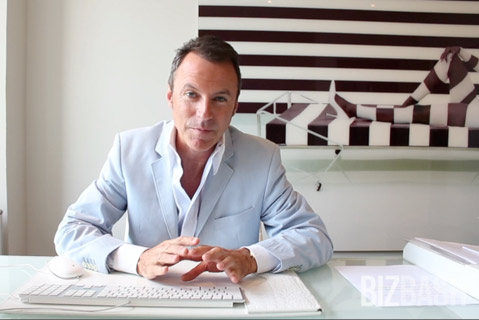
Colin Cowie, hotel designer

There are few better settings for an international spy thriller than the chaotic, neon-lit streets of Kowloon, to the north of Hong Kong’s Victoria Harbour.In the early 1970s, Kowloon’s triad-infested back-alleys played host to Roger Moore’s James Bond who used the area as the backdrop for The Man With the Golden Gun.

The Mira hotel’s rooms were conceived by Colin Cowie, a South African “lifestyle guru” and interior designer, and on its eleventh floor is Cuisine Cuisine, an award-winning restaurant where specialties include braised birds nests, South African abalone and sturgeon caviar.

On Monday, Kowloon was plunged once again into the midst of a global intrigue involving spooks and spies.

For it was here that Edward Snowden, the CIA worker-turned-whistleblower, made his temporary Asian hide-out, holing himself up inside one of Hong Kong’s chicest design hotels as the world absorbed his revelations about the National Security Agency’s mammoth electronic intelligence gathering operations.

On Monday afternoon two employees at Hong Kong’s £42m Mira hotel confirmed to The Daily Telegraph that a man called Edward Snowden had been staying at the 492-room luxury hotel in Kowloon.

“He checked out today,” said one staff member, who declined to be named.

The employees declined to say exactly when Mr Snowden, who reportedly flew to Hong Kong on May 20, had checked in and out, or which floor he had been staying on.

But it was from one of the hotel’s “uniquely designed guestrooms” that the 29-year-old looked on as news of his leaked revelations swept across the globe.

The Mira is one of Hong Kong’s most fashionable and talked about hotels. It describes itself as “a design-led urban retreat for the discerning traveller” and boasts a Michelin Star Chinese restaurant, a 25-metre indoor pool and a 18,000 square metre spa.

The Mira would have made a comfortable, if expensive, place to lie low. A brochure describes the hotel as “a living, breathing sophisticated space” which promises to “pamper the mind, body and spirit of the fast-living urban traveller”. Once a week the hotel hosts “Champagne Tuesday” at which guests quaff HK$100 glasses of champagne to the sound of “cool French jazz”.

Kowloon’s hustle and bustle would also have offered good cover to anyone wanting to fly under the radar. Outside the Mira’s pitch-black entrance at Number 118 Nathan Road, the streets teem with street hawkers and workers. Shoppers pour in and out of glitzy shopping malls and Cartier and Philippe Patek boutiques.

It is unclear how much Mr Snowden was able to take advantage of the hotel’s luxury facilities. Staff members refused to go into details about their former guest on Monday and The Guardian reported that the former contractor had spent three weeks “ensconced” in his bedroom, ordering room service. “I’ve left the room maybe a total of three times during my entire stay,” Mr Snowden said.

As Mr Snowden’s identity and and unexpected presence in Hong Kong was revealed on Monday morning, journalists raced to locate his hideout.

Rumours about his exact whereabouts spread on social media, with one Twitter-user suggesting Mr Snowden had been staying in the Excelsior hotel in Hong Kong’s Causeway Bay area. Staff there said they had “no information” about his presence, however, and refused to confirm or deny if they were hosting a guest named Edward Snowden.

By late afternoon Mr Snowden’s temporary home had been identified by means of an elegant bedside lamp that appeared in footage of an interview he had given and matched those in the Mira.

Members of the media rushed to the Kowloon hotel but by then the elusive Mr Snowden had left, staff said.

Tonight it was not clear if Mr Snowden remained in Hong Kong or had travelled elsewhere.

He told The Guardian he had chosen to come to Hong Kong because of its “commitment to free speech and the right of political dissent” but planned “to seek asylum in a country with shared values”, possibly Iceland.

A security guard outside the palm-flanked US consulate laughed off questions about the former CIA employee. “There are many Americans living in Hong Kong,” he said, grinning. – The Telegraph


Whistleblower disappears from Hong Kong hotel

Russia is willing to consider granting political asylum for NSA whistleblower Edward Snowden, who blew the lid on the US PRISM program, Russian media reported. Snowden dropped out of sight Monday after he was last seen checking out of a Hong Kong hotel.

The Mira Hotel, is a self-described “design hotel” near Kowloon park on the mainland.

The Mira Hotel in Tsim Sha Tsui, a waterfront area popular with tourists, said that an American named Edward Snowden had checked into the hotel on June 1 and stayed for more than a week before checking out Monday afternoon. The hotel is a luxury property that, according to its web site, promises “matchless indulgence for the young-at-heart modern traveler,” where room rates can go for more than $300 a night. […]

A man reached at the Mira Hotel in a room under Mr. Snowden’s name said he wasn’t the person reporters were looking for and then hung up the phone. On dialing the hotel again, the reception said Mr. Snowden’s room was no longer taking phone calls. A few minutes after that, the hotel said Mr. Snowden had checked out.

“If we receive such a request, we will consider it,” Kommersant daily quoted President Vladimir Putin’s press secretary Dmitry Peskov as saying.

Snowden, a 29-year-old former technical assistant for the CIA and current employee of the defense contractor Booz Allen Hamilton, revealed the existence of PRISM, the National Security Agency’s (NSA) massive data-mining surveillance program which gave the agency backdoor access to emails, videos, chats, photos and search queries from nine worldwide tech giants.

The whistleblower disappeared after checking out of a Hong Kong hotel, Reuters quoted witnesses as saying. A day earlier Snowden revealed his identity to The Guardian newspaper.

The revelations of Edward Snowden have been condemned by senior US lawmakers, who threatened the whistleblower with prosecution. Senator Dianne Feinstein (D-CA) on Monday called Snowden’s NSA leaks an “act of treason.”

Chairman of the House homeland security subcommittee Peter King stressed that if Edward Snowden is the leaker, then the US “must prosecute him to the fullest extent of the law and begin extradition proceedings at the earliest date.”

On Monday, Regina Ip, formerly Hong Kong’s top official overseeing security, told reporters it would be in Snowden’s “best interest to leave Hong Kong,” citing an extradition treaty with the United States that was signed in 1996.

Visitors walk into The Mira Hotel, where 29-year-old former CIA employee Edward Snowden was reported to have checked out of on Monday, in Hong Kong June 10, 2013 (Reuters / Bobby Yip)

“He won’t find Hong Kong a safe harbor,” Ip said. “Those agreements have been in force for more than 10 years. If the US submits a request, we would act in accordance with the law.”

Iceland MP and privacy rights campaigner Birgitta Jonsdottir has offered Snowden assistance in getting asylum in the Nordic island state.

Snowden fled to Hong Kong on May 20. Before that he had been working with the NSA earning approximately $200,000 per year and living in Hawaii.

“I’m willing to sacrifice all that because I can’t in good conscience allow the US government to destroy privacy, internet freedom and basic liberties for people all around the world with this massive surveillance machine they’re secretly building,” he told The Guardian. “The greatest fear that I have regarding the outcome for America, of these disclosures, is that nothing will change.”

Snowden copied the last of the documents he planned to release three weeks ago, telling his bosses he needed time off to be treated for epilepsy. He has also said he has a girlfriend who was unaware of his plans to seek refuge in Hong Kong.

WikiLeaks founder Julian Assange says he has been in contact with Edward Snowden, saying the NSA contractor was a prime example of what his organization is attempting to do.

“This organization and people like it and our values are forming a new body politic and people like Edward Snowden are part of that phenomena,” Assange said in a telephone interview with The Australian Broadcasting Corporation’s Emma Alberici on Monday from the Ecuadorian embassy in London.

Guardian journalist Glenn Greenwald, who revealed classified US surveillance programs leaked by Snowden, told AP that there will be more ‘significant information’ exposed in the near future. “We are going to have a lot more significant revelations that have not yet been heard over the next several weeks and months,” Greenwald told AP.

‘Arrest Obama for war crimes when he visits SA’

The Muslim Lawyers Association in Johannesburg wants US President Barack Obama arrested and tried for war crimes when he arrives in South Africa on June 29.

Group spokesman Yousha Tayob said Obama ordered drone strikes that killed innocent civilians.

In terms of the Rome Statute, South Africa has the right to prosecute a war criminal on its territory, said Tayob.

Researchers from New York University School of Law and Stanford University Law School recently released a report entitled “Living Under Drones: Death, Injury and Trauma to Civilians From US Drone Practices in Pakistan”.

They found that in four years Obama commissioned five times more drone attacks than former president George W Bush did in his two terms in the White House .

The report estimates drones have killed between 474 and 881 civilians, including 176 children.

The US Embassy in South Africa’s spokesman Jack Hillmeyer said it had “no comment”.

National Prosecuting Authority spokesman Bulelwa Makeke said the office had received the docket and was studying it. – timeslive.co.za

Obama orders overseas target list for cyber-attacks

Barack Obama has ordered his senior national security and intelligence officials to draw up a list of potential overseas targets for US cyber-attacks, a top secret presidential directive obtained by the Guardian reveals.


The 18-page Presidential Policy Directive 20, issued in October last year but never published, states that what it calls Offensive Cyber Effects Operations (OCEO) “can offer unique and unconventional capabilities to advance US national objectives around the world with little or no warning to the adversary or target and with potential effects ranging from subtle to severely damaging”.


It says the government will “identify potential targets of national importance where OCEO can offer a favorable balance of effectiveness and risk as compared with other instruments of national power”.


The directive also contemplates the possible use of cyber actions inside the US, though it specifies that no such domestic operations can be conducted without the prior order of the president, except in cases of emergency. -The Guardian

Meet Edward Snowden, whistleblower behind the NSA surveillance revelations

The 29-year-old source behind the biggest intelligence leak in the NSA’s history explains his motives, his uncertain future and why he never intended on hiding in the shadows

The individual responsible for one of the most significant leaks in US political history is Edward Snowden, a 29-year-old former technical assistant for the CIA and current employee of the defence contractor Booz Allen Hamilton. Snowden has been working at the National Security Agency for the last four years as an employee of various outside contractors, including Booz Allen and Dell.

The Guardian, after several days of interviews, is revealing his identity at his request. From the moment he decided to disclose numerous top-secret documents to the public, he was determined not to opt for the protection of anonymity. “I have no intention of hiding who I am because I know I have done nothing wrong,” he said.

Snowden will go down in history as one of America’s most consequential whistleblowers, alongside Daniel Ellsberg and Bradley Manning. He is responsible for handing over material from one of the world’s most secretive organisations – the NSA.

In a note accompanying the first set of documents he provided, he wrote: “I understand that I will be made to suffer for my actions,” but “I will be satisfied if the federation of secret law, unequal pardon and irresistible executive powers that rule the world that I love are revealed even for an instant.”

Despite his determination to be publicly unveiled, he repeatedly insisted that he wants to avoid the media spotlight. “I don’t want public attention because I don’t want the story to be about me. I want it to be about what the US government is doing.”

He does not fear the consequences of going public, he said, only that doing so will distract attention from the issues raised by his disclosures. “I know the media likes to personalise political debates, and I know the government will demonise me.”

Despite these fears, he remained hopeful his outing will not divert attention from the substance of his disclosures. “I really want the focus to be on these documents and the debate which I hope this will trigger among citizens around the globe about what kind of world we want to live in.” He added: “My sole motive is to inform the public as to that which is done in their name and that which is done against them.”

He has had “a very comfortable life” that included a salary of roughly $200,000, a girlfriend with whom he shared a home in Hawaii, a stable career, and a family he loves. “I’m willing to sacrifice all of that because I can’t in good conscience allow the US government to destroy privacy, internet freedom and basic liberties for people around the world with this massive surveillance machine they’re secretly building.”

Three weeks ago, Snowden made final preparations that resulted in last week’s series of blockbuster news stories. At the NSA office in Hawaii where he was working, he copied the last set of documents he intended to disclose.

He then advised his NSA supervisor that he needed to be away from work for “a couple of weeks” in order to receive treatment for epilepsy, a condition he learned he suffers from after a series of seizures last year.

As he packed his bags, he told his girlfriend that he had to be away for a few weeks, though he said he was vague about the reason. “That is not an uncommon occurrence for someone who has spent the last decade working in the intelligence world.”

On May 20, he boarded a flight to Hong Kong, where he has remained ever since. He chose the city because “they have a spirited commitment to free speech and the right of political dissent”, and because he believed that it was one of the few places in the world that both could and would resist the dictates of the US government.

In the three weeks since he arrived, he has been ensconced in a hotel room. “I’ve left the room maybe a total of three times during my entire stay,” he said. It is a plush hotel and, what with eating meals in his room too, he has run up big bills.

He is deeply worried about being spied on. He lines the door of his hotel room with pillows to prevent eavesdropping. He puts a large red hood over his head and laptop when entering his passwords to prevent any hidden cameras from detecting them.

Though that may sound like paranoia to some, Snowden has good reason for such fears. He worked in the US intelligence world for almost a decade. He knows that the biggest and most secretive surveillance organisation in America, the NSA, along with the most powerful government on the planet, is looking for him.

As for his future, he is vague. He hoped the publicity the leaks have generated will offer him some protection, making it “harder for them to get dirty”.He views his best hope as the possibility of asylum, with Iceland – with its reputation of a champion of internet freedom – at the top of his list. He knows that may prove a wish unfulfilled.

But after the intense political controversy he has already created with just the first week’s haul of stories, “I feel satisfied that this was all worth it. I have no regrets.” – The Guardian

Storm clouds gather for Obama

The latest Quinnipiac University poll, published today, will send shivers through the White House, even though Washington is experiencing its first heat wave of the year. The Quinnipiac survey is the first major survey to show that the wave of recent scandals hitting the Obama administration are beginning to damage President Obama’s own standing with the American people. According to Quinnipiac, Barack Obama’s job approval rating now stands at just 45 percent, with less than half of voters viewing the president as “honest and trustworthy.”

President Barack Obama gets a negative 45 – 49 percent job approval rating, compared to 48 – 45 percent positive in a May 1 survey by the independent Quinnipiac (KWIN-uh-pe-ack) University, conducted before the IRS allegations surfaced.

The president’s biggest drop is among independent voters, who give him a negative 37 – 57 percent score, compared to a negative 42 – 48 percent May 1. He gets a negative 9 – 86 percent from Republicans and a positive 87 – 8 percent from Democrats, both virtually unchanged. Women approve 49 – 45 percent while men give a negative 40 – 54 percent score.

Americans are divided 49 – 47 percent on whether Obama is honest and trustworthy, down from 58 – 37 percent, the last time Quinnipiac University asked the question September 1, 2011.

The Quinnipiac study also shows deep-seated disillusionment with the federal government among American voters.

Only 3 percent of voters trust the federal government to do the right thing almost all the time, while 12 percent say they trust it most of the time; 47 percent say some of the time and 36 percent hardly ever. That compares to results of a Quinnipiac University poll in July 2010, four months before the Republican sweep that year on the back of anti-government sentiment, when 2 percent said almost always, 16 percent said most of the time; 50 percent said some of the time and 31 percent said hardly ever.

Of the three major scandals currently engulfing the presidency – the IRS targeting of conservative groups, the Obama administration’s response to the Benghazi terrorist attack, and the Justice Department’s seizure of phone records belonging to Associated Press journalists, the IRS issue is making the biggest impact with voters. According to Quinnipiac, 66 percent of Americans disapprove of the way in which the IRS is handling its job, and 76 percent support the appointment of a special prosecutor to investigate the IRS scandal. The Benghazi issue is also doing considerable damage to the Obama administration’s image, with 46 percent believing “the Obama administration deliberately misled the American people about the events surrounding the death of the American Ambassador to Libya.” Voters are generally less familiar with the AP story.

The Quinnipiac poll suggests trouble ahead for next year’s Congressional mid-term elections, where the Republicans will be seeking to consolidate and expand their control of the House of Representatives, and possibly retake the Senate. Significantly, among Independent voters, who are likely to decide many of the crucial House and Senate races in November 2014, 57 percent disapprove of Barack Obama’s job performance, and 56 percent do not believe that the president is “honest and trustworthy.” By a 45 percent to 35 percent margin, Independents believe that Republicans in Congress are doing a better job than President Obama on handling the economy, the number one issue for the American electorate. Among all voters, Barack Obama and Congressional Republicans are tied at 43 percent. Overall, 68 percent of Americans are “somewhat dissatisfied” or “very dissatisfied” with the direction the United States is taking, hardly a vote of confidence in Mr. Obama’s leadership. Expect even worse figures for the White House in the coming weeks, as the pressure intensifies on a scandal-hit presidency. – Nile Gardiner, The Telegraph

Trayvon Martin: America takes sides

That young black man Trayvon Martin was killed last year by white neighbourhood watch volunteer George Zimmerman is not in dispute. But as Zimmerman’s trial begins today it may be harder to establish what represents justice.

Frank Taaffe ponders how fast the gated community here in Sanford where he bought his house seven years ago went to pot once the economy went south. Other buyers went into foreclosure or rented their homes out to strangers. Burglaries went up. A heroin ring was cracked by the police a few doors down.

“I could see the ambience here eroding,” Mr Taaffe, 56, says. “I don’t want to say darker, but that too.” Until a few months ago, the only gap in the perimeter fence around the community – “the Retreat at Twin Lakes” – was here right behind his house. “The scum that used to come through here…” he says, gesturing to the sliver of grass separating him from next door. “This was the corridor of crime.”

Mr Taaffe doesn’t mean to be racist discussing the trial that starts today of his friend, George Zimmerman, accused of murdering Trayvon Martin last year here at Twin Lakes. Zimmerman is white Hispanic while Trayvon, just 17, was black.

“There are cases of African-Americans being castigated because of the colour of their skin, I do believe that,” he acknowledges. It’s just that he thinks he knows better than most what happened here that February night.

Others in Sanford might tell you something similar. No town wants to be called racist. “We have been portrayed as some kind of racially charged city but that’s not the case,” City Manager Norton Bonaparte notes over coffee at a recent Chamber of Commerce breakfast at Sanford Zoo. “This was a tragic interaction between two individuals.”

But that, of course, is a sparse version of the truth and even Mr Bonaparte knows it. The reason this trial will be besieged by media crews from around the world has everything to do with the perception, at least, of racial  stereotyping. It’s also why everything is being done to get ready for when the verdict comes in – to keep Sanford from blowing up all over again.

The worst might actually be over. What ignited the African-Americans nearly 18 months ago and sparked Trayvon support rallies everywhere was the police decision to release Mr Zimmerman without charge soon after taking him in. He had belonged to the Twin Lakes Neighbourhood Watch, had seen Trayvon outside a house (Mr Taaffe’s, in fact), figured he was “up to no good” and given chase. He didn’t know the boy was staying in the house of his father’s girlfriend at Twin Lakes and was merely returning from a corner shop.

Most outrageous to some was the notion that he had been freed under Florida’s “Stand Your Ground” law that says if you are facing possible lethal danger you are not obliged to try to flee and can act right there to save yourself. That means shooting your assailant if you have a permit to carry a weapon, which Mr Zimmerman did, without fear of prosecution. The African-American community saw a pattern.

“It was the straw that broke the camel’s back,” explains Francis Oliver, who runs the Goldsboro Historical Museum in a double-wide trailer in the worn down and mostly black Goldsboro section of Sanford. “They got the man who pulled the trigger, he admitted pulling the trigger and they had him in the police station. He tells them he stood his ground. You can’t stand your ground against a boy with a bag of Skittles and a bottle of iced tea.”

As Mr Bonaparte, who is black, puts it at the Chamber breakfast, the killing of Trayvon Martin highlighted what “has not been resolved in America even going back to the lynchings. A white man shot and killed a black person and nothing happened, again. That’s what struck a chord.” Locally, he adds, “it was the like the removal of a scab that showed that the healing that should have happened had not”.

But that early boil of outrage has been partially lanced. Mr Zimmerman, 28, turned himself in and eventually was charged with second-degree murder. The then chief of police, Bill Lee, was sacked by Mr Bonaparte. (Mr Lee was white and his replacement is black.) In the spring of this year, lawyers for Mr Zimmerman said they would not use a Stand Your Ground defence. To some it is enough that the wheels of justice are finally turning as they should.

“It’s in God’s hands now,” says Frederick Turner, a Goldsboro resident, “but I can’t say the community is happy because a young black man died for no reason”. He also echoed many in voicing dismay at the attempts by the defence to introduce evidence, including records from his mobile phone, that disparage Trayvon as wayward at least, even a wannabe gangster with an enthusiasm for marijuana and violence.

“All that stuff doesn’t have nothing to do with what happened to him in those seconds, minutes and hours.” Even if the judge in the case refuses to admit it, the publicity around these claims is unlikely to have escaped potential jurors.

Jury selection begins today. When it is over and the trial proper begins, the nub will be determining exactly what happened in those “seconds and minutes” between Mr Zimmernan spying the teenager outside Mr Taaffe’s house and shooting him from close range.

We know a bit – for example that he got out of his car and pursued the youngster on foot through the neighbourhood. It’s on the tapes of his call with the police dispatcher, who asked: “Are you following him?” “Yeah,” he replied. “OK, we don’t need you to do that,” said the dispatcher. “OK,” Zimmerman said. But he followed him anyway.

The difficulty is that no one else actually witnessed that final, fatal confrontation at a bend on Twin Trees Road, about a minute from Mr Taaffe’s house if you are running quickly. Some residents phoned the emergency services and screaming is heard on the tapes of those calls but experts do not agree which of the two men is doing the screaming. Do the lacerations that were on the back of Mr Zimmerman’s head support his claim that it was Trayvon who turned on him and that he fired in self-defence? Or was Trayvon indeed the sole victim?

“It’s called ‘prevent-defence’ – it’s a football term,” say Mr Taaffe, who expects to be called as a witness by both sides. “That’s what [Zimmerman] did. He cared for his neighbours and for his community. He wasn’t profiling anyone… He wasn’t chasing anybody. How could it be Trayvon screaming? If it was me, I would have gone into ‘prevent-defence’.”

Indeed, Mr Taaffe, who is in internet marketing, is about as exasperated now as the Travyon Martin supporters were when Mr Zimmerman was first allowed to walk free.

“This case has become so polarised and the other side just don’t want to take the cotton wool out of their ears. Where is the common sense? What happened to common sense?”

As for the verdict he is in no doubt. “George Zimmerman will walk out a free man,” he predicts. “But he will have to spend the rest of his life either in hiding or trying to justify his actions.” Such are the passions of this case. – The Independent