‘Anti-immigration is not racist’

ukimmigrationThe success of British Prime Minister David Cameron’s flagship immigration policy was called into serious question on Sunday, dealing him a potential blow ahead of 2015 elections by playing into the hands of a populist anti-immigration party.

A report by lawmakers from across the political spectrum concluded that Britain’s migration statistics were grossly unreliable and “not fit” for purpose, undermining the credibility of Cameron’s assertions about the issue.

Immigration is a hot button issue in Britain, where Cameron is trying to stop an exodus of voters to the UK Independence Party (UKIP) before a parliamentary election in two years’ time, and polls show the issue is one that worries voters the most.

Concerns have been fuelled by warnings in the right-leaning press about “hordes” of Romanians and Bulgarians moving to Britain next year when EU freedom of movement restrictions lapse, at a time when Britons face rising competition for jobs.

To compound Cameron’s problems on immigration, a government pilot scheme that involves vans driving around London with billboards telling illegal immigrants to “go home or face arrest” has angered his junior coalition partner, the Liberal Democrats, and prompted allegations of racism.

Questioning immigration was for years regarded as racist in Britain, but all three main parties have started to talk tough about the subject in response to rising public anxiety, campaigns in the country’s popular tabloid press, and the popularity of the anti-immigration UKIP.

Cameron’s ruling Conservatives, who are trailing the opposition Labour party in the polls, have promised a far-reaching immigration crackdown and say they have cut net migration – the numerical difference between people coming in and out of the country – by a third.

They have also pledged to cut that figure to tens of thousands of people a year from over 100,000 now.

Data ‘too uncertain’

But the report, by the lower house of parliament’s Public Administration Committee, said that government migration data was neither systematically nor rigorously collected.

“We are struck by the advice of the Migration Advisory Committee to the Government that it should aim for net migration of only 50,000 as the only means of being certain that net migration is in fact below 100,000,” it said.

Bernard Jenkin, a Conservative lawmaker who oversaw the report, told local media government statistics were “little better than a best guess and could be out by tens of thousands.”

Chris Bryant, a Labour lawmaker, said the report showed the government’s assertions on immigration could not be trusted.

“We should be able to count people in and out of this country,” he told Sky TV. “If the government is going to boast about having cut net migration then you would think that the statistics would be reliable ones. The truth is they’re not.”

Cameron’s Conservatives are trailing Labour in the polls, but several surveys show Labour’s lead, which until recently had been fairly steady at ten percentage points, is narrowing.

One opinion poll published earlier this month put the Conservatives in joint first place with Labour for the first time in over a year.

UKIP, which campaigns for Britain to leave the European Union and for a halt to “open door immigration,” made sweeping gains in May local elections, winning almost one in four votes.

But its poll rating has since fallen from a high of 22 percent. Some polls suggest it has lost one or two percentage points. Others suggest its fall in support may be more serious.

A spokesman for Britain’s Home Office (interior ministry) said the government was confident it was on the right track.

“We disagree with the report’s conclusions,” he said. “Government reforms on immigration are working and the statistics do show that net migration is at its lowest level for a decade.” – Reuters

Zambia’s ethnic worries

Great Scott, it's a white face!
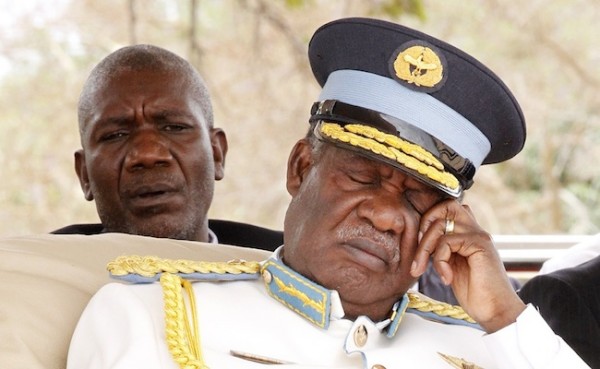
Great Scott, it’s a white face! Guy Scott with President Sata (left)

Zambia recently woke up to a story in state-owned media that a group calling itself Tongas Under Oath had killed two people belonging to President Michael Sata’s ethnic group, and was now in the process of removing settlers from the ethnically Tonga Southern Province. However, the story did not wash with the citizens who simply viewed it as an attempt by the ruling Patriotic Front (PF) government to clamp down on the opposition United Party for National Development (UPND).

Zambia’s third largest opposition party is led by Hakainde Hichilema, a Tonga who has been very critical of the Sata government. And as is often the case in Zambian politics, Hichilema is the latest in a line of fearless opposition leaders whose increasing popular support is likely to result in electoral success.

Prior to the release of the letter allegedly written by the Tongas Under Oath group, Hichilema was arrested and charged after he claimed that the PF government was planning to send youths to Sudan to train as militias. A few days later, the opposition’s headquarters in the capital, Lusaka, were searched by the police looking for seditious materials.

They did not find any but a few days later a far more sinister letter about an assasination plot was sent to President Sata with a date stamp from Mazabuka, a town in Southern Province.

No one was ever arrested in the Tongas Under Oath terror plot however, since President Sata himself admitted that the supposedly incriminating letter was not authored in the Southern Province, but in Lusaka.

Despite Zambia’s obvious ethnic struggles, the white British Zambian Vice-President Guy Scott said recently in an unusually frank interview: “The South Africans are very backward in terms of historical development. I hate South Africans… actually they’ve been the cause of so much trouble in this part of the world.”

The comments ruffled feathers on social media and appeared to threaten relations between the former liberation struggle allies.

During the interview in Lusaka, Scott mocked South Africa’s membership of the Brics developing economies, compared President Jacob Zuma with FW de Klerk and opined: “I have a suspicion the blacks model themselves on the whites now that they’re in power. ‘Don’t you know who we are, man?'”

He also defended the Zimbabwean president, Robert Mugabe, and spoke out against Zuma’s attempts to mediate in that country on behalf of the Southern African Development Community.

Recalling a meeting between Mugabe and the Zambian president, Michael Sata, Scott said, without irony: “Michael the other day was saying, ‘You have to get this thing sorted out among yourself, you don’t want to go to SADC – it’s a new kind of colonialism’.”

The Daily Maverick’s Simon Allison quickly came to Scott’s rescue and tried to defend his strange comments. – ISN/ The Guardian

Third Zambian journalist arrested for ‘obscene materials’

President Sata,  wide awake to 'terror'
President Sata, awake to terror

Zambian police on Monday arrested and charged a journalist with having porn on his computer in another apparent crackdown on a publication critical of the government, his lawyer said.

Clayson Hamasaka is the third reporter taken into custody for ostensible links to the Zambian Watchdog, which publishes articles critical of President Michael Sata’s government.

“They have arrested Hamasaka and charged him with the offence of possession of obscene materials,” his lawyer Keith Mweemba told AFP.

“They claimed they found some obscene material on his personal laptop,” he added.

“All is aimed at linking them up to the Zambian Watchdog,” Mweemba said.

The news site withholds its reporters’ names to protect their identities.

The equipment was confiscated in a raid on Hamasaka’s house on July 10, when he was detained with fellow journalist Thomas Zyambo.

Hamasaka was investigated for sedition but later released.

Zyambo was arrested on charges of rebelling against the state, released on bail, then summoned to the police station again on Monday together with Hamasaka.

A conviction for possessing pornography carries a five-year prison sentence in the conservative southern African country.

Police wanted to match Zyambo’s writing to a handwritten biography of President Sata that was found on him during his arrest and led to the sedition charge.

“I am already appearing in court, so why do they want me to write the same thing? They want to now know my handwriting,” Zyambo told AFP at the police offices.

Hamasaka secured bail in the evening and is due in court on August 12.

Critics have accused the government of targeting journalists with trumped-up charges.

Another journalist, Wilson Pondamali, was arrested for possession of restricted information two weeks ago.

Police have refused to release him despite a court granting bail, and he was hospitalised after collapsing in prison.

He remains handcuffed to his hospital bed while undergoing treatment for pneumonia, according to London-based rights group the Media Legal Defence Initiative (MLDI).

MLDI and the Southern African Litigation Center have referred his case to the United Nations and the African Union.

They petitioned the bodies “to declare that Mr. Pondamali’s continued detention violates his right to freedom of expression and liberty, and secure his immediate release,” according to a statement on the MLDI website.

Zambia’s government has meanwhile blocked local access to the Zambian Watchdog.

It remains difficult to confirm the existence of the Barotse Liberation Army, the supposed paramilitary wing of various groups calling for the secession of Zambia’s Western Province. However, if President Michael Sata’s order to the army to kill the rebel activists is anything to go by, the organization is nevertheless considered a serious threat to Zambia’s national security.

The November 30, 2012 order came after it was reported that the rebels were recruiting former soldiers and policemen to serve in the Barotse Liberation Army. Speaking at a Southern African Development Community (SADC) regional Defence Command Staff College graduation ceremony, Sata said:

In Lukulu (Western Province) people have formed a group called Barotse Liberation Army, they are recruiting people. As of today, I am aware that they have recruited 276 people. They are recruiting former army officers, police officers and former poachers they want to rise against us and we have to be prepared… And you the Army Commander I have told you before that I need troop career planes because how can I transport troops to Lukuku?

In a veiled criticism of the army’s lack of preparedness and alleged toleration for unrest in the region, Sata said:

Our soldiers are graduating but some of them, they have never fired a gun since they joined the army until they retire… because it is different to train and to go and do the action. You need to be well trained in order to defend this country.

On a Facebook group, Zambian Voice, Isikanda Wamulwange expressed concern at President Sata’s call:

If military force will be used on the so called “rebels” in the Western province, might this not lead to civil war, is there no better way to resolve this issue.

Chileshe Tayali responded on the same thread:

Surely the President’s outburst is not the best way to sort out BRE [Barotse Royal Establishment] conflict. He is declaring war in public. I find his directives very careless.

A local online publication, the Barotse Post, reported that the soldiers sent to the area pulled out after failing to find rebels:

The Zambian troops began their disgraced pull out from Lukulu on Sunday, 2nd December 2012, after failing to find the imagined Barotse Liberation Army activists. Four helicopters were seen flying out with some of the special forces who were sent on what has proved to be a wild goose chase. In order to save face, the disappointed and ashamed Minister of Defense has pleaded for information on BLA from the locals. This only shows how panicky the Zambian Government gets to be whenever it comes to the Barotseland issue.

The same publication accused the Zambian government of allegedly fabricating lies against against Barotse people:

Not so long ago the Zambian people were fed on a lie that the Barotseland Freedom Movement in Kaoma was recruiting retired military personnel. This claim was recently followed by another malicious one, in the wake of Mr Clement Sinyinda’s resignation as Ngambela [Prime Minister] of Barotseland, that some Lozi people in Senanga and Sesheke were organizing to dethrone the Litunga [king].

Calls for the secession of Western Province have heated up in the last few years over allegations that successive Zambian governments have ignored the Batrotseland Agreement of 1964 which united the region with the rest of Zambia at independence in 1964.

As an opposition leader, Sata promised restoration of the agreement within 90 days of assuming office but, surprisingly, he has now taken a belligerent stance against it and it seems dialogue is not yet on the horizon. – ISN/Sapa/AFP

Independent media shake establishment

George Little
George Little

In a groveling public display earlier this week, the American Department of Defense announced plans to increase its public affairs efforts due to the devastating effect independent media is having on the Pentagon’s ability to control its news, more specifically, its ability to quash negative news stories before they go viral.

On Thursday, the DoD bemoaned the fact that, because of citizen journalists, social media and other online platforms reporting news in real time, the public is more quickly becoming aware of the constant patterns of contradictions and habitual lying by a government long ago captured by a group of corrupt interests.

“..we cannot hide our bad news stories. Bad news gets out one way or the other and we must come to terms with telling bad stories as well as the good,” the secretary of defense for public affairs, George Little, stated.

When bad things happen, the American people should hear it from the DoD, not as a scoop on an aggregated news site, Little said.

When it came time for a brief question and answer segment, Staff Sgt Hostutler, a junior enlisted member of Air Force production, highlighted that many in her position feel that, as a result of recent spates of negative publicity, the American people are just not buying their stories anymore, making it difficult to execute positive spin effectively.

“My question is: you mentioned that we need to start telling the story about the bad news as well as the good, and the issue I see that we’re facing… It seems like we have this culture in our career to kinda glaze over these issues and put out this positive press, and “No, our jets are fine,” and so with the good and the bad, I don’t think the American people actually trust us to deliver accurate information.

“What’s the plan to change that in the way ahead, because to continue the way we have, to continue to put that positive spin, it feels like we’re losing a lot of our audience because they’re not listening, because we keep saying the same thing over, everything is okay, and it’s not…

“… Is there a plan to kinda change the way that we think? Because as it is, a lot of people, from what I can see, are going through, “We’re putting out mindless propaganda,” is what some of us feel that we’re putting out and what the American people feel that we’re putting out, so how do we change this?”

In essence, this is a signal of defeat to the power that is independent media, and shows just how large of an effect it is having. All independent forms of journalism alive on the web today are frequently been the target of naysayer critics saying these stories actively “hurt” the White House’s message “on a daily basis.”

On one hand, the government has revealed it is not invincible to the onslaught of curious, honest and hard-working journalists eager to obtain and report the truth. It shows just how vulnerable the man behind the curtain really is; in all his power, he’s upset over the few forms of media he can’t control.

With their constant contradictions being exposed, the American government is finding it harder to keep their stories straight and consistently gets caught off-guard. – prisonplanet.com

Saudi prince warns against fracking

saudiprinceA Saudi prince has warned that his oil-reliant nation is under threat because of fracking technology being developed elsewhere around the world.

Billionaire Prince Alwaleed bin Talal said the Gulf Arab kingdom needed to reduce its reliance on crude oil and diversify its revenues.

His warning comes as rising shale energy supplies in the United States cut global demand for Saudi oil.

In an open letter to his country’s oil minister Ali al Naimi and other government heads, published on Sunday via his Twitter account, Prince Alwaleed said demand for oil from Organisation of the Petroleum Exporting Countries (Opec) member states was “in continuous decline”.

He said Saudi Arabia’s heavy dependence on oil was “a truth that has really become a source of worry for many”.

He added that the world’s biggest crude oil exporter should implement “swift measures” to diversify its economy.

Prince Alwaleed, owner of international investment firm Kingdom Holding, is unusually outspoken for a top Saudi businessman.

But his warning reflects growing concern in private among many Saudis about the long-term impact of shale technology.

It is allowing the US and Canada to tap unconventional oil deposits which they could not reach just a few years ago.

Chancellor George Osborne has also announced support for fracking in Britain and in offshore waters, to ease a reliance on foreign oil and gas.

Some analysts think this may push demand for Saudi oil, as well as global oil prices, down sharply over the next decade.

Over the past couple of years the Saudi government has taken some initial steps to develop the economy beyond oil.

It has sought to liberalise the aviation sector and provided finance to small, entrepreneurial firms in the services and technology sectors.

Mr Naimi said publicly in May that he was not concerned about rising US shale oil supplies.

Prince Alwaleed told Mr Naimi in his open letter, which was dated May 13 this year, that he disagreed with him.

The prince said: “Our country is facing a threat with the continuation of its near-complete reliance on oil, especially as 92% of the budget for this year depends on oil.

“It is necessary to diversify sources of revenue, establish a clear vision for that and start implementing it immediately.”

The prince said Saudi Arabia should move ahead with plans for nuclear and solar energy production to cut local consumption of oil.

The shale oil threat means Saudi Arabia will not be able to raise its production capacity to 15 million barrels of oil per day (mbpd), Prince Alwaleed argued.

Current capacity is about 12.5mbpd; a few years ago the country planned to increase capacity to 15mbpd, but then put the plan on hold after the global financial crisis.

While most Saudi officials have in public insisted they are not worried by the shale threat, Opec has recognised that it needs to address the issue.

In a report earlier this month, Opec forecast demand for its oil in 2014 would average 29.61mbpd, down 250,000bpd from 2013. It cited rising non-Opec supply, especially from the US.

The fracking warning comes as Saudi Arabia announced three foreign consortiums – led by US, Spanish and Italian firms – have won a $22.5bn contract to build Riyadh’s 110-mile, six-line metro train network. – Sky News

Australia’s immigration prisons

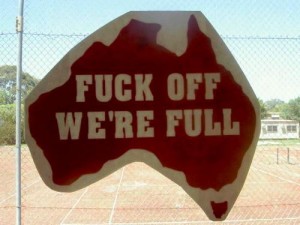
ausfullAustralia’s immigration and detention policies aren’t particularly humane. People caught arriving illegally on small boats are being held in dire conditions in offshore detention centres and some have put themselves on hunger strike or attempted suicide to protest against their treatment.

Many Australians who condemn asylum seekers however, agree with even harsher measures to keep dark-skinned people out. They feel no sympathy for example, for the 98 bodies that were found dumped in the water recently.

For whatever reason, the irony of a country made up almost entirely of boat people being fearful of boat people seems to have escaped those with a more conservative viewpoint, leading them to carry on politicising, and therefore dehumanising, the boat people. According to Greens Senator Sarah Hanson Young, that process has led to the asylum seekers being treated more “like animals” than human beings – the Australian government only concerned with finding the best place to crowbar them out of sight and out of mind.

According to Pamela Curr from Asylum Seeker Refugee Centre Australia, it’s a resentful fear that the asylum seekers will come along and, “take [Australian citizens’] jobs and houses”.

Since 2007, more than 33,000 of those people have arrived illegally in Australia by boat, including Hazaras from Afghanistan, Shias from Pakistan, Iranians, Iraqis, Kurds and now the Rohingyas, the stateless people from Burma. Up to 300 people a week arrive in Jakarta on one-way tickets, most likely with the intention to make the crossing to Australia and escape war, terror, oppression and marginalisation in their homelands.

People pay into the thousands – members on a recent Afghan-run boat recently paid up to $5,500 each – to be smuggled across the sea, perfectly aware that they’re risking death. Dead bodies are found on a weekly basis, reportedly after dying of starvation and dehydration en route to Australia.

The UN has now declared the Indian Ocean as one of the “deadliest stretches of water in the world” for people fleeing their country, and the Australian government reintroduced the policy of offshore detention to deal with asylum seekers last August, but the fear of being killed or persecuted in their homelands is obviously enough to override both of those risks.

Conveniently, the offshore detention centres are located on the Micronesian islands of Nauru and Manus, which allows the Australian government to dump the asylum seekers in the hands of the islands’ governments – institutions that barely have the right facilities to process their own refugee claims. Once they’re out of Australia, they’re essentially forgotten about. Because, by law, Australian immigration can detain someone for as long as they want, plenty of people have described the detention camps as a method of making an example out of anyone who illegally travels to the land down under.

Three hundred and seventy seven people have been sent to Nauru and over 200 to Manus after the decision was passed last year. According to Pamela – who was present at Parliament when the decisions were made – there was no “selection criteria”; these people were simply selected at random and “dumped in a prison-like environment with no judicial review and no access to the court”.

Nobody from the press is allowed to visit the islands, so there’s been little coverage of what life there is like. The reality is that the detention centres are near enough prisons, albeit ones situated on tropical islands. Pamela put me in touch with some detainees on the island via email – an exclusive access point to find out what people there are really going through. Hediye, an 18-year old asylum seeker currently being held on Manus, described to me how each living area is surrounded by fences, so “they can lock you up in your block”. The rooms are apparently tiny with no air conditioning, just a small fan, bunk beds, two windows and a screen door, leaving detainees completely exposed and making them feel like they’re constantly “on show”.

If you’re a single man and not lucky enough to be afforded the luxury of one of these rooms, you’ll be crammed into tents with up to 13 other people. Sounds great, huh? It gets better – because of the island’s location in the tropics, as well as the sweltering sun basically turning the tents into furnaces, the heat is complemented by torrential rainfall that floods the tents. Pamela told me a story of her friend on the island who had witnessed a man recovering from a suicide attempt in a medical tent that was “knee-deep with water”.

Aria, a 29-year-old Iranian refugee being held on Manus, described it as “a nightmare that we think is never going to end”. Aria left Iran because he wanted to play drums in a metal band – a genre that Iran classifies as “evil music” and therefore isn’t particularly supportive of – and thought that he might be able to follow his dreams in Australia. Instead, he fears that he and other detainees are losing their youth in detention by just “waiting, waiting, waiting” on the island.

Understandably, that extended period of waiting can lead to desperation, and suicide attempts are on the rise. On the 27th of February, a man tried to hang himself on Nauru. Pamela recounted to me how he was found just in time to save his life, transferred to a psychiatric hospital in Brisbane and, as soon as he was half-way back on his feet, the government “put him on a plane and sent him back – it’s really just ghastly”.

A drawing by 10-year-old Melika, who is currently being held in the Manus detention centre, sent to the author by Pamela Curr. The “BLL23” is Melika’s ID number. All people arriving by boat are registered with the first three letters of the name of the boat they came in on and a number, another method of dehumanising the detainees.

Conditions on the island also appear to be getting worse. Water shortages have begun, meaning people have had to go days without showers or functioning toilets, dropping the cherry on top of a cake made out of shit. And it’s not just the “seven days without water” that are an issue, Hadiye explained to me, but the fact that “the power goes out for at least eight hours a week”.

Protest letters from detainees on the islands directly address the Australian parliament, questioning whether their detention is fair justice and pleading for them to not “destroy our future or make us crazy” because they would “prefer to die instead of living in Nauru”. Hemat and Khadijeh, a young Kurdish couple who were trying to escape Iran before being caught and held on Manus, confirmed that: “It feels like we’re at the end of the world,” they told me. “We’re thinking this isn’t life; death is better than existing like this.”

A UN report on the conditions of Nauru Island declared how the ongoing delays and confusion in the processing of asylum seekers will have a “significant and detrimental impact” on their “mental and physical health”. A similar UN report on Manus island confirmed the inadequacies in the transfer, treatment and processing of asylum seekers, and declared how it is arbitrary detention, making it “inconsistent with the obligations of Australia and Papa New Guinea under international human rights law”.

New laws are currenly being pushed through Parliament, ones that seek to make sure refugees won’t have any work rights if they do make it to Australia. “It is a tough policy”, Australian Environmental Minster Tony Burke admits, but Australia doesn’t “want to see [the refugees] drowning”.

The new legislation means that any asylum seeker, including those who actually make it to the sandy shores of Oz, will be treated the same as those found offshore. As mentioned, they will have no work rights, limited accommodation and financial support and could be sent to one of the offshore detention centres at any point. Basically, the rights of the refugee will be completely undercut.

The Australian government released figures last year that highlighted how 90 percent of the cases processed found the asylum seekers to be genuine refugees, so why the prison-like detainment and not a better form of assistance? On top of those figures, the people keep coming in by sea, despite the fact the prospects for them in Australia are getting increasingly worse – so, the detention deterrent clearly isn’t working. Unfortunately, the priority of sealing the vote seems to to have put humanity and morality at the bottom of the pile for Australia’s competing politicians.

As Zohreh Yousefian, an Iranian refugee being held on Manus, told me, “My brother and I risked our lives in the hope of having freedom, safety, tranquillity and living in peace. Just remember, I’m a human like you, and I have my own rights in such a short life to live free.” Unfortunately for Zohreh and the hundreds of other refugees trying to make a better life for themselves in Australia, the government there are doing just about everything they can to make sure that will never be possible. – vice.com

Not white enough for Oz

Australian Prime Minister Kevin Rudd on Sunday said he made “absolutely no apology” for his hardline new policy on asylum-seekers under which they are sent to Papua New Guinea.

Rudd quickly moved to announce a radically reshaped immigration plan under which boatpeople could be resettled in PNG, sent home, or to a third country but not Australia. His new stance reinforces the notion that Australia wants to remain a white country.

Not white enough for Oz

Under the directive, those who pay people-smugglers to arrive on unauthorised boats will be sent to the poor Pacific nation for processing and resettled there even if found to be genuine refugees.

“On the question of asylum-seekers… we’ve had to adjust our policy over time and I make absolutely no apology whatsoever for our current policy settings because the world around us has changed,” Rudd told Channel Ten.

Rudd, who was last month reinstalled as prime minister by his Labour colleagues to help turn around dire polls in an election year, had previously softened some of the former conservative government’s policies.

The plan has worried the United Nations refugee agency which said on Friday that conditions at Papua New Guinea’s Manus Island facility currently failed to adequately protect refugees.

“UNHCR is troubled by the current absence of adequate protection standards and safeguards for asylum-seekers and refugees in Papua New Guinea,” it said in its first assessment of the policy.

Australia resumed sending asylum-seekers to Manus Island and the Pacific state of Nauru in 2012 in a bid to deter record numbers of migrants arriving by boat, hundreds of whom drowned en route.

Rudd has said the new PNG policy will take some time to deter asylum-seekers, but since he announced the change just over a week ago more than 1 300 have arrived on boats.

‘You will not be settled in Australia’

“It is the implementation of that policy direction over time, resolutely, which will yield results,” he told Network Ten’s Bolt Report.

“In the interim, people smugglers will test your resolve.”

Asylum-seekers are a sensitive issue in Australia, and one set to feature prominently in the election due this year.

Rudd said while people-smugglers, who make thousands of dollars bringing asylum-seekers to Australia, would test the government’s resolve “we are not for turning”.

“Our policy is very clear… you will not be settled in Australia,” Rudd said. AFP

UN celebrates World Toilet Day and multilingualism

multilingualismThe United Nations General Assembly adopted a resolution to mark “World Toilet Day.” The day will be celebrated November 19.

“The amusement and laughter likely to follow the designation of 19 November as ‘World Toilet Day’ would all be worthwhile if people’s attention was drawn to the fact that 2.5 billion people lacked proper sanitation and 1.1 billion were forced to defecate in the open, the General Assembly heard today,” a U.N. press release reads.

“Ending open defecation will lead to a 35 per cent reduction in diarrhoea, which results in over 750,000 deaths of children under five years of age every year,” Singapore’s representative said as he tabled a draft resolution on Sanitation for All, one of four adopted by consensus today. Apart from establishing World Toilet Day, the text also urged Member States and the United Nations system to encourage behavioural change, to introduce policies that would increase sanitation among the poor, and to accelerate progress towards attaining Millennium Development Goal 7.

Tajikistan’s representative, speaking also on behalf of Finland, Thailand and Hungary — the Steering Committee of the Group of Friends of Water — underlined the need for accelerated, bolder action on sanitation. He also called for expansion of the water agenda beyond securing water, hygiene and sanitation for all, to address other matters, like water-resource management, water quality and wastewater.

The Assembly went on to adopt a draft resolution on multilingualism, which emphasized the paramount importance of equality among the six official languages of the United Nations. It underlined the need for full implementation of the resolutions establishing arrangements for the official and working languages of the United Nations, as well as the Secretariat’s responsibility for the equitable integration of multilingualism into is activities.

By other terms, the Assembly emphasized the importance of making use of all the official languages and of ensuring their full and equitable treatment in all activities of the Department of Public Information, with a view to eliminating the disparity between the use of English and that of the other five. It reaffirmed the need for full parity among the six official languages, and for linguistic diversity on all United Nations-related materials on the web, in documentation and conference services, in human resources management, as well as in United Nations field offices and peacekeeping operations.

Taking up a draft titled “Causes of conflict and the promotion of durable peace and sustainable development in Africa” (document A/67/L.59/Rev.1), the Assembly called upon the United Nations system and Member States to support peace-consolidation mechanisms and processes, to assist in post-conflict countries, to support efforts by African countries to promote political, social and economic inclusion, to support the African Union and to deliver expeditiously on commitments to ensure the full and speedy implementation of the political declaration on Africa’s development needs, as well as implementation of the New Partnership for Africa’s Development (NEPAD).

Nawaf Salam ( Lebanon), Acting President of the Assembly, then announced that consideration of the draft resolution “New Partnership for Africa’s Development: progress in implementation and international support” (document A/67/L.57/Rev.1) would be postponed for one week.

Also today, the Assembly elected Timor-Leste, by acclamation, as a Vice-President representing the Group of Asian States for the Assembly’s sixty-eighth session, following the resignation of the representative of Uzbekistan.

The General Assembly will reconvene at a time and date to be announced. – The Weekly Standard

No longer a crime to mock French president

flanbyBeing rude to the President of France is no longer an automatic criminal offence, France’s parliament agreed today.

In the interests of free speech, MPs revoked legislation dating back to 1881 when anything judged to have ‘offended the head of state’ risked an automatic fine.

The change followed the European Court of Human Rights (ECHR) ruling in March that France violated a demonstrator’s right to freedom of expression when he referred to Nicolas Sarkozy as a ‘jerk’.

Mr Sarkozy, the notoriously aggressive 5ft 5ins conservative, became the butt of numerous jokes during his five years in office, which ended last year.

But when a demonstrator held up a placard reading ‘Get Lost Jerk’ at a Sarkozy meeting in western France in 2008, he received a criminal conviction and a fine of around 25 pounds.

This was despite exactly the same expression being used by Sarkozy himself months earlier while he was attending an agricultural show in Paris.

Last year ECHR deemed the punishment handed down to Sarkozy’s tormentor as being disproportionate and a violation of freedom of expression, as the act was a ‘satirical remark.’

The ECHR acknowledged that the insult constituted ‘criticism of a political nature’ for which ‘freedom of expression was of the highest importance.’

Now anyone who chooses to insult a serving French president will have to be pursued through the libel courts.

Francois Hollande, the current Socialist French president, is regularly mocked, often by people using his nickname of ‘Flanby’, after a wobbly caramel pudding.

Earlier this month it emerged that Sarkozy views his successor as a ‘ridiculous little fat man who dyes his hair’.

When Sarkozy was head of state, his third wife Carla Bruni put him on a fitness programme aimed at making him leaner, fitter and younger looking.

Before that the diminutive Sarkozy – nicknamed ‘Bling-Bling’ because of his love of tacky status symbols – was himself mocked for being a chubby little man.

He continued to wear platform heels, and to surround himself with smaller men in an attempt to look taller, but lost a great deal of weight through constant work-outs and giving up chocolate.

Hollande, in contrast, has failed to lose the tubby image and shake off the Flanby nick-name.

Opinion polls routinely reveal that Hollande is the most unpopular president in the history of the Fifth Republic, with Sarkozy a close second. – Daily Mail

Biggest oil discovery in 50 years

cooberpedyIn a virtually uninhabitable section of South Australia, a discovery has been made which could rock the world.  Some are calling it the biggest discovery of oil in 50 years.  Earlier this year, a company called Linc Energy announced that tests had revealed that there was a minimum of 3.5 billion barrels of oil equivalent sitting under more than 65,000 square kilometres of land that it owns in the Arckaringa Basin.  But that is the minimum number.  It has been projected that there could ultimately be up to 233 billion barrels of recoverable oil in the area.  If that turns out to be accurate, the oil sitting under that land is worth approximately 20 trillion dollars, and it would be roughly equivalent to the total amount of oil sitting under the sands of Saudi Arabia.  In essence, it would be a massive game changer.

If the 233 billion barrel figure is accurate (and some have even suggested that the true number could actually be 400 billion barrels), that would make it nearly 10 times larger than the Bakken formation, 17 times larger than the Marcellus discovery and 80 times larger than the Eagle Ford deposit down in Texas.

It would also mean that Australia now has more “black gold” than the nations of Iran, Iraq, Canada and Venezuela.

The closest town to this oil discovery, Coober Pedy, is in the process of being totally transformed.  It normally only has about 1,700 inhabitants, but news of this discovery has drawn in 20,000 additional people already and real estate prices in the town are absolutely skyrocketing.

So does all of this mean that gas prices will go down soon?

Well, unfortunately that is not likely to be the case.

First of all, the oil in this formation in Australia is going to be quite expensive to extract.  It has been estimated that it is going to cost up to 300 million dollars just to get this site ready for production.

In addition, many of our politicians are absolutely determined to greatly punish the use of oil because they believe that it is the primary cause of global warming.  So they continue to raise taxes on gasoline consumption.

Hopefully the price of gasoline will come down a bit over the next few years, but even if it does I would not expect it to come down too much.

But what we can be sure of is that the world is not going to run out of oil any time soon.  Those that have been predicting that we are are on the verge of an “energy doomsday” can take a rest for a while.

It is time that the American people were told the truth about our energy situation, and the truth is that we have plenty of energy resources.

#1 Back in 1995, the U.S. Geological Survey told the American people that the Bakken Shale formation in western North Dakota and eastern Montana only held 151 million barrels of oil.  Today, government officials are admitting that it holds 7.4 billion barrels of recoverable oil, and some analysts believe that the actual number could be closer to 24 billion barrels of oil.

#2 It is estimated that there are 19 billion barrels of recoverable oil in the tar sands of Utah.

#3 It is estimated that there are 86 billion barrels of recoverable oil in the Outer Continental Shelf.

#4 It is believed that there are 800 billion barrels of recoverable oil in the Green River formation in Wyoming.

#5 Overall, the United States is sitting on approximately 1.442 trillion barrels of recoverable oil.

#6 According to the Institute of Energy Research, the United States has an 88 year supply of natural gas.

#7 According to the Institute of Energy Research, the United States has a 169 year supply of oil.

#8 According to the Institute of Energy Research, the United States has a 465 year supply of coal.

#9 Goldman Sachs is predicting that the United States will be the number one oil producing country in the world by the year 2017.

So the bottom line is that we have plenty of energy resources.  We do not need to be importing oil from OPEC or anyone else.

But just because we are not going to run out of oil, natural gas or coal any time soon does not mean that we should not be developing alternative energy resources.  We should definitely be seeking ways to produce energy more cheaply, more cleanly and more efficiently.

If America does not end up leading the world in developing new forms of energy, we should be ashamed of ourselves.  And right now, the Chinese appear to be way ahead of us as far as thorium energy is concerned, and Italian scientists appear to be ahead of our own scientists in developing “cold fusion” technology.

So yes, let’s be glad that we are not going to be facing a crippling energy crisis in this generation, but let’s also not be complacent.  There are lots of new technologies out there just waiting to be developed, and the rewards are going to go to those that are able to develop them first. – Economic Collapse


Syria’s endgame: An Alawite State

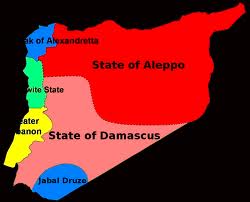
Alawite State?
Alawite State?

As Syria’s Civil War goes from months to years, the sectarian nature of the conflict becomes ever more clear. With international arms dealers benefitting greatly from the conflict, it might last still longer.

The Islamist factions that dominate the rebellion depend on the support (or at least acquiescence) of Syria’s Sunni majority, whereas the Assad government relies on the Shi’ite (and mostly Alawite) minority.

As the war drags on and stalemates, however, it is setting the stage for similar sectarian bloodletting as was seen in Iraq. The rebels are clearing Alawite villages in the north, while the Assad government is setting the stage for similar “cleansing” to ensure an Alawite majority around the southwest.

It’s not just idle speculation about the eventual division of Syria. President Assad has reportedly even approached Israeli officials in the past year to ask them not to intervene if the government attempts to form an “Alawite state” by relocating the displaced villagers into the Golan Heights.

From the southern part of the Homs Province down into Golan, a contiguous Alawite state with a border to Lebanon could be a fall-back point, giving Syria’s Alawite majority ties to the Shi’ites in neighboring Lebanon. While the war is a long way from over, a division of Syria into Sunni and Alawite states could end up being the endgame. – antiwar.com

US drones used beyond declared combat zones, target Africa

droneafricaUS military drone surveillance is expanding beyond declared combat zones.

The steel-gray U.S. Air Force Predator drone plunged from the sky, shattering on mountainous terrain near the Iraq-Turkey border. For Kurdish guerrillas hiding nearby, it was an unexpected gift from the propaganda gods.

Fighters from the Kurdistan Workers’ Party, or PKK, filmed the charred wreckage on Sept. 18 and posted a video on YouTube. A narrator bragged unconvincingly that the group had shot down the drone. But for anyone who might doubt that the flying robot was really American, the video zoomed in on mangled parts stamped in English and bearing the label of the manufacturer, San Diego-based General Atomics.

For a brief moment, the crash drew back the curtain on Operation Nomad Shadow, a secretive U.S. military surveillance program. Since November 2011, the U.S. Air Force has been flying unarmed drones from Incirlik Air Base in Turkey in an attempt to suppress a long-simmering regional conflict. The camera-equipped Predators hover above the rugged border with Iraq and beam high-resolution imagery to the Turkish armed forces, helping them pursue PKK rebels as they slip back and forth across the mountains.

As the number of drone attacks in Afghanistan, Pakistan and Yemen decrease, the U.S. military is shifting its huge fleet of unmanned aircraft to other hot spots around the world. This next phase of drone warfare is focused more on spying than killing and will extend the Pentagon’s robust surveillance networks far beyond traditional, declared combat zones.

Over the past decade, the Pentagon has amassed more than 400 Predators, Reapers, Hunters, Gray Eagles and other high-altitude drones that have revolutionized counterterrorism operations. Some of the unmanned aircraft will return home with U.S. troops when they leave Afghanistan. But many of the drones will redeploy to fresh frontiers, where they will spy on other targets that worry U.S. officials.

In Africa, the U.S. Air Force began flying unarmed drones over the Sahara five months ago and the Pentagon has also set up drone bases in Ethiopia, Djibouti and the Seychelles. Even so, the commander of U.S. forces in Africa told Congress in February that he needed a 15-fold increase in surveillance, reconnaissance and intelligence-gathering on the continent. – Washington Post

Malawians offered cash to arrest visiting Blair

Blair imparting wisdom

Until recently, Tony Blair had never visited Malawi. Last summer there was a lot of international press coverage on the discovery of oil under Lake Malawi. Since then he’s developed an interest in the country’s “governance” and has visited twice in nine months.

He arrives in Malawi today, having successfully shoehorned a couple of staffers from his “Africa Governance Initiative” into high-level advisery roles with Joyce Banda’s government.

It’s anyone’s guess why Blair still believes he and his cronies are worth listening to. Presumably for the same reason he saw fit to rack up bills of £1m a year at the American Colony Hotel in Jerusalem while working as a “peace envoy”. (He’s obviously doing a terrific job and no doubt the Middle East will be at peace any time now). Egyptians know him as an astute analyst of international affairs — remember how he pointed out that Mubarak was “an immensely courageous and a force for good” in, ahem, February 2011?

One thing Blair is very good at is getting large amounts of cash out of governments (just ask Kazakhstan) by riding the global gravy train for all it’s worth. He’s also good at setting up mystifying financial structures so nobody knows where he’s channeling his money.

It will certainly be a boost for him to be photographed with Malawi’s president, Joyce Banda, who despite facing a vigorous opposition at home nonetheless has far greater credibility on the international scene than he does (just last year Desmond Tutu called for Blair to be tried for his crimes at the Hague).

Malawians should protest against Blair’s visit and show Banda that she shouldn’t welcome such a person to Malawi, still less take any advice from him. The man who led the disastrous New Labour project in the UK, as well as waging two catastrophic wars, can have nothing useful to tell Banda. Malawian readers will understand what I mean when I say that Tony Blair is a stupid man. He will have plenty to say about things like “strengthening capacity” but it seems that the only thing Blair has shown a consistent commitment to is exploiting his former office in order to accrue vast personal wealth.

It should be noted that anybody who attempts to arrest Tony Blair during his Malawian safari can receive approximately 1.1 million Kwacha (£2,150), thanks to the Arrest Blair campaign established by British journalist George Monbiot. Here’s a helpful guide to making a citizen’s arrest, and the rules about how to make sure you get the cash.

Malawians like to reflect on their history by observing that they are a peace-loving people. As Blair arrives in the country, they should tell him only one thing: Choka! – The Guardian

Crime pays: International crime ranks as top economic player

geldwasPolice find it hard to compete with international crime syndicates who rake in $870 billion a year via activities from drug trading and human trafficking to identity theft, a top UN official said Wednesday.

“This is an enormous amount of money,” Yury Fedotov, head of the United Nations Office on Drugs and Crime, told AFP in an interview.

If crime syndicates were classed as an industry, their collective clout would rank them among the world’s top economic players.

Crisis-era cuts have widened a longstanding financial gulf between criminal gangs and those who fight them, Fedotov said.

“Gangs are better funded than any law enforcement institution. That is clear, and especially if we compare the huge amount of illicit revenues with limited budgets of many law enforcement institutions,” he said.

But funding is just part of the problem, Fedotov explained, as law enforcement agencies struggle to keep up with shape-shifting networks that move faster than the traditionalist mafias of the past.

“Contemporary organised crime is also sophisticated and highly adaptive,” Fedotov said.

“We should be more flexible, and not only follow the flow, but also prevent and anticipate developments in terms of organised crime,” he added.

Cybercrime is a major growth area, he explained, given that around one third of the world’s population now has active access to the Internet.

The annual proceeds of online identity theft alone are estimated at $1.0 billion, he noted, though that is still outstripped by $20 billion generated by trafficking in endangered species.

In the narcotics trade, meanwhile, concerns focus on the rising number of designer drugs.

Fedotov also flagged worries about rising drug trafficking via the troubled Sahel and West Africa — notably through lawless Guinea Bissau, which he dubbed the “weakest link”.

The trade through the region has been stoked by notoriously violent central American cocaine-running gangs whose north American markets have shrunk. – The Citizen