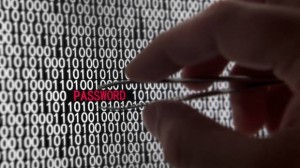
Germany prepares charges against US and British intelligence

spyinggermanyGermany is preparing to bring charges against US and British intelligence amid fresh allegations that the services spied far more extensively than thought on German phone and internet traffic and bugged European Union offices in America.

A report alleging a major and continuous US National Security Agency spying operation in Germany was published by Der Spiegel magazine yesterday, prompting outrage from Berlin MPs still reeling from reports about extensive British surveillance in their country.

The German Justice Minister, Sabine Leutheusser-Schnarrenburger, demanded an immediate explanation and said the behaviour of the intelligence services was “reminiscent of the actions against enemies during the Cold War”. “It defies belief that our friends in the US see the Europeans as their enemies,” she said.

The leak, which Der Spiegel said came from fugitive ex-CIA analyst Edward Snowden, claimed that the NSA tapped into half a billion German phone calls, emails and SMS messages each month. Reports last week revealed extensive tapping of German phone and internet traffic by British intelligence under its so-called Tempora programme. The information was said to be shared with the NSA.

A spokesman for the Federal Prosecutor said the office was preparing to bring charges against “persons unknown” in relation to the reports.

There was also widespread and mounting anger at official European Union level yesterday following disclosures that the NSA had spied on EU computer networks at its offices in New York and Washington and that it had also bugged the premises. Martin Schulz, head of the European Parliament, demanded “full clarification” from the US and said that if the disclosures proved true they would have a severe impact on US-EU ties.

It also emerged that the UK Government had invited German MPs and justice officials to attend a video conference at British Embassy in Berlin today during which the issue of spying would be addressed.

Der Spiegel said the NSA’s German phone and internet surveillance operation was the biggest in the EU. On 7 January 2013 it tapped into some 60 million German phone calls in a single day.

The magazine said that Canada, Australia, Britain and New Zealand were exempt from NSA surveillance but Germany was regarded as a country open for “spy attacks”. – Belfast Telegraph

SA knew UK was spying

spyThe South African government knew that British spooks were spying on it at the 2009 London G20 summit, say international relations sources.

As soon as it became aware of the surveillance by the United Kingdom’s Government Communications Headquarters, it took measures to strengthen security for its delegations visiting ­foreign countries.

The UK government acknowledged this week to its South African counterpart that the action was wrong, international relations insiders told the Mail & Guardian.

Though the news of the UK spying on South Africa was made public by the Guardian newspaper only last weekend, a source in the department of international relations and co-operation (Dirco) told the M&G that South Africa knew about the spooks in 2009, but opted to deal with the matter privately because of its embarrassing nature.

“What was carried in that Guardian article is something we already knew,” said the international relations source.

Among other things, the increased security measures demand that no South African government minister is allowed to use any host country’s communication tools when visiting other countries.

Dirco this week demanded that the UK government take action against those involved in the espionage at two G20 meetings in April and September 2009. South Africa, however, said this incident would not hurt “solid, strong and cordial” ties with the UK.

Dirco spokesperson Clayson Monyela told the M&G that South Africa would use relevant diplomatic channels to communicate issues. “There’s a planned SA/UK bilateral [meeting] in the coming weeks and South Africa will utilise that opportunity to raise anything that we believe affects our relationship.”

Information about the UK’s spying on South Africa, Turkey and Russia came to the fore this week after former US spy Edward Snowden leaked documents to the Guardian.

The Dirco insider said while governments know that they spy on each other, the UK is in the wrong because “they deliberately set up countries that they spied on. That’s not a conventional way of doing things. That’s why all the countries affected reacted with anger. As much as we know we spy on each other, don’t get caught.”  – M&G

Thank you for your service, Mr. Snowden

Ilana Mercer
Ilana Mercer

A heroic American whistleblower chooses, oh-so wisely, to expose Uncle Sam’s usurpations to the veteran reporters of the British Guardian and not to the partisan hacks of the American press. This fact tells you all you need to know about US presstitutes.

Confirmation of the degree to which American media has been co-opted by power came on June 10, again, via a British newspaper. The Mail Online divulged that Edward Snowden had “first approached the Washington Post with his leaks but the newspaper refused to comply with his publishing demands.” You see, the Washington Post had to hotfoot it back to Big Brother Obama before it would do its journalistic due diligence. “The Post broke the story on PRISM two weeks later, on Thursday, after consulting with government officials,” confirmed the Mail Online.

Even after being scooped by the Guardian, the Obama embeds at the Washington Post saw fit to inform their readers about PRISM on a purely need-to-know basis, “reprinting only four of the 41 PRISM PowerPoint slides,” and generally misrepresenting the nature of the program known as PRISM. The manufactured-in-America version of PRISM thus contradicts the “internal NSA documents” leaked to the Guardian.

According to the guardian of American freedoms at the Guardian, reporter Glenn Greenwald, the 41-slide PowerPoint presentation he acquired from Snowden has been authenticated as a document “used to train intelligence operatives on the capabilities of the program.” The presentation, pictorials with captions, handed out by the National Security Agency, boasts of having “direct access to the systems of Google, Facebook, Apple, Yahoo, PalTalk, YouTube in 2010; Skype and AOL, and other servers.”

Contrary to what you’re being told, “the world’s largest surveillance organization” can and does “obtain targeted communications without having to request them from the service providers and without having to obtain individual court orders.” And it is contrary to the Bill of Rights, the Fourth Amendment to the Constitution, in particular. It specifies that “warrants shall issue” only “upon probable cause, supported by oath or affirmation, and particularly describing the place to be searched, and the persons or things to be seized.”

Tellingly, the tools of Big Media and big government are not apprising you of these facts. Like a tortoise in its shell they’ve retreated from the watersheds that are the AP, the IRS and the NSA scandals, informing you only of what New York and Northeast elites think is important: “Most of you still like Obama.”

In light of “the disclosure that the federal authorities routinely collect data on phone calls Americans make, regardless of whether they have any bearing on a counterterrorism investigation,” the Gray Lady endeavored, fleetingly, to shake off a flea or two, and adopt a slightly less reverential tone toward the godhead Obama. The New York Times quickly lay down with dogs again; the paper rushed to restore Obama’s bona fides the following day.

As to other “nimble” minds in media: Andrea Tarantula, one of the interchangeable females on a Fox News idiot’s extravaganza called “The Five,” said that, “If they are competent with my information; they can have it. If not, let me have my freedoms back.” To Andrea (who is, admittedly, not as invincibly stupid as the statist Dana Perino), the inviolable “right of the people to be secure in their persons, houses, papers, and effects, against unreasonable searches and seizures” is subject to the efficiency of a naturally illicit search.

Not for Greg Gutfeld are arguments from principle. Sitting in for Bill O’Reilly, Gutfeld declared that “this” was not about surveillance but about a progressive government that could not be trusted. The majority of Americans are equally adrift, oblivious to the individual liberties American Constitution makers bequeathed them. The individuals questioned by the polling professionals at the Pew Research Center were inclined to approve of the phone-call tapping of millions, if conducted by the party for which they voted.

Lawrence O’Donnell and his entourage at MSNBC—Alex Wagner and Chris Hayes, the most enthusiastic Obama bobbleheads on TV—acted all surprised about rudderless America, never implicating their daily, partisan promotionals in the process. The hosts harped on the fact that no harm had come from the NSA PRISM program. And, after all, was Obama not obligated to continue the incursions into liberty begun by Bush? C’est la vie. Wagner did display a modicum of remorse for her cover-up. She admitted that Obama had gone beyond the call of duty in expanding counterterrorism and state surveillance.

Neoconservatives such as Bill Kristol of the Weekly Standard and the editorial board of the Wall Street Journal; retired United States Army Lt. Col. Ralph Peters, and radio talker Hugh Hewitt—all pronounced the NSA data sweep a non-scandal. Another neocon, Charles Krauthammer, saw Obama’s infractions as a vindication of Bush’s. The columnist invited Democrats now excusing Obama to pardon Bush and … party on.

Snowden came forth, in his words, “to reveal criminality.” But Fox News’ Megyn Kelly chose to mine crime from the ore of virtue. Kelly summoned a two-bit profiler, allegedly from the FBI’s Behavioral Analysis Unit—who sounded like she’d been plucked from the set of Criminal Minds—to expose “this guy.” Not to be outperformed by Kelly, the profiler unloaded terms like “loser” and “drop-out” on a man who has held many responsible positions within the intelligence community in his young life.

Yet another Fox News personality, Neil Cavuto, went on to compare Snowden to celebrity seducer Roman Polanski, who, in 1978, sought asylum in France after being convicted of sleeping with an American minor. Chimed Cavuto, “We don’t know why [Snowden] did what he did.”

Oh yes we do. Contra Cavuto, Snowden forsook creature comforts and worldly possessions to speak truth to power—and not to any power. The 29-year-old National Security Agency contractor has gone up “against the world’s most powerful intelligence agencies,” as he stated soberly. Snowden understands his chances of prevailing are not good. “[T]ey’re such powerful adversaries that no one can meaningfully oppose them. If they want to get you, they will get you in time.”

In Snowden’s poignant words, “You can’t wait around for someone else to act. I had been looking for leaders, but I realized that leadership is about being the first to act.” “I’m neither traitor nor hero. I’m an American,” he summed-up so simply.

Yes, we need fewer personalities like Cavuto and more men of character like Snowden.

Those who’re not suspended in the moral abyss with mainstream media already know that Edward Snowden is the best of America. Let us prove ourselves worthy of his sacrifice. Come every Memorial Day—more aptly called “Dying For Nothing Day”—we direct a commonplace saying at members of a military that has not defended authentic American liberties for decades. It is, however, to a young man such as this that we should say:”Thank you for your service, Mr. Snowden.”

British spying claims outrage Russia, Turkey and South Africa

Russian Prime Minister Dmitry Medvedev, also spied upon

Russia, Turkey and South Africa expressed outrage on Monday over revelations that Britain and the United States spied on foreign delegates at G20 meetings in London in 2009.

The Turkish government summoned Britain’s charge d’affaires to explain a newspaper report that London put Finance Minister Mehmet Simsek under surveillance during the talks.

Moscow meanwhile expressed concern that US spies had intercepted communications made by then president Dmitry Medvedev while he was in Britain, and some Russian lawmakers warned it could harm US-Russian ties.

British Prime Minister David Cameron said he would not comment on intelligence matters, but the revelations were likely to be embarrassing as he hosts G8 leaders at a summit in Northern Ireland.

The claims are based on documents leaked by former US spy Edward Snowden, who has already invoked the ire of Washington by lifting the lid last week on a massive US Internet surveillance system.

According to The Guardian newspaper, Britain’s GCHQ electronic eavesdropping agency used “ground-breaking intelligence capabilities” to monitor communications at two G20 meetings in April and September 2009.

Delegates were allegedly tricked into using specially prepared Internet cafes which allowed British spies to intercept and monitor email messages and phone calls through BlackBerry devices.

GCHQ was also able to track when delegates were contacting each other and the agency targeted certain officials, including the finance minister of NATO ally Turkey.

Ankara responded with outrage, contacting the British ambassador and summoning the deputy head of mission to demand an explanation, a foreign ministry diplomat said.

Earlier, the ministry said that if the report was true, “such an action by an ally country is unacceptable”.

“This will constitute a scandal in terms of relations between the two countries if any truth is found in the allegations,” it said.

The British Foreign Office confirmed that its deputy head of mission had met Turkey’s director general for intelligence and security at the foreign ministry in Ankara, but gave no details.

Officials travelling to Northern Ireland with Russian President Vladimir Putin meanwhile expressed concern over claims that US agents spied on his predecessor while he was in London.

“As a country which takes steps to protect its own information, we are worried,” said Russia’s G8 negotiator Alexei Kvasov.

The reaction in Moscow was less diplomatic.

“It’s a scandal!” fumed Alexei Pushkov, the head of the lower house of parliament’s foreign affairs committee, on Twitter.

Senator Igor Morozov, a member of the international affairs committee of the upper house of parliament, said it risked hurting ties with Washington.

“In this situation how can we trust the current announcements of US President Barack Obama, who is talking about a new ‘reset’ (of relations)?” he told the RIA Novosti news agency.

Cameron earlier told Sky News television: “We never comment on security or intelligence issues, and I am not about to start now.”

The Guardian said that South African computers were also singled out for special attention, prompting Pretoria to warn against the abuse of privacy and “basic human rights”.

“We have solid, strong and cordial relations with the United Kingdom and would call on their government to investigate this matter fully with a view to take strong and visible action against any perpetrators,” the foreign ministry said.

The leaked documents suggest that orders to gather intelligence on G20 delegates came from a senior level within the government of Britain’s then prime minister Gordon Brown.

A briefing paper prepared for GCHQ director Iain Lobban, dated January 9, 2009, said the agency’s remit was “to ensure that intelligence relevant to Her Majesty’s government’s desired outcomes for its presidency of the G20 reaches customers at the right time and in a form which allows them to make full use of it”.

Snowden, currently in hiding in Hong Kong, has vowed to fight any attempt by the United States to extradite him, as it pursues a criminal investigation into the Internet surveillance leaks.

In a live question-and-answer session on The Guardian’s website on Monday, he said there were more revelations to come about the US National Security Agency’s access to Internet data. – AFP

Turkey to probe ‘scandalous’ British spying

Turkish Finance Minister Mehmet Simsek

Turkey on Monday said it had contacted British authorities to inquire about “unacceptable” newspaper allegations that Britain spied on Finance Minister Mehmet Simsek’s emails and phone calls when he was in London in 2009.

Documents leaked by US former spy Edward Snowden appear to show that Britain spied on foreign delegates including fellow NATO member Turkey at G20 meetings at the time, British newspaper The Guardian reported Monday.

“It is clear that if the report is true, such an action by an ally country is unacceptable,” the foreign ministry said in a statement, stressing that it was waiting for “an official and satisfying statement from British authorities” on the matter.

“This will constitute a scandal in terms of relations between the two countries if any truth is found in the allegations,” it added.

As with the other G20 participants who were reportedly spied on, including South Africa, there is no suggestion that Simsek and his party were involved in any kind of criminal offence, according to the newspaper.

The newspaper said it had seen a document showing that Britain’s Government Communications Headquarters (GCHQ), its electronic eavesdropping agency, put Simsek under surveillance while in London, and possibly up to 15 members of his delegation as well.

The document stated that the objective was “to establish Turkey’s position on agreements from the April London summit” and their “willingness (or not) to co-operate with the rest of the G20 nations”.

According to the leaked files seen by the Guardian, British spies tricked delegates into using specially prepared Internet cafes. Those cafes allowed the spies to intercept communications and monitor email messages and phone calls through delegates’ BlackBerry devices. – AFP

Dept. of International Relations wants British spying on South Africa probed

international_relationsReports that Britain spied on G20 delegates, including South Africa, during meetings in London in 2009, should be investigated, the international relations and co-operation department said on Monday.

Spokesman Clayson Monyela said the government had noted with concern the reports published by the UK’s Guardian newspaper.

“We do not yet have the full benefit of details reported on, but in principle we would condemn the abuse of privacy and basic human rights particularly if it emanates from those who claim to be democrats,” he said.

“We have solid, strong and cordial relations with the United Kingdom and would call on their government to investigate this matter fully with a view to take strong and visible action against any perpetrators.”

The newspaper reported that Britain had used “ground-breaking intelligence capabilities” to monitor communications between officials at two meetings in April and September of 2009.

According to the report, British agents repeatedly hacked into foreign diplomats’ phones and e-mails.

Speaking at the G8 summit on Monday, British Prime Minister David Cameron declined to address the issue, the French news agency Agence France-Presse reported.

“We never comment on security or intelligence issues and I am not about to start now,” he said.

“I don’t make comments on security or intelligence issues. That would be breaking something that no government has previously done.” – Sapa

Britain spied on G20 delegates, including South Africans: report

Edward Snowden
Edward Snowden

Documents leaked by US former spy Edward Snowden appeared to show Britain spied on G20 delegates during meetings in London back in 2009, Britain’s Guardian newspaper reported Monday.

Among the officials targetted were delegates from NATO ally Turkey and from South Africa.

Britain used “ground-breaking intelligence capabilities” to monitor communications between officials at the two meetings in April and September of 2009, the paper reported.

The revelations are likely to be an embarrassment to Britain, which is hosting the two-day G8 summit in Northern Ireland from Monday.

The paper cited documents it had seen concerning the work of Britain’s Government Communications Headquarters (GCHQ), which handles signals intelligence.

According to the files, British spies tricked delegates into using specially prepared Internet cafes. Those cafes allowed the spies to intercept communications and monitor email messages and phone calls through delegates’ BlackBerry devices.

GCHQ was also able to track when delegates were contacting each other and the agency targeted certain officials, including the Turkish finance minister, according documents shown to the newspaper.

They also singled out South African computers for special attention, according to one document.

The paper also said that GCHQ received reports from a US National Security Agency attempt to listen in as then Russian president, Dmitry Medvedev, made a call via satellite to Moscow.

The documents suggest that orders to gather intelligence on delegates came from a senior level within the government of then prime minister, Labour’s Gordon Brown, said The Guardian.

Two documents explicitly mention information being passed on to ministers.

Snowden is hiding in Hong Kong and the United States has launched a criminal investigation after the former CIA technical assistant blew the lid on the NSA’s vast electronic surveillance operation.

Leaders from the G8 nations meet in Lough Erne, Northern Ireland, on Monday for two days of talks on issues including the Syrian crisis, tax collection and free trade. – AFP

Media on Mandela watch warned over unlicensed equipment

International journalists stationed outside the Pretoria hospital where former president Nelson Mandela is believed to be receiving treatment were warned about their equipment on Wednesday.


“… Some broadcasters had some equipment which is not licensed,” said Independent Communications Authority of SA (Icasa) spokesman Jubie Matlou.


Broadcasting equipment brought into the country had to be approved to prevent interference on frequencies used by local, licensed services, he said.


“Apparently what’s happened here, because of former president Mandela being ill, we have a lot of broadcasters coming into the country and bringing in equipment that has not been cleared,” Matlou said.


“So, our inspectors could have picked up interference and complained.”  He said Icasa issued the offenders with non-compliance warnings on Wednesday.


The journalists are camped outside the hospital where Mandela is thought to have been admitted early on Saturday morning in a serious, but stable condition.


“They are being advised to have that equipment cleared with the authority. From tomorrow [Thursday], we will be attending to those applications and helping them with what to do,” said Matlou.


An inspector would report back on the extent of the problem on Thursday and on how to mitigate and resolve it. – SAPA


Global netizens worried over US spying

News that the U.S. government has been snooping on Internet users worldwide came as little surprise to global netizens, who said Friday they have few expectations of online privacy as governments increasingly monitor people’s digital lives, often with Internet companies’ acquiescence.

Privacy activists concerned over the U.S. National Security Agency’s selective monitoring of Internet traffic called on people to take measures to better protect their digital data ranging from emails to photos to social network posts. But most people eschew encryption and other privacy tools and seemed resigned to the open book their online lives have become.

“It doesn’t surprise me one bit. They’ve been doing it for years,” said Jamie Griffiths, a 26-year-old architect working on his laptop in a London cafe. “I wouldn’t send anything via email that I wouldn’t want a third party to read.”

From Baghdad, to Bogota, Colombia, many said they already carefully censor what they write online and assume governments are regularly spying on online activity, be it as part of global counter-terrorism or domestic surveillance efforts.

“The social networks and email have always been vulnerable because tech-savvy people know how to penetrate them,” said Teolindo Acosa, a 34-year-old education student at Venezuela’s Universidad Central who was leaving a cybercafe in Caracas.

Leaked confidential documents show the NSA and FBI have been sifting through personal data by directly accessing the U.S-based servers of Google, Facebook, Microsoft, AOL, Skype, PalTalk, Apple and YouTube.

Following Thursday’s revelation, U.S. President Barack Obama said Friday that the surveillance did not “target” U.S. citizens or others living in the U.S. – which does not mean their communications were not caught up in the dragnet.

But that didn’t dampen the outrage of people who resent what they consider Washington’s self-anointed role as the world’s policeman.

“To the United States, everyone is suspicious, even the pope!” said leftist Colombian Sen. Alexander Lopez. “Everyone is under observation these days and this should be taken up by the United Nations.”

Lopez said he has no plans to close his Google and Microsoft email accounts. He figures he’ll be spied on no matter what he does.

The revelation of global data vacuuming could hurt U.S. technology companies if Internet users become disillusioned and abandon them in favor of homegrown alternatives that offer greater security.

U.S. privacy activist Christopher Soghoian said he finds it “insane” that so many politicians outside the United States use Google gmail accounts.

“This has given the NSA an advantage over every other intelligence system in the world. The Americans don’t have to hack as much, because everyone in the world sends their data to American companies,” he said.

Hossam el-Hamalawy, a blogger with Egypt’s Revolutionary Socialists, one of the Egyptian groups that helped spearhead the 2011 uprising, said the dearth of locally developed Web tools means many around the world are simply stuck with U.S. sites, even if they know the government is monitoring them.

“The problem is that there is no alternative,” he said. “If you don’t use Facebook, what is the alternative social network available for the Internet user who is not an IT geek?”

Soghoian predicted an increasing push by governments and companies in Europe in particular, where privacy has been a much bigger issue for voters than in the United States, away from storing data in U.S.-based server farms.

Indeed, under U.S. law it is not illegal for the NSA to collect information on foreigners.

The disclosure of the NSA data-vacuuming program known as PRISM is only the latest “of many U.S. government programs created to infringe on personal freedoms,” said Carlos Affonso Pereira de Souza, a technology policy professor at FGV think tank in Rio de Janeiro.

Going back well into the 20th century, the United States, Britain, Canada, Australia and New Zealand ran a secret satellite communications interception network that became known as Echelon and searched information including telexes, faxes and emails, according to experts including U.S. journalist James Bamford. The system was the subject of a 2001 European Parliament inquiry.

According to a U.N. report released this week, such surveillance has been on a global upsurge with governments increasingly tapping into online personal data and even discouraging online anonymity by passing laws prohibiting it.

The governments of China, Iran, Bahrain are among other nations that already aggressively oversee online activity, in many cases putting people in prison for political blog posts and other messages.

Israel’s attorney general in April upheld a practice allowing security personnel to read email accounts of suspicious individuals when they arrive at the airport, arguing it prevents militants from entering the country.

The U.N. report said such activity has been expanding as technology advances, and that countries should prioritize protecting people’s online rights.

“In order to meet their human rights obligations, States must ensure that the rights to freedom of expression and privacy are at the heart of their communications surveillance frameworks,” the report reads.

Its author, Guatemalan Frank La Rue, calls for legal standards to ensure “privacy, security and anonymity of communications” to protect people including journalists, human rights defenders and whistleblowers.

Civil libertarians in the United States were much more upset about a different revelation published Wednesday, that the NSA has been collecting the phone records including the calls, numbers, times and duration of all U.S. citizen customers of the telecommunications giant Verizon.

—

Associated Press writers Vivian Sequera in Bogota, Ian Deitch in Jerusalem, Jill Lawless in London, Bradley Brooks in Sao Paulo, Fabiola Sanchez in Caracas, Sameer N. Yacoub in Baghdad and Tony G. Gabriel in Cairo contributed to this report. Jack Chang contributed from Mexico City.