Mandela’s family members arrive at hospital

Mandela family members

Family members arrived on Thursday at the Pretoria hospital where former president Nelson Mandela is critically-ill with a recurring lung infection.

His daughter Makaziwe Mandela arrived in a red Range Rover, entering the Medi-Clinic Heart Hospital’s Park Street gates at 10.15am.

Earlier, Democratic Alliance spokesman Mmusi Maimane arrived to place flowers and a card at a “wall of well-wishes”, which is fast running out of space.

Maimane said he wanted to express his gratitude to the anti-apartheid icon and to show support for the medical team caring for him.

“Nelson Mandela is not only the former president, the liberator. There’s an overwhelming feeling in the country when all of us think about what is happening here.

“We’ve come to relay our thoughts to the family as well,” Maimane said on his way to the Celliers Street entrance.

The Salvation Army also showed its support for the former president.

“This is a struggle of an old man who left a mark for the country; we say to him that God loves him. Lift up your head and look up to God and don’t lose hope,” said Salvation Army leader William Langa.

He and the Salvation Army choir sang and prayed outside the hospital for Mandela’s recovery.

Well-wishers of different nationalities also arrived at the hospital to place flowers and messages of hope.

“We just want to him to get better,” Spaniard Lupita Marcos, now living in South Africa, said with tears in her eyes.

On Wednesday, the presidency announced that President Jacob Zuma had cancelled a scheduled trip to Mozambique on Thursday, after visiting Mandela and finding him “still in a critical condition”.

Zuma was supposed to attend a Southern African Development Community regional summit.

He left the hospital at 10.15pm on Wednesday in a black BMW, escorted by a number of official cars with blue police lights.

Meanwhile, scores of journalists milled around outside the hospital.

Several, mainly international broadcasters, were conducting live crossings.

Numerous tents, generators, broadcasting cameras on tripods, and outside broadcast vans have become a feature on the street’s pavement since Mandela was admitted on June 8.

Tshwane metro police officers were parked nearby. Police and hospital guards continue to man the hospital’s entrances, and search cars entering the premises. – Sapa

Obama to honour slaves in Senegal

Barack ObamaAmerica’s first black president Barack Obama will acknowledge the historic stain of slavery and honour Senegal’s democratic resilience in an unstable region Thursday, at the start of an African tour.

Obama stepped off Air Force One into the African night late Wednesday in Dakar to launch a three-nation trip designed to fulfil neglected expectations for his presidency on a continent where he has deep ancestral roots.

But his itinerary, which also takes in South Africa and Tanzania, threatens to be disrupted as life apparently ebbs from Nelson Mandela, the anti-apartheid icon who is gravely ill in a Pretoria hospital.

Should Mandela die before Obama lands in South Africa on Friday, aides may be forced to tear up plans to visit Johannesburg and Cape Town. As it stands, the ex-South African president’s plight is already overshadowing Obama’s trip.

On Thursday, Obama will begin his day with talks and a press conference with Senegal President Macky Sall. Then he will discuss the importance of the rule of law at Senegal’s Supreme Court.

A ‘full circle’ moment then beckons as Obama, the son of a Kenyan, and his wife Michelle, the descendent of slaves, will pay a visit to Goree Island, a memorial to Africans swept up in the Atlantic slave trade.

Obama will journey by ferry to the island’s Slave House museum, off the Senegal coast, which epitomises a dark period of American and African history resonating on both sides of the Atlantic to this day.

“There’s this link between Obama, an American originating from Africa through his father, and his wife, an African-American originating from Africa through her ancestors,” said House of Slaves curator Eloi Coly.

“I think with all these ingredients gathered together, this visit by the Obamas should be very special.”

White House spokesman Jay Carney said that the visit would be an important moment for Obama.

“A visit like this by an American President, any American President, is powerful,” he told reporters.

“I think that will be the case when President Obama visits and I’m sure particularly so, given that he is African American.”

US officials are keen to highlight democracy, in Muslim majority Senegal, on the first leg of a visit focusing on francophone west Africa, the tip of the continent in South Africa, and the democratic west in Tanzania.

Obama will also likely bring up the situation in neighbouring Mali, before a UN peacekeeping force starts operations in a country where Islamists and radicals have exploited a power vacuum.

The US president’s arrival in Africa came at a delicate time as the world prepared to say a farewell to Mandela.

Napilisi Mandela, an elder in Mandela’s clan, told AFP that the former South African president was on life support, and South African President Jacob Zuma called off a scheduled trip to Mozambique.

Obama and Mandela met in 2005, when the former South African president was in Washington, and Obama was a newly elected senator, and the two have spoken several times since by telephone.

But the long awaited prospect of a public appearance between the first black presidents of South Africa and the United States is now impossible.

Obama claims a spiritual connection to Africa, but a crush of international crises in his first term thwarted his hopes to travel extensively in the continent. He did manage a short trip to Ghana in 2009.

His tour is designed to highlight Africa’s emerging economic potential and growing middle class, as well as youth and health programs, and to emphasise US engagement in a region benefiting from a wave of Chinese investment.

“We are not too late,” said Carney, pointing out that although Obama had been kept away, Vice President Joe Biden visited Africa in the first term, and there were also wide ranging diplomatic efforts by the administration on the continent.

But there has been disappointment in Africa, after Obama’s 2008 election caused euphoria and an expectation that he would put Africa policy at the top of his agenda.

There is one glaring missing stop on Obama’s itinerary: Kenya.

Officials said that the indictment of Kenyan President Uhuru Kenyatta at the International Criminal Court in The Hague, over previous election violence, made it politically impossible for Obama to stop by on this tour. – AFP

Golfers hope for Mandela recovery

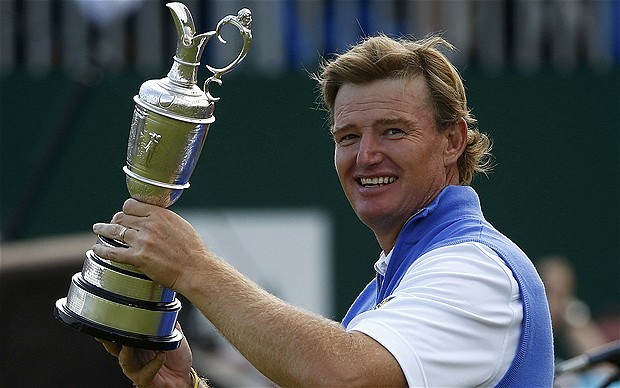
Ernie Els
Ernie Els

The Sunshine Tour’s professional golfers showed their support for ailing former president Nelson Mandela by wearing beaded South African flags during the first round of the Vodacom Origins of Golf tournament at Selborne Park Golf Club in KwaZulu-Natal.

Jean Hugo, a 13-time winner on tour sported the flag on his cap on Wednesday.

Mandela was known, over the years, to phone South Africa’s top golfers when they achieved internationally.

Shortly after he was admitted to hospital on June 8 for treatment of a recurring lung infection, South Africa’s most successful golfer post 1992, Ernie Els, said Mandela had often contacted him earlier in his career.

“When I won a lot of tournaments in the ’90s and early part of the 2000s, we spoke a lot on the telephone,” Els said in Ardmore, Pennsylvania, where he was preparing to play in the US Open.

“He always felt proud of what the sporting athletes out of South Africa did for the country, you know, winning worldwide events. He always felt very proud of that. Yeah, through that instance we had a really nice relationship.

“We’ll just — we’re hoping for the best. Whatever outcome that might be. I just want him to be well.”

Els said he had not met Mandela for a number of years, but hoped for his recovery.

“Yeah, South Africans, we’re obviously very concerned about President Mandela. He’s 94-years-old now. He’s almost on to his 95th birthday, and he’s been quite ill for a while now.

“So we’re just hoping for the best. I haven’t seen him for quite a few years now. I haven’t seen him for probably seven or eight years now. But we’ve had always a great relationship.” – Sapa

Australian minister apologises for premature announcement of Mandela’s death

Gary Gray
Gary Gray

An Australian politician has apologized to South Africa’s high commissioner for incorrectly announcing that Nelson Mandela had died.

Resources Minister Gary Gray issued a statement Thursday saying he was “deeply sorry” for wrongly telling guests at a Minerals Council of Australia dinner at Parliament House on Wednesday that the anti-apartheid leader was dead.

Gray said he had mistakenly shared what he “thought was reliable advice.”

Mandela is in critical condition at a hospital. The 94-year-old former president was admitted to the Pretoria hospital on June 8 to be treated for what the government said was a recurring lung infection.

Mandela was jailed for 27 years as a result of inciting violence to overthrow the government and was freed in 1990 and became South Africa’s first black president in 1994.

Also in Australia Kevin Rudd returned as prime minister of Australia on Thursday, three years after being replaced in the office by his then-deputy Julia Gillard.

Rudd challenged Gillard for leadership of the Labor Party on Wednesday and won a 57-45 vote among fellow Labor members of parliament.

In the Australian parliamentary system, the leader of the governing party assumes the position of prime minister and on Thursday morning, in Canberra, Rudd was sworn in for a second time.

Gillard resigned after the party vote on Wednesday night and announced she will leave politics.

A major factor in Gillard’s demise — and in Rudd’s Phoenix-like return — is the election Australia has to hold by the end of this year.

Under Gillard’s leadership, Labor was facing overwhelming defeat, according to opinion polls. But the same polls show a Rudd-led Labor Party would fare much better at the ballot box. – SAPA/AP/CNN

Obama plans to ‘highlight racial atrocities’ on African visit

Goree island
Goree island

The hopeful story President Barack Obama wants to tell about Africa is represented in the first stop of his weeklong trip to re-engage the continent, in a country where democracy recently overcame an impending electoral crisis.

During his visit to Senegal on Thursday, Obama also will reflect on the ties many African-Americans share with the continent as he takes a tour of Goree Island, Africa’s westernmost point. By some accounts, millions of Africans were shipped off into slavery across the Atlantic Ocean through the island’s “Door of No Return.”

It’s the first of two island visits Obama planned to highlight racial atrocities of the past. The second was scheduled for Sunday at South Africa’s Robben Island, where anti-apartheid leader Nelson Mandela was imprisoned for 18 years.

But Mandela’s condition could affect Obama’s plans. The former South African president is gravely ill, and Obama foreign policy adviser Ben Rhodes said it would be left to the Mandela family to decide whether he is up for a visit from Obama this weekend.

Mandela’s legacy hangs over the entire trip, with Senegal among many African countries that have benefited from his example of a peaceful transition to power. “So much of the democratic progress that we see across the continent I think can be tied in some way to the inspiration that Nelson Mandela set,” Rhodes said.

Obama’s focus in Senegal will be on the modern-day achievements of the former French colony after half a century of independence. He planned to meet with Senegalese President Macky Sall, who ousted an incumbent president who attempted to change the constitution to make it easier for him to be re-elected and pave the way for his son to succeed him. The power grab sparked protests, fueled by hip-hop music and social media, that led to Sall’s election.

But such people-powered democratic transitions are not always the story of the African experience. Fighting and human rights abuses limited Obama’s options for stops in his first major tour of sub-Saharan Africa since he took office more than four years ago. Obama is avoiding his father’s homeland, Kenya, whose president has been charged with war crimes, and Nigeria, the country with the continent’s most dominant economy. Nigeria is enveloped in an Islamist insurgency and military crackdown.

Obama’s itinerary in Senegal was designed to send a message, purposefully delivered in a French-speaking, Muslim-majority nation, to other Africans in countries that have not made the strides toward democracy that Senegal has. Obama plans to meet with civil society leaders at the Goree Institute and visit the Supreme Court to speak about the importance of an independent judiciary and the rule of law in Africa’s development.

“It’s not enough to have elections, it’s not enough to have democratically elected leaders,” Rhodes said. “You need to have independent judiciaries. You need to have confidence in the rule of law. You need to have efforts to combat corruption. Because, frankly, not only is that good for democracy and respect for human rights, but it’s critical to Africa’s economic growth, because where you have clear rules of the road and efforts to combat corruption, businesses will invest, and jobs will be created and growth will take off. And that’s what we want to see.” – AP

Tight security at Mandela hospital

Medi-Clinic Heart Hospital in Pretoria

Nine police officers were manning the entrance of the Pretoria hospital where critically-ill former president was being treated on Thursday.

The officers were screening all vehicles entering the hospital through the Park Street entrance at 6am.

Another police contingent was manning the other entrance on Celliers Street.

Despite the biting cold, local and international media started regrouping outside the hospital after 5am.

A dozen candles burnt through the night next to the Celliers Street entrance.

The candles were placed next to a miniature art gallery established by well-wishers on the security wall of the Medi-Clinic Heart hospital in Arcadia, east of Pretoria.

Numerous passers-by momentarily stopped on Thursday morning, observing the various presents brought for Madiba.

Multicoloured balloons, flowers, pictures and paintings of Madiba, hundreds of get-well-soon cards, flags and banners totally eclipsed the Medi-Clinic signboard at the Celliers Street entrance.

Some of the messages read: “No one knows the time, including Jesus and the angels, only God knows. No one will take you from us except our heavenly father. From Lynel Dlamini”

A message printed in a large frame read: “From the bottom of our hearts, we as Northern Sudanese love you and pray for you. We pray for our hero, our man Madiba to be out of this sickness with all power render[ed] from Allah the Almighty.”

Another well-wisher wrote: “Tata Madiba. You are in my prayers. A father to our country. One we will always look up to. Sending you all my love and well wishes from Cape Town. Love you always. From Charne Snyders”.

Others wrote: “Madiba you are my hero. Will pray forever for you. From Judia Tivane Holm [from] Mozambique”.

“Madiba be well. Long live freedom. Long live Justice. Long live hope. From Shabana Azmi [and] Sandeep Chachna [from] India

“I will always love you Tata. From Johanisa Ruiters. From Noupoort, Northern Cape.”

Before 3am, most journalists had left and only a handful were milling around near the hospital.

Numerous tents, generators, broadcasting cameras on tripods and broadcast vans had become a permanent feature on the street’s sidewalk since Madiba was admitted for a recurring lung infection on June 8.

Tshwane metro police officers were parked near the large fleet of media cars, which occupied all the parking spots near the entrance.

The metro police barricaded Celliers Street, allowing media vehicles and cars of residents of the street.

On Wednesday, President Jacob Zuma left the hospital at 10.15pm in a black BMW. He was escorted by a number of official cars with blue flashing police lights, which waited for him a street away from the hospital’s Park street entrance.

Zuma was followed by Defence Minister Nosiviwe Mapisa-Nqakula in a black Lexus.

Shortly after Zuma’s visit, the presidency said that Zuma had cancelled his visit to Mozambique on Thursday.

“President Zuma has decided to cancel his visit to Maputo, Mozambique tomorrow June 27, where he was due to attend an SA Development Community Summit regional infrastructure investment conference,” spokesman Mac Maharaj said in a statement. – Sapa

Midnight candles for ailing Mandela

Candles_flame_in_the_wind-otherA dozen candles burnt through the night on Thursday at the Pretoria hospital where critically ill former president Nelson Mandela is being treated.

The candles were placed next to a miniature art gallery established by well-wishers on the security wall of the Medi-Clinic Heart hospital in Arcadia, east of Pretoria.

Multicoloured balloons, flowers, pictures and paintings of Madiba, hundreds of get-well-soon cards, flags and banners totally eclipsed the Medi-Clinic signboard at the Celliers Street entrance.

The tributes and messages of support were pasted at the entrance by people from all walks of life, addressed to the celebrated anti-apartheid icon.

Some of the messages read: “No one knows the time, including Jesus and the angels, only God knows. No one will take you from us except our heavenly father. From Lynel Dlamini”

A message printed in a large frame read: “From the bottom of our hearts, we as Northern Sudanese love you and pray for you. We pray for our hero, our man Madiba to be out of this sickness with all power render[ed] from Allah the Almighty.”

Another well-wisher wrote: “Tata Madiba. You are in my prayers. A father to our country. One we will always look up to. Sending you all my love and well wishes from Cape Town. Love you always. From Charne Snyders”.

Others wrote: “Madiba you are my hero. Will pray forever for you. From Judia Tivane Holm [from] Mozambique”.

“Madiba be well. Long live freedom. Long live Justice. Long live hope. From Shabana Azmi [and] Sandeep Chachna [from] India

“I will always love you Tata. From Johanisa Ruiters. From Noupoort, Northern Cape.”

Before 3am, most journalists had left and only a few were milling around near the hospital.

After midnight, several news crews, mainly international broadcasters, were doing live crossings near the Celliers Street entrance.

Numerous tents, generators, broadcasting cameras on tripods and outside broadcast vans have become a permanent feature on the street’s sidewalk since Madiba was admitted for a recurring lung infection on June 8.

Tshwane metro police officers were parked near the large fleet of media cars, which occupied all the parking spots near the entrance.

Vehicles were entering the Medi-Clinic Heart Hospital sporadically through the entrance along Park Street. The Celliers Street gates were closed for the night.

Late on Wednesday, President Jacob Zuma left the hospital at 10.15pm in a black BMW. He was escorted by a number of official cars with blue flashing police lights, which waited for him a street away from the hospital’s Park street entrance.

Zuma was followed by Defence Minister Nosiviwe Mapisa-Nqakula in a black Lexus.

He arrived at the hospital just before 10pm. Mapisa-Nqakula arrived at 9.30pm.

Shortly after Zuma’s visit, the presidency said that Zuma had cancelled his visit to Mozambique on Thursday.

“President Zuma has decided to cancel his visit to Maputo, Mozambique tomorrow June 27, where he was due to attend an SA Development Community Summit regional infrastructure investment conference,” spokesman Mac Maharaj said in a statement.

Earlier in the evening, Mandela’s eldest daughter Makaziwe Mandela left the hospital at 6.20pm in a red Range Rover.

Thirty-five minutes earlier Mandela’s ex-wife Winnie Madikizela-Mandela left the hospital after her second visit for the day.

She left at 5.45pm after spending an hour at the hospital.

Two hours earlier, Madikizela-Mandela left at 2.45pm along with Mandela’s daughters Makaziwe and Zindzi Mandela as well as his grandchildren Ndaba and Ndileka Mandela, after arriving at 1.45pm.

Both Madikizela-Mandela’s visits were an hour long, her shortest since the presidency announced the former anti-apartheid icon’s condition deteriorated on Sunday evening.

The country’s former surgeon general, Dr Vejay Ramlakan, arrived at the hospital earlier on Wednesday. He stepped down earlier this year.

He returned in the early evening.

The presidency said on Tuesday that Mandela remained in a critical condition.

“[Mandela’s] condition remains unchanged in hospital, and doctors continue to do their best to ensure his recovery, well-being and comfort,” Maharaj said in a statement. – Sapa

Ban Ki-moon says ‘whole world praying for Mandela’

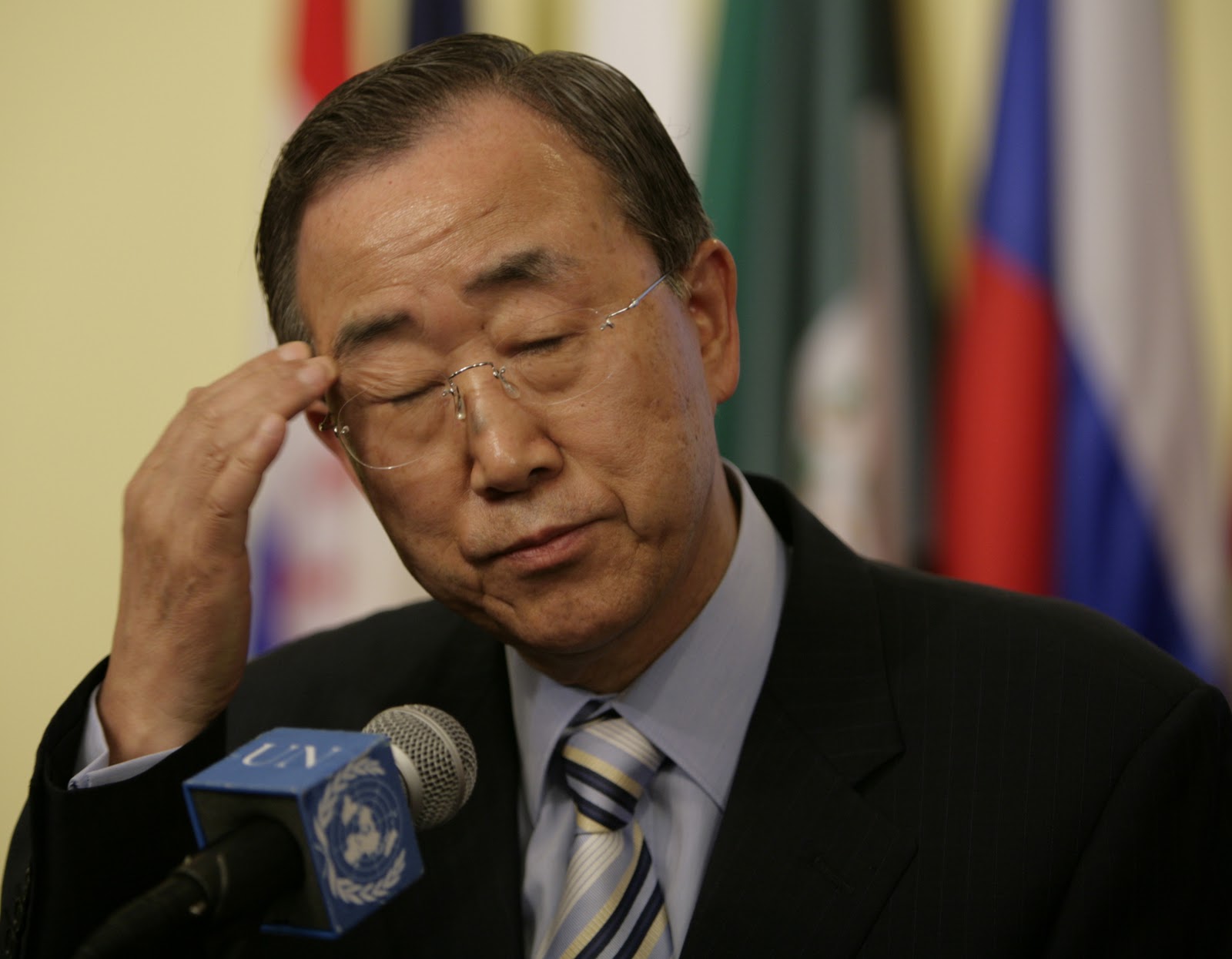
Ban ki-moon
Ban ki-moon

UN leader Ban Ki-moon said Wednesday that the whole world is praying for Nelson Mandela as the legendary South African leader fights for his life.

Ban called Mandela “one of the giants of the 20th century” at a New York reception for the 50th anniversary of the Organization of African Unity which played a leading international role in fighting apartheid in South Africa.

“I know our thoughts and prayers are with Nelson Mandela, his family and loved ones, all South Africans and people across the world who have been inspired by his remarkable life and example,” Ban said.

“Let us all show similar conviction and sense of purpose today in working to improve well-being and opportunity for all Africans,” the UN secretary general added.

Mandela, 94, is on life support in hospital in Pretoria. – AFP

Mandela on life support: Xhosa clan elder

A heart-lung machine

Nelson Mandela is on life support, an elder in the South African icon’s clan said Wednesday, as President Jacob Zuma called off a scheduled trip to Mozambique.

“Yes, he is using machines to breathe,” Napilisi Mandela told AFP after visiting the anti-apartheid hero. “It is bad, but what can we do.”

Zuma cancelled a trip scheduled for Thursday after he “found him to be still in a critical condition”, a statement from the presidency said. – AFP

Zuma sings ‘Bring me my machine gun’ for Mandela

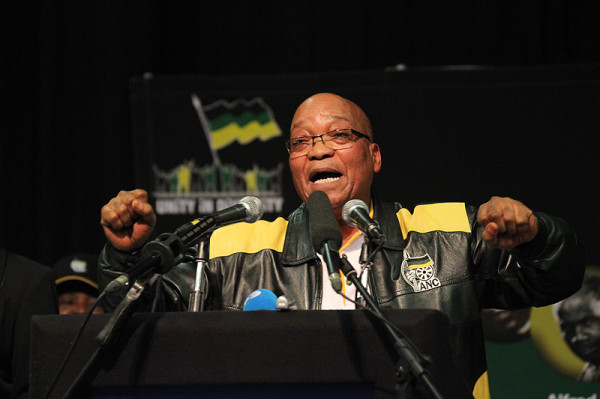
President Jacob Zuma singing 'Mshini Wami'
President Jacob Zuma singing ‘Mshini Wami’

Former president Nelson Mandela was still in a critical condition in hospital on Wednesday afternoon, President Jacob Zuma said.

“As he remains in a critical condition in hospital we must keep him and the family in our thoughts and prayers every minute,” he said to groans of despair from the audience at the National Education, Health and Allied Workers’ Union (Nehawu) conference in Boksburg, east of Johannesburg.

Zuma led a song from the anti-apartheid struggle about Mandela and Oliver Tambo taking up arms.

He then sang “Awulethu’ Mshini Wami” with delegates joining him. After that he had a bite of cake on the stage and left. – Sapa

Zuma sings about Mandela

Jacob Zuma in Zulu dress

President Jacob Zuma opened the National Education, Health and Allied Workers’ Union (Nehawu) conference on Wednesday with a rousing rendition of a song about former president Nelson Mandela, who is gravely ill.

Loosely translated from isiZulu, he sang: “We are walking a long distance, so said Nelson Mandela to his supporters.”

Dipping his body into the song, as the red-clothed delegates harmonised and ululated, Zuma sang several refrains.

On Sunday, his office broke the news that Mandela was critically ill, after being in hospital with a recurring lung infection since June 8.

When he finished the song, Zuma began his prepared speech.

He was addressing the conference in his capacity as African National Congress president. – Sapa

When the Mandela machine stops, what monstrous reality will return?

roodt_fbfoto

by Dan Roodt

Last night I woke up, checked my Twitter and, sure enough, there was a Beeld journalist tweeting at one or two in the morning that nothing was happening outside Mandela’s hospital in Pretoria, except the noise of the foreign journalists’ generators. I suppose they have outside broadcast units over there, vying with each other to be first on the air in Europe or the US to tell the world that Mandela is dead.

[followbutton username=’danroodt’ count=’true’ lang=’en’ theme=’light’]

Like Dan Roodt’s Facebook page

Mandela is that ultimate postmodern illusion: a fable, a South African simulation. Mandela sprung from a rural African village in the Eastern Cape, the most backward of South African provinces where the age-old African cattle culture is still being perpetuated and where subsistence farmers eke out a living on small patches of land controlled by their chief. From these primitive, rural surroundings Mandela was plucked to be put into global circulation, on gold coins and – more recently – even on our banknotes.

Shortly after Mandela’s familiar visage came rolling off the presses of the South African mint at Halfway House, between Johannesburg and Pretoria, the rand took a dive. It declined to over R10 per US dollar, as if the gods were saying: we don’t like what we see on our banknotes.

Announcing the new banknotes was the governor of the South African Reserve Bank, a Ms. Gill Marcus.  I caught some radio snippet where she was saying that “the new notes show our international icon, Nelson Mandela”. Her use of the possessive pronoun was quite revealing, because I strongly suspect that Mandela has always been a kind of extra in someone else’s movie or reportage. His incongrous first name “Nelson” was given to him by his white missionary teacher one day, a little bit like South African whites give their servants Western names like Petrus, Jonas, Sophia and so on.

Mandela never actually ruled South Africa. He was in office for two years but at the time, according to inside information, factions within the ANC fought over who should have control over his diary. Like Gill Marcus, they also had “their Mandela” who represented some kind of political capital to them, Mandela coins in a bag, as it were.

The bespectacled, frumpish Ms. Marcus is quite a bizarre central bank governor. She is no chic, French Christine Lagarde. When she occasionally announces that “interest rates are being kept unchanged” and rattling off a few clichés about the economy, she sounds like she is putting on an act. Simulating. Her suburban Johannesburg accent makes you think she should be pushing the trolley at some Northern Suburbs supermarket, filled with corn flakes and bottles of Coke, rather than running our central bank.

Gill Marcus also has a brother. His name is Gilbert. It sounds even more English than Nelson, so whoever christened him was somehow pretending to be distantly related to the House of Windsor too, or at least some or other British peer. The last time I saw Gilbert he was appearing in the Johannesburg High Court on behalf of the ANC and trying to defend the slogan “Kill a Boer, kill a farmer”, that innocent little ditty sung at political meetings of the ruling party. Mandela’s party, if you have a bad memory.

Marcus defended “Kill a Boer” by comparing it to the French national anthem, La Marseillaise, “not to be taken literally”. If “Kill a Boer” really is the ANC’s and Mandela’s “Marseillaise”, why is it not South Africa’s national anthem? one wonders. At least that would explain the explosion of racial and ethnic violence that commenced in South Africa, from the very moment that Mandela and his charming murderess of a wife (now ex-wife), Winnie, hoisted their famous fists in the air.

So Ms. Marcus runs the central bank and Mr. Marcus looks after freedom of speech for anyone out there who might want to go and kill some Boers. Interesting. Then they say that Mandela was all for “reconcilition” in South Africa. I remember one of his speeches where he told whites bluntly to emigrate if they didn’t like crime and violence or the corrupt ways of this party.

Lying in his bed at the Mediclinic Heart Hospital in Pretoria, Mandela has already been deified. As one news service put it: He is “a man considered by many to be a living saint”. No less. A woman with an American accent said on 702 Talk Radio in Johannesburg that “Mandela had performed many miracles”. I must have missed those. Did he turn water into wine? Did he walk on water?

However, it is precisely this unreal, messianic aspect of the Mandela cult that is so revealing about the void at the heart of the so-called post-apartheid state. Or the lies, the dissimulations, the propaganda, the make-believe. Whereas South African school books nowadays state that Mandela “went to prison because he was a leader” or “for his beliefs”, the truth is far less palatable. He was engaged in terrorist activities for a quasi-communist organisation getting support from the Soviet Union and left-wing groups and individuals in Britain. Until 2008 his name still appeared on a terrorist watch list in America, as USA Today reported:

“Nobel Peace Prize winner and international symbol of freedom Nelson Mandela is flagged on U.S. terrorist watch lists and needs special permission to visit the USA. Secretary of State Condoleezza Rice calls the situation ’embarrassing,’ and some members of Congress vow to fix it.”

But as Mandela stated once, without a hint of irony: “Some terrorists become heads of state.” Or saints.

How do we explain the Mandela cult? Last night some black man tweeted: “Mandela is South Africa’s George Washington, except he never owned slaves.” I beg to differ. Mandela had thousands of slaves, white slaves in the media who would stay up, upon a winter’s night on the Highveld.

I doubt that Mandela ever wrote a speech. They were all written for him, the make-believe black Messiah. Although, even calling Mandela “black” is something of a misnomer, as he was genetically tested and found to be partly Khoi, a descendant of the original hunger-gatherer groups that had inhabited the whole of southern Africa before they were driven out by the incoming Bantu tribes from further north. Within South Africa’s complex racial nomenclature, Mandela is really a Xhosa-speaking Coloured. When the notorious black nationalist and one-time spokesman for the ANC government, Jimmy Manyi, said in 2010 that “there were too many Coloureds in the Western Cape”, he could have included Mandela in that statement.

However, the fact that Mandela’s “blackness” is somehow suspect, adds even more to his status as a simulacrum. In a certain sense Mandela is a fugure who stepped out of white liberal fiction, an avuncular ex-terrorist who could be photographed in a Springbok rugby jersey in various poses. He would smile, exude bonhomie, and the crowds would go wild.

In essence, Mandela is the product of public relations, by design and by accident. He went to prison as a failed terrorist who got caught before he could do any real damage, although he harboured the intent. Out he came as a miraculous martyr, cameras flashing. Many people – most of them white and left-wing, if not communist – have toiled over the years to make him famous. Again without irony, people refer to the “Mandela brand”.

South Africa is an anomaly. As no less a commenator than Samuel Huntington stated in his Clash of Civilizations, the country imagined itself to be Western, yet it was rejected by the West. All the white, Western governments, with Bill Clinton’s American administration in the lead, dismissed South Africa in favour of the Mandela brand. He was the miracle cure, the panacea.

As it happened, he did not cure us. The term “witch doctor” is no longer politically correct and these days in South Africa you can get a prescription from your “traditional healer” who will invoke the spirits to cure you, while you perform some rituals or imbibe muti or medicine concocted of animal parts and herbs. Mandela, the ultimate traditional healer, has laid Western science low. Also political science. But, as so often happens after all the mumbo jumbo, he has not cured us. South Africa is still the same, the same population, the same ethnic and racial diversity, the same ills and problems.

Except, it has got worse. When Mandela and his merry band of exiles took over, there were fewer than 30 million people and no foreigners in significant numbers. Now the population has doubled and the ANC’s open-border policies have added millions of foreign Africans to our demography. It has resulted in xenophobic attacks and killings, riots, looting, as well as more strain on an already over-burdened infrastructure.

The old South Africa was a besieged state, besieged above all by Mandela’s white slaves, the journalists, who vilified it at will, without regard for accuracy or measure. They had introduced the culture of dissimulation that has slowly gnawed away at our meanings until now, when we have nothing left.

South Africa is an empty shell, a failing state. Its criminal levels of corruption have transformed it into an Ali Baba’s cave to be looted constantly. It is not so much Mandela’s legacy as that of his puppet masters, whoever they might be. He was just the extra on the stage, the figurehead, the aged male model in his trademark gaudy shirts.

Once South Africa had an identity, a sense of coherence. It may be hard to believe now, but at times in the past it enjoyed some esteem. That old South Africa was tied to Afrikaners and their policies which were subsumed under the increasingly odious propaganda term, apartheid. Many babies were thrown out with the bath water.

In a real sense, South Africa as a country has been abolished. We only have myths left. Or vacuous, vapid slogans that I do not even want to repeat here. We imagined that we were America, that Mandela was a Martin Luther King that had come to save us. But despite the American fast-food brands on all our street corners, this is not America.

Of course Mandela resonated with the American racial imaginary, that of the tens of millions of guilt-ridden white Americans after the civil rights movement, It accounts for his meteoric rise to being a media colossus. But the media machine that created him, that made him rise from the muddy puddles of Qunu, is just Tinseltown. It has no substance.

In E.M. Forster’s dystopian novella, The machine stops, everyone lives in a great machine that supplies them with their daily diet of illusions and allows them to communicate freely, a bit like the internet today. However, there is moment when the main character says to his mother in another room, in another country: “The machine stops.” After that, all hell breaks loose. At first slowly, then apocalyptically.

This is not to say that I am predicting that there would be genocide or the wholesale slaughter of whites when Mandela dies. But the set of illusions associated with the Mandela brand will not survive him.

At the very least, the hangover will be immense. South Africa, or the patch of polluted, mined earth that still goes by that name, no longer exists, apart from still issuing passports and identity papers. Under successive waves of negative and euphoric propaganda, it has lost its sense of the real, a bit like a scizophrenic patient. It has multiple identities: it is jabbering, now American, now African, then it wants to don the Springbok rugby jersey.

One nation, one beer, it mutters to itself.

But some day soon the reality check will have to come, when there is nothing left to loot, when Gill Marcus’s reassuring platitudes on the rand will no longer suffice to delude us and the rest of the world.

Vorster thought that the alternative to reform was “too ghastly to contemplate”. That alternative was revolution. And Mandela was the archangel of revolution that had brought us that ghastly alternative: farm murders, racial demagoguery, bankrupt municipalities, quotas, never-ending riots and mayhem.

I daresay there exists a level of ghastliness that we have not yet seen, of the Zimbabwean order, in the guise of “land reform”, hyperinflation and even more violence than what we have already become inured to.

That monstrous reality may not be very far.

[followbutton username=’danroodt’ count=’true’ lang=’en’ theme=’light’]

Like Dan Roodt’s Facebook page

AbaThembu elders to decide on Mandela

makaziwe_mandelaA group of AbaThembu elders is preparing to fly to Gauteng to assess a critically ill Nelson Mandela and decide “what to do”.

The Times has learnt that at an urgent meeting called by Mandela’s eldest daughter, Makaziwe, at his home in Qunu in the Eastern Cape yesterday, it was decided that the elders and Mandela’s confidants would visit the former president in the Mediclinic Heart Hospital in Pretoria.

According to a CBS News report, the former statesman – who has been in the hospital for 18 days with a lung infection – was ”unresponsive and has not opened his eyes for days”.

One of the local chiefs said Mandela spokesman Nkosi Bhekizulu Mnqanqeni and possibly Nkosi Bhovulengwe Mfundo Mtirara would be among the elders who would assess Mandela.

They are likely to fly to Johannesburg today and head straight to Mandela’s bedside.

Family elder Napilisi Mandela confirmed they would discuss delicate matters.

A chief said: “They want to visit Tata himself and discuss what should be done.”

Last night, Nkosi Mtirara would say only that yesterday’s gathering was “a family meeting”.

But The Times understands that this meeting, the first of its kind, focused not only on Mandela’s health but also on the moving of family graves from Qunu to Mvezo in 2011. The graves were moved by Mandela’s grandson, Chief Mandla Mandela.

Vehicles transporting family members also visited the guarded burial site. The entourage spent almost 30 minutes looking around before moving back to the house.

The meeting adjourned at 12.30pm and the family was rushed back to the airport.

There was, however, little activity at Mvezo Great Place yesterday, other than the installation of a new steel gate at the entrance. – timeslive.co.za

Mandela’s ex-doc arrives at his bedside

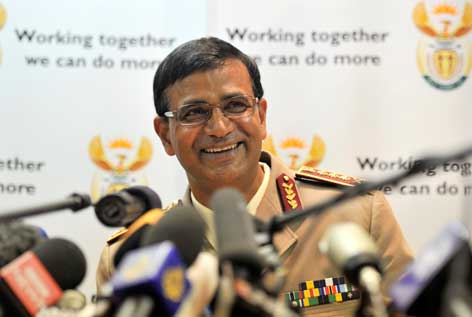
ramlakanDr Vejay Ramlakan arrived on Wednesday at the Medi-Clinic Heart Hospital in Pretoria, where former president Nelson Mandela remains in a critical condition.

Ramlakan is the country’s former surgeon-general. He stepped down earlier this year.

His car was not searched by the police and security guards when he arrived at the hospital.

Security at the private hospital has been increased since Mandela was admitted on June 8 with a recurring lung infection.

Police started searching vehicles entering the facility at about 5am.

Earlier, Tshwane metro police officers barricaded part of Celliers Street, leading to the hospital’s main entrance.

Numerous traffic patrol cars were also in the area. – SAPA