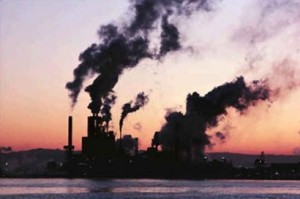
Some 1700 jets land in Davos to ponder global warming

A squadron of 1,700 private jets are rumbling into Davos, Switzerland, this week to discuss global warming and other issues as the annual World Economic Forum gets underway.

The influx of private jets is so great, the Swiss Armed Forces has been forced to open up a military air base for the first time ever to absorb all the super rich flying their private jets into the event, reports Newsweek.

“Decision-makers meeting in Davos must focus on ways to reduce climate risk while building more efficient, cleaner, and lower-carbon economies,” former Mexican president Felipe Calderon told USA Today.

Davos, which has become a playground of sorts for the global elite, is expected to feature at least 40 heads of state and 2,500 top business executives. Former Vice President-turned-carbon billionaire Al Gore and rapper Pharrell Williams will be there as well; each plans to discuss global warming and recycling respectively.

Another big theme of the mega-rich confab will be combating “income inequality” and how the world’s rich can pay their fair share to reduce the gap between top earners and the lower class. Admission price for Davos: roughly $40,000 a ticket.

The World Economic Forum will also feature discussions on gender equality and opportunities for women. According to the World Economic Forum’s own statistics, just 17% of all 2015 participants are women.

The 45th World Economic Forum meeting begins on Wednesday and runs through Saturday.

Source: Breitbart

India, China ignore climate bait

Five years after over 150 heads of state cobbled up a rickety climate deal that fell through, the one-day UN Climate Summit is another attempt of rich nations to push India and China – responsible for one-third of total carbon emissions in 2013 – to accept some strong measures to check global warming.

But the two Asian giants are not willing to take the bait unless the developed world anchored by the United States and the European Union offers substantial incentives to developing nations for adopting a cleaner growth trajectory, cutting down on emissions.

The rich nations’ commitment to provide US $30 billion between 2010 and 2012 for climate mitigation and adaptation is yet to fructify, resulting in the Green Climate Fund remaining a defunct body.

Officially, Prime Minister Narendra Modi and Chinese premier Xi Jinping are not attending the summit called by UN chief Ban Ki-moon because of conflicting schedules.

But it is, in fact, a snub to the developed nations for pushing climate talks outside the United Nations framework. “It creates confusion and we don’t agree,” environment minister Prakash Javadekar, who will represent the country at the summit, said without mentioning to the event.

China has opted for a relatively senior functionary, vice-premier Zhang Gaoli, for the talks. While some island nations threatened by rising sea levels because of climate change expressed shock and disappointment, this will achieve little as India and China do not expect Obama to deliver generous green currency that would motivate emerging economies to revise their country-centric stands.

Neither the American president, nor the European leaders have the mandate to offer money at the summit like in Copenhagen, 2009.

New data shows carbon emissions in the atmosphere closing in on the threshold level to limit temperature rise by two degree Celsius, and India and China being the fastest-growing emitters, would put the two emerging economies under some pressure.

Source: Hindustan Times

Outdoor air pollution classified as carcinogenic by World Health Organization

air pollutionby Melissa Roper

It is not yet certain if climate change is the result of anthropogenic-sourced carbon emissions or, on the contrary, is a Sun-influenced phenomenon. As the debate on global warming versus global cooling continues, results of recent research draw attention towards an equally worrying side-effect of industry greenhouse gas emissions – the fatal implications of air pollution on human health. Earlier this month, 24 experts from 11 countries met at the International Agency for Cancer Research (IARC) headquarters in Lyon to assess the correlation between cancer and air pollution. IARC is the cancer specialized agency of the World Health Organization (WHO), the coordinating authority for health within the United Nations.

Cancer and air pollution: two widespread phenomena

The scientists evaluated over 1000 papers analysing the carcinogenicity of particulate matter and transport-related pollutants, and the results of the study will be published as Volume 109 of the IARC Monographs. According to the study’s Press release published on 17th October 2013, “outdoor air pollution [is] a leading environmental cause of cancer deaths”. This conclusion is the first paper to officially link the two:  both the worldwide rate of cancer and global air pollution have become alarmingly widespread phenomena in the past decades.  Cancer has become so common, that the international medical industry was revolutionized in order to address the problem in evermore effective ways. As Licensed Prescriptions explain, it has become possible to diagnose, prevent and treat cancer quickly, in some cases even without the need of a biopsy. One of the reasons why cancer has become such a frequent problem may be that “the air we breathe has become polluted with a mixture of cancer-causing substances” as summarized by Dr. Kurt Straif, Head of IARC Monographs.

Sources and effects of air pollution

The IARC study reports that although air pollution comes from a mixture of natural and anthropogenic sources, “the predominant sources of outdoor air pollution are transportation, stationary power generation, industrial and agricultural emissions, and residential heating and cooking. Generally, the burning of fuels – oil, coal, gas or wood – release elements such as particulate matter, carbon monoxide, sulphur oxides, and metals (lead, in particular) into the air. Humans breathe in these particles, which get stuck in the lung tissue and produce breathing affections and cancer on the long term.

South Africa air pollution

The University of Western Cape’s Biodiversity and Conservation Biology Department (BCB) also discusses air pollution, stating that “pollution from exhaust gases of vehicles is responsible for 60% of all air pollution and in cities up to 80%”, with lead being one of the most dangerous chemicals emitted by the transport industry. Combustion of coal is also acknowledged as a major source of air pollution leading to possible fatal effects. For South Africa in particular, one of the dangerous side effects of burning coal is acid rain, affecting stone, metal and brick elements. Highly acid rain, snow, hail or fog is produced when sulphur and nitrogen dioxides combine with the atmospheric moisture. “Coal in South Africa is rich in sulphur and the power stations in the Mpumalanga Province could be responsible for acid rain over other areas of our country”, explains the BCB.

Indeed, as announced by Greenpeace in August 2013, Witbank, a town outside of Johannesburg, has “some of the world’s most polluted air”. This can be linked with the activity of the 11 coal-fired power stations situated across Mpumalanga. Witbank is also the place where 83% of South Africa’s coal is mined.

Improving the National Ambient Air Quality

South African air is polluted by the high sulphur dioxide and particulate matter concentrations resulted from power-generation and industrial burning of coal.  This urgent matter was addressed by the most recent air quality governance approach, the Air Quality Act of 2004 and the recent National Ambient Air Quality Standards 2010. Key directions of the new approach include: Decentralisation of air quality management responsibilities; Requirements that all significant sources be identified, quantified and addressed; Setting of ambient air quality targets as goals to achieve emission reductions. The National Standards sets limits for the following airborne particles: Sulphur dioxide (SO2), Nitrogen dioxide (NO2), Particulate matter (PM 10 – 10 micrometre diameter), Ozone (O3), Benzene (C6H6), Lead (Pb) and Carbon monoxide (CO). The required date of compliance with the standards depends on each element, from “immediate” (2010) to January 1st 2015.

Climate war reaches boiling point

globalcoolingThe war between former Vice President Al Gore and his critics over global warming is about to hit the boiling point with a new claim that Sun-influenced climate change is shifting into reverse, with the Earth poised to head into a period of cooling that will end the rise of the oceans.

A global warming critic on Monday announced plans to release new data showing that the threat of rising global sea levels has peaked and that the Sun is entering a “hibernation” period that could bring colder weather.

“Like most major climate events, the past sea level rise was caused by the Sun and had little or nothing to do with mankind’s industrial greenhouse gas emissions,” said John Casey, a former White House and NASA advisor and climate author. “Now that the Sun has entered a state of ‘solar hibernation’ and is cutting back on the energy by which it warms the Earth, a new and potentially dangerous decades-long drop in global temperatures has begun,” he warned.

Casey is the president of the Space and Science Research Corporation and author “Cold Sun,” which predicts the coming cooling period. Because his predictions go against the mainstream, he has been ridiculed by supporters of global warming. Media Matters called him a “scam artist.”

Read more: