Midnight candles for ailing Mandela

Candles_flame_in_the_wind-otherA dozen candles burnt through the night on Thursday at the Pretoria hospital where critically ill former president Nelson Mandela is being treated.

The candles were placed next to a miniature art gallery established by well-wishers on the security wall of the Medi-Clinic Heart hospital in Arcadia, east of Pretoria.

Multicoloured balloons, flowers, pictures and paintings of Madiba, hundreds of get-well-soon cards, flags and banners totally eclipsed the Medi-Clinic signboard at the Celliers Street entrance.

The tributes and messages of support were pasted at the entrance by people from all walks of life, addressed to the celebrated anti-apartheid icon.

Some of the messages read: “No one knows the time, including Jesus and the angels, only God knows. No one will take you from us except our heavenly father. From Lynel Dlamini”

A message printed in a large frame read: “From the bottom of our hearts, we as Northern Sudanese love you and pray for you. We pray for our hero, our man Madiba to be out of this sickness with all power render[ed] from Allah the Almighty.”

Another well-wisher wrote: “Tata Madiba. You are in my prayers. A father to our country. One we will always look up to. Sending you all my love and well wishes from Cape Town. Love you always. From Charne Snyders”.

Others wrote: “Madiba you are my hero. Will pray forever for you. From Judia Tivane Holm [from] Mozambique”.

“Madiba be well. Long live freedom. Long live Justice. Long live hope. From Shabana Azmi [and] Sandeep Chachna [from] India

“I will always love you Tata. From Johanisa Ruiters. From Noupoort, Northern Cape.”

Before 3am, most journalists had left and only a few were milling around near the hospital.

After midnight, several news crews, mainly international broadcasters, were doing live crossings near the Celliers Street entrance.

Numerous tents, generators, broadcasting cameras on tripods and outside broadcast vans have become a permanent feature on the street’s sidewalk since Madiba was admitted for a recurring lung infection on June 8.

Tshwane metro police officers were parked near the large fleet of media cars, which occupied all the parking spots near the entrance.

Vehicles were entering the Medi-Clinic Heart Hospital sporadically through the entrance along Park Street. The Celliers Street gates were closed for the night.

Late on Wednesday, President Jacob Zuma left the hospital at 10.15pm in a black BMW. He was escorted by a number of official cars with blue flashing police lights, which waited for him a street away from the hospital’s Park street entrance.

Zuma was followed by Defence Minister Nosiviwe Mapisa-Nqakula in a black Lexus.

He arrived at the hospital just before 10pm. Mapisa-Nqakula arrived at 9.30pm.

Shortly after Zuma’s visit, the presidency said that Zuma had cancelled his visit to Mozambique on Thursday.

“President Zuma has decided to cancel his visit to Maputo, Mozambique tomorrow June 27, where he was due to attend an SA Development Community Summit regional infrastructure investment conference,” spokesman Mac Maharaj said in a statement.

Earlier in the evening, Mandela’s eldest daughter Makaziwe Mandela left the hospital at 6.20pm in a red Range Rover.

Thirty-five minutes earlier Mandela’s ex-wife Winnie Madikizela-Mandela left the hospital after her second visit for the day.

She left at 5.45pm after spending an hour at the hospital.

Two hours earlier, Madikizela-Mandela left at 2.45pm along with Mandela’s daughters Makaziwe and Zindzi Mandela as well as his grandchildren Ndaba and Ndileka Mandela, after arriving at 1.45pm.

Both Madikizela-Mandela’s visits were an hour long, her shortest since the presidency announced the former anti-apartheid icon’s condition deteriorated on Sunday evening.

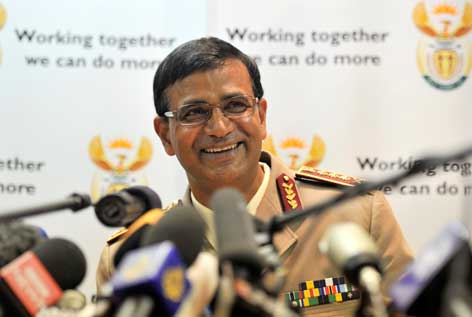
The country’s former surgeon general, Dr Vejay Ramlakan, arrived at the hospital earlier on Wednesday. He stepped down earlier this year.

He returned in the early evening.

The presidency said on Tuesday that Mandela remained in a critical condition.

“[Mandela’s] condition remains unchanged in hospital, and doctors continue to do their best to ensure his recovery, well-being and comfort,” Maharaj said in a statement. – Sapa

Ban Ki-moon says ‘whole world praying for Mandela’

Ban ki-moon
Ban ki-moon

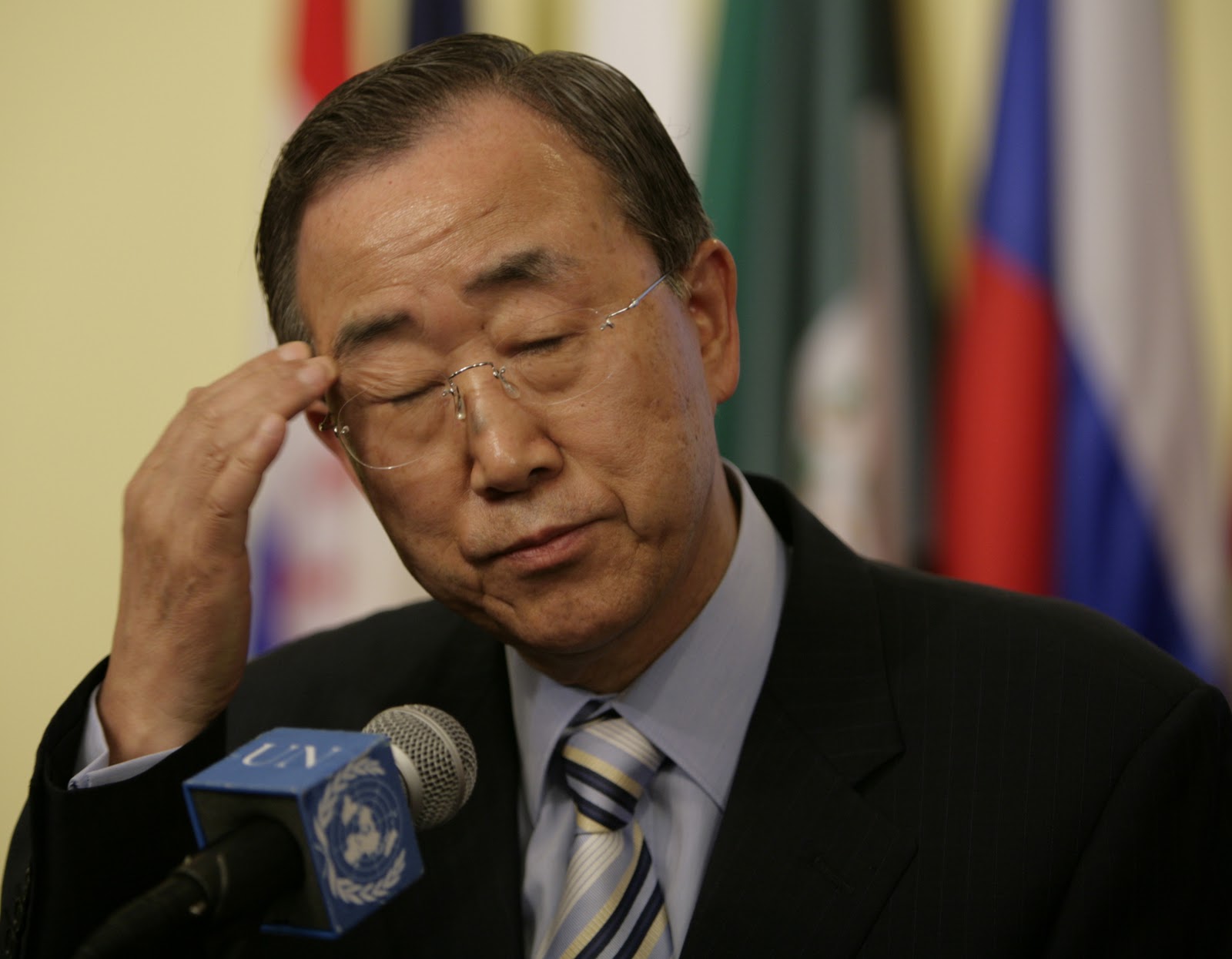
UN leader Ban Ki-moon said Wednesday that the whole world is praying for Nelson Mandela as the legendary South African leader fights for his life.

Ban called Mandela “one of the giants of the 20th century” at a New York reception for the 50th anniversary of the Organization of African Unity which played a leading international role in fighting apartheid in South Africa.

“I know our thoughts and prayers are with Nelson Mandela, his family and loved ones, all South Africans and people across the world who have been inspired by his remarkable life and example,” Ban said.

“Let us all show similar conviction and sense of purpose today in working to improve well-being and opportunity for all Africans,” the UN secretary general added.

Mandela, 94, is on life support in hospital in Pretoria. – AFP

Mandela on life support: Xhosa clan elder

A heart-lung machine

Nelson Mandela is on life support, an elder in the South African icon’s clan said Wednesday, as President Jacob Zuma called off a scheduled trip to Mozambique.

“Yes, he is using machines to breathe,” Napilisi Mandela told AFP after visiting the anti-apartheid hero. “It is bad, but what can we do.”

Zuma cancelled a trip scheduled for Thursday after he “found him to be still in a critical condition”, a statement from the presidency said. – AFP

Rice leaves UN with final blast over Syrian ‘disgrace’

Susan Rice
Susan Rice

US ambassador Susan Rice left the United Nations on Tuesday slamming the Security Council’s failure to act over the worsening Syria conflict as a “moral and strategic disgrace.”

But while Rice criticized Russia and China for their veto of resolutions on the Syria war, she said it was not inevitable that relations with Russia would continue to sour.

Rice, who moves to become President Barack Obama’s national security advisor, said: “The repeated failure of the Security Council to unify on the crucial issue of Syria I think is a stain on this body and something that I will forever regret.”

“The council’s inaction on Syria is a moral and strategic disgrace that history will judge harshly,” Rice told reporters after making her farewells to other UN envoys after four and a half years as US ambassador.

Russia and China have three times used their vetoes as permanent members of the Security Council to block western-proposed resolutions that would have increased pressure on President Bashar al-Assad.

Rice stressed that there were no sanctions or threats of force in the proposed resolutions which she called “very mild.”

“Yet we have been paralyzed, and I don’t know how in any circumstance one could ascribe that to a failure of US policy or US leadership, when the vast majority of the council was ready and willing to move ahead.”

Russia and China accused the United States, France and Britain of only seeking regime change in Syria, where the United Nations says more than 93,000 people have been killed in the past 27 months.

Rice said tougher sanctions against Iran and North Korea had been a Security Council success and showed it was possible to work with Russia, which could become a key dossier in her new White House job.

At Rice’s final closed consultations, Russia’s UN ambassador Vitaly Churkin read out a mock council statement which “expressed relief” at Rice’s departure, according to diplomats at the meeting.

Russia is a “complex” relationship, Rice acknowledged to reporters after the good natured farewell from her rival envoy.

“While there are certainly important points of divergence, and there have been points of friction and there undoubtedly will be in the future, I am not prepared to predict that that is inevitable,” she said.

“On issues as important as Iran and North Korea, and many others, we have been able to find common ground and effect outcomes that have been beneficial,” Rice said.

Samantha Power, a White House advisor, has been named as the new UN ambassador and is awaiting Congress confirmation. – AFP

Obama heads to Africa for week-long tour

GTY 158441009 A CLJ POL USA CTUS President Barack Obama and his family were headed to Senegal on Wednesday, where they will start A week-long stay in Africa.

During the trip, Obama will meet with Senegal’s President Macky Sall on Thursday, South African President Jacob Zuma on Friday and Tanzania’s President Jakaya Kikwete on Monday.

On Friday, Obama will arrive in South Africa, where the continued hospitalization of anti-apartheid icon Nelson Mandela has drawn the nation into a mood of worry and well-wishing for the 94-year-old former leader.

“We simply hope that he recovers,” White House spokesman Jay Carney told reporters on board Air Force One. “We continue to pray for him and his family, and obviously all of the South African people to whom he means so much as well as his admirers around the world.”

Carney was also asked about Wednesday’s decision by the US Supreme Court that handed victory to supporters of same-sex marriage, and whether the topic would come up in Obama’s official meetings in Senegal, where homosexuality is a criminal act.

“Well, I wouldn’t rule it out,” Carney said. “You can assume that that’s something that is both a concern to the president and the administration, and that would be something that we would discuss.”

Highlights of Obama’s trip will include a visit to Senegal’s Goree Island, the so-called “Door of No Return” for many African slaves; Robben Island off of Cape Town, where Mandela spent much of his 27 years in jail under the apartheid regime; and the memorial to the victims of the 1998 US embassy bombing in Dar es Salaam.

Obama will on Saturday host a town hall meeting at the University of Johannesburg in Soweto, part of his Young African Leaders Initiative. On Sunday, he is to deliver a major speech on his Africa policy in Cape Town.

On Tuesday, the final day of the journey, first lady Michelle Obama and former first lady Laura Bush will participate in an African First Ladies’ Summit in Dar es Salaam.

A driving interest underlying Obama’s journey – only his second to Africa since taking office in 2009 – is Africa’s economic boom and the investment competition coming from other parts of the world, including China. Obama will travel with a large economic and trade team.

Carney noted that the “intense focus on the Middle East” in the first decade of the century had “an unintended consequence that resulted in us not being as engaged in Africa … as President Obama believes we need to be.”

But he denied that the United States was “too late” and pointed out Washington’s ongoing engagement with Africa.Author: Pat Reber, dpa

Zuma sings ‘Bring me my machine gun’ for Mandela

President Jacob Zuma singing 'Mshini Wami'
President Jacob Zuma singing ‘Mshini Wami’

Former president Nelson Mandela was still in a critical condition in hospital on Wednesday afternoon, President Jacob Zuma said.

“As he remains in a critical condition in hospital we must keep him and the family in our thoughts and prayers every minute,” he said to groans of despair from the audience at the National Education, Health and Allied Workers’ Union (Nehawu) conference in Boksburg, east of Johannesburg.

Zuma led a song from the anti-apartheid struggle about Mandela and Oliver Tambo taking up arms.

He then sang “Awulethu’ Mshini Wami” with delegates joining him. After that he had a bite of cake on the stage and left. – Sapa

Zuma sings about Mandela

Jacob Zuma in Zulu dress

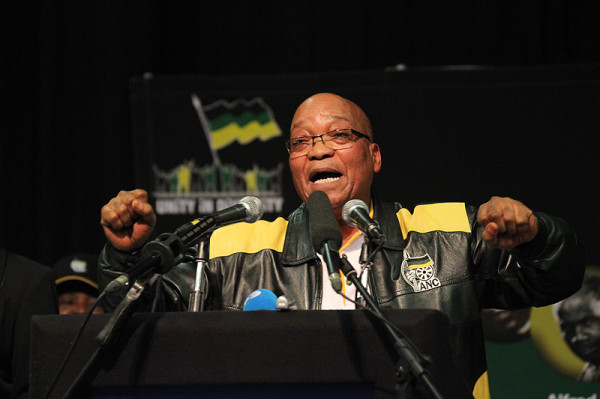
President Jacob Zuma opened the National Education, Health and Allied Workers’ Union (Nehawu) conference on Wednesday with a rousing rendition of a song about former president Nelson Mandela, who is gravely ill.

Loosely translated from isiZulu, he sang: “We are walking a long distance, so said Nelson Mandela to his supporters.”

Dipping his body into the song, as the red-clothed delegates harmonised and ululated, Zuma sang several refrains.

On Sunday, his office broke the news that Mandela was critically ill, after being in hospital with a recurring lung infection since June 8.

When he finished the song, Zuma began his prepared speech.

He was addressing the conference in his capacity as African National Congress president. – Sapa

When the Mandela machine stops, what monstrous reality will return?

roodt_fbfoto

by Dan Roodt

Last night I woke up, checked my Twitter and, sure enough, there was a Beeld journalist tweeting at one or two in the morning that nothing was happening outside Mandela’s hospital in Pretoria, except the noise of the foreign journalists’ generators. I suppose they have outside broadcast units over there, vying with each other to be first on the air in Europe or the US to tell the world that Mandela is dead.

[followbutton username=’danroodt’ count=’true’ lang=’en’ theme=’light’]

Like Dan Roodt’s Facebook page

Mandela is that ultimate postmodern illusion: a fable, a South African simulation. Mandela sprung from a rural African village in the Eastern Cape, the most backward of South African provinces where the age-old African cattle culture is still being perpetuated and where subsistence farmers eke out a living on small patches of land controlled by their chief. From these primitive, rural surroundings Mandela was plucked to be put into global circulation, on gold coins and – more recently – even on our banknotes.

Shortly after Mandela’s familiar visage came rolling off the presses of the South African mint at Halfway House, between Johannesburg and Pretoria, the rand took a dive. It declined to over R10 per US dollar, as if the gods were saying: we don’t like what we see on our banknotes.

Announcing the new banknotes was the governor of the South African Reserve Bank, a Ms. Gill Marcus.  I caught some radio snippet where she was saying that “the new notes show our international icon, Nelson Mandela”. Her use of the possessive pronoun was quite revealing, because I strongly suspect that Mandela has always been a kind of extra in someone else’s movie or reportage. His incongrous first name “Nelson” was given to him by his white missionary teacher one day, a little bit like South African whites give their servants Western names like Petrus, Jonas, Sophia and so on.

Mandela never actually ruled South Africa. He was in office for two years but at the time, according to inside information, factions within the ANC fought over who should have control over his diary. Like Gill Marcus, they also had “their Mandela” who represented some kind of political capital to them, Mandela coins in a bag, as it were.

The bespectacled, frumpish Ms. Marcus is quite a bizarre central bank governor. She is no chic, French Christine Lagarde. When she occasionally announces that “interest rates are being kept unchanged” and rattling off a few clichés about the economy, she sounds like she is putting on an act. Simulating. Her suburban Johannesburg accent makes you think she should be pushing the trolley at some Northern Suburbs supermarket, filled with corn flakes and bottles of Coke, rather than running our central bank.

Gill Marcus also has a brother. His name is Gilbert. It sounds even more English than Nelson, so whoever christened him was somehow pretending to be distantly related to the House of Windsor too, or at least some or other British peer. The last time I saw Gilbert he was appearing in the Johannesburg High Court on behalf of the ANC and trying to defend the slogan “Kill a Boer, kill a farmer”, that innocent little ditty sung at political meetings of the ruling party. Mandela’s party, if you have a bad memory.

Marcus defended “Kill a Boer” by comparing it to the French national anthem, La Marseillaise, “not to be taken literally”. If “Kill a Boer” really is the ANC’s and Mandela’s “Marseillaise”, why is it not South Africa’s national anthem? one wonders. At least that would explain the explosion of racial and ethnic violence that commenced in South Africa, from the very moment that Mandela and his charming murderess of a wife (now ex-wife), Winnie, hoisted their famous fists in the air.

So Ms. Marcus runs the central bank and Mr. Marcus looks after freedom of speech for anyone out there who might want to go and kill some Boers. Interesting. Then they say that Mandela was all for “reconcilition” in South Africa. I remember one of his speeches where he told whites bluntly to emigrate if they didn’t like crime and violence or the corrupt ways of this party.

Lying in his bed at the Mediclinic Heart Hospital in Pretoria, Mandela has already been deified. As one news service put it: He is “a man considered by many to be a living saint”. No less. A woman with an American accent said on 702 Talk Radio in Johannesburg that “Mandela had performed many miracles”. I must have missed those. Did he turn water into wine? Did he walk on water?

However, it is precisely this unreal, messianic aspect of the Mandela cult that is so revealing about the void at the heart of the so-called post-apartheid state. Or the lies, the dissimulations, the propaganda, the make-believe. Whereas South African school books nowadays state that Mandela “went to prison because he was a leader” or “for his beliefs”, the truth is far less palatable. He was engaged in terrorist activities for a quasi-communist organisation getting support from the Soviet Union and left-wing groups and individuals in Britain. Until 2008 his name still appeared on a terrorist watch list in America, as USA Today reported:

“Nobel Peace Prize winner and international symbol of freedom Nelson Mandela is flagged on U.S. terrorist watch lists and needs special permission to visit the USA. Secretary of State Condoleezza Rice calls the situation ’embarrassing,’ and some members of Congress vow to fix it.”

But as Mandela stated once, without a hint of irony: “Some terrorists become heads of state.” Or saints.

How do we explain the Mandela cult? Last night some black man tweeted: “Mandela is South Africa’s George Washington, except he never owned slaves.” I beg to differ. Mandela had thousands of slaves, white slaves in the media who would stay up, upon a winter’s night on the Highveld.

I doubt that Mandela ever wrote a speech. They were all written for him, the make-believe black Messiah. Although, even calling Mandela “black” is something of a misnomer, as he was genetically tested and found to be partly Khoi, a descendant of the original hunger-gatherer groups that had inhabited the whole of southern Africa before they were driven out by the incoming Bantu tribes from further north. Within South Africa’s complex racial nomenclature, Mandela is really a Xhosa-speaking Coloured. When the notorious black nationalist and one-time spokesman for the ANC government, Jimmy Manyi, said in 2010 that “there were too many Coloureds in the Western Cape”, he could have included Mandela in that statement.

However, the fact that Mandela’s “blackness” is somehow suspect, adds even more to his status as a simulacrum. In a certain sense Mandela is a fugure who stepped out of white liberal fiction, an avuncular ex-terrorist who could be photographed in a Springbok rugby jersey in various poses. He would smile, exude bonhomie, and the crowds would go wild.

In essence, Mandela is the product of public relations, by design and by accident. He went to prison as a failed terrorist who got caught before he could do any real damage, although he harboured the intent. Out he came as a miraculous martyr, cameras flashing. Many people – most of them white and left-wing, if not communist – have toiled over the years to make him famous. Again without irony, people refer to the “Mandela brand”.

South Africa is an anomaly. As no less a commenator than Samuel Huntington stated in his Clash of Civilizations, the country imagined itself to be Western, yet it was rejected by the West. All the white, Western governments, with Bill Clinton’s American administration in the lead, dismissed South Africa in favour of the Mandela brand. He was the miracle cure, the panacea.

As it happened, he did not cure us. The term “witch doctor” is no longer politically correct and these days in South Africa you can get a prescription from your “traditional healer” who will invoke the spirits to cure you, while you perform some rituals or imbibe muti or medicine concocted of animal parts and herbs. Mandela, the ultimate traditional healer, has laid Western science low. Also political science. But, as so often happens after all the mumbo jumbo, he has not cured us. South Africa is still the same, the same population, the same ethnic and racial diversity, the same ills and problems.

Except, it has got worse. When Mandela and his merry band of exiles took over, there were fewer than 30 million people and no foreigners in significant numbers. Now the population has doubled and the ANC’s open-border policies have added millions of foreign Africans to our demography. It has resulted in xenophobic attacks and killings, riots, looting, as well as more strain on an already over-burdened infrastructure.

The old South Africa was a besieged state, besieged above all by Mandela’s white slaves, the journalists, who vilified it at will, without regard for accuracy or measure. They had introduced the culture of dissimulation that has slowly gnawed away at our meanings until now, when we have nothing left.

South Africa is an empty shell, a failing state. Its criminal levels of corruption have transformed it into an Ali Baba’s cave to be looted constantly. It is not so much Mandela’s legacy as that of his puppet masters, whoever they might be. He was just the extra on the stage, the figurehead, the aged male model in his trademark gaudy shirts.

Once South Africa had an identity, a sense of coherence. It may be hard to believe now, but at times in the past it enjoyed some esteem. That old South Africa was tied to Afrikaners and their policies which were subsumed under the increasingly odious propaganda term, apartheid. Many babies were thrown out with the bath water.

In a real sense, South Africa as a country has been abolished. We only have myths left. Or vacuous, vapid slogans that I do not even want to repeat here. We imagined that we were America, that Mandela was a Martin Luther King that had come to save us. But despite the American fast-food brands on all our street corners, this is not America.

Of course Mandela resonated with the American racial imaginary, that of the tens of millions of guilt-ridden white Americans after the civil rights movement, It accounts for his meteoric rise to being a media colossus. But the media machine that created him, that made him rise from the muddy puddles of Qunu, is just Tinseltown. It has no substance.

In E.M. Forster’s dystopian novella, The machine stops, everyone lives in a great machine that supplies them with their daily diet of illusions and allows them to communicate freely, a bit like the internet today. However, there is moment when the main character says to his mother in another room, in another country: “The machine stops.” After that, all hell breaks loose. At first slowly, then apocalyptically.

This is not to say that I am predicting that there would be genocide or the wholesale slaughter of whites when Mandela dies. But the set of illusions associated with the Mandela brand will not survive him.

At the very least, the hangover will be immense. South Africa, or the patch of polluted, mined earth that still goes by that name, no longer exists, apart from still issuing passports and identity papers. Under successive waves of negative and euphoric propaganda, it has lost its sense of the real, a bit like a scizophrenic patient. It has multiple identities: it is jabbering, now American, now African, then it wants to don the Springbok rugby jersey.

One nation, one beer, it mutters to itself.

But some day soon the reality check will have to come, when there is nothing left to loot, when Gill Marcus’s reassuring platitudes on the rand will no longer suffice to delude us and the rest of the world.

Vorster thought that the alternative to reform was “too ghastly to contemplate”. That alternative was revolution. And Mandela was the archangel of revolution that had brought us that ghastly alternative: farm murders, racial demagoguery, bankrupt municipalities, quotas, never-ending riots and mayhem.

I daresay there exists a level of ghastliness that we have not yet seen, of the Zimbabwean order, in the guise of “land reform”, hyperinflation and even more violence than what we have already become inured to.

That monstrous reality may not be very far.

[followbutton username=’danroodt’ count=’true’ lang=’en’ theme=’light’]

Like Dan Roodt’s Facebook page

AbaThembu elders to decide on Mandela

makaziwe_mandelaA group of AbaThembu elders is preparing to fly to Gauteng to assess a critically ill Nelson Mandela and decide “what to do”.

The Times has learnt that at an urgent meeting called by Mandela’s eldest daughter, Makaziwe, at his home in Qunu in the Eastern Cape yesterday, it was decided that the elders and Mandela’s confidants would visit the former president in the Mediclinic Heart Hospital in Pretoria.

According to a CBS News report, the former statesman – who has been in the hospital for 18 days with a lung infection – was ”unresponsive and has not opened his eyes for days”.

One of the local chiefs said Mandela spokesman Nkosi Bhekizulu Mnqanqeni and possibly Nkosi Bhovulengwe Mfundo Mtirara would be among the elders who would assess Mandela.

They are likely to fly to Johannesburg today and head straight to Mandela’s bedside.

Family elder Napilisi Mandela confirmed they would discuss delicate matters.

A chief said: “They want to visit Tata himself and discuss what should be done.”

Last night, Nkosi Mtirara would say only that yesterday’s gathering was “a family meeting”.

But The Times understands that this meeting, the first of its kind, focused not only on Mandela’s health but also on the moving of family graves from Qunu to Mvezo in 2011. The graves were moved by Mandela’s grandson, Chief Mandla Mandela.

Vehicles transporting family members also visited the guarded burial site. The entourage spent almost 30 minutes looking around before moving back to the house.

The meeting adjourned at 12.30pm and the family was rushed back to the airport.

There was, however, little activity at Mvezo Great Place yesterday, other than the installation of a new steel gate at the entrance. – timeslive.co.za

Senegalese go into hiding for Obama visit

africaobamaOrdinary Senegalese are drawing lessons from the past and leaving nothing to chance so that they avoid “foreseeable” embarrassing circumstances during President Barack Obama’s visit, which commences on June 26.

Enduring long hours in traffic jams while waiting for high profile visitors to pass through, being unable to hawk their wares freely in the streets and being virtually “held prisoner in one’s house” are some of the embarrassments they recall from the 1998 visit of former American president Bill Clinton.

Many businesses particularly in downtown Dakar and its peripheral districts have already started recording low sales due to this anticipation. “We’ve virtually been closed for a week now,” says Doudou Keita, a garment seller in Guelle Tapé, a few kilometres from the city centre.

Mbaye Ndiaye, an economist formerly employed by the Trade ministry, says the visit will cause losses of several million dollars, especially to the informal sector “who will take months to recover”.

“While the Americans are capable of making our country a better place, Obama is also capable of making our small businesses in Dakar poorer,” argues Ndeye Diop, a doughnut and coffee seller in a conversation with her colleague.

Assuredly, Ndeye’s colleague Bintou Diagne retorted in English with a native accent “Yessi, e can!” It was a play on Obama’s 2008 campaign slogan: ‘Yes we can.’

These “unforeseeable” embarrassments have led thousands of Dakar city dwellers whose neighbourhoods are being “bunkered” to return to their villages until Obama – nicknamed “the big cat” – goes away.

Barack (which means ‘shack’ in Wolof) “should have lodged in a shack to show solidarity with the majority shack dwellers here”, leading comedian “Kutia” insistently jokes on television about Obama, who he calls the “White House rent payer”.

Pickpockets and prostitutes

Since the announcement of the date of his arrival, the thousands of street beggars in Dakar have visibly disappeared and gone underground.

The same thing has happened to the noisy hawkers on the streets of the capital, most of whom were mistakenly picked up by police during a clean-up against pickpockets classified by security agents as “persons with the propensity to cause embarrassment”.

This category also includes both licensed and unlicensed prostitutes who made good profits during visits by less high profile statesmen whose delegations frantically sought out their services.

But for Obama’s visit, they are among those bearing the heaviest brunt of the tour, which has been extended from 48 to 72 hours beginning this Wednesday.

“No matter…some of us can still harvest from Obama’s field”, says Aisha Konaté, a sex worker with nearly two decades of experience and who boasts of having contacts capable of roping in “high profile” clients to her private abode

For a week now, the national television “RTS” has been clocking Obama’s upcoming visit with the Senegalese and American flags displayed on the top left corner of TV screens, and the inscription “D-Day 3 days to go,” or whichever days are pending.

The youthful face of Obama has for two weeks been very visible on a billboard on one of the tallest buildings along the Place de l’independence main square in Dakar.

And elsewhere, especially at the heavily secured Leopold Sedar Senghor International airport, several giant Senegelase and American flags are flapping high in the sky around photographs of the two heads of state. – africareview.com

US exporting cultural war to Africa

ugandagayBy Barbara Bradley Hagerty

The battle over the Bible and homosexuality has torn apart Christian churches and entire denominations in the United States. But what happens when that culture war is exported to other countries? Ugandans are finding out — with potentially deadly consequences.

Uganda is now considering a bill that would impose the death penalty or life in prison on gay men and lesbians for some homosexual acts.

To understand how this bill came to be, one needs to know the story of King Mwanga. In 1886, Uganda’s king ordered some two dozen male pages to have sex with him, and when they refused because of their Christian faith, he ordered that they be burned to death. Every year on June 3, Ugandans celebrate a national holiday honoring the Christian martyrs and deploring the pedophile king.

Into this climate stepped Scott Lively, an American evangelical and president of Defend The Family International. In March 2009, Lively traveled to Uganda to speak, along with two other Americans from “ex-gay communities,” about the “gay agenda.”

“The gay movement is an evil institution,” he told Uganda’s Family Life Network. “The goal of the gay movement is to defeat the marriage-based society and replace it with a culture of sexual promiscuity.”

Then Lively, who has authored a book called The Pink Swastika, played into the fears raised by Uganda’s history.

“Male homosexuality has historically been, not adult to adult; it’s been adult to teenager,” he said. “It’s called pederasty — adults sodomizing teenage boys.”

Later in his trip, Lively addressed the Ugandan Parliament on the gay issue, recommending therapy to help people leave their gay lifestyle. A few months later, a bill was introduced to execute people for some homosexual acts.

Lively says he never suggested putting the death penalty into bill, and he says he thinks the bill goes too far.

“But the fact that they’re willing to stand up and say, ‘No, we are not going let you homosexualize our country!’ — that is a step in the right direction, and I would hope that it would spread to other countries,” he says.

Lively is considered a fringe player in the American culture wars. But in recent years, mainstream evangelicals in the U.S. have forged close spiritual and financial ties with their biblically conservative African brothers. For example, dozens of Episcopal churches and even some dioceses have left the U.S. church to go under the authority of Anglican bishops in Uganda, Nigeria and Rwanda — primarily over the gay issue.

Jim Naughton, a former canon in the Episcopal Diocese of Washington, D.C., says their message plays one way in the U.S., but differently in a place like Uganda. And they should have known.

“If you go to countries where there’s already a great deal of suspicion and maybe animosity towards homosexuals, and begin to tell people there, ‘Well, actually these people are child abusers, they’re coming for their children, that they’re the scourge that is being deposited on you by the secular West,’ you’re gonna get a backlash.” Naughton says it’s like “showing up in rooms filled with gasoline, and throwing lighted matches around and saying, ‘Well, I never intended fire .‘ ”

Many U.S. evangelicals, including Lively, say they are “mortified” by the death penalty provision. Naughton doesn’t buy it.

“I think if they were mortified, they would have been mortified immediately,” he says. “Instead they were mortified — oh, two, three months into the campaign against this thing, when it was getting real traction.”

Megachurch pastor Rick Warren is a case in point. Warren, author of The Purpose Driven Life, has extensive ties with religious leaders in Africa, including Uganda. Initially, he refused to condemn the bill. Finally, two months after the bill was introduced, he urged pastors in Uganda to oppose it.

“We are all familiar with Edmund Burke’s insight, ‘All that is necessary for evil to triumph is for good men to do nothing,’ ” Warren began. He explained his silence by saying, “It is not my role to interfere with the politics of other nations,” then stated that the bill “is unjust, it’s extreme, and it’s un-Christian.”

If Warren was slow to condemn the bill, other Christian conservatives have yet to do so, says Warren Throckmorton, who teaches psychology at Grove City College and has been monitoring U.S. evangelical response. He says some of the Christian groups most publicly tied to Uganda have been the quietest. Joyce Meyer Ministries, Oral Roberts University, the College of Prayer in Atlanta — all have close ties and declined to express reservations about the death penalty.

“Silence is often interpreted as consent,” says Throckmorton, who is himself a conservative evangelical. “So I think those kinds of responses may lead those individuals in Uganda to think that perhaps what [they’re] doing really is according to the evangelical faith.”

“The question is, what’s the most effective way to deal with it?” asks Martyn Minns, bishop of the Convocation of Anglicans in North America, a group that broke from the Episcopal Church and is now aligned with Nigeria.

“Sometimes megaphone diplomacy doesn’t work,” Minns says. “Sometimes quietly talking to folks who will actually shape the final product is more effective.”

His group has been working behind the scenes to remove the death penalty from the bill. But Minns also says Uganda has a right to resist the wave of gay activism that he says is flooding in from the West.

“It’s hard for any of us who have not lived under colonial rule to realize how offensive it is for people who have won that freedom to now basically be told, ‘You’re fools. You’re ignorant. One day you’ll grow up and be like us,’ ” Minns says. “That comes across in a very patronizing way.”

This week Uganda’s president called for the bill to be withdrawn, saying it was harming the country’s foreign policy. The sponsor has refused to do so, and it is expected to be considered in February. But no matter what happens, the story of Uganda is considered a cautionary tale of what can happen when the West’s religious debates are transplanted to another culture. – NRP

Mandela’s ex-doc arrives at his bedside

ramlakanDr Vejay Ramlakan arrived on Wednesday at the Medi-Clinic Heart Hospital in Pretoria, where former president Nelson Mandela remains in a critical condition.

Ramlakan is the country’s former surgeon-general. He stepped down earlier this year.

His car was not searched by the police and security guards when he arrived at the hospital.

Security at the private hospital has been increased since Mandela was admitted on June 8 with a recurring lung infection.

Police started searching vehicles entering the facility at about 5am.

Earlier, Tshwane metro police officers barricaded part of Celliers Street, leading to the hospital’s main entrance.

Numerous traffic patrol cars were also in the area. – SAPA

Obama’s security takes over SA

usmilheliHundreds of secret agents, three truckloads ofbulletproof glass sheets, 56 support vehicles – and fighter jets.

These will all be part of the security deployed this weekend to ensure US President Barack Obama’s safety during his visit to South Africa.

Referring to a US government internal planning document for the visit, the Washington Post reported that US Secret Service agents would be posted in secure facilities. An aircraft carrier with a fully equipped medical trauma centre will be part of the security arrangements.


According to the newspaper, support vehicles, which include 14 limousines, will be airlifted in by US military cargo planes.


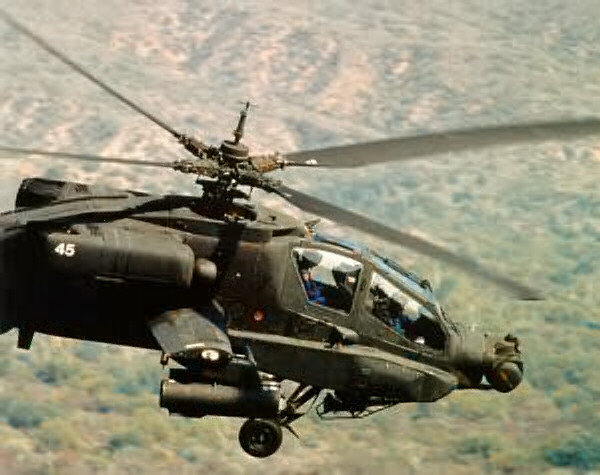
US military helicopters were reportedly spotted yesterday flying over Pretoria and Johannesburg’s northern suburbs.


National police spokesman Sally de Beer confirmed the US aircraft fly-overs, saying they were part of an exercise in conjunction with the US government to ensureeverything ran smoothly when Obama arrived.


“There is nothing out of the ordinary. No outside country is operating independently [and] there is no one taking over our country,” she said.


Three Sea Knight helicopters and two Black Hawks were spotted flying over Illovo and Sandton.


ANC alliance partners Cosatu and the SACP have vowed to protest against the visit.


International Relations and Cooperation Minister Maite Nkoana-Mashabane said Obama would be warmly welcomed on Friday, as would any other “friendly” head of state.


She said Obama’s “historic visit” followed an invitation by President Jacob Zuma.


Obama will hold talks with Zuma in Pretoria on Saturday.


“The two leaders will discuss the status of relations between South Africa and the US.


“The talks will range from trade, health and education cooperation, development assistance to peace, security, development and cooperation in Africa,” she said.


Obama will arrive on Friday and will preside over a Young African Leaders Initiative meeting at the Soweto campus of the University of Johannesburg.


He will visit Robben Island and a US-funded Desmond Tutu Centre in Noordhoek. He will speak at the University of Cape Town on Sunday. – timeslive.co.za

Mandela children quarrelling over grave site

Qunu
Qunu

Newspapers in Gauteng reported on Wednesday that former president Nelson Mandela’s grandson Mandla Mandela stormed out of a family meeting in Qunu, in the Eastern Cape, after a disagreement.

Three sources told The Star the family was torn between Mandla Mandela –who wants Mandela buried at his birthplace in Mvezo — and the rest, who felt that his wish to be buried next to his children should be respected.

The Star reported that a Mandela family meeting held in Qunu on Tuesday was to discuss a “significant” family matter.

The meeting was attended by the family, United Democratic Movement leader Bantu Holomisa and Public Service and Administration Minister Lindiwe Sisulu.

The Times reported that a group of elders planned to fly to Gauteng to assess the critically ill Mandela and decide what to do.

It reported that the meeting on Tuesday had focused on Mandela’s health, and on the moving of the family graves from Qunu to Mvezo in 2011. The graves were moved by Mandla Mandela.

The Times reported that the family wanted the graves of three of Mandela’s children — sons Makgatho and Thembekile and daughter Makaziwe — to be in Qunu.

The newspaper reported that it understood that a fuming Mandla Mandela, who moved the graves without consulting the family, stormed out of the meeting.

Mandla Mandela could not be reached for comment. – Sapa