Steeped in amnesia and anosognosia

Theo Venter
Theo Venter

by Riana Malan

This week, with the world “remembering” South Africa’s transition to democracy presided over by former terrorist Nelson Mandela, was one steeped in amnesia and worse, anosognosia.

As Mandela was taken to lie in state at the Union Buildings, the seat of government in the capital Pretoria, South Africans recalled the day he was sworn in as the country’s first black president, 19 years ago.

Back then, many whites saw a dark future as the white generals and police chiefs of the apartheid government saluted their new boss, watched by dozens of world leaders, most of whom supported the long terror campaign against whites.

For the Afrikaans-speaking minority, which had wielded political power for half a century, it was an uncertain time. Mandela feverishly tried to reassure whites that he bore no grudge, but most Afrikaners were skeptical. And their fears have yet to be assuaged.

Whites feared that the black majority would seek revenge for perceived injustices. They were not wrong.

Cheered on by nations like the US, Britain and Australia — who until recently practised much worse forms of racial discrimination — the governing black majority embarked on a path of anti-white and discriminatory measures to disenfranchise the minority white population.

Mandela continued to make overtures to whites to placate them while he set in motion draconian racial laws to punish whites. Conscious of the power of symbols, he famously donned the jersey of the all-white Springboks rugby team — once an emblem of apartheid — to award the Rugby World Cup trophy when South Africa lifted the tournament on home soil.

This was the morphine the Afrikaners needed to forget the ever increasing attacks on and torture of white farmers, the scourge of child rape and the bold stripping of all their assets.

Jim Goad writes eloquently about what the obituaries all omit.

As postmortem tributes oozed sanctimonious brown-nosing, it should have been called Up Mandela’s Ass. I doubt that this saccharine chunk of carefully packaged propaganda was any more idealized, unrealistic, or one-sided than the thousands of other tributes that burst forth like millions of sugarcoated tears after his passing, but I was only able to handle one Mandela tribute lest my eyes roll so violently that they pop out of my head.

The 20/20 special peddled such obviously fraudulent lies as the allegation that Mandela’s African National Congress was “committed to nonviolent resistance.” Not a peep was made about the fact that Mandela was sentenced to prison not only for “treason”, but that he pled guilty to an indictment accusing him of complicity in “the preparation, manufacture and use of explosives—for the purpose of committing acts of violence.” Nothing was said about the radical guerrilla army he founded called “Spear of the Nation” that was linked to hundreds of acts of violence and sabotage. Nothing was said about his claim that “violence in this country was inevitable.” Nor was it mentioned that he was offered freedom from prison in February 1985 if he agreed to foreswear violence but that he refused. And they certainly didn’t dare to show a clip of an ANC “necklacing” that’s one of the most brutal snippets of mob violence I’ve ever witnessed. Nothing was said about the Church Street Bombing or any of the other bombings and violent acts committed in the ANC’s name that in other contexts would have Mandela dubbed a violent terrorist. Instead, 20/20 referred to him with the much cheerier sobriquet of “freedom fighter.”

The show argues that Mandela was able to quell racial tensions in South Africa and bring together a “rainbow nation” merely by being big-hearted enough to endorse the country’s rugby team. We are not informed that two years after his release from prison, Mandela joined ANC members in a group sing-along of a cheery ditty whose lyrics reputedly included “kill the whites.” Nothing was mentioned of other ANC slogans such as “kill the Boers” and “one settler, one bullet,” nor of ANC officials’ comments such as “When Mandela goes, we will kill you whites like flies.” And they didn’t dare show any photos of the thousands of white farmers that have been savagely massacred since apartheid ended. And we were not informed that rather than ushering in a post-racial utopia, South Africa’s Black Economic Empowerment program dictates wealth redistribution along racial lines.

The program refers to his second wife, Winnie Mandela, as “fiery and controversial” but neglects to include the fact that she headed a criminal gang that was responsible for the beatings, murder, and torture of adults and children. Nor did it mention his first wife’s divorce filing that included allegations of repeated physical abuse and threatening her with an axe.

We hear glowing reminiscences that Mandela was a voice of “democracy” but not a word about the fact that he was a lifelong committed Marxist. Even though he shrugged off accusations of being a communist, the South African Communist Party claimed on Friday that “At his arrest in August 1962, Nelson Mandela was not only a member of the then underground South African Communist Party, but was also a member of our Party’s Central Committee.” Nothing was mentioned about allegations that he handwrote a tract called “HOW TO BE A GOOD COMMUNIST” that claimed “THE CAUSE OF COMMUNISM IS THE GREATEST AND MOST ARDUOUS CAUSE IN THE HISTORY OF MANKIND.”

The 20/20 special left out many other inconvenient facts. Not a whisper was made about the fact that Israel was a huge supporter of South African apartheid and the last country on Earth to sever ties with the regime.

Also left unmentioned is the fact that since apartheid ended in 1994, South Africa has slipped from #93 on the Human Development Index to #121 in 2013. We are not told that the nation now boasts the world’s highest Gini coefficient, highest per-capita rate of rape, highest total number of HIV infections, and a per-capita murder rate seven times that of the USA. We don’t hear about deliberate gang rapes that are jovially referred to as “jack rolling,” nor the impenetrable metal “rape gates” that several Afrikaners have placed on the entrances to their bedrooms like jail doors. We don’t hear about the gated communities and the flame-throwing cars. We don’t hear the merest suggestion that South Africa is likely only a decade or two away from becoming Zimbabwe.

Instead, we get Michelle Obama and Oprah Winfrey creaming their jeans over His Holiness. And at the very end, we see children’s choirs in South Africa and New York City singing a version of John Lennon’s “Imagine.” The final frames show a black boy hitting sour notes as he sings the line “And the world shall live as one.”

Consciously or otherwise, that coda may encapsulate what Mandela truly represents and why he’s being canonized to such an absurd degree—he was a charismatic footservant of globalism. In the end, despite his image as the foe of colonialism, he may have been nothing more than a useful tool of global finance. He is a token of white colonialism’s surrender to a specifically anti-white breed of global financial colonialism. If he’d been white and fought bravely in the name of blood and soil, his eulogists would be singing a much different tune.

The financial Powers That Be will continue to rape and exploit South Africa’s bounteous mineral riches, and the great masses of the country’s blacks will continue to wallow in violence, poverty, disease, and hunger. The main difference will be that the pesky and irksome Boers who pulled the region out of the Stone Age will no longer be in the way. Like the pioneers who tamed the American West, they have served their purpose and are now being discarded.

Mandela famously visited the Afrikaner enclave of Orania in 1995 to have tea with Betsie Verwoerd, widow of the architect of apartheid, Hendrik Verwoerd.

Perhaps this visit caused hundreds of thousands of whites to leave the country for good, because they finally began to understand the disingenuousness of the man.

Theo Venter, a “political analyst” who lectures at North-West University, and paid sycophant of the New World Order, says “one of the legacies of black emancipation has been the emergence of a black middle class that shares the same fears as whites”.

This nonsense is a popular theme with foreign powers that believe they have the money and influence to make racial differences and cultural mores go away.

The boos that current President Jacob Zuma, who has been dogged by Anglo-American criticism, elicited at Tuesday’s memorial service, according to Venter, was a good thing.

“The people who booed Zuma were black not white,” he says, forgetting that South Africa now has a far left and an extreme left vying for power. Whites, who make up around 9 per cent of the population, are helpless observers of the situation, rather than protagonists.

“In national politics the role of Afrikaners as a distinct group is gone forever,” Venter smiles, himself an Afrikaner. As the ANC becomes embroiled in infighting and scandal he sees South Africa’s 1993 constitution as “one of the most progressive in the world” and “the glue that binds the nation henceforth”.

Venter clearly means the “eraser” that binds the nation, for the demise of whites is eagerly sought by all black parties. He would never be mistaken for a real thinker, and his masters must be pleased since they probably believe they have enough money to smooth over the white genocide with spin.

Three caught for raping, stabbing three-year-old

childrape3Police arrested three black male suspects after a three-year-old girl escaped death when a resident found her crying hours after she was allegedly raped and stabbed in Thaba Nchu.

The little girl, found rape and abandoned at an old industrial site in Thaba Nchu, was apparently attacked by three teenagers aged between 15 and 18.

Police said it is alleged that the victim was raped before the suspects stabbed her several times all over her little body. Police could not confirm the number of times the victim was stabbed.

According to the information given to police, it is alleged that on Sunday a woman residing in Sakanyoka township left the three year old with an older sibling when she went to a tavern.

“It is alleged that three suspects came in the house and took the victim to an old industrial area in Thaba Nchu, where they started to exchange raping her, before they stabbed her several wounds and left her, thinking that she was dead,” said police spokesperson, Consolation Mokoale.

“At about 10:00 in the morning a community member heard a child crying from the building and went to investigate.  She found the girl in a pool of blood,” said Mokoale in a statement on Tuesday.

She said police and paramedics were called and the girl was found alive but in a critical condition.

“She was taken to Pelonomi medi-clinic for treatment. Police received a tip off and three suspects aged between 15 and 18 were arrested for kidnapping, attempted murder and rape,” Mokoale said.

They will appear before Selosesha Magistrate Court on Wednesday.

Tutu home burgled during Mandela memorial

tutu3Emeritus archbishop and virulent critic of white South Africa, Desmond Tutu had his home broken into while he was away speaking at Nelson Mandela’s memorial.

An aide confirmed on Wednesday that Tutu was burgled on Tuesday night.

“We are not able to tell exactly what was stolen, the archbishop and his wife were not at home. The house was not pillaged,” his aide Roger Friedman said.

The strange burglary called attention to Tutu who was largely ignored by the foreign press at the memorial.

Tutu used the news of the burglary to repeat what he had said at the memorial: “I want to show the world we can come out here and celebrate the life of an icon.”

Tutu’s supporters claimed the timing of the incident is embarrassing for South Africa when the eyes of the world are on the country, but Tutu’s positive message contradicted their claims.

It is the second time in five months that Tutu’s home in Milnerton, Cape Town had been singled out.

In August criminals broke into the home while the archbishop emeritus and his wife Leah were at home sleeping, but where unharmed.

Burglaries are common in South Africa and are frequently accompanied by violence. Most burglars are black youths.

Tutu, a Nobel Peace Prize laureate was once regarded as the voice of South Africa’s moral conscience, but his marxist leanings and racist calls for taxing only whites, have cost him the support of many well-meaning South Africans.

Since retiring as archbishop in 2010, Tutu has tried hard to remain in the public eye by berating religious intolerance toward gays. The theme he has chosen is still very unpopular with blacks.

His detractors call him the “purple frock clown”.

Swiss clocks tick past deadline to disclose hidden assets

swissclockSome 300 Swiss banks had until the end of Monday to determine whether to give the United States records of Americans hiding assets there as Washington threatens institutions with legal action for assisting those avoiding US taxes.

The US and Switzerland have been at odds in recent years, with Washington alleging that Swiss banks have helped US citizens hide billions of dollars in assets from authorities.

Pursuant to a deal between the nations, Swiss banks can avoid US prosecution by volunteering account information on American clients, along with paying a fine.

The penalty equals between 20 and 50 percent of the value of the undeclared accounts, based on when they were conceived. If a bank opened an undeclared account before 2009 – when the Swiss banking giant UBS was fined US$780 million by the US for tax evasion – it would face a lower penalty.

Notoriously secretive Swiss banks that do not disclose account information will face stiffer penalties and prosecution in the US if Washington finds they have hidden Americans’ assets.

Egon Vorfeld, managing partner at the Forum Finance Group SA, suggested smaller banking entities will feel the brunt of the high fines even though they are less likely to hide US citizen assets.

“Most of the larger banks are already cooperating, and it’s fairly clear which direction they are going,” Vorfeld told RT in an interview. “They have run the numbers and know exactly what they are doing. Perhaps some of the smaller banks could be affected because the fines – the worst of them – could be very onerous on them.”

Negotiator of the deal Swiss Finance Minister Eveline Widmer-Schlumpf has encouraged banks to comply, but experts are split on whether bending to Washington and offering disclosure is a good idea.

“If the United States is threatening all the Swiss banks that it will block their access to the US market and to conducting operations in dollars, let it say so clearly, and let Switzerland take the country before…the World Trade Organization for abusing its dominant position,” wrote business lawyer Douglas Hornung in a recent opinion piece in the Le Temps daily.

“But please, don’t give in to inexcusable blackmail and let us remain the proud masters of our destiny, and of our past. We have a choice,” he added.

Vorfeld told RT the issue of why the US feels it should be able to tell Swiss banks what to do comes down to its large footprint in global banking operations.

“The US has an awful lot of clout and is able to throw its weight around, and feels justified to do so. But clearly a lot of other people feel there is injustice in this supposed justice system, that a lot of the smaller banks will be possibly victims,” Vorfeld said, suggesting those smaller institutions are also more likely to possibly evade the US demand. RT

More than 500 world-famous authors sign anti-surveillance petition

jmcoetzee
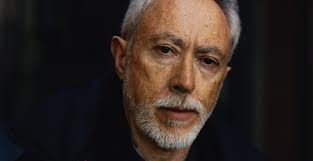
JM Coetzee

More than 500 renowned authors – including five Nobel laureates – from across the globe have signed a petition demanding to end ‘mass surveillance’. It follows the revelations over the last few months of US’ and other countries’ spying.

Their open appeal is called ‘A Stand for Democracy in the Digital Age’. Among the signatories are Nobel laureates Orhan Pamuk, JM Coetzee, Elfriede Jelinek, Günter Grass and Tomas Tranströmer.

Others who signed the letter include Bjork, Umberto Eco, Yann Martel, Ian McEwan and many others.

“WE DEMAND THE RIGHT for all people, as democratic citizens, to determine to what extent their personal data may be collected, stored and processed, and by whom; to obtain information on where their data is stored and how it is being used; to obtain the deletion of their data if it has been illegally collected and stored. WE CALL ON ALL STATES AND CORPORATIONS to respect these rights,” the open appeal read.

It adds that “a person under surveillance is no longer free; a society under surveillance is no longer a democracy. To maintain any validity, our democratic rights must apply in virtual as in real space.”

The letter also calls for the creation by the UN an International Bill of Digital Rights.

Everyone is invited to sign the open appeal at www.change.org/surveillance

The petition comes in the wake of massive revelations by Edward Snowden that disclosed surveillance all over the globe carried out by NSA.

In the latest incident, it has been revealed that the NSA and the UK’s GCHQ spying agencies collected players’ charts and deployed real-life agents into online games World of Warcraft and Second Life.

The move was organized by group of independent authors who made it possible through personal contacts and private networks.

Danish writer Janne Teller, one of the organizers, told the Daily Mail that the authors’ community is “really very worried about mass surveillance” which is “undermining democracy totally.”

“I think it’s quite significant when you have 560 or so of the greatest contemporary writers, from all across the world, expressing a very serious concern, because these are people who always work on the big philosophical questions of life. Hopefully their concern matters to politicians,” Teller added.

The concern listed by the appeal’s organizers is reflected in statistics.

A recent survey by the writers’ rights group PEN discovered that 85 percent of its US members are worried about government surveillance, according to the organization’s report.

Twenty-eight percent had also curbed their social media use, while 24 percent are avoiding certain topics in phone and email conversations. – RT

Brit locked up for telling Nelson Mandela joke

Neil Phillips, right

Neil Phillips was taken to a police station after posting jokes about Nelson Mandela’s death.

“There was no hatred. What happened to freedom of speech?”

Neil Phillips said he was fingerprinted, DNA-swabbed and had his computers seized.

The 44-year-old was held after posting: “My PC takes so long to shut down I’ve decided to call it Nelson Mandela.”

Another read: “Free Mandela – switch the power off.”

But police swooped after a councillor complained over the gags about the former South African leader, who passed away on Thursday, aged 95.

Mr Phillips who insisted he meant no harm, said: “It was an awful experience. I was fingerprinted, they took DNA and my computer.

“It was a couple of jokes, Bernard Manning type,” he added. “There was no hatred. What happened to freedom of speech? I think they over-reacted massively.”

Mr Phillips, who runs Crumbs sandwich shop in Rugeley, Staffordshire, was arrested after complaints by Cllr Tim Jones about the one-liners, aired when the anti-apartheid hero was critically ill.

A spokesman for Staffordshire Police confirmed the arrest and added: “When he answered bail on September 30, he was informed that there would be no further action based on CPS decision of there being insufficient evidence to support a prosecution.”

Yesterday, millions flocked to churches, parks and hills to pay their respects to Mr Mandela, including ex-wife Winnie. – dailystar.co.uk

‘Too much of a saint’

bobzim
Mugabe’s not impressed

State media in Zimbabwe largely ignored Mandela’s death. On Zimbabwe’s only television channel – the state-controlled Zimbabwe Broadcasting Corporation – Mandela’s death was not given any prominence.

The station focused on the late Brigadier General Misheck Tanyanyiwa, who has been declared a national hero.

President Robert Mugabe sent his condolences however, in which he hailed “the great icon of African liberation, freedom fighter, a beacon of excellence and a humble and compassionate leader”, despite many Zimbabweans declaring that Mandela was not a hero.

Mugabe was clearly referring to Mandela’s legacy of terror and violence, but Zimbabweans in general were less forgiving.

“The problems South Africa is facing today are originating from the time when he was the president. He is a famous prisoner who sacrificed the dream of his people on the alter of expedience,” one said scathingly.

Mandela’s death stirred debate in Zimbabwe as the former terrorist is often compared to Mugabe.

Mandela was 95 and Mugabe is 90, and both spent long periods in jail in their quest for independence – Mugabe spent more than 10 years held by the Ian Smith regime against Mandela’s 27.

They clashed publicly in 1998 when Mandela over the Democratic Republic of Congo (DRC) following a rebel offensive in that country.

Mandela as chairperson of the Southern African Development Community opposed bailing out Laurent Kabila when Mugabe wanted military intervention. Zimbabwe sent its forces to back Kabila.

Mandela’s most scathing attack on the Zimbabwean leader came in June 2008 when he spoke at a dinner in London against Mugabe. Mugabe had just lost the first round of elections against Morgan Tsvangirai from the opposition MDC.

Mandela then spoke of “the tragic failure of leadership in our neighbouring Zimbabwe”.

Mugabe also lambasted Mandela for going out of his way to please white South Africans.

“They [whites] will praise you only if you are doing things that please them. Mandela has gone a bit too far in doing good to the non-black communities, really in some cases at the expense of [blacks],” Mugabe said. “That is being too saintly, too good, too much of a saint.”


Rolihlahla the celebrity magnet

mandelaspiceGeri Halliwell in a chinese outfit, clutching his arm and the rest of the Spice Girls cuddling him for the picture, caught Nelson Mandela grinning broadly.

If nothing else, that photo opportunity proved that the revered global statesman is a sucker for celebrity froth. Once freed from decades spent in apartheid jails, Mandela’s star-pulling power was legendary.

He was feted by the world’s biggest names in entertainment, sport and music, from the most ghoulish to the downright ridiculous.

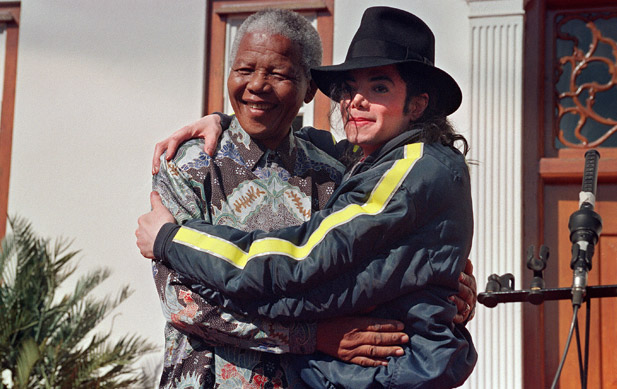
Free of the stuffiness usually inbred into politicians, Mandela was more at home bantering with celebrities like Michael Jackson, who clutching the US State Department’s listed former terrorist, donned his best make-up.

With an ability both to inspire and delight, his calls for tolerance were blended with a penchant for breaking into a gleeful shuffle dance in public and wearing colourful shirts.

Few stars were immune to the “Madiba magic” and a photo opportunity with one of the world’s most recognisable personalities was seen as an essential part of a stop in South Africa.

His rock star-like 85th birthday drew guests ranging from U2 frontman Bono to actor Robert de Niro, who were invited alongside his cook and gardener.

Yet when faced with overcome admirers, Mandela also knew how to turn on the charm with trademark humility.

“I love you so much,” an emotional Oscar-winning actress Charlize Theron, born in South Africa, said at his side.

“I love you too, you know,” was Mandela’s stammered.

Canadian singer Celine Dion even named one of her twin boys Nelson after meeting him — an occasion she prepared for by taking a history course.

Mandela drew stars from Beyonce to the late Amy Winehouse to perform for his AIDS efforts.

In 2004, aged 85, he told the world “don’t call me, I’ll call you” while announcing that he was stepping out of the public eye.

Growing increasingly frail, his last star-studded mega-bash was a 90th birthday concert in London in 2008.

Mandela made his final public appearance at South Africa’s 2010 World Cup final.

Supermodel Naomi Campbell reportedly called him her “honorary grandfather”.

Former US leader Bill Clinton described him as “a ferociously loyal friend”.

mjmandela

David Cameron won’t be hanging Mandela

Conservative-FutureBritish Prime Minister David Cameron on Thursday said “a great light had gone out” following Nelson Mandela’s death, revealing that flags would be flown at half-mast at his Downing Street Office.

“A great light has gone out in the world,” said a statement released by Cameron.

“Nelson Mandela was a towering figure in our time; a legend in life and now in death — a true global hero.

“Across the country he loved they will be mourning a man who was the embodiment of grace,” he added.

“Meeting him was one of the great honours of my life. My heart goes out to his family – and to all in South Africa and around the world whose lives were changed through his courage.

“I’ve asked for the flag at No.10 to be flown at half mast.”

In a newly updated edition of Cameron: The Rise of the New Conservative, by James Hanning, the deputy editor of The Independent on Sunday, and Francis Elliott, the deputy political editor of The Times, it is revealed that the 23-year-old future leader went on a “fact-finding mission” that took place 20 years ago while the Thatcher government was opposed to sanctions against South Africa at the time.

The trip was organised and funded by Strategy Network International (SNI), created in 1985 specifically to lobby against the imposition of sanctions on South Africa.

Cameron remembered the visit: “It was all terribly relaxed, just a little treat, a perk of the job. The Botha regime was attempting to make itself look less horrible, but I don’t regard it as having been of the faintest political consequence.”

In 2006, shortly after becoming Tory leader, Mr Cameron tried to make amends for his party’s record on South Africa by visiting Nelson Mandela, by then President, at the same time as suggesting the party’s policy from the 1980s was from another era that he did not belong to. He said at the time: “The mistakes my party made in the past with respect to relations with the African National Congress and sanctions on South Africa make it all the more important to listen now.

“The fact that there is so much to celebrate in the new South Africa is not in spite of Mandela and the ANC; it is because of them – and we Conservatives should say so clearly today.”

But what was not known, and which sheds new light on the 2006 meeting, was that British civil servants and advisers were told not to go on such trips, the book reveals.

Many in the Conservative Party used to wear ‘Hang Nelson Mandela’ badges at university. Their leader at the time Margaret Thatcher described Mandela as a terrorist.

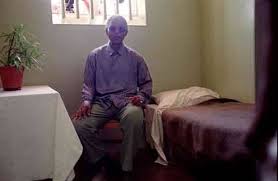
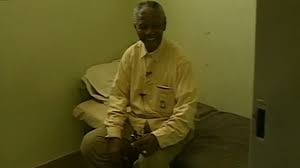
The strange transformation of Mandela’s prison cell

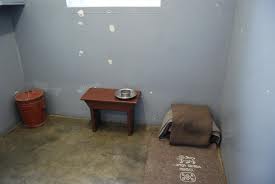
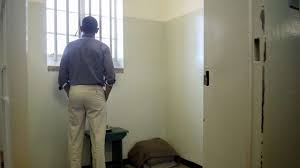
Nelson Mandela’s old prison cell on Robben island has undergone a strange transformation.

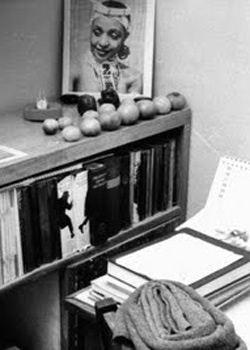
Photos from the Johannesburg archives show a cosy cell with furniture and books and above all, a bed and mattress.

On many later visits by Mandela to his old cell in the company of foreign journalists and film crews, not much had changed. His books were no longer there, but the furniture looked the same.

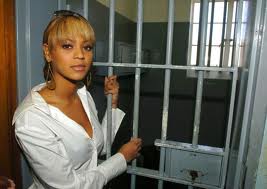
Even recent visits by the likes of Beyoncé showed the cell as it had been while the famous South African was imprisoned there for inciting violence and terrorism.

With president Barack Obama’s most recent visit however, the cell suddenly strangely took on the appearance of a bare, 19th century gaol, stripped of all furniture.

Mandela in his cell after his release


mandelacell2
Mandela on a later visist to the same cell
Beyonce at Mandela's cell with the furniture visible
Beyonce at Mandela’s cell with the furniture visible
From the Joburg Artchives, his desk, books and shelf with a photo of his wife Winnie
Obama visiting the now bare cell
The new 19th century look bears no resemblance to the original cell

Custom made offspring

designerbabiesPeople already choose to custom-make their offspring. At the most basic biological, or even subconscious level, we choose our mates based on who will serve up the strongest/cutest/smartest kid. Parents that go the in-vitro route can do so at an even higher degree by shopping egg donors or sperm banks for preferred personality or physical characteristics. There are even some nutty sites peddling superior offspring via “Nobel Prize” or “celebrity” sperm.

Now with each new scientific breakthrough or technological innovation we’re getting further from “natural” selection and closer to commercial eugenics, and a frightening future of humanity in which Gattaca is science fiction no more. The latest advancement comes from the UK, where researchers from the Royal Veterinary College have successfully engineered “designer sperm” that can be passed down to future generations.

Researchers generated transgenic animals by altering the genes in the sperm of mice and inserting the custom genes into an embryo. The baby mice were born with the new genetic material in tact, and it was passed on through three generations. The study was published last week in the FASEB journal.

This idea of gene therapy—manipulating DNA as a medical treatment—has long held the promise of preventing inherited disease, and researchers say the new sperm-centric approach, if it works in humans, could be a breakthrough for the health industry.

“Transgenic technology is a most important tool for researching all kinds of disease in humans and animals,” said study author Anil Chandrashekran. “For years we have chased effective gene therapies and have hit numbers speed bumps and dead ends. If we are able to alter sperm to improve the health of future generations, it would completely change our notions of ‘preventative medicine.”

True enough, but it would also be the equivalent of a gateway drug to a whole new level of customizing humans. At this point, the path toward designer babies is tangled up in a “new genetics” infatuation with analyzing and screening DNA. The same modern methods that make it possible to spot genetic risks and prevent disease can also be used for more cosmetic electives. Case in point: PGD (pre-implantation genetic diagnosis) tests embryos for genetic medical conditions and won’t implant them in the womb if they’re found to carry a disease gene. But it also can—and has—be used to select a baby’s gender, and hair and eye color.

That’s done by testing a bunch of embryos and implanting the one you like best. Going in and customizing sperm DNA is a somewhat different beast. After all, there’s a difference between exercising some control over how a baby turns out by selecting the mom and dad—be it in a petri dish or in the bedroom—and engineering a future human by messing with the cells themselves.

Like it or not, the latter is inevitable. A new and potentially revolutionary gene-editing technique using CRISPR genes—Clustered Regularly Interspaced Short Palindromic Repeats—has exploded in popularity over the last year, and is now raising millions from the VC world. It’s a form of ultra-precise editing or “genetic surgery” to remove harmful mutated genes and splice in healthy DNA. Again, it’s marked for disease prevention, but what’s to stop it from opening the genetic enhancement Pandora’s Box? First illness, then “negative” traits like allergies or baldness, then eventually folks are writing lists of desired traits for their dream child and handing them over the to doc.

A recent patent filed by the currently embattled genetic testing company 23andMe shows the firm slipping down this very slope. The patent describes a method for what’s essentially genetic shopping: Couples stipulate the characteristics they’re looking for—there are actual checkboxes—and the system computes which matches of sperm and egg from a marketplace of donors would produce the desired outcome.

In more ways than one we’re creeping toward a future where humanity’s engineered at the genetic level—but how far will it go? There’s a common argument that just because the technology for so-called designer babies exists doesn’t mean we’ll abuse it. But that doesn’t seem realistic to me. How many people, if given the option of imbuing their progeny with a leg up on society right out the gate, would turn it down? – motherboard.vice.com

Going to Harvard means getting an A

harvard“The median grade in Harvard College is indeed an A-,” the school’s dean of education said today, according to the student newspaper. Even more stunning: “The most frequently awarded grade in Harvard College is actually a straight A.”

That ought to dispel any notion that Harvard is tough on its students. Grade inflation may be a victimless crime, but what is the point of having a range of grades if half of them are A- or higher?

Accusations of grade inflation flare up frequently at Harvard and other college campuses. Harvard, in particular, has been accused of grading more softly than some of its rivals in the Ivy League.

Larry Summers, the former US Treasury secretary, was highly critical of the practice while he was president of the university. After he stepped down, he told an interviewer: “Ninety percent of Harvard graduates graduated with honors when I started. The most unique honor you could graduate with was none.” – Quartz

African railroads secure raw materials for resource-hungry China

railafricachinaThe Chinese, investing heavily in Africa to secure its oil and other raw materials for their expanding economy, are spearheading a new era of railroad building to unlock the continent’s interior.

This is an echo of the long-gone colonial empires when a century ago British and French engineers first opened up Africa to plunder its riches.

The railroad frenzy is being accompanied by a massive push to build several major ports along the coast of East Africa to accelerate exports across the Indian Ocean, mostly to China, India and Japan, as well as lay down a network of oil and gas pipelines to these ports.

“Railways are key to increasing regional trade,” said Darlan Fabio de David, chief executive of Rift Valley Railways, a private equity-backed company rehabilitating the line between the Kenyan port of Mombasa and the inland Ugandan capital of Uganda that was built by the British between 1896 and 1901.

Kenya, which has found oil, is a key link in all this because it lies on the Indian Ocean. There are plans to build a huge deepwater port at Lamu which would act as a rail and pipeline hub for regional exports.

Further north, landlocked Ethiopia is another. It has no ports, but it has long been a pivotal economic player in the region, funneling goods from inland Africa to the continent’s ports through its rail lines.

Extending that network would stimulate economic activity further inland and export trade via the Red Sea port of Djibouti in the Horn of Africa.

In Tanzania, which with neighboring Mozambique is on the cusp of a major offshore gas boom, the main port of Dar es Salaam, the capital, could greatly enhance its importance as the main export center for copper and cobalt from Zambia and the Democratic Republic of Congo.

Congo’s mineral-rich, and war-ravaged, Katanga province produces 580,000 metric tons of copper a year and about 60,000 metric tons of cobalt. Zambia produces 6,750,000 tons of copper annually.

Between them they account for 7 percent of the world’s copper output and roughly half the planet’s cobalt.

New rail lines, replacing the costly road system currently in use, would cut transportation costs. Hauling these products to the east coast rather than southward via Durban in South Africa would allow the DRC and Zambia to export larger volumes of minerals.

The Chinese have been making massive investments in Africa over the last decade in return for access to the continent’s mineral riches.

The recent oil and gas discoveries in East Africa, ideally located for direct shipment eastward across the Indian Ocean, and the prospect of more to come have accelerated Chinese investment in streamlining transportation systems to the planned megaports.

On Nov. 28, the presidents of Kenya, Uganda, Rwanda and the fledgling state of South Sudan conducted the groundbreaking of Kenya’s $4 billion Mombasa-Nairobi line, financed by the Export-Import Bank of China, which will run parallel to the existing colonial-era line.

“The project will define my legacy as president of Kenya,” declared Uhuru Kenyatta.

The first section will link the Kenyan port of Mombasa to the capital, Nairobi, reducing the journey time from 15 hours to about four.

It is said to be the country’s biggest infrastructure project since independence 50 years ago.

The cost of the railway will be $5.2bn (£3.2bn) – mostly funded by China.

Some Kenyans have complained that the contract was given to the Chinese state-owned China Road and Bridge Corporation (CRBC) without going to tender.

Kenyan President Uhuru Kenyatta and his Chinese counterpart Xi Jinping agreed the deal in August in Beijing.

There are now almost 1 million Chinese living in Africa. A decade ago, there only a few thousand.

China’s new president, Xi Jinping, visited Tanzania and the DRC in the summer, his first major foreign tour, underlining Africa’s importance in China’s economic strategy.

China recently overtook the United States as the world’s largest importer of oil. Almost 80 percent of Chinese imports from Africa are mineral products.

China is the continent’s leading business partner, with trade — which tripled over the last decades — exceeding $166 billion. That’s expected to soar over the next 10 years when the new railroads, pipelines and ports kick in.

Direct investment — usually building airports, highways, schools, factories and railroads — is more difficult to quantify because much of Beijing’s funding goes through tax shelters. But China’s ambassador to South Africa recently said it “exceeds $40 billion.”

Another major project is rehabilitating the rail link between Addis Ababa, Ethiopia’s capital, and the port of Djibouti, a tiny former colony of France on the Red Sea, which links the Mediterranean with the Indian Ocean.

The 475-mile, $3 billion line is being built largely by Chinese companies, as is the Mombasa-Nairobi track. China will also provide most of the locomotives and rolling stock. – UPI/BBC


Too white to care about

jacarandaClad in a tracksuit with an image of his No1 superhero Spiderman, six-year-old abuse victim Jimmy (not his real name) and his peers play happily on the grounds of the Jakaranda Children’s Home.

They are oblivious of the predicament facing the place they call home – it is not black enough.

Corporate donors that covered 70% of the Pretoria home’s more than R25-million annual running costs have pulled out because, the centre says, the majority of children it houses are white.

Jimmy and 350 other children were removed from their parents because of abandonment, neglect and emotional and physical abuse.

They will soon have to survive without privately funded child development programmes, or worse, they could find themselves without a home.

“There’s nothing we can do about it . it’s a sad situation,” the shelter’s marketing executive Elzane van der Merwe says.

The children are victims of the Broad-Based Black Economic Empowerment Act, she says. The act stipulates that for companies to be allocated BBBEE points, they must donate to charities whose beneficiaries make up at least 75% quota of the previously deprived race groups.

At the Jakaranda shelter, 75% of the children are white.

For the past two years, the shelter received R7.1-million in government funding a year, which has been increased to R9.1-million for this year.

However, Van der Merwe says: “Without corporate funding we cannot continue with therapy and educational and sporting programmes. These are crucial to a child’s proper development but without funding we will have to offer the basics like shelter, schooling, food and clothing.”

She said companies still donate to the home but private funding had declined by 70% in the past three years.

Van der Merwe related an incident in which a company pledged R100 000 but pulled out at the last minute after realising that the majority of children were white.

She said the home did not decide which child was placed at the home. It got applications from social workers and the children were placed at the home according to their needs by the court. – timeslive.co.za