Czech artist gives Communists and Leftists the Finger

thefingerThe Czech artist David Cerny’s sculpture floats in the Vltava River and is aimed at the presidential residence, Prague Castle, in the background.

Mr. Cerny is not known for understatement or diplomacy after displaying a caricature of a former Czech president inside an enormous fiberglass rear end.

But on Monday, Mr. Cerny, 45, took his political satire to new heights when, on the eve of Czech general elections this weekend, he installed on the Vltava River a 10m plastic purple hand with a raised middle finger. It is a symbol, he said, that points directly at the Prague Castle, the seat of the current Czech president, Milos Zeman.

Mr. Cerny said the monumental hand with its outstretched middle finger, placed on a float facing the castle, was a “scream of alarm” against the state of politics in the Czech Republic, endemic corruption and Mr. Zeman, a former leftist prime minister, whom he accused of becoming intoxicated with power.

He said the sculpture, which he gave an unprintable title, was also aimed at the country’s Communist Party, which could gain a share of power in the coming elections for the first time since the revolution that overthrew communism more than two decades ago.

“This finger is aimed straight at the castle politics,” Mr. Cerny said by phone from Prague, the Czech capital. “After 23 years, I am horrified at the prospect of the Communists returning to power and of Mr. Zeman helping them to do so.”

Mr. Zeman, who was visiting Ukraine on Monday, declined to comment through a spokeswoman, who told the Czech news media that he had not yet seen the sculpture.

The sculpture is part of a Czech tradition of cultural rebellion dating to Communist times, when artists, writers and musicians like the Plastic People of the Universe used subversive lyrics or gestures to revolt against authority.

‘Torture, murder of gay man not linked to other gay murders’

law4“I told (the court) that as a family we were prepared to forgive them. It will help give us closure,” said Anchen Jooste about the two men who had been sentenced for the brutal murder of her gay brother, Barney van Heerden.

Van Heerden was found strangled in his home in September 2011, his head wrapped in tape and his body beaten. This was after he had invited into his home three black men who were later accused of robbing and murdering him.

Van Heerden’s murder was the first case identified by The Star in what police believe is a series of killings of gay men in Gauteng and the Western Cape.


In November last year, police told the media about their theory that the killings were perpetrated by a gang targeting gay men.

But after a year of investigations, police have been unable to forensically link the trio to any of the other crimes.

Earlier this month, one of the men responsible for the crime, Maxwell Nyathi, turned State witness. He told the Johannesburg High Court sitting in Palm Ridge how he, Mthokozisi Ndlovu and Bheki Maseko had wangled their way into Van Heerden’s home before robbing him. They allegedly left him bound with duct tape around his face and head, causing his death.


Last week, Jooste, who had attended the entire trial, saw Ndlovu and Maseko each sentenced to 20 years for the murder and another 10 years – to be served concurrently – for the robbery. She said it was a cathartic experience, but that she would fight if the pair tried to apply for parole.


“They deserve at least 20 years for what they did,” she said.


Jooste said she approached the men after the sentencing, specifically to speak to Maseko, who had told the court that he had known Van Heerden for some time before the murder.


She asked him about how he had met her brother and what their relationship had been like. Apparently, Van Heerden had wanted to help Maseko to pay for his university tuition.


“His facial expression showed he had cared for Barney,” said Jooste, who said the emotion after this confrontation was overwhelming.


Judge George Maluleke’s judgment had upset Jooste.


The judge had said that an almost middle-aged man associating sexually with 22-year-olds was playing “a dangerous game”.


He also suggested the three men were prostitutes being solicited by Van Heerden, which Jooste said was unlikely.


But the grieving sister said she wanted the senseless murder to have meaning. She wants to donate one of Van Heerden’s properties to a gay rights organisation for use as a safe house for teenagers kicked out of their homes after coming out of the closet. – IOL

Dutch to adopt black SA orphans

blackorphansThe lives of hundreds of black orphans might soon change for the better because of inter-country adoption.

The SA Central Authority, which oversees adoptions in this country, has given adoption agency Wandisa permission to cooperate in inter-country adoptions with the Nederlandse Adoptie Stichting, a Dutch agency.

A director of the Dutch agency, Macky Hupkes, said his organisation was waiting for the authorities of both countries to conclude a state-to-state adoptions agreement.

The founder and president of Wandisa, Debbie Wybrow, said: ” Many Dutch families have indicated their willingness to adopt older children and those who have special needs,” she said.

Census 2011 estimated that there were 3.3million orphans in South Africa. Between 1.5million and 2million of them could benefit from inter-country adoption.

A Dutch adoptive mother said the new South African-Netherlands agreement was a relief to her and her husband.

“We have been trying to adopt for four years . and are overwhelmed that children who need parents can finally get them,” she said.

“It was painful being told that you may be good parents, but you are not Christian and therefore are not allowed to be parents.”

Adoptions made headlines last month when the SA Human Rights Commission launched an investigation into allegations of discrimination against three adoption agencies.

The agencies were accused of discriminating against homosexual and non-Christian would-be adoptive parents, contravening the constitution and the Children’s Act.

Wandisa is waiting for the approval of adoption agreements with Canada and Ireland, which were submitted in 2009 and 2010 respectively. – timeslive.co.za

Press Ombudsman dismisses complaint from ‘private army’

unsomali
Allegations of torture in Somalia

The Press Ombudsman has dismissed a security company owners’ complaint against Independent Newspapers, regarding two stories published in the Weekend Argus, he said in a finding released on Wednesday.

According to the finding, the first story was published on September 1 last year under the headline: “UN slams SA ‘private army’ Security firm accused of breaking sanctions, torture SA failing in its obligation to clamp down on mercenaries, says report”.

The second story was a follow-up published on page 11 on September 29, headlined “SA-linked military firm loses anti-piracy contract”.

Ombudsman Johan Retief and an adjudication panel said Sterling Corporate Services’ (SCS) owner Lafras Luitingh complained that the first story omitted important facts, that the headline was misleading, and that the newspaper did not try to verify the allegations against him and his company.

He complained that the reporter failed to correct the mistakes in the second story, even though he was provided with information, and that the references to “private army” in both stories wrongly suggested that he was involved in illegal activities.

In the first story, Ivor Powell and Bianca Capazorio reportedly wrote that a United Nations report had “slammed” SCS for mustering a “private army” in defiance of international agreements.

The UN report, authored by the its Monitoring Group on Somalia and Eritrea (SEMG), reportedly condemned SCS for “brazen, large-scale and protracted violation of the Somalia sanctions regime”, and for allegedly torturing local recruits.

The reporters wrote that it accused the South African government of failing to fulfil its international obligations “which include clamping down on mercenary activities”.

They wrote that the SCS operated as the private army of President Abdirahman Mohamud Faroole of the semi-autonomous region of Puntland (a region in northeastern Somalia).

They also reported that SCS had been involved in operations against Faroole’s enemies, “though officially contracted only to train and provide military advice to the Puntland administration”.

The story reportedly added that although SCS was mainly contracted to train an anti-piracy force, the bulk of its operations was directed against villages in the hinterland with little connection to Somali pirates holding shipping routes to ransom.

The story mentioned examples of alleged torture and “murderous corporal punishment”.

The follow-up story, written by Powell, reported that SCS had lost a contract to train a paramilitary Puntland Maritime Police Force against piracy in the Horn of Africa. It elaborated on the first story.

Retief and the panel concluded that the newspaper was justified in calling the SEMG’s Report a “UN report”, as a document “adopted” by the Security Council became an official document of the UN.

It also found that Luitingh had not brought any relevant UN document to the panel’s attention to substantiate his claim that the UN permitted his actions in Somalia.

“The panel finds that the newspaper did contact Luitingh and ask for his comment and that, in addition, they had published comment from a number of other involved parties. Luitingh had it within his power to provide comment and had chosen not to do so.”

While the panel accepted that Luitingh and his counsel were convinced that the second story should have reflected their views, which for them meant a correction, the panel did not believe this would have been appropriate.

It found the newspaper was justified in using the phrase “private army” as the phrase was used in the SEMG’s report.

Both parties have seven working days to appeal the decision. – Sapa

BBF should refrain from influencing tenders, says PP

thuliGood governance begins with ethical leadership, Public Protector Thuli Madonsela said at the annual Black Management Forum conference on Wednesday.

“Refrain from using power and connections to influence the issuing of unnecessary tenders or getting tenders you do not qualify for,” she said.

“Operate ethically, taking in to account the need for sustainability, including knowing that having islands of influence in a sea of poverty is not sustainable.”

Power struggles within organisations appeared to contribute to poor governance.

Madonsela drew an analogy between George Orwell’s novel Animal Farm and cases she investigated where public funds were used by state officials for their own comfort, instead of addressing the needs of the public.

Such instances led to a trust deficit between the state and the people, which was often exacerbated by a lack of proper accountability.

Madonsela also warned about power-mongering, in the form of people withholding knowledge from their colleagues or superiors in an attempt to gain power within organisations. This practice also had negative consequences for governance.

She also drew attention to the importance of retaining institutional memory.

“A high leadership and technical skills turnover in organisations exposes the organisation to uncertainties about rules, procedures and systems,” she said. – Sapa

British drop vans with ‘racist’ signs telling immigrants to leave

A plan to use vans as mobile billboards telling illegal immigrants to leave is being dropped, British Home Secretary Teresa May said Tuesday.

The signs advising illegal immigrants to go home were criticized by both the Labor Party and the Liberal Democrats, the Conservatives’ partner in the coalition, The Independent reported. May conceded a 10,000 pound ($16,000) pilot project was disappointing, although she disputed the Labor Party’s charge that only one person decided to leave as a result of the campaign.

“Politicians should be willing to step up to the plate and say when they think something actually hasn’t been as good an idea, and I think they were too blunt an instrument,” May said.

Complaints were made to the Advertising Standards Authority that the signs were both inaccurate and racist. The authority did not find racism but said the arrest statistics on the signs were inaccurate. – Breitbart

Saudi Arabia severs diplomatic ties with US

The kissing is over
The kissing is over

Upset at President Barack Obama’s policies on Iran and Syria, members of Saudi Arabia’s ruling family are threatening a rift with the United States that could take the alliance between Washington and the kingdom to its lowest point in years.

Saudi Arabia’s intelligence chief is vowing that the kingdom will make a ‘major shift’ in relations with the United States to protest perceived American inaction over Syria’s civil war as well as recent U.S. overtures to Iran, a source close to Saudi policy said on Tuesday.

Prince Bandar bin Sultan told European diplomats that the United States had failed to act effectively against Syrian President Bashar al-Assad and the Israeli-Palestinian conflict, was growing closer to Tehran, and had failed to back Saudi support for Bahrain when it crushed an anti-government revolt in 2011, the source said.

The growing breach between the United States and Saudi Arabia was also on display in Washington, where another senior Saudi prince criticized Obama’s Middle East policies, accusing him of ‘dithering’ on Syria and Israeli-Palestinian peace.

In unusually blunt public remarks, Prince Turki al-Faisal called Obama’s policies in Syria ‘lamentable’ and ridiculed a U.S.-Russian deal to eliminate Assad’s chemical weapons. He suggested it was a ruse to let Obama avoid military action in Syria.

‘The current charade of international control over Bashar’s chemical arsenal would be funny if it were not so blatantly perfidious. And designed not only to give Mr. Obama an opportunity to back down (from military strikes), but also to help Assad to butcher his people,’ said Prince Turki, a member of the Saudi royal family and former director of Saudi intelligence.

The United States and Saudi Arabia have been allies since the kingdom was declared in 1932, giving Riyadh a powerful military protector and Washington secure oil supplies.

The Saudi criticism came days after the 40th anniversary of the October 1973 Arab oil embargo imposed to punish the West for supporting Israel in the Yom Kippur war.

That was one of the low points in U.S.-Saudi ties, which were also badly shaken by the September 11, 2001, attacks on the United States. Most of the 9/11 hijackers were Saudi nationals.

Saudi Arabia gave a clear sign of its displeasure over Obama’s foreign policy last week when it rejected a coveted two-year term on the U.N. Security Council in a display of anger over the failure of the international community to end the war in Syria and act on other Middle East issues.

In Bahrain, home of the U.S. Fifth Fleet, a simmering pro-democracy revolt by its Shi’ite majority has prompted calls by some in Washington for U.S. ships to be based elsewhere.

The source declined to provide more details of Bandar’s talks with the diplomats, which took place in the past few days.

But he suggested that the planned change in ties between the energy superpower and the United States would have wide-ranging consequences, including on arms purchases and oil sales.

Saudi Arabia, the world’s biggest oil exporter, ploughs much of its earnings back into U.S. assets. Most of the Saudi central bank’s net foreign assets of $690 billion are thought to be denominated in dollars, much of them in U.S. Treasury bonds.

‘All options are on the table now, and for sure there will be some impact,’ the Saudi source said.

‘Prince Bandar told diplomats that he plans to limit interaction with the U.S.,’ the source close to Saudi policy said. – Daily Mail

US may have targeted Angela Merkel’s cellphone

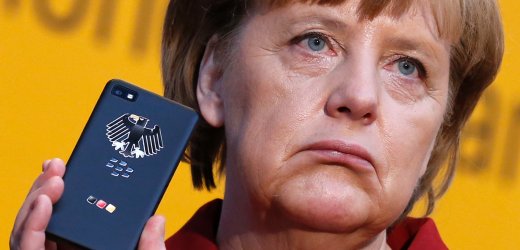
German Chancellor Merkel holds a BlackBerry Z10 smartphone featuring high security Secusite software at the booth of Secusmart during her opening tour at the CeBit computer fair in HanoverGerman Chancellor Angela Merkel complained to President Barack Obama on Wednesday after learning that U.S. intelligence may have targeted her mobile phone, and said that would be “a serious breach of trust” if confirmed, her government announced.

The White House denied that the U.S. is listening in on Merkel’s phone calls.

The German government said it responded after receiving “information that the chancellor’s cellphone may be monitored” by U.S. intelligence. It wouldn’t elaborate but German news magazine Der Spiegel, which has published material from NSA leaker Edward Snowden, said its research triggered the response.

Merkel spokesman Steffen Seibert said in a statement the chancellor made clear to Obama in a phone call that “she views such practices, if the indications are confirmed … as completely unacceptable.”

Merkel said among close partners such as Germany and the U.S., “there must not be such surveillance of a head of government’s communication,” Seibert added. “That would be a serious breach of trust. Such practices must be stopped immediately.”

In Washington, White House spokesman Jay Carney said “the United States is not monitoring and will not monitor the communications of the chancellor.”

Merkel raised concerns over electronic eavesdropping issue when Obama visited Germany in June, has demanded answers from the U.S. government and backed calls for greater European data protection. However, Wednesday’s statement was much more sharply worded and appeared to reflect frustration over the answers provided so far by the U.S. government.

Merkel called for U.S. authorities to clarify the extent of surveillance in Germany and to provide answers to “questions that the German government asked months ago,” Seibert said. – Breitbart

Gordhan cans credit cards, flashy cars

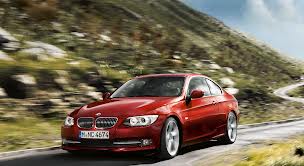
bmw2
Black Man’s Wheels no more?

Finance Minister Pravin Gordhan drew a line in the sand on state spending on Wednesday, announcing cuts to official perks and giving half of government departments not a cent more in his mid-term budget review.

In a last-minute agreement with cabinet, the state is to impose tighter guidelines on cars, accommodation and travel for all government leaders, from ministers to mayors.

Gordhan said these would apply from December 1 and would spell an end to official credit cards, million rand vehicles, luxury hotel stays and expensive home upgrades for cabinet members.

He told reporters it would also apply to the presidency. Asked about plans to purchase a new presidential jet, Gordhan said if this was necessary, it would be done.

The finance minister said he expected the downgrading of official perks with regard to cabinet ministers would save only about R15m, but if applied across all tiers of government it could bring savings of R2bn.

The announcement dominated a medium-term budget Gordhan said stuck to his counter-cyclical approach of “supporting growth and job creation and fiscal moderation”.

He gave assurances that the budget deficit would decrease in coming years, and added: “We think we have what we need to manage any turbulence that might arise.”

Where the minister did open the public purse for adjusted appropriations, most of the additional funding went towards the state’s rising wage bill, at an added cost of more than R2bn.

At a national level, Treasury is handing out R1bn to cover salary increases, inflation related and otherwise.

Another R1.25bn is going to the provinces to pay for a R690m upgrade in clerical posts and R563m higher-than-expected salary increases.

The police ministry received a sizeable budget adjustment, of which R202m will pay for improving detective services and R20m will go towards the embattled crime intelligence division.

A further R444m will be spent on increasing visible policing.

Gordhan reiterated Treasury’s firm commitment to the National Development Plan – which remains contested in the ruling alliance – and also called on the labour movement to come to the party in stabilising the investment climate in South Africa.

Without making any firm pronouncement on privatisation of state-owned enterprises, he repeated that the state had to rationalise its assets, including selling off those that served no useful purpose.

Wednesday’s mid-term budget review also saw an increase for the department of public enterprises, but the only parastatal to benefit was arms manufacturer Denel.

This includes R57m to cover penalties on its onerous production contract to make parts for Airbus. However, this is a considerable decrease compared to payments of around R200m in recent years from the state’s R1.6bn indemnity cover to Denel linked to the contract.

Gordhan said there was no indication of a new state guarantee for South African Airways because the implications of the recently-announced turnaround strategy for the national carrier were still being considered.

The defence ministry received an additional R150m for sending troops to the Democratic Republic of Congo as part of the UN intervention force in the conflict-ridden central African nation. – Sapa

Another farm murder rattles KZN farming community

law4A crowd of 350 farmers, farmworkers and others from the rural community protested outside the Himeville Magistrate’s Court on Tuesday, as three men appeared for the grisly murder of timber contractor Daniel Knight last week.

The protest was held just a day after another KwaZulu-Natal farmer was murdered on his Vryheid dairy farm, The Witness reported.

Willem Weites, 78, was killed while trying to rescue his daughter, who was being held at knife-point

His son, Frederik Weites, 50, said a white car came to the dairy store with men carrying a bucket as people often do when they come to buy milk.

Weites said the three black men got out of the car and grabbed his sister Everlien, 49, after asking where her father was.

“They held a knife to her neck and when my father tried to intervene, they just shot him in the head and chest and he died on the spot,” he said.

He said they then dragged his sister to the main house threatening to rape her. They thus forced his mother to hand over keys to the safe.

They tied up both women, took an undisclosed sum of money and drove off in his father’s bakkie, he said.

Another attacker tied up farm workers and took their cellphones.

The bakkie was later recovered about eight kilometres away as in most farm attacks.

“We are devastated. I mean why do you need to kill people for money when you can take the money and leave them alive?” Frederik asked. Weites had often helped local blacks grind their maize at his mill.

Police spokesperson Captain Thulani Zwane said Ngome SAPS were investigating charges of murder and “business robbery”. No arrests had been made, he said.

In Himeville, Tsepiso Sthembiso Ramanyane, 20, Bonginkosi Eric Nyawose, 33, both from Bulwer, and Thabo Dlamini, 22, from Himeville, appeared for the murder of Knight and robbery with aggravating circumstances for taking property of Knight’s valued at R651 000.

While white farmers fear the escalating farm attacks, black workers fear that 300 households who had family members working for Knight may be hit by job losses following his murder.

Knight’s murder was particularly brutal. He was struck on the head with a heavy hammer while his partner, her eyelids forced open, was made to watch.

Graham Acutt, a dairy farmer, said: “This affects the community more than it affects the farmers; more families in the community will lose jobs because of some individuals that want quick cash. This picketing shows everyone that we are sick and tired of criminals that attack us.”

Sue Acutt asked: “Why did they want her to watch them doing this? Later, they even tried to suffocate her using a plastic glove as they covered her face with it. They left her thinking she had also died after she passed out.”

Vice-chairperson of the Vryheid Agricultural Chamber Horst Hellberg, referring to Weites’ death, said it was with shock “that we had to hear of another farm murder, this time one of our senior farmers”.

“It is unacceptable that farm murders are getting out of control again and government is not treating it as a priority.”

He suggested the government would address these issues more seriously only once there was not enough food to put on the nation’s tables.

KwaZulu-Natal Agricultural Union (KwaNalu) security desk Koos Marais said they were disturbed by the latest callous murder.

Dr Johan Burger of the South African Institute for Security Studies said in 2012, 63 farm murders were recorded. This year up to September there had been 54 farm murders recorded already.

“The brutality with which these murders are carried out makes us believe that there is something behind these attacks,” he said.

He said it was interesting to note that last year 39 farmers were killed and of those only three were black farmers.

Racism rears its ugly head in Anglican Church

St John's
St John’s

South African-born but London-based Jeremy Ganga claims he was “too black” to land a top job at the St John’s parish, in Wynberg, and has taken his fight to the Labour Court.

Ganga, 51, has accused the church of racially discriminating against him in favour of Duncan McLea, who was an associate rector at the church at the time, and of flouting job-interview ethics by giving McLea a copy of his, Ganga’s, CV and letter of application.

Ganga argues that he was prejudiced in that McLea also interviewed him and advanced his opinion about him to the selection committee.

Ganga, who holds both South African and British citizenship, lost out on a job last year when a selection committee favoured McLea.

Yesterday, he told The Times that the incident had “offended my sense of fairness and justice as a Christian”.

The matter was in court last week when Ganga, a full-time master’s student at the University of London, was ordered to pay R75000 by the end of November as security if he wanted to continue with the litigation.

Ganga has accused the 180-year-old church of indirectly discriminating against him by giving McLea “a distinct competitive advantage” in circumstances in which associate rectors “are and historically always have been disproportionately . white men”.

“[This] has the effect of differentiating between white and black candidates,” his lawyer argued.

Alternatively, he claimed that the selection process was “deliberately designed to favour the white candidate, and therefore that it was directly discriminatory”.

StJohn’s has strongly denied discriminating against Ganga and giving McLea an unfair advantage, saying McLea saw Ganga’s application because of his position at the church.

Ganga did not get the job, it said, because of his poor interview performance and psychometric test scores, and because the selection committee – most of which was black – questioned whether he had sufficient experience in running a church.

It added that the panel “prayerfully considered the matter at length and unanimously decided to select Rev McLea”. But Ganga’s lawyer said his client had had “good prospects of succeeding”.

In his security-of-costs ruling Judge Anton Steenkamp said that though McLea could have tailored his responses in his interview “in light of the perceived strengths and weaknesses” he might have gleaned from Ganga’s application, it was not clear whether this amounted to discrimination.

The evidence had not yet been tested in court, but Steenkamp believed that Ganga’s prospects of success at trial were poor.

“Even though Ganga is black and McLea is white, the evidence thus far does not show any differentiation on the grounds of race,” Steenkamp said.

Yesterday, Ganga told The Times that he was confident that he could prove his case.

He said he was forced to litigate after unsuccessfully trying to resolve the matter with the church.

He said the experience had left him and his family “hurt and disillusioned”.

“It is this sense of injustice that eventually motivated us to approach the court,” Ganga said.

He moved to the UK 23 years ago where he continues to live with his educational psychologist wife and three children.

He was previously a programme director at the Anglican Institute for School Leadership, and a parish priest in London. – timeslive.co.za

Racial income gap lowest ever

sowhatThe income gap between racial groups in South Africa is the lowest it has ever been, according to a Stellenbosch University study.

According to the study, the black middle class has grown from 350 000 individuals in 1993, to almost three million in 2012, with the black share of the middle class growing from 11% to 41%.

“In terms of fundamentals, our society is slowly becoming more equitable,” said Professor Hennie Kotzé, Research Fellow at the Centre for International and Comparative Politics at Stellenbosch University.

The researchers caution that there is still a lot of work to be done on racial equality when it comes to income, as whites are still over-represented in the middle class, but say that the figures indicate that South Africa is making steady progress.

“After almost 20 years of democracy, it is no longer true that South Africa’s middle class is mainly white,” said Servaas van der  Berg, a professor of Economics in a media statement. “Black South Africans now represent the largest share of the middle class.”

According to the university, despite the heartening news provided by the study, there are still major issues that need to be dealt with – particularly for South African children.

“Where almost all children growing up in typical upper middle class households will have access to electricity, clean water and decent sanitation we find that less than 20% of young children in lower class households have access to adequate sanitation, less than 35% have access to clean water and just over 60% have electricity in their homes.

“Similarly, while 83% of children who live in upper middle class households have access to a car, it is rare amongst the lower income classes (4%). The starkest contrast is in terms of computers: 73% of upper middle class children grow up with computers in their home, but virtually none of those born into lower classes have access to a computer,” the university said in its statement.

You can read more about the research on Stellenbosch University’s Research on Socio-Economic Policy website.

‘We can’t think like Africans’

Mac Maharaj
Mac Maharaj

Presidential spokesman Mac Maharaj has apologised for the Malawi comments made by President Jacob Zuma.

“I have received numerous calls from Malawians being angry and after long discussions, they come around and say, yes, let’s not make a mountain of a molehill,” Maharaj said on Wednesday.

“Let me apologise for that and withdraw it,” he said.

He was interviewed on Power FM where he tried to explain the context of the statements made by Zuma at the Gauteng ANC’s manifesto forum in Johannesburg on Monday night.

In a clip on the EyeWitness News website, Zuma is heard saying: “We can’t think like Africans, in Africa, generally. We are in Johannesburg, this is Johannesburg. It’s not some national road in Malawi.”

Maharaj said Zuma was speaking in the context of two points on the highways but these did not come out in reporting by the media.

“Firstly, he was saying we need to enforce the user-pay principle for the national highways because it is not correct that people in the remote parts of South Africa should do the petrol levy and pay for the roads used in Gauteng,” said Maharaj.

He said the road should not be seen as a local road in a local area but as part of the transport system at the heart of the country’s economy.

“If that system through neglect of infrastructure chokes, the South African economy chokes.”

He said the comments did not reflect how Zuma thought or acted in forums about Africa.

“Our records are clear in that we are the champions of trying to get Africa to see itself as one and enter the global stage on a basis of equality with the rest of the players of the world economy,” said Maharaj.

Democratic Alliance parliamentary leader Lindiwe Mazibuko said Zuma must explain the blunder to Parliament.

She said the comments were unacceptable, and an insult to South Africans and to the people of Malawi.

“It is for this reason that I will today submit three urgent parliamentary questions to President Zuma enquiring whether he has followed due process and sent an official apology or clarified his comments to the High Commissioner of the Republic of Malawi; and whether he will retract and/or apologise for his unacceptable insults to both South Africans and the people of Malawi,” Mazibuko said in a statement.

She said lambasting people for “thinking like Africans” was an insult to every citizen on the continent, including all South Africans.

“It is now time for President Zuma to recognise that what he said was unacceptable, to stop the ineffective spin, and do what is expected of him: retract and apologise without delay,” she said. – Sapa

As anti-EU alliance takes shape, Soviet-style collapse looms

eu2As European Union bosses openly claim that a “federation” ruled from Brussels is inevitable, a growing coalition of political parties across the EU is coming together in an effort to preserve national sovereignty and self-government while putting the brakes on uncontrolled immigration. Led in large part by prominent political leaders from Holland and France, the budding anti-EU alliance is already being viciously demonized in the establishment press with smears like “radical” and “far-right.” More than a few analysts have compared the developments to the rise of the U.S. Tea Party.

The almost comical hysteria being expressed among top bloc officials about the effort to defeat the “integration” agenda suggests that paranoia is starting to take hold at the top — especially after recent polls revealed that the peoples of Europe largely reject the EU even as the super-state continues to usurp more power. Indeed, amid the economic crisis, the controversial bid to smash national sovereignty in favor of unaccountable “regional” governance is coming under increasing pressure from across the political spectrum.

Critics are saying the integration scheme is doomed anyway, but they want to help bring it down before more damage is inflicted. The EU is on track to “collapse like the Soviet Union,” said European Parliament Member (MEP) and French “National Front” party leader Marine Le Pen, echoing sentiments expressed by more than a few respected analysts and political leaders. Le Pen, whose socially conservative party — the third largest in France — has been surging in the polls, is working with other European political leaders to create a powerful alliance within the so-called European Parliament in defense of national sovereignty.

Blasting the EU as a “global anomaly,” Le Pen vowed to work with others toward reining in the growing super-state in favor of a system involving “cooperation of sovereign states.” The peoples of Europe, she complained, now have “no control” over their economies, currency, or the movement of people within their nations. “I believe that the EU is like the Soviet Union now: It is not improvable,” Le Pen was quoted as saying, adding that the increasingly unpopular behemoth would crumble under its own weight like the USSR did decades ago.

Joining forces with Le Pen in the effort to rein in the EU after regional parliamentary elections next summer is firebrand Dutch Member of Parliament Geert Wilders and his powerful party. According to Le Pen, one of the reasons for her party to campaign with Wilders and his Party for Freedom (PVV) is to show voters across Europe that “similar patriotic movements are active in every EU country.” It is important for voters to see that “we do not stand alone,” she noted. “The current system has a lot to lose if our movements work together.”

A poll released this month showed the National Front currently on track to be the biggest winner in the upcoming EU elections with 24 percent support — sending shockwaves through the French political establishment. The Dutch Party for Freedom, meanwhile, is also soaring in the polls, with recent surveys suggesting that it is the most popular party in the Netherlands at the moment. If elections were held today, it would dominate, polls suggest.

As chief of the Party for Freedom (PVV), MP Wilders has developed an international reputation as a strong critic of Islam — especially the ongoing mass immigration of Muslims into Europe, which he sees as a threat to the continent’s future. While Le Pen has distanced herself from some of the most heated rhetoric, National Front is also critical of radical Islam’s increasing prominence in France. The PVV calls for a withdrawal from the euro and the restoration of free markets, while National Front has strayed somewhat from its solid pro-market positions in recent years.

Even with those differences, the two party leaders are reportedly planning a meeting in the Netherlands next month. Among other topics on the agenda is forming a pro-sovereignty parliamentary grouping to unite so-called “euro-skeptic” and pro-sovereignty parties in the quasi-legislative European Parliament. Some of the political parties being considered as possible allies include Italy’s Northern League, the Austrian Freedom Party, the Sweden Democrats, Belgium’s Vlaams Belang, and others. While there are significant policy differences among potential members, all of them share concerns over the increasingly out-of-control EU.

Based on his public comments, despite the inter-party differences, MP Wilders believes that unity among anti-EU forces will help the cause. “The National Front and the PVV could make the Europhile elite sing a different tune,” he was quoted as saying on Dutch TV, referring to extremist “integration”-at-all-costs advocates who currently dominate EU institutions. “We want to do whatever we can to turn the forthcoming European elections into a Europe-wide electoral landslide against Brussels.”

According to analysts and news reports, a brutal electoral outcome for pro-EU extremists may well be on the way as people across the region grow increasingly furious with the EU for a wide array of reasons. The government-funded BBC, for example, reported without citing a source that the upcoming elections could see 170 out of 751 members of the European Parliament representing either euro-skeptic or outright anti-EU parties. The U.K. Telegraph, meanwhile, said that “even ardent European federalists” concede that as much as 30 percent of the quasi-legislative body could be composed of euro-skeptics.

Despite the fact that the European Parliament is virtually impotent compared with other bloc institutions, the developments reportedly have EU bosses and the anti-sovereignty establishment on edge. “If we allow these forces to gain a foothold once again on our continent we will have wasted a century of building closer ties and condemned history to repeat itself,” claimed former Belgian Prime Minister Guy Verhofstadt, invoking World War II for fear-mongering purposes while absurdly calling on “mainstream” parties to circle the wagons to fight “extremism.”

Socialist French President François Hollande, who recently declared that Europeans had “no choice” but to “march toward a unified Europe,” claimed the rising alliance of anti-EU parties could spark “regression and paralysis” in the region. The radical leader also argued, implausibly, that the developments could “threaten” Europe’s ability to recover from the eurozone crisis, which according to experts and economists was actually caused largely by EU scheming as well as the European Central Bank and its controversial single currency.

If the budding alliance does take shape in the wake of next year’s elections, which would require at least 25 members from seven countries to become official, it will not be alone in slamming the EU inside the European Parliament. Other major parties in Europe also oppose the euro and even membership in the EU. The liberty-minded United Kingdom Independence Party (UKIP), for example, part of the Europe of Freedom and Democracy grouping in the regional parliament, has been surging in the polls thanks in large part to its calls for Britain to withdraw from the controversial super-state.

Led by Nigel Farage, a former trader who is probably the best known member of the European Parliament due to his hard-hitting anti-EU speeches going viral across the Internet, the UKIP is also opposed to massive immigration, Huge Government, and never-ending EU power grabs. According to news reports, however, the popular British party will not be joining with the potential alliance led by Wilders and Le Pen.

“I am sure that a new Eurosceptic group of parties comprising Marine Le Pen and Geert Wilders will happen. But UKIP will not be part of it,” MEP Farage was quoted as saying, adding that his libertarian party would continue taking a principled stand against EU political union. “The European elections shall be a chance for people to give their views if they wish to remain in the EU or leave the EU and face towards global opportunities like UKIP.”

Even with recent polls showing a collapse in remaining support for the EU, the anti-sovereignty establishment working fiendishly to advance a federal regime is now doing so out in the open. It has also become clear that powerful forces intend to do anything and everything to keep the EU and the euro marching onwards — no matter what the people think. However, with the backlash against the schemes continuing to grow across the bloc, the longtime establishment dream of a centralized Europe ruled from Brussels is hardly assured. – thenewamerican.com