Hawk boss sent Zimbaweans back to be tortured, killed

Dramat
Dramat

Damning new documents put Hawks boss Lieutenant-General Anwa Dramat at the centre of a rendition scandal in which Zimbabweans were arrested in South Africa and sent across the border to be tortured and killed.

Internal police memos and a sworn statement by a senior border police official at Beit Bridge in Limpopo allege that he facilitated the illegal deportations.

President Jacob Zuma is expected to be presented with evidence this week that could result in an arrest warrant being issued for Dramat, one of South Africa’s top cops.

Rendition is the illegal kidnapping and transfer of a prisoner from one country to another.

The Sunday Times understands that Dramat has agreed to present himself for interrogation to investigators from the Independent Police Investigative Directorate (IPID) on Tuesday.

A decision will be made after this meeting whether to arrest him and six others, including Gauteng Hawks boss Major-General Shadrack Sibiya and the Hawks’s Colonel Leslie “Cowboy” Maluleke, for their alleged role in the renditions.

The investigation was sparked by a Sunday Times exposé in October 2011 that detailed how a team led by Sibiya and Maluleke arrested four Zimbabweans in Diepsloot township, near Johannesburg, who were suspected of killing a Chief Superintendent Chatikobo in Bulawayo, Zimbabwe.

A paper trail seen by the Sunday Times shows that Witness Ndeya, his nephew Shepherd Tshuma and their friends Nelson Ndlovu and Maqhawe Sibanda were detained at Orlando police station in Soweto before being driven to Beit Bridge on November 8 2010.

Sibanda and Ndlovu were dropped off before reaching the border, but Ndeya and Tshuma were handed over to Zimbabwean police. Days later, Ndeya’s bullet-riddled body was released to his relatives at Bulawayo mortuary, a death certificate shows. Tshuma was released and is now in hiding in South Africa, along with Sibanda and Ndlovu.

Sibiya said in a sworn statement to the IPID investigators that he was never involved in any operation where suspects were arrested and deported to Zimbabwe. “I do not even know the suspects mentioned,” he said. However, he and Maluleke are implicated directly in sworn statements made by rendition survivors and fellow police officers.

The Sunday Times is aware of several other Zimbabweans who are allegedly the subject of rendition by the same Hawks team, including:

Prichard Tshuma, arrested in November 2010 in Alexandra township, who has since disappeared;

Gordon Dube, arrested in Diepsloot in 2010 and believed to have died in custody; and

John Nyoni, arrested in Diepsloot on January 26 2011. A relative was informed a month later that he had died in police custody from a severe beating and gunshot wounds.

An internal investigation headed by Dramat cleared Sibiya, Maluleke and other Hawks officials of any wrongdoing. In a report last year to Police Minister Nathi Mthethwa, Dramat said Zimbabwean crime suspects in South Africa were arrested by South African police and extradited through formal court processes. Those here illegally without arrest warrants in Zimbabwe were handed to home affairs for deportation.

Dramat’s officers suspected that Ndeya, Tshuma, Ndlovu and Sibanda were planning armed robberies in South Africa, but when they could not be linked to any criminal cases they were handed to home affairs for lawful deportation, Dramat said in the report.

However, new documents seen by the Sunday Times suggest that Dramat played a central role in facilitating their alleged rendition. Police memos reveal that Dramat held a meeting in August 2010 with his counterpart in Zimbabwe to discuss “mutual assistance” in apprehending “most-wanted Zimbabwean criminals involved in cross-border crimes”.

Sources close to the investigation said Dramat held more meetings with Zimbabwean police officials in South Africa and Zimbabwe shortly before the alleged renditions. They claim the Hawks are withholding more documents allegedly incriminating their boss in the scandal, including travel claims for his trips to Zimbabwe and Limpopo, where he is believed to have met the Zimbabwean officials.

A sworn statement by a Lieutenant-Colonel Madilonga at Beit Bridge border post directly implicates Dramat.

Madilonga said that in October 2010 a convoy of Zimbabwean police officials driving Mitsubishi Tritons arrived at Beit Bridge, headed by a Superintendent Ncube, a detective from a homicide unit in Harare, who said he was on his way to meet Dramat in Pretoria.

Ncube claimed he had made prior arrangements with Dramat to hunt down Zimbabwean cop-killer suspects in South Africa with the Hawks boss’s help. When Madilonga protested, Ncube gave him Dramat’s cellphone number and told him to call the Hawks boss. Madilonga said Dramat told him he was aware of the visit by the Zimbabweans and should “let them come”.

Two weeks later, on November 8, Ncube returned to Beit Bridge with the Hawks’s Colonel Maluleke, who showed him home affairs deportation documents for two Zimbabwean cop-killer suspects, Ndeya and Tshuma. The border policeman climbed into Maluleke’s sedan, which was followed by another sedan driven by Ncube and carrying Ndeya and Tshuma.

“We never stopped at the border and no documents were stamped for the purpose of deportation,” Madilonga said in his statement.

Once in Zimbabwe, they were surrounded by Zimbabwean police, who pulled Ndeya and Tshuma out of the sedan and showed no interest in the home affairs documents, said Madilonga, who claimed Maluleke warned him the operation was “top secret”.

Madilonga said that in 2012, once the IPID’s investigation was in full swing, Maluleke called to ask him to make a “cover-up” statement.

Investigators now believe that the deportation documents used were fraudulent. Sworn statements by home affairs officials indicate that the detention warrants dated 2010 had been discontinued in 2008, and that illegal immigrants are taken to the department’s Lindela deportation facility, not directly to Beit Bridge, with the necessary documents.

“The members of SAPS are not entitled to deport people themselves and it is illegal to do so,” the acting deputy director of home affairs at Lindela, Job Jackson, said in a sworn statement.

Sibiya blamed faction fighting between the police’s Hawks and crime intelligence divisions. “I don’t know anything about this thing. I was not involved and I have never been involved. Crime intelligence is behind this whole thing – I don’t know why.”

He said the investigation had dragged on for three years. “I’m challenging IPID: let’s go to court on Monday.”

Maluleke said the allegations were planted by crime intelligence officials unhappy with the Hawks’ role in arresting former crime intelligence head Richard Mdluli. “They were in the Mdluli camp, so when he got arrested, they decided whoever was involved in arresting Mdluli, we must take them down,” he said.

Maluleke insisted that his unit had done nothing illegal in arresting and handing over the Zimbabweans. “They are Zimbabweans and belong in Zimbabwe. We arrested and removed criminals from South Africa who are terrorising our community,” he said.

IPID spokesman Moses Dlamini declined to confirm or deny if Dramat, Sibiya and Maluleke were suspects in the case. Asked why the case had not gone to trial yet, he said: “I’m not going to get into a debate with [Sibiya]. Our investigation is not three years old – it’s been just over a year. It’s at quite an advanced stage. That’s all I’m prepared to say.”

Dramat said he was “not prepared to talk about it or comment” on the case. – timeslive.co.za

#RedOctober hashtag trends on Twitter

redoctoberA backlash from white liberals erupted on Twitter as marches were held in a number of cities on Thursday by a grouping that gathered in protest against the oppression and slaughter of whites.

In Cape Town, Red October protesters marched from Keizersgracht to Parliament, where they released red balloons.

Red October, which is supported by musician Steve Hofmeyr, was slammed as “racist” on social media, with messages of disbelief and anger.

The #RedOctober hashtag trended on Twitter across South Africa.

By late afternoon, an online petition had been started “To all South Africans: Let’s shut down Red October!”, in an effort to have its Facebook page removed. It went nowhere.

According to the Red October website, the marches had been organised to let everyone know “that we have had enough”.

Whites protesting against their oppression marched to the Union Buildings under the theme Red October. After delivering a memorandum of their concerns, they released red balloons in remembrance of murdered white farmers.

“No longer will we be silent about the oppression of the White South African Ethnic Minority! No longer will we silently endure the killing of our people on our farms and in our towns and cities,” read its petition.

Their grievances included “destruction of our infrastructure; our filthy government hospitals; our pathetic educational system; dangerous neighbourhoods; and a disintegrating road network”.

As an ethnic minority, said Red October, white people were entitled to protection of their rights as enshrined in the constitution.


Turfloop quiet after violence errupts

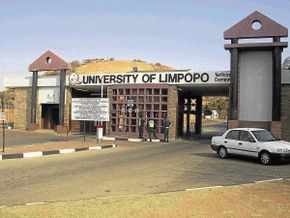
turfloopThe situation at the University of Limpopo’s Turfloop campus was quiet and under control on Friday after a wave of protests, police said.

“We are still monitoring the situation, but it is very quiet,” Brigadier Hangwani Mulaudzi said.

On Thursday, police used rubber bullets and teargas to disperse a group of protesters at the university.

Mulaudzi said the protest started on Wednesday night, and continued into Thursday morning.

“Some of the protesters stoned vehicles and blocked the entrances to the university. We had to bring in reinforcements to assist local police,” he said.

Twelve students were arrested and charged with public violence. They would appear in the Mankweng Magistrate’s Court soon.

Mulaudzi said the protests were sparked by a dispute over Student Representative Council (SRC) elections.

“Different student bodies were fighting among themselves but we cannot allow students to take matters into their own hands and destroy public property,” Mulaudzi said.

Father murders daughter, eats flesh

png2A Papua New Guinea man described as a vampire has been arrested after allegedly murdering his young daughter by biting her neck, eating her flesh and drinking her blood, a report said on Friday.

Police called the grisly incident that occurred on Wednesday at a settlement near Lae “an act of cannibalism”.

The PNG Post Courier cited local councillor John Kenny, who was one of the first on the scene, as saying the three-year-old child and her mother were visiting the father when he grabbed the girl and ran off into nearby bushes.

Kenny said the man allegedly held the toddler close to him, bit deep into her neck, ate the flesh and sucked her blood.

Two boys who were climbing a coconut tree nearby saw him and ran quickly to raise the alarm.

“He was just laughing at the boys and continued eating the flesh and sucking the blood,” Kenny told the newspaper.

“The boys were scared and ran quickly to alert the people.”

When people arrived to investigate the man reportedly dumped the body in the bushes and ran away before being caught and turned over to police.

PNG is a sprawling nation where black magic, sorcery and cannibalism sometimes occur.

Last year police arrested dozens of people linked to an alleged cannibal cult accused of killing at least seven people, eating their brains raw and making soup from their penises.

There have been several other recent cases linked to cults, witchcraft and cannibalism, with a man in 2011 reportedly found eating his screaming, newborn son during a sorcery initiation ceremony. – Sapa/AFP


Black gang war errupts at Pretoria school

After his ear was cut off in a gang attack

Violence erupted when black pupils from a Pretoria West school attacked a group from Langenhoven High School on Wednesday, leaving at least four pupils critically injured.

One was rushed to hospital with an ear cut off; another had a sharp instrument stuck in his back.


In what parents on Thursday termed gang-related violence, the boys from Pretoria West arrived outside the school gates in a taxi they had hired specifically for that purpose.


They wielded an assortment of weapons, including knives, pangas, small axes and other sharp weapons.


“They waited outside the gate, and attacked my son just as he came out on his way home,” said Lucas Mgidi, whose son’s ear was cut off in the fight. Mgidi said his son had been caught in the attack meant for a rival group.


Department of Education spokesman Gershwin Chuenyane said a team would be sent to investigate the circumstances around the incident.


“We are saddened by the injuries suffered by the pupils, we will send psycho-social officials to talk to them,” he said.


Mgidi said his son had fought back when he found himself in the thick of things, but he was left badly injured and bleeding after being hit with bricks, booted feet and fists.


The boy was hit on the side of his face with a knife that severed most of his left ear. “His friends arrived at the scene to find him looking very bad.


“They picked him up, took the piece of ear lying on the ground near him and flagged down a passing taxi to remove him from the situation and the possibility of further injuries,” Mgidi said.


Mgidis’ son’s friends called his parents to notify them of the injury, and the father asked the taxi driver to drop his son off at a local hospital.


Maropeng Mamabolo, whose son was among the group from Pretoria West, said her son was also left badly injured.


He was bleeding profusely and had a sharp instrument stuck in his back from the clash.


A parent admitted that she knew the boys had been heavily armed. “They had dangerous weapons on them, they might even have had a gun.”


The police had been called to the scene, and on Thursday spokeswoman Sergeant Ann Portman said when the officers arrived most of the injured had been removed.


“We are investigating the possibility of the violence being gang-related,” she said, adding that a 15-year-old boy from Langenhoven had been arrested yesterday.


“He was the only identifiable one, and we released him into his parents’ custody, pending the investigation.”


Police would be collecting statements from the injured boys once they were well enough to talk. “And then more arrests will follow,” Portman said.


Mgidi said they now feared for their son’s life, and did not know how safe he would be when he was well enough to return to school.


The pupil’s aunt blamed the school for allowing the situation to escalate out of control. “If they had called in the boys and spoken to them my nephew would not have acted desperately and asked for assistance.”


Both boys were out of intensive care by Thursday afternoon, with their parents saying they expected them to be discharged soon. – Pretoria News

Police fire rubber bullets at students

saps6Police fired rubber bullets at Goldfields Further Education Training students who stoned them and broke college windows on Wednesday, said Free State police.

They arrested 27 of them for public violence and malicious damage to property, Captain Stephen Thakeng said.

He said college management called the police about an illegal gathering by students, who were breaking windows.

When the police arrived students threw stones and empty bottles at their cars. Police used rubber bullets when they refused to disperse.

Police were monitoring the situation on Wednesday afternoon. – Sapa

Government to take half of fracking projects

Susan Shabangu
Susan Shabangu

The government will take a 20% “free carry” in all new oil and gas projects, and reserve the right to buy another 30% at market-related rates, which will allow it to take its interest in projects to an effective 50%, it emerged on Thursday.

Mineral Resources Minister Susan Shabangu broke the news when she announced that the technical regulations for shale gas hydraulic fracturing (fracking) in the Karoo and other petroleum sector technical regulations had been approved by the Cabinet.

The regulations will be published in the Government Gazette next week.

However, it was not yet clear yesterday whether the free carry and the reserve will be included in these regulations.

The size of the free carry stake has surprised the industry.

Ms Shabangu told a post-Cabinet media briefing that Cabinet had approved the free carry and reserve last November, but did not explain why they had not been made public until now.

Free carry in the oil and gas sector takes place when a government is able to take a percentage of production without having contributed to the capital and exploration costs of the project.

Ms Shabangu said previously the mining sector had contributed little to the country’s direct economic development.

“The petroleum industry is completely new and the state will have to also be a free carrier … the reason for the technical regulations, particularly for the hydraulic fracturing, is how is it going to happen,” she said.

“The policy agreed to by the Cabinet of November says the state will have 20% free carry, but it also says if the state has another interest it can be up to 50%, but the 30% can be market related.”

During last month’s public hearings on amendments to the Mineral and Petroleum Amendment Act, oil and gas companies, especially ExxonMobile and Royal Dutch Shell, criticised the draft law for not having stated up front what the free carry obligations would be.

Several other oil and gas representative bodies complained that leaving the free carry and other state interests to regulations and not including them in the act made their planning and risk assessment very difficult.

They also pointed out during their oral presentations that the world norm was for governments to take a 10% free carry.

ExxonMobile’s SA GM Russ Berkoben told Parliament last month that South Africa’s potential offshore oil and gas reserves were possibly located in some of the most dangerous seas in the world, entailing significant exploration risks.

Therefore, he said, the fiscal and regulatory terms had to be as attractive as possible to encourage investment in the sector, otherwise companies would rather go to other countries with more accessible resources and simpler laws.

The regulations to be published next week will allow for a 30-day public consultation.

The immediate reaction from Royal Dutch Shell, Sasol and the South African Oil and Gas Alliance to Ms Shabangu’s announcements was that they welcomed the clarity emerging from them. However, they would have to study the regulations extremely carefully before making further comment.

Shell is exploring prospects off the west coast, while Exxon plans to search for crude and natural gas after acquiring rights to blocks near Durban.

Webber Wentzel partner Jonathan Veeran said that “10% ( free carry) was what one would have expected”. While the clarity on the percentages is helpful, it does mean that companies would have to test whether it would still be economically viable to continue with their projects, he said.

Mr Veeran said South Africa had a very underdeveloped upstream oil and gas sector and this meant it would still have to be seen whether even local companies could absorb this state interest.

Democratic Alliance MP James Lorimer said: “If the Cabinet was deliberately trying to sabotage the prospects of South Africa developing an offshore oil industry, they could hardly be going about it any differently to how they are behaving.”

He added that after listening to what the industry said in the public hearings on the new mineral and petroleum bill, the minister should have been moving towards realism rather than descending into “kleptocratic fantasy land”.

Treasure the Karoo Action Group and civil rights organisation Afriforum said yesterday that they did not believe this to be a proper consultation and were preparing to stop fracturing in the Karoo in the courts if necessary. Treasure the Karoo Action Group CEO Jonathan Deal said: “Government is effectively embarking on a business plan without proper consultation with the public.”

He said that should the government go ahead with its plans to frack in the Karoo, it would effectively lead to another e-tolling saga where a lot of money is invested with no real return and no popular support.

“The fact of the matter is that government has not heard the total story about fracking and is only listening to one side. It is not just about the ecology, but also that fracking is not a sustainable option,” he said.

Ms Shabangu said one of the report’s main recommendations was to ensure that the regulatory framework was robust enough to mitigate any negative effect should fracking be approved.

Mr Deal referred to comments by outgoing Royal Dutch Shell group CEO Peter Voser in the Financial Times this week that he regrets entering his company in the US fracking sector where it had to take a $2.1bn impairment. – Business Day

Debt ceiling crisis: Collapse will be worse than Great Depression

depressionYou can forget about any default in the debt ceiling crisis.  Former Assistant Treasury Secretary Dr. Paul Craig Roberts says, “The debt ceiling will be raised.  No government wants to lose its power or lose its ability to borrow.  So, if they don’t raise the debt ceiling, it is just a way of Washington committing hari-kari.  It simply removes the United States as a super power.”  

Dr. Roberts goes on to say, “If they don’t make a deal, one of two things will happen. . . . The Federal Reserve, on its own authority, lends the Treasury the money. . . . The other alternative, Obama . . . can simply declare a national emergency and raise the debt ceiling on his own initiative.  He could govern as a dictator.”

What would happen if the U.S. did default?  Dr. Roberts says, “The danger of default is the rest of the world dumps dollars.  If they dump dollars, the Fed loses control, the whole system blows up.  The banks fail.  The bond market collapses.  The stock market won’t go down 1,500 points; it would be cut in half. ”

No matter what happens, there is still an enormous and growing debt. 

Dr. Roberts contends, “The situation is unsustainable.”  It will blow up at some point, and Dr. Roberts predicts, “It will be worse than the Great Depression because in the Great Depression, prices fell along with employment.  Now, prices will be rising and employment would be falling. . . . Gold and silver prices will explode in dollar terms.”  – usawatchdog.com

Red October march calls for end to black violence

Sunette Bridges
Sunette Bridges

Almost 600 Afrikaners marched on the Union Buildings on Thursday to protest white genocide. The Red October group released hundreds of red balloons to mark the day while calling for tolerance and warned against hate speech and racism.

The mostly white Afrikaner group, organised by Afrikaans singer Sunette Bridges, delivered a memorandum calling for an end to black-on-white violence and what it termed reverse racial discrimination in education and employment.

“We are not denying that they are being murdered, but they are not being murdered by white people,” said Bridges, when asked why the focus was on white, and especially farm, murders. “And if they were murdered by white people, the international community would have an absolute freak-out.”

The group and its organisers had come under fire from other Afrikaans constituencies for appropriating a traditionally communist slogan for its name on what in previous years had been celebrated as Kruger Day, the birthday of Boer resistance leader Paul Kruger.

Organisers said they were fighting for the rights of minorities, and not protesting black rule.

“Everyone is welcome here,” said popular Afrikaans singer Steve Hofmyer, who acted as a celebrity draw card for the event. “We march to prove that there are South Africans left who won’t acclimatise to the sub-standard.”

Despite arguments that the event was intended to advance minority rights in general, the focus was very much on the rape and murder of white people by black people, something organisers did not shy away from characterising as genocide.

Hofmyer said white people faced an exaggerated threat.

“Immaterial of the statistics, we are not used to this mortality rate, we are not used to being raped in these numbers,” he said.

Crime affects everyone in South Africa, he told the crowd, but Afrikaners had the right to count their own dead. “If we say all deaths should be counted, why do we count the rhinos and not count all dead animals?”

Dr Dan Roodt from Praag said Afrikaners had been disenfranchised and were not allowed to have their own municipalities even in towns and cities where they were the majority population.

“As someone said, even in the reserves, American Indians are permitted to run their own affairs,” he stated. “Yet we are universally denied any say in the running of the country our forefathers built.”

Dr Roodt
Dr Dan Roodt


RO5
Her placard says it all…


Red balloons against the Union Buildings, seat of South Africa's government
Red balloons against the Union Buildings, seat of South Africa’s government


During the march, the crowd sang Afrikaans folk songs such as 'Sarie Marais', 'Die lied van jong Suid-Afrika', 'Oukraalliedjie', 'Bobbejaan klim die berg' and many others.
During the march, the crowd sang Afrikaans folk songs such as ‘Sarie Marais’, ‘Die lied van jong Suid-Afrika’, ‘Oukraalliedjie’, ‘Bobbejaan klim die berg’ and many others.


Famous Afrikaans singer Steve Hofmeyr being interviewed by the media


This protestor simulated some wounds
redOctober3
Most liberal pundts denounced the protest as ‘racist’ for being white, but the march in Cape Town contained a few people of colour


Rising red balloons signified the end of the protest in Pretoria


Canadian wins Nobel Prize in literature

Alice Munro
Alice Munro

Canadian writer Alice Munro has won this year’s Nobel Prize in literature.

More than a hundred reporters from around the world thronged and bustled in the Stock Exchange Building in Stockholm’s Old Town for about an hour before the doors to the Swedish Academy swung open.

Notably, there were many Japanese reporters present, hoping to break the news that Haruki Murakami had won the prize. Finally, the Swedish Academy’s Permanent Secretary Peter Englund stepped out from the doors and said Canadian short story writer won the prize.

The Swedish Academy, which selects Nobel literature winners, called her a “master of the contemporary short story”.

This may have to do with the frank intimacy of her tone, which is stripped of ornament and fuss, yet also, in its plainness, contains huge amounts of terrible, sublime, and contradictory feeling.

It may have to do with the fact that she writes mostly about women who want to escape some kind of confinement, who are hungry for experience above all else, and who attain it at a dear price.

They are elegant, wry, determined women. They are also subversives, and because they allow us into their lives.

It may have to do with her work being politically very safe.

Munro is the first Canadian writer to receive the prestigious $1.2m award since Saul Bellow, who won in 1976 and left for the US as a boy.

Munro’s writing has brought her numerous awards including a National Book Critics Circle prize for “Hateship, Friendship, Courtship, Loveship, Marriage”. She is also a three-time winner of the Governor General’s Prize, Canada’s highest literary honour.

Last year’s Nobel literature award went to Mo Yan of China.

The 2013 Nobel announcements continue on Friday with the Nobel Peace Prize, followed by the economics prize on Monday.

Official pockets hundreds of thousands for wiping R1.1 million in fines

tshwane2A Tshwane Metro official who allegedly pocketed hundreds of thousands of rand by clearing drivers’ traffic fines has been fired.

The official, Kgotso Lethoba, had worked in the transgressions department at the Akasia vehicle licensing centre, which falls under the metro police, since 2006.

He was fired last month for fraud. He “transferred” the names on fines to the tune of R1.1 million.

Metro police spokesman Senior Superintendent Isaac Mahamba said Lethoba, who had access to the Aarto/eNatis system, managed to transfer traffic fines from the original driver to a fake ID number, thereby clearing the driver’s name.

This was done for almost a year, despite its not being part of his job description, until his arrest in February.

Mahamba said the system was set up in such a way that it blocked people from renewing their vehicle licences if there were outstanding fines on the vehicle.

“When you do not pay your fines, you cannot renew your licence disc until the debt is paid in full,” Mahamba said.

When people went to pay their fines, the official offered to make the fine “go away” – at a price.

He would transfer the fines to fake identity and passport numbers and pocket the money.

The process of transferring the fine is called driver nomination, normally used when there is a dispute over who should pay a fine.

An example, said Mahamba, was when a driver could prove that someone else was driving the vehicle when the fine was incurred.

The Aarto system is document-driven and to have a traffic fine transferred, one must fill in forms and provide a copy of the person’s ID to whom the fine is transferred.

Mahamba said Lethoba had filed no documentation for the transfers.

It is unclear how much the official charged.

Mahamba said the department hoped to recover some of the money by deducting it from Lethoba’s pension fund contributions.

Lethoba was arrested on February 13 as part of the city’s efforts to clamp down on corruption. He was placed on paid suspension for three months pending an investigation.

A first offender, Lethoba was allowed to return to work after the three-month suspension until his disciplinary hearing was completed. He was dismissed on September 30.

The disciplinary hearing started in March. The were delays because the official was sick and witness were absent, said Mahamba.

When he returned to work, the official was not allowed to use the Aarto/eNatis system.

“This dismissal is consistent with the city’s zero-tolerance policy in respect of dishonesty,” said Mahamba, adding that the criminal charges of corruption against the employee were continuing in court.

Since the official’s arrest, Mahamba said, the system had been adapted so that documents had to be filed before a fine could be transferred. “This should stop corrupt activities on the system.”

Four other employees in the same department have been arrested for similar offences. The suspects worked together and used the IDs of dead people to transfer traffic fines.

The criminal case of corruption against them is ongoing and they have returned to work after their three-month suspension.

Another official from the Akasia vehicle licence department was arrested in August after she was allegedly caught writing a learner’s licence test on behalf of a candidate for a fee. A date is awaited for her disciplinary hearing.

The Pretoria News reported on Tuesday that 12 metro employees in the horticulture department were axed for stealing council fuel and selling it to taxi drivers at a reduced rate. – iol.co.za

SAS Spioenkop heads for west Africa on anti-piracy mission

SAS_Spioenkop1
SAS Spioenkop

An SA Navy frigate has set sail for the pirate-infested west coast of Africa.

SAS Spioenkop left Simon’s Town naval base yesterday morning with a crew of 180 .

It and three other frigates were purchased in the controversial arms deal.

Commander Greyling van den Berg, spokesman for the naval base, said pirate attacks had increased along the African west coast and were a threat to commercial vessels and international trade.

The frigate will stop in Namibia, Angola, Ghana, Nigeria and Senegal. The crew will train their foreign counterparts in anti-piracy action at some of the ports of call during the six-week voyage and will showcase South African defence industry products.

“Piracy has increased, especially off Nigeria, because there are a lot of offshore oil platforms there,” said Van den Berg.

“So we will be sailing through an area that is heavy with pirates. That is why our training involves specific training for anti-piracy.”

He said South Africa is a strategic choke-point for the continent. Because modern ships are too big to pass through the Suez Canal, which connects the Mediterranean with the Red Sea, they must sail around the west coast of Africa to get to Europe.

He said another South African warship was patrolling the Mozambique channel.

The frigate will reach Dakar, Senegal, next month in time for the four-day Sea Power for Africa Symposium, which attracts many of the continent’s naval leaders. Van den Berg said piracy would top the agenda this year. – timerslive.co.za

IEC expects record voter turnout

iecThe Independent Electoral Commission (IEC) is determined to attain record voter turnout in next year’s election, chairwoman Pansy Tlakula said.

“We are preparing ourselves for an exceptionally high… voter turnout,” she said at the media launch for the 2014 elections in Midrand.

“In South Africa, our legislative framework requires citizens to register before they vote. Registration is apolitical and everyone has a role to play.”

Tlakula said voter registration needed to be embraced by, among others, political parties, organised labour, organised business, faith-based organisations, and civil society.

The IEC had started consulting with the relevant parties in this regard.

She announced that registration for next year’s elections would take place on November 9 and 10.

“All our voting stations in the country will be open for the purpose of voter registration from 8am.

“Our officials will be ready to welcome and assist all potential voters.”

Tlakula said those who were already registered should take the opportunity to check their details on the voters’ roll, and those who had moved should register in their areas.

She called on young people, especially those who were voting for the first time, to register.

“Democracy and freedom came at a great price and you cannot take it for granted. We should treasure and use the opportunity to exercise that right [to vote],” Tlakula said. – Sapa

‘Blaming apartheid, race does not wash anymore’

Matthews Phosa
Mathews Phosa

It is time for government to shape the country’s future decisively and stop blaming the past, former ANC treasurer-general Mathews Phosa said on Tuesday.

“We are… a government, and placing the blame on the past, apartheid, race, and other external factors does not wash anymore. It is time for solutions of which we are the architects and it is time to shape our future decisively,” Phosa said in a speech prepared for delivery at the Ahmed Kathrada Foundation conference in Johannesburg.

“Let us begin by making sure that every rand of public money that is spent makes a tangible impact on development and upliftment of our people.”

Corruption and non-service delivery were serious concerns.

“If we fail to address the income gap and alleviate poverty, we will have other consequences. Ours will be a perpetually volatile society, open to flare-ups from time to time, and growing disenchantment among the voters with those they have voted into power.”

Phosa said many in the ruling African National Congress had faced charges of corruption and had brought the party into disrepute in “a devastating and shocking fashion.”

“It has never been ANC policy for anyone to steal public money. Anyone doing that satisfies his or her own greed at the expense of the nation, and to the lasting detriment of a party that commanded the respect of the entire globe.”

The corruption scourge would lead to the decline of the ANC and ultimately render its history “meaningless”.

“If we want to avoid being consigned to the dustbin of history, we must be demonstrably more decisive, more transparent and totally unforgiving in how we deal with those who steal public money, or abuse positions of trust,” said Phosa. – Sapa