British warship sets sail for Gibraltar

HMS Westminster frigate

A British war ship set sail for the Mediterranean on Tuesday amid diplomatic tensions between Britain and Spain over the contested British overseas territory of Gibraltar. The HMS Westminster frigate will dock in Gibraltar as part of a Royal Naval deployment of ten vessels to the Mediterranean and Gulf.

The departure of the ship from Portsmouth, played down by the British and Spanish governments as part of a long planned, routine exercise, has underscored heightened tensions over the territory.

A helicopter carrier also left Portsmouth for Gibraltar on Monday.

Britain has warned Spain it might take legal action to try to force Madrid to abandon tighter controls at the border with Gibraltar in what it called an “unprecedented” step against a European ally.

A spokesman for British Prime Minister David Cameron said the Spanish border checks, imposed after Gibraltar created an artificial reef which Spain said blocked its fishing vessels, were “disproportionate” and “politically motivated”.

Tensions over the rocky outpost at the mouth of the Mediterranean, to which Spain lays claim, have turned into one of the worst rows in years between the two European Union states.

Opposition politicians in Spain have accused Prime Minister Mariano Rajoy of using the situation to distract Spaniards from the country’s severe recession and a corruption scandal.

Spain has said it will not back down over the border controls, which it says are a legal and proportionate step to prevent money laundering and the smuggling of tobacco and other products.

If Britain chooses to test whether those restrictions breach EU law on freedom of movement, the case is likely to end up in the European Court of Justice. Judgments there can take years, although special cases can be fast-tracked. – SABC

Dutch mourn tragic prince

Prince Friso
Prince Friso

Prince Friso of the Netherlands will be buried Friday in the municipality of Baarn, the royal house said Tuesday in the Hague.

The younger brother of King Willem-Alexander died Monday at the age of 44, one and a half years after he was buried by an avalanche in Austria and fell into a coma.

Friso’s mother, Princess Beatrix, was born at Soestdijk Palace in Baarn, and Friso went to school in the small town near Utrecht.

The Dutch royal family gathered at the Huis ten Bosch palace in the Hague, where Friso lay.

There were broadcast images of Beatrix, Willem-Alexander and Queen Maxima in front of the palace. Friso’s widow, Princess Mabel, and her daughters Luana, 8, and Zaria, 7 were seen in the palace gardens.

Dutch citizens came to the palace to leave flowers, and thousands also posted messages of condolence online.

“It is a small token of compassion,” a young man said as he handed over a bouquet of lilies to a palace official.

An elderly lady said about Friso’s death: “We all had expected this, of course. But it still came suddenly.”

The prince died of complications following the severe brain damage he suffered in February 2012, when he was buried under an avalanche while skiing in Lech, the Austrian resort where the Dutch royals traditionally spend their winter holidays.

The town of Lech announced that it would honour Friso in its annual mass on the Catholic Assumption holiday on Thursday, an event that takes place on an Alpine mountain pasture. – Sapa-dpa

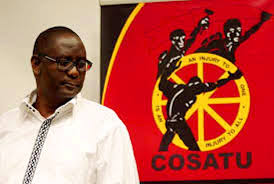
Cosatu factions head for battle

Comrade Vavi
Comrade Vavi

Cosatu’s central executive committee will hold a special meeting on Wednesday to discuss the conflict between supporters of the federation’s top two leaders.

The opposing factions are expected to use the meeting to dislodge and discredit general secretary Zwelinzima Vavi and president Sdumo Dlamini.

The trade union federation’s top brass called the special meeting after Vavi admitted to having had a sexual liaison with a junior staff member at the Cosatu head office, in Braamfontein, Johannesburg, earlier this year.

Vavi has apologised.

It is expected that Vavi’s detractors in Cosatu – comprising representatives of the National Union of Mineworkers, the Police and Prisons Civil Rights Union, the National Education, Health and Allied Workers’ Union and the SA Democratic Teachers’ Union – will call for his suspension tomorrow.

But Vavi’s supporters are expected to attack Dlamini in a strategy to crush attempts to topple their man. A vote of no-confidence in the Cosatu president might be called.

Expected to lead the charge against Dlamini is the National Union of Metalworkers of SA.

The union has accused Dlamini of failing to deal with what has been call ed the imminent implosion of the labour federation after attempts were reportedly made to force him to act .

Numsa has questioned the motive for convening a special sitting of the Cosatu leadership, which has the power to suspend or expel leaders of the federation.

The union claims that the meeting is part of a ploy to oust Vavi.

Numsa said it would argue tomorrow that the special meeting was unconstitutional and would call for it to be cancelled.

A letter to this effect has been sent to Cosatu officials, the union said yesterday.

Numsa president Cedric Gina – speaking to journalists yesterday in Johannesburg alongside other union leaders after Sunday’s special central committee meeting – said he had recently implored Dlamini to prevent Cosatu’s “imminent demise” but Dlamini was not moved by his pleas. – timeslive.co.za


Renamo: 36 Mozambique soldiers, police killed

renamoMozambique’s main opposition party Renamo Tuesday claimed its fighters killed 36 soldiers and police in a fresh outbreak of violence at the weekend between the government and its former civil war foes.

Renamo said the killings occurred in two separate clashes in the central province of Sofala, a region where violence erupted earlier this year more than two decades after the end of a brutal civil war in the southern African country.

National police spokesman Pedro Cossa confirmed the presence of armed men in the region, but did not comment on the reported casualties.

Local media reported two deaths.

In a statement emailed to AFP, rebel group-turned-opposition party Renamo said it had first clashed with Frelimo government forces on Saturday.

“Renamo security forces responded promptly to fire from FADM (Armed Forces of Mozambique) and FIR (Police Rapid Intervention Force) causing 29 deaths,” it said.

“The next day… there was a new onslaught by the forces of the Frelimo government and it was again answered promptly and killed seven,” Renamo said, claiming the deadly exchange of fire was in self defence.

It was not clear what had prompted the clashes.

Tension had been simmering between the former warring parties which signed a peace deal in 1992 after 16 years of civil war which broke out shortly after independence from Portugal.

Support for Renamo has waned in recent elections, and its leader Afonso Dhlakama in October last year began retraining ageing veterans demanding “a new political order”.

The party is demanding more representation in the armed forces, an overhaul of the electoral system and a cut of revenues from Mozambiques fast-growing coal and gas mines.

Armed clashes broke out in April with a Renamo attack on a police station in Muxungue, near the latest outbreak of violence.

In July police burnt down 50 huts belonging to suspected armed members of Renamo in an a bid to flush out those it suspected were behind a spate of ambushing civilian vehicles in the area.

A latest round of peace talks ended without a deal on Monday, despite a partial agreement reached last month to change the electoral laws.

Without changes to existing electoral legislation the opposition has vowed to boycott the local government elections due in November. – Sapa/AFP

Concourt judge says police unchanged since Apartheid

Zac Yacoob
Zac Yacoob

The behaviour of South Africa’s police force remain largely unchanged since the apartheid era, former Constitutional Court judge Zac Yacoob said in a New Age report on Monday.

“Sadly, the police of today do not seem to be better than the police of yesterday,” said Yacoob, in reference to the Marikana tragedy.

In August last year, 44 people died during strike-related unrest at Lonmin’s Marikana operations in Rustenburg.

Thirty-four people — almost all striking mineworkers — were shot dead in a clash with police on August 16. Ten people, including two police officers, were killed in the preceding week.

Yacoob was speaking at the commemoration of the Golela Nine in Chatsworth, Durban.

Nine anti-apartheid activists, known as the Golela Nine were found dead after they were ambushed near the Swaziland border at Golela in 1988.

Yacoob had represented the families of the victims at the inquest into their death. – eNCA

SA’s terrible municipal audits

musterbstIt was announced on Tuesday that only seventeen of South Africa’s 278 municipalities have received clean audits for the financial year 2011-2012.

The Auditor-General (AG) Terence Nombembe released the latest report in Pretoria.

It showed that while a handful of municipalities performed better than the previous year, the majority remained in the red.

Along with the 278 municipalities, a further 60 municipal entities are included in the results.

Of those which received clean audits, only three municipalities and three municipal entities improved their results over the previous year to achieve a clean audit, while just over 30 others improved their results, but remained negative.

The three successful municipalities, George, Langeberg and Mossel Bay, are all in the Western Cape.

A further 50 auditees regressed from their previous year’s results.

The majority maintained mostly negative results from previous years.

None of the country’s eight metropolitan municipalities managed to secure a clean financial bill.

The AG’s office said metros were setting a bad example to their smaller counterparts.

“Unfortunately, the metropolitan municipalities faltered in their crucial role of providing exemplary leadership to smaller municipalities.”

Nombembe says the high vacancy rate in municipalities is partly to blame, saying a lack of chief financial officers (CFO’s) in municipalities is particularly problematic.

“At 73 percent of the auditees, vacancies in key positions and key officials without the minimum competencies and skills continued to make it difficult for these auditees to produce credible financial statements and performance reports.”

Clean audits have now been sitting at a level of five percent for the past three years.

Earlier this year, Nombembe warned that billions were being spent on consultants to do work that should be handled internally.

It appears the trend has remained, sending expenses spiralling among more than two thirds of municipalities simply for consultants handling financial matters.

The report is Nombembe’s last as AG as his seven-year contract will expire in November.

Parliament has begun the search for a replacement. – EWN

KwaZulu-Natal farmer shot in the head in latest farm attack

newcastleA KwaZulu-Natal farmer was reportedly killed by farm attackers as he returned to his property.

The Mercury newspaper reported that Timothy Green — who was returning home from visiting family — was shot dead at his front gate after disturbing the attackers on Sunday night.

The 44-year-old Newcastle farmer apparently tried to hide under his vehicle, but could make just one call before being shot in the head and legs.

“When he realised he was under attack, he called Marlize Strydom, a colleague and friend, and asked her to call the police… that was the last call he made,” his brother Anthony Green told The Mercury.

The newspaper reported that Strydom called the Dannhauser police station, but no vehicles were apparently available. Police arrived on the scene only an hour later.

Police said that a murder docket had been opened. The attackers are still at large.

Why I am ashamed of being South African

By definition, excess stands outside reason. (Georges Bataille)

South Africa is known as the rape and murder capital of the world. But that sounds almost anodyne, telling us nothing about the millions of psychos let loose by this crazy government and its many foreign backers.

Just this morning I learned about the macabre murder of a woman of Italian extraction, Vivien Ponté. She was tied up, presumably raped, then slaughtered (there were blood stains all over) and finally set alight upon her own double bed. The Johannesburg Beeld published a picture of her charred bed.

roodt_dan_wikiThe mainstream media in South Africa have long ceased to keep us informed of all the murders in the country, especially black-on-white murders. The 200 foreign correspondents from the world’s major news media based in Johannesburg generally eschew reporting on anything that would disturb their carefully constructed myth of South Africa as a liberal democracy with a “model constitution”. According to them, our pristine utopia is only occasionally marred by the presence of “die-hard white racists” and people who commit speech crimes like using the “k-word” or even just insinuating that all is not well in Mandelatopia.

Murder, rape, burning women on their beds? What’s that? These incidents almost never make it into print in international English and if they do, they are carefully sanitised so as to remove the grisly, unspeakable, dehumanising details. Currently there is almost a pandemic of child rapes. Even toddlers and babies are regularly subjected to sexual violence. In one case, the maniac of Thokoza, a 42-year old black man called Sifiso Makhubo, raped 34 underage girls and two adult women before he was finally arrested. Makhubo believed that raping girls as young as ten could cure him of HIV-Aids. Of course, in the process he infected many of them. The fact that he conveniently committed suicide on the eve of his trial, did nothing to expiate his crimes.

Sifiso Makhubo
Sifiso Makhubo

I must confess: I am ashamed to bear the South African nationality. I cringe whenever someone pronounces the phrase “We South Africans…” To me, everything about South Africa is tainted by the wave of sadistic violence, corruption and mediocrity that have swept the country since 1994. The flag, the anthem, the constitution, our very identity, have all been blighted by our “transformation” – that politically correct cliché – into a criminal, deviant society.

One cannot be proud of anything in South Africa, except perhaps the Drakensberg mountains and the Kruger National Park. Appropriately, the ANC government wants to rename the Kruger and inside its animals, such as rhinos, are being poached. So even there, decay has already set in. Maybe they will rename the Drakensberg too, after some terrorist like Magoo’s Bar bomber Robert McBride or Abu Bakr Ismail, the “commander” – so-called – of the Church Street bomb.

South Africa is a social and political Chernobyl. The disaster predates the leftist coup of 1994 and may be traced to the very foundation of the current state in 1910. Britain, too, committed war crimes and atrocities on our soil during the Anglo-Boer war, but those were swept under the carpet for the sake of “reconciliation between the two white races, English and Afrikaners” as it was put at the time. Boer women and children were harassed, raped and made to starve in the British concentration camps. Many of the atrocities were committed by so-called “armed blacks” that the English employed to terrorise Boer civilians.

So South Africa was more or less conceived in the British camps. It is the fruit of a forced union, then as now. The rape and rapine that Britain and its black helpers visited upon us in 1900 would become the sediment of the slimy and shameful compromises and forgetfulness of politicians. Alas, during the twentieth century we had few leaders of integrity. Verwoerd was a rare exception and without him we would not have been a republic now. For that he was vilified and finally assassinated.

Ruins of the Château de Lacoste in the Vaucluse department, home of the Marquis de Sade

Remarkably, South Africa has largely escaped war on its own soil for more than a century, even though we participated in both world wars on the Allied side. “Never a good deed shall go unpunished,” as the saying goes, and for our loyalty to Britain and the US we have been crucified, calumnied and finally incarcerated in this putative “New South Africa”. Except it is not new. It is old, very old, primitive, even primaeval. It wears the grimace of ancient rituals, killings, human sacrifices. If 1994 were a “liberation” at all, it was the liberation of Freud’s two primal drives: Eros and Thanatos, the latter being the death drive. When the two of them combine, as they have in South Africa, you encounter the set of impulses that still bear the name of an eighteenth-century French writer, the Marquis de Sade.

Every South African is a sadist. The utter perversity and complete lack of any moral compass in our society testify to the almost pristine state of amoral utopia that we have reached: a paradise of cruelty. Everything is permitted; everyone may be bought or bought off and everyone will look the other way, either because they are in on the deal or out of fear.

People often ask me: “If you are so ashamed and disgusted by South Africa, why don’t you leave?” I think the short answer is that, given the decades of slander directed at Afrikaners, most other countries would rather welcome a Rwandan war criminal than an Afrikaans writer, so no other state would have me. But then, I ask myself, if our women could “walk barefoot over the Drakensberg” as Susanna Smit famously put it, why should we simply abandon our land to these squads of sadists? The more complex answer is that a place as sick as South Africa needs a few psychiatrists, a few sane people to at least write up the manic convulsions of the patient.

It feels as if I have only broached the subject. There is so much more to say and to explain, of how we got to be inmates in this, our sadists’ castle.

This could well turn into a series, on the shame of being South African.

Embassy threats ‘had no basis in fact’

droneattackA high-ranking Yemeni security official has told McClatchy that the Obama administration’s recently announced terror threat which supposedly targeted US embassies had “no basis in fact” and was manufactured merely to dampen opposition to drone strikes.

After initially warning of a terror plot “thought to have been one of the most serious against American and other Western interests since the September 11 attacks,” the US closed 20 embassies and consulates earlier this month, 18 of which reopened soon after.

The announcement of the threat occurred as it was simultaneously acknowledged that the attack on the US consulate in Benghazi last year was linked to a clandestine CIA arms smuggling operation based in the Libyan city that was being used to transport arms to rebels in Syria, many of whom are allied with Al-Qaeda militants.

The announcement of the threat against US embassies also served to justify blanket NSA surveillance, leading some to suggest that the alleged plot was being hyped to distract from the Edward Snowden scandal. It was later claimed that the NSA had intercepted a “conference call” of Al-Qaeda members during which militants discussed an attack.

However, in a report entitled U.S. embassies in Muslim world reopen amid still-murky threats, McClatchy cites, “A high-ranking Yemeni security official speaking on the condition of anonymity,” who told the news outlet that the threat “had no basis in fact,” with the source bemusedly attributing “media reports about imminent terror strikes to a single official’s comments, which he cast as a misguided attempt at shifting public opinion in the face of increasing and unpopular American drone strikes.”

Dozens of people, labeled “suspected militants” by the US, have been killed in Yemen over the last two weeks as a result of at least eight drone strikes, attacks that have outraged Yemeni citizens. According to Princeton University professor and Yemen expert Gregory Johnson, the drone strikes are actually serving to recruit more terrorists.

“There are strikes that kill civilians. There are strikes that kill women and children. And when you kill people in Yemen, these are people who have families. They have clans. And they have tribes. And what we’re seeing is that the United States might target a particular individual because they see him as a member of al-Qaeda. But what’s happening on the ground is that he’s being defended as a tribesman,” said Johnson.

Figures show that 50 civilians are killed for every one terrorist taken out by a drone strike, which means that 95% of the victims are innocent men, women and children.

As Ron Paul noted recently, while the Obama administration is conducting drone strikes in Yemen to supposedly target Al-Qaeda terrorists, the White House is simultaneously supporting the allies of Al-Qaeda terrorists, the vast majority of whom have pledged allegiance to Al-Qaeda, in Syria.

Furthermore, as the high-ranking Yemeni security official reveals, the administration is also apparently manufacturing terror plots in order to justify these drone strikes as well as mass NSA surveillance. – Infowars.com

Facebook bans pro-Israel columnist

fbbanBy Ruthie Blum. For the past two months, I have intermittently been barred from Facebook.

The first time it happened was in June, when I tried to post my Israel Hayom column. Suddenly, a window popped up, telling me that inappropriate material had been found on, and removed from, my page. I was warned that if I continued violating Facebook’s “community standards,” I would be banned from the social network for good.

The notice included a link specifying these standards, and a demand that I click to acknowledge I had read and understood them. Failure to do so, it said, would result in my inability even to open Facebook to read my newsfeed. I complied.

The following statement appeared: “Facebook gives people around the world the power to publish their own stories, see the world through the eyes of many other people, and connect and share wherever they go. The conversation that happens on Facebook–and the opinions expressed here–mirror the diversity of the people using Facebook. To balance the needs and interests of a global population, Facebook protects expression that meets the community standards outlined on this page. Please review these standards. They will help you understand what type of expression is acceptable, and what type of content may be reported and removed.”

Underneath the explanation, examples of unacceptable content were listed. Among these were “violence and threats,” “self-harm,” “bullying and harassment,” “graphic content,” “nudity and pornography,” and “hate speech.”

I was puzzled. Neither I nor anyone else who had shared articles with me had engaged in any of the above. And, as eagerly as I searched, I couldn’t locate a single dirty picture on my timeline.

Indeed, the only activity visible, other than the occasional photo of one of my family members, was political in nature.

Since global politics is what I write about–with an emphasis on the defense of Israel and criticism of its detractors–this is obviously what dominates my Facebook page. Comments on pieces I post are also related to issues of foreign policy, Zionism, anti-Semitism, the Middle East and the United States.

What, then, could possibly be the reason for my suspension?

Figuring at first that it must be some kind of error, I simply chalked it up to spam and waited until I was allowed back into Facebook’s good graces.

When this warning appeared a second time, however, I did what I always do when baffled by cyberspace–I called my kids. After admonishing me for being an idiot where the Internet is concerned, one of them told me to change my settings. This would prevent other people from posting on my page without my permission. I took his advice and assumed I had solved the problem.

The very next day, I received the warning again, this time with a slightly harsher tone. After all, I had become a serial offender. I was banned not for 24 hours, but for three days. This meant that not only was I unable to post anything, but I could not even “like” anyone else’s posts.

The only good thing about this was that it gave me the chance to snap back at my son that maybe I’m not such an idiot. I had done as he had instructed, and  was still getting the menacing message. Ha.

The next step, we decided, was to send a message to the folks at Facebook. Hey, I hollered, I haven’t been posting anything incendiary. Please advise. Alas, no response was forthcoming.

Again I returned to the rules of conduct, to see if I could decipher what I was doing wrong and how I could make it right. The clue was at the bottom of the “community standards” page, in a paragraph titled “Reporting abuse”: “If you see something on Facebook that you believe violates our terms, you should report it to us.”

In other words, someone has been complaining about me to Facebook, reporting abuse on my part. This person clearly doesn’t like what I have to say–which is always from a conservative viewpoint–and has come up with a way to silence me through bullying.

It is actually he or she who is violating Facebook standards, not I. But there is nothing I can do about it, other than go on the defensive, and so far not very effectively.

This is exactly how the enemies of Israel operate. They repeatedly accuse the Jewish state of acting in an illegitimate fashion, thereby placing the burden of proof on the unwitting defendant. It is a brazen and shameless tactic. And it works like a charm.

Facebook is a private enterprise that has the right to choose its users. Those users do not pay for the privilege; and it is a huge privilege for writers to have access to such a massive readership. Whoever has been targeting me knows this full well.

He or she is also aware that all one has to do to ruin Israel’s reputation is to cast aspersions. Social networking takes care of the rest.

UPDATE (7:55 pm): The Observer received the following statement from Facebook:

As our team processes more than one million reports each week, we occasionally make a mistake. In this case, we mistakenly removed content from Ruthie Blum’s profile, and worked to rectify the mistake as soon as we were notified. We apologize for the inconvenience caused due to the removal of this content, and we have already taken steps to prevent this from happening in the future. Additionally, we have removed any blocks on associated accounts. – The Observer

Judge throws out racism claim against celebrity chef

Paula Deen
Paula Deen

A federal judge in Georgia has thrown out race discrimination claims by a former Savannah restaurant manager whose lawsuit against Paula Deen ended up causing the celebrity cook to lose a big slice of her culinary empire.

Lisa Jackson sued Deen last year, saying she was subjected to racist attitudes during the five years she worked at a Deen restaurant, Uncle Bubba’s Seafood and Oyster House. But U.S. District Court Judge William T. Moore Jr. ruled Monday that Jackson, who is white, has no standing to sue them for race discrimination.

In his ruling, judge Moore said that though others may have allegedly faced discrimination, Jackson can’t sue since she was not one of the victims.

“While Plaintiff may have faced significant challenges in managing a workplace allegedly permeated with racial discrimination, her difficulties do not fall within the zone of interests sought to be protected by Title VII [of the Civil Rights Act of 1964] and cannot support a claim for racial discrimination under that stature,” he said, according to the court order obtained by NBC News.

“We are pleased with the court’s ruling today that Lisa Jackson’s claims of race discrimination have been dismissed,” Deen’s spokeperson Elana Weiss Rose told TODAY. “As Ms. Deen has stated before , she is confident that those who truly know how she lives her life know that she believes in equal opportunity, kindness and fairness for everyone.” – Today


Nkwinti backs down on land reform

Nkwinti
Nkwinti

Farm productivity is considered by Rural Development and Land Reform Minister Gugile Nkwinti to be more important than ensuring 30% of agricultural land is black-owned by 2014, Beeld reported on Tuesday.

Speaking at the launch of the Land Bank’s annual report on Monday, Nkwinti reportedly said his main goal was ensuring 100% productivity on land transferred in the reform programme.

Nkwinti said that for government, the issue was not about the pursuit of targets, and he had not determined any target that 30% of the land should be in black hands by next year, the newspaper reported.

“It was a sentimental statement at that time. No one explained it to me and I am also not pursuing it.”

It was important to ensure that farms already transferred were productive, because this would help feed the country’s people and provide jobs.

For this reason, his department had spent about 25% of its budget on the recapitalisation of land.

He reportedly denied that the land reform programme had failed because not enough land had been transferred.

“We are moving from a quantitative approach to a qualitative one.”

Nkwinti said of the 79,000 land claims lodged so far, only about 6,000 claimants had indicated they would prefer land.

The rest stated that they would rather have the money as compensation. – Sapa

UDM, Agang, Cope to unite?

Holomisa
Holomisa

A possible coalition is on the cards for the United Democratic Movement, Agang SA and the Congress of the People (Cope) ahead of the 2014 general elections.

UDM leader Bantu Holomisa reportedly wants to team up with Agang SA’s Mamphela Ramphele in a bid to challenge the ANC’s dominance in the Eastern Cape.

But the UDM leader denied that an agreement had been reached.

Holomisa would only confirm he had been in talks with the two parties.

“We agreed we would let Agang SA launch themselves as a party and that Cope must find a way to sort through their disputes. We will be meeting again very soon,” said Holomisa.

He added that nothing was concrete.

“The positive thing is that all of us feel strongly that we need to close rank and unite in fighting for the people of South Africa from this maladministration we are witnessing on a daily basis.”

‘Yengeni was not targeted’

Tony Yengeni surrounded by polo enthusiasts

ANC national executive committee member Tony Yengeni was “substantially over the limit” when he was pulled over for drunk driving, according to a report.

The Cape Argus reported that Yengeni was first tested with a hand-held screening device when he was stopped in Cape Town. His Maserati was reportedly missing its numberplates.

“Officers had spotted the Maserati driving erratically. Also, we take the absence of numberplates extremely seriously… If a vehicle doesn’t have a numberplate, then no other enforcement is possible,” City of Cape Town mayoral committee member JP Smith said, according to the newspaper.

“Officers used a screening device, which showed he was substantially over the limit, which was sufficient basis on which to take him to the Shadow [Safely Home Anti Drunk-driving Operations War Room] centre in Athlone,” added Smith.

He insisted that Yengeni had not been targeted.

“Fifty-two people were nabbed across the province this weekend. Mr Yengeni is one of 52 – so he certainly wasn’t targeted. Anyway, without a numberplate it was improbable that officials would have known who he was anyway,” said Smith.

He added that video footage will be made available to prove that police had a probable cause for pulling over Yengeni. – iAfrica.com