Poverty engulfing SA’s white middle class

The white middle class struggling

It was not only the poor who were hard hit last year. As many as 116000 “financially comfortable” households have fallen on bad times.

Slowing economic growth and rising unemployment hit many a household classified as “anchored well”, shifting them into the more vulnerable category, “drifting”, Momentum’s Household Financial Wellness Index showed yesterday.

An economist at Unisa’s Personal Finance Research Unit, Johann van Tonder, said the Momentum data showed that even skilled people with “high-net worth” and a formal-sector job were not immune to deteriorating economic conditions.

Households classified as “anchored well” are not necessarily high-income earners. But they have a stable standard of living.

Bernadene de Clercq, head of the Unisa research unit, said that many of the “anchored well” were pensioners but could sustain their lifestyle.

About three-quarters of South Africans said they we re facing financial challenges, according to the index, which sampled more than 3500 households in different income groups and geographical areas.

The rising cost of living – higher prices for electricity, food and fuel – and the high level of indebtedness have been gnawing away at disposable incomes.

This is despite the interest rate being lowered to an historic low in July last year. The repo rate is now at 5%, prime at 8.5%.

Slowing economic growth has hit both shacks and comfortable suburban homes.

The index revealed a decline in the average “financial wellness” score of households from 65.23 points in 2011 to 64.77 points last year.

“Though the change seems marginal, on a net basis it translates into over 276000 households moving to a weaker financial wellness category,” said Van Tonder.

Last year, economic growth was 2.5%, compared with 3.5% in 2011. Lower growth hurts employment and also makes it tougher for entrepreneurs to turn a profit.

About 80000 jobs were created last year, which was about a quarter as many as in the previous year, according to Van Tonder.

Last year, the number of unemployed people increased four times faster than in 2011.

“These factors combined to adversely affect many households’ income-earning capability, their ability to finance expenses, their capacity to accumulate wealth and to improve their dwellings, and their prospects of acquiring a better education or improved skills,” said Van Tonder.

Only 15000 households rose to a higher financial wellness category.

The outlook is not good.

Most economists, the Reserve Bank and the International Monetary Fund have reined in their growth forecasts this year. The current consensus is that the economy will grow by only about 2% after the first quarter surprised on the downside, showing growth of only 0.9%.

The middle class have resorted to the courts – challenging, among other things, e-tolling. – timeslive.co.za



Why is Rhodes University really funding the ‘indigent’ Mandelas?

Indigent Mandelas
Indigent Mandelas and a security guard

The Sunday Times revealed recently that the Rhodes University law clinic provided funding to Makaziwe Mandela and 15 other members of the Mandela clan to engage in a public spat about their inheritance.

The funding helped an order forcing Mandla Mandela to move the remains of three of Nelson Mandela’s children from Mvezo Great Place to Qunu which the Eastern Cape High Court in Mthatha issued.

The university is standing by its law clinic’s decision to fund 16 members of the Mandela family, who apparently qualified for aid as indigents.

Part of the reason for the clinic’s decision, the university said on Tuesday, was because Mandla Mandela appeared to be silencing the voices of women in the Mandela family.

This meant that the case fell within the clinic’s mandate to pursue cases that “impact on the human rights and socio-economic conditions of disadvantaged communities”. The university says Hayes was acting in accordance with this “strategic objective”.

Their instructing attorney in that court application was Wesley Hayes, who is also a the deputy director of the law clinic. Hayes was previously known to the Mandela family.

Also on Sunday, Mandla Mandela visited his grandfather in hospital in Pretoria, declaring afterwards that Nelson Mandela’s health was improving. Makaziwe’s laywer earlier described Mandela’s state as “vegetative”.

He said he had asked his lawyers to write to the Rhodes vice-chancellor Saleem Badat to discuss the reasons why the law clinic saw fit to provide the funding.

An objective of the Rhodes University Law Clinic is to provide free legal advice and services to people who are deemed to be indigent.

Critics say there is no logic in the university’s stance that “a number” of the Mandela applicants were indigent.

“This is the Mandela family we are talking about. How does a Mandela family member become indigent?” said Mandla’s laywer Pilusa.

He said Mandla Mandela suspected the university had an alternative agenda in funding his aunt and others’ court application “that would force them [the clinic] to depart from the normal procedure, which looks at real indigent families”.

“Even the reasons given, that one or two of the Mandelas are indigent, doesn’t make any sense. It’s really a very odd situation,” said Pilusa. – M&G

NoViolet longlisted on eve of Zim elections

NoViolet shortlisted on eve of Zim elections
NoViolet longlisted on eve of Zim elections

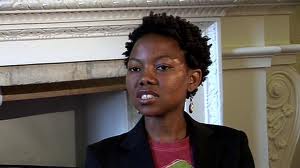
Zimbabwean writer NoViolet Bulawayo is the African on the Booker longlist for a literary prize, one of the English language’s top fiction awards, which names 13 writers from seven countries.

Selected from 151 titles, it also includes authors from Britain, New Zealand, Canada, Australia, Malaysia and Ireland. The choice supports the view that literature prizes in English are pure politics, as the Zimbabwean elections loom.

Announcing the list, the judge Robert Macfarlane said: “This is surely the most diverse longlist in Man Booker history: wonderfully various in terms of geography, form, length and subject.”

“These 13 outstanding novels range from the traditional to the experimental, from the first century AD to the present day, from 100 pages to 1 000, and from Shanghai to Hendon.”

If you thought the name NoViolet Bulawayo is an improbable one, it’s probably because hers is a handy political moniker. Born Elizabeth Tshele in 1981 in Tsholotsho, in the south of Zimbabwe,  she moved to the United States when she was 18.

A previous winner of the Caine Prize, she is also the recipient of the Truman Capote Fellowship. She won the Caine Prize in 2011 for the story Hitting Budapest, included in her debut novel as the first chapter. The beautifully written story is told using a deceptively simple but mature child narrator.

It begins: “We are on our way to Budapest: Bastard and Chipo and Godknows and Sbho and Stina and me. We are going even though we are not allowed to cross Mzilikazi Road, even though Bastard is supposed to be watching his little sister Fraction, even though mother would kill me dead if she found out; we are going. There are guavas to steal in Budapest, and right now I’d die for guavas, or anything for that matter. My stomach feels like somebody just took a shovel and dug everything out.”

In total, seven women are on the list, the others being Alison MacLeod with Unexploded, Charlotte Mendelson with Almost English, Canadian Ruth Ozeki with A Tale for the Time Being, and New Zealand’s Eleanor Catton with The Luminaries.

The judges will meet again in September to decide a shortlist of six books and the winner will be announced at a ceremony on October 15 in London. – Reuters

British far-right clash with police over surveillance

EDL wants surveillance...
EDL wants surveillance…

Protesters have been injured and a police officer hospitalised with concussion after police and far-right demonstrators clashed at an English Defence League (EDL) rally in Birmingham.

Hundreds of EDL supporters gathered in the city’s Centenary Square on Saturday, with Unite Against Fascism members forming a counter-protest in nearby Chamberlain Square.

Soon after EDL leader Tommy Robinson began his speech to the crowd, protesters started tussling with police, with some pulling down fences around a new University of Birmingham construction site and hurling smashed cobble-stones and bottles at officers.

Several protesters were seen with blood pouring from their heads after police equipped with riot gear and armed with batons confronted the crowd.

“Police injured, Broad St bar doors smashed, building site materials thrown at police, shops closed, work lost. Another peaceful EDL protest,” tweeted Birmingham Labour MP Ian Austin.

West Midlands Police said that four arrests had been made and that 1,000 extra officers had been drafted in before the demonstration to help cope with any disorder.

The EDL said they were marching for the reintroduction of CCTV cameras in the Washwood Heath and Sparkbrook areas of the city. The cameras were originally installed as a counter-terrorism measure, but removed in 2011. – ibtimes.com


Bomb found at site planned for Pope visit

popebrazilA homemade bomb was discovered hidden near a Brazilian shrine Pope Francis is scheduled to visit later this week, the military said Monday. The device was found in a parking garage bathroom inside the National Sanctuary of Aparecida in São Paulo state.

The Brazilian Air Force found the bomb, which they said was comparable to dynamite with a fuse, during a routine security sweep prior to the pope’s arrival. It was detonated without incident.

“It was a homemade device with little potential to cause fatalities,” the military said in a statement. “It is worth pointing out that such episodes formed part of our security forces’ training in Aparecida and at no point were civilians’ lives in danger.”

Police added that the bathroom is not located in an area likely to be used during Pope Francis’ visit.

Thousands of people lined the streets in Rio de Janeiro Monday, where Pope Francis arrived on the day to begin celebrations for World Youth Day. He will be in the mostly Catholic country from July 23-28.- RT

Gangs have increased by 40% since Obama took office

Bobby Rush
Bobby Rush

Newt Gingrich appeared on Candy Crowley’s State of the Union with Democratic Congressman Bobby Rush.

Throughout the 1960s, Rush was involved in the civil-rights movement and worked in civil-disobedience campaigns in the Southern United States. After co-founding the Illinois chapter of the Black Panthers in 1968, he served as its “defense minister”. Rush has made statements saying “We needed to arm ourselves” and referring to the police as “pigs”.

He is U.S. Representative for Illinois’s 1st congressional district, serving since 1993. The district is located principally on the South Side of Chicago with its population percentage being 65% African-American, higher than any other congressional district in the nation.

A member of the Democratic Party, he holds the distinction of being the only person to defeat President Barack Obama in an election, as he did in the 2000 Democratic primaries.

NEWT GINGRICH: This fits perfectly with what I was going to say earlier. You have a congressman — and I respect Bobby Rush. You have a congressman who represents the most violent city in America. You have a congressman who represents the city in which over 500 people were killed last year, 74 percent of them African-American. You have a congressman who represents the city which is 80 percent of the killings, according to police, are by gangs. Gangs have increased — let me finish. Gangs have increased by 40 percent since this president was elected. There is no federal program to stop it. No one wants to have an honest conversation about it. And so you have a congressman whose own district is bleeding, who puts on a hoodie as a symbolic act, but he doesn’t do anything about the gangs in his own district.

REP. BOBBY RUSH (D-IL): Wait a minute.

CROWLEY: Hang on. First of all, congressman, let me let you —

RUSH: That’s a charge, Newt, that is not going to hold, doesn’t hold water. I have been working relentlessly since I’ve been in Congress, even when you were the speaker of the House and didn’t want to hear any of these matters. I have been working on trying to deal with this violence. I’m astounded and ashamed about this violence. But this is also systemic to an overall problem. Chicago will take care of this violence. That’s one of the reasons why on a Friday, the 26th, we’re having this National Summit on Urban Violence. This was before the verdict we had planned this. The congressional black caucus is coming into Chicago so that we can work on solutions to this problem.

Now, what I challenge you to, Newt, especially today, I want to challenge you and your Republican cohorts. Today is a Sunday. Today is a day of worship. We serve and worship the same God. In Michael 6:3 and 8, the words tell us that we should love justice, do mercy, and walk humbly with our God. Now, for those folks who are cheering the George Zimmerman verdict, I would challenge you and the rest of the, let us honor, and let us lift up the spirit of the words of Micah 6:8 to work together to have the conversation, but not just have the conversation. Let us deal with the disenfranchisement, and let us deal with the distortions as it relates to our nation.- Real Clear Politics

US to ‘diversify’ white neighborhoods

HUDThe United States Department of Housing and Urban Development (HUD) is a Cabinet department in the Executive branch of the United States federal government.

To ensure that “every American is able to choose to live in a community they feel proud of,” HUD has published a new fair-housing regulation intended to give people access to better neighborhoods than the ones they currently live in.

The goal is to help communities understand “fair housing barriers” and “establish clear goals” for “improving integrated living patterns and overcoming historic patterns of segregation.”

“This proposed rule represents a 21st century approach to fair housing, a step forward to ensuring that every American is able to choose to live in a community they feel proud of–where they have a fair shot at reaching their full potential in life,” said HUD Secretary Shaun Donovan.

“For the first time ever,” Donovan added, “HUD will provide data for every neighborhood in the country, detailing the access African American, Latino, Asian, and other communities have to local assets, including schools, jobs, transportation, and other important neighborhood resources that can play a role in helping people move into the middle class.”

According to HUD, long-term solutions include “helping people gain access to different neighborhoods and channeling investments into under-served areas.” The mapping tool may guide development and zoning decisions, for example.

In a July 16 speech to the NAACP, Donovan said the American Dream still isn’t within equal reach of all communities. He lamented the lack of diversity in America’s boardrooms, schools, and the nation’s “strongest neighborhoods.”

Donovan said HUD’s new neighborhood mapping tool, which uses Census data, will “expand access to high opportunity neighborhoods and draw attention to investment possibilities in under-served communities.”

“Make no mistake, this is a big deal,” Donovan said. “With the HUD budget alone, we are talking about billions of dollars. And as you know, decades ago, these funds were used to support discrimination. Now, they will be used to expand opportunity and bring communities closer to the American Dream.”

Under the proposed rule, the neighborhood data provided by HUD will be used to evaluate patterns of integration and segregation, racial and ethnic concentrations of poverty, and access to “valuable community assets.” HUD wants to know if existing laws and policies–such as zoning, financing, infrastructure planning and transportation–create, perpetuate or alleviate segregation. – CNS News

‘More white kids have to die’

Eric Dyson
Michael Eric Dyson

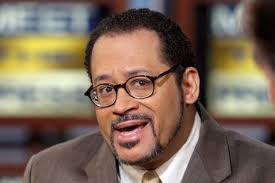
Appearing on the “progressive” cable network owned by death merchant General Electric, MSNBC, a regular guest at globalist forums held at the Aspen Institute and funded by the Rockefeller Brothers and the Ford Foundation, Michael Eric Dyson, said white people will not understand racism until their children are murdered.

“Not until, and unless, the number of white kids die that approximate the numbers of black and other kids who have died will America see it is beyond logic, it is beyond rationality, its about let’s get something done,” Dyson said.

“As for Eric Holder, look the reality is you gotta act now,” Dyson said. “The president, you won the second term, you’re in office, you are ensconced. Do something courageous, bold, and helpful, not only to African-American people, but to America, because unless we do this [subject Zimmerman to double jeopardy] white Americans and others will feel this was a justifiable verdict.”

Dyson argued Sunday also on MSNBC that racism is to blame for Detroit’s financial woes, after the once-booming industrial metropolis filed for bankruptcy last week.

Host Ed Schultz asked if race could be responsible for the city’s downfall.

“Of course, it’s an 85 percent black city,” Mr. Dyson replied. “It’s been perceived as a colony of black people who are ringed by suburban white areas that are now going into the city to plunder it. The perception is that there is a massive takeover of resources and materials and properties, basically being occupied.”

“We have to acknowledge that part of this has to be the racial animus that has characterized that city for the last 50-some-odd years,” he continued. “The service industries hemorrhaged jobs in the inner city, depleted that city of its economic infrastructure and left it to its own fate.” – Kurt Nimmo, Infowars/Washington Times

Ivy League prof calls God a ‘white racist’

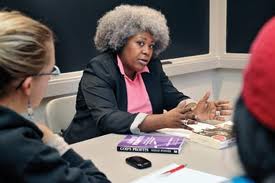
Anthea Butler
Prof. Anthea Butler

The mainstream media and the Obama administration’s active fomenting of racial tension and hatred following the George Zimmerman not-guilty verdict has led to some bizarre public outbursts, including a recent deranged blog posting published by a supposedly well-educated college professor. University of Pennsylvania (UPenn) associate professor Anthea Butler recently spewed her obvious disagreement with the verdict by ranting online that God is a “white racist” who walks around with a gun “stalking young black men.”


Butler, who teaches at the UPenn Department of Religious Studies, went off on a disturbing tangent in her blog posting when she began to vomit her irrational beliefs about how God “ain’t good all of the time,” insinuating that because the Zimmerman verdict was not what she wanted, God is somehow evil. Butler proceeded in her posting to accuse God of not being “for” black people in general because of the verdict, making sure to also blame Christians for Trayvon Martin’s murder.


“As a historian of American and African-American religion, I know that the Trayvon Martin moment is just one moment in a history of racism in America that, in large part, has its underpinnings in Christianity and its history,” gushes Butler. “When the good Christians of America are some of its biggest racists, one has to consider our moral responsibility to call out those who clearly are not for human flourishing, no matter what ethnicity a person is.”


Butler goes on and on to decry white people, Christians, all Americans that are not black, and of course God in her lunatic diatribe against essentially all of non-black humanity, illustrating how completely off her rocker she truly is. Not only did the Zimmerman trial have absolutely nothing to do with white Christians — Zimmerman, after all, is actually part Hispanic, for anyone that actually cares — but the verdict itself was determined based on the evidence, or lack thereof, that was presented during the trial.


“No amount of heartbreak over the Zimmerman acquittal justifies these hateful posts,” wrote Josiah Ryan, editor-in-chief of the UPenn paper Campus Reform, in an editorial about Butler’s unhinged pontification. “Professor Butler’s remarks were clearly designed to hurt when Americans needed healing and to divide when we needed unity.”


“In tumultuous times students must be able to turn to their professors for calm and wisdom. In stoking the flames of hatred, Professor Butler has betrayed her students’ trust. UPenn administrators out not to allow her back in the classroom.”


The real irony in Butler’s rant is that it really only illustrates her own seething racism towards non-blacks, whom she fallaciously blames for all of the problems faced by what she presumptuously refers to as “us,” specifically African-Americans. And by somehow managing to drag God into the mix and labeling him as a racist, Butler proves that she has literally lost her grounding in reality.


According to reports, Butler has not been able to be reached for comment following her irrational blog posting, which she gleefully followed up with hateful “tweets” suggesting that God is a member of the KKK. Not surprisingly, UPenn officials have also thus far refused to comment on the situation. – Natural News

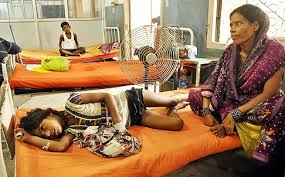
Indian school poisoning: Principal ‘forced kids to eat’ odd-looking food

indiaschoolfoodAfter 23 Indian children died from consuming poisoned school meals, it has emerged that victims refused the food before being made to eat it, according to the Times of India. Preliminary investigations indicate the cooking medium was laced with pesticide.

Police say that the latest case of poisoning, which claimed the lives of 23 children, was most probably caused by storing cooking oil in a used pesticide container.

Monocrotophos is an insecticide which is toxic to birds and humans. The World Health Organization describes it as highly hazardous and advises that its handling should only be undertaken by well trained and competently supervised users. All material contaminated with the chemical should be destroyed in a high-temperature chemical incinerator, according to the Food and Agriculture Organisation of the United Nations.

However, an anonymous HRD (Ministry of Human Resource Development) source told the Times of India that the cooking agent used for soyabean subzi may have played a role.

“Earlier it was thought oil was put in a pesticide container. But it seems that the lady cook used pesticide,” the source said.

The subzi looked black and smelt odd according to the source. “The school principal insisted the cooking medium cannot be bad since it had come from her husband’s shop,” he said. “When students refused to eat, the principal scolded and forced them to eat.”

“I can accept accidents can happen anywhere. But the scale of this incident and the carelessness, the sheer callousness of the response, the delay in treating the children, is shocking,” activist Dipa Sinha of the Right to Food Campaign told AFP.

The children died after eating lentils, potatoes and rice cooked with oil containing agricultural insecticide that was five times the strength sold in the market place, according to tests.

Forensic tests have shown that the oil contained a “highly toxic” form of insecticide which killed the children so quickly that some died in their parents’ arms while being taken to hospital.

The principal reportedly fled the school shortly after realizing the extent of the tragedy. “A crucial one and half to two hours were lost. Had these children been rushed to hospital immediately few lives could have been saved,” he said. – RT

SA teens prefer unsafe sex

condomchoiceMost teenagers in Gauteng admit to preferring unsafe sex, the provincial social development department has found.

Briefing the media on its study “Factors associated with teenage pregnancy in Gauteng province”, social development MEC Nandi Mayathula-Khoza said teen pregnancies were a problem that could not be ignored.

“Yes, girls who fall pregnant have a right to continue with school. This issue, however, contributes to the level of unemployment, considering the girls who drop out of school due to pregnancy.”

Experimentation with sex, and factors such as having multiple sexual partners and partners of disparate ages, had to be discouraged, Mayathula-Khoza said.

The study, part of a national survey, was conducted over five weeks at schools. More than 500 pupils between the ages of 13 and 18 filled in questionnaires, and 19 focus groups, consisting of 10 to 12 pupils, were formed.

The Department of Basic Education estimates that 94000 schoolgirls became pregnant during 2011.

Just over 1600 pregnancies were reported at Mpumalanga schools in the whole of 2012 but by May this year 1 564 pupils were reportedly pregnant .

The Gauteng department of health found that 4217 of 1040760 pupils in the province became pregnant in 2011, compared with 4874 of 953170 pupils three years earlier.

But Mayathula-Khoza said the reduction in the number of pregnancies should not stop the province from taking further action.

Earlier this year Health Minister Aaron Motsoaledi lambasted older men who lured girls into having sex for money.

He said girls were four to eight times more likely to be infected with HIV than boys of the same age.

The national department found that 28% of schoolgirls countrywide were HIV-positive, whereas only 4% of boys were infected with the virus.

The DA’s Gauteng education spokesman, Khume Ramulifho, attributed the prevalence of teenage pregnancies to a lack of practical education.

“Children are taught about life orientation at school but, though they might pass with flying colours, the problem does not seem to disappear.” – timeslive.co.za


Racial transformation of SA’s housing market

luxuryhouseThe racial transformation of South Africa’s suburban markets is continuing and 2013 could be the first year when the estimated percentage of white buyers in these areas drops below 50 percent of total buying.

The estimated percentage of black buyers may also be the highest yet.

FNB’s estate agent surveys for the first two quarters of this year reveal that an estimated 46.5 percent of total buyers were white, 32 percent black, 12.5 percent Indian and 9 percent coloured.

John Loos, a household and consumer sector strategist at FNB, said yesterday the racial percentages did not move dramatically from year to year but the change since 2005 – when a question on the racial classification of buyers was introduced to the bank’s estate agents survey – had become “very significant”.

In 2005, white buyers represented an estimated 57 percent of total buyers and black buyers only 23 percent, he said.

The further progress in the racial transformation of the suburban housing market should not come as a surprise, Loos said, given that for a long time data from Statistics SA and others had been showing the steady transformation of the labour market, and with it the narrowing of the income gap between race groups.

It was also notable that estate agents perceived more rapid change in home buying percentages in favour of the three previously disadvantaged population groups around times of more rapid economic growth, with transformation appearing to suffer a setback in stagnant economic times.

“Whereas in the economic boom years black group buying saw its estimated percentage of total buyers rise from 23 percent in 2005 to 30 percent in 2008, the lagged impact of the 2008/9 recession was a decline in this group’s percentage back to 26.8 percent in 2011.

“Then, in 2012 and the first half of 2013, it appeared to gather steam once more.”

Loos said the estimated pick-up in buying by previously disadvantaged groups following a considerable period of better economic times and low interest rates was not surprising.

Many people in these groups had less financial backing from older generations and this emerging middle class was arguably more dependent on a favourable economic and interest rate cycle to boost current income and access to credit compared with many older white group repeat buyers, who had already built up significant wealth, including the value of the homes they had sold in the past.

“Boosting economic growth through boosting the skills development sector and developing growth-friendly policies should therefore be seen as essential to housing market racial transformation.

“Stagnant economic growth periods have estate agents seemingly pointing to a slower rate of suburban housing market transformation,” he said.

FNB last week reported that the most important reasons for homeowners selling in the second quarter of this year were downscaling in line with a different life stage (21 percent), upgrading (19 percent), downscaling due to financial pressure (18 percent), change in family structure (12 percent) and moving for safety and security (10 percent).

Loos said selling to upgrade had become “very significant once more” following the lull in the 2008/09 recession but it had yet to exceed selling to downscale due to life stage changes.

He said life stage downscaling and downscaling related to financial pressure accounted for 39 percent of total selling.- IOL

Zille defends drug user DA King

The King's drug of choice still illegal
The King’s drug of choice still illegal

DA leader Helen Zille has defended the party’s controversial decision to accept abaThembu King Buyelekhaya Dalindyebo as a member, and said he would only forfeit his membership if he lost his appeal against his conviction on charges that include culpable homicide.

The decision – which has been widely criticised as expedient and lampooned by cartoonists – had been a “pragmatic” one, Zille said.

The king’s announcement of his intention to join the DA had taken the party by surprise and confronted it with the choice of accepting or rejecting him in public.

Responding “below the radar” had not been an option since the king had broadcast his plan to join the party and issued a public invitation for it to sign him up, Zille wrote in her SA Today newsletter on Monday.

She and DA Eastern Cape leader Athol Trollip had discussed the situation and decided to give Dalindyebo the opportunity to “reconsider” after informing him of the “implications of joining the DA”.

Trollip had gone to see him and spelled out the DA principles and opposition to the Traditional Courts Bill.

Trollip had made it clear that if the Appeal Court upheld Dalindyebo’s criminal conviction, he would lose his DA membership.

Dalindyebo is appealing against his conviction on charges including arson, kidnapping, assault with intent to do grievous bodily harm and culpable homicide.

UCT law professor Pierre de Vos pointed out in his blog that the DA constitution said a member of the party automatically loses that membership if convicted of any offence listed in Schedule 1, 2, 5, 6 or 7 of the Criminal Procedure Act – and stressed that this included culpable homicide, kidnapping and assault “when a dangerous wound is inflicted”.

Previously, the DA had called for President Jacob Zuma, when he was the deputy president, to be fired when his former financial adviser, Schabir Shaik, was convicted, despite Zuma himself not having been convicted of any offence.

But Zille said the DA had welcomed Dalindyebo because no one else who joined the party as an ordinary member was subject to an ideology test or “due diligence” investigation.

Politics involved converting opponents, “not creating impenetrable barriers to entry” and the party’s “core mandate” was to win more votes in order to win elections “so that we can implement our policies, to better serve all South Africans”.

This was “politics in the real world”, or “realpolitik”, and time would tell whether it had been the right choice. – IOL

SA military spending could soon double

militaryspendingMILITARY spending could increase from R38 billion to R83 billion a year and the total size of the SA National Defence Force (SANDF) could be doubled in the near future.

This is if government decides to implement the recommendations of the Defence Review committee’s 2013 report.

It explains that while South Africa now spends 1.1% of GDP on the military, “international donor agencies have used the figure of 2% of GDP as being a reasonable amount for a developing country to spend on defence when it is at peace, is not faced with instability in its immediate region or with any direct threat”.

But if the SANDF is to be equipped to operate effectively in the current strategic environment in which there is increased instability, it would require South Africa to “increase the capabilities of its peace-time force”.

This would entail employing 207 000 people and receiving funding “in the order of R83 billion in 2013/14 rand value, equating to 2.7% of GDP and 7.1%” of government spending”.

The Citizen recently reported that the report also recommends the acquisition of new military hardware, which could cost as much as R100 billion, according to sources.

Department of Defence (DOD) spokesman Siphiwe Dlamini criticised the report, saying that recommendations that billions be spent were contained in a draft report that had not yet been finally accepted by the department.

“The fact of the matter is that the portfolio committee on defence and military veterans has requested to visit the Department of Defence as part of their oversight function.

“The programme and agenda was designed by the committee and communicated to the DOD. It is concerning to the DOD that such a programme is splashed all over The Citizen newspaper with innuendos.”

Whatever weapon systems finally end up being acquired, concerns have been raised about who will operate them. Pikkie Greef, national secretary of the South African National Defence Union (Sandu), told The Citizen the frigates and submarines bought in the 1999 arms deal are tied up in docks because there aren’t enough sailors to staff them.

“We also don’t have enough pilots to fly the aircraft that we bought in the last arms deal.

“The SANDF does not have proper mobile catering trucks. That means that the SANDF cannot properly feed its soldiers in the field.

“It is ridiculous to consider buying warships when we cannot even give an infantryman a hot meal. The Defence Review committee was supposed to consult with all role players – but they have certainly not consulted in any way with the only trade union that organises within the SANDF.”

Greef said that staffing levels in the navy were such that there are not enough sailors to put two frigates to sea at the same time.

“The last arms acquisition process was shrouded in secrecy and loaded with corruption as a result. One hopes that in future acquisition processes are conducted openly and transparently – as the constitution says they should.”

The Defence Review suggests that billions should be spent on arms in order that South Africa can “influence the international agenda through optimised defence diplomacy and active multi-lateral and bi-lateral engagements”.

Terry Crawford Browne of Economists Allied for Arms Reduction said: “I know that the figure of R100 billion and more has been bandied about.”

The upcoming meeting of Parliament’s defence portfolio committee “will discuss programmes relating to the Strategic Defence Review, which recommends we go on another major spending spree, which will no doubt provide many nice back-handers for the well connected.

“It seems ridiculous to even consider buying arms when we cannot provide toilets and clean water. We don’t need to engage in gunboat diplomacy and warmongering.” – citizen.co.za