Tutu’s Cape Town home burgled

Milnerton, near Cape Town

The Cape Town home of Archbishop Emeritus Desmond Tutu was broken into, Eyewitness News reported on Thursday.

Tutu and his wife were asleep when intruders entered their Milnerton home on Wednesday morning, the broadcaster reported.

Western Cape police said some small items were stolen, including keys and remotes.

Tutu and his wife were not harmed. – Sapa

Woman shot by 8 armed blacks in Bronkhorstspruit

crime-gunTeresa Hammond (43) was shot and one of her guests seriously injured during an attack at her home at 1.30 am on 6 August, reports Sunette Bridges.

Teresa awoke to find 8 armed black men in her bedroom, with a gun against her head in her home in Ekandustria near Bronkhorstspruit. Her husband, Mike, was in hospital where he is being treated for a lung infection and her children, Michelle (13) and Leslie (5) were asleep in their bedrooms.

Hammond’s guests, Derick and Michelle Lidston, where sleeping in the guest room on the ground floor of the house.

“When I awoke at 1.30, there was a gun against my head and I was surrounded by 8 men. One of them was an employee of mine.”

The attackers demanded to know where the safe was and Teresa told them that they didn’t have one or kept any cash in the house. The men then went to fetch her children.

Some of them started searching the house for valuables and Teresa managed to escape to the bottom floor with her children. She ran to the guest room to warn her guests and they pushed a wardrobe in front of the door. She told Derick to get out via the window to look for help.

The attackers broke down the door and shot Teresa through the wardrobe.

“I shot the bitch!” one of them yelled.

Derick jumped out of the window but the attackers waited for him outside. They brutally assaulted him and started dragging him on the tar road.

Teresa managed to hide her children. The attackers fled at 2.15 am with cellphones, wallets and jewelry.

Derick was seriously injured and taken to hospital where he had to undergo surgery.

The Hammonds’ employee, who was involved in the attack, has been taken into custody. The other 7 are still at large. – Sunette Bridges

Murray joins Bulls

Waylon Murray
Waylon Murray

Former Springbok midfielder Waylon Murray has signed a two-year contract with the Bulls, the Pretoria-based franchise announced on Tuesday.

“We have just received the clearance, so can now officially announce the signing,” said Bulls high performance manager Xander Janse van Rensburg.

“Waylon is a highly-rated player with heaps of experience, especially at Super Rugby and Currie Cup level. He will add experience to our back division as well as a cool head.”

Clearance was received from Murray’s Super Rugby franchise, the Southern Kings, and the 27-year-old could be considered for selection ahead of Saturday’s Currie Cup opener against Western Province in Cape Town.

His contract runs until October 31, 2015. – Sapa

Tens of thousands march against government in Tunisia

Protest scene in Tunisia

by Antoine Lambroschini

Tens of thousands of people poured onto the streets of the Tunisian capital to demand the resignation of the government as the political crisis in the north African nation deepened.

The country has been wracked by political unrest since the July 25 murder of opposition lawmaker Mohamed Brahmi and Tuesday’s protests marked the biggest anti-government demonstration since the assassination.

A police official estimated that 40,000 people crowded the streets of Tunis to call for the government led by the moderate Islamic movement Ennahda to step down. Opposition leaders cited in local media put the figure at 100,000-200,000.

Earlier on Tuesday, the National Constituent Assembly (ANC) — a body elected in 2011 to forge consensus on drafting a new constitution — was suspended.

Brahmi’s murder, as well as that of another opposition politician, Chokri Belaid, have been blamed on radical Islamists, with the Ennahda-led cabinet criticised for not doing enough to prevent them.

The demonstration attracted a mixed bag of opposition parties, ranging from extreme left to centre-right, and was timed to mark six months since Belaid was gunned down outside his home.

Protesters carried pictures of both Belaid and Brahmi and shouted slogans such as “The people want the regime to fall” and “The government will end today”.

The march passed off peacefully.

Assembly speaker Mustapha Ben Jaafar said the ANC’s work would be halted until the government and opposition opened negotiations to break the deadlock “in the service of Tunisia”.

Brahmi’s killing had already prompted several opposition members to boycott the ANC and its suspension was a key demand of the protesters on the street.

The stalemate showed no sign of ending, however, with the opposition refusing to hold talks with the government until it steps down and Ennahda ruling out any dialogue conditional on its ouster.

Larayedh has refused to quit, offering instead to broaden the coalition.

Ben Jaafar criticised the country’s politicians for failing to find a compromise as Tunisia also battles mounting terror threats.

“Despite the gravity of the situation and instead of working towards unity, unfortunately party leaders have gone in the opposite direction, towards division, by mobilising” street protests, he said.

Since the ANC was elected in October 2011, political leaders have failed to find a consensus on a new constitution following a revolution that ousted longtime president Zine el Abidine Ben Ali.

And the suspension of the assembly’s work throws into question Prime Minister Ali Larayedh’s target of the ANC adopting a new constitution and electoral law by October 23 ahead of a December 17 election.

‘Excessive demands’

Ennahda chief Rached Ghannouchi, quoted in La Presse newspaper on Tuesday, said the government will not step down under pressure from the street, while Larayedh charged that demonstrators were hampering efforts by security forces to root out gunmen linked to Al-Qaeda.

“There are excessive demands at protests for the dissolution of the elected government,” Ghannouchi told La Presse.

“In democratic regimes, protests don’t change governments. It’s under dictatorial regimes that a demonstration is able to topple a regime.”

Earlier Tuesday, before its work was suspended, the ANC had gathered to discuss the “terrorist crisis” as security forces pressed on with a vast operation to hunt down militants holed up in the rugged Mount Chaambi region near the Algerian border.

Speaking to the assembly, Larayedh had harsh words for the demonstrators, saying their activities meant security forces “are obliged to be in the streets when they should be participating in the battle against terrorism”.

Defence Minister Rachid Sabbagh told the ANC that the armies of Tunisia and Algeria would “reinforce their cooperation, particularly to arrest the Chaambi terrorists.”.

“We will continue our operations until all the terrorists have been killed or arrested,” said the minister.

Ghannouchi also dismissed the criticism that authorities are being soft on radical Islamists, who have grown in influence since the popular uprising that toppled Ben Ali two years ago.

“There are 500 to 600 terrorist suspects imprisoned in jails,” he noted. – AFP

North West premier condemns rape of 3-year old

rape_girls_feetNorth West premier Thandi Modise has condemned the alleged rape of a three-year-old-girl in the province.

“When the scourge of sexual offences against women reaches infants, toddlers and young girls, every parent who has a child should be worried that the scourge has reached unacceptable level and proportion,” she said in a statement on Tuesday.

She said the spate of rape incidents where the perpetrator is known to the victim points to moral decay that needs urgent intervention.

Earlier in the day, police arrested a 37-year-old man for allegedly raping a three-year-old girl in Ipeleng, near Schweizer Reneke, in North West, police said.

The man, who is the girl’s neighbour, took her to a nearby shack where he raped her on Monday, Captain Pelonomi Makau said.

“… Police were summoned to the scene after the community allegedly assaulted the suspect. The suspect was taken to the hospital with injuries and was under police guard,” Makau said.

The man was discharged and detained on Tuesday and was expected to appear in the Schweizer Reneke Magistrate’s court on Thursday.

Modise called for the alleged perpetrator to be denied bail. – Sapa

Large fire forces Nairobi airport closure

The scene at Nairobi airport

A massive fire engulfed the arrivals hall at Kenya’s main international airport early Wednesday, forcing East Africa’s largest airport to close and the rerouting of all inbound flights.

Dark black smoke that billowed skyward was visible across much of Nairobi as emergency teams battled the blaze. Stranded passengers stood on sidewalks outside the airport with their luggage in hand.

The Kenya Airports Authority said the Jomo Kenyatta International Airport has been closed until further notice so that emergency teams can battle the fire.

Associated Press reporters at the scene said the fire had gutted the international arrivals hall, where passengers pass through immigration and retrieve their luggage.

As in many countries in East Africa, public sector services like police and fire units are hobbled by small budgets and outdated or no equipment. A British passenger, Martyn Collbeck, said he was surprised that the airport wasn’t shut down sooner so that emergency vehicles could respond.

“When I arrived there were one or two fire engines parked outside the international arrivals. It spread very fast,” said Collbeck, who had been scheduled to fly back to London on an early morning KLM flight. “There were a couple of explosions which I think were a couple of gas canisters.”

But, he added: “I would have expected more fire engines to respond faster.”

The Nairobi airport is the busiest airport in East Africa, and its closure is likely to affect flights throughout the region. – AP

University of Johannesburg student shot outside campus

Campus of the University of Johannesburg

A student was shot and wounded outside the University of Johannesburg’s Doornfontein campus, the institution said on Wednesday morning.

“The university can confirm that a 30-year-old student has been shot in an attempted robbery outside the campus grounds at the Doornfontein campus,” said UJ spokesman Hermane Esterhuizen.

“The student is in a stable condition in hospital.”

The incident took place at 8:30pm on Tuesday. Esterhuizen said police was investigating.

It is alleged the male student had gone to get something to eat, and on his return was confronted by two men.

Police could not immediately be reached for comment.

Easterhuizen said this incident did not take place on the same campus where a hijacking was reported last week.

On Thursday, a 23-year-old UJ student was hijacked and kidnapped by an armed man while parking her car in the parking lot of the Kingsway campus.

The man approached and pointed a firearm at her, and told her to move over to the passenger seat.

The man drove out of the campus to an empty parking lot where he tied her hands, put her in the boot of the car, and drove to an ATM.

After giving the armed man her bank pin number, he left her in an open area in Eldorado Park, where she was later found.

On Friday, police arrested a man in Ennerdale, south of Johannesburg, in connection with the hijacking and kidnapping.

The 18-year-old man was allegedly found in possession of the hijacked car. – Sapa

Survey shows support for Malema’s policies among black youth

Julius Malema
Julius Malema

The EFF’s policies of land reform and elimination of national borders within southern Africa will boost youth support for the party, according to a survey released on Tuesday.

Thirty-eight percent of respondents believed Economic Freedom Fighters’ leader Julius Malema would gain support because of its policies, according to research conducted by Pondering Panda.

Twenty-nine percent believed he would lose support and 18 percent believed his support base would not change. Fifteen percent did not have an opinion on the matter.

The cellphone survey was conducted among 2339 people aged between 18 and 34. However, 49 percent of respondents did not support the EFF’s land reform policy, while 37 percent did.

According to the survey, 42 percent of young blacks approved of land reform. Support for the policy was also strongest in the Free State, with 56 percent of respondents approving it.

On the elimination of borders, 32 percent approved, while 54 percent disapproved.

“Although opposition to the EFF’s land and border reform policies still significantly outweighs support for them, what this survey shows us is that they are far from marginal ideas,” Pondering Panda spokeswoman Shirley Wakefield said.

“Young South Africans want change, and other parties should look carefully at the alternatives they will be offering them.”

Man stoned to death in Soweto

stoningA man was found stoned to death in Jabulani, Soweto, police said on Tuesday.

The 31-year-old man was found by a passer-by, surrounded by bloody rocks in a Jabulani hostel on Monday evening around 9.35pm, Warrant Officer Kay Makhubela said.

“When we found him he was still alive but couldn’t speak. He died at the hospital upon arrival,” he said.

No arrests had yet been made.

Makhubela urged those who might have witnessed the crime to come forward.

“We know the people who live there might have seen what happened,” Makhubela said. – Sapa

McDonald’s restaurant robbed in Randburg

McDonaldsThree men robbed a McDonald’s restaurant in Randburg, Johannesburg, Gauteng police said on Tuesday.

A man held a teller at gunpoint at the fast food restaurant, at the Beyers Naude N1 off-ramp, on Monday evening while two accomplices guarded the door, Captain Lydia Mtila-Dikolomela said.

The three men took cash and ran away. No one was injured and no arrests had been made. – Sapa

Soweto pupils questioned over teen murder, possible rape

Soweto
Soweto, the black township south of Johannesburg

Ten high school pupils were taken in for questioning after a teenage girl was found dead in Soweto, Gauteng police said on Tuesday.

“They were taken in to help police with the investigation. We let them go home afterwards,” said Warrant Officer Kay Makhubela.

“We wanted to know if they knew anyone or anything related to this incident.”

The body of 15-year-old Lungile Kubeka was found in a yard on Monday morning. Police believe she may have been raped and strangled, as there were no open wounds on her body.

Angry residents, who alleged that Kubeka’s boyfriend was behind the attack, went to the Sebetsa O Thole Moputso Secondary School in Dobsonville and demanded they hand themselves over to police.

Makhubela said police took in the ten pupils including the boyfriend, his friends, and some of Kubeka’s friends.

None was arrested. – Sapa

Mugabe understands democracy well

roodt_dan_wikiby Dan Roodt

[followbutton username=’danroodt’ count=’true’ lang=’en’ theme=’light’]

Like Dan Roodt’s Facebook page

Is it not astounding that so many people are criticising the outcome of the Zimbabwean elections, when that country went through an official poll in which Zanu (PF) won a clear majority?

In addition, Robert Mugabe’s view of democracy is entirely commensurate with that of most western leaders, especially those of Britain and the US. There exists a dichotomy between the spectacle of campaigning and voting – the soap opera of elections – and the real business of power that is normally settled outside of public scrutiny, in proverbial smoke-filled rooms.

Democracy is what follows a “state of exception” (Carl Schmitt) during which one regime is replaced by another. Both the American and French revolutions were examples of such states of exception. In the case of Zimbabwe, Britain virtually appointed Mugabe as permanent president during the state of exception known as the Lancaster House Conference  of 1979. Every election since in Zimbabwe has merely confirmed Britain’s support for revolutionary change in the ex-Rhodesia, hence the hypocrisy of complaints about largely minor deficiencies in the Zimbabwean electoral process.

Writing in the UK Daily Mail two days ago, columnist Stephen Glover said:

“Instead of expressing his anxieties, the Foreign Secretary could offer the Zimbabwean people a heartfelt apology on behalf of the British Government for inflicting Robert Mugabe on them in the first place, and then standing aside as he pillaged his country, murdered his enemies and ruined the economy… What has happened in Zimbabwe is to Britain’s eternal shame.”

Mr Mugabe is a self-styled “strong leader”. In so doing, he is simply displaying the “leadership” that everyone talks about, and that they even teach in business schools.

Modern democracy is indeed a process whereby the voter surrenders his freedom of action to members of the elite who may act on his behalf, tax him and even impoverish him to their heart’s content. During the banking crisis, we have seen how Western governments did the same and have burdened future generations with mountains of debt, simply to save their sponsors and cronies among members of the corrupt banking fraternity.

In most third-world countries, including Zimbabwe, you first queue to vote and then you stand in line for bread or some or other hand-out. The one is good practice for the other.

In South Africa, of course, those who queue to vote are rewarded with poverty, joblessness and grants of R250 a month, enough to buy beer and air time. Just look at the 10 biggest companies by market capitalisation on the JSE, and you will notice that smoking and drinking beer dwarf all other forms of economic activity, followed by mobile telephony.

Democracy is all about talking, drinking, smoking and making babies, for which you get child-support grants. The notion of freedom as defined by the philosophers of the western enlightenment is, of course, slightly more complex and subtle than subsisting for the sake of a pay-as-you-go cellphone connection.

Sadly, such classical ideas of freedom and what some people refer to as “higher ideals” have been derided by so-called “liberals” and Marxists as being tantamount to fascism. Taking pride in one’s language or culture, showing patriotism or constructing a society where people are not sheep to be lorded over by professional politicians, are all very suspect notions that are regularly denounced as “right-wing extremism”.

Aspiring to be one’s own master, holding one’s leaders accountable for public expenditure and the quality of their decision-making is reminiscent of the Tea Party programme in the US.

As the New York Times has assured us, the Tea Party is a racist movement of soon-to-be-outnumbered white Americans who hanker after the halcyon days of the Ku Klux Klan.

Private property, too, is a decidedly reactionary concept, which Mr Mugabe has “democratically” dispensed with. Most white-owned farms in Zimbabwe were bought after 1990 and after ZANU (PF)’s accession to power, yet the rights of these property owners were forfeited in favour of a revolutionary “land-reform programme”.

Most university professors in the West and in SA probably applauded him for trampling upon private property. Not to mention the nongovernmental organisations for whom starvation is big business and whose customers, the voters, will queue up again for hand-outs.

The destiny of man is to be a shopper. Everything else is Nazism, even though German Chancellor Angela Merkel still attends the annual Wagner Festival in Bayreuth.

No doubt the professors and media pundits will soon have Wagner banned worldwide and then everybody will just listen to Justin Bieber and Lady Gaga. Democracy entails the lowering of intellectual and aesthetic standards down to the basest level.

The verbiage of Barack Obama on “democracy” resembles the kitsch of fast food, wearing track suits and sports caps in public and the obsessive, banal voyeurism of most TV programmes. We are living through a modern version of Nero’s mob rule whereby a few powerful political and financial dictators occupy the minds of the masses with “bread and circuses”, an election being the ultimate circus, of course.

As Pat Buchanan has said somewhere, democracy cannot be foisted on people by carpet-bombing them from 40 000 feet. Zimbabwe is but one among a number of societies that have been destabilised by so-called democracy. In North Africa and the Middle East, the West has not balked at supporting Al-Qaeda and related fundamentalist movements in a kind of anti-modern fervour. The paradox is that modern democracy so often leads to fundamentalism, mayhem and even primitivism.

Systems of ethnic domination whereby one group is victimised by another are routinely approved as “democratic”. In fact, there is an element of sadism in South African democracy with its endemic violence, torture and persecution of ethnic minorities about which international silence is maintained. Far from making people free, democracy often leads to greater coercion and oppression than more traditional forms of rule. It seems that democracy may only be established through terror, coercion and war, while the most democratic countries, such as the U.S. and the U.K., are also the most aggressive when it comes to foreign military adventures and attacking other countries.

Not for nothing did the Russian leader Mr. Vladimir Putin state that he was revolted by the “pro-democracy rebels” of Syria who devoured the organs of their enemies. Under democracy, more and more such cannibalistic incidents are also occurring in South Africa.

Not only does Mr Mugabe understand democracy and its empty theatrics well, but his wife Grace has mastered the art of shopping better than any New York socialite.

Surely the elected leader of Zimbabwe deserves a better press?

This is an extended version of a letter published today in Business Day.

[followbutton username=’danroodt’ count=’true’ lang=’en’ theme=’light’]

Like Dan Roodt’s Facebook page
 

‘Racism is everywhere’: Minneapolis police chief

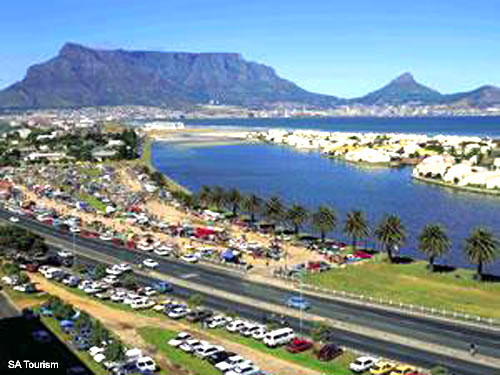
The scene in Green Bay where police officers Brian Thole and Shawn Powell used the 'N word'
The scene in Green Bay where police officers Brian Thole and Shawn Powell used the ‘N word’

The Minneapolis Police Department has been under the microscope after two separate incidences of officer-involved altercations laced with racial slurs came to light. Now, the former police chief is speaking out.

The videos out of Green Bay, Wis., and Apple Valley, Minn., have rocked the department and city leaders. In both, off-duty officers can be seen and heard as they fight and use racial epithets in heated altercations.

“It makes the department look bad,” said Tim Dolan, former police chief for the Minneapolis Police Department. “It makes the profession look bad.”

Dolan found the behavior so troubling, he penned a letter to the editor of the Star Tribune over the weekend. In it, he wrote, “As I often told officers in the past, there will be days when you will be less proud of putting on the uniform of the Minneapolis Police Department.”

“The recent incidents reported should embarrass and concern anyone who has worn a uniform,” he continued.

Dolan led the department for six years. Last year, he retired and passed the baton to Janee Harteau.

“I used to say the job was easy except for personnel issues,” Dolan recalled. “Personnel issues are the toughest to deal with, especially with race involved.”

When asked whether there is a problem with racism within the department, Dolan replied: “Racism is everywhere.”

“People say there isn’t racism,” he said. “They are not living in reality.”

The cases have sparked outrage in every corner of the city, particularly in neighborhoods where the majority of residents are African American.

“As a member of the community — the last couple years, I began trusting police here,” Darrel Young told FOX 9 News. “To see that… it was a hard to swallow.”

While Harteau cannot comment on specific individuals and punishments, she made it clear she was “appalled” by what she saw in the videos appearing on the local news. She has insisted that there is no place for racism or discrimination in the department and has vowed to reach out to cultural and faith leaders in the community, including Bishop Richard Howell, in an effort to rebuild trust.

“I think the time for conversation is now,” Howell said. “Let’s not let this thing get out of hand.”

On Sunday, the Minneapolis Police Federation also signaled its interest in being a part of the solution, with the union president releasing a statement that echoed Harteau’s sentiments after illustrated a desire to be included in discussions with community leaders.

“On behalf of our 850 members, we agree 100% with Chief Janee Harteau that each and every officer in MPD has taken an oath of office and is required to live by the Law Enforcement Code of Ethics. We take that oath and the code very seriously,” Lt. John Delmonico wrote. “The overwhelming majority of MPD officers work hard every day to earn the public’s respect and trust. We must impartially enforce the law without discriminating against any citizen based on their race, sexual orientation, religion or national origin. There is no place in MPD for racist and bigoted officers.”

Dolan said while it is tough to weed out the “bad apples,” he believes union cooperation will be crucial going forward.

“The union can make some concessions which might help in terms of how far you can control off-duty behavior,” Dolan said. “They do play an important role.” – KMSP-TV

US intelligence intercepts ‘point to big Al-Qaeda attack’

Al Qaeda fighters in Somalia

The unusual US decision to close its diplomatic missions en masse in the Middle East Sunday was prompted by intercepts of high-ranking Al-Qaeda operatives signaling a major attack, US lawmakers said Sunday.

Lawmakers briefed on the intelligence called the threat reporting among the most serious they’ve seen in recent years, reminiscent of the intelligence chatter that preceded the September 11, 2001, attacks.

“There is a significant threat stream and we’re reacting to it,” General Martin Dempsey, the chairman of the Joint Chiefs of Staff, said in an interview with ABC.

Dempsey said the specific locations and targets were not known but “the intent is to attack Western, not just US interests.”

At least 25 US embassies and consular offices were ordered closed Sunday, most of them in the Middle East and North Africa, in response to the threat.

Representative Dutch Ruppersberger, the ranking Democrat on the House Intelligence Committee, told ABC’s “This Week” that Al-Qaeda’s “operatives are in place.”

He said the United States knows this “because we’ve received information that high level people from Al-Qaeda in the Arabian Peninsula are talking about a major attack and these are people in the high level.”

ABC News cited an unnamed US official as saying there was concern that Al-Qaeda might deploy suicide attackers with surgically implanted bombs to evade security.

The chairman of the House Homeland Security Committee, Michael McCaul, said the United States was in a high state of alert, calling it “probably one of the most specific and credible threats I’ve seen, perhaps, since 9/11.”

He said an attack appeared to be “imminent,” possibly timed to coincide with the last night of Ramadan, the Muslim holy month.

The suspected plot comes against the backdrop of a series of recent prison breaks in Iraq, Libya and Pakistan in which thousands of inmates have escaped, he said, creating additional risks.

US sensitivity to embassy security also has been heightened by the Al-Qaeda attack on the US mission in Benghazi, Libya, last September 11 that claimed the life of the US ambassador and three other Americans.

It also dovetailed an intensifying US debate over electronic surveillance by the National Security Agency following bombshell leaks by fugitive former intelligence contractor Edward Snowden.

The NSA’s congressional supporters were quick to point to the role of electronic intercepts in obtaining the latest intelligence, while dismissing suggestions it also served to divert attention from the agency’s role in scooping up Americans’ phone and Internet data.

“If we did not have these programs, then we simply wouldn’t be able to listen in on the bad guys,” said Saxby Chambliss, the ranking Republican on the Senate Intelligence Committee.

However, he pointed out that the latest threat warnings did not stem from controversial domestic electronic surveillance programs, but from NSA’s monitoring operations outside the United States.

“And that’s where all the planning is taking place, we think that’s where the activities is planned for,” he said on NBC’s “Meet the Press.”

Representative Peter King, a Republican member of the House Intelligence Committee, said the intelligence was specific “as to how enormous it was going to be, and also there’s certain dates were given.”

“And, you know, the assumption is that it’s probably most likely to happen in the Middle East at or about one of the embassies, but there’s no guarantee of that at all,” he said on ABC.

“It could basically be in Europe, it could be in the United States, it could be a series of combined attacks,” he said.

Chambliss likened the stream of information to the intelligence chatter that preceded the 9/11 attacks in New York and Washington.

“What we have heard is some specifics on what’s intended to be done and some individuals who are making plans such as we saw before 9/11,” he said.

“Whether they’re going to be suicide deaths that are used or whether they’re planning on vehicle-born bombs being carried into an area, we don’t know,” he said. – AFP