Google’s Android mobile platform now controls 79.3 percent of the global market, according to the latest survey.
This equates to a ten percent increase over the second quarter of 2012, BusinessWire reported, citing figures from the International Data Corporation (IDC). Android shipments also saw a big jump, going from 108 million shipments in Q2 2012 to 187 million in Q2 2013.
Apple’s share of the global market dropped more than three percent during the same period, IDC figures showed, from 16.6 percent in Q2 2012 to 13.3 percent in Q2 2013.
Despite the dropping marketshare, Apple managed to ship 31 million units in Q2 2013, compared to 26 million in Q2 last year.
Third-placed platform Windows Phone has seen a very modest marketshare increase, reaching 3.7 percent from 3.1 percent a year ago. Microsoft’s platform saw a big jump in shipments however, going from 4.9 million to 8.7 million units.
JPMorgan says it is facing a federal criminal probe relating to mortgage-backed securities sold in the run-up to the financial crisis.
The New York-based bank says it received notice in May that the civil division of the U.S. Attorney’s office for the Eastern District of California had concluded JPMorgan violated certain federal securities laws in connection with the sale of mortgage-backed securities.
The probe, along with one by the office’s criminal division, relates to securities backed by subprime mortgages and so-called Alt-A mortgages, loans that are less risky than subprime loans, but riskier than prime loans.
JPMorgan Chase & Co. made the disclosure in a regulatory filing late Wednesday.
The disclosure came a day after the U.S. government accused Bank of America Corp. of civil fraud. – AP
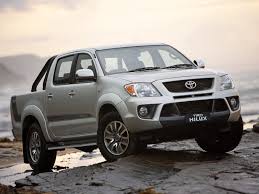
Yes, we know you love your bakkies, South Africa. So we’ve decided to publish a list of best-selling pick-ups every month.
After the Department of Trade and Industry releases the figures for new vehicle sales each month, we’ll slap together a list of the top ten best-selling bakkies.
In July, the Toyota Hilux easily holds onto its top position — as expected — while the Ford Ranger flies up to second, leap-frogging two popular sub-one-tonners. Yes, that means the Nissan NP200 drops to third and the Chevrolet Utility to fourth.
Despite increased sales, the best the Isuzu KB and Nissan NP300 can do is hold on to their respective fifth and sixth positions. The Volkswagen Amarok is stuck in seven, while the Mazda BT-50 moves up a spot to eighth. The Nissan Navara also climbs one spot to ninth, relegating the Toyota Landcruiser PU to the tenth and final place.
Bakkies for July 2013 (see June’s figures here):
1. Toyota Hilux – 3159 (up from 3070)
2. Ford Ranger – 1876 (up from 1627)
3. Nissan NP200 – 1663 (down from 1682)
4. Chevrolet Utility – 1587 (down from 1672)
5. Isuzu KB – 1379 (up from 1012)
6. Nissan NP300 – 916 (up from 600)
7. Volkswagen Amarok – 412 (down from 430)
8. Mazda BT-50 – 183 (up from 173)
9. Nissan Navara – 176 (up from 166)
10. Toyota Landcruiser PU – 154 (down from 191)
Amazon.com Inc. (AMZN), whose founder Jeff Bezos is purchasing the Washington Post (WPO), ranks among the biggest spenders among high-technology companies seeking to influence the work of the federal government.
Former U.S. Senators Trent Lott, a Mississippi Republican, and John Breaux, a Louisiana Democrat, are among those working for Seattle-based Amazon, which spent $1.7 million on lobbying from January through June, ninth highest among high-tech companies, according to the Center for Responsive Politics, a Washington-based research group that tracks lobbying.
The company weighed in on issues with Congress, the Commerce Department and the Federal Trade Commission on matters such as Internet sales taxes and privacy, patent laws, cybersecurity and online wine sales, Senate filings show.
“They have a huge number of issues before the federal government and now he’s bought the hometown paper for covering those politicians,” said Bill Allison, editorial director for the Sunlight Foundation, a Washington-based watchdog group. “There’s always a concern you’re going to have a conflict when you have wealthy publisher. Given all of Amazon’s issues, it’s hard to see where Bezos won’t have a conflict.”
Ethics specialist Bob Steele agrees.
“There are certainly competing loyalties,” said Steele, director of the Janet Prindle Institute for Ethics at DePauw University in Greencastle, Indiana. “If he handles it very well, it’s possible to manage those competing loyalties, but it’s also possible for competing loyalties to turn into conflicts of interest that could erode the integrity of his journalistic obligations.”
Like other high-tech companies, Amazon has increased its lobbying spending. The company’s 2013 totals for the first six months of the year are 31 percent higher than the $1.3 million spent during the same period a year earlier. In 2000, when the company first reported it was lobbying the federal government, it spent $246,000 during the first six months.
Amazon’s team of lobbyists also includes former Assistant Treasury Secretary Jonathan Talisman, who served in the Clinton administration; Elizabeth Frazee, former aide to House Judiciary Committee Chairman Bob Goodlatte, a Virginia Republican; and Holly Fechner, former counsel to the Senate Health, Education, Labor and Pensions Committee.
Bezos, chief executive officer of Amazon, is purchasing the Post on his own, paying $250 million to the Washington Post Co., for a newspaper which has been held by the family of Post CEO Donald Graham since 1933.
Bezos must consider the reputation of the Post going forward as he acquires a newspaper at the heart of reporting on and editorializing about Washington’s issues. Kelly McBride, an ethics specialist at the Poynter Institute, a St. Petersburg, Florida-based journalism training organization, says Bezos would undercut the value of his purchase if he used the Post to advocate for his business interests.
“He will have to create — and I have no doubt that he will — a standard of independence and transparency in his newsroom,” McBride said. “It doesn’t make any business sense for it to become a mouthpiece. It makes business sense to do the right thing.” – Bloomberg
German companies believe the US now poses almost as big a risk as China when it comes to industrial espionage and data theft, a survey has revealed.
The startling finding of a survey of 400 companies conducted in mid-July underscores the shift in German public and business opinion caused by revelations about US surveillance activities.
Some 26 per cent of German managers, IT and security professionals described the US as a high-risk place for industrial espionage and data theft, according to the survey commissioned by EY, the consultancy.
This was second only to the 28 per cent of respondents who view China as a particularly high-risk country for industrial espionage. Russia was ranked third, with 12 per cent saying it posed a significant risk.
When they were asked the same question two years ago only 6 per cent of German companies described the US as a high-risk centre for industrial espionage and data theft.
“Until now [German companies] mostly identified China and Russia as the location of [potential] attackers. Now companies realise that western intelligence agencies also employ very comprehensive surveillance measures,” Bodo Meseke, executive director of fraud investigation and dispute services at EY, said.
US surveillance has become a core issue in Germany’s election campaign following disclosures about Prism, the US data mining programme, and reports in Der Spiegel, the German magazine, that the US has spied on EU offices and is obtaining around 500m pieces of metadata a month from Germany.
Opposition parties have pressed ministers to obtain answers from the US on the extent of any spying on German soil, and the Federation of German Industry has described media reports about US surveillance as “concerning”.
Following meetings in Washington last month, Hans-Peter Friedrich, Germany’s interior minister, assured German industry that the US National Security Agency had not engaged in industrial espionage in Germany.
The US says its cyber activities are focused on combating terrorism and do not target companies, in contrast to China, which Washington accuses of cyber snooping to obtain corporate secrets.
These assurances do not appear to have convinced a significant portion of Germany’s business community.
Germany’s dependence on high-tech exports means the protection of patents and intellectual property are of perennial concern. Modern Germany’s tolerance of mass surveillance is also far lower than in other countries because of their experience of Nazism and East Germany’s Stasi secret police.
German companies continue to view business competitors in foreign countries as a bigger espionage threat than state intelligence agencies, according to the EY survey.
There are signs that disclosures made by Edward Snowden, the former NSA official turned whistleblower, are affecting the cloud computing industry, which involves storage of data and software on huge external servers rather than local hard drives.
A separate survey carried out last month by the Cloud Security Alliance, a trade body, found that 10 per cent of non-US members had cancelled plans to use a US-based cloud provider. Some 56 per cent said they would be less likely to use a US cloud company in future. – FT
Agriculture employs 5.2% of the workforce but only accounts for 2.5% of annual gross domestic product (GDP), statistician general Pali Lehohla said on Monday.
“Agriculture contributes 2.5% of GDP, but in terms of employment agriculture punches above its weight with 5.2%,” he told reporters in Pretoria on Monday.
Lehohla was releasing figures obtained on farming in South Africa during the last population count in 2011. He said a more expansive study would be conducted on agriculture in particular.
The census showed that 2.8-million households were involved in agriculture in some form or another. It contained three questions related to agriculture but did not make a clear distinction between commercial and subsistence farming. A more nuanced picture was needed, Lehohla said.
The provinces with the highest number of households practising agriculture were KwaZulu-Natal with 24.9%, Eastern Cape with 20.7%, and Limpopo with 16.3%. The Northern Cape had the highest proportion of households that reported livestock ownership.
Lehohla said the census data would allow for a follow-up study because government had now identified the households that would be canvassed.
“The purpose was, in part, to give us a frame so that when we go for a fully-fledged agricultural census we know where to go. When we do the agriculture census we will go to those 2.8-million.”
Government planned to use the information obtained to strengthen agriculture in a bid to see the sector provide jobs to more people, he said.
Lehohla said the census showed families involved in agriculture in general had poor access to facilities, but the explanation for this might lie more in their location than in any government policy.
“We also know that agriculture is practised in rural areas where the provision of facilities is very difficult. When you look at the Eastern Cape and the altitude, when it comes to things like the provision of water, then it becomes very expensive to provide water.” – Sapa
The US Trade Representative that oversees the country’s trade policy with the rest of the world says the current United States administration wants a seamless renewal of the Africa Growth and Opportunities Act (AGOA).
Ambassador Michael Froman was speaking at the Washington-based think-tank, The Brookings Institution, which has just released a report suggesting certain recommendations for policymakers, including extending AGOA beyond 2015 when it’s due to expire.
The Brookings report is an empirical analysis of the possibilities post-2015 and calls AGOA one of the defining characteristics of the trade and commercial relationship between Africa and the United States.
Critically it argues that without an extension, there will be declines in African exports, economic diversification and employment for many eligible countries. Trade Representative, Michael Froman, was speaking ahead of his departure to the AGOA forum in Addis Ababa next week: “We want to see the seamless renewal of AGOA and we know how important that is to people making investment decisions to know in advance whether they’ll still benefit from those preferences and preferential access to the US market, plays a key role in whether they maintain their investments and add to them so we want to make sure there’s a seamless renewal.”
He says they’ve already started working with certain interested members of congress, who will ultimately have to renew the legislation once the White House is ready to resubmit it. But much needs to happen before that: “We have a little over two years now before AGOA expires, we want to use this period to really look at the successes of AGOA but also ways it can be improved, also look at the changes on the continent, the changing economic relationships and trade relationships that have developed between Africa and other economic partners around the world and see what kind of changes we want to make to AGOA before working with Congress and obviously Congress plays the critical role here in figuring what kind of AGOA we want to renew.”
The Brookings report back an assessment by Froman who described the current trade relationship with Africa as good but one that could be much more substantial, sighting a lack of greater regional and custom’s integration that makes trading with Africa that much more difficult. He also welcomed interest from other countries in the continent, including China: “The question for Africa is what kind of trade and investment relationships do they want to have, it’s up to them, with outside partners and ensuring that it works for them. And we’re very much confidence because as we travel around Africa as I did last year to a number of countries and back again this year, as much as the Chinese are there, they want Americans to be there as well. Because they know that our companies bring technology, management training. That they hire locally, that they like to build local capacity.”
Governance will also continue to be a factor as to which countries in sub Saharan Africa are eligible for the programme moving forward. This years AGOA forum in Ethiopia, will look at Sustainable Transformation through Trade and Technology. – SABC
Frack gag: No discussion about water contamination
The 7- and 10-year-old children of a Pennsylvania couple that reached a settlement following a lawsuit involving health issues brought on by fracking have been barred from discussing details of the case for the rest of their lives.
Though a gag order is not unusual in itself when large corporations reach a settlement with plaintiffs in court, the August 2011 case of a family that went to court with Range Resources Corporation, Williams Gas/Laurel Mountain Midstream, and Markwest Energy due to the environmental and health impact caused by gas fracking operations has raised eyebrows for its inclusion of the couple’s young children.
The Pennsylvania family reached a $750,000 settlement with the gas companies, and have used the award to relocate. In exchange, however, Chris and Stephanie Hallowich agreed that no member of their family could comment on the case “in any fashion whatsoever.”
Details of the case only emerged recently when the Pittsburgh Post-Gazette managed to get court transcripts released. The paper’s reporters were originally barred from attending the settlement hearing, and had to wait until a three-judge panel of the Pennsylvania Superior Court ruled that a lower court had erred in blocking the unsealing of the records.
Court records, which should have included details of the settlement but did not, paint a confusing picture for Chris and Stephanie Hallowich as they tackled the significance of their gag order.
“We know we’re signing for silence forever, but how is this taking away our children’s rights being minors?” Stephanie Hallowich asked the judge.
“I mean, my daughter is turning 7 today, my son is 10.”
According to the transcripts, Judge Polonsky, who oversaw the case, was unable to clarify. The family’s attorney, Peter Villari, questioned whether the order would be enforceable.
“I, frankly, your Honor, as an attorney, to be honest with you, I don’t know if that’s possible that you can give up the First Amendment rights of a child,” stated Villari.
Along with the gas companies, the Hallowich family also sued the state’s Department of Environmental Protection. In its ruling to unseal court records, the superior court also noted that the August 2011 hearing during which the record was sealed was held three days prior to schedule, without an official notification of the change of date, reports the New York Times.
According to Bruce Baizel, Energy Program Director at Earthworks, which focuses on mineral and energy development, the motives behind restrictive gag orders post-settlements is to conceal any evidence of adverse environmental impact from hydraulic fracturing, or fracking.
“The refrain in the industry is, this is a safe process. There’s no record of contamination. That whole claim would be undermined if these things were public,” Baizel told ClimateProgress.
Moreover, attempts to measure the number of settlements with non-disclosure agreements have failed.
“They don’t have to be registered, they don’t have to be filed. It’s kind of a black hole,” says Baizel.
Prior to the settlement the Hallowichs said that nearby gas drilling had caused “burning eyes, sore throats, headaches and earaches, and contaminated their water supply.”
Once the settlement was reached and the gag order enacted, however, a spokesman for Range Resources stated that the family had “never produced evidence of any health impacts,” and that the Hallowichs primary motive for moving was instead due to “an unusual amount of activity around them.” – RT
Julius Malema’s comments about Sars poses a serious threat to the tax-collecting agency’s integrity, it says.
In a statement released by Sars, it said: “On June 27 2013 counsel for [Sars] addressed a letter to Mr Julius Malema and his legal representative, cautioning Mr Malema to refrain from making false public statements about the state of his tax affairs and his engagements with Sars.
“In subsequent weeks, Mr Malema has not only refused to correct his lies, he has in fact repeated such allegations in various news interviews.”
During the Economic Freedom Fighters (EFF) national assembly last week, Malema said Sars must not allow itself to be used to settle political fights. He said his colleague Kenny Kunene and other EFF members had received notices from Sars stating they were under investigation. Sars had an obligation to rise above political divisions to ensure the public could trust it with their finances, he said. Malema said if Sars continued to allow itself to be used, the EFF would fight back.
Sars on Friday said it was because of Malema’s comments that it had decided to invoke section 67(5) of the Tax Administration Act which allowed it to disclose taxpayer information that would otherwise be confidential.
Malema’s history with Sars
In 2010, Sars contacted Malema when he failed to submit his tax returns for a number of years. It took Malema 18 months, after many attempts by Sars, to file his outstanding returns. “Ultimately he failed to regularise his tax affairs,” said Sars. Malema had still not registered the Ratanang Trust for tax purposes. Sars had to register it on his behalf. “Neither of these situations, his personal income tax affairs and that of the trust, was helpful in demonstrating his willingness to comply with his tax obligations,” the agency stated.
“Such situations do not only speak to the failure of Mr Malema to comply with his statutory obligations, but also the fact that it is not fair for Sars to treat one taxpayer different from another.” After eventually receiving the outstanding tax returns it became clear, through an analysis of the information, that Malema submitted inaccurate information to Sars for the tax years 2005 to 2011. The same applied to the information submitted about the trust.
“All indications were that Mr Malema was attempting to restructure his asset holdings without informing Sars.” Because of this Sars launched a financial investigation into his tax affairs. The financial investigation found that Malema had failed to register for tax in 2005, he under-declared and mis-declared income in the years 2005 to 2011 and was assessed for about R16-million. Malema also failed to submit the tax returns for the Ratanang Trust.
The investigation found that Malema, while engaging with Sars, was transferring assets he owned to third parties in a clear attempt to shift assets outside the reach of Sars, it said. Malema had made no attempt to pay any amount towards his tax debt. “Ultimately when Sars reached a conclusion of how much tax Mr Malema owed … and despite him having had, by his own account at least R4-million available at the time, he opted not to pay one cent towards his tax debt,” stated Sars.
Malema accepted that he owed Sars R16-million in tax, but he did not offer to convert any of his assets towards his tax debt and he never asked for any form of payment arrangement. “Mr Malema failed the procedural requirements to qualify for a settlement for tax debt through his own design, and not because ‘somebody decided’ so.
“Mr Malema must, as we all do, face the consequences of his actions. He had ample opportunity to utilise the various mechanisms provided for in law to state his case,” the agency stated.
Sars attached some of Malema’s properties to recoup the R16-million tax debt owed by the controversial leader. In May, his incomplete mansion in Sandton, Johannesburg, was sold on auction for R5.9-million. His farm in Limpopo fetched R2.5-million at an auction in June. Several of his household goods were also auctioned off earlier this year. – Sapa
Petrochemical giant Sasol has pulled the plug on a shady empowerment deal with union boss Simon Mofokeng and wife Maureen after Business Times exposed how they used fake documents to clinch contracts worth over R300-million.
But this still leaves questions unanswered, including how Sasol could have done business with Mofokeng’s company for 13 years before uncovering the deception.
Sasol confirmed this week it would report a case of fraud to the police, which means the Mofokengs are likely to face charges along with their financial director, Vusani Moyo.
Simon Mofokeng is the general secretary of Cosatu-affiliated Ceppwawu (Chemical, Energy, Paper, Printing, Wood and Allied Workers Union) – a serious conflict of interest, as Ceppwawu has a major presence at several of South Africa’s top listed companies, including Sasol.
Sasol, which is listed on the JSE and the New York stock exchange, said on Wednesday it had cancelled its coal-handling contract with Khotso Batho “with immediate effect” for issuing “fraudulent letters of good standing to Sasol”.
“Sasol is not immune to corruption, but in instances such as this, where acts of fraud are identified, we will act swiftly and decisively,” said Sasol CEO David Constable.
The scandal has also sparked a major overhaul of Sasol’s procurement processes to make it harder for contractors to get away with fraud. It also launched an internal probe into the role of Sasol staffers, including the likelihood that they had failed to act against Khotso Batho despite being given evidence of wrongdoing.
“Any member of staff found to have knowingly facilitated a corrupt or noncompliant relationship with this service provider will face disciplinary action,” said Constable.
Well-placed sources told Business Times previously that Mofokeng had enjoyed a close relationship with Sasol top brass, including former Sasol Mining MD Hermann Wenhold, who is now group safety manager.
Sasol declined to confirm whether Wenhold or other senior executives were under investigation.
A three-month investigation by Business Times previously exposed how Mofokeng used his influence as a union boss to extort special treatment for his company from Sasol, which renewed its contract twice even though it failed to comply with its procurement rules.
These included needing a tax clearance certificate and letters of good standing from the labour department proving Khotso Batho was up to date with payments to the government’s compensation fund.
Mofokeng earned a salary of R130 000 a month as a Khotso Batho executive while employed as a full-time Ceppwawu office bearer, even though the union does not ordinarily allow its salaried top brass to hold paid outside employment.
Business Times established that Khotso Batho owes the SA Revenue Service at least R22-million in unpaid taxes, has failed to produce audited financial statements in the last three years, and is up to a year behind in submitting its VAT, PAYE and UIF returns.
It has been in arrears with the compensation fund since 2001. – timeslive.co.za
An Australian mining firm was convicted on Friday in Darwin of desecrating a sacred outback Aboriginal site in a landmark ruling protecting the beliefs of the beleaguered minority in the country.
OM (Manganese) Limited, an Australian subsidiary of Singapore-based OM Holdings Limited, was fined $133 600 for damaging the spiritual significance of an Aboriginal rock site at Bootu Creek, north of remote Tennant Creek in the Northern Territory.
OM Manganese had previously been convicted of physically damaging the site when an overhanging rock feature known as the Horse’s Head collapsed due to nearby blasting activities in 2011, destroying the area known in English as “Two Women Sitting Down”.
But Darwin magistrate Sue Oliver on Friday ruled it had also amounted to desecration.
“The defendant did not consider damage to the site as a vague and remote possibility,” Oliver said, describing the company’s failure to do so as “wilful blindness”.
“The defendant company made decisions that involved the sacred site that favoured business and profit over the [cultural protection] obligations they had.”
Oliver imposed the fine for what the local Kunapa people said amounted to destruction of the site, forever disrupting their relationship with the land and its mythology or “dreaming”.
“It will always remain a sacred site to us, but it has been ruined and we don’t know what to do,” said Kunapa representative Gina Smith of the site which had been “there for thousands of years as part of our culture and our story”.
“It’s been significantly changed, which makes it much harder for Aboriginal people to recognise the dreaming,” she added.
“We’re not likely to use it any more.”
According to the Kunapa dreaming, a marsupial rat and a bandicoot fought over bush tucker, or native food, at the Bootu Creek site and their blood spilled over the rocks, turning them the rich red of manganese ore.
The Aboriginal Areas Protection Authority, the statutory body responsible for overseeing sacred sites in the Northern Territory which brought the case against OM Manganese, welcomed the “historic” ruling.
“When a sacred site is desecrated or damaged it tears the social fabric of the affected community, as the harmony of those people is inherently linked to that sacred site,” said AAPA chief Ben Scambary.
OM Holdings said it had contested the desecration charge on the basis that the damage was unintentional, but it accepted Oliver’s ruling.
“The company never intended to harm, damage or disrespect the sacred site. We sincerely regret the damage and the hurt caused and I unreservedly apologise to the site’s custodians and traditional owners,” OM CEO Peter Toth said in a statement to the Australian stock exchange.
Aborigines, the most disadvantaged Australians, are believed to have numbered around one million at the time of British settlement in 1788. There are now just 470 000 out of a total population of 23 million. – AFP
Allegations of massive fraud related to Eskom’s ill-starred Medupi and Kusile power station projects have begun to emerge from the collapse of First Strut, the Mail & Guardian reported.
Central to the claims is steel fabrication company Cosira, which construction group First Strut bought in November 2012 from the Da Silva group in a deal funded with a R385-million bond issue.
Cosira was subcontracted by prime contractor Alstom to supply and construct the turbine halls at Medupi and was a joint venture partner for the turbine hall desulpherisation plant at Kusile.
Medupi has been dogged by delays and concern that key tenders may have favoured the business interests of the ANC – which, through Chancellor House, has an interest in boiler supplier Hitachi.
First Strut, which trades as First Tech, applied to put Cosira into business rescue on June 13 this year.
Six days later, First Strut’s gay chairperson and financial director, Jeff Wiggill, was found shot dead next to his Bentley in Protea Glen, Johannesburg.
His murder precipitated the collapse of First Strut and indications are emerging that Wiggill presided over what is – separate to the Cosira transaction – shaping up to be the largest corporate fraud and loan default in South African history.
First Strut director Andris Bertulis applied to liquidate Cosira. In his affidavit, Bertulis alleged that since taking control of the company First Tech had uncovered significant misrepresentation of its assets.
“As an illustration, a deeper look into one of the applicant’s projects, the Medupi project, revealed that the loss there was not the original R27-million … but rather a current projected loss of roughly R140-million.
“What’s coming out of that is the huge amounts of debt. I mean, they are talking in the region of R3.5-billion.”
The Bertulis affidavit alleges that lawyers engaged by First Strut analysed Cosira’s books during April 2013 and, on that basis, revised the company’s value down from a claimed positive R183-million to a total negative of R323-million.
Da Silva group chief executive John da Silva denied any wrongdoing. He said they had not been given an opportunity to respond to Bertulis’s claims.
“You’ve got to understand one thing: initially, when that affidavit came out … the rest of the [First Strut] group was still intact and Mr Bertulis was going around looking for any financial issue that the group had on Cosira.
Da Silva referred further queries to his lawyer.
Eskom declined to comment, referring all queries to Alstom.
A spokesperson for Alstom declined to answer detailed questions, but issued a statement noting: “Alstom did not purchase raw steel from Cosira, but a supply and construction service, for which Alstom paid a composite fee based on market-related pricing. Cosira has delivered all the steel and materials it was contracted to supply to the Medupi site. In light of recent developments, Alstom as the main contractor … has stepped in wherever possible to ensure timely completion of the deliverables and mitigate any material impact on the projects. Further questions should be directed to Cosira.”
An investigation has raised questions about the pricing of steel for the Eskom contract and the artificial insertion of middlemen between steel fabricators and steel suppliers such as Macsteel and Trident.
The M&G has established that, in March 2009, coinciding with the Eskom contracts, Cosira set up a shelf company called Copper Moon Trading 653, with two directors: Monique Fisher and Molemo Kgomo.
Fisher was until then the personal assistant to one of the senior Cosira executives. Kgomo was married to Cosira director Molefe Kgomo.
The announcement by national utility Eskom that the first unit of its disaster-prone 4,764MW Medupi coal power plant is now unlikely to be commissioned until the latter half of 2014 means South Africa could face 700MW gap in its 2014 electricity supply balance.
The plant’s first unit was initially expected to begin operating in April 2012. Eskom is blaming its contractors; consumers in South Africa and the region will again be concerned that they could lose out if power has to be rationed in Africa’s largest economy.
South Africa traditionally produced a power surplus and exported to its neighbours, but the balance started to swing from surplus into deficit in the mid 2000s and in 2008, the country suffered dramatic blackouts that underlined the under-invested electricity supply industry’s capacity to damage the economy.
The government and industry have few doubts about the extent of the problem. Public enterprises minister Malusi Nkanyezi Gigaba pulled no punches in April when he stressed the government’s commitment to bringing the first 800MW of power from Medupi Unit 6 of online by end-year.
Gigaba told reporters that “failure to meet these deadlines will result in tough penalties being imposed on any party responsible for such delay”.
Barely three months later it seems the minister and Eskom have admitted defeat, while project costs have spiralled – to over $14bn.
The innocuously titled Eskom Update on its New Build Programme delivered another blow to South Africa at a time when fears about declining mining output – an industry in which electricity can account for as much as 32% of total costs – and poor macroeconomic performance are weighing on investors’ minds.
In its update Eskom said the December target for commissioning Unit 6 was “unlikely to be met”. A “more realistic” target was H2 2014. However, full commissioning was still expected in 2017.
This is a View article from the African Energy newsletter, a respected source of independent analysis on the continent’s energy industries produced by Cross-border Information, a business intelligence company with a long established research focus on the politics, energy and financial sector trends of Africa and the Middle East.
A judge has ordered Ben Bernanke, the Federal Reserve chairman, to testify about the bailout of AIG in a case where the government is accused of illegally appropriating the insurer and using it “to covertly funnel billions of dollars to foreign entities”.
Government lawyers had argued Mr Bernanke was too senior and the facts had been raked over too often for his appearance to be necessary.
Judge Thomas Wheeler disagreed. Compelling Mr Bernanke to travel to a Washington law firm to answer questions about the government bailout, he wrote on Monday that the “court cannot fathom having to decide this multibillion-dollar claim without the testimony”.
The claim comes from Hank Greenberg, the former chief executive of AIG, who says he and other shareholders were unfairly diluted when the Federal Reserve Bank of New York took an 80 per cent equity stake in return for $182bn in emergency funding. He is suing the government for compensation.
Judge Wheeler said there were “extraordinary circumstances”, a test of whether senior officials had to give evidence in lawsuits.
In his decision, he wrote: “Mr Bernanke was a central figure in the government’s 2008 determination of how it should handle AIG’s fiscal difficulties. To rule otherwise would deprive the court of important relevant evidence in its fact-finding and resolution of this case.”
The insurer came close to collapse in September 2008 as Lehman Brothers filed for bankruptcy. AIG had written credit default swaps, an insurance against default by subprime mortgage-backed securities, which fell in value as the crisis deepened.
The US provided AIG with more than $182bn in taxpayer funds to stave off collapse in return for a majority stake. In its complaint, Starr International, Mr Greenberg’s vehicle, said the US did so against the wishes of AIG shareholders “without due process or just compensation”. – FT
This website uses cookies to improve your experience. We'll assume you're ok with this, but you can opt-out if you wish. Cookie settingsACCEPT
Privacy & Cookies Policy
Privacy Overview
This website uses cookies to improve your experience while you navigate through the website. Out of these cookies, the cookies that are categorized as necessary are stored on your browser as they are essential for the working of basic functionalities of the website. We also use third-party cookies that help us analyze and understand how you use this website. These cookies will be stored in your browser only with your consent. You also have the option to opt-out of these cookies. But opting out of some of these cookies may have an effect on your browsing experience.
Necessary cookies are absolutely essential for the website to function properly. This category only includes cookies that ensures basic functionalities and security features of the website. These cookies do not store any personal information.
Any cookies that may not be particularly necessary for the website to function and is used specifically to collect user personal data via analytics, ads, other embedded contents are termed as non-necessary cookies. It is mandatory to procure user consent prior to running these cookies on your website.


 Google’s Android mobile platform now controls 79.3 percent of the global market, according to the latest survey.