Google CEO predicts totally invasive internet

Google executive chairman Eric Schmidt on Thursday predicted a totally invasive Internet.

At the end of a panel at the World Economic Forum in Davos, Switzerland, where his comments were webcast, he was asked for his prediction on the future of the web. “I will answer very simply that the Internet will disappear,” Schmidt said ironically.

“There will be so many IP addresses…so many devices, sensors, things that you are wearing, things that you are interacting with that you won’t even sense it,” he explained. “It will be part of your presence all the time. Imagine you walk into a room, and the room is dynamic. And with your permission and all of that, you are interacting with the things going on in the room.”

Concluded Schmidt: “A highly personalized, highly interactive and very, very interesting world emerges.”

The panel, entitled The Future of the Digital Economy, also featured Facebook COO Sheryl Sandberg and others.

Earlier in the debate, Schmidt discussed the issue of market dominance. The European Union has been looking at Google’s search market dominance in a long-running antitrust case, and the European parliament late last year even called for a breakup.

“You now see so many strong tech platforms coming, and you are seeing a reordering and a future reordering of dominance or leaders or whatever term you want to use because of the rise of the apps on the smartphone,” Schmidt said Thursday. “All bets are off at this point as to what the smartphone app infrastructure is going to look like” as a “whole new set” of players emerges to power smartphones, which are nothing but super-computers, the Google chairman argued. “I view that as a completely open market at this point.”

Asked about his recent trip to North Korea, Schmidt said the country has many Internet connections through data phones, but there is no roaming and web usage is “heavily supervised.” Schmidt said “it’s very much surveillance of use,” which he said was not good for the country and others.

Sandberg and Schmidt lauded the Internet as an important way to give more people in the world a voice. Currently, only 40 percent of people have Internet access, the Facebook COO said, adding that any growth in reach helps extend people’s voice and increase economic opportunity. “I’m a huge optimist,” she said about her outlook for the industry. “Imagine what we can do” once the world gets to 50 percent, 60 percent and more in terms of Internet penetration.

Gunther Oettinger, a conservative German politician serving as the European Union’s commissioner for digital economy and society, said on the panel that “we need a convincing global understanding, we need a UN agency for data protection and security.” Asked what form that “understanding” should have, he said he was looking for “clear, pragmatic, market-based regulation.” Explained Oettinger: “It’s a public-private partnership.”

Source: Hollywoord Reporter

ADSL clients being terrifically throttled in South Africa: CEO

Amid a looming broadband price war in South Africa, OpenWeb CEO Keoma Wright says that unscrupulous ISPs derive their profit from throttling the living daylights out of their clients.

The Minister of Communications, Yunus Carrim, recently met with the Council of the Independent Communications Authority of South Africa (Icasa), and urged all parties to work together to cut communications costs in South Africa.

Wright noted that the broadband market is becoming ever more competitive and Internet Service Providers (ISPs) are now offering packages like never before.

In the ADSL arena, an increasing number of providers are promising unshaped ADSL for next to nothing.

Wright says with ADSL you pay for what you get. “The less you pay, the less bandwidth you will ultimately be able to use on the network.”

As Telkom controls the price of ADSL in South Africa, private ISPs have had to come up with creative ways to offer a good service and derive a small profit. “Unfortunately, some unscrupulous ISP’s derive their profit from throttling the living daylights out of their clients,” Wright said.

“When a client complains, they simply point them to section 65215411544 million A to Z in their 74th Amended Acceptable Usage Policy stating that throttling is a way of life, take it or leave it,” he said.

He warns unsuspecting consumers to read the fine print before signing any ADSL contract.

“Be careful, the catch is in the fine print. What many ISPs advertise as Unshaped, more than likely comes with a complicated, draconian style Fair Usage Policy hidden deep within the realms of their Terms of Service.”

Wright said that throttling is ridiculous. “My advice is to leave throttling, one can rather shape heavy downloads during peak periods, yet still offer a great service on browsing and similar.”

Some ISPs even shape and throttle capped accounts. When clients purchase capped accounts, they already have one limit imposed – the cap. Why must further limits be imposed? Capped should be completely unshaped, he said.

“It is your bandwidth, you have a right to use it as and when you please,” Wright said.

He noted that ADSL is still cheaper than mobile data and is much more reliable. Whilst gaming on mobile is nearly impossible due to jitter, lag, latency and other technical challenges, fixed line Internet works better for streaming, gaming VoIP and a number of other protocols.

“When was the last time you saw a truly Uncapped Unshaped Mobile data deal? Never. ADSL might look more expensive, but when you total up what you get, ADSL is still a much better offering overall,” Wright said.

The flying car has landed

Organisers of Vienna’s Pioneers Festival, an annual conference for future technology and digital entrepreneurship, announced on Thursday that they would unveil the prototype of “the world’s most advanced flying car” on 29 October.

An earlier prototype of the Flying Roadster by Slovakian company AeroMobil reportedly took its first test flight in October last year. The latest version will be tested a day before its premiere, on 28 October.

Company co-founder Juraj Vaculik said that AeroMobil had sped up the prototyping process after having seen “enthusiastic reactions of the global engineering and design community”.

Weighing 450 kg, with carbon-fibre wings that fold behind the cabin and a flight top speed of 124mph, the two-seater promises to be more of a flying sports car than a flying family car.

“We want to make personal transportation exciting, more efficient and sustainable. With ever more cars on the roads and ever more crowded airports, travelling is no longer what it used to be,” said AeroMobil’s CTO Stefan Klein, who has been working on developing a flying car for two decades.

In June, Terrafugia announced that it was two years away from finishing its first “roadable aircraft” , but now it looks like the US company will be beaten to the prize.

aeromobil

The information Google doesn’t want you to organize

Back in February, in a San Jose courtroom, a bombshell was dropped that could have been erased from the public record.

It turns out that Google, which bases its business on collecting and analyzing huge reams of data for advertising purposes, has been scanning users’ emails even before users have a chance to open or read them, including email messages that are deleted without being opened. Google knows what’s in your email before you do.

The revelation came in a now-settled legal dispute over Google’s Gmail service. Dozens of the nation’s largest newspapers and media companies fought to make sure that the case — and its wide-ranging implications for Internet users — received a full public airing. It has been an unfolding drama ever since, affecting what analysts estimate are 500 million Gmail users worldwide.

Google tried, and failed, to redact information about its email scanning process from a transcript of a public court hearing. Last month, the judge in the case ruled that portions of the transcript from that February hearing could not be redacted retroactively, since that would be tantamount to closing a public courtroom.

The company’s attempt — akin to putting toothpaste back into a tube — was a reversal of its previous position in the lawsuit, a pledge that there would be a “fully public airing of the issues raised by plaintiffs’ motion for class certification.” The NSA recently used the very same tactic when it tried to secretly delete portions of a public court transcript in a lawsuit filed against its surveillance practices.

As a result, we now know much more about how Google collects personal information from users of Gmail and Google Apps and, in this case, how it plugged a critical gap in its data mining operation to sweep up even more of your information.

Here’s what happened:

Back in 2010, Google was facing a vexing problem. It was losing out on a treasure trove of personal information from millions of Gmail users who were slipping through its chief analytical tool, known as “Content OneBox.” Anytime they accessed their email through Outlook or on their iPhone, Google’s data machine wasn’t there to capture it all. So it needed a way to sidestep the problem.

Within a matter of months, the company shrewdly moved the Content OneBox from Gmail’s storage area to the “delivery pipeline” — meaning that it could now scan messages before they were received. As the plaintiffs explained:

“Google made a choice. They said, you know what, when people are accessing emails by an iPhone, we are not able to get their information. When people aren’t opening their emails or they are deleting them, we are not able to get their information. When people are using Google Apps accounts where ads are disabled, we are not able to get that information. When people are accessing Gmail through some other email provider, we are not able to get that information. So what they did is they took a device that was in existence already and operating just fine back in the storage area, and they moved it to the delivery pipeline.”

This move has sweeping consequences, as Chris Hoofnagle, director of privacy programs at Berkeley’s Center for Law & Technology, has described:

“Hiding ads while analyzing data takes advantage of a key deficit users have around internet services: users only perceive profiling if they receive ads. The content one box infrastructure would allow Google to understand the meaning of all of our communications: the identities of the people with whom we collaborate, the compounds of drugs we are testing, the next big thing we are inventing, etc. Imagine the creative product of all of Berkeley combined, scanned by a single company’s ‘free’ email system.”

Google’s stated goal is to “organize the world’s information,” but they fought to avoid disclosing how and why they’ve done it. Now we know.

Source: USAToday

New app to avoid black areas

Two enterprising white entrepreneurs just made yet another app for avoiding non-white areas of your town, and it’s really taking off!

SketchFactor is here, an app made for avoiding “sketchy” neighborhoods, which is the term young white people use to describe places where they don’t feel safe.

The app is the brainchild of co-founders Allison McGuire and Daniel Herrington, is a Manhattan-based navigation app that crowdsources user experiences along with publicly available data to rate the relative “sketchiness” of certain areas in major cities.

The app will launch on the iTunes on Friday, capping off a big week for the startup, which was named as a finalist in the NYC BigApps competition.

According to Ms. McGuire, a Los Angeles native who lives in the West Village, the impetus behind SketchFactor was her experience as a young woman navigating the streets of Washington, D.C., where she worked at a nonprofit.

After meeting Mr. Herrington, an electrical engineer who was taken with the SketchFactor idea, the two quit their Washington D.C.-based jobs and decamped to New York City with funding from family and friends.

As one of the finalists in the BigApps competition, SketchFactor is poised to receive more attention when it launches.

Shaking up the gaming industry

The ever-growing popularity of video gaming, online or not, is bringing a new set of problems for the big developers. Electronic Arts have recently come in for some heavy criticism from players, as the rise of social media brings disgruntled customers together in a way that was impossible a few years ago.

It’s A Trap!

Image courtesy of idownloadblog.com

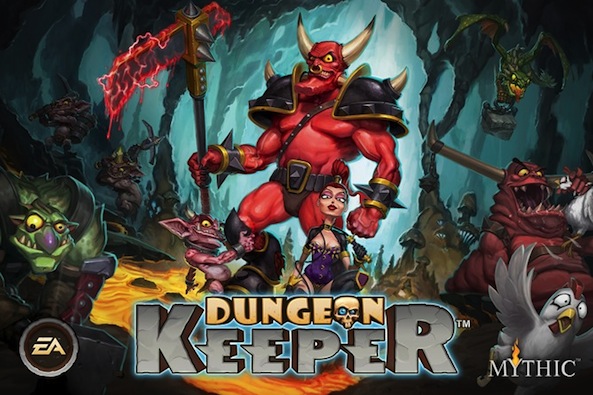
Dungeon Keeper, released in October as what the company described as a “twisted take” on the 1997 game, is a free-to-play app that has attracted a lot of negative attention. For those not familiar with the “free-to-play” (or Freemium) concept, it generally involves players being able to purchase extra levels and other content via micro-transactions.

The problem with Dungeon Keeper seems to be that EA have taken this idea too far. The game is almost unplayable without constantly spending money, and fans are angry not just that the app is “a money trap”, as one user on Metacritic called it, but that a much-loved franchise has been ruined.

Market Changes

To be fair to EA and games developers in general, the market has changed so much in recent years that mistakes are bound to be made. In the past, console and PC games dominated a market which was composed mostly of teenagers. Games were produced slowly and at considerable expense, and sold a predictable number of units, allowing the developers’ business model to adapt gradually.

Certain sectors of the games market, online casinos being an example, have found the changes in the market less problematic. Sites like CasinoSagaFans.com haven’t had to change the way they make games – they’ve simply had to accommodate more players, as online gambling becomes more popular every year.

But the new breed of gamers, young and old, have become used to being able to download a new game in seconds, and pay either nothing or very little for the privilege. The Freemium model is an attempt to allow players to continue to access content in this way while still staying afloat.

A Step Too Far?

EA comes in for particular criticism because it’s one of the biggest games companies in the world, controlling huge swathes of the sports game market including the FIFA series; but also because, in the case of Dungeon Keeper, it’s taken the idea of free-to-play games too far. These days, Twitter and all the other myriad social media platforms allow gamers to share their discontent immediately. That’s going to be a problem for developers in the short term, but it’s easy to see that, over a longer period, the ability to monitor how customers are feeling about a product (practically in real time) could be a huge benefit.

Fluorspar for Li-ion-batteries

Scientists from the South African Nuclear Energy Corporation (Necsa) and Necsa fluorochemical subsidiary Pelchem have developed a lower-cost method to produce high-purity phosphorus pentafluoride (PF5), which is used to manufacture lithium hexafluorophosphate (LiPF6) – the electrolyte used in most lithium-ion (Li-ion) batteries.

The work was completed as part of a doctoral thesis at the University of Pretoria and a patent had been filed for the new process.

LiPF6 is a white crystalline solid in its pure form and is used as a dissolved salt solution in batteries, with its supply considered critical for the expansion of the Li-ion battery industry.

The current commercial processes involved in producing PF5 use either high-cost raw materials or produce undesirable waste products.

The Necsa process, however, uses low-cost start-up materials through which the PF5 could be produced in high purity.

The electrical vehicle and electronics for commercial aircraft markets are considered a growing market for Li-ion batteries, with growing interest in bulk energy storage systems. The global market for Li-ion batteries was $11-billion in 2012 and is expected to grow to $35-billion by 2020.

As a result of the product’s importance, the South African Department of Trade and Industry had embarked on a Fluorochemical Expansion Initiative aimed at increasing the local beneficiation of the country’s fluorspar mineral reserves, with strategic research and development support from the Department of Science and Technology.

South Africa has the largest global reserves of fluorspar, at 40-million tons.


Honda finds its mojo

They say, “When you’re on a good thing, stick to it.” Honda has followed that formula since launching the first Jazz back in 2001. And why not? It’s worked wonders for the automaker so far.

Now manufactured at 10 plants in eight countries, the Jazz – Fit in the US – has sold more than 4 million units. The second generation, released in 2007, essentially followed the original’s design with bolder headlights and grille, and maintained the car’s central fuel tank layout and dimensions. But according to the third generation’s 2015 chief engineer, Makoto Konishi, “It’s time for a big change. That ‘good thing’ needs to get better.”

He rallied his R&D team by urging them to create the “Super Cub” of the car world. The Cub was a 50cc motorcycle launched in 1958 that became the biggest seller ever (60 million in 50 years).

At Honda’s Takasu Proving Ground in Hokkaido, the car looks great. The front end is bolder. It appears to take design hints from the Clarity fuel-call car, the CR-V, and even the new NSX.

hondajazz

Design boss Toshinobu Minami says that in designing the new exterior, he wanted to make a strong connection with a market smitten with smartphones and the Internet, a market fascinated by new gadgets.

“We had to give the new model a significantly new face and stronger road presence while maintaining its dimensions,” Minami said. The face, especially, had to exude ‘new.’ That is why Honda opted for a more solid face with an “exciting edge design.” said Minami.

Senior handling and ride quality engineer Terumasa Kotada told us Honda benchmarked the Jazz/Fit on a certain Volkswagen.

“In upping our game, we wanted to make a stronger international competitor, so we benchmarked our Jazz/Fit on the Polo. The moment you get in the Polo, you notice how low you sit in the car. This instills confidence. And then when you drive the Polo, you notice how low its roll center is and its huge stability levels, instilling even more confidence. To get our desired result, I tested the car extensively on the autobahns in Germany,” he said.

To give the Jazz/Fit better road feel, feedback, and stability, Kotada says the car’s suspension geometry was redesigned by adding a new H-beam torsion rear suspension setup and a revised front strut. Taking hints from the Polo, toe control and caster angle were revised. The electronic power steering was modified to give the car a more natural steering feel.

In a strange way, the Honda actually feels bigger and more substantial on the road, and turns in like a charm with almost no understeer and loads of feedback. It rolls less while going into corners, and is more stable at speed, gripping the blacktop while the rear follows neatly and cleanly. Under heavy braking, the car resists nosedive as the back end stays absolutely planted. “Rear end stability is just one major result of our Polo-inspired suspension redesign,” adds Kotada.

The cabin is filled with a sporty exhaust note that has been tuned and silenced — with sound-absorbing felt — to delete all human-unfriendly sounds. While the dash design is simple yet functional, it is not in the same class as the Polo when it comes to interior trim, materials, and quality.

When you benchmark a car on another, you expect to see significant improvements in all major areas, upgrades that put the new car in the same class. Honda says we can expect to see further refinements inside the car before it goes on sale in Europe and elsewhere early next year.

Designer Minami commented that he would have liked Honda’s announcement of a return to F1 with McLaren to come a year earlier. That way he could have incorporated some McLaren design hints into the car. As it is, he seems happy enough, but does admit that some people may find its looks over the top.

Honda seems to have found its mojo again. It’ll be back in Formula 1; a new NSX is coming out soon; a smaller sports car is on the way; a new Accord hybrid will travel more than 800 miles on a tank of gas; and a new Civic Type R will soon challenge the Megane RS for the fastest lap by a front-drive car at the Nurburgring. If anything, this car is a reflection of the company’s newfound corporate confidence.

Source: motortrend.com

Blackberry Passport will launch in September

BlackBerry’s CEO John Chen at the company’s earnings report and annual meeting confirmed that the long-rumoured square-shaped ‘Windermere’ smartphone will be officially called BlackBerry Passport.
Chen showed off the yet-to-be-announced Passport which will launch in September at an event in London. Crackberry reports that the company chief also showcased the BlackBerry Classic QWERTY smartphone that is slated to hit the market shelves before end of this year, but did not give an exact release date.

Unfortunately, the Canadian handset maker did not reveal any details about the pricing and of the BlackBerry Passport, previously codenamed Windermere.

Based on a BlackBerry developer listing, the Passport smartphone is said to sport a 4.5-inch display with a resolution of 1440×1440 pixels and offer a pixel density of 453ppi. Other than the screen information, company has not shared any more details of the device.

Other rumoured innards of the BlackBerry Passport include 3GB of RAM, a 13-megapixel rear camera, and a 3450mAh battery. BlackBerry on Wednesday, along with the announcement of its deal with Amazon for 240,000 Android apps, also said that it would be shutting down its music and video stores on BlackBerry World.

The Canadian handset company also confirmed the launch of its low-cost touchscreen smartphone, the BlackBerry Z3 in India on June 25. The company started sending invites for the event scheduled next week with a tagline that said, “Join us to witness the unveiling of the next generation BlackBerry 10 device.”

For the BlackBerry Classic, the company has revealed that it will run BlackBerry 10.3.1 OS, for which a separate SDK would be released for developers.

Source: gadgets.ndtv.com

Amazon launches its ‘Fire’ smartphone

Amazon announced its first smartphone today, a bold move into a segment currently dominated by Apple and Samsung. At an event in Seattle, CEO Jeff Bezos unveiled the Fire Phone, a smartphone with a 4.7-in. 3-D display, a 2.2-GHz quadcore processor, a 13-megapixel rear-facing camera and 2 GB of RAM.

The device, which has a heavy focus on multimedia, will offer unlimited photo storage and a dedicated button to launch the camera app. It will be sold exclusively on AT&T’s network at a price of $199 for a 32-GB version with a two-year contract or $299 for a 64-GB version. Amazon is also throwing in a free year of Amazon Prime, its customer-loyalty program (existing Prime members will get a bonus year tacked onto their current subscription).

The device is currently available for preorder on Amazon’s website and will begin shipping on July 25.

The new phone is designed to be tightly integrated with Amazon’s myriad services. The company’s Instant Video service will be preinstalled on the device, as will Amazon’s newly launched music-streaming service. The phone will also come with a new program called Firefly, which allows people to scan objects, songs and TV shows (sort of like an all-purpose Shazam app) so that Amazon can identify them and offer a way to purchase them from its store. In total Firefly can recognize 100 million items, Bezos said. “Fire Phone puts everything you love about Amazon in the palm of your hand,” he said in a press release.

The phone’s 3-D capabilities are its most unique feature. Through a technology dubbed Dynamic Perspective, the Fire Phone uses four cameras placed on its front face to track a person’s head movements at all times. This allows the phone to offer a real-time 3-D-like display that presents more depth to images than a typical smartphone screen. During the event, Bezos demonstrated the phone’s map app, which showed looming skyscrapers leaping off the screen, as well as an app that allowed the user to sort through dresses as if they were in an actual 3-D space. The phone’s motion sensors allow users to scroll within certain apps by tilting the device rather than touching the screen.

Like the Kindle, the Fire Phone will run on a modified version of Android and support some apps native to Google’s operating system. Popular apps such as Instagram, Facebook, Netflix, ESPN and HBO Go should be available for the device when it launches. Amazon has also released development tools to allow companies to make apps that make use of Dynamic Perspective and Firefly.

The device demonstrates Amazon’s growing interest in creating hardware. In addition to its popular line of Kindle e-readers and tablets, the company released its first set-top box, the Amazon Fire TV, earlier this year. The company has always been reticent to disclose just how successful its hardware ventures are — Bezos said today that there are “tens of millions” of Kindle owners, and there’s no real data on Fire TV sales — but smartphone sales dwarf those other segments. More than a billion smartphones were shipped globally in 2013, with Samsung and Apple controlling nearly half the market between them.

Amazon will face an uphill battle taking on those two giants, but the company has a history of eschewing profits to smother competitors in other markets. They may be embarking on a similar strategy today — the 32-GB version of the Fire Phone, for instance, will sell for $100 less than a similar model of the iPhone 5S. – Time.com

Mind altering lasers makes fruit flies ‘sing and dance’

Scientists have created a thermogenetic tool that can alter a fly’s mind and make it sing and dance.

fruitfliesThe Fly Mind Altering Device, or FLyMAD, lets the researchers use heat from infrared lasers to activate genetically defined brain cell types in flies genetically modified to be sensitive to temperature to help them understand the role of neuronal cells in flies’ courtship behaviour.

The scientists found that specific cells where switched on and off immediately with heat of around 30 degrees Celsius and this changed the fly’s behaviour, which allowed the researchers to analyse the links between the two.

To test FlyMAD, the scientists made the flies “moonwalk” by activating and deactivating certain neurons, and then used the tool to find the neurons responsible for the flies’ courtship “singing”, which they could then activate.

The FlyMAD was developed in collaboration between researchers from Vienna University of Technology, the Howard Hughes Medical Institute, and the Research Institute of Molecular Pathology (IMP), with their findings published in the journal Nature Methods.

Source: Descrier

The must-have game apps for your phone

angry_birds_family_by_fizzle_knight-d61ffh9Mobile phones have effectively revolutionised the way we live our lives, and continue to grow in technical capabilities to further extend the range of facilities and functions available to its users. One in five people across the world own a smartphone device, illustrating its vast popularity and a growing dependence on technology to improve our quality of life. Mobile phones were primarily invented to provide the basic function of making and receiving calls whilst on the go, which extended communication between friends, family members, loved ones and work colleagues away from landline telephones located in the home or office.

Considerable advancements in technology has not only led to dynamic changes in the overall size, weight and appearance of phones, but also created smartphones and Android devices which open up an almost limitless world for users to search the internet, organise their daily schedule and play games whilst on the go. The latter has become one of the highest grossing mobile phone markets, as games designers continues to produce top-selling apps that combine simplistic touchscreen controls with an engrossing gameplay experience across all genres.

Bet365

Downloading the Bet365 app onto your smartphone or Android device allows you to enter a world of gambling that provides a high quality gaming experience. While Bet365 are renowned across the world for their comprehensive sports betting market, they also provide a bingo and casino service for gamblers to enjoy their favourite games on. A glowing review on gamblingafrica.com promotes the Bet365 app as a must have for punters who wish to enjoy a selection of slot, table and card games whenever they desire.

Angry Birds

A transformation from a basic game concept to a global phenomenon as a franchise which is the highest downloaded free-to-play game of all time symbolises the huge popularity of Angry Birds. Created by Rovio Entertainment, the game is based upon a slingshot from which gamers fire birds at pigs placed across various structures of increasing difficulty level, with the aim to destroy all the pigs on the playing field in order to progress. It was primarily developed and released for touchscreen smartphones, but such is the ever-increasing worldwide popularity, the game is now available to play across console and PC platforms; Angry Birds also thrives upon merchandise sales, with long-term plans for a television series and feature films firmly in the pipeline. With over 2 billion downloads across all platforms, Angry Birds, whether it is the original version or any of the numerous spin-offs, is a must-have download for any phone.

Limbo

Unlike many other modern day platform games, Limbo takes an interesting twist on a popular genre through stylish monochrome graphics and 2D gameplay that beautifully combine to create a hugely popular game. Limbo was originally designed by Playdead for the Xbox 360 console, but was later expanded across the PlayStation 3, Microsoft Windows and iOS platforms, with the latter allow smartphone users to download and play a popular game whilst on the go. The game is based upon an un-named boy who searches through a dark forest to look for his missing sister, with various puzzles and enemies facing the player as they travel through ‘the edge of hell’. Its simplistic gameplay is matched by challenging puzzles that require gamers to concentrate and find a solution to keep the boy alive and avoid the many pitfalls that stand in his way.

Candy Crush Saga

With an average of 46 million users every month, Candy Crush Saga is undoubtedly amongst the most popular gaming apps of all time. The puzzle-based games requires gamers to matching coloured sweets to create horizontal and vertical lines consisting of three, or more, of the same pieces, with the difficulty rating increasing over hundreds of levels which require a certain objective, such as total score and number of given moves, in order to progress. Candy Crush Saga is available to play across all smartphone and Android devices, in addition to the social networking site Facebook which continues to enhance its global appeal and addiction.

Football Manager Handheld 2013

The hugely popular games series place gamers in the hotseat of a football club who they must lead to potential glory, or steer clear of relegation within a game that provides all the emotion and stress of being a football manager. Football Manager has established itself as a top-selling PC game, but its integration onto the mobile phone platform allows avid football fans to enjoy being a manager whilst on the go. Considerable thought has been put into making the mobile conversion a success, with the app providing a wealth of options and information that do not over-complicate the game and offer a wonderful gaming experience for football fans who wish to take their favourite team to the top.

SA mobile data traffic to explode

mobile2Mobile data traffic in South Africa is expected to have a compound annual growth of 53% in the next five years, according to a report.

According to a forecast, it will reach an annual run rate of two exabytes (one quintillion bytes) by 2018.

This is one of the Cisco Visual Networking Index Global Mobile Data Traffic Forecast for 2013 to 2018, said ITWeb.

The report also states that 60% of mobile connections in South Africa will be “smart” connections by 2018, up from 20% in 2013. Cisco also notes that by 2018, 33% of mobile traffic will be offloaded onto WiFi or small cell network.

Craig Zeeman, director of transformation and service provider at Cisco SA said to ITWeb: “South African mobile data traffic will continue its truly remarkable growth, increasing nearly eight-fold over the next five years and growing twice as fast as fixed IP traffic in South Africa.”

Food will be heavily impacted by an increase in mobile data. More than 240 tons of food spoils each year during transit and storage alone.

If organisations used mobile data to keep better track of trucks and the temperature of storage facilities, they would save enough food to feed 40 million people.

In developed countries:

  • mHealth could save $400 billion in healthcare costs in OECD countries
  • Connected cars could save one in nine lives through emergency calling services
  • mEducation can reduce student drop-outs by eight per cent or 1.8 million children
  • Smart metering can cut carbon emissions by 27 million tonnes – the equivalent of planting 1.2 billion trees