German aid for deadly US drone attacks

The BND offers ‘language assistance’ in African languages.

The filtering system the German spy agency, the BND reportedly uses does not reliably prevent German targets with .com and .org domain names from being monitored by the US.

In response to questioning about the close cooperation in Bad Aibling, the BND said that the Joint SIGINT Activity and the Joint Analytical Center were discontinued “in 2012 and 2011, respectively.” In addition, the BND noted in a statement, no joint surveillance took place prior to the facility’s discontinuation: “Even before, signals intelligence was performed exclusively by the BND.”

The NSA documents, though, tell a different tale.

A map from the spy program Boundless Informant, published by SPIEGEL in the summer of 2013, indicates that the NSA collects vast amounts of data in Germany.

One document, which explains the program, says that data is collected “against” a target country.

In the Wharpdrive program, BND specialists are even taking the lead. According to one document from the Edward Snowden archive, Germany’s cooperation with the NSA’s Special Source Operations is meant to provide “unconventional special access” to fiber-optic cables.

As far back as 2006, the BND was working in Schöningen on algorithms that could detect patterns or anomalies and thus enable it to exploit social networks for intelligence purposes.

BND surveillance could very well contribute to guiding the deadly drones to their targets. Indeed, the former head of NSA and CIA Michael Hayden recently confirmed, “We kill people based on metadata.”

Other documents state that the BND offers “language assistance” in African languages. It is also clear that the BND shares the results of its monitoring of two foreign ministries as well as Internet telephony originating from a crisis-plagued country in the Middle East.

These days, tensions between the upper echelons of government in Germany and the United States are at their highest in years, but these documents suggest a smooth relationship between the eager BND and the covetous NSA.

There was only one point on which the United States expressed reserve: A request by the Germans to use information from NSA surveillance in “open court.” The document, from April 2013, said there were concerns that the disclosure of surveillance capabilities in a German court could have ramifications and that the “desired and planned level of cooperation” could not be maintained.

In this instance, Germany’s adherence to its own constitution seems bothersome to the Americans.

Source: Der Spiegel

NSA, FBI, DIA sued over refusal to disclose role in Mandela’s imprisonment

Mandela's legacy: Killing white children
Mandela’s legacy: Killing innocent white children

Ryan Shapiro reveals he is suing the NSA, FBI and Defense Intelligence Agency in an attempt to force them to open their records on one of the country’s greatest secrets: how the U.S. helped apartheid South Africa capture Nelson Mandela in 1962, leading to his 27 years in prison.

The U.S. has never confirmed its involvement, but details have leaked out over the years. Shapiro already has a pending suit against the CIA over its role in Mandela’s capture and to find out why it took until 2008 for the former South African president to be removed from the US terrorist watch list.

The NSA has already rejected one of Shapiro’s requests for its information on Mandela, citing “national defense.”

Meanwhile, Michelle Obama has reminded the Chinese on her visit there that Americans were racist back then when Mandela was imprisoned: “Many decades ago, there were actually laws in America that allowed discrimination against black people like me, who are a minority in the United States. But over time, ordinary citizens decided that those laws were unfair. They called on government officials to change those laws, and they voted to elect new officials who shared their views,” she said.

“And slowly but surely, America changed. We got rid of those unjust laws. And today, just 50 years later, my husband and I are President and First Lady of the United States. And that is really the story of America –- how over the course of our short history, through so many trials and struggles, we have become more equal, more inclusive, and more free.”

Crime and rape in South Africa soared after Mandela was released, a white genocide was set in motion, the US declared the “War on Terror” and launched the invasions of Yugoslavia, Iraq, Afghanistan, Libya, Syria and Ukraine, making the world a much less safer place.

Source: Democracy Now/The Weekly Standard

Germany to resume counter-espionage against US, Western allies

merkelcellFollowing decades of a heavily subdued program, Germany is planning to resume counter-espionage against both the US and other Western allies in response to ongoing revelations surrounding NSA’s global surveillance practices, Der Spiegel reports.

Another primary motivation for the resumption of surveillance is US reluctance to agree to a no-mutual-spying treaty desired by Germany, the reports suggests.

The beefed up program will include more active tracking of US agents operating within Germany’s borders. British embassies – as well as those of the US – could also be targeted, according to the report.

“This step would be an about-face from the decades-long practice of systematically monitoring the activities of countries such as China, Russia and North Korea but rarely the activities of Western partners,” read Spiegel’s assessment of the situation.

One of the revelations considered to be most serious was the fact that the US was monitoring a non-governmental cell phone used by German Chancellor Angela Merkel. According to the files leaked by Edward Snowden, the German Chancellor’s mobile phone has been on an NSA target list since 2002 and was codenamed “GE Chancellor Merkel.” Surveillance and communication equipment installed on the roofs of both the US and British embassies in the capital was also deeply criticized.

Head of the German domestic intelligence service, the Bundesamt für Verfassungsschutz (BfV), Hans-Georg Maassen suggested last November that active operations may be stepped up in the wake of the news. Germany was required to “adjust counter-espionage and take a 360-degree view,” according to Maassen.

In January, Germany called for less rhetoric and more action in the wake of President Obama’s pledge to stop spying on world leaders. While the announcement was greeted with optimism, politicians said it had been “too little, from a German point of view.”

Mere days afterwards, former NSA contractor and whistleblower Edward Snowden chose the German ARD broadcaster to give his first TV interview, stating that: “There is no question that the US is engaged in economic spying.”

Clemens Binninger, part of Merkel’s Christian Democrats party, said that in regards to the discrepancies between countries surveilled, Germany needs to “cease the differentiation and treat them all the same way.”

Chancellor Merkel said on Saturday in her weekly podcast that herself and French President Francois Hollande would review plans to build up a trustworthy data protection network in Europe.

She aired her disapproval of companies such as Google and Facebook, basing their operations in countries with low levels of data protection, while in reality being active in countries with high data protection.

“Above all, we’ll talk about European providers that offer security for our citizens, so that one shouldn’t have to send emails and other information across the Atlantic. Rather, one could build up a communication network inside Europe,” she said.

In the wake of the revelations about US global spying activities, Merkel has become one of the biggest supporters of greater data protection making it mandatory for ministers to use encryption on their phones to secure their communications against intrusion.

However, before the new counter-intelligence plan comes into effect, an agreement must be reached between Merkel‘s office, the Interior Ministry and the Foreign Ministry, Der Spiegel reports. – RT

Is Israel the Sixth Eye?

five_eyesIt’s common to hear when Israeli prime ministers travel to the White House that there isn’t ‘an inch of daylight’ between Israel and the U.S. That’s how damn close we are. It’s one thing (and troubling enough) to say this about political issues. But now it appears that our respective intelligence operations are increasingly coordinated and overlapping. Of course, there continues to be intensive spying by Israeli agents within the U.S. (Pollard and others agents exposed over the years following testify to this). But increasingly there appears to be no reason for Israel to attempt to penetrate U.S. security as we’re willing to give them the store.

Yesterday, I reported that Israeli security correspondent Ronen Bergman had revealed the NSA maintained a secret facility in Jerusalem that monitored all U.S. satellites. I also reported something not in Bergman’s interview: that this base was part of another secret agreement allowing Israel to share in all intelligence information produced as part of the Five Eyes network. In effect, Israel has become the Sixth Eye.

Working with an Israeli researcher, I’m publishing the first known picture of the facility, which is located on Martin Buber Street near the Hebrew University campus on Mt. Scopus. This is one of the highest points in Jerusalem and would offer the best vantage point to receive and transmit signals to space satellites. The NSA facility is located within an IDF SIGINT base called Ofrit, which intercepts telecommunications throughout the West Bank. Frankly, I’ve never heard of a U.S. intelligence facility housed within an Israeli military base. This brings home even more strongly how little separation there now is between Israeli and American intelligence operations. Or to paraphrase Lennon-McCartney: I am you and “you are me and we are all together.”

Source: richardsilverstein.com

Snowden says NSA involved in industrial espionage

snowdenardThe National Security Agency is involved in industrial espionage and will take intelligence regardless of its value to national security, the former NSA contractor Edward Snowden has told a German television network.

In a lengthy interview broadcast on the public broadcaster ARD TV on Sunday, Snowden said the NSA did not limit its espionage to issues of national security and cited the German engineering firm Siemens as one target.

“If there’s information at Siemens that’s beneficial to US national interests – even if it doesn’t have anything to do with national security – then they’ll take that information nevertheless,” Snowden said in the interview conducted in Russia, where Snowden has claimed asylum.

Source: The Guardian

The Americans lied

bndLast summer, German Chancellor Angela Merkel promised her citizens a pact which would prohibit U.S. spying on German citizens. But since then, Washington has shown little interest in pursuing such a treaty. Now, officials in Germany fear the deal is dead.

Failed talks? Hardly. The negotiations “are continuing,” says Germany’s foreign intelligence service, the Bundesnachrichtendienst (BND). “We are still talking,” says the German government. In other words, nothing has yet been decided. The No-Spy deal is still alive.

But the statements coming out of Berlin and Pullach, where the BND is headquartered, reek of forced optimism. Nobody wants it to look as though efforts have been abandoned toward a deal which would see the U.S. agree to swear off spying operations in Germany.

Yet despite the assertions, most of those involved are slowly coming to the realization that a surveillance deal between Washington and Berlin isn’t likely to become reality. The U.S. government is still digging in its heels.

On Tuesday, the German daily Süddeutsche Zeitung quoted one source who is familiar with the talks as saying “we won’t get anything.” The paper also reported that the US is refusing to promise that it won’t monitor members of the German government and other politicians in the future.

No surprises here.

Source: Der Spiegel

A digital highway for launching cyberattacks

cyberattacksThe National Security Agency has implanted software in nearly 100,000 computers around the world that allows the United States to conduct surveillance on those machines and can also create a digital highway for launching cyberattacks.

While most of the software is inserted by gaining access to computer networks, the N.S.A. has increasingly made use of a secret technology that enables it to enter and alter data in computers even if they are not connected to the Internet, according to N.S.A. documents, computer experts and American officials. The technology, which has been used by the agency since at least 2008, relies on a covert channel of radio waves that can be transmitted from tiny circuit boards and USB cards inserted surreptitiously into the computers. In some cases, they are sent to a briefcase-size relay station that intelligence agencies can set up miles away from the target.

The radio frequency technology has helped solve one of the biggest problems facing American intelligence agencies for years: getting into computers that adversaries, and some American partners, have tried to make impervious to spying or cyberattack. In most cases, the radio frequency hardware must be physically inserted by a spy, a manufacturer or an unwitting user.

The N.S.A. calls its efforts more an act of “active defense” against foreign cyberattacks than a tool to go on the offensive. But when Chinese attackers place similar software on the computer systems of American companies or government agencies, American officials have protested, often at the presidential level.

Among the most frequent targets of the N.S.A. and its Pentagon partner, United States Cyber Command, have been units of the Chinese Army, which the United States has accused of launching regular digital probes and attacks on American industrial and military targets, usually to steal secrets or intellectual property. But the program, code-named Quantum, has also been successful in inserting software into Russian military networks and systems used by the Mexican police and drug cartels, trade institutions inside the European Union, and sometime partners against terrorism like Saudi Arabia, India and Pakistan, according to officials and an N.S.A. map that indicates sites of what the agency calls “computer network exploitation.”

Source: NYT

Quacking Over Ducksters As Freedoms Go POOF

mercer_ilanaby Ilana Mercer

[followbutton username=’IlanaMercer’ count=’true’ lang=’en’ theme=’light’]

Like Ilana Mercer’s Facebook page

While the nation fretted over the ouster of one Duckster from the parallel reality of a TV reality show, more of the protections enshrined in the Fourth Amendment of the U.S. Constitution evaporated.

Just after Christmas, district-court Judge William Pauley ruled that the privacy protections afforded by the Constitution were relative freedoms, not absolute ones. As such, Fourth-Amendment rights had to be calibrated against a government’s need to maintain a database of records that would (putatively) prevent future terrorist attacks.

Paraphrased by The Guardian, “Pauley argued that al-Qaida’s ‘bold jujitsu’ strategy to marry seventh century ideology with 21st century technology made it imperative that government authorities be allowed to push privacy boundaries.”

You’d think that the purview of the justice elite is to “marry” American law with Islamist ideology, rather than uphold a timeless principle that states: “The right of the people to be secure in their persons, houses, papers, and effects, against unreasonable searches and seizures, shall not be violated, and no warrants shall issue, but upon probable cause, supported by oath or affirmation, and particularly describing the place to be searched, and the persons or things to be seized.”

“The judgment,” continued The Guardian, “directly contradicts the result of a similar challenge in a Washington court [a week earlier] which ruled the NSA’s bulk collection program was likely to prove unconstitutional and was ‘almost Orwellian’ in scale.”

Friday’s ruling, surmised the vigilant British paper, “makes it more likely that the issue will be settled by the U.S. Supreme Court, although it may be overtaken by the decision of Barack Obama on whether to accept the recommendations of a White House review panel to ban the NSA from directly collecting such data.”

Indeed, in August, media-enabled megalomaniac Obama told a rapt press corps that, in his magnanimity, he’d be prepared to “jiggle” his surveillance apparatus here and there to better allay unnecessary fears (“provide greater assurances,” as the president put it).

In his remarks, Big Daddy said—in defiance of the evidence—that he was comfortable “the NSA program [was] not being abused,” going on to promise that he’d outsource the matter to a new hire: A civil liberties officer. (CNN’s Jessica Yellin was in estrus.)

This is the inglorious history of American freedom and federalism. In the rare event that the Supreme Court refuses to play along (as nicely as plaything Justice John G. Roberts did for ObamaCare)—there is always a perfectly legal, extra-constitutional, quasi-legislative, quasi-executive, quasi-judicial, “independent” regulatory commission or executive agency to kill off or override constitutional protections.

A “civil liberties officer,” for example.

The nice men in periwigs who came up with the Fourth Amendment were recklessly naive to imagine that branches of a government, each of whose power is enhanced when the power of the other branches grows, would serve to check one another. The idea of a judiciary that would police the executive as an arm of a self-correcting tripartite government was worse than naive.

Ditto the Duck detritus: they are the new wholesome in America.

Into the Cannibal's Pot

As “luck” would have it, legislation that flouts the Fourth Amendment was previously in place to provide Pauley with all the positive-law backing the judge needed to justify an anti-constitutional ruling. To wit, the grounds upon which the New York jurist dismissed this ACLU (American Civil Liberties Union) case against the NSA were, primarily, “that bulk collection was [already] authorized under existing laws allowing ‘relevant’ data collection to be authorized by secret US courts.”

Here you have the essence of modern-day, Managerial-State America. Natural law, common-law and Constitution have been nullified; buried under the rubble of legislation, statute, precedent, ad infinitum, rights having long-since been outsourced to the “better” judgment of bureaucrats and hired “experts.”

In this case, to Eric Holder’s Department of Justice.

Not only has Obama “the sinner” trusted Holder his “sin eater” with the expansion of surveillance-state USA; he has, it would appear, charged him with dealing a one-two Knockout punch to white America.

Eric Holder’s first arrest in the string of Knockout attacks across the country is a first in more than one way.

The arrest is unique in that it is of a white offender. Knockout attacks have been, almost exclusively, black-on-white hate crimes.

Were it not so disquieting for what it portends, this single arrest would be as comical as the specter of global-warming scientists marooned in Antarctic ice so densely packed that no man-made machinery can affect it.

Heeding Holder, the U.S. attorney for the southern district of Texas has remanded Conrad Alvin Barrett (27 years old) to prison for breaking the jaw of a man (79 years old), while “laughing and saying; ‘Knockout’” as he beat it.

The question is not whether this is a good arrest. If he’s guilty, let Barrett rot. The question is, why have there been no arrests for the multiple killings and maiming of innocents by feral black thugs across the country?

Befitting a banana republic, Holder, who carries water for President Camacho, is likely attempting to deploy the law to frame the Knock-Out phenomenon as an equal-opportunity crime. This is the administration’s ultimate racial reprisal against white victims of hate crimes: “know thy place, Honky!”

MSNBC host Melissa Harris-Perry will no doubt deem the “banana” usage here to be racist, “conceived by a group of wealthy white men who needed to . . . render [a black man] inferior and unequal and diminish his accomplishments.” This is what our unsharpened pencil thinks of the word “Obamacare.”

But Obama and his fans “can’t have their banana and eat it.” It is an incontrovertible fact that under Strong Man Obama, America’s banana-republic- and surveillance-state credentials are that much stronger.

[followbutton username=’IlanaMercer’ count=’true’ lang=’en’ theme=’light’]

Like Ilana Mercer’s Facebook page

More than 500 world-famous authors sign anti-surveillance petition

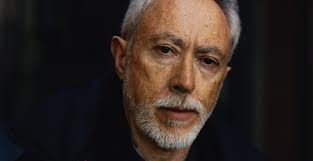
jmcoetzee
JM Coetzee

More than 500 renowned authors – including five Nobel laureates – from across the globe have signed a petition demanding to end ‘mass surveillance’. It follows the revelations over the last few months of US’ and other countries’ spying.

Their open appeal is called ‘A Stand for Democracy in the Digital Age’. Among the signatories are Nobel laureates Orhan Pamuk, JM Coetzee, Elfriede Jelinek, Günter Grass and Tomas Tranströmer.

Others who signed the letter include Bjork, Umberto Eco, Yann Martel, Ian McEwan and many others.

“WE DEMAND THE RIGHT for all people, as democratic citizens, to determine to what extent their personal data may be collected, stored and processed, and by whom; to obtain information on where their data is stored and how it is being used; to obtain the deletion of their data if it has been illegally collected and stored. WE CALL ON ALL STATES AND CORPORATIONS to respect these rights,” the open appeal read.

It adds that “a person under surveillance is no longer free; a society under surveillance is no longer a democracy. To maintain any validity, our democratic rights must apply in virtual as in real space.”

The letter also calls for the creation by the UN an International Bill of Digital Rights.

Everyone is invited to sign the open appeal at www.change.org/surveillance

The petition comes in the wake of massive revelations by Edward Snowden that disclosed surveillance all over the globe carried out by NSA.

In the latest incident, it has been revealed that the NSA and the UK’s GCHQ spying agencies collected players’ charts and deployed real-life agents into online games World of Warcraft and Second Life.

The move was organized by group of independent authors who made it possible through personal contacts and private networks.

Danish writer Janne Teller, one of the organizers, told the Daily Mail that the authors’ community is “really very worried about mass surveillance” which is “undermining democracy totally.”

“I think it’s quite significant when you have 560 or so of the greatest contemporary writers, from all across the world, expressing a very serious concern, because these are people who always work on the big philosophical questions of life. Hopefully their concern matters to politicians,” Teller added.

The concern listed by the appeal’s organizers is reflected in statistics.

A recent survey by the writers’ rights group PEN discovered that 85 percent of its US members are worried about government surveillance, according to the organization’s report.

Twenty-eight percent had also curbed their social media use, while 24 percent are avoiding certain topics in phone and email conversations. – RT

German MP says Snowden ready to testify in Merkel tapping case

Hans-Christian Stroebele

Whistleblower Edward Snowden has met with a German MP in Moscow. He passed a letter addressed to the German government and federal public prosecutor where he allegedly said he is ready to testify over Washington’s probable wiretapping of Merkel’s phone.

During the meeting, Snowden made it “clear that he knows a lot,” Greens lawmaker Hans-Christian Stroebele told ARD channel.

“He expressed his principle readiness to help clarify the situation. Basis for this is what we must create. That’s what we discussed for a long time and from all angles,” the MP said. “He is essentially prepared to come to Germany and give testimony, but the conditions must be discussed.” 

Stroebele, 74, is a member of the German parliament’s control committee which is responsible for monitoring the work of intelligence agencies.

Snowden wouldn’t be able to travel to Germany to give evidence, as that would effectively see his refugee status lifted. If that were to happen, it would be possible for him to be extradited to the US, Interfax news agency quoted an unknown source as saying.

“At the same time, the German General Prosecutor’s Office could in principle send its representatives to Russia or pass its written questions on to Edward Snowden,” the same source said.

German Chancellor Angela Merkel has dispatched the country’s top foreign affairs and intelligence advisers to Washington this week to further investigate the allegations that her cell phone was tapped by the NSA, the report which caused fierce outrage in Germany.

The scandal initially broke when journalists working with Snowden’s leaked documents contacted the German government for clarification. German politicians subsequently suggested involving Snowden as a witness in the wiretapping case.

The German Federal Prosecutor’s Office may summon Snowden to be a witness in the case, German justice minister Sabine Leutheusser-Schnarrenberger told Deutschlandfunk radio on Sunday.

“If our suspicions prove correct and a case is opened, the German Federal Prosecutor’s Office will have to consider the possibility of interrogating Snowden as a witness,” she said. 

If Snowden were to come to Germany for the case, the EU country could breach US’ requests for extradition, the minister added.

Leutheusser-Schnarrenberger also said that the phone tapping is illegal and constitutes a crime,    therefore those responsible should be held accountable.

A parliamentary session will be held on November 18 to discuss the phone tapping. The Greens, along with the far-left Die Linke party, previously asked for a public inquiry into the matter. They were the ones to call on witnesses, including Snowden.

In June, Edward Snowden, a former NSA contractor who disclosed secret US surveillance programs, fled to Hong Kong and then to Russia.

President Vladimir Putin rejected US demands to extradite Snowden to face charges including espionage.

In early August, Snowden was granted temporary asylum, which can be extended annually.

EU parliament votes to suspend US from SWIFT to avoid spying

euparliamentThe European Parliament voted Wednesday for US access to the global financial database held by a Belgian company to be suspended because of concerns that the US is snooping on the database for financial gain rather than just to combat terrorism.

The Strasbourg based parliament voted 280 in favor, with 254 against, with 30 abstentions, and called for a suspension of US access until a full enquiry clarifies the situation.

“We need full transparency, especially with all the NSA revelations. Europe cannot accept that the data of private citizens is being accessed without anyone knowing about it”, Guy Verhofstadt, the leader of the Liberals in the European Parliament, told Reuters.

EU lawmakers are concerned that the US is covertly using information from the SWIFT database following leaked US documents aired by Brazil’s biggest television network Globo, which indicated that the US has secretly tapped into SWIFT.

Under current agreements the US has limited access to the SWIFT database. The deal is part of transatlantic cooperation following the September 2001 attacks, and allows certain data from SWIFT to be shared with the US treasury.

The idea was that by sharing on a limited basis the millions of financial messages that take place across the world every day, it would help combat terrorism.

However, the parliament’s vote is symbolic, not binding, and rather reflects EU wide public anger at the NSA spying allegations. The European Commission and the various EU governments will still need to approve a suspension of US access to SWIFT.

The European Commission has said in a statement that it had no immediate plans to propose a suspension of SWIFT to its member states and that it was “still waiting for additional written assurances”that the US was respecting its prior written agreement with the EU.

For its part the US has denied it is doing anything wrong. According to the EU Home Affairs Commissioner Cecilia Malmstrom, the US Treasury undersecretary for terrorism, David Cohen, has told her that the US government has respected the 2010 agreement on SWIFT.

But there is undoubtedly a firm belief within certain sections of the EU parliament that the EU should be more careful about what it shares with the US.

“The EU cannot continue to remain silent in the face of these ongoing revelations: It gives the impression we are little more than a lapdog of the United States,” said Jan Albrecht, a German Green in the EU parliament.

The vote comes on the back of allegations by the Le Monde newspaper that the NSA has spied on the agency records of millions of phone calls of top French politicians and business people.

The claims were taken seriously by the French government and on Monday morning the US ambassador to France Charles Rivkin was summoned to the French Foreign Ministry to give an explanation.

It was also reported earlier this week that years of spying on Mexico by the NSA had helped Americans get the upper hand in business talks and get investment opportunities that were more favorable to them. – RT


Snowden reporter Greenwald quits Guardian

Greenwald facing the press

Glenn Greenwald, the journalist who broke so many of the stories about government surveillance leaked by former National Security Agency contractor Edward Snowden, has been a nightmare for the Obama administration.

Now he’s leaving the Guardian, the British newspaper where he published those articles, to pursue what he calls a “once-in-a-career dream journalistic opportunity.”

News of Greenwald’s departure was broken by the website BuzzFeed. The journalist, who is also a lawyer, says he’s not ready to provide specifics. “Because this news leaked before we were prepared to announce it, I’m not yet able to provide any details of this momentous new venture, but it will be unveiled very shortly,” he said in a statement.

But whatever the particulars, it’s probably safe to anticipate that his new news operation will specialize in hard-edged, investigative reporting fueled by a liberal agenda.

In an interview with BuzzFeed, Greenwald indicated he didn’t plan to be playing small ball. He said his new organization would be “a very well-funded… very substantial new media outlet.” He won’t say where the money is coming from until the official announcement.

And he will clearly be the man, building the operation from scratch. “My role, aside from reporting and writing for it, is to create the entire journalism unit from the ground up by recruiting the journalists and editors who share the same journalistic ethos and shaping the whole thing — but especially the political journalism part — in the image of the journalism I respect most,” he said.

Greenwald, who lives in Rio de Janeiro, says he’ll continue to do so. But while some of the staff will be based there as well, he says the news outlet’s main outposts would be in New York City, Washington, D.C. and San Francisco.

The Snowden correspondent’s new gig will be funded by eBay founder Pierre Omidyar, Reuters reported, citing “people familiar with the matter.”

Greenwald, known for his crusading liberal approach, had nothing but good things to say about the Guardian. The two seemed a perfect fit, since the British news outlet is also known for its activist, left-leaning approach.

“My partnership with the Guardian has been extremely fruitful and fulfilling: I have high regard for the editors and journalists with whom I worked and am incredibly proud of what we achieved,” Greenwald said.

Right back atya, the Guardian responded. “Glenn Greenwald is a remarkable journalist and it has been fantastic working with him,” spokeswoman Jennifer Lindenauer said. “Our work together over the last year has demonstrated the crucial role that responsible investigative journalism can play in holding those in power to account. We are of course disappointed by Glenn’s decision to move on, but can appreciate the attraction of the new role he has been offered. We wish him all the best.”

Greenwald, who began his journalism career with the pioneering online magazine Salon, has had an enormous impact on the political climate in the United States. His stunning disclosures of massive government collection of email and phone data of ordinary Americans with absolutely no connection to terrorism shook lawmakers and ordinary citizens alike.

At first the conventional wisdom in Washington was that this was no huge deal. Much of the initial outrage focused on leaker Snowden rather than the stunning information he had leaked.

But that soon changed as new details continued to emerge. In July, the House came close to passing a measure to block the NSA’s wholesale collection of telephone records. Before Snowden and Greenwald, such a close vote, or even a vote at all, would have been unimaginable.

In September, four senators introduced legislation to rein in the NSA. And even staunch defenders of the snooping like Sen. Dianne Feinstein, D-Calif., chairman of the Senate Intelligence Committee, say that reforms are in order.

Greenwald is aggressive, passionate and fearless. It will be fascinating to watch his new venture take shape. – USAToday

German telecom giant to counter surveillance

germantelecomGermany’s largest telecom provider, Deutsche Telekom, is looking to introduce a “national routing” service which would keep German internet traffic out of the hands of foreign spies.

The former state-owned communications giant outlined the plans at a secret meeting in the Economy Ministry, business weekly Wirtschaftswoche reported.

Currently, email data is exchanged between users worldwide via international Internet exchange points; physical structures through which Internet service providers (ISPs) exchange Internet traffic between their networks.

The company hopes to hammer out an agreement with other national Internet providers which would guarantee that “while being transported from the sender to the receiver in Germany… no single byte leaves Germany,” Thomas Kremer, a board member of Telekom’s data privacy, legal affairs and compliance, told the magazine.

To put the plan into effect, Deutsche Telekom must secure the support of all its competitors, including Telefonica and Vodafone.

While Vodafone and Telefonica are currently mulling the initiative, another competitor – Internet service provider QSC – has questioned the efficacy of the plan, saying it was not possible to determine with certainty whether data is being routed nationally or internationally.

“In a next step, this initiative could be expanded to the Schengen area,” the spokesman said, referring to the group of 26 European countries – excluding Britain – that have removed border controls for participating countries.

Deutsche Telekom first began leading the charge for to protect its users’ privacy from foreign intelligence agencies in August when they rolled out ‘Email Made in Germany’, an encrypted email service that only uses German servers to process and store all domestic email traffic.

The move followed revelations that the US National Security Agency (NSA) collects 500 million pieces of phone and email metadata from Germany each month — more than in any other EU country.

“Germans are deeply unsettled by the latest reports on the potential interception of communication data,” said Rene Obermann, head of Deutsche Telekom.

“Now, they can bank on the fact that their personal data online is as secure as it possibly can be.”

Experts do not believe the move will stop governments from getting their hands on information, although it might complicate efforts to do so.

“Of course the NSA could still break in if they wanted to, but the mass encryption of emails would make it harder and more expensive for them to do so,” Sandro Gaycken, a professor of cyber security at Berlin’s Free University, said when the idea was first proposed. – RT

Carnegie Mellon introduces app NSA can’t break

carnegiemellonCarnegie Mellon University software researchers say they have written a smartphone messaging app with security that not even the National Security Agency can break, yet is easy to use.

“Even the NSA cannot break this, we believe. This is a lot safer than any security system out there,” said Adrian Perrig, a former technical director of Carnegie Mellon’s CyLab and a professor at ETH (Eidgenössische Technische Hochschule) in Zurich, who oversaw the project.

The app — called SafeSlinger — is available free on the iTunes App Store for Apple and Google Play Store for Android smartphones. Within a few months, the developers plan to have a similar security app available for email, using Google’s Gmail, Perrig said.

With government snooping on personal data in the name of preventing terrorist attacks and the NSA obtaining personal data from Google, Microsoft, Apple and other technology companies, consumer outrage has increased without a way to fight back.

“That’s precisely what SafeSlinger will do,” Perrig said — provide an easy way to securely exchange messages for free without the need to trust an external party.

Michael W. Farb, a research programmer at Carnegie Mellon CyLab, said, “The most important feature is that SafeSlinger provides secure messaging and file transfer without trusting the phone company or any device other than my own smartphone.” Farb worked on the Android version of SafeSlinger.

The software was introduced at last week’s MobiCom 2013 Conference for Mobile Computing and Networking in Miami after six years of development, funded with $500,000 in research money from the National Science Foundation and Cylab, Perrig said.

“With SafeSlinger, users can gain control over their exchanged information through end-to-end encryption, preventing intermediate servers or service providers from reading their messages or other personal information that is exchanged,” Perrig said.

Other applications such as the popular PGP (Pretty Good Privacy) are available but difficult to use securely. Blackberry was popular among business and other users who needed its security protections, but its data was observed by the government, Perrig said.

A three-minute video is available on YouTube that explains how SafeSlinger works.

The setup between users takes several minutes, when they exchange contact information and answer security questions generated by the app that help it generate encryption and authorization credentials. Then it works like a regular messaging app.

The app developers spent two years debugging the program, and it’s been subjected to three security reviews. In addition, they are publishing the source code for SafeSlinger so it can be reviewed and improved by others.- triblive.com