The D-bomb has dropped

by Ilana Mercer

In our democracy – for we are no longer a republic that upholds individual rights and limits central power – you vote not for the representative who will defend your inalienable, individual rights. Rather, if you are The Rich – whom the left treats as a reified, rigid state-of-being – you vote defensively. If you are The Poor, you vote extractively – you empower your guy to steal The Other Guy’s stuff and hand it over.

Elections are when the politically dominant majority gets to thump the politically weak minority.

The Moron Media, left and right, are sticking to their story. Barack Obama had “out-hustled” Mitt Romney. Obama ran a better “ground game.” He triumphed “in the trenches,” “neutralized” his rival. He had not stopped campaigning since 2008. The president’s mega-machine was unbeatable, even though his vision was lacking. (As I like to say, a visionary bureaucrat is a voracious one. The best leader is one who leads in limiting his leadership.)

Had Romney, say some of the analysts, been a better tactician, scrappier, less of a patrician – he’d have won.

The media so arguing have advocated for immigration policies that have helped, over the decades, to replace the American people with a new, vastly different people. Although whites broke for Romney in a big way – as a proportion of the voting public, the founding majority is teetering on minority status. It has shrunk to the point where it is becoming powerless against a coalition in opposition.

As an extension of their life’s work, the “news” people aforementioned have anointed a string of progressive commentators who are distinguished from the Democrats with whom they cavort in studios in one way only: They call themselves Republicans.

This lot’s line on the Republicans’ Nov. 6 defeat went as follows: Be nicer to the axis of Asians, blacks, browns (and brown-nosing bimbos) who handed the Democrats a handy victory.

In a word, neutralize the D-Bomb.

Order lIana Mercer’s brilliant polemical work, “Into the Cannibal’s Pot: Lessons for America from Post-Apartheid South Africa”

For years, those of us who’ve warned about demographics have been dubbed racists. But the D- Bomb has dropped. Its debris is scattered across “the field” upon which Mitt Romney said he “left everything.”

Asians, blacks and Latinos united for Obama.

As always, women voted with their wombs, although married sisters were less wild for big daddy O. (Oh, how we suffer for the female suffrage! I once vowed to “give up my vote if that would guarantee that all women were denied the vote.”)

To the pox of the 19th Amendment – it granted women the vote – add the 26th Amendment. Smuggled into the Constitution by statute, it artificially swelled the ranks of Democratic voters by millions of 18-, 19- and 20-year-olds. While they don’t work for a living, the vote grants youngsters a claim on the livelihood of those who do.

Overlapping voter categories notwithstanding, Obama thus curried favor with females – single ladies, in particular – the faithless, kids and minorities.

Put differently, those earning less than $50,000 trended Barack Obama; those earning more than $50,000, and certainly individuals in the upper-income tax bracket, preferred Mitt Romney.

People with higher incomes constitute a minority, an economically dominant minority (to paraphrase Amy Chua). People with low incomes are in the majority, a politically dominant majority.

The rich are politically impoverished; the poor politically rich. The rich dominate the economy; the poor dominate the polity.

When elections roll around, the politically powerful exact their revenge against the economically powerful.

What kind of a right gives one man control over another man’s life? In a democracy, the right to vote does just that.

As for demographics, they have become destiny. They were not necessarily so. Demographics have been the excuse central planners have advanced to persevere with immigration policies that destroy civil society and shore up the welfare state.

The now-waning West became great not because it outbred the rest of the world. The West was once great because of its human capital – innovation, exploration, science, philosophy; because of superior ideas and the willingness to defend such a civilization, not because it was more populated than the rest of the world.

America doesn’t need more people; it needs better people.

Making nice with constituencies that vote repeatedly and habitually for the candidate who promises them more stuff is tantamount to sleeping with the enemy. The only voters who could be swayed by the promise of the free market are the Democratic Party’s Asian supporters, since they enjoy higher incomes and stabler families than the party’s Hispanic and black devotees.

Ultimately, elections are about perception – the way in which the people perceive the political planks of the two parties.

The American people perceive the Democratic Party as the party of entitlements. They think of the Republican Party as the party of austerity.

History and reality tell us that both parties have grown government into the gigantic, intractable, wealth-gobbling Thing that it is. But in the age of reality TV, reason and reality are meaningless.

Perception is everything.

The idea of an American People is yet another misconception. The extravaganza that had one adorable, carrot-topped kid bawling “no more ‘Bronco Bamma’ and Mitt Romney, please” has ended. But if this advance auction of stolen goods – H. L. Mencken’s definition of an election – proved anything, it is that America is a mass of competing factions.

Some vie to keep more of their rightful property; others fight to get their paws on that very property.

And the tipping point has arrived. This, Nov. 6, 2012, has proven.

Ilana Mercer is a classical liberal (libertarian) writer and a fellow at the “Jerusalem Institute for Market Studies.” She is the author of “Into the Cannibal’s Pot: Lessons For America From Post-Apartheid South Africa.” “The titular tease,” explains Ilana in the book, “is meant as a metaphor and is inspired by Ayn Rand’s wise counsel against prostrating civilization to savagery.” Ilana’s website is IlanaMercer.com.. She blogs at www.barelyablog.com.
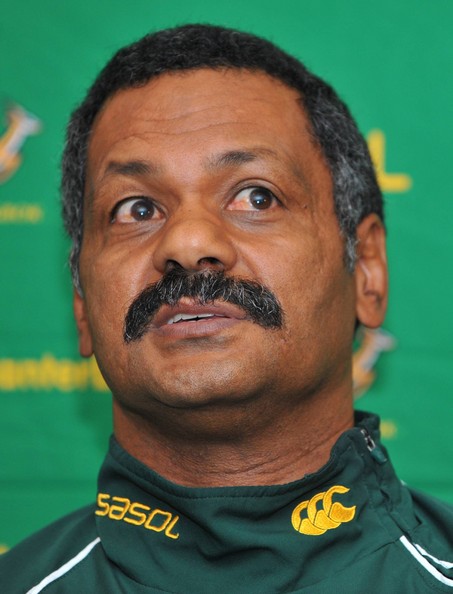
South African rugby ‘too white’, says former Springbok coach

Peter de Villiers

By making the Springbok team too white, black South Africans were being alienated from the sport and the team, which was divisive for the country, former Springbok coach Peter de Villiers said in an internet radio interview.

“We have to know what country we’re living in, and at the moment we’re turning a lot of black people against us by making the team white,” he told Ballz Radio earlier this week.

De Villiers did not want to comment on the Springbok team’s recent performance, as he said he had not watched the team lose their match against the All Blacks 21-11 in Dunedin, New Zealand last week, Beeld reported.

“People don’t want to talk [about race], but I have to… we’re breaking up the country, and damaging a sport that we all love,” De Villiers said.

He did not want to comment on current Springbok coach Heyneke Meyer’s selections for the team, but said that the best players should be sent onto the field.

“I don’t want to comment on his team selections, but I do know that you can’t keep doing the same thing and expect different results.” – Sapa

Education, not race determines employment in South Africa – SAIRR

Educational achievement is a more important indicator of why people are employed rather than race, the SA Institute of Race Relations (Sairr) said on Wednesday.

“The proportion of people by race in professional positions closely mirrors the proportion of people by race with professional qualifications,” said research manager Lucy Holborn in a statement.

The data challenged the view that South African employers were resisting racial transformation in the workplace.

According to the data, there were about 41 percent of black people with degrees and there were 36 percent of blacks in professional positions.

There were 45 percent of white people with degrees or higher qualifications and there were 42 percent of them in professional positions.

“While a degree of racial prejudice exists in all societies, the data suggests that educational achievement will determine the pace of future employment equity progress in South Africa,” she said.

Sairr sourced information from Statistics SA and the Commission for Employment Equity.

FW de Klerk pontificates on inequality and our ‘catastrophic education system’

FW de Klerk, former President of South Africa

The outcome of the ANC’s elective conference in Mangaung at the end of the year could have a big effect on South Africa’s future, former president FW de Klerk said on Thursday.

“I do think the choice of leadership in this December can positively or negatively effect our future in the short and the medium term,” he said, speaking at a Cape Town Press Club memorial dinner.

It was important that African National Congress members attending the conference acted in the interests of the country, and not individuals.

“Therefore I think it’s important that, in the context of a party structure, that the conference goers take good account of what is in the best interests not of person A or person B, but what is in the best interests of South Africa.”

De Klerk called for a return to the spirit of seeking reconciliation that prevailed in the country in the years immediately after 1994.

“How can we rise above grabbing and looking for positions and filling your pockets?”

South Africa needed political leaders who could serve communities and “put their hands and their heads together in ensuring we tackle the challenges we face”.

Responding to a question on whether South Africa should not be promoting itself with a massive international “road show”, De Klerk said investors had been frightened by what they had seen happening in South Africa over the past 18 months.

“What has happened at Marikana will make a joke of any road show,” he said, referring to the shooting dead of 34 striking mineworkers by police in North West on August 16.

They were also put off by reports of corruption.

“Investors are put off by factual accounts of the unbridled corruption that is taking place in South Africa. You can’t have a road show unless your house is in order.

“We need to sell ourselves, but we need to get the product right [first].”

Earlier, De Klerk, who turned 76 in March this year, said the main inequality divide in South Africa was no longer between blacks and whites, but between unionised and employed workers on the one hand, and unemployed on the other.

“It is a divide that lies at the heart of our inequality challenge.”

It was also a divide “that the Congress of SA Trade Unions is determined to defend by vigorously opposing any efforts to make the labour market more flexible”.

Another principal cause of inequality was the “catastrophic failure of our education system”.

A total of 60 percent of those who left school did so without a matric, and those who passed matric did so with an average mark of less than 40 percent.

De Klerk criticised the ruling party’s affirmative action and black economic empowerment policies.

“In the face of increasing national inequality, there is good reason to conclude that the government’s affirmative action and BEE policies have failed to address inequality, and might even have aggravated it.

“This is because most affirmative action and BEE occur in the top 10 to 15 percent of the income pyramid and have little or no impact on the bottom 85 percent of our society.

De Klerk, who served as South Africa’s last apartheid president from 1989 to 1994, called for these policies to be abandoned.

“Shift the accent in affirmative action programmes from race to relative disadvantage,” he said.

He also offered recommendations for the promotion of equality, including a more flexible labour dispensation, accelerated economic growth, and the rooting out of corruption, among others.

– Sapa

‘Black aspiration and white fear causing tension in South Africa’

Much patience is needed for South Africa to develop social cohesion, black church leader Reverend Frank Chikane said in Kliptown, Soweto on Thursday.

“We need to be ready to listen to each other,” he said during a report back from commissions at the national social cohesion summit.

“To build social cohesion and a common nation, a national identity is needed.”

Chikane, former director general in the presidency, was reporting back on the commission which dealt with prejudice and discrimination.

He said it was a difficult commission. High levels of sensitivity and humility were needed.

“We need to listen to each other… We must also listen when people speak in strange tongues.”

The two-day summit, organised by the department of arts and culture, broke up into five commissions on Thursday. Language was a recurring theme in each commission.

Wits University Professor Yunus Ballim, reporting back from the commission on economic inequalities, said South Africa needed to develop a shared discourse.

“Just to have the ability to greet each other in an African language or say goodbye in an African language.”

It was embarrassing that many people could not do that after 18-years of democracy.

Social historian Luli Callinicos said minority groups had done very little to try learn an African language.

“Our own culture is being undermined… We need to restore ubuntu,” she said. “Because this is something we can teach the rest of the world. We must be careful not to lose it.”

Callinicos was part of the commission on social interaction, co-operation and solidarity. Poverty and inequality added to the lack of social cohesion.

“Cohesion, if you are deprived, is going to be very difficult,” she said.

People in most of the commissions also called for a public dialogue and said the development of social cohesion started at a local level and needed to be ongoing.

Former ambassador to France and jazz legend Hugh Masekela’s sister Barbara Masekela said the relevance of the Constitution should not be set aside only for when needed but should be used in people’s daily lives.

This was part of the commission on national identity and unity.

Chikane said delegates questioned the Constitution.

“There were questions about the foundation of our new society in terms of the Constitution,” he said.

He said there were good structures and institutions but they were not doing enough to develop social cohesion.

Another commission on special divisions focused on the issue of land.

Leonard Martin, who reported back, said there was an urgent need for a land audit because of the persistent problem of “landlessness”.

He said land had caused great tension in South Africa. There was “black aspiration and white fear”.

He said the commission urged people to build a unified country.

“Build a South Africa that belongs to all.”

Martin said there needed to be robust and honest discussions about South Africa’s past. – Sapa