Mandela makes ‘dramatic’ progress

Nelson Mandela
Nelson Mandela

Nelson Mandela has made “dramatic progress,” and may be going home “anytime soon,” said his daughter Zindzi on the eve of his 95th birthday.

“I visited him yesterday and he was watching television with headphones,” said Zindzi Mandela in an interview with Britain’s Sky TV. “He gave us a huge smile and raised his hand … He responds with his eyes and his hands.”

Mandela is gaining “energy and strength,” said his daughter. “I should think he will be going home anytime soon.”

The latest description by Zindzi – who is one of Mandela’s daughters by his second wife, Winnie Madikizela-Mandela – is a significant improvement from court documents filed by the family earlier this month which said he was on life support and near death.

Mandela has been in a Pretoria hospital since June 8 and officials say his condition is critical but stable.

The news of the improvement in Mandela’s health will boost his supporters in South Africa and around the world who are preparing to celebrate his 95th birthday on Thursday, a day declared by the United Nations as a way to recognize the Nobel Prize winner’s contribution to reconciliation.

Interest in Nelson Mandela International Day has ignited as a result of the former South African president’s hospitalization in Pretoria and people find ways to honor his ideals.

A Johannesburg-based foundation named after Mandela and numerous other groups have asked people to volunteer 67 minutes to charity to match what they say are the 67 years that Mandela served his community. Mandela led South Africa through a tense transition from apartheid to democracy and became president in the country’s first all-race elections in 1994.

President Jacob Zuma will mark the birthday by overseeing the donation of houses to poor white families in the Pretoria area, in line with his Cabinet’s theme to commemorate Mandela’s birthday this year by focusing on food security, shelter and literacy.

In Cape Town, labor activists are holding an event at St. George’s Cathedral on Thursday, in remembrance of Mandela’s years of service and to encourage people to donate food to charity while leaving messages of support for the former leader’s family.

Mandela, who is in critical but stable condition, has been hospitalized since June 8, and hundreds of well-wishers have left prayers and messages of hope at his Johannesburg home and at the hospital where he is being treated. Legal documents have said Mandela’s breathing is machine-assisted.

The anti-apartheid leader has also inspired artists and graphic designers who celebrate his life through paintings and posters.

A group of young South African designers created a poster project to offer a global perspective of Mandela with submissions from around the world. The group whittled down 700 posters submitted by designers from more than 70 countries, to 95 for each day of Mandela’s life.

The posters will be unveiled Wednesday and a single special edition auctioned off to raise money for a proposed children’s hospital that will be named after Mandela, the group said.

“He carries across this concept of humanity and selflessness,” said Mohammed Jogie, co-founder of the project.

South African artists John Adams and Paul Blomkamp have painted two of the largest Mandela paintings to honor the man who spent 27 years imprisoned during the system of white minority rule known as apartheid.

Blomkamp said his painting was inspired by Mandela’s energy, which he described as exceptional. Blomkamp said an image of his painting will be featured in a display in New York’s Times Square Thursday in honor of Mandela’s birthday. SAPA/AP

Mbeki: Mandela will be home soon

mandelahomesoonFormer president Thabo Mbeki says he believes Nelson Mandela will be sent home soon to recuperate, reports Eyewitness News.

Thabo Mbeki said he knew the ailing elder statesman’s doctors and that they were doing an excellent job, the station reported.

He was speaking at a memorial lecture for former ANC president Zaccheus Mahabane on Saturday.

Mandela spent his 37th day in the Mediclinic Heart Hospital in Pretoria on Sunday. He was admitted on June 8 due to a recurring lung infection.

Last week, the presidency said Mandela was responding to treatment but was still in a critical but stable condition.

Meanwhile, visitors outside the hospital on Sunday said they were there to teach Mandela’s legacy and be part of history.

Knowing Madiba
Spruitview resident Vusumzi Makalima brought his four children to the hospital to teach them about Mandela.

“The kids wanted to know where Madiba was … what he did, and why he was in prison,” he said.

“I wanted to teach them about what he did for the country, and show them where he was hospitalised.”

He said the visit was about teaching Mandela’s legacy to his children so they would not forget.

Another Johannesburg resident also visited to be a part of history.

“This will go down in the history books and I wanted to be a part of history,” said Joel Mdantshe.

“Mandela will be a man in the history books that will not be forgotten.”

Mdantshe and his friends posed for pictures at the shrine and said they would keep the pictures safe to remember that they visited the hospital where Mandela was.

“Even if we can’t see him, we will remember that we were here, so close to him, just the building standing between us and Tata,” said Mdantshe. – Sapa

Balloons, flowers, flags for Mandela

Cards and flowers for Nelson Mandela outside the Mediclinic Heart Hospital in Pretoria

Colourful balloons, flower baskets, and South African flags were among the items left outside the Medi-Clinic Heart Hospital in Pretoria where former president Nelson Mandela remains in a critical condition.

People continued to visit the Celliers Street wall on Sunday, and posed for pictures in front of it.

The shrine of messages continued to grow, with organisations also adding their words of support. One get well poster was from the Pretoria Magistrate’s Court and another from the University of the Free State.

White media marquees lined the street, and journalists took shelter from the heat while keeping a close watch. Police continued to monitor the hospital entrance.

Sunday marked Mandela’s 37th day in hospital. He was admitted on June 8 with a recurring lung infection.

The Presidency said last week that he remained in a critical but stable condition. – Sapa

How should we respond to calls for white genocide?

roodt_fbfoto

by Dan Roodt

[followbutton username=’danroodt’ count=’true’ lang=’en’ theme=’light’]

Like Dan Roodt’s Facebook page

This week on Twitter a former UKZN student representative council member, Sfiso “Mabhiza” Mbatha, tweeted: “We gonna kill every white cockcroach that breath(es) SA’s air”, while adding, “Would rape every 13yr old white girl after Mandela finally kick that bucket. Just for control.”

These tweets caused a lot of reaction, but no official complaints were laid. If any such statement were made about blacks, it would have provoked a far larger furore. The tweeter would have been charged with hate speech at the SA Human Rights Commission and MSM journalists would have “shamed” him with negative publicity about his “racism”.

As Mbatha explained afterwards, he thought it was something of a joke: “It was just a joke at the end of the day. But now I realise that they were uncalled for, they went overboard and pushed the limit. I did say that I was joking, but people responded by insulting me, so I insulted them back.”

A large number of whites did not react at all. This is typical of so-called “advanced groups” all over the world who almost expect to be resented and even hated by the less successful groups. The well-known ethnic expert and author of the book, Ethnic goups in conflict, David Horowitz, distinguishes between “advanced groups” and “backward groups”. I think it would be fair to say that South African whites fit the definition of an “advanced group” and therefore typically react like one. Advanced groups are more educated, entrepreneurial and occupy the higher social classes in an ethnically divided society. As Horowitz explains:

“Where backward groups seek proportionality in government employment, advanced groups seek only assurances of nondiscrimination. Where backward groups attempt to keep ethnic strangers from government service in their region, advanced groups affirm the principle of unrestricted mobility.”

Advanced groups are reluctant to secede if they find themselves living in diaspora in a “backward territory”. Significantly, Horowitz notes that advanced groups are “disproportionately victims of ethnic violence”. South Africa’s brutal farm murders are a case in point, targeting a specific language and racial group that is perceived to be in a better socio-economic position than the surrounding “backward” population.

If we are honest, we should admit that some form of white genocide or anti-white violence has always been at the core of the ANC’s “liberation strategy”. The ANC is essentially composed of elites identifying with the less successful ethnic groups in South Africa. It is therefore normal that, according to the laws of ethnic conflict, it should heap opprobium onto whites which it perceives as “the enemy” and responsible for the relative deprivation of South African blacks. It is also telling that the principle of proportional employment has been implemented, not only in the public sector, but also in the private sector in a clear attempt to curtail white social and economic prowess.

However, it would be too simplistic to transpose Horowitz’s theory of ethnic conflict onto South Africa as one might onto Nigeria, Sri Lanka or Malaysia. In addition to the ethnic dynamic at work in the South African conflict, there is also the ideological dimension in the form of political correctness, Western decadence and generalised anti-white attitudes to be found in the global mainstream media.

Against this backdrop, calls for a white genocide in South Africa seem almost normal or normalised. Foreign correspondents in Johannesburg from the BBC, the New York Times and the London Guardian who have been casting whites in the role of evil racists for years, are likely to report on anti-white animus among blacks with “understanding”. In the light of the aforegoing narrative, these correspondents might suggest: who can blame them?

White South African liberals and leftists who are loyal to Britain and share left-wing Anglo-American perspectives on their own countrymen, take an equally sanguine view of such manifestations of anti-white “racism”. Liberal Britons are indifferent to the killing of whites in South Africa, if not supportive of any would-be black genocidaires. I once spoke to an official from a London NGO who explained to me that we should not complain about being killed by blacks as “they were only getting their own back”, as if white leaders in the past had proceeded to similar public appeals to “exterminate the kaffirs”!

As we saw during the court case around Julius Malema’s “hate speech” against Afrikaner farmers, there was little media sympathy for white victims of ethnic and racial violence. Even though Malema was prohibited from singing the song, “Kill a Boer, kill a farmer”, the song kept on being sung all over the country. In fact, the governing ANC opposed the legal prohibition of the song, with its advocate Gilbert Marcus, brother of Reserve Bank governor Gill Marcus, arguing for the party’s “freedom of speech”. Singing such songs were part of “black culture”.

It may be, therefore, that calls for white genocide in South Africa are examples of the “free speech” that Marcus and many other leftists and liberals would argue are “harmless” and “not to be taken literally”. In the words of the young black tweeter from Natal, Sfiso “Mabhiza” Mbatha, it is “just a joke at the end of the day”.

It is also true that black Africans often joke about killing. “I’m going to kill you,” is quite an everyday saying. Also, killing is invoked many a time as a universal method of meting out justice for all sorts of crimes and misdemeanours.

However, as the saying goes, “many a true word is spoken in jest”. Robert Mugabe is one of the most admired black leaders in South Africa and there is no doubt that his “final solution to the white problem” by simply confiscating their assets and expelling most of the white population, would also be wildly popular in this country. There not being another country south of South Africa towards which whites could flee, a broad desire “to get rid of whites once and for all” could lead to widespread killing, massacres or even systemic genocide of the kind hinted at in “jocular” black tweets.

How then should we answer my initial question in the title above: “How should we respond to calls for white genocide?” I think there would be at least two approaches. The one would be a kind of laissez faire approach in line with leftist white responses of “not taking it literally”. That would also constitute the most typical reaction of Horowitz’s “advanced group” that sees its salvation not in mass mobilisation and ethnic agitation, but in avoiding conflict – or at worst, moving away from it. The most common reaction of whites after escaping from an armed robbery, farm attack or other form of black-on-white violence is not to join the local chapter of the AWB’s Ystergarde (Iron Guard), but to call an Australian immigration consultant.

I have just had a visit from a friend who had recently emigrated to Australia. He misses South Africa, family and friends, especially the warmth and hospitality of Afrikaners. But he does not contemplate ever returning to South Africa, because, as he put it: “I feel safe in Australia. I would be scared to live in South Africa again.”

Many whites simply ignore ethnic slogans directed at them. I once listened to a talk show on the Afrikaans radio RSG where many of the callers stated quite frankly that they had adopted a kind of ostrich-like, head-in-the-sand approach. They would simply avoid reading newspapers and websites or even listening to the news on radio because it upsets them. They choose not to know. The average white professional woman or housewife shopping at Woolworths does not care either that the chain has an anti-white employment policy. She buys the fantasy of eating well, dressing well and decorating her home in the latest mix of white and earthy, African colours.

Ever since my Afrikaans high school days, I have often heard the typical injunction from teachers and many others: “Don’t be so negative!” Within the Afrikaner mind, every problem has a solution and “being negative” is a cardinal sin. In that sense, what can be more “negative” than imputing genocidal urges to South Africa’s black majority? Or even responding to a call for white genocide that is made every so often by some tweeter or black politician?

Among my many criticisms of the Afrikaans schooling system, although one of the best in the world for churning out straight-A students in maths and science, or good writers, artists, actors and so on, is that it does not teach one the art of critical thinking. Disagreeing with someone, especially publicly, is often seen as “bad manners” or even worse, as displaying that nefarious “negative” attitude. Often I have sat in meetings with especially elderly Afrikaners who used to occupy positions of authority in the old system and, upon voicing my disagreement on some point, they would simply ignore me as if they had not heard me!

Similarly, many Afrikaners out there, including the editors of newspapers, radio stations and pay-TV channels, are “simply not hearing” any call for white genocide. Call it denial or what you will, but just as their culture predisposes blacks to easily talking about killing, local white culture tends to make them hard of hearing.

We have been educated and programmed to be decent, cooperative, “positive” in Afrikaans parlance, so behave like a typical “advanced” ethnic group, eschewing ethnic solidarity in the face of danger.

However, there is one “advanced” group, probably due to past experience, that does not take calls for genocide lying down. Here I am referring, of course, to Jews. South African Jews enjoy arguably the highest standard of living of any ethnic group in the world and a perusal of the weekly South African Jewish Report will tell you about their huge socio-economic success, as well as media and political influence.

Unlike such dreadful appeals directed against Afrikaners and Boers, no-one in South Africa has ever called for the extermination of Jews. In fact, South Africa’s much-maligned National Party government was probably responsible for the good relations not only between Jews and the rest of the white population, but also between Jews and South African Muslims.

To my surprise, I recently discovered the construction site of Johannesburg’s Holocaust Centre, with another one having been in existence in Cape Town for some years already. These centres, apart from educating the public about the history of Jewish persecution, tend to preach tolerance towards Jews and between ethnic groups generally.

There is also the international Anti-Defamation League which, according to one of its own documents, “fights anti-Semitism and all forms of bigotry, defends democratic ideals and protects civil rights for all,” doing so through “information, education, legislation, and advocacy”.

I can only imagine the international outcry, notably from Germany, that would ensue if any South African black leader had to start singing “freedom songs” about “Kill a Jew, kill a plutocrat”. Charges of hate speech would immediately be laid against the offender and he would become persona non grata in many quarters. I doubt very much whether anyone at the Johannesburg Bar, least of all Gilbert Marcus SC, would defend his “freedom of speech” and colourful metaphors.

The so-called South African Human Rights Commission is a suspect body, in itself prone to anti-white sentiment. It was created to harass whites, not to uphold their rights. As far as I know, it has never responded to complaints about anti-white hate speech, apart from acknowledging the receipt of such a complaint. For that reason, many Afrikaner groups do not even comtemplate complaining to the SAHRC about calls for white genocide.

But if we are looking for models to deal with the growing chorus calling for a white genocide in South Africa, we could do worse than to imitate the Jewish community. Either one lets these comments and invocations to kill whites slide, like the ostriches that we are, or one should draw a line and respond to each and every one of them. Even if the SA Human Rights Commission will do nothing to stop hate speech against whites, the mere fact of documenting such complaints might come in handy at some later point when our struggle for survival gets even more intense than it already is.

The current mayor of Chicago, Rahm Emanuel, made a bizarre statement in 1992 when he said: “Gays are the next Jews of fundraising.” Many people have recently quoted this.phrase to point out the vast support for Obama’s Democrats among US gays.

But in a more fundamental sense, I think we could say that Afrikaners – and by extension white South Africans – are “the next Jews”. We are already subject to vicious propaganda campaigns, vilification, hostile media reports, legal and official discrimination, stereotyping and random ethnic attacks, even pogroms.

Our famous Afrikaner poet, N.P. van Wyk Louw, once wrote: “If the Afrikaner had to lose political power in South Africa, he would be as helpless as the Jew in Nazi Germany.”

Recent history has vindicated Louw. It is high time that, while we are being treated like Jews in Czarist Russia, we should respond like modern Jews who not only react vehemently against any suggestion of genocide, but also preempt it through, in the words of the Anti-Defamation League: “information, education, legislation, and advocacy”.

[followbutton username=’danroodt’ count=’true’ lang=’en’ theme=’light’]

Like Dan Roodt’s Facebook page

‘Life’ in the new South Africa: where people die at 49

Kevin_Kingby Kevin King

[followbutton username=’djkevking’ count=’true’ lang=’en’ theme=’light’]

Ever heard of the saying “life is short”? Actually, life is the longest thing that you or I will ever have. But that’s life on a personal level. If you’re South African, life is a whole lot shorter compared to the world average. When Madiba read out his “Better life for all” speech, I’m 100% sure that “better” did not imply shorter!

Life expectancy in the new South Africa has plummeted to a shocking 49 years. To put that in perspective, the life expectancy in Europe during the middle ages was around 30. And with the current downward trend, we could get even closer to that figure. We are currently ranked 210 out of 226 countries. The bottom 40 places consist mostly of African states of which we are in the lower half. Of the six countries which hold up the bottom of the list, four are neighbouring countries namely Swaziland, Zambia, Lesotho and Mozambique. In a war-ridden country such as Iraq, you can expect to live 20 years longer than in South Africa! Much further up the list are notables such as the USA (78 yrs), UK (79 yrs), New Zealand (80 yrs), Australia (81 yrs) and Japan (82 yrs).

So how on earth does our self-proclaimed “Capital of Africa” end up with a life expectancy of 49, 210th in the world and one of the worst fairing African states?

Pre-1994

At the start of the apartheid in 1948, the average life expectancy of African (black) South Africans was only 38. At the time there were close on eight million black South Africans. During the 46 years of apartheid, the average life expectancy rose significantly to 64 years. This increase was evident by the growth of the black population which was then estimated at just over 35 million.

Post-1994

Since the fall of apartheid, 17 years ago, the average life expectancy of a South African has dropped considerably from above 65 years to 49, a shameful number for a country that can afford billions to host world cups. There are a number of factors which contributed in our current state of shame but let’s have a look at the main ones:

1. HIV/Aids – The ruling party’s policies, under Mbeki, regarding Aids is said to have resulted in millions of deaths which have occurred and which are still to occur in the next decade. It has also contributed to the high rate of TB fatalities with are in most cases Aids-related.

2. Hospitals – Many of our hospitals have become places of dying instead of places of healing due to the lack of competent nursing staff and the lack of qualified doctors and nurses.

3. High crime rate – About 50 South Africans are murdered PER DAY which means about 20 000 people a year.

4. Lack of drinking water – Although water is plentiful, more than 80% of families do not have access to adequate drinking water. It is said that by 2015, more than 80% of our water resources will be undrinkable. This contributes to unhygienic conditions, sickness and disease.

5. Poverty – Unemployment is sitting at about 25%. Most of these people cannot afford food and do not have houses over their heads. Some who are employed don’t even get paid eg Aurora.

a) Any ideas on how to improve the life expectancy of our countrymen to an acceptable level, say above 75?

b) How long will this take?

[followbutton username=’djkevking’ count=’true’ lang=’en’ theme=’light’]

CNN denies exclusive deal to broadcast Mandela’s funeral

CNNAmerican broadcaster CNN flatly denies any involvement with a rumored deal between Nelson Mandela’s relatives and the company over exclusive rights to broadcast possible future funeral of the first South African black president.

“There is absolutely no truth to the allegation that CNN has bought the rights to the Mandela funeral,” a company spokesperson said.

Earlier South Africa’s The Sunday Independent reported that Mandela’s family claimed CNN had “preferential” access to the funeral ceremony of the former South African leader.

Nelson Mandela, 94, remains in a critical but stable condition in hospital.

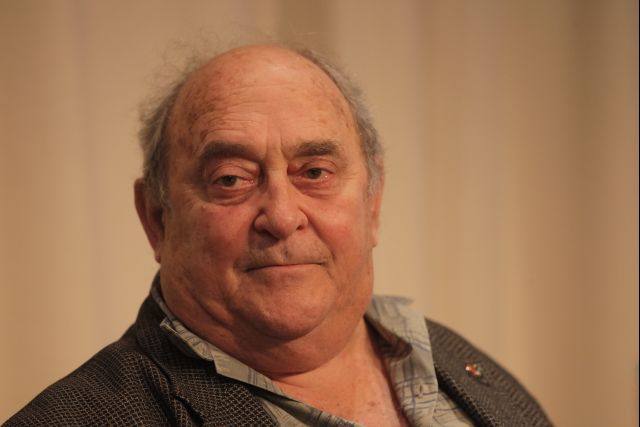
‘Our Rivonia trial lit the flame of revolution’: Denis Goldberg

Denis Goldberg
Denis Goldberg

Three silver-haired men sat together and recalled a court case 50 years ago that rocketed their friend and fellow freedom fighter to fame. To one man in the group that friend is simply “Nel.”

To the rest of the world he is Nelson Mandela, Nobel Peace Prize winner, South Africa’s former president, and a man who spent 27 years in jail for a cause he told a court in 1964 that he was prepared to die for.

Mandela, hospitalized since June 8, remains in critical condition. A grandson, Ndaba Mandela, said Tuesday that his grandfather is “very much alive” and responds when spoken to, though he is on life support in the form of mechanical ventilation. Mandela turns 95 on July 18.

Thursday marks the 50th anniversary of an event known in South African history as the Raid on Liliesleaf, a simple home in a Johannesburg suburb of Rivonia that served as the nerve center of activists seeking to overturn the white racist rule of South Africa’s apartheid era. Those arrested in the raid were charged with sabotage. Mandela had already been convicted of separate charges and was later tried and sentenced with those from Liliesleaf.

Denis Goldberg, 80, was one of the grey-haired men recalling the raid at a memorial for the event Monday evening. South Africa’s apartheid government, playing Cold War politics to win U.S. support, labeled those arrested as terrorists and communists. But Goldberg said the trial allowed those prosecuted in what became known as the Rivonia Trial to get their anti-apartheid views out to the public.

“It was a failed revolution at the time, but it was the spark that lit the flame,” said Bob Hepple, who was arrested at Liliesleaf but fled to England and did not face trial. “It’s great having a vision of freedom but you have to act to get freedom. It doesn’t fall from the trees.”

Mandela had previously traveled to Algeria to receive training for guerrilla warfare – violence that he never personally carried out but a strategy that he determined should be pursued by the African National Congress.

Writings discovered by the apartheid police in the Liliesleaf raid showed that Mandela had carefully pondered and endorsed the use of violence against apartheid.

“This was a thinking man. This was not a hot-headed leader,” Goldberg said.

Goldberg is one of the select few family members and friends who have visited Mandela since he was hospitalized June 8. Goldberg’s words last week that Mandela was conscious and responsive came in contradiction to papers filed in a Mandela family court case that described the former president as being in a vegetative state.

Goldberg and two contemporaries were invited to see Mandela by Graca Michel, Mandela’s wife. Goldberg said that Graca sat the three down and told them what she thought they should know about Mandela’s condition.

Goldberg retains the liberal feistiness that would have been required for a white man fighting for freedom for his black countrymen in the 1960s. He told Machel he would share the information about Mandela with the world. “I fought for democracy and I’m going to speak out,” he said.

“And Graca Machel said, ‘Yes, do that,'” Goldberg said.

Goldberg said it’s sad to see an old friend – once a strong physical presence – lying in bed “with a tube down his throat.” Mandela, he said, never addressed him by name. Goldberg is 15 years younger than the former president.

“For me he’s Nel and I’m boy,” Goldberg said. – AP

Is Mandela God?

mandela_zapiro

by Albert Brenner

It is always so amusing to witness mere mortals turning another mortal into a god. The MSM is ablaze, in awe prostrated… rapturously conveying the frenzied idolization, the unfolding living-liturgy and imminent deification of a mortal called Mandela.“He is alive in us!““He is the paragon of Love and Grace!““We must all be a Mandela“.

“He died in Robben Island but was resurrected to make the Miracle of the Rainbow Nation come true“.

Holy moly!

Mandela`s inevitable communion with the Choir Eternal is being heralded in with such bellicose abandonment that one already dreads the brewing stupefaction set to follow in its wake, 2000 years from now.

Did He really walk on water, all the way from Robben Island to Tuin Huis? Did He really ascend to the top of Mount Table to write the Holy Constitution Script and perform the We-Are-Oneness Miracle upon His return? Did He really take one million fish and divide them into 16 million portions equal in size to the original million? Did He really soar smilingly undead into the Heavens in a silver gull-wing Mercedes SLK drawn by four golden Qunu goats?

That is was a boat, Realpolitik, social welfare grants and a hearse will be irrelevant then. For the peddling of Guilt has always been the most profitable profession in History. Money certainly makes the moral world go round.

Just, for example, ask Charlemagne – whose Economic Empowerment of the Franks through the `Christianizing` subjugation of the Saxons, made him and his cronies incredibly rich and famous. All in the name of the Catholic Pope…just like Zuma, Sexwale, Ramaphosa and ilk do in the `Secular-Humanizing` name of Mandela.

Or the Mandela daughters, with their fake hair, clothing range, wine brand and `Being Mandela` reality show in America. Or instant-billionnaire Al Gore, with his dystopian anthropogenic Global Warming nonsense.

It is all so darn easy. All you have to do is clothe the ever-recurring memes sustaining religiosity in the moral garments of the new Religion… and then flaunt them shamelessly, like a drag queen at a Gay Pride parade.

In our Zeitgeist, Human Rights have become the new 10 Commandments, Apartheid the new Original Sin, the (CO2-free) Rainbow Nation the new Heaven, `racism` the new heresy, political-incorrectness the new blasphemy, the South African Human Rights Council (SAHRC) the new Inquisition Tribunal and the heterosexual Afrikaner male the new Devil.

As Nietzsche said, nothing changes, except change itself. But then, who can blame the perennially weak of mind? The Sleep of Reason calls forth monsters. And who better to protect them against that Monster they dread the most, their own mortality, than a man of flesh…who became God.

Quiet at Mandela hospital

Medi-Clinic Heart Hospital in Pretoria

There was little movement on Sunday morning outside the Medi-Clinic Heart Hospital in Pretoria where former president Nelson Mandela is being treated.

Passersby took cellphone pictures and read messages supporting the ailing statesman.

In a hand-made card, Minewa Hu from Toronto in Canada said the world was indebted to Mandela.

“The world is indebted to your lifelong struggle for social justice. I was moved to see my city’s declaration of your honorary citizenship in our municipality hanging in your former home in Soweto.”

Hu said there were many letters at Mandela’s home from other governments welcoming him as their own.

“You, sir, have lived a life of exemplifying courage, resilience and optimism.”

Mandela was admitted at the hospital for a recurring lung infection on June 8. He is in a critical but stable condition. – Sapa

When will Mandela’s life support be switched off?

Doctors have advised Nelson Mandela’s family that his life support should be switched off – and they are considering this to avoid prolonging his suffering.

But the statesman will not die a dignified death unless he is buried near the remains of two of his sons and a granddaughter in Qunu.

This emerged in the Mthatha High Court on Wednesday, where Judge Lusindiso Pakade ordered that the remains be exhumed from Mveza and returned to Qunu.

In an affidavit handed to the court, Mandela’s eldest daughter Makaziwe Mandela said: “Mr Nelson Mandela’s health is perilous. He is… assisted in breathing by a life-support machine.

“The family has been advised by the medical practitioners that his life support machine should be switched off. Rather than prolonging his suffering, the Mandela family is exploring this option as a very real probability.

“Mr Mandela is incapacitated and unable to approach the court in his own name.”

However, she said, Mandela would not die a dignified death unless he was buried alongside the remains of two sons and a granddaughter at the family homestead in Qunu.

They were named in court papers as sons Makgatho Mandela, Mandla Mandela’s father, who died in 2005; Madiba Thembekile Mandela, who died in 1969, while Mandela was still on Robben Island; and his granddaughter Makaziwe Mandela.

It had earlier been reported that Makaziwe was Mandela’s infant daughter, who died in 1948.

The affidavit said: “The applicants do not want a situation to be created in which Mr Nelson Mandela’s remains are committed to lie in a burial site, entirely alone and forlorn and absent from those remains of his children and grandchild.”

“It has always been the desire of Mr Nelson Mandela for his remains to be buried at his family’s homestead in Qunu near Mthatha, Eastern Cape.

“The applicants are desirous of burying their father and committing him to the earth in which his descendant’s remains lie. It’s incontestable that these are the wishes of Mr Nelson Mandela. But because Mandela’s grandson, Mandla, had removed the remains of the three relatives and reburied them at his homestead in Mvezo, Mandela could not be laid to rest with them, she said.

Mandla had been refusing to return their remains to the gravesite in Qunu, which is being prepared for Mandela’s burial, she said.

She accused Mandla of trying to gain from Mandela’s death.

She said he had dug up the remains of three relatives in a moment of anger towards the rest of the Mandela family. The relationship between Mandla and the rest of the Mandela family had become “strained in recent times”.

Breaking open the gates to the graves

Mandla felt “alienated” from the family and had secretly removed the remains in the dead of the night, her affidavit read.

She said Mandla had hoped that, because he had reburied the relatives’ remains at his homestead in Mvezo, Nelson Mandela would also be buried at Mvezo. “It would appear that the first respondent (Mandla) desires that Mr Nelson Mandela be interred in his land, at The Great Place, Mvezo, for self-serving interests. By controlling the area in which these descendants remains are buried, he expects that the remains of Nelson Mandela will soon follow.”

Makaziwe also spoke of how the family was preparing for the day of Madiba’s death.

“The anticipation of his impending death is based on real and substantial grounds,” said Makaziwe. – Cape Argus

Mandela grave dig starts, say police

Empty graveHealth department officials started digging to find the remains of three of former president Nelson Mandela’s children in Mvezo on Wednesday, Eastern Cape police said.

“The graves are not marked, but when they find the coffins they will identify the remains,” Lt-Col Mzukisi Fatyela said.

“Police are on the scene monitoring the situation.”

Earlier in the day, the ailing icon’s grandson Mandla Mandela, who is also the Mvezo chief, lost a challenge against a court order instructing him to rebury the remains in Qunu.

Mandla exhumed the graves of the three children in 2011 and reburied their remains in Mvezo.

Mandla Mandela’s lawyer said it was illegal for the Mandela family to exhume the remains because there was no one at Mvezo to show them where the remains were, and the graves were not clearly marked.

Officials from the sheriff of the court’s office broke open a gate to Mvezo village on Wednesday afternoon to gain access to the graves. ENCA filmed an official using a pick-axe to force open the gate.

Three hearses and police vans entered the village.

They were to transport the remains of three of Mandela’s children from Mvezo, where he was born, to Qunu, where he grew up.

Mandela’s eldest surviving daughter Makaziwe Mandela and grandson Ndaba Mandela reportedly arrived at Mvezo along with the officials from the health department.

On Tuesday, criminal charges were laid against Mandla Mandela over the exhumation and reburial.

Fatyela said a case of tampering with a grave had been opened.

“The investigation started yesterday [Tuesday] after the case was opened,” he said.

Fatyela said members of the Mandela family laid the charge, but declined to name them.

Mandela remained critically ill on Wednesday in a Pretoria hospital, where he is being treated for a recurring lung infection. – Sapa

Mandela court decision expected today

Empty graveThe Eastern Cape High Court is expected to make a decision on Wednesday about the relocation of the graves of former president Nelson Mandela’s children.

His grandson Mandla Mandela has brought an application to set aside an order made last week compelling him to return the remains of the three children to Qunu from Mvezo, where he had them reburied two years ago.

The graves are those of Mandela’s eldest son, Mandla’s father, Makgato Mandela who died in 2005; Mandela’s first daughter Makaziwe, who died as an infant in 1948; and Mandela’s second son Madiba Thembekile, who died in a car accident in 1969.

Sixteen members of Mandela’s family want the remains exhumed on Wednesday afternoon.

Last week, the court ordered Mandla Mandela, the official head of the Madiba clan and an African National Congress MP, to return the remains to Nelson Mandela’s childhood home of Qunu, from his birthplace of Mvezo.

However the process was delayed because of an error on the court order giving him until “July 29” to move the remains instead of “June 29”.

On Tuesday, members of the Mandela family opened a case of grave tampering against Mandla Mandela at the Bityi police station. – Sapa

Mandela remains ‘critical but stable’

The Medi-clinic Heart Hospital in Pretoria

Ailing former president Nelson Mandela is still in a critical, but stable condition, the presidency said on Monday.

“We remind all South Africans to begin planning for Madiba’s birthday on 18 July,” President Jacob Zuma said in a statement.

“We must all be able to do something good for humanity on this day, in tribute to our former president.”

Zuma thanked everyone who had kept Mandela and his family in their thoughts and prayers.

The anti-apartheid icon was admitted to a Pretoria hospital on June 8 with a recurring lung infection.

When he was admitted to hospital, the presidency described his condition as serious, but stable.

However, on June 23, after Zuma and African National Congress deputy president Cyril Ramaphosa visited Mandela, the presidency announced that his condition had deteriorated.

“The condition of former president Nelson Mandela, who is still in hospital in Pretoria, has become critical,” spokesman Mac Maharaj said in a statement at the time.

He said Mandela’s doctors had told Zuma and Ramaphosa that his condition had become critical in the past 24 hours.

Zuma visited him again on Wednesday. In an official update on Thursday, the presidency said Mandela’s condition had improved, but remained critical, but stable.

After the visit, Zuma cancelled his trip to Mozambique, where he was due to attend a Southern African Development Community infrastructure investment conference.

A steady flow of family members had visited Mandela at the Medi-Clinic Heart Hospital, in Pretoria, since his admission. – Sapa

Obama warns Africa’s ‘tyrant’ leaders

Barack Obama at the University of Cape Town

US President Barack Obama warned Sunday that Africa could only fulfill its rising potential with leaders who serve their people, not tyrants who enrich themselves.

In a strident call for democratic change and good governance, Obama used the political legacy of ailing Nelson Mandela and South Africa’s emergence from years of Afrikaner rule as proof that freedom will ultimately prevail.

“In too many countries, the actions of thugs and warlords and human traffickers hold back the promise of Africa,” Obama said at a speech at Cape Town University.

“America cannot put a stop to these tragedies alone, and you don’t expect us to. That is a job for Africans. But we can help you and we will help you,” he said, announcing major new US programs to boost electricity and health care.

“History shows us that progress is only possible where governments exist to serve their people and not the other way around,” said Obama, in a line that drew loud and prolonged cheers from his audience of more than 1,000 people.

The speech was delivered from the same spot where American political icon Robert Kennedy delivered his famous “ripple of hope” speech in 1966, which called on students to decry the “racial inequality of apartheid”.

Obama’s goal was to inspire a new generation of Africans with the belief that they could ignite political change and the potential of their continent.

He slammed leaders who “steal or kill or disenfranchise voters,” saying that the ultimate lesson of South Africa was that such brutal tactics will not work.

“So long as parts of Africa continue to be ravaged by war and mayhem, opportunity and democracy cannot take root,” said Obama.

“Across the continent, there are places where still, fear often prevails,” Obama said, warning of “senseless terrorism” from Mali to Mogadishu.

“From Congo to Sudan, conflicts fester,” Obama said, hitting out at those who argue that American calls for democracy and freedom are “intrusive” or “meddling”.

He also condemned the rule of Robert Mugabe in neighbouring Zimbabwe, where he said the “promise of liberation gave way to the corruption of power and the collapse of the economy”.

Like the rest of Obama’s trip to South Africa, the speech was rich in emotion when he mentioned his hero Mandela, who lies critically ill in a Pretoria hospital.

“You have shown us how a prisoner can become president,” Obama said. – AFP