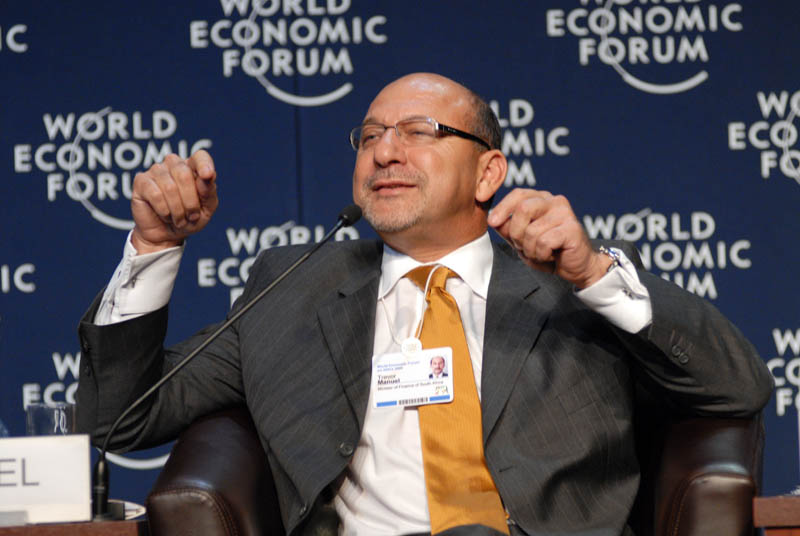
Everyone must be a Mandela: Trevor Manuel

Trevor Manuel
Trevor Manuel

Every person must remember the contribution former president Nelson Mandela has made to the country, Minister in the Presidency Trevor Manuel said on Thursday.

“I think that is what is important to remember,” he said in Johannesburg.

“We must carry forward his legacy… Everyone has to be a Nelson Mandela.”

Whatever Madiba had worked to achieve, including democracy, was a success.

Manuel said Mandela’s physical presence was only one part of it.

“We… understand that his physical presence is only one part of it… his spiritual presence [must] live on,” he said.

The elderly statesman, 94, is in a critical condition in a Pretoria hospital, where he was admitted with a recurring lung infection on June 8. – Sapa

‘Mandela needs ancestors’ help’

A sangoma's bones
A sangoma’s bones

Traditional healers in Limpopo held a ceremony at the ANC’s offices in Polokwane on Thursday to pray for former president Nelson Mandela who is critically ill in a Pretoria hospital.

African National Congress Limpopo task team chairman Falaza Mdaka said the traditional healers had asked to perform a ritual at the offices, as it was Mandela’s “home”.

Mdaka said Mandela was a special person and the world still needed him.

“We are pleading for him to continue to be with us. We understand that he is old,” he said.

Tradition healers sang struggle songs and burnt incense, calling on the ancestors to heal the country’s beloved statesman.

“Mandela needs ancestors’ help,” said one of the healers, Sylvester Hlathi.

Mandela, 94, was admitted to the Medi-Clinic Heart Hospital in Pretoria on June 8 for treatment of a recurring lung infection.

The presidency has said that his condition remains critical. – Sapa

Mandela’s family members arrive at hospital

Mandela family members

Family members arrived on Thursday at the Pretoria hospital where former president Nelson Mandela is critically-ill with a recurring lung infection.

His daughter Makaziwe Mandela arrived in a red Range Rover, entering the Medi-Clinic Heart Hospital’s Park Street gates at 10.15am.

Earlier, Democratic Alliance spokesman Mmusi Maimane arrived to place flowers and a card at a “wall of well-wishes”, which is fast running out of space.

Maimane said he wanted to express his gratitude to the anti-apartheid icon and to show support for the medical team caring for him.

“Nelson Mandela is not only the former president, the liberator. There’s an overwhelming feeling in the country when all of us think about what is happening here.

“We’ve come to relay our thoughts to the family as well,” Maimane said on his way to the Celliers Street entrance.

The Salvation Army also showed its support for the former president.

“This is a struggle of an old man who left a mark for the country; we say to him that God loves him. Lift up your head and look up to God and don’t lose hope,” said Salvation Army leader William Langa.

He and the Salvation Army choir sang and prayed outside the hospital for Mandela’s recovery.

Well-wishers of different nationalities also arrived at the hospital to place flowers and messages of hope.

“We just want to him to get better,” Spaniard Lupita Marcos, now living in South Africa, said with tears in her eyes.

On Wednesday, the presidency announced that President Jacob Zuma had cancelled a scheduled trip to Mozambique on Thursday, after visiting Mandela and finding him “still in a critical condition”.

Zuma was supposed to attend a Southern African Development Community regional summit.

He left the hospital at 10.15pm on Wednesday in a black BMW, escorted by a number of official cars with blue police lights.

Meanwhile, scores of journalists milled around outside the hospital.

Several, mainly international broadcasters, were conducting live crossings.

Numerous tents, generators, broadcasting cameras on tripods, and outside broadcast vans have become a feature on the street’s pavement since Mandela was admitted on June 8.

Tshwane metro police officers were parked nearby. Police and hospital guards continue to man the hospital’s entrances, and search cars entering the premises. – Sapa

Obama to honour slaves in Senegal

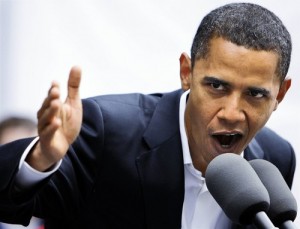
Barack ObamaAmerica’s first black president Barack Obama will acknowledge the historic stain of slavery and honour Senegal’s democratic resilience in an unstable region Thursday, at the start of an African tour.

Obama stepped off Air Force One into the African night late Wednesday in Dakar to launch a three-nation trip designed to fulfil neglected expectations for his presidency on a continent where he has deep ancestral roots.

But his itinerary, which also takes in South Africa and Tanzania, threatens to be disrupted as life apparently ebbs from Nelson Mandela, the anti-apartheid icon who is gravely ill in a Pretoria hospital.

Should Mandela die before Obama lands in South Africa on Friday, aides may be forced to tear up plans to visit Johannesburg and Cape Town. As it stands, the ex-South African president’s plight is already overshadowing Obama’s trip.

On Thursday, Obama will begin his day with talks and a press conference with Senegal President Macky Sall. Then he will discuss the importance of the rule of law at Senegal’s Supreme Court.

A ‘full circle’ moment then beckons as Obama, the son of a Kenyan, and his wife Michelle, the descendent of slaves, will pay a visit to Goree Island, a memorial to Africans swept up in the Atlantic slave trade.

Obama will journey by ferry to the island’s Slave House museum, off the Senegal coast, which epitomises a dark period of American and African history resonating on both sides of the Atlantic to this day.

“There’s this link between Obama, an American originating from Africa through his father, and his wife, an African-American originating from Africa through her ancestors,” said House of Slaves curator Eloi Coly.

“I think with all these ingredients gathered together, this visit by the Obamas should be very special.”

White House spokesman Jay Carney said that the visit would be an important moment for Obama.

“A visit like this by an American President, any American President, is powerful,” he told reporters.

“I think that will be the case when President Obama visits and I’m sure particularly so, given that he is African American.”

US officials are keen to highlight democracy, in Muslim majority Senegal, on the first leg of a visit focusing on francophone west Africa, the tip of the continent in South Africa, and the democratic west in Tanzania.

Obama will also likely bring up the situation in neighbouring Mali, before a UN peacekeeping force starts operations in a country where Islamists and radicals have exploited a power vacuum.

The US president’s arrival in Africa came at a delicate time as the world prepared to say a farewell to Mandela.

Napilisi Mandela, an elder in Mandela’s clan, told AFP that the former South African president was on life support, and South African President Jacob Zuma called off a scheduled trip to Mozambique.

Obama and Mandela met in 2005, when the former South African president was in Washington, and Obama was a newly elected senator, and the two have spoken several times since by telephone.

But the long awaited prospect of a public appearance between the first black presidents of South Africa and the United States is now impossible.

Obama claims a spiritual connection to Africa, but a crush of international crises in his first term thwarted his hopes to travel extensively in the continent. He did manage a short trip to Ghana in 2009.

His tour is designed to highlight Africa’s emerging economic potential and growing middle class, as well as youth and health programs, and to emphasise US engagement in a region benefiting from a wave of Chinese investment.

“We are not too late,” said Carney, pointing out that although Obama had been kept away, Vice President Joe Biden visited Africa in the first term, and there were also wide ranging diplomatic efforts by the administration on the continent.

But there has been disappointment in Africa, after Obama’s 2008 election caused euphoria and an expectation that he would put Africa policy at the top of his agenda.

There is one glaring missing stop on Obama’s itinerary: Kenya.

Officials said that the indictment of Kenyan President Uhuru Kenyatta at the International Criminal Court in The Hague, over previous election violence, made it politically impossible for Obama to stop by on this tour. – AFP

‘Gays are the next Jews’

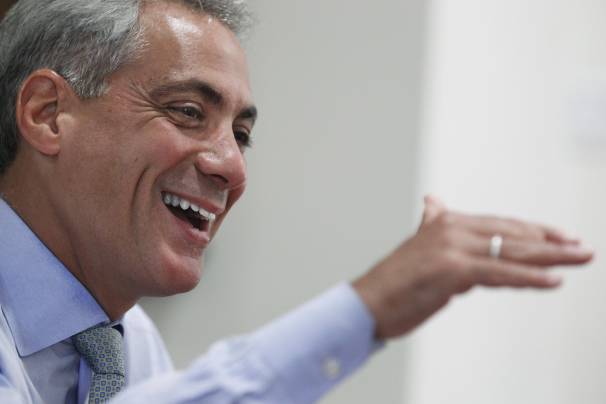
Rahm Emanuel
Rahm Emanuel

By Timothy P. Carney

While raising money for Bill Clinton (who signed the Defense of Marriage Act) in 1992, Rahm Emanuel proclaimed “Gays are the next Jews of fundraising.”


I’m not 100 percent sure what he meant by that, but Democrats have certainly grabbed onto gay issues as a fundraising lever. Democrats today are using the gay marriage ruling as a way to raise money, Paul Bedard writes.


Obama’s core network of fundraisers included many gay men and women who were also gay-marriage activists. I wrote on this after Obama spurred a fundraising boom by announcing his support for gay marriage.

“About 20 percent of Obama’s bundlers — volunteer fundraisers — are gay, according to media reports, with many of them being gay rights activists. For example, Sally Susman has raised at least $500,000 for Obama’s re-election.

Millionaire banking mogul Eugene Sepulveda is another gay half-million-dollar Obama bundler. Rufus Gifford is the finance director for Obama’s re-election campaign, and Andrew Tobias is treasurer of the Democratic National Committee — and both are gay.” – The Washington Examiner


US top court green lights gay marriage

gayokThe US Supreme Court on Wednesday struck down a central portion of a federal law that restricted the definition of marriage to opposite-sex couples in a major victory for the gay rights movement.

The ruling, on a 5-4 vote, means that legally married gay men and women are entitled to claim the same federal benefits that are available to opposite-sex married couples.

It sidestepped a broad ruling that would affect the whole country, however, by saying it could not decide a closely watched case on the constitutionality of a California law that restricts marriage to opposite-sex couples.

By finding that supporters of the ban on gay marriage did not have standing to defend the law, the court effectively gave the green light for at least some gay weddings to proceed in California because a federal judge’s original ruling that struck down the law, known as Proposition 8, will remain intact.

Justice Anthony Kennedy wrote in the majority opinion that the Defence of Marriage Act violated the US constitution’s guarantee of equal protection.

“The federal statute is invalid, for no legitimate purpose overcomes the purpose and effect to disparage and to injure those whom the state, by its marriage laws, sought to protect in personhood and dignity,” he wrote.

Justice Kennedy, often the court’s swing vote in close decisions, also said the law imposed “a stigma upon all who enter into same-sex marriages made lawful by the unquestioned authority of the states”.

Chief Justice John Roberts and Justice Antonin Scalia both wrote dissenting opinions.

In his dissent, Justice Roberts wrote that the court in the coming Proposition 8 case would not reach the issue of constitutionality of state laws that limited the definition of marriage.

By striking down section 3 of the law, the court clears the way to more than 1,100 federal benefits, rights and burdens linked to marriage status.

As a result of Wednesday’s ruling, Edith Windsor of New York, who was married to a woman and sued the government to get the federal estate tax deduction available to heterosexuals when their spouses die, will be able to claim a $363,000 tax refund. – Reuters

SA ready for nuclear

Alexander Bychkov
Alexander Bychkov

SOUTH Africa is “ready” to develop nuclear energy, an International Atomic Energy Agency (IAEA) forum held being held in St Petersburg, Russia, heard on Wednesday.

IAEA deputy director-general for nuclear energy Alexander Bychkov said he believed South Africa was “fully capable” of implementing a nuclear programme.

“There are no capacity problems in South Africa. It is a fast-growing economy. It is up to the government to decide how to implement nuclear energy. It appears interested in using the energy source to develop its people.”

Luc Oursel, CEO of French nuclear energy multinational Avera, said his company and many others in the industry globally would be interested in working with South Africa.

“South Africa is seen as a country (which) nuclear energy companies can develop long-term relationships with. Areva is awaiting a plan from South Africa. We want to know how we can play a role in the programme they develop. We want to help them to procure the necessary materials.”

Energy officials in South Africa’s government have expressed a commitment to developing nuclear energy, amid scepticism about the cost of the venture.

In April, Department of Energy director-general Nelisiwe Magubane told Parliament that South Africa’s nuclear plans were non-negotiable and were backed by the National Development Plan, which some commentators have disputed.

“The only thing(s) that we are waiting for are the procurement processes and how (they are) going to be funded,” Ms Magubane said.

In March, Deputy President Kgalema Motlanthe said a nuclear industry needed to be established in South Africa.

Ms Magubane said South Africa had to build three nuclear stations to generate a total of 9,600MW, with the first units to come on line in 2025.

Nuclear costs are rising. Given advanced, safer technologies, input costs sit at $7,000/kW compared with $5,000/kW back in 2010.

Nuclear energy stations can be expensive to build and maintain but South Africa is struggling to meet energy demand and remains heavily reliant on coal as its energy source, a National Planning Commission report found earlier this year.

If liquefied natural gas became an energy source of choice, nuclear energy could be delayed for years, while funds were diverted to developing infrastructure to mine the gas.

In addition, the proposed fracking of shale gas in the Karoo has been met with outrage over fears it would damage the environment and require lots of water. South Africa already suffers water scarcity. – bdaylive.co.za

• Anderson was invited to the IAEA international forum and Atomexpo held in St Petersburg, Russia, by Russian state nuclear energy firm Rosatom.

Golfers hope for Mandela recovery

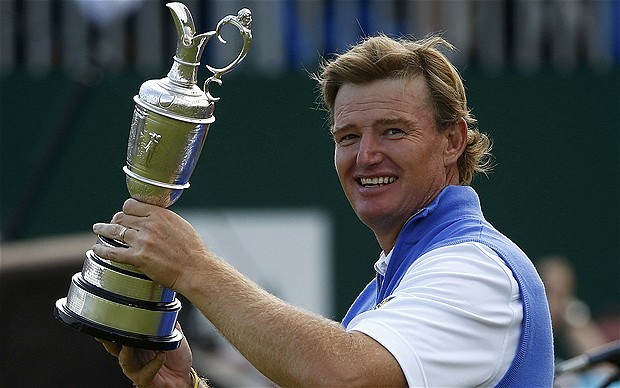
Ernie Els
Ernie Els

The Sunshine Tour’s professional golfers showed their support for ailing former president Nelson Mandela by wearing beaded South African flags during the first round of the Vodacom Origins of Golf tournament at Selborne Park Golf Club in KwaZulu-Natal.

Jean Hugo, a 13-time winner on tour sported the flag on his cap on Wednesday.

Mandela was known, over the years, to phone South Africa’s top golfers when they achieved internationally.

Shortly after he was admitted to hospital on June 8 for treatment of a recurring lung infection, South Africa’s most successful golfer post 1992, Ernie Els, said Mandela had often contacted him earlier in his career.

“When I won a lot of tournaments in the ’90s and early part of the 2000s, we spoke a lot on the telephone,” Els said in Ardmore, Pennsylvania, where he was preparing to play in the US Open.

“He always felt proud of what the sporting athletes out of South Africa did for the country, you know, winning worldwide events. He always felt very proud of that. Yeah, through that instance we had a really nice relationship.

“We’ll just — we’re hoping for the best. Whatever outcome that might be. I just want him to be well.”

Els said he had not met Mandela for a number of years, but hoped for his recovery.

“Yeah, South Africans, we’re obviously very concerned about President Mandela. He’s 94-years-old now. He’s almost on to his 95th birthday, and he’s been quite ill for a while now.

“So we’re just hoping for the best. I haven’t seen him for quite a few years now. I haven’t seen him for probably seven or eight years now. But we’ve had always a great relationship.” – Sapa

Obama’s ‘power trip’ to Africa

pylonsMr Obama is arriving in Africa this time with a few tricks up his sleeve. He will announce the creation of a new fund, Power Africa, to support the development of electricity infrastructure with a mix of state and private investment as well as initiatives to promote trade. His trip coincides with talks in Addis Ababa on renewing the Clinton era African Growth and Opportunity Act, which gave thousands of African products duty-free access to the US.

Nearly 600 million Africans face energy poverty, the in­ability to cook with modern cooking fuels and a lack of mini­mum lighting for productive activities at sunset.  This energy gap impacts a variety of health, education and economic outcomes:  Vaccines cannot be properly refrigerated, girls are pulled out of school to collect firewood, and small businesses cannot expand because of energy limitations.

As the Obama team considers a policy legacy for Africa during its second term starting in 2013, advisors believe a strong U.S. commitment to close the energy poverty gap in Africa can benefit the global economy.

With strategic interventions, the U.S. could address this energy poverty gap while at the same time create markets and increase investments for American businesses.  If the White House leverages private investment by rationalizing U.S. government tools, such as the Overseas Private Investment Corporation, and engages proactively with African environmental powers, the U.S. could make a significant contribution to accomplishing this achievable goal.

For the past couple of decades, U.S. companies have piled into Asia to reach new consumers. Now companies such as General Electric Co., General Motors Co. and Procter & Gamble Co. are expanding in the long-neglected frontier market of Africa.

GE on Friday signed an agreement to build a 400-megawatt gas-fired power plant in Tanzania. The East African country, where U.S. President Barack Obama plans to visit next week, is one of many on the continent that is seeking more electricity to meet growing demand from businesses and consumers.

Meanwhile, P&G is investing more than $150 million in its South African factories to expand the supply of its diapers and other products in southern and eastern Africa. And GM in October plans to start selling newly licensed Isuzu trucks in Kenya, Nigeria and Angola.

Until recently, most U.S. companies concentrated investment in the continent’s biggest economies, such as South Africa and Nigeria, or those with mineral wealth, like Angola. But as they seek new consumers, U.S. companies are branching out across the continent.

“People are finding that there are opportunities beyond the biggest markets in Africa, and part of it is because year-after-year growth in Africa has been stronger than on almost any other continent,” says Clay Lowery, a vice president at Rock Creek Global Advisors, an economic-policy consulting firm in Washington.

By 2018, five of the world’s fastest-growing economies will be in sub-Saharan Africa, according to the International Monetary Fund. U.S. companies invested $48.5 billion in Africa in the decade through 2011, according to the United Nations Conference on Trade and Development, more than companies from any other nation did. But China and India are catching up, pumping billions of dollars into Africa in each of the past few years.

President Obama’s visit to Senegal, South Africa and Tanzania beginning Wednesday is expected to bolster efforts to burrow into the continent’s smaller, more fragmented markets.

U.S. officials for years have urged American corporations to pursue opportunities in Africa to keep pace with the Chinese, Indian and Brazilian companies already here. On a trip to Senegal last August, then-Secretary of State Hillary Clinton touted U.S. businesses’ “sustainable partnerships in Africa that add value rather than extract it,” a thinly veiled reference to Chinese companies, which largely are focused on resource-related investments to support China’s economy.

U.S. corporations aren’t strangers to Africa. Companies including Coca-Cola Co. and Exxon Mobil Corp. have long invested on the continent and have been expanding. Since 2000, the U.S. African Growth and Opportunity Act has boosted African manufacturers, allowing them to export clothing to the U.S. duty free.

But many U.S. companies are only now waking up to Africa’s new consumer class, a byproduct of steady growth and more stable governments.

Stronger commercial relationships, some analysts say, could strengthen diplomatic ties with many African countries, as happened in China, India and elsewhere in Asia.

“We were never focused on Africa in any way,” says Witney Schneidman, a former U.S. diplomat and now a senior adviser for Africa for law firm Covington & Burling LLP. “Are corporates the agents of change?”

Africa is far from being the next Asia, however. The continent has a sixth of the world’s population but fuels less than 3% of the global economy. Africa also received less than 3% of global foreign direct investment in 2011, according to the U.N.

But the continent is growing fast from its low base. The IMF projects that sub-Saharan Africa’s economy will expand 5.6% this year, compared with 3.6% world-wide. The African Development Bank estimates that the continent’s emerging middle class may already be 300 million strong. – FT/WSJ/Brookings


Orders for ‘racist’ Paula Deen cookbook surge

Paula Deen
Paula Deen

Advance orders for Paula Deen’s new cookbook have surged since the Food Network and Smithfield Foods axed her for using a racial slur.

Orders for “Paula Deen’s New Testament: 250 Favorite Recipes, All Lightened Up” surged on Amazon by nearly 1,300% in the last 24 hours.

The cookbook was ranked 115th on Tuesday, compared to a ranking of 1,592nd on Monday

“Paula Deen’s New Testament” is not available until October. Deen’s agent did not immediately return a message from CNNMoney about the book sales.

Scripps Networks Interactive’s Food Network announced June 21 that it would not renew Deen’s contract after reports emerged that she admitted, during a court deposition in May, using racial slurs.

“Yes, of course,” said Deen, when asked by a lawyer if she had ever used the “N word.”

Deen’s television contract expires at the end of June.

Pork producer and former Deen sponsor Smithfield Foods cut its ties on Monday. – CNNMoney

Big lesson: Bad losers still have the race card

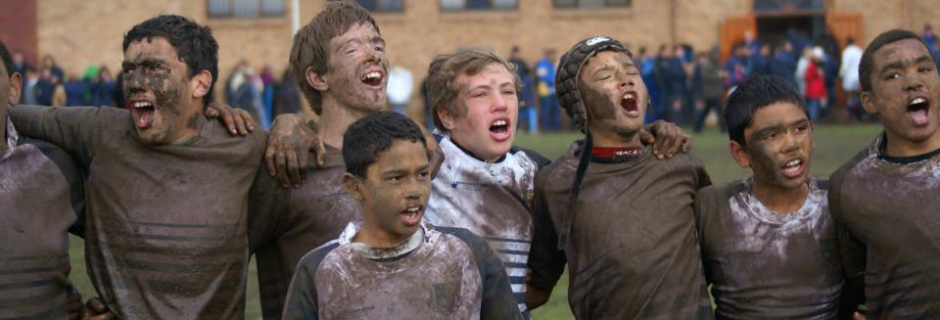
Wynberg Boys, bad losers

A Paarl Gim rugby player has been banned for a year after hurling racial abuse at players from Wynberg Boys’ High earlier this month.

On June 1, Paarl Gim played Wynberg Boy’s in Paarl. The racial slurs included the use of the k-word, directed at one player, and one boy being told by another: “I will slap the coloured off your face”.

The incident was greeted with protests from the Wynberg Boys team, who were trailing 33-0 at the time, and some even resorted to walking off the field while the game was being played.

The under-16 player was found guilty after Paarl Gim held an independent disciplinary hearing, which Wynberg principal Keith Richardson said was handled very professionally.

“Paarl Gim acted professionally and I believe the matter was handled fairly. They called in witnesses, the boy and some of our boys.”

SArugbymagazine.co.za reported that the player could face expulsion if he is found guilty of a similar offence in the future.

Richardson said this was a good learning experience for the players and hopefully others who heard about the story.

“The most important thing is that other boys may also learn from this and hopefully they will learn that they must think before they say anything. There has been so much publicity around this that everyone can learn something from it.”

Paarl Gim head of Rugby Deon Gerber said he was not able to give comment on the matter as a statement had been released by the school.

The headmaster, Eddie Bateman, could not be reached for comment, but shortly after the incident said the school strongly condemned racism.

“Racism is diametrically opposed to the value system of the school,” Bateman said.- iol.co.za


Australian minister apologises for premature announcement of Mandela’s death

Gary Gray
Gary Gray

An Australian politician has apologized to South Africa’s high commissioner for incorrectly announcing that Nelson Mandela had died.

Resources Minister Gary Gray issued a statement Thursday saying he was “deeply sorry” for wrongly telling guests at a Minerals Council of Australia dinner at Parliament House on Wednesday that the anti-apartheid leader was dead.

Gray said he had mistakenly shared what he “thought was reliable advice.”

Mandela is in critical condition at a hospital. The 94-year-old former president was admitted to the Pretoria hospital on June 8 to be treated for what the government said was a recurring lung infection.

Mandela was jailed for 27 years as a result of inciting violence to overthrow the government and was freed in 1990 and became South Africa’s first black president in 1994.

Also in Australia Kevin Rudd returned as prime minister of Australia on Thursday, three years after being replaced in the office by his then-deputy Julia Gillard.

Rudd challenged Gillard for leadership of the Labor Party on Wednesday and won a 57-45 vote among fellow Labor members of parliament.

In the Australian parliamentary system, the leader of the governing party assumes the position of prime minister and on Thursday morning, in Canberra, Rudd was sworn in for a second time.

Gillard resigned after the party vote on Wednesday night and announced she will leave politics.

A major factor in Gillard’s demise — and in Rudd’s Phoenix-like return — is the election Australia has to hold by the end of this year.

Under Gillard’s leadership, Labor was facing overwhelming defeat, according to opinion polls. But the same polls show a Rudd-led Labor Party would fare much better at the ballot box. – SAPA/AP/CNN

Obama plans to ‘highlight racial atrocities’ on African visit

Goree island
Goree island

The hopeful story President Barack Obama wants to tell about Africa is represented in the first stop of his weeklong trip to re-engage the continent, in a country where democracy recently overcame an impending electoral crisis.

During his visit to Senegal on Thursday, Obama also will reflect on the ties many African-Americans share with the continent as he takes a tour of Goree Island, Africa’s westernmost point. By some accounts, millions of Africans were shipped off into slavery across the Atlantic Ocean through the island’s “Door of No Return.”

It’s the first of two island visits Obama planned to highlight racial atrocities of the past. The second was scheduled for Sunday at South Africa’s Robben Island, where anti-apartheid leader Nelson Mandela was imprisoned for 18 years.

But Mandela’s condition could affect Obama’s plans. The former South African president is gravely ill, and Obama foreign policy adviser Ben Rhodes said it would be left to the Mandela family to decide whether he is up for a visit from Obama this weekend.

Mandela’s legacy hangs over the entire trip, with Senegal among many African countries that have benefited from his example of a peaceful transition to power. “So much of the democratic progress that we see across the continent I think can be tied in some way to the inspiration that Nelson Mandela set,” Rhodes said.

Obama’s focus in Senegal will be on the modern-day achievements of the former French colony after half a century of independence. He planned to meet with Senegalese President Macky Sall, who ousted an incumbent president who attempted to change the constitution to make it easier for him to be re-elected and pave the way for his son to succeed him. The power grab sparked protests, fueled by hip-hop music and social media, that led to Sall’s election.

But such people-powered democratic transitions are not always the story of the African experience. Fighting and human rights abuses limited Obama’s options for stops in his first major tour of sub-Saharan Africa since he took office more than four years ago. Obama is avoiding his father’s homeland, Kenya, whose president has been charged with war crimes, and Nigeria, the country with the continent’s most dominant economy. Nigeria is enveloped in an Islamist insurgency and military crackdown.

Obama’s itinerary in Senegal was designed to send a message, purposefully delivered in a French-speaking, Muslim-majority nation, to other Africans in countries that have not made the strides toward democracy that Senegal has. Obama plans to meet with civil society leaders at the Goree Institute and visit the Supreme Court to speak about the importance of an independent judiciary and the rule of law in Africa’s development.

“It’s not enough to have elections, it’s not enough to have democratically elected leaders,” Rhodes said. “You need to have independent judiciaries. You need to have confidence in the rule of law. You need to have efforts to combat corruption. Because, frankly, not only is that good for democracy and respect for human rights, but it’s critical to Africa’s economic growth, because where you have clear rules of the road and efforts to combat corruption, businesses will invest, and jobs will be created and growth will take off. And that’s what we want to see.” – AP

Tight security at Mandela hospital

Medi-Clinic Heart Hospital in Pretoria

Nine police officers were manning the entrance of the Pretoria hospital where critically-ill former president was being treated on Thursday.

The officers were screening all vehicles entering the hospital through the Park Street entrance at 6am.

Another police contingent was manning the other entrance on Celliers Street.

Despite the biting cold, local and international media started regrouping outside the hospital after 5am.

A dozen candles burnt through the night next to the Celliers Street entrance.

The candles were placed next to a miniature art gallery established by well-wishers on the security wall of the Medi-Clinic Heart hospital in Arcadia, east of Pretoria.

Numerous passers-by momentarily stopped on Thursday morning, observing the various presents brought for Madiba.

Multicoloured balloons, flowers, pictures and paintings of Madiba, hundreds of get-well-soon cards, flags and banners totally eclipsed the Medi-Clinic signboard at the Celliers Street entrance.

Some of the messages read: “No one knows the time, including Jesus and the angels, only God knows. No one will take you from us except our heavenly father. From Lynel Dlamini”

A message printed in a large frame read: “From the bottom of our hearts, we as Northern Sudanese love you and pray for you. We pray for our hero, our man Madiba to be out of this sickness with all power render[ed] from Allah the Almighty.”

Another well-wisher wrote: “Tata Madiba. You are in my prayers. A father to our country. One we will always look up to. Sending you all my love and well wishes from Cape Town. Love you always. From Charne Snyders”.

Others wrote: “Madiba you are my hero. Will pray forever for you. From Judia Tivane Holm [from] Mozambique”.

“Madiba be well. Long live freedom. Long live Justice. Long live hope. From Shabana Azmi [and] Sandeep Chachna [from] India

“I will always love you Tata. From Johanisa Ruiters. From Noupoort, Northern Cape.”

Before 3am, most journalists had left and only a handful were milling around near the hospital.

Numerous tents, generators, broadcasting cameras on tripods and broadcast vans had become a permanent feature on the street’s sidewalk since Madiba was admitted for a recurring lung infection on June 8.

Tshwane metro police officers were parked near the large fleet of media cars, which occupied all the parking spots near the entrance.

The metro police barricaded Celliers Street, allowing media vehicles and cars of residents of the street.

On Wednesday, President Jacob Zuma left the hospital at 10.15pm in a black BMW. He was escorted by a number of official cars with blue flashing police lights, which waited for him a street away from the hospital’s Park street entrance.

Zuma was followed by Defence Minister Nosiviwe Mapisa-Nqakula in a black Lexus.

Shortly after Zuma’s visit, the presidency said that Zuma had cancelled his visit to Mozambique on Thursday.

“President Zuma has decided to cancel his visit to Maputo, Mozambique tomorrow June 27, where he was due to attend an SA Development Community Summit regional infrastructure investment conference,” spokesman Mac Maharaj said in a statement. – Sapa