European Union must not side with the farm murderers of South Africa

by Dan Roodt

The news that South Africa supplies 70% of the citrus fruit consumed in the European Union adds another ingredient to the debate around farmland in South Africa. In strictly economic terms, both farm murders and ANC’s radical land reform plans serve European protectionist interests.

Our farmers are almost superhuman. Against all odds, they manage to compete against the pampered, subsidised EU agricultural producers. They live within a virtual war zone of terrorist attacks on farms, hostile propaganda from the left-liberal media and concerted attempts by neo-Marxist think tanks like the Cape-based PLAAS that advocate the abolition of property rights altogether.

The ANC government is amenable to the radicals of PLAAS, such Dr. Ruth Hall, an Afrikaner-hating, Oxford academic who came to this country with the sole intention of instigating a Soviet-style “agrarian revolution” that would push Afrikaners off their ancestral, family-owned lands. In the process, agriculture as we know it will be destroyed and our sought-after fruit will again disappear off European supermarket shelves as in the days of the anti-apartheid boycott against South Africa when French communists and Dutch anarchists focussed their hate on the word “Outspan”.

Apart from the teaching profession, there are few areas of economic activity in South Africa that are so dominated by Afrikaners as agriculture. To understand why, one must briefly look at the history of this country. During the nineteenth century, colonial British mining companies snapped up all the minerals in the old Boer republics and when that wasn’t enough, they persuaded Britain to invade us, burn all our farms and put our women and children in concentration camps.

In the cities, Afrikaners were discriminated against and even forbidden to speak their language in stores. With most of business, mining and industry closed to us, we had only farming and the professions open to us. That is how Afrikaners doggedly stuck to agriculture, through droughts and crises, and managed to get fifty percent of the postgraduate qualifications in this country. We also produced a large number of accountants, doctors and lawyers.

With the ANC’s revolutionary takeover, the first thing they did was to apply stringent affirmative action to our medical schools so that hardly any Afrikaner physicians are being trained anymore. The legal profession was dumbed down so that just about anybody could get a degree and even a mediocre advocate could become a judge, as long as he happened to be black. Accounting standards are still being upheld, but one wonders for how long before racial quotas will be applied there too.

Agriculture therefore represents a last economic foothold for Afrikaners. Despite European and American protectionism, we have managed to carve out a niche in the world market. Our beautiful, tasty, healthy oranges and grapefruit grace the breakfast tables of Europe.

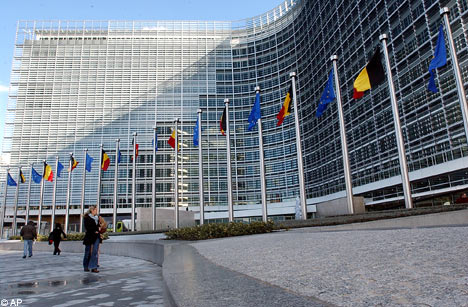
However, when EU Commissioner Catherine Ashton and the South African Minister of International Relations, Maite Nkoana-Mashabane, met yesterday in Brussels, there was no-one representing the Afrikaner interest around the table. Neither the protectionist EU, nor the anti-white, anti-Afrikaans ANC, gives two hoots about our economic survival in this country. We are already excluded from government, from the big corporations, from the mines, from the bench, from hospitals and banks.

Once our academics were able to build some of the finest universities in this country and in the world. Yet even there, the imperatives of “transformation” have dictated our exclusion on racial and cultural grounds from the very institutions our fathers and grandfathers had founded and developed. Foreign academics from the United Kingdom, Nigeria, Zimbabwe and other African countries have flocked to our universities to displace us, the indigenous whites of South Africa.

Until now, the European Union has said nothing about the vicious attacks on our farmers. Unless Europeans want to be seen as siding with the radical, ethnocentric and even genocidal elements in this country who wish to ethnically cleanse Afrikaners from the land, they will have to speak out and condemn such attacks.

At the same time, we insist upon open access to the EU market in fruit as it is one of the few lifelines we have left in this left-fascist environment where an alliance of UK academics and farm killers threaten to destabilise our agriculture further, or even destroy it completely.

We also appeal to European political parties sympathetic to Afrikaners to voice their concerns about maintaining the health of our exports and trade. Stability needs to return, against the outlandish ideas of “land reform” advocated by unreconstructed communists. “Land reform” is a slogan for extending the full-spectrum racial dominance that we already experience in the rest of the economy and the public sector, but it will also serve those in Europe who see a threat in our honest and fair competition with them.
Setting for a real international spy thriller

Colin Cowie, hotel designer

There are few better settings for an international spy thriller than the chaotic, neon-lit streets of Kowloon, to the north of Hong Kong’s Victoria Harbour.In the early 1970s, Kowloon’s triad-infested back-alleys played host to Roger Moore’s James Bond who used the area as the backdrop for The Man With the Golden Gun.

The Mira hotel’s rooms were conceived by Colin Cowie, a South African “lifestyle guru” and interior designer, and on its eleventh floor is Cuisine Cuisine, an award-winning restaurant where specialties include braised birds nests, South African abalone and sturgeon caviar.

On Monday, Kowloon was plunged once again into the midst of a global intrigue involving spooks and spies.

For it was here that Edward Snowden, the CIA worker-turned-whistleblower, made his temporary Asian hide-out, holing himself up inside one of Hong Kong’s chicest design hotels as the world absorbed his revelations about the National Security Agency’s mammoth electronic intelligence gathering operations.

On Monday afternoon two employees at Hong Kong’s £42m Mira hotel confirmed to The Daily Telegraph that a man called Edward Snowden had been staying at the 492-room luxury hotel in Kowloon.

“He checked out today,” said one staff member, who declined to be named.

The employees declined to say exactly when Mr Snowden, who reportedly flew to Hong Kong on May 20, had checked in and out, or which floor he had been staying on.

But it was from one of the hotel’s “uniquely designed guestrooms” that the 29-year-old looked on as news of his leaked revelations swept across the globe.

The Mira is one of Hong Kong’s most fashionable and talked about hotels. It describes itself as “a design-led urban retreat for the discerning traveller” and boasts a Michelin Star Chinese restaurant, a 25-metre indoor pool and a 18,000 square metre spa.

The Mira would have made a comfortable, if expensive, place to lie low. A brochure describes the hotel as “a living, breathing sophisticated space” which promises to “pamper the mind, body and spirit of the fast-living urban traveller”. Once a week the hotel hosts “Champagne Tuesday” at which guests quaff HK$100 glasses of champagne to the sound of “cool French jazz”.

Kowloon’s hustle and bustle would also have offered good cover to anyone wanting to fly under the radar. Outside the Mira’s pitch-black entrance at Number 118 Nathan Road, the streets teem with street hawkers and workers. Shoppers pour in and out of glitzy shopping malls and Cartier and Philippe Patek boutiques.

It is unclear how much Mr Snowden was able to take advantage of the hotel’s luxury facilities. Staff members refused to go into details about their former guest on Monday and The Guardian reported that the former contractor had spent three weeks “ensconced” in his bedroom, ordering room service. “I’ve left the room maybe a total of three times during my entire stay,” Mr Snowden said.

As Mr Snowden’s identity and and unexpected presence in Hong Kong was revealed on Monday morning, journalists raced to locate his hideout.

Rumours about his exact whereabouts spread on social media, with one Twitter-user suggesting Mr Snowden had been staying in the Excelsior hotel in Hong Kong’s Causeway Bay area. Staff there said they had “no information” about his presence, however, and refused to confirm or deny if they were hosting a guest named Edward Snowden.

By late afternoon Mr Snowden’s temporary home had been identified by means of an elegant bedside lamp that appeared in footage of an interview he had given and matched those in the Mira.

Members of the media rushed to the Kowloon hotel but by then the elusive Mr Snowden had left, staff said.

Tonight it was not clear if Mr Snowden remained in Hong Kong or had travelled elsewhere.

He told The Guardian he had chosen to come to Hong Kong because of its “commitment to free speech and the right of political dissent” but planned “to seek asylum in a country with shared values”, possibly Iceland.

A security guard outside the palm-flanked US consulate laughed off questions about the former CIA employee. “There are many Americans living in Hong Kong,” he said, grinning. – The Telegraph


Whistleblower disappears from Hong Kong hotel

Russia is willing to consider granting political asylum for NSA whistleblower Edward Snowden, who blew the lid on the US PRISM program, Russian media reported. Snowden dropped out of sight Monday after he was last seen checking out of a Hong Kong hotel.

The Mira Hotel, is a self-described “design hotel” near Kowloon park on the mainland.

The Mira Hotel in Tsim Sha Tsui, a waterfront area popular with tourists, said that an American named Edward Snowden had checked into the hotel on June 1 and stayed for more than a week before checking out Monday afternoon. The hotel is a luxury property that, according to its web site, promises “matchless indulgence for the young-at-heart modern traveler,” where room rates can go for more than $300 a night. […]

A man reached at the Mira Hotel in a room under Mr. Snowden’s name said he wasn’t the person reporters were looking for and then hung up the phone. On dialing the hotel again, the reception said Mr. Snowden’s room was no longer taking phone calls. A few minutes after that, the hotel said Mr. Snowden had checked out.

“If we receive such a request, we will consider it,” Kommersant daily quoted President Vladimir Putin’s press secretary Dmitry Peskov as saying.

Snowden, a 29-year-old former technical assistant for the CIA and current employee of the defense contractor Booz Allen Hamilton, revealed the existence of PRISM, the National Security Agency’s (NSA) massive data-mining surveillance program which gave the agency backdoor access to emails, videos, chats, photos and search queries from nine worldwide tech giants.

The whistleblower disappeared after checking out of a Hong Kong hotel, Reuters quoted witnesses as saying. A day earlier Snowden revealed his identity to The Guardian newspaper.

The revelations of Edward Snowden have been condemned by senior US lawmakers, who threatened the whistleblower with prosecution. Senator Dianne Feinstein (D-CA) on Monday called Snowden’s NSA leaks an “act of treason.”

Chairman of the House homeland security subcommittee Peter King stressed that if Edward Snowden is the leaker, then the US “must prosecute him to the fullest extent of the law and begin extradition proceedings at the earliest date.”

On Monday, Regina Ip, formerly Hong Kong’s top official overseeing security, told reporters it would be in Snowden’s “best interest to leave Hong Kong,” citing an extradition treaty with the United States that was signed in 1996.

Visitors walk into The Mira Hotel, where 29-year-old former CIA employee Edward Snowden was reported to have checked out of on Monday, in Hong Kong June 10, 2013 (Reuters / Bobby Yip)

“He won’t find Hong Kong a safe harbor,” Ip said. “Those agreements have been in force for more than 10 years. If the US submits a request, we would act in accordance with the law.”

Iceland MP and privacy rights campaigner Birgitta Jonsdottir has offered Snowden assistance in getting asylum in the Nordic island state.

Snowden fled to Hong Kong on May 20. Before that he had been working with the NSA earning approximately $200,000 per year and living in Hawaii.

“I’m willing to sacrifice all that because I can’t in good conscience allow the US government to destroy privacy, internet freedom and basic liberties for people all around the world with this massive surveillance machine they’re secretly building,” he told The Guardian. “The greatest fear that I have regarding the outcome for America, of these disclosures, is that nothing will change.”

Snowden copied the last of the documents he planned to release three weeks ago, telling his bosses he needed time off to be treated for epilepsy. He has also said he has a girlfriend who was unaware of his plans to seek refuge in Hong Kong.

WikiLeaks founder Julian Assange says he has been in contact with Edward Snowden, saying the NSA contractor was a prime example of what his organization is attempting to do.

“This organization and people like it and our values are forming a new body politic and people like Edward Snowden are part of that phenomena,” Assange said in a telephone interview with The Australian Broadcasting Corporation’s Emma Alberici on Monday from the Ecuadorian embassy in London.

Guardian journalist Glenn Greenwald, who revealed classified US surveillance programs leaked by Snowden, told AP that there will be more ‘significant information’ exposed in the near future. “We are going to have a lot more significant revelations that have not yet been heard over the next several weeks and months,” Greenwald told AP.

Millions transferred while napping on keyboard

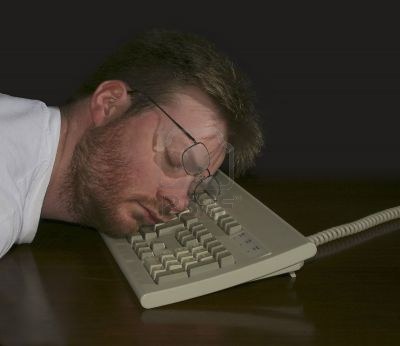
An obviously tired German bank employee fell asleep on his keyboard and accidentally transformed a minor transfer into a 222 million euro ($293 million) order, a court heard Monday.

The Hessen labour court heard that the man was supposed to transfer just 62.40 euros from a bank account belonging to a retiree, but instead “fell asleep for an instant, while pushing onto the number 2 key on the keyboard” — making it a huge 222,222,222.22 euro order.

The bank discovered the mistake shortly afterwards and corrected the error.

The case was taken to court by the man’s 48-year-old colleague who was fired for letting the mistake slip through when verifying the order.

The court ruled that the plaintiff should be reinstated in his job. – AFP

Deadly initiation schools

The state has been unified in its calls for better monitoring and interventions to improve the outcomes of traditional circumcision. But how can the state intervene in a process on which it does not even have basic data? When the Mail & Guardian canvassed officials for information on the numbers of deaths and mutilations caused by botched circumcisions each year, reporters were sent from pillar to post in search of statistics.

There was national outrage in May when news emerged that 27 boys died during initiation in Mpumalanga province. President Jacob Zuma echoed the national outrage at the unnecessary loss of lives, saying: “It cannot be acceptable that every time young men reach this crucial time in their development, their lives are culled in the most painful of ways in the care of circumcision schools.”

By the time a snap debate on the issue was called in Parliament, the death toll approached 40. MPs defended cultural practices, called for the arrest of those responsible for the deaths, a clampdown on fly-by-night initiation schools and “culturepreneurs”, and demanded better monitoring of the initiation process to ensure safe health practices.

But with poor record keeping at the outset, it’s unclear whether the state has any sort of plan to prevent the death and mutilation of the boys who would be men.

Initiation may be a highly valued cultural practice but there are no indications that government tracks the issue of deaths and mutilations caused during it.

There do not appear to be any reliable national statistics on the number of boys who undergo initiation each year, nor the number who die or are mutilated as a result of traditional circumcision.

According to Health Minister Aaron Motsoaledi, the main medical issues that can cause death in initiates are massive bleeding leading to hypovolemic shock, infection, septicaemic shock, dehydration from being denied drinking water, hypothermia from exposure to extreme weather, and low blood sugar from extreme food restriction. Poor circumcision technique can lead to genital amputation. In some cases, the cause of death is assault.

Of the three provinces in which initiation is most commonly practiced, the M&G was only able to get statistics from one, the Eastern Cape.

In that province, the death toll for the five years from 2008 to 2012 was 323. During that time, a further 126 boys suffered genital amputations.

An effective intervention strategy cannot be put into place unless government has an indication of the state of play in each province where initiation is practiced.
Initiation is most commonly practiced in the Eastern Cape, Limpopo and Mpumalanga.

The Limpopo and Mpumalanga health departments could not provide numbers and referred further questions to traditional leaders and the department of traditional affairs.

Sizwe Kupelo, a spokesperson for the Eastern Cape health department, said that keeping these statistics was possible because the department works together with Eastern Cape House of Traditional leaders, local government and various community structures.

The Eastern Cape has a head start on other provinces – in 2001 it became the first province to introduce legislation regulating traditional circumcision in an attempt to curb deaths and genital mutilation taking place in the bush.

In contrast, Mpumalanga has yet to finalise its initiation Bill.

Ten things about initiation:

1. Last month, 28 youths died of wounds sustained at initiation schools in Mpumalanga. The ritual period can be as long as three months, isolated in a remote area, usually in winter.

2. The origins of circumcision are obscure. The earliest record is from ancient Egypt, 25 centuries ago: a bas-relief in the sixth-dynasty tomb of Ank-Mahor at Saqqara shows what seems to be an adult or adolescent circumcision. About a century later, a written record tells of a mass circumcision (120 men) and the writer’s pride that none showed pain.

3. The ritual still takes this form in East Africa, where boys making the transition to men are circumcised in a public ceremony. They are expected not to flinch or cry out.

4. Jewish people circumcise male children soon after birth, for religious reasons: the founding covenant with Abraham involves circumcision (Genesis 17: 9-14; the same text is treated by Muslims as an injunction to circumcise).

5. Moses also made a covenant with God, but God tried to kill Moses “as they camped overnight” (Common English Bible) and he was rescued by his wife Zipporah, who seized a flint and chopped off her son’s foreskin, throwing it at Moses’s feet (Exodus 4:24-26).

6. There are three forms of Jewish circumcision: milah, periah and metsitzah, in order of increasing amounts of prepuce and surrounding tissue of the penis to be removed in the operation. Milah is the oldest form, with periah introduced in the second century AD. Metsitzah was ordered by the rabbis in the Talmudic period of the sixth century AD, the earlier forms being deemed insufficient.

7. The Catholic Church declared circumcision a mortal sin in 1442.

8. Infant circumcision increased in the Anglophone world in the late 19th and early 20th centuries. It is not clear why. Rationales, later debunked, include the idea that it reduced masturbation (thought to lead to insanity) or risk of disease. As late as the 1890s, it was believed retention of the foreskin could lead to “hernia, bladder infections, kidney stones, insomnia, chronic indigestion, rheumatism, epilepsy, asthma, bed-wetting, Bright’s disease, erectile dysfunction, syphilis, insanity and skin cancer” (Maurice Clifford, Circumcision: Its Advantages and How to Perform It).

9. Today, some studies suggest circumcision may reduce the risk of HIV and other sexually transmitted diseases, but the evidence is uncertain.

10. Circumcision was stopped as a cultural practice by the Zulu king Shaka. He replaced it as a rite of passage with the youths’ graduation through age-grouped regiments (amabutho) of his army. The present Zulu king, Goodwill Zwelithini, recently recommended circumcision for lowering the Aids risk. – M&G


Excrement wars continue in Cape Town

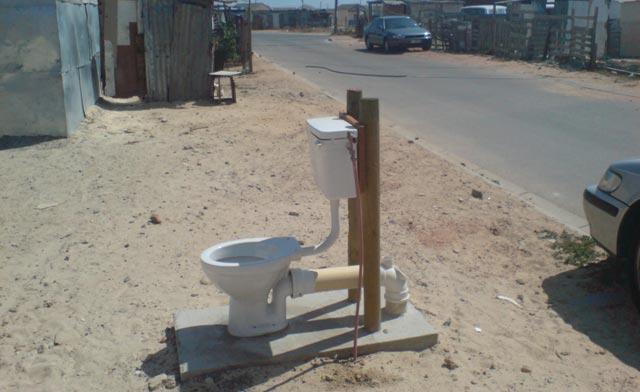
It started as toilet wars...

More faeces has been dumped at government offices in Cape Town despite a heavy police presence around the city bowl.

The Western Cape provincial government and the City of Cape Town on Monday reinforced security on the roads leading to the city, on the trains and around the provincial legislature, after picking up that further “poo attacks” were planned on government buildings.


Rumours of a planned protest to the legislature by human excrement-carrying Makhaza residents started flying on Sunday night and an unusually high number of police – in uniform and plain-clothed could be seen outside the legislature by mid-morning on Monday.


Around the same time, a number of the protesters and their leaders – including former ANC councillor Andile Lili – responsible for dumping faeces at the steps of the legislature were arrested at the Esplanade train station in Ysterplaat, according to sources.


Police could not be reached to give details about these arrests.


Lili confirmed to the Mail & Guardian that he and six others had been arrested. He claimed not to know the reasons for their arrest, saying there was no wrong doing from their side.


“We have not done anything wrong. It’s our human rights and dignity that’s being trampled upon,” he said from a police van.


Last week, Western Cape Premier and Democratic Alliance leader Helen Zille’s convoy came under attack after protesters from Harare, Khayelitsha, threw feaces at the motorcade. The premier, who arrived in the area for a scheduled talk in a bus, had to leave in a car with one of her VIP protectors.


Police intelligence
A source from the City of Cape Town said police intelligence picked up on Sunday afternoon that there were plans to disrupt the Monday morning traffic on the N2 to Cape Town and also to dump more excrement at the legislature.


Two of the plain-clothed police outside the provincial legislature said they were taking the matter seriously as the legislature is a national key point.


But shortly after 3pm, three men – including Loyiso Nkohla, an ANC councillor in the City of Cape Town – emptied two portable tanks of exrecement at the Protea Assurance Building, which houses the provincial departments of cultural affairs and sport and agriculture.


The building is less than 200m from the provincial legislature.


Nkohla admitted to being one of the “poo dumpers”, saying he wanted the government to get a sense of what the poor were living with in Makhaza, Khayelitsha.


When the M&G arrived at the dumping scene, a man, who only identified himself as “from the building management” was hosing off the remnants of the waste from the ground floor reception area at around 3.30pm.


He said he was not present when the waste was dumped but had been called from upstairs afterwards.


He added that a security guard was present but had been caught off guard.


Ungovernable
Zille said the incident was “a new manifestation of the long-standing campaign” to make the city ungovernable, which has been the ANC Youth League’s stated strategy for a long time, she said.


Zille said the league has roped in several ANC councillors who are also at the forefront of the campaign.


“It is bizarre that the campaign is focusing on the city’s ‘portable flush toilet’, which the city is using to eradicate the remaining bucket toilets.


“The portable flush toilet is used like an ordinary flush toilet. The waste is stored in a tank that is clean, hygienic and odourless, and the tank is serviced three times a week.”


She said the ANC Youth League was stealing these tanks and then spreading the contents around various government buildings.


“I have no doubt the voters will have something to say about this come the next election,” Zille added. – M&G


Teen gunned down by Syrian rebels

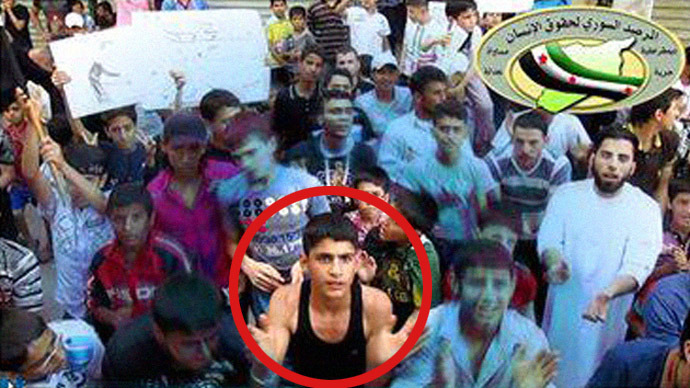
Photographs of the bloodied face of a 14-year-old boy executed in front of his parents by jihadist rebels in northern Syria have thrown into stark relief the sometimes extreme justice meted out in rebel-held areas.

Fighters of the al-Qaeda front group the Islamic State of Iraq and Syria accused Mohammad Qattaa of blasphemy, but a human rights group said he had done nothing more than use a common Arabic phrase that makes reference to the Prophet Mohammed’s name.

Pictures of Qattaa’s face, bloodied by the three shots that cut short his life on Sunday, spread like wildfire on social media websites, prompting a strong condemnation of his killing from the mainstream opposition.

“If someone shot a dog in the street, people would act,” cried the boy’s grieving mother Umm Mohammed in amateur video footage distributed by activists.

“Where are his rights? He was a child! How could they kill him?

“They killed him right in front of my eyes… May God take revenge on them… I saw his blood streaming down,” she wailed.

“We are with neither side (in Syria’s raging conflict). We just look after ourselves… Why did you kill my son? Is he a terrorist?”

The Syrian Observatory for Human Rights said the militants responsible for the boy’s execution were foreign volunteers with the al-Qaeda-linked Islamic State of Iraq and Syria.

“A member of the Islamic State of Iraq and Syria spoken to by an Observatory activist said the boy deserved to die,” said Observatory director Rami Abdel Rahman.

“Those who executed the boy were not Syrian,” he added.

Large swathes of northern Syria have fallen into the hands of various rebel groups, some of them Islamist, which have set up their own justice systems in areas they control.

Qattaa’s killing was the latest in a series of abuses by rebel fighters that have discomfited the mainstream opposition and its Western backers.

Just last month, amateur video showed a rebel fighter in the devastated province of Homs eating the organs of a slain soldier.

Opposition National Coalition member Alia Mansour said: “This execution is a crime against humanity and a crime against Syria’s revolution.”

“As the conflict develops, it is logical that we will see more problems of criminality emerge,” said Aron Lund, who has written extensively on the Syrian insurgency.

“The core problem in Syria, aside from the war, is the lack of law and order. Religious extremism is a response to the lack of law and order, as radicals see a chance to step in like a sheriff in the Wild West,” Lund told AFP.

“On the regime side, power is concentrated in Assad’s hands. But on the rebel side, it is more complicated because many insurgent groups are competing against each other for territory, and have many different ideas about how Syria should be ruled,” he added.

Alia Mansour of the opposition National Coalition condemned Qattaa’s killing.

“This execution is a crime against humanity and a crime against Syria’s revolution,” Mansour said. “We don’t want to exchange one killer regime for another.”

But Nadim Houry of Human Rights Watch said it was imperative that the opposition go beyond mere condemnation as allegations of abuses by rebel fighters were multiplying.

“Executions are on the increase, and a rising number of groups are taking the law into their own hands,” Houry told AFP.

“The rule of the gun is what dominates in Syria now, whether in opposition or regime-held areas. What is essential is that there be space for Syrian non-combatants to be able to speak up and condemn such acts,” he said.

“This kind of ability to mobilise and put pressure on the guys with the guns is essential for Syria’s future.”

Children have accounted for at least 5 030 children have been killed in Syria’s raging war, which has left more than 94 000 people dead in 26 months. The majority were killed in regime shelling, the Observatory says. – AFP

Mandela’s Qunu prepares for influx

Mandela's home in Qunu

As former president Nelson Mandela spends his fourth day in hospital, his home village of Qunu was preparing for throngs of visitors, the Sowetan reported.

Some residents were preparing to turn their homes into home-stay accommodation, as they said there might not be enough place in the village should the ailing icon die, according to the report.

Villagers, who did not want to be named, told the newspaper there were only three bed and breakfasts (B&B) in the village.

An employee at one of the residences said the house had been converted into a 10-room B&B and had previously accommodated many foreigners who came to the village to see Mandela’s home.

Nowinothi Geledwana, 63, told the newspaper she had previously rented out some rooms in her house and expected to do so again, should there be a demand.

“I have about three to four rooms that are available and can be rented out should people prefer home-stay accommodation in Qunu,” Geledwana was quoted as saying.

“I really don’t know how much I will charge for them, but I’m sure I will make some profit.”

Apart from accommodation provided by residents, the Nelson Mandela Museum in the village also had accommodation for 60 people, while there was a plush guesthouse less than 10km from Qunu.

The Star newspaper reported the Mandela family in Qunu was preparing for another relative’s funeral.

Florence Mandela, the wife of one of the son’s of the elder statesman’s uncle, died last week aged 96.

Florence’s funeral would be held on Saturday. – SAPA

Malema to launch a new party soon

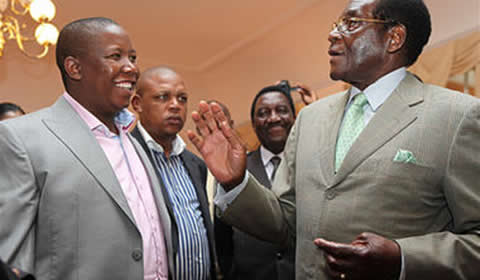
Malema with Robert Mugabe

Expelled ANC Youth League president Julius Malema is preparing the ground to form a new political party.

The organisation will advocate a radical policy shift in favour of black South Africans.

The Star can reveal that Malema is consulting his supporters with a view to establishing a movement that will “restore the dignity of blacks” and reduce inequality between rich and poor.

In an exclusive interview with the paper on Sunday, the firebrand said the envisaged “forum” would fight for social justice rather than reconciliation and resume an “onslaught against white male monopoly capital”.

It would push for the expropriation of land without compensation and nationalisation of the country’s mines, and force the beneficiaries of apartheid to be remorseful “and behave in a manner that says they regret their conduct”.

Malema has ruled out the possibility of joining other parties – including Agang and the DA – saying he did not agree with their policies.

The Star has also learnt that an intelligence report handed over to President Jacob Zuma last year has warned that Malema planned to establish a party.

Malema implored the youth to revolt against the current state of affairs in the ANC and the country.

He accused Zuma of dictatorship, undermining internal democracy in the ANC and of presiding over a country that was deteriorating politically and economically.

He said a probe that cleared Police Minister Nathi Mthethwa of wrong-doing after it emerged that the police’s slush fund was used to build a wall around his private house was just one example.

Malema said that after watching these developments, he had decided to organise “radical militants” in and outside the ANC “to come together and talk about an alternative platform”.

“We need a party that demands justice in this country, that will say we need the land that was taken from our people and we are not going to pay for it. A party that will say those who were victims of apartheid stand to benefit unashamedly and those who perpetuated apartheid must show remorse and behave in a manner that says they regret their conduct,” Malema said.

“When they were arguing for our expulsion and suspension, they said we did not show remorse, but when Kabelo goes and says ‘we will work with the new leadership’, they still cut off his head. Even Ronald Lamola, after making a long trip to Nkandla after Mangaung to pledge the youth league’s support, they still kicked him out.

“The Limpopo provincial executive committee under Soviet Lekganyane released a statement insulting me for political expediency… that still did not spare them.”

Malema added that the rule of law had collapsed because state organs like Sars and the Hawks were “loyal to individuals and not institutions”.

The two agencies are probing Malema for alleged tender corruption. His house and other assets have been auctioned off to pay off a R16 million debt owed to Sars. – iol.co.za

SA billionaire wants his money back

Mark Shuttleworth

Billionaire entrepreneur Mark Shuttleworth has taken the government to court to have the country’s exchange control system declared unconstitutional.


He further seeks an order declaring the bank’s so-called “closed door policy”, which insists that the public communicate with it through the intermediation of authorised banks, unconstitutional and invalid.


Shuttleworth blames South Africa’s existing system of exchange control for forcing him to emigrate in 2001.


He says in court papers that the system made it impossible to conduct his entrepreneurial and philanthropic ventures.


He had assets worth over R4.27-billion in South Africa when he emigrated. He only transferred them out of the country in 2008 and 2009, each time paying a 10% levy.


He currently lives on the Isle of Man and holds dual South African and UK citizenship.


His advocate, Gilbert Marcus SC, yesterday argued that South Africa’s exchange control system was governed not by laws but by the dictates of an organ of state that were not accessible to the public. He argued they did not follow any constitutionally required process of promulgation and violated many constitutional rights.


The application continues before Judge Francis Legodi today. – SAPA


‘Arrest Obama for war crimes when he visits SA’

The Muslim Lawyers Association in Johannesburg wants US President Barack Obama arrested and tried for war crimes when he arrives in South Africa on June 29.

Group spokesman Yousha Tayob said Obama ordered drone strikes that killed innocent civilians.

In terms of the Rome Statute, South Africa has the right to prosecute a war criminal on its territory, said Tayob.

Researchers from New York University School of Law and Stanford University Law School recently released a report entitled “Living Under Drones: Death, Injury and Trauma to Civilians From US Drone Practices in Pakistan”.

They found that in four years Obama commissioned five times more drone attacks than former president George W Bush did in his two terms in the White House .

The report estimates drones have killed between 474 and 881 civilians, including 176 children.

The US Embassy in South Africa’s spokesman Jack Hillmeyer said it had “no comment”.

National Prosecuting Authority spokesman Bulelwa Makeke said the office had received the docket and was studying it. – timeslive.co.za

Family gather at Mandela’s bedside

Winnie Mandela, wearing a purple jacket, leaving the hospital. Credit: APTN

Relatives of Nelson Mandela yesterday spent hours with him at the Pretoria hospital at which he is being treated for a recurring lung infection. His former wife, Winnie Madikizela-Mandela, and two female relatives, arrived at Mediclinic Heart Hospital just after 3pm yesterday.

Shortly before that Mandela’s daughter from his first marriage, Makaziwe, had arrived.

Then came his grandson, Ndaba, and his eldest daughter by Madikizela-Mandela, Zindzi, and two other relatives.

They all left shortly after 5pm.

Mandela spent his third day in hospital after being rushed from his home in Houghton, Johannesburg, at about 1.30am on Saturday when his condition deteriorated.

The Presidency yesterday again released only sketchy details about Madiba’s condition.

“Former president Nelson Mandela remains in hospital and his condition is unchanged.

“President Jacob Zuma reiterates his call for South Africa to pray for Madiba and the family during this time,” The Presidency said.

Presidential spokesman Mac Maharaj said on Saturday that Mandela was in a “serious but stable condition” and was breathing on his own.

ANC spokesman Jackson Mthembu said the ruling party had to rely on Maharaj for updates on Mandela’s condition.

“Our assumption [in the absence of constant updates] is that his condition is unchanged,” Mthembu said.

Well-wishes for the world icon continued to pour in yesterday. The Desmond and Leah Tutu Legacy Foundation “thanked God” for the “extraordinary gift” of Mandela and wished him a speedy recovery.

“Tata Mandela once again endures the ravages of time in hospital. Our prayers are for his comfort and his dignity,” the organisation said.

African Union Commission chairman Nkosazana Dlamini-Zuma said: “I am sending him our fervent prayers and numerous get-well-soon messages from the entire staff of the union. We give him courage and urge him carry on”. – SAPA/timeslive.co.za

Nelson Mandela: journalists moved from hospital

A fence was erected on Monday evening next to one of the entrances of the Pretoria hospital where former President Nelson Mandela was believed to be.

Police officers set up the barrier where numerous journalists had been camped out, close to a busy street in Arcadia. Tshwane metro police officers ordered journalists to move their cars.

There was speculation that President Jacob Zuma was expected to arrive at the hospital.

Around 10 uniformed policemen stood at the entrance, along with officers in civilian clothes. Several police cars were driven into and out of the hospital. All vehicles entering the hospital premises were inspected.

Earlier on Monday presidency spokesman Mac Maharaj said Mandela was receiving intensive care.

“Today the doctors are saying his condition is unchanged,” he told reporters from his office at the Union Buildings.

“He is under expert attention and they [doctors] are doing everything to keep him comfortable.” Maharaj said a report in The Star suggesting the Mandela family had barred ANC and government officials from visiting Madiba was unfortunate.

“It’s very unfortunate that one particular newspaper chose to run with that as a headline. I’ve read that report and it has no single source it attributes to, except three unnamed sources.

“There are restrictions which arise from the fact that Madiba is under intensive care. Those are medical restrictions to control movement of people [to exclude the] possibility of visitors bringing infection into the environment,” said Maharaj.

The Star newspaper reported that the Mandela family had taken charge of the 94-year-old Nobel Peace Prize winner’s hospital stay, banning everyone, including government leaders and senior party officials, from visiting him.

The African National Congress on Monday said it was unaware of this.

Maharaj confirmed Zuma was scheduled to visit Mandela in hospital, but did not say when.

“As head of state, president Zuma will visit at the appropriate time. We just want Madiba to get better.” ANC MP and Mandela’s ex-wife, Winnie Madikizela-Mandela, had also been at the hospital. – Sapa

South Africa is world’s biggest exporter of oranges and grapefruit

South African grapefruit

International Relations Minister Maite Nkoana-Mashabane and European Commission vice-president Baroness Catherine Ashton discussed citrus exports on Monday.

“Yes, we engaged on the citrus issue and there has been an undertaking, and producers will still be engaging,” Mashabane told reporters in Belgium.

“Discussions have already been accelerated, and scientific research would continue [into the citrus spot problem].”

The discussion was held behind closed doors at the European External Affairs’ headquarters in Belgium’s capital, Brussels.

About 70 percent of the European Union’s citrus consumption comes from South Africa.

On Sunday, South Africa’s ambassador to Belgium, Mxolisi Nkosi, said the EU wanted to stop some imports from South Africa, like citrus fruit. He said the EU was increasingly using protectionism to block certain exports. Nkosi said the citrus sector contributed about R6 billion to South Africa’s gross domestic product.

The rise in citrus production was mainly due to the increase in cultivation areas, packaging and transport improvements, and preferences for healthier food options. But citrus harvesting and production in most of Europe continued to decline, particularly at the present time of year, due to the weather.

South Africa is the world’s biggest exporter of oranges and the largest shipper of grapefruit.

Citrus imports were halted after some shipments of fruit were tainted with a disease which affects the external appearance of the fruit. In 1993 the EU declared citrus black spot a phyto-sanitary measure.

This meant it was placed on a trade watch-list at EU borders. If spotty fruit was found, the consignment would be impounded. This reduced the size of citrus exports to the EU.