While Julius Malema may have little power left politically, he certainly wielded his weight at the MTN South African Music Awards (Samas) this weekend.
The disgraced former leader of the ANC Youth League made sure that South Africa’s current favourite musician, Dr Malinga, got to perform in the early hours of yesterday morning at the Samas’ infamous pre-party, hosted by independent record label Kalawa Jazmee.
The Kalawa party is traditionally one of the biggest parties during the Sama weekend at Sun City in North West. This year the party saw the label’s top artists, including Professor and Mafikizolo, on stage, with an impromptu appearance by Trompies.
By 3.30am the party was still in full swing and fans of the independent record label were demanding more. But the management of the Sun City Shebeen decided it was time to stop the party before Kalawa’s popular new artist, Dr Malinga (of Via Orlando fame), had to perform.
But according to one observer, Malema then jumped on stage.
“Malema grabbed the microphone and said to the white manager: ‘Chief, have you seen a revolution? If you want to see black people revolt, then stop this party.”
He then instructed Kalawa boss Oskido to play the CD and Dr Malinga to do his traditional leap dances on stage. The crowd apparently went ballistic, chanting “Juju! Juju! Juju!”
Co-director of Kalawa, Oskido, played down the incident.
“Julius asked the club owner if Dr Malinga could play. He was very polite,” said Oskido yesterday.
Malema was however just one of the high-profile guests invited to the 19th MTN Samas. Other guests included Generations actors Menzi Ngubane and Sophie Ndaba as well as director Rapulana Seiphemo.
The big winners for the night were Khuli Chana and the granddaughter of IFP leader Mangosuthu Buthelezi, Toya Delazy, with three Samas each.
Khuli Chana won best male and best rap as well as best album. Delazy won best newcomer, best pop as well as best producer for her debut album, Due Drop Deluxe.
The hotly contested best dance award, for which the nominees included Oskido, Vetkuk vs Mahoota, Pascal & Pearce and DJ Pepsi, was won by Black Coffee.
Zebra & Giraffe won best rock while best kwaito was won by Kalawa Jazmee artist, Professor.
Kalawa Jazmee provided a highlight when they ended the show with Vetkuk vs Mahoota. They performed their massive hits Stokvel and Via Orlando. When Dr Malinga kicked his way on stage for Via Orlando the crowd rose to their feet and screamed in excitement.
Lira provided a beautiful moment when she performed at the Samas for the first time. Her interactive show included fashion as well as dancers. The Samas were broadcast live on SABC1 with a viewership of five million.- IOL
As South African troops prepare for deployment to the violence-racked east of the Democratic Republic of Congo, the enemy is gearing up for full-scale war.
M23 welcomed in Goma
As South African troops prepare for deployment to the violence-racked east of the Democratic Republic of Congo, the enemy is gearing up for full-scale war.
A 1000-strong South African contingent is expected to be deployed to the region within a month as part of an African intervention force. It will almost certainly be drawn into conflict with the heavily armed and battle-hardened M23 rebel group after the collapse of peace talks between the rebels and the central government in Kinshasa.
One of 33 rebel groups in the region, the M23 has 40t of munitions looted from DRC army armouries in clashes in the east of the country last year.
The M23 routed DRC government forces in November in a fight for the capital of the country’s eastern region, Goma, where South African peacekeepers were deployed. In the battle for Goma, South African soldiers were caught by surprise and the M23 forces – whose officers have over 20 years of jungle combat experience – were able to take the town within days.
Reported to have access to T55 and T72 Soviet-era tanks, and armed with anti-tank and surface-to-air missiles, anti-aircraft guns, heavy machine guns, armoured vehicles and rocket-propelled grenades, the M23’s 5500-strong force is in the final stages of preparing for war.
The rebels have upped their propaganda war against the South Africans since warning President Jacob Zuma last month of a “catastrophic and apocalyptic” response if the SANDF engaged them.
The group has since revealed that it plans to kidnap SANDF troops to force South Africa to about-turn on the deployment.
The rebels are said to be backed by Rwandan and Ugandan military advisers and special forces, a claim both countries deny.
In March, the UN Security Council authorised the deployment of a 3000-man intervention force to the DRC to work alongside 17000 UN peacekeepers. The intervention force, which will comprise South African, Malawian and Tanzanian troops, is expected to arrive in the DRC within a month.
As opposed to the peacekeeping force, the new intervention force’s mandate will see troops being able to engage rebel forces regardless of provocation in order to bring stability to the region.
The SANDF has limited heavy-lift air transport capability, its Rooivalk attack helicopters’ Makopa anti-tank missiles are not yet certified, and it is most unlikely that the air force’s Gripen fighter jets will be deployed to the DRC. Knowing all this, South African soldiers are gravely concerned about the impending battle.
An army officer, who has knowledge of the mission’s planning, said: “We train and fight hard. We know our job and are capable, but with little air support, this fight is difficult. We learned good lessons in CAR but, make no mistake, this will not be easy.
“The M23 are well-armed and have good intelligence. They will not fight conventionally. It will be guerrilla-style attacks preying on our weaknesses, and our lack of cohesion and joint training with the other forces.”
SANDF spokesman Brigadier-General Xolani Mabanga declined to comment other than to say: “We are awaiting the UN’s force deployment orders.”
Defence analyst Helmoed Heitman said: “The M23 are not a bunch of ragtag rebels. They are superior in their jungle-fighting capabilities with backing from neighbouring countries [that are] running proxy military forces in the region.
”Our biggest problem is lack of air capabilities. We have the Rooivalk attack helicopter and Oryx troop-carrying helicopters, but we have no proper heavy-lift transport aircraft to get our equipment and troops in and out safely.
“The Rooivalk’s anti-tank missile is not certified, meaning it will have to get dangerously close to the enemy for its rockets to be effective.
“We are taking our long-range G5 cannon and various armoured vehicles but these vehicles will not withstand the M23’s fire-power. Their 37mm anti-aircraft guns are lethal both to air and ground targets and they have the support of tanks and special forces.”
Heitman said major hindrances included the lack of intelligence. “Our defence intelligence is what got us into trouble in CAR.
“Added to this is the UN’s view that this is just another peacekeeping mission. Instead of additional forces, they divided the current peacekeeping force, transferring the South African brigade to the intervention force and creating a vacuum for the rebels to capitalise on. This is not peacekeeping. It will be aggressive counter-guerrilla warfare in which people, including civilians, will die. You need numbers that are not there to bring about peace.”
Heitman said the M23 rebels knew the SANDF’s capabilities.
“They will not pick on us. They will pick on the possible weak links – Malawi and Tanzania – who have little battle experience. They will harass, divide and conquer.” He added: “They have the strong possibility of tank and special forces support.”
Sources from the DRC however, say there is little evidence that the different parties involved understand the real issues in the country. According to the dominant ethnic group, the Lingala, the president is happy about the diversion that both Malawi and Rwanda have created in order to bolster his power. – timeslive.co.za/PRAAG
On May 3, a Vosloorus Taxi Association member was shot and killed during a shootout at the Windmill Park taxi rank.
According to JJ Dlamini, chairman of the association, this is now the 13th member they have lost during the ongoing taxi violence.
At the recent Reiger Park Taxi Association elections, both Dlamini, as well as Andy Koza, chairman of the Reiger Park Association, stated that they wanted the violence to end.
“We are busy arranging a meeting with the Reiger Park Association to discuss what can be done to prevent further violence,” says Dlamini.
He adds that they regret what is happening, and would like to assure commuters that they are doing everything they can to resolve the situation.
“We are unsure who is responsible for inciting violence.”
For more than a year-and-a-half, the two associations have been fighting for rights over the Holomisa to Boksburg route.
The Johannesburg High Court ruled that the route belongs to the Reiger Park Association.
The Vosloorus Association is challenging this ruling.
The associations met on March 7, and it was agreed that they would share the route until an agreement could be reached.
At the time of going to print, Koza had been issued a gag order by the association’s executives, and their public relations officer was unavailable for comment.
The capitalist system is the real enemy in South Africa, Congress of SA Trade Unions general-secretary Zwelinzima Vavi said on Friday.
Problems such as xenophobia, corruption, gender-based violence, and substance abuse were rooted in economic misery, he said in Johannesburg.
“All of these are rooted in another set of three even bigger demons; unemployment, poverty, and inequality, which provide a fertile breeding ground for all the others.”
Vavi was speaking at a seminar hosted by the University of the Witwatersrand’s African centre for migration and society.
He said the latest figures on unemployment indicated things were getting “even worse”.
Statistics SA reported this week that the official unemployment rate in the first quarter of the year had risen to 25.2 percent from 24.9 percent in the last quarter of 2012.
Vavi said this did not reflect the full extent of the problem, as it excluded discouraged work seekers and those reduced to “cutting hair at the corner of the street”.
South Africa also had the most unequal society in the world, he said.
“If we do not address this, the demons… will be unleashed,” he said.
The “real enemy” was the capitalist system, which undermined social cohesion.
He dismissed business concerns that a proposed national minimum wage would lead to job losses as “propaganda and lies”.
“A national minimum wage would be a significant step towards securing greater social cohesion,” he said.
From culture to multicultural intimidation. Pictures from a 'cultural evening' at Fochville High School. Now the education department wants to deny the school its language and culture.
On behalf of the Pro-Afrikaans Action Group (Praag) and all Afrikaans speakers in the country, I strongly object to your sensationalist headline: “My child hates Afrikaans people” (City Press, May 5).
The rest of the article displays a distinct bias against Hoërskool Fochville and Afrikaans in general by selectively quoting from affidavits filed by an NGO run by Mark Heywood, who is British.
For 200 years now, language has been a bone of contention in South Africa, specifically the fraught relationship between English and Afrikaans. Your reporter would therefore do well to be more circumspect and objective in reporting on such an explosive issue.
Apart from swaggeringly throwing down the race card, the ace to trump all else, you also neglected to mention that Barbara Creecy, the Gauteng education MEC, had created the problem by unexpectedly busing in a whole class of so-called “English” children at the beginning of last year.
Hostile officials from the department then ordered the school to teach them in that language, for which they were not qualified.
The use of children as pawns in Creecy’s neocolonial language war on Afrikaans is distasteful. Instead of concentrating her funds and her energies on providing education in Gauteng, Creecy has launched an all-out attack on Fochville and other Afrikaans high schools, threatening an educational legacy that goes back more than 100 years.
According to newspaper reports, Creecy and her high-handed officials have also threatened Afrikaans high schools in Joburg to change their language policy. I wonder whether the same is being done at Zulu or Tswana schools?
Is it any wonder that the community around Hoërskool Fochville is defending themselves against the autocratic Gauteng education department in the courts? But what a waste of taxpayers’ funds!
Creecy is directly responsible for the implosion of maths teaching in Gauteng – with the matric average now at 20%. What are we gaining, educationally, from these vindictive state actions against Afrikaans schools?
Can the ANC not replace Creecy with a black MEC for education in Gauteng who will not have a colonial axe to grind with Afrikaans?
Dr Dan Roodt,
Director, Praag, Joburg
This letter was also published today in City Press.
The court case between the Gauteng education department and Rivonia Primary School over admission policies is crucial for access to education, Section27 said on Wednesday.
“The Constitutional Court’s decision in the case is a crucial one for the future of access to equal education in South Africa,” spokeswoman Nikki Stein said.
The Constitutional Court is scheduled to hear the case on Thursday. It involves the admission policy of a former model C school, Rivonia Primary, in Johannesburg.
According to Section27, the school refused to admit a Grade One pupil in 2011, saying it had no capacity.
The department intervened and instructed the school governing body (SGB) to override its policy and admit the pupil.
The dispute between the department and the school is around which of them has the final say in determining a school’s capacity.
The case would determine who had the final say about how many children were admitted to a school, in what language they would be taught, and who would be excluded from a school on the basis of an SGB’s admission and language policies, said Stein.
Also awaiting the outcome of the case were residents of Fochville, on the West Rand.
Stein said Section27 was representing 54 parents against the SGB of Hoerskool Fochville, a public school that adopted an Afrikaans language policy which excluded English-speaking pupils.
“Hundreds of learners from Fochville and nearby Kokosi township travel 25km to attend English medium schools,” she said.
Fochville SGB’s refusal to become a dual medium school is said to discriminate against pupils on the grounds of their race.
The Fochville case would be heard in the High Court in Johannesburg.
Section27 and Fochville residents are expected to picket outside the Constitutional Court on Thursday. – Sapa
In an experimental bid to determine whether wider gun ownership could lead to a decline in crime, a University of Houston graduate student and the Armed Citizens Project is looking to give away shotguns to residents of fifteen cities.
Kyle Coplen, 29, is the founder of the Armed Citizens Project, a group which announced that it will seek to expand its program into the Chicago Metropolitan Area at a recent National Rifle Association convention in Houston, Texas.
According to Coplen, the idea is to give out free, 20-gauge single-barrel shotguns to residents living in mid- to high-crime neighborhoods to see whether the presence of armed homes would cause a drop in crime.
“Gun-control advocates often argue that an increase in guns in an area will lead to an increase in crime, while gun-rights advocates often believe that fewer guns result in more crime. While both sides often argue that their opponents’ policies will result in more crime, gun-control proponents have largely been the victors when it comes to policy implementation,” explains the Armed Citizens Project’s website.
New measures in Congress to enact federal background checks for gun owners and the defeat of various other gun control measures indicate that in reality, gun control supporters do not have the upper hand in policy implementation.
While states such such as Connecticut and Colorado have recently passed new controls on assault weapons and high-capacity magazines, elsewhere, such as in Texas and South Carolina, state legislatures are lobbying to attract gun industry investment and working on legislation to further bolster access to guns.
One Texas bill that would ban state and local police from working with federal authorities on new gun control regulations was recently passed by the state House.
As for the Armed Citizens Project, according to Coplen the group intends to both screen participants for its shotgun give-away project and provide training for those selected.
“We’re not just tossing a bunch of shotguns into a community and walking away,” Coplen told Fox 26.
“What we’re doing is finding residents who are interested in protecting themselves. we’re not forcing guns on anyone,” he added.
In addition to offering free guns, the Armed Citizens Project is setting its sights on local gun buyback programs. The group hopes to dissuade those looking to hand over their guns with training sessions, or even have those weapons traded in for 20-gauge shotguns.
City and county-sponsored gun buybacks have recently become a point of contention for gun rights advocates. In Arizona, for example, Governor Jan Brewer recently signed a bill prohibiting cities and counties in that state from destroying guns collected through such programs, instead mandating that they be sold to licensed dealers.
The Armed Citizens Project hopes to distribute guns to hundreds of people living in major American cities by the end of the year. The program is already active in Houston and Tucson, Arizona, and in addition to Chicago they are also setting their sights on New York and Detroit. In Houston, local news channel WGN reports that 100 people have already signed up for the project.
Despite early success, Copley anticipates that getting his project started in a city such as New York, where Mayor Michael Bloomberg is a staunch proponent of gun regulation, will be a hurdle.
“I really don’t care what [Bloomberg] thinks. I can’t think of one thing he’s ever done besides being a successful businessman that I can agree with,” said Coplen to the NY Daily News.
New York Police Commissioner Raymond Kelly has already shown skepticism of Copley’s project.
“You need a permit … so obviously you won’t be able to do it here,” Kelly told the Daily News on Monday.
In addition to broad discretion over gun permits, the New York Police Department requires a $140.00 shotgun permit fee, in addition to a fingerprinting charge of $91.50.
Coplen intends to request donations to help low-income city applicants secure the necessary permits.
“I guess the Bloomberg administration doesn’t want poor people to be able to defend themselves. I guess that right is left to the elites,” Coplen told Daily News.
It is so breathtakingly unctuous that one is obliged to give some facts to the public in case they are tempted to view the African National Congress’s (ANC’s) past through Dr Jordan’s rosy prism.
Once again we hear of the ANC’s “moral high ground”. This has become something of a buzzword, but it is a misnomer.
A reading of any of the South African Institute of Race Relations’ books, particularly those by Anthea Jeffrey, will put to rest Dr Jordan’s fantasies and selective amnesia about the ANC and how it came to power.
“The Truth about the Truth Commission” shows in great detail that the bulk of the victims during the ANC’s violent revolution were black people, almost always in townships.
In light of this terror and killings, Mr Tambo’s speeches and pronouncements take on special significance. In a September 1985 interview with Newsweek, Mr Tambo discussed ANC military activities within SA and said that “avoiding civilian casualties will no longer be a factor in the ANC’s military actions”.
Referring to ANC proxy the United Democratic Front’s (UDF’s) terror campaign against township populations, Mr Tambo declared on Radio Freedom from Ethiopia (July 8 1985) that “for months we have maintained an uninterrupted offensive against the local government authorities in the black urban areas as well as the police”.
He then chastises those blacks who did not “respond to the same level of activity and determination (as that of the UDF’s cadres).
This is a situation which we must correct”. Coercive township terror was an effective UDF tactic.
The brutality the ANC unleashed against its own people is well documented. During a Lusaka domestic service broadcast on September 9 1985, Mr Tambo declared that the “current political crisis presents a great leap forward and indicates the start of a bloodbath that will eventually end apartheid”. The violence didn’t end in 1994.
Bloodbaths do not sit well with moral high grounds. If Dr Jordan has even a shred of integrity, he should present us with Oliver Tambo, warts and all.
He shouldn’t let the chance of having a regular say in a newspaper go to his head.
Whereas American media has shed mostly darkness on the “apparently” mysterious motivation behind the ruthless, savage, April 15 attack on the Boston Marathon—a Chechen leader offered some valuable insights about these homegrown terrorists:
[The] Tsarnaevs … were raised in the United States, and their attitudes and beliefs were formed there. It is necessary to seek the roots of this evil in America.
The man makes a profound point. Here, and not in Chechnya, did the Tsarnaevs receive a liberal, lax, progressive education, emphasizing the wicked ways of the West and the righteousness of its “victims.” It is here in America that these invertebrates matured into aggrieved ignoramuses.
“If we Americans cannot even agree on what is right and wrong and moral and immoral, how do we stay together in one national family?,” prodded Patrick J. Buchanan, in a recent column.
“A common faith and moral code once held this country together. But if we no longer stand on the same moral ground, after we have made a conscious decision to become the most racially, ethnically, culturally diverse people on earth, what in the world holds us together? The Constitution, the Bill of Rights? How can they, when we bitterly disagree on what they say?”
As Harvard political scientist Robert Putnam discovered, reluctantly, diversity in fact immiserates. The greater the diversity in a county or country, the more distrustful and depressed are its inhabitants.
America’s practically pornographic rituals of public grief—what are they if not a neurotic symptom of this disconnect? A diverse and distrusting people, lacking in a shared national DNA, are thrust together by the crisis of the day. In the absence of any core value over which to unite, we Americans meet on the only common ground we share: the graveyard. We come together to bury or remember our dead. We unite to grieve over tragedy and misfortune that have befallen us for no other reason than that we exist in the same space in time.
As to America’s ingenious and inspired founding documents aforementioned: The vast majority of the people in this variegated land remain ignorant of them. Or, if familiar with the Constitution and the Bill of Rights (or better still, the Federalist and Anti-Federalist Papers)—they’ll have been taught contempt for their framers and the philosophy these magnificent men espoused. When he hears parents, pedagogues, politicians and media sycophants pound on about the country’s Founding Fathers as the archetypical pale, patriarchal oppressors—a young man quickly learns to reject his adopted country’s heritage and look elsewhere for roots.
Boys, especially, require strong, moral men in their lives—men who affirm their masculinity. American boys, however, are mired in an estrogen-infused, cloistered world where real men in authority are a threatened minority. The nation’s schools have been, for the most, drained of manliness. Almost to a man are they staffed by feminists (mostly bereft of the Y chromosome).
Newtown shooter Adam Lanza was a product of a freewheeling, fatherless household. The tele-experts have been mum about a mother who was weak and ineffectual. Nancy Lanza was filled with fear. She used a menacing gun collection to overcompensate for her parental inadequacies. A strong, caring male might have taught the troubled Lanza to handle firearms responsibly; might have helped diffuse the lad’s rage. A manifestly weak woman playing at make-believe manhood only added fuel to that fire.
Reflecting this warped reality are America’s revised history textbooks, which are short on heroic figures and long on “history from below.” Physicist Myron Pauli, a featured writer on BarelyABlog.com, recently recounted his surprise at learning from his daughter’s “history” book that “World War II was fought primarily by women, Navahos, Mexicans, blacks, and Japanese-Americans.” The next edition, presumably, will illuminate the “neglected” role of the homosexual, hermaphrodite, and transgendered community in winning that war.
Boyhood today means BB guns and “bang-bang you’re dead” are banned. Tykes have a choice: undergo anger management and anti-bullying instruction or be chemically neutered by way of ADHD meds. Concomitantly, although your kids (boys and girls) desperately need discipline, the rare classroom disciplinarian risks litigation (from you!).
And, as his real nature craves heroic tales about yesteryear’s warriors and explorers, a little boy is required to hack his way through a page-turner like “One Dad Two Dads Brown Dad Blue Dads.” The smashing success of politically incorrect books such as “The Dangerous Book for Boys” proves just how much little boys want to be boys again. The book reintroduced a new generation of youngsters to the joys of catapult-making, knot-tying, stone skimming, astronomy (concocting rocket fuel from saltpeter and sugar is not in the book, but is a lot of fun—or so my husband tells me). In short, more of the stuff of Boy Scouts, before the organization was hounded and hogtied by politicized girls and gays.
This very sexual activism is practiced by the president of the United States. No other than Barack Obama tinkled basketball player Jason Collins to congratulate him on stepping out as the first openly gay player in NBA history. Imagine Vladimir Putin or the president of Chechnya doing the same. Impossible!”
A huge step forward for our country” is how a hugely hyperbolic (and frightfully masculine) First Lady tweeted out about Collins’ “accomplishment.” Small mercies, Michelle Obama did not call the festive affair a giant leap for mankind.
In the unmanly (because so undignified) mosaic described so far, pride-of-place must be reserved for the American president. To a boy from a Muslim culture, America’s man-in-chief has to represent a mass of contradictions. This president and those before him lead the lavish and licentious lifestyle of an emperor. This as they bomb and obliterate other people from afar. Hardly honorable, much less manly.
A major neo-Nazi murder trial opened Monday in Germany over a killing spree that embarrassed authorities, shed a spotlight on the country’s murky far-right scene, and exposed institutional racism and incompetence.
The trial opened amid tight security in the southern city of Munich after a three-week delay over an outcry about media access which has further undermined Germany’s image on top of fundamental security flaws exposed by the murder spree.
Under a heavy police presence, chief defendant Beate Zschäpe, 38, entered the Munich court just before proceedings began, appearing relaxed and with her arms folded, while dozens of anti-racist protesters shouted slogans outside.
Many people, including reporters had lined up outside overnight to claim one of the 50 free courtroom seats for the first day of the high-profile trial whose significance extends far beyond the murders.
Zschäpe faces charges linked to 10 mostly racially motivated murders over a seven-year period as the last surviving member of a killer trio, most of whose victims were of Turkish origin.
She is the last surviving member of a neo-Nazi trio whose random discovery in November 2011 forced the country to re-assess its image of having learnt the lessons of its Nazi past.
Germany has not seen a terror trial of this scale since members of the prominent left-wing militant group, the Red Army Faction, were sentenced 36 years ago.
Ten were killed
Zschäpe is charged with complicity in the murders of eight ethnic Turks, a Greek immigrant and a German policewoman between 2000 and 2007. She is said to be one of three central members of the far-right gang dubbed the National Socialist Underground (NSU).
She is also accused of involvement in 15 armed robberies, arson and attempted murder in two bomb attacks.
Her lawyers deny she was directly involved in murder. Zschäpe has remained silent during her 18-month custody and supposedly has no plans to break her silence during the hearing which could last more than two years.
Dressed in a black jacket, white shirt and wearing large hoop earrings, Zschäpe entered the courtroom before the hearing got under way and stood with her back to the TV camera.
She faces life in prison if convicted. Four men alleged to be accomplices will also go on trial on lesser charges.
Families want many answers
For the victims’ families, the opening day of the highly-anticipated trial will be their first chance to see the accused in person, as they seek answers to why their loved ones were gunned down.
Lawyers for Semiya and Kerim Simsek, whose father was the first victim, said in a written statement their clients who are co-plaintiffs would be seeking many answers from the trial.
“They want to know why their father was murdered. How they came upon the flower seller Enver Simsek? Did local neo-Nazi networks help in the victim selection?” they said.
Germans were stunned to learn in November 2011 that home-grown racist killers were behind the unsolved murders – and not the foreign criminal gangs that police and the media had always assumed were to blame.
Anger was stoked by revelations that the security forces failed to home in on the killers for more than a decade, and an admission that files had been shredded that could have helped the investigation.
Lawyers for some of the victims’ relatives, who are co-plaintiffs, said, apart from a conviction, they wanted a clear naming of those who also bore responsibility.
Relatives want names of those responsible
They called in a joint statement for a discussion which seriously addresses the problem of “far-right violence and structural racism” in Germany and initiates necessary changes.
The case only came to light after Zschäpe’s alleged NSU accomplices, Uwe Mundlos and Uwe Böhnhardt, were found shot dead in an apparent murder-suicide.
Zschäpe then allegedly blew up their shared home in eastern Germany not long before handing herself in to police.
A DVD with a film in the style of a “Pink Panther” cartoon, which the group had produced earlier, claiming responsibility for the attacks, then emerged.
“I assure you that Germany will do everything necessary to shed light on the murders at all points and sentence the criminals to the punishments they deserve,” Merkel said in an interview with Turkish newspaper Hurriyet last week.
At a memorial to the victims she called the killings a “disgrace” for the country and apologised for the fact that suspicion had fallen on some victims’ relatives, which she called “particularly tormenting”.
UN Human Rights Council criticism
Berlin last month apologised before the UN Human Rights Council for mistakes in probing the NSU murders which the government’s top official on human rights described as “one of the worst human rights abuses in recent decades” in Germany.
As most of the victims originated from Turkey, the trial will be intensely scrutinised beyond Germany’s borders.
A controversy over the accreditation of journalists overshadowed the run-up to the trial after the court initially failed to guarantee Turkish media seats when it handed out reserved spots on a first-come, first-served basis.
This strained German-Turkish ties and forced a last-minute postponement when Germany’s top court ordered it to allocate seats to foreign reporters, leading to the final 50 media organisations being chosen in a lottery.
Turkish media now have four seats but several leading German newspapers missed out. – AFP
Nearly half of Republican voters beileve that armed revolution may soon be coming to the United States, a new poll by Fairleigh Dickinson University has found.
Think of it as an alternate definition for the term “gun control.”
Nearly half of all Republicans surveyed said they believed that “an armed revolution in order to protect liberties might be necessary in the next few years,” a new poll
While 44% of registered Republican voters indicated that they believed armed rebellion would soon be a reality in the U.S., just 18% of Democrats agreed. As for Independent voters, 27% indicated that guns would soon be used to settle the country’s political problems.
The partisan gap on the question of whether armed revolution will soon play a role in America’s political history mirrors the differences in opinion on gun control. While 50% of those surveyed said that new gun control legislation was necessary to protect the public, just 24% of Republicans said new laws were needed. A whopping 73% of Democrats favored new legislation, the survey found.
“If there was a bipartisan moment after Sandy Hook to pass gun control legislation, it’s past,” Dan Cassino, a professor of political science at Fairleigh Dickinson, said in a press release. “Partisan views have strongly re-asserted themselves, and there’s no sign that they’ll get any weaker.”
Conspiracy theorists would also seem to have partisan leanings, according to the poll. Asked whether they agreed or disagreed with the statement: “Some people are hiding the truth about the school shooting at Sandy Hook Elementary in order to advance a political agenda,” 45% of Republicans said they either agreed or weren’t sure, compared with 29% of Democrats.
“The differences in views of gun legislation are really a function of differences in what people believe guns are for,” Cassino said. “If you truly believe an armed revolution is possible in the near future, you need weapons and you’re going to be wary about government efforts to take them away.” – Daily News
Barbara Creecy, MEC for Education of Gauteng Province
Barbara Creecy, the MEC for Education in the Gauteng province of South Africa, has launched an all-out attack on Afrikaans high schools by threatening principals and busing in “English” (black) children to Fochville Hoërskool.
Ms. Creecy studied at the exclusive private English school with a British colonial culture, Roedean, in Johannesburg. In the tradition of Lords Somerset and Milner, as well as Kader Asmal who destroyed Afrikaans as a university language during his tenure as national minister of education, Creecy is intent on stamping out Afrikaans at high schools frequented by Afrikaans children. These schools are seen as “not multicultural enough” and transmitting a minority language and culture to children of which the province does not approve.
The province is littered with the mass graves of children who died in the concentration camps set up by Creecy’s forebears one hundred years ago. Then, the British colonial secretary for education, Sargent, said: “Our military police have gathered the vast majority of the children in these camps and I feel it is a golden opportunity to get them to speak English.” 27 000 children died in the camps and are buried in various sites in South Africa’s northern provinces.
The following information about Barbary Creecy is available on the departmental website:
Gauteng Education MEC Barbara Creecy grew up in Johannesburg where she attended the University of Witwatersrand and became involved in the student movement in the 1970s.
She was part of the South African Students’ Press Union and used her journalism skills in ANC underground structures.
She became active in supporting political detainees and this led to a permanent position in the offices of apartheid defense attorney Priscilla Jana.
During the 1980s she worked at the Civic Desk of the United Democratic Front. In the early 1990s, she was part of a non-governmental organisation that specialised in organisational development of trade unions and community-based entities, where her she gained experience in adult education, community fieldwork and organisational development.
Creecy was elected to the Gauteng Legislature in 1994 and two years later was appointed Chairperson of the Social Welfare Committee. From 1999 to 2000 she was Deputy Chief Whip and in 2001 took over chairpersonship of the Education Committee.
Since 1997, she has been a member of the ANC Executive Committee of Greater Johannesburg and was the party’s National Coordinator for the 2004 elections.
She currently serves on the Provincial Executive Committee, on which she was responsible for managing the Gauteng ANC’s 2009 general election campaign. She has a Masters Degree in Public Policy and Management from the University of London .
In 2004, she was appointed MEC for Sports, Recreation, Arts and Culture, and in 2009 was appointed MEC for Education.
Creecy is the mother of Geeta and Sean and her free time is spent walking, nurturing her garden, or focused on a good book.
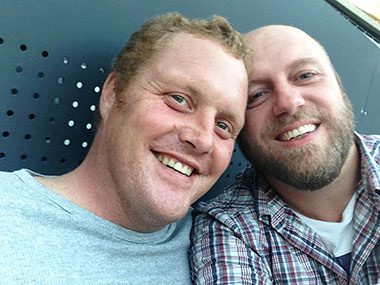
Farm owners in Paarl, who allegedly refused a gay couple permission to get married on their land, could face legal action.
The Saturday Star reported gay couple Emile Butler and Gareth O’Brien were considering taking the matter to the Equality Court.
The couple had planned to get married at the Diemerskraal wine estate outside Cape Town but were turned down by owners Daan and Jeanette Morkel.
It was alleged the owners could not “find it in their hearts” to allow a gay couple to get married on their property, the newspaper reported today.
Constitutional law expert Pierre de Vos said the owners’ right to reserve admission was not an absolute right.
The Equality Act requires that “no person may unfairly discriminate directly or indirectly against anyone on one or more grounds.”
These include grounds of “race, gender, sex, pregnancy, marital status, ethnic or social origin, colour, sexual orientation, age, disability, religion, conscience, belief, culture, language and birth”.
The Human Rights Commission had notified the Morkel’s about the complaint. Daan Morkel confirmed to the newspaper that they were contacted by the commission. – Sapa
This website uses cookies to improve your experience. We'll assume you're ok with this, but you can opt-out if you wish. Cookie settingsACCEPT
Privacy & Cookies Policy
Privacy Overview
This website uses cookies to improve your experience while you navigate through the website. Out of these cookies, the cookies that are categorized as necessary are stored on your browser as they are essential for the working of basic functionalities of the website. We also use third-party cookies that help us analyze and understand how you use this website. These cookies will be stored in your browser only with your consent. You also have the option to opt-out of these cookies. But opting out of some of these cookies may have an effect on your browsing experience.
Necessary cookies are absolutely essential for the website to function properly. This category only includes cookies that ensures basic functionalities and security features of the website. These cookies do not store any personal information.
Any cookies that may not be particularly necessary for the website to function and is used specifically to collect user personal data via analytics, ads, other embedded contents are termed as non-necessary cookies. It is mandatory to procure user consent prior to running these cookies on your website.


 While Julius Malema may have little power left politically, he certainly wielded his weight at the MTN South African Music Awards (Samas) this weekend.