EU, US exploiting nationalism to fend off Russia in Ukraine
Ukraine’s opposition will march on parliament to pressure lawmakers struggling to end a deadly three-month political standoff, jeopardizing compromises that eased tensions over the past week.
Vitali Klitschko, a former boxing champion and EU man, and Arseniy Yatsenyuk, a lawmaker and former central banker, plan to lead thousands of demonstrators today on the first mass action outside their Independence Square compound since Jan. 19, when the last attempt to reach parliament erupted in clashes with police.
“If politicians don’t make a decision, we the people will,” Serhiy, a 23-year-old from the Lviv region near Poland, said inside the encampment, wearing camouflage and a bulletproof vest adorned with a paper “self defense” badge. “We’ve had enough. We’re fighters. We haven’t come here to listen to talks. If we decide to act, we’ll act.”
The standoff began Nov. 21, when Yanukovych pulled out of a free-trade deal with the EU, opting instead for President Vladimir Putin’s offer of $15 billion of aid and cheaper gas.
Russia, which stopped buying bonds from Ukraine’s cash-strapped government after Yanukovych’s Russian-born prime minister, Mykola Azarov, resigned on Jan. 28, said yesterday it will resume purchases, including $2 billion this week. Russian Finance Minister Anton Siluanov made the announcement just as Klitschko and Yatsenyuk were meeting with German Chancellor Angela Merkel in Berlin to seek financial and political backing to form a new government.
You might think you have to pay through the nose at the moment to access the Internet.
But one ambitious organisation called the Media Development Investment Fund (MDIF) is planning to turn the age of online computing on its head by giving free web access to every person on Earth.
Known as Outernet, MDIF plans to launch hundreds of satellites into orbit by 2015.
And they say the project could provide unrestricted Internet access to countries where their web access is censored, including China and North Korea.
Using something known as datacasting technology, which involves sending data over wide radio waves, the New York-based company says they’ll be able to broadcast the Internet around the world.
The group is hoping to raise tens of millions of dollars in donations to get the project on the road.
The Outernet team claim that only 60% of the world’s population currently have access to the wealth of knowledge that can be found on the Internet.
This is because, despite a wide spread of Wi-Fi devices across the globe, many countries are unable or unwilling to provide people with the infrastructure needed to access the web.
The company’s plan is to launch hundreds of low-cost miniature satellites, known as cubesats, into low Earth orbit.
Here, each satellite will receive data from a network of ground stations across the globe.
Using a technique known as User Datagram Protocol (UDP) multitasking, which is the sharing of data between users on a network, Outernet will beam information to users.
Much like how you receive a signal on your television and flick through channels, Outernet will broadcast the Internet to you and allow you to flick through certain websites.
By June of this year the Outernet project aims to begin deploying prototype satellites to test their technology.
‘We have a very solid understand of the costs involved, as well as experience working on numerous spacecraft,’ said Project Lead of Outernet Syed Karim, who fielded some questions on Reddit.
‘There isn’t a lot of raw research that is being done here; much of what is being described has already been proven by other small satellite programs and experiments.
There’s really nothing that is technically impossible to this.
But at the prospect of telecoms operators trying to shut the project down before it gets off the ground, Karim said: ‘We will fight… and win.’
If everything goes to plan, the Outernet project aims to ask NASA for permission to test the technology on the International Space Station.
And their ultimate goal will be to beginning deploying the Outernet satellites into Earth orbit, which they say can begin in June 2015.
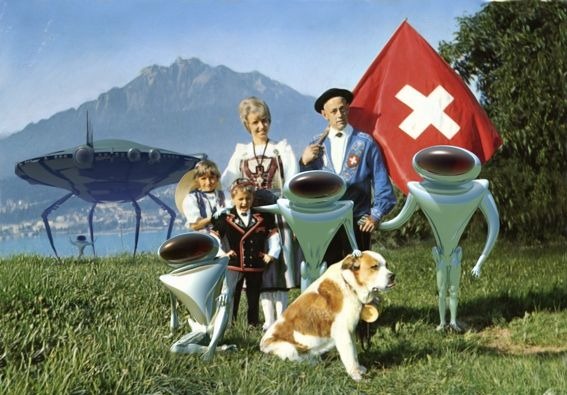
Switzerland’s vote to curb immigration has soured relations with the European Union and prompted companies including Nestle SA to warn of a potential effect on their business.
The vote outcome requires government quotas for all immigrants including European Union nationals.
The referendum responded to concerns over Switzerland’s mushrooming population, which grew 12 percent between 2000 and 2012. That has caused rents to spiral, construction to boom, and space in trains to grow tighter.
Switzerland voted against joining the EU’s precursor in 1992, preferring to stay a landlocked country surrounded by the bloc. A set of bilateral treaties, touching on topics ranging from market access for goods and services to scientific research, govern its relations.
While two recessions in four years have boosted anti-immigration parties across the euro area, Switzerland is unique because the limits will target many highly skilled workers.
It’s not only in parts of Switzerland that people welcomed the vote outcome. European politicians from France’s Marine Le Pen to Geert Wilders of the Netherlands and Heinz-Christian Strache in Austria cheered the decision, saying the Swiss result should resonate in the rest of Europe.
The Swiss People’s Party, or SVP, the biggest in parliament with 26.6 percent of the national vote in 2011, is a staunch opponent of EU membership and is also critical of too much power with the federal government in Bern. It spearheaded the anti-immigration vote, as it has other popular initiatives, billing these as a way for the common citizen to take back power. Party President Toni Brunner is a farmer by profession.
Swiss people feel disadvantaged in the labor market with wage dumping.
Switzerland managed to remain largely unscathed from the debt crisis and recession that afflicted the euro area. In 2013, the unemployment rate among Swiss citizens as measured by the International Labour Organization stood at 3.1 percent while among foreigners it was 8.3 percent.
For the EU, the jobless rate was 12.1 percent last year. At the same time, Swiss house prices have climbed almost 40 percent in the last 10 years.
Switzerland thus seems better off alone as immigrants become a burden to society. Adding fuel to the fire, the clampdown by European governments on tax evaders with secret Swiss bank accounts has at times been portrayed by the SVP as Switzerland getting bossed about by the EU.
Even so, the approval of the immigration ballot has many Swiss worried. Who’s going to clean Swiss toilets, take care of the sick and elderly, and who’s going to wash the dishes in a restaurant?
The banking and pharmaceuticals sectors are the economy’s big pillars. Agriculture makes up only 3.6 percent of employment and about 1 percent of annual output. Only a quarter of the population lives in a rural area, less than Austria or Italy, though more than in France.
Switzerland is doing well, and the EU isn’t. The Swiss want to keep it that way it seems.
Scientists at Penn State University have successfully controlled tiny nanomotors inside living human cells. Consisting of tiny, rocket-shaped bits of metal, the nanomotors were propelled by ultrasonic waves and steered with magnets. Researcher Tom Mallouk wasn’t afraid to talk up potential future applications, saying that the technology could one day be used “to treat cancer and other diseases by mechanically manipulating cells from the inside.” Once inside a living cell, the nanomotors could pulverize the cell’s contents like an “egg beater” or just break the cell’s membrane, Penn State’s note about the research says, which could allow for targeted attacks on specific cells. More importantly, Mallouk says that the nanomotors were able to move independently of one another, instead of the “whole mass of them going in one direction.”
Though it’s a long way off from Mallouk’s self-stated dream of “Fantastic Voyage-style medicine, where nanomotors would cruise around inside the body, communicating with each other and performing various kinds of diagnoses and therapy,” it is the first time that nanomotors have worked inside living cells. Previously, nanomotors required toxic fuels to operate, which obviously wouldn’t work on living tissue. Working inside actual living animals is still a ways off, Mallouk tells CNN that it would be a decade or more before research hit that stage.
Finally, the wait is over. The design of World’s first Thorium based nuclear reactor is ready.
India Today Online brings you the first look of design and prototype of the Advanced Heavy Water Reactor, also termed as AHWR.
It is the latest Indian design for a next-generation nuclear reactor that will burn thorium as its fuel ore.
The design is being developed at Bhabha Atomic Research Centre (BARC), in Mumbai, India and aims to meet the objectives of using thorium fuel cycles for commercial power generation.
The AHWR is a vertical pressure tube type reactor cooled by boiling light water under natural circulation. The unique feature of this design is a large tank of water on top of the primary containment of vessel, called the gravity-driven water pool (GDWP). This reservoir is designed to perform several passive safety functions.
Dr R K Sinha, chairman, Atomic Energy Commission, in an exclusive interview to India Today Online said, “This reactor could function without an operator for 120 days.”
The AHWR is a unit that will be fueled by a mix of uranium-233 and plutonium – which will be converted from thorium by previously deployed and domestically designed fast breeder reactors.
Thorium is an element that is three times more abundant globally than uranium. As all mined thorium is potentially usable to breed reactor fuel. India’s abundant reserves of thorium, constitute 25 per cent of the world’s total reserves.
Earlier, India produced the world’s first thorium nuclear reactor, the Kakrapar-1, in 1993, and as part of India’s three-stage fuel cycle plan, a new Advanced Heavy Water Reactor (AHWR) is being designed, slated for operation in 2016. The country hopes to use thorium-based reactors to meet 30 per cent of its electricity demands by 2050.
The AHWR is slated to form the third stage in India’s three-stag fuel-cycle plan. It is supposed to be built starting with a 300 MW prototype in 2016. Later, the first megawatt of electricity would be be generated by 2025. “To generate a single megawatt of electricity from this world’s first thorium based reactor it would take at least 7-8 years,” said Dr Sinha.
Dr Sinha said, “This will reduce our dependence on fossil fuels, mostly imported, and will be a major contribution to global efforts to combat climate change.”
It is also said to be the most secured and safest reactor, which in future, could be set up in populated cities, like – Mumbai or Delhi, “within the city”.
The latest AHWR design incorporates several passive safety features. These include: Core heat removal through natural circulation; direct injection of emergency core coolant system (ECCS) water in fuel; and the availability of a large inventory of borated water in overhead gravity-driven water pool (GDWP) to facilitate sustenance of core decay heat removal. The emergency core cooling system (ECCS) injection and containment cooling can act (SCRAM) without invoking any active systems or operator action.
The reactor also incorporates advanced technologies, together with several proven positive features of Indian pressurised heavy water reactors (PHWRs). These features include pressure tube type design, low pressure moderator, on-power refueling, diverse fast acting shut-down systems, and availability of a large low temperature heat sink around the reactor core.
The construction on the first AHWR is scheduled to start in 2016 – though no site has yet been announced. Sources says, “nothing has decided, it could be Tarapur in Mumbai or some other location in India”.
A student at McGill University in Montreal, Canada was forced to issue a formal apology for emailing a picture of President Obama kicking open a door–all because some students thought the image was somehow racist.
The image was actually an edited .gif, and was shown by Jay Leno on “The Tonight Show” last fall. It humorously suggests that the president may be fed up with press conferences. McGill student Brian Farnan, vice president of the university’s student government, sent out an email with the .gif and the harmless caption, “Honestly midterms get out of here,” according to Legal Insurrection.
What happened next is almost unbelievable: Another student issued a formal complaint against Farnan for committing a “micro-aggression.”For those not up-to-date on the PC lexicon, “micro-aggression” is the latest phrase of choice for leftist radicals seeking to blame racism for common annoyances suffered by people of all races. Minority activists at the University of Michigan, for example, have insisted that trivial slights, such as “Having your opinion second-guessed in a group assignment,” are micro-aggressions that betray the campus as a hostile place for students of color.
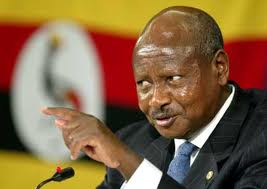
Ugandan President Yoweri Museveni plans to sign a very popular bill into law that prescribes life imprisonment for some homosexual acts, officials said Friday, in a country where homosexuality already has been criminalized.
Museveni announced his decision to governing party lawmakers, said government spokesman Ofwono Opondo. Opondo said the legislators “welcomed the development as a measure to protect Ugandans from social deviants.”
homosexual acts,warned Museveni on Sunday that enacting an anti-gay law would complicate U.S. relations with Uganda and would be a “step backward for all Ugandans.”
His national security adviser, Susan Rice, said via Twitter that she had spoken by phone to Museveni on Saturday night to protest after he told members of his party that he would sign the law.
“As we have conveyed to President Museveni, enacting this legislation will complicate our valued relationship with Uganda,” Obama said.
Museveni’s decision was based on a report by medical experts presented at the retreat, saying that “homosexuality is not genetic but a social behavior,” said Opondo.
Evelyn Anite, a spokeswoman for the governing party, said the report, which had been requested by the president, was prepared by more than a dozen scientists from Uganda’s Health Ministry.
Homosexuality already is illegal in Uganda under a colonial-era law that criminalizes sex acts “against the order of nature.”
The bill is popular in Uganda, one of many sub-Saharan African countries where homosexuals face severe discrimination if not jail terms. A new law in Nigeria last month increased penalties against gays.
After the Ugandan bill was passed late last year, Museveni called for a “scientifically correct” position on homosexuality, ordering the team of government scientists to investigate whether homosexuality is a lifestyle, according to Anite.
Their report led Museveni to believe homosexuality should be punished, she said.
Museveni believes gays should be “rehabilitated”.
Museveni has been under pressure within his own party to sign the legislation, which has wide support among Christian clerics and lawmakers who say it is needed to deter white homosexuals from recruiting Ugandan children.
Following decades of a heavily subdued program, Germany is planning to resume counter-espionage against both the US and other Western allies in response to ongoing revelations surrounding NSA’s global surveillance practices, Der Spiegel reports.
Another primary motivation for the resumption of surveillance is US reluctance to agree to a no-mutual-spying treaty desired by Germany, the reports suggests.
The beefed up program will include more active tracking of US agents operating within Germany’s borders. British embassies – as well as those of the US – could also be targeted, according to the report.
“This step would be an about-face from the decades-long practice of systematically monitoring the activities of countries such as China, Russia and North Korea but rarely the activities of Western partners,” read Spiegel’s assessment of the situation.
One of the revelations considered to be most serious was the fact that the US was monitoring a non-governmental cell phone used by German Chancellor Angela Merkel. According to the files leaked by Edward Snowden, the German Chancellor’s mobile phone has been on an NSA target list since 2002 and was codenamed “GE Chancellor Merkel.” Surveillance and communication equipment installed on the roofs of both the US and British embassies in the capital was also deeply criticized.
Head of the German domestic intelligence service, the Bundesamt für Verfassungsschutz (BfV), Hans-Georg Maassen suggested last November that active operations may be stepped up in the wake of the news. Germany was required to “adjust counter-espionage and take a 360-degree view,” according to Maassen.
In January, Germany called for less rhetoric and more action in the wake of President Obama’s pledge to stop spying on world leaders. While the announcement was greeted with optimism, politicians said it had been “too little, from a German point of view.”
Mere days afterwards, former NSA contractor and whistleblower Edward Snowden chose the German ARD broadcaster to give his first TV interview, stating that: “There is no question that the US is engaged in economic spying.”
Clemens Binninger, part of Merkel’s Christian Democrats party, said that in regards to the discrepancies between countries surveilled, Germany needs to “cease the differentiation and treat them all the same way.”
Chancellor Merkel said on Saturday in her weekly podcast that herself and French President Francois Hollande would review plans to build up a trustworthy data protection network in Europe.
She aired her disapproval of companies such as Google and Facebook, basing their operations in countries with low levels of data protection, while in reality being active in countries with high data protection.
“Above all, we’ll talk about European providers that offer security for our citizens, so that one shouldn’t have to send emails and other information across the Atlantic. Rather, one could build up a communication network inside Europe,” she said.
In the wake of the revelations about US global spying activities, Merkel has become one of the biggest supporters of greater data protection making it mandatory for ministers to use encryption on their phones to secure their communications against intrusion.
However, before the new counter-intelligence plan comes into effect, an agreement must be reached between Merkel‘s office, the Interior Ministry and the Foreign Ministry, Der Spiegel reports. – RT
Iceland, long known for its geothermal power, may become the next Nordic oil state, should predictions of an offshore deposit containing 10 billion barrels of oil hold true.
Icelandic authorities told Dagbladet, a Norwegian newspaper, that the deposit, between the country’s north-eastern coast and the Norwegian island of Jan Mayen, could be worth upwards of $1 billion.
According to an agreement with Norway, the deposits would be spilt between the two countries, but the find was large enough that Iceland could repay its foreign debt several times over.
“If we find a deposit with a billion barrels of oil, Iceland would be able to repay everything it owes,” said Heidar Mar Gudjonsson, the chair of Eykon Energy, an Icelandic oil firm.
Norway has built up an $800 billion wealth fund thanks to the profits from its oil resources in the North and Barents seas.
Iceland’s offshore areas closely resemble Norway’s and that has oil firms hoping that means there is just as much oil. One report showed that studies of seabed samples had found residues indicating that Icelandic waters may indeed be covering reserves as large as those that Norway has found in the Barents Sea.
The US Geological Survey estimated in 2008 that the Arctic contained 90 billion barrels of potentially recoverable oil, some 13 percent of the globe’s untapped reserves.
Iceland is pinning its hopes on an area about 200 kilometres north of its coast. The Dreki region is the subject of a 1981 agreement with Norway, giving each country the option to take a 25 percent share of any drilling license its neighbour issues in the region.
Norway has halted its exploration in the region, saying that it was content to rely on its agreement with Iceland.
Russia banned adoptions by single people from countries where same-sex marriage is legal.
The new measure comes into law in the middle of a Winter Olympics which gay activists have already tried to derail. The IOC has responded by emphasizing a separation between politics and sports.
The decree, signed by Prime Minister Dmitry Medvedev and posted on the government’s website Thursday, also reiterates a ban on adoptions by same-sex couples who are in unions “recognized as marriages and registered in accordance with the law of a country where such marriages are permitted.”
The measure came as an amendment to a law the Kremlin put in place in July banning same-sex couples from adopting children. That followed by days another law against exposing minors to gay propaganda, or any actions or statements that condone nontraditional relationships.
The latest decree doesn’t affect U.S. citizens because Russia already banned all Americans—regardless of their sexuality or marital status—from adopting Russian children in late 2012. It would apply to single people in other countries, mainly in Europe, where gay marriage has been legalized.
A spokesman for the European Union declined to comment.
Some countries don’t permit gay individuals or couples to adopt, according to the U.S. State Department. And more than a dozen countries don’t allow single people to adopt, according to a 2009 report by the U.N. Department of Economic and Social Affairs.
In an interview ahead of the Sochi Games last month, Russian President Vladimir Putin said gay people were welcome to attend the Olympics so long as they “leave the children in peace.”
So far, there haven’t been any prominent expressions of support for gay rights by athletes competing in Sochi, who have been told by Olympic officials to keep their political views out of the competitions.
Mr. Putin has increasingly crusaded against Western influence and “genderless and infertile” Western tolerance.
Angela Merkel greets one of the ‘Wise Men’ at the Chancellery in Berlin
Despite a growing PC backlash against it, blackface is still hugely popular in Germany, where people insist they aren’t racist
With Karneval ready to kick off later this month, many in Germany are picking out their festive getups and preparing to drink as much Hefeweizen as possible.
It has a long history in this country of roughly 82 million, where Nazism is banned.
“It’s horrible that black people are being portrayed as clowns and funny-looking people,” says Tahir Della, spokesperson for the Initiative for Black People in Germany, an anti-racism group. “It’s degrading.”
Hougan Jean Claude is possessed by the Spirit Ogou. Ogou is the male warrior spirit who wields a machete during the ceremony. Ogou is known as a tough task master who regularly calls people out at ceremonies to demand that the become initiated into the Vodou religion.
Mockery, if not total degradation, is part of the history of Germany’s Karneval. Though the holiday itself goes back further, the tradition of wearing costumes developed during the 1800s in the western part the country. At the time, the Germans were under French rule, and they used Karneval as a chance to mock their foreign overlords.
In the modern era, the mockery has moved into other realms. It’s all supposed to be in good fun. One advertisement for a costume on Amazon features a white actor in blackface with cartoonish red lips, a minstrel-like smile, a spear in one hand and a bone in the other (the company did not immediately respond to a request for comment). Another costume on Karneval-Megastore, a site run by the German company Kultfaktor, features a man in blackface wearing a grass skirt with a bone through his nose.
The company later apologized, saying it had returned them to the manufacturer, and expressing “regret and dismay” that anyone would think these outfits were racist.
“Karneval is all about having fun,” says the Kultfaktor spokesperson. “Of course we play with clichés, but this fact also applies at Karneval to all categories of people. We also have costumes that take light-skinned people for a ride, and this may be overlooked.”
For light-skinned people, stereotypes about black people linger: That they’re lazy, stupid, brutish and subhuman.
In Germany today, many claim that minstrel shows were a uniquely American phenomenon with little or no history on the continent. But blackface is sometimes shunned in the U.S., though there are some glaring exceptions.
Europe has been slower to change. In Germany, chocolate-covered marshmallows are still often called Negerkuss, or “Negro kiss,” and some German-made candy was pulled from the shelves in Sweden just a few weeks ago, following customer complaints that its ads were racist.
Germany’s blackface problems go far beyond costumes or candy. German Chancellor Angela Merkel posed with children dressed in blackface last year for an official event.
Two years ago, a German theater chose to feature actors in blackface—a decision that sparked online backlash. At the time, some argued that there weren’t enough black actors in Germany.
So why is it still acceptable in Germany? Part of the problem is that racism here means Nazism, according to T. Vicky Germain, a filmmaker and activist in Berlin. If you try and explain why something’s racist, people will often give you an annoyed look and say they aren’t Nazis. “That’s a serious problem,” says Germain.
Just two months ago, nearly 7 million people tuned in to ZDF, a major, publicly funded German TV station, when the program presenter on Wetten, Dass…? (Wanna Bet That…?) dared the audience to come dressed as two characters in a well-known children’s book. For one of the characters, the presenter suggested audience members use “coal or shoe polish” to blacken their faces.
The studio audience complied, and so did the mayor of Augsburg, a city of in southern Germany. After the incident, the network refused to apologize, and the local newspaper argued that the incident could not be called racist because audience members were dressing up like a “bold, adventurous and sympathetic hero.”
As one Reddit user, whose name has since been deleted, writes: “I bet that about 99 percent of Germans could not tell you what a minstrel show or blackface is. [The children’s character] has a positive image here and this has nothing to do with a minstrel type black caricature at all.”
On social media, some were outraged, as the hashtag #blackface spread widely. But the practice is still so common—in costume ads and elsewhere—that it’s not likely to disappear anytime soon.
Icy weather in the US has led to the highest number of flight cancellations in more than 25 years, according to an analysis by The Associated Press.
U.S. airlines have canceled more than 75,000 domestic flights since Dec. 1, including roughly 14,000 this week. That’s 5.5 percent of the 1.35 million flights scheduled during that period, according to AP calculations based on information provided by flight tracking site FlightAware.
It’s the highest total number and highest percent of cancellations since at least the winter of 1987-1988, when the Department of Transportation first started collecting cancellation data.
On Thursday, more than 70 percent of flights were canceled in Baltimore, Philadelphia, Washington D.C. and Charlotte, N.C. thanks to a winter storm that paralyzed most air traffic along the East Coast. Ice storms this winter have caused major headaches in typically warm cities like Atlanta, Dallas and Houston.
“This year is off to a brutal start for airlines and travelers,” says FlightAware CEO Daniel Baker. “Not only is each storm causing tens of thousands of cancellations, but there’s been a lot of them.”
10,000 racist tweets are sent ever day, a major new study into racism on social networks has discovered.
Research by the think tank Demos found the biggest insult was ‘white boy’.
Researchers analysed 126,975 English-language tweets from across the globe over a 9-day period in the biggest ever study of Twitter racism.
The Demos researchers claim 10,000 racist slurs are tweeted every day.
The study found that slurs were employed in six distinct ways: negative stereotype; casual use of slurs; targeted abuse; appropriated; non-derogatory; and offline action/ideologically driven.
The most common type of slurs were actually meant in a non-offensive, non-abusive manner, or to express in-group solidarity.
This group represented between 47.5-70 percent of tweets, depending on whether human or computer analysis were employed.
Researchers revealed the most common racial slurs used on the micro-blogging site included ‘whitey’ and ‘pikey’.
However, as many as 70% of tweets using such language were deemed to be using slurs in non-derogatory fashion.
‘This sparks the debate about the extent to which Twitter truly is a platform for racism and abusive language,’ the report claims.
Jamie Bartlett, Director of CASM at Demos and author of the report, said: ‘Twitter provides us with a remarkable window into how people talk, argue, debate, and discuss issues of the day.
‘While there are a lot of racial slurs being used on Twitter, the overwhelming majority of them are not used in an obviously prejudicial or hateful way.
Of the 126,975 English-language tweets from across the globe, further analysis suggests only 1% of tweets used a racial slur in an ideological context within a political statement or in a call to action in the real world.
Analysis found that as few as 500 tweets a day were directed at an individual and appeared on first sight to be abusive.
A Florida man who shot and killed a black teenager in a dispute over loud music defended himself in court at a racially-charged trial which has revived memories of a notorious case that gripped the United States last year.
The murder trial of Michael Dunn has drawn comparisons to that of neighbourhood watch volunteer George Zimmerman, who was cleared of killing teenager Trayvon Martin after claiming self-defence under Florida’s controversial ‘stand your ground’ law.
Dunn, 47, who is white, insisted he was in fear for his life when he opened fire on a red sport utility vehicle after exchanging words with the black teenagers inside when he asked them to turn their music down.
“I was just going ‘oh my God, where is all this hostility coming from?’” Dunn told the court as he described seeing one of the teens pull out what looked to him like a shotgun.
Police did not find evidence of a gun in the vehicle and the three surviving teens testified that they never threatened Dunn.
Dunn insisted he was “in a panic” when he yanked his pistol out of his glove box as one of the teens started to get out of their car and come towards him.
“This is the point where he is coming to kill me, coming to beat me,” Dunn testified. “He made it quite clear what his intentions were.” Dunn said he kept firing as the sport utility drove away because he was afraid that he or his fiancé — who had rushed out of the gas station shop when she heard the shots — might get hit by returning fire.
On the night of the fatal gas station shooting, Dunn said the music from a red Dodge Durango parked next to him grew ‘really loud’ after his fiancée went into the store.
‘My review mirror was shaking, my eardrums were vibrating. It was ridiculously loud,’ Dunn said.
‘I said, ”Can you turn that down please?”’ he testified. ‘They turned it off. I said thank you.’
Dunn claimed that the music had not made him angry but described it as ‘rap c***’ and ‘obnoxiously loud’.
The young men in the Durango soon began using expletives, the word ‘cracker’ and then turned the volume back up, Dunn claimed.
‘I start hearing things like F-him and F-that,’ Dunn said. ‘It was mean-spirited.
‘When they turned the music on the second time i wasn’t going to ask them for any more favors again.
‘Now it got ugly. I had no reaction–I’m looking forward and hoping Rhonda comes out [of the store].
‘Now there’s thumping bass and he’s yelling over the bass. I hear ”I should kill that m***********.”’
‘I’m flabbergasted. Now I’m paying attention to what they are saying. Then I hear in a more elevated voice: ”I should f****** kill, that m**********.”’
Dunn added: ‘At this point, I think I should try and deescalate this.’
Dunn then claims that a young man, identified as Jordan Davis, who was seated in the rear of the car, bent down and appeared to pick up something by his feet.
The accused said that at this point, he did not reach for his pistol stored in the glove compartment of his car.
Dunn said Davis ‘came back up and slammed whatever it was against the door’.
He said: ‘I saw sticking above the windowsill about four inches of a barrel. It was a thump I heard against the door. It looked like a 12-gauge or maybe 20-gauge [shotgun].’
Dunn testified: ‘I was in fear for my life and I was stunned. I’ve never been threatened, let alone threatened with a firearm. I was incredulous–I couldn’t believe what I was hearing and seeing.’
The accused said that Davis began to get out of the car and yelled at him: ‘This s*** is going down now.’
Dunn said: ‘This is the point where my death is imminent, he made it very clear what his intentions were. I’ve never been in that position.’
Dunn testified that he had no idea that he had shot and killed Jordan Davis, 17, until he saw a news alert on his phone once he got back to his hotel.
He explained that he did not immediately contact local police because he wanted to get the advice of a neighbour who works in law enforcement and was convinced it was an open and shut case of self-defence.
Unlike Zimmerman — who did not face charges for weeks after claiming self-defence in the shooting of an unarmed teenager — Dunn was arrested and charged with murder the day after the shooting. He has been held in jail pending his trial.
This website uses cookies to improve your experience. We'll assume you're ok with this, but you can opt-out if you wish. Cookie settingsACCEPT
Privacy & Cookies Policy
Privacy Overview
This website uses cookies to improve your experience while you navigate through the website. Out of these cookies, the cookies that are categorized as necessary are stored on your browser as they are essential for the working of basic functionalities of the website. We also use third-party cookies that help us analyze and understand how you use this website. These cookies will be stored in your browser only with your consent. You also have the option to opt-out of these cookies. But opting out of some of these cookies may have an effect on your browsing experience.
Necessary cookies are absolutely essential for the website to function properly. This category only includes cookies that ensures basic functionalities and security features of the website. These cookies do not store any personal information.
Any cookies that may not be particularly necessary for the website to function and is used specifically to collect user personal data via analytics, ads, other embedded contents are termed as non-necessary cookies. It is mandatory to procure user consent prior to running these cookies on your website.