SA’s contaminated water poses danger to agriculture

riversSouth African river water is highly contaminated with a cocktail of bacteria. This water is used to irrigate agricultural produce all over the country and, if eaten raw, the contaminated food reaches and can cause illness in consumers.

This was said on Monday by Trevor Britz, professor in food science at Stellenbosch University at a congress being held by the SA Association for Food Science and Technology at the CSIR in Pretoria.

Britz is a scientist with a DSc from Pretoria University, specialising in environmental bacteriology. With colleague C Lamprecht, he has for four years headed a team conducting a study funded by the Water Research Commission and the Department of Agriculture on the use of river water for irrigation in agriculture.

The results have shown unequivocally that the microbial levels of rivers and fresh produce monitored in South Africa are unacceptably high.

Britz told the congress that consumption of fresh produce was increasing worldwide and, since often eaten raw, it made an excellent vehicle for disease transmission. Not surprisingly, food-borne disease outbreaks linked to fresh produce are increasing in number and intensity.

Although fresh produce can become contaminated at any time in the agri-food chain, pre-harvest contamination is considered the most likely origin. One important source of pathogens found on fresh produce is from faecally-contaminated irrigation water. Over the past decade the microbial quality of many local rivers used for irrigation of fresh produce has decreased and pollution levels are far above recommended World Health Organisation and local guidelines.

In some rivers faecal indicators reached “log 7” cell concentrations. In many cases the rivers did not meet the international faecal guideline for safe irrigation with Escherichia coli concentrations exceeding 1 000 colony-forming unit (cfu) per 100 ml-1.

The presence of indicator organisms indicated unsanitary conditions, as well as the presence of potential pathogens including staphylococcus, klebsiella, listeria, salmonella, enterococcus, coliforms, E coli, norovirus and hepatitis-A viruses, and protozoa.

It was concluded that there was a high risk of exposure to human pathogens when water from these rivers is used to irrigate produce that is consumed raw.

In view of this, as well as the seriousness of recent E coli food-borne outbreaks which involved multi-drug resistant pathogenic E coli strains, it could be argued that the potential of E coli as an emerging pathogen on fresh produce poses a serious risk.

In his lecture Britz said informal settlements and industrial pollution were the main sources of river contamination. “Our findings are extremely unpopular with both central and provincial governments and municipalities.”

Intervention was required to reduce the health risks but concerns were dismissed, for instance by saying the E coli contamination was reduced by the rivers. This was found to be untrue as the contamination was often just as bad downstream.

Education of the public was paramount in terms of hygiene, like washing hands and food, he said.

From the authorities, better sewerage infrastructure was urgently required. Many settlements had sewerage and water, but the capacity was too low to handle the load.

Unless something was done, the risk would increase, he said. – Pretoria News

Argentinian farmland fetch high prices

Argentine agri exports looking good

Twenty percent of GDP in Argentina is agriculture-related, making it an important country for agriculture production due its high yields.

Argentina is the world’s largest exporter of sunflower oil, a leading exporter of soybean oil and among the top five exporters of soybeans and corn. More than a third of Argentina’s exports are in agri products, which earned them $25 billion in 2010/2011.

Export oportunities is a key driver for agricultural production for 1014/2015, particulary for grains, rice and sugar. However a key risk is the county’s rising food inflation, which could force the government to try and stem exports as has been done to beef exports in the past.

The government is taking positive steps to change grain seed laws to increase the biofuel blending limit, which could increase production in the medium term.

It could help foster a good relationship with the farmers and capitalize on its strong production potential.

Beef consumption is expected to decline as consumers switch to poultry. It has unintended consequences.

Farmers will build stocks on the back of high prices and Argentina could return to being one of the world’s largest beef exporters over the medium term.

The long-term soybean forecasts should be revised as the government passes new seed laws to encourage farmers to use genetically modified GM seeds.

Only 35% use it now and that could change to 80% shortly. It would cut production costs while allowing farmers to earn more revenue from their output.

It could mean that Argentina could surpass Brazil and become the world’s second largest soybean exporter. At the moment they are in third place.

A continued rebound in corn is expected as Buenos Aires Grains Exchange already saw a 4% area increase in corn planted for the 2011 season. Argentina is the world’s second largest corn exporter.

Le Pen’s party wins big in by-election

Marine Le Pen
Marine Le Pen

Two far-right candidates in France have won 50 per cent of the vote in a single by-election.

The success on Sunday night was described as a ‘warning shot’ to mainstream politicians who are accused of letting ordinary people down over issues like immigration.

Front National (FN) candidate Laurent Lopez took 40.4 percent of the vote in the first round of voting in the south eastern town of Brignoles.

Another far-right party, the ‘Parti de France’, took 9.1 percent.

The centre-right UMP, France’s main opposition parliamentary party, came second with 20.9 percent.

The result led to Marine Le Pen, the leader of the FN – which wants to call a halt to new arrivals – today saying that her party is ‘already the main party in France.’

Its support has been rising consistently, with recent opinion polls suggesting it could take around 16 percent of votes in municipal elections scheduled for next March.

Analysts say economic mismanagement by the ruling Socialists, including record unemployment, have all contributed to the FN’s success.

But it is the contentious issue of immigration, especially from eastern European and Muslim countries, which the FN particularly focuses on.

It says that spiralling crime figures are the result of lax European Union policies which allow thousands of undesirables to enter France.

Shanty towns full of Roma gypsies have, for example, begun springing up on the edges of major cities like Paris and Marseille.

The spokesman for the Socialist party called for the left to unite against the rise of the FN. He said the by-election result was a ‘warning shot’ ahead of the municipal elections – the first real electoral test since President Francois Hollande’s Socialists came to power

David Assouline, spokesman for the Socialist party, called for the left to unite against the rise of the FN.

Mr Assouline said the by-election result was a ‘warning shot’ ahead of the municipal elections – the first real electoral test since Francois Hollande’s Socialists came to power last year.

‘It proves what we have been saying for months,’ Mr Assouline added. ‘When the FN stands strong and tall, the left must absolutely be united from the first round.’

The UMP will battle against the FN candidate in the second round of the Brignoles poll on October 13th.

The Socialist party had no candidate in the by-election and had publicly supported the far-left PCF party, which was eliminated in the first round.

Mr Assouline said his party now called on Brignoles residents to vote for the UMP candidate in the second round rather than let the FN in.

Annoyed at constant references to the FN’s extremism, Mrs Le Pen said last week: ‘We are absolutely not a party of the right. Those who think that are making a total analytical error.

‘I’m considering seeking a judicial ruling that the description ‘extreme right’ is a pejorative term deliberately used to damage the Front National. For journalists to label the FN like this is unethical, biased and intellectually sloppy.’

US soldier killed because he was white

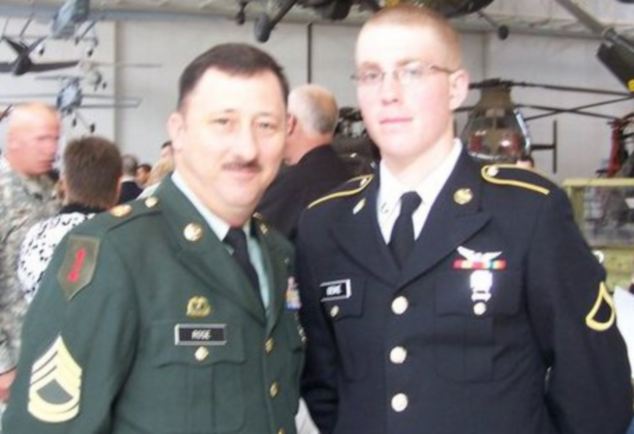
Tevin Geike, right
Tevin Geike, right

A Joint Base Lewis-McChord soldier was in Washington, US, stabbed to death in a parking lot because he was white.

20-year-old Tevin Geike was walking with two other white soldiers along Pacific Highway SW when a group of black men drove by and shouted a racial comment toward the soldiers, the Lakewood Police Department said.

“One of the soldiers yelled back something about the suspects treating combat soldiers with disrespect,” Lt. Chris Lawler said.

The car turned around and the men confronted the soldiers, according to reports. As the verbal confrontation ensued, the driver of the vehicle realized the men were actually combat veterans and called his friends off. While the men headed back to their vehicle, one of the suspects appeared to have bumped into Geike, witnesses say.

The soldiers saw Geike fall to the ground as the car sped away. He was bleeding profusely from stab wounds and died at the scene.

“We came down here, and he was already dead in my brother’s arms,” said Glenn Zimmerman, a friend of Geike.

Friends say there was a party at the Biltmore Motel that evening, and Geike was gathering with family and friends after being discharged from the military. Zimmerman said Geike’s contract was up, and he was celebrating serving his country.

“I don’t understand how someone can do this – that man, he almost gave his life for people to enjoy the freedoms they have and he was just stabbed for no (expletive) reason,” he continued.

The initial remark that started the encounter seemed derogatory in nature, said Lakewood police Lt. Chris Lawler. He said it was too early to say that race was the motivating factor, but investigators were exploring whether the killing should be classified as a hate crime.

“We are certainly considering it, for sure,” Lawler said.

Police are searching for a midnight blue BMW-type sedan or VW Jetta-type car with four doors, tinted windows and stock rims, and low profile tires.

All five suspects are black men in their 20s, police say. The main suspect is believed to be in his early 20s, about 6’1″, medium build, and was wearing a blue zip-up hoodie. The driver was described as having short cropped hair, and wearing a blue and white horizontal striped shirt.

Detectives were in the area Saturday looking for businesses or others who might have video from around the time of the stabbing. Lawler said the person who stabbed the soldier should come forward and show remorse now.

“He’s going to get caught,” Lawler said. “Nobody’s going to give up until we catch up.”

Geike, of Summerville, SC, entered the Army in October 2010 and reported to Fort Jackson, SC, for basic training. According to unit records, Spc. Geike was a member of the 7th Infantry Division, arrived at JBLM in April 2011, and had been in the Army 35 months.

Police however later said the stabbing death of a white Army soldier allegedly at the hands of a group of African American comrades was not a hate crime – despite witnesses claiming they called him a ‘cracker’ during the confrontation.

A group of five black men – called Tevin a ‘cracker’, a racist term for a white person.

Police have all but ruled out hate crime charges after interviewing the alleged attackers.

Lakewood police officers said they no longer believed the killing to be a hate crime following the arrests and speaking to everyone they believed were involved.

All the suspects are from Joint Base Lewis-McChord and served in the same combat infantry unit as Tevin.

The accused are Jeremiah Hill, 23 – the alleged murderer – Cedarium Johnson, 21; and Ajoni Runnion-Bareford, 21. Two others are still being sought.

‘There’s a derogatory term they use for white people, and it’s cracker, and I heard that phrase repeated numerous times which is why I thought race had something to do with it.’ The witness added that the black men were ‘looking for trouble. They were looking for somebody to attack’.

Tevin’s mother Jennifer Rose fought back the tears as she said that she had got a text from her son just hours before his death saying he was going to get a tattoo to celebrate his military graduation.

She said: ‘Tevin trusted everybody until they gave him a reason not to trust them. He was really kind-hearted and he would give you the shirt off your back.

‘He absolutely loved being in the military and was looking forward to graduating. He wanted to be an oil rigger.’

Mrs Rose, 39, added, that there was ‘no way’ that Tevin would have said anything racist to provoke his killer.

She said: ‘I have a hard time with that (the racism) because we have some really good friends who are black and we consider them family. It may have been racial from their side but not my son’.

The attack has sparked an outpouring of emotion on Facebook with Tevin’s step-father Dean Rose writing: ‘I love you son and the world is not as good without you in it. You will be missed. RIP son’.

Tevin’s younger brother Jarod wrote: ‘I want to cry but can’t all the tears are gone…feels like a nightmare just want it to end….trying to stay strong is hard when it comes to a family member especially a brother getting murdered.

During his service Tevin has been awarded the National Defense Service Medal, Global War on Terrorism Service Medal, Army Service Ribbon and Aviation Badge.

China warns US as Republicans vow to stand and fight

China, the biggest foreign creditor of the United States, has waded into the American budget crisis, warning Congress that it must resolve the political impasse over the debt ceiling without further delay.

The Chinese Vice Foreign Minister, Zhu Guangyao, told America’s deadlocked politicians on Monday that “the clock is ticking” and called on them to approve an extension of the national borrowing limit before the federal government is projected to run out of cash on 17 October.

uschina“We ask that the United States earnestly takes steps to resolve in a timely way the political issues around the debt ceiling and prevent a US debt default to ensure the safety of Chinese investments in the United States,”  Mr Zhu told reporters in Beijing. “This is the United States’ responsibility,” he added.

The American government entered its seventh day of shutdown on Monday, following the failure of Congress to approve the national budget a week ago. And there was little sign of progress on the still more crucial issue of the fast-approaching “debt ceiling”  deadline. Yet rather than indicating  a willingness to negotiate, the Republican Speaker of the House of Representatives, John Boehner, stated on Sunday that it was “time for us to stand and fight” over the budget. He added that a default was “the path we’re on”. American stock markets opened down in response to the belligerent comments yesterday, with the S&P 500 Index of leading shares shedding 0.5 per cent.

In September 2008 China eclipsed Japan to become the biggest single foreign creditor of the US federal government. The US administration estimates that the China government holds at least $1.3 trillion of its bonds. The total could be higher because Beijing is known to hold American debt through intermediaries. And, in total, the Beijing authorities have $3.5trn of dollar-denominated assets, which would also be hit hard in the event of a default.

These vast foreign exchange holdings are a by-product of China’s closed financial system and persistent current account surplus, which means that most foreign currency that enters the country accumulates with the central bank. The central bank then invests the money in normally “safe” dollar assets. The vast dollar reserves are also a legacy of China’s policy in recent decades of artificially holding down the value of its currency, the renminbi, in order to boost the overseas sales of its politically influential export industry.

However, economists have criticised the popular idea that China could exert political or economic leverage over Washington by threatening to sell its dollar investments, since such a drastic shift would ultimately serve to undermine the paper value of Beijing’s own vast investment portfolio. Nevertheless, China’s creditor position and its status as the world’s second largest economy gives its voice some authority in Washington and Mr Zhu made it clear that private representations had already been made. “The US is clearly aware of China’s concerns about the financial stalemate and China’s request for the US to ensure the safety of Chinese investments,” he said yesterday.

Since the global financial crisis, which led to a sharp depreciation in the value of the dollar against the renminbi, the authorities in Beijing have been concerned about the fact that so much of their national reserves are held in the form of the American currency. China has been promoting the idea of a new reserve currency to replace the greenback, with some analysts suggesting that the renminbi could one day take its place.

Mr Zhu stressed that it was vital, not only for China but the wider global economy, for America to resolve its budget impasse. “Safeguarding the debt is of vital importance to the economy of the US and the world,” he said. Referring to a similar deadlock in 2011, which led to a downgrade of the US AAA credit rating by the Standard & Poor’s agency, Mr Zhu said: “We hope the United States fully understands the lessons of history.”

The concerns over the stability of the dollar come at a time of geo-political flux. Barack Obama has sought to “pivot” his foreign policy to Asia to counter China’s growing military influence. But the shutdown has forced the US President to cancel his visit to Asia this week to attend a summit. – The Independent

Gulf states to introduce medical testing to detect gays

arabgaysBahrain, Kuwait, Qatar, Oman, Saudi Arabia and the UAE already outlaw homosexuality, but are toughening their stance.

A medical test being developed by Kuwait will be used to detect homosexuals and prevent them from entering the country – or any of the Gulf Cooperation Countries (GCC), according to a Kuwaiti government official.

GCC member countries – Bahrain, Kuwait, Qatar, Oman, Saudi Arabia and the United Arab Emirates – already deem homosexual acts unlawful.

This stance is being toughened, according to Yousouf Mindkar, the director of public health at the Kuwaiti health ministry.

He told Kuwait newspaper Al Rai: ‘Health centres conduct the routine medical check to assess the health of the expatriates when they come into the GCC countries. However, we will take stricter measures that will help us detect gays who will be then barred from entering Kuwait or any of the GCC member states.’

Those taking part in homosexual acts in Kuwait, if they’re under 21, can receive a jail sentence of up to 10 years.

Earlier this month Oman newspaper The Week was suspended over an article that was deemed to be sympathetic to homosexuals, according to the BBC.

It’s illegal to be gay in 78 countries, with lesbianism banned in 49. Five countries mete out the death penalty to gay people – Iran, Saudi Arabia, Sudan, Yemen and Mauritania.

Iran: Since 1979, the government has executed more than 4,000 people charged with homosexual acts. A non-adult who engages in consensual sodomy is subject to a punishment of 74 lashes.

Saudi Arabia: Although the maximum punishment for homosexuality is execution, the government tends to use other punishments – such as fines, prison sentences, and whipping – unless it feels that homosexuals have challenged state authority by engaging in social movements.

Sudan: For homosexual men, lashes are given for the first offence, with the death penalty following the third offence. 100 lashes are given to unmarried women who engage in homosexual acts.For lesbian women, stoning and thousands of lashes are the penalty for the first offence. Today, the issue has divided some religious communities. In 2006, Abraham Mayom Athiaan, a bishop in South Sudan, led a split from the Episcopal Church of Sudan for what he regarded as a failure by the church leadership to condemn homosexuality sufficiently strongly.

Yemen: Homosexuality is still illegal in Yemen in accordance to the country’s Shari’ah legal system. Punishment ranges from flogging to death.

Mauritania: The Shari’a law applies in Mauritania. The penal code states that, since 1983,any adult Muslim caught engaging in an ‘unnatural act’ with a member of the same sex is punishable with the death sentence by public stoning.

Tanzanian arrested for raping teenager

rape7Alexandria, Eastern Cape – A 33-year-old black man accused of raping a teenager has been arrested in Alexandria, Eastern Cape police said on Monday.

The Tanzanian man was taken to custody on Sunday after allegedly raping a 15-year-old girl, said Lieutenant Luvuyo Mjekula.

The man tried to bribe her into silence, but she lodged a complaint.

“The suspect has previously been charged for drug-related offences, but (has been) released due to technicalities,” said Mjekula. – Sapa

Bob Geldof: World will end in 2030

bobtony
Blair and Geldof

Sir Bob Geldof has declared we ALL have less than 17 years to live.The musician-turned-activist reckons the world will end in 2030 – leading to the extinction of humankind.

Sir Bob, 61, based his miserable prediction on the effects of climate change.

“The world can decide in a fit of madness to kill itself,” he told a group of youngsters at a summit in Johannesburg, South Africa.

“We may not get to 2030. We need to address the problem of climate change urgently”

The former Boomtown Rats singer also warned “the next war will not be a World War One or a World War Two, it will be the end.”

He added: “We may not get to 2030. We need to address the problem of climate change urgently.”

Sir Bob is best-known for his attempts in helping to fight famine in Africa, staging Live Aid at Wembley Stadium in 1985.

He finished his speech by apologising for being “bloody miserable”, but added: “just get on with it”.

Despite the dire warnings on climate change, it emerged last month that a million square miles of Arctic seas have frozen in the past year as a new environmental trend takes hold, dubbed “global cooling”.

The extraordinary “reverse” of global warming has led to a 60 per cent rise in ice-covered ocean. Just six years ago, some scientists were predicting that all of this ice would have melted away by 2013.

The big chill has persuaded some experts that temperatures will keep falling for decades and throws fresh doubts on claims that global warming will devastate the planet.

Bob Geldof claims man-made climate change has wrecked the planet

Details of the latest twist in the debate emerged in a secret memo to the United Nations Intergovernmental Panel on Climate Change.

It says that a chillier-than-usual summer has left a thick ice layer stretching from the Canadian islands to the northern coast of Russia.

The ice prevented dozens of yachts and a cruiser getting through America’s North-West Passage.

The shock memo surfaced just days before the Arctic freeze is about to begin and six years after warnings that global warming would melt the ice by this winter.

An ice-free Arctic was boldly predicted in a 2007 by Professor Wieslaw Maslowski, of the Naval Postgraduate School in Monterey, California.

He said his grim but conservative estimate was provided by the most realistic computer models. Cambridge University expert Professor Peter Wadhams added: “This is not a cycle, not just a fluctuation. In the end, it will all just melt away quite suddenly.”

On the back of the dire warnings, billions of pounds were invested in green measures to combat agents of climate change such as greenhouse gas emissions.

But the secret UN memo revealed that the ice has spread quickly following the smallest ever frozen surface area, this time last year.

It also shows how governments who fund the panel are terrified at the implications of the new predictions. – dailystar.co.uk

Saudi black ops behind Syrian chem attack

blackopsThe August chemical weapons attack in the Syrian capital’s suburbs was done by a Saudi Arabian black operations team, Russian diplomatic sources have told a Russian news agency.

“Based on data from a number of sources a picture can be pieced together. The criminal provocation in Eastern Ghouta was done by a black op team that the Saudi’s sent through Jordan and which acted with support of the Liwa Al-Islam group,” a source in the diplomatic circles told Interfax.

The attack and its consequences had a huge impact on the Syrian situation, another source said.

“Syrians of various political views, including some opposition fighters, are seeking to inform diplomats and members of international organizations working in Syria what they know about the crime and the forces which inspired it,” he told the agency.

Liwa Al-Islam is an Islamist armed group operating near Damascus headed by the son of a Saudi-based Salafi cleric. The group claimed responsibility for the bombing of a secret governmental meeting in Damascus in July 2012 that killed a number of top Syrian officials, including Defense Minister Dawoud Rajiha, his deputy Asef Shawkat, and Assistant Vice President Hassan Turkmani.

The allegations mirror a number of earlier reports, which pointed to Saudi Arabia as the mastermind behind the sarin gas attack, which almost led to US military action against Syrian government. Proponents of this scenario say intelligence services in Riyadh needed a false flag operation to provoke an American attack in Syria, which would tip the balance in favor of the armed opposition supported by Saudi Arabia.

While the majority of Western countries say they are certain that the Syrian government carries the blame for the attack, Damascus maintains that the rebel forces must be behind it. Russia shares this conviction too, calling the incident a provocation.

Back in March US President Barack Obama said the use of chemical weapons would be a ‘red line’ for the Syrian government, crossing which would prompt America’s intervention into the bloody Syrian conflict. After the August attack, which the US believes has claimed some 1,400 lives, the president was called on his words by many supporters of the Syrian opposition both at home and outside of the US.

The plan for military action was put on pause after a Russia-brokered deal with Damascus, which agreed to join the Organization for the Prohibition of Chemical Weapons (OPCW) and destroy its stockpile of chemical weapons. Experts from OPCW are currently in Syria preparing for the disarmament. – RT

Kenya pushing for AU-split from ICC

iccAfrican leaders will debate the continent’s “relationship” with the International Criminal Court at a special summit on October 11, officials said Friday, amid growing opposition to the tribunal.

The 54-member African Union has accused The Hague-based ICC of singling out Africans for prosecution and has previously called for the court to drop crimes against humanity trials of Kenya’s leadership.

“They will discuss African relationship with ICC,” the deputy head of the AU’s executive branch, Erastus Mwencha, himself a Kenyan, told AFP.

Diplomats say member states of the court, which was founded primarily to try genocide, war crimes and crimes against humanity, are expected to discuss a possible united pullout from the ICC.

African countries account for 34 of the 122 parties to have ratified the Rome Statute, the court’s founding treaty, which took effect on July 1, 2002.

Mwencha said the cases of Kenyan President Uhuru Kenyatta and his deputy William Ruto were not specifically earmarked for discussion, saying only that the “agenda is very broad.”

Kenyatta and Ruto, as well as former radio boss Joshua Arap Sang, face crimes against humanity charges for their alleged roles in orchestrating ethnic violence after disputed 2007 elections. The violence left at least 1 100 dead and more than 600 000 homeless.

Last month, Kenyan lawmakers voted on a motion to withdraw recognition of the court’s jurisdiction.

Any move by the AU to leave the ICC’s Rome Statute will have no effect on the current trials, and pulling out is a lengthy process that must be done by nations on an individual basis.

The pan-African bloc in May accused the ICC of “hunting” Africans, and has requested that the cases against Kenyatta and Ruto be transferred to Kenya.

The trial of Ruto and Sang is already under way, and Kenyatta’s trial is set to begin in November. The three have pledged their cooperation with the court and maintain their innocence.

The ICC maintains that it is not targeting Africa as a continent, pointing out that many of the cases under investigation in Africa were referred to the court by the countries themselves.

It could lead to a breakdown in relations between the court and African leaders. Tensions between the African Union (AU) and the court (ICC) are nothing new, but the meeting in Addis Ababa, the Ethiopean capital, has the potential to irretrievably damage relations between them.


“The Kenyans were criss-crossing Africa in search of support for their cause even before their parliament voted to withdraw from the ICC,” said one AU diplomat. “A complete walkout by signatories is certainly a possibility – but other requests are also possible.”

Ruto and Kenyatta have been seen as stalwarts in the fight against Islamic extremism and have argued that their absence for months on end, particularly in the case of Mr Kenyatta, is not just dangerous but also untenable.

It is not just Kenya that is promoting the anti-ICC agenda and pointing out that all eight cases it is investigating are in Africa.

Sudanese president Omar al-Bashir, wanted for genocide and crimes against humanity in Darfur, visited Kenya last month but was not arrested, despite an ICC request. He says the charges are “exaggerated” and describes the ICC as part of a “western plot” against him.

Last week, Ivory Coast’s government decided not to transfer former first lady Simone Gbagbo to join her husband in The Hague on charges of crimes against humanity in connection with the 2010 presidential election, and said it would try her at home.

Rwanda’s ambassador to the African Union, Joseph Nsengimana, observed: “It is not only the case of Kenya. We have seen international justice become more and more a political matter.”

President Jacob Zuma said it was the impression that the ICC was being “unreasonable” – that led directly to the Addis Ababa summit on October 13th.

Countries that support the court and its work, notably Botswana, are likely to do so again. Those who oppose it are hoping it will be “a game-changer”, most immediately perhaps in the case against Mr Kenyatta. – Sapa/AFP/Irish Times

The real crisis is not the US shutdown or ‘debt ceiling crisis’

Dr Paul Craig Roberts

By Paul Craig Roberts

The inability of the media and politicians to focus on the real issues never ceases to amaze.

The real crisis is not the “debt ceiling crisis.” The government shutdown is merely a result of the Republicans using the debt limit ceiling to attempt to block the implementation of Obamacare. If the shutdown persists and becomes a problem, Obama has enough power under the various “war on terror” rulings to declare a national emergency and raise the debt ceiling by executive order. An executive branch that has the power to inter citizens indefinitely and to murder them without due process of law, can certainly set aside a ceiling on debt that jeopardizes the government.

The real crisis is that jobs offshoring by US corporations has permanently lowered US tax revenues by shifting what would have been consumer income, US GDP, and tax base to China, India, and other countries where wages and the cost of living are relatively low. On the spending side, twelve years of wars have inflated annual expenditures. The consequence is a wide deficit gap between revenues and expenditures.

Under the present circumstances, the deficit is too large to be closed. The Federal Reserve covers the deficit by printing $1,000 billion annually with which to purchase Treasury debt and mortgage-backed financial instruments. The use of the printing press on such a large scale undermines the US dollar’s role as reserve currency, the basis for US power. Raising the debt limit simply allows the real crisis to continue. More money will be printed with which to purchase more new debt issues needed to close the gap between revenues and expenditures.

The supply of dollars or dollar denominated assets in foreign hands is vast. (The Social Security system’s large surplus accumulated over a quarter century was borrowed by the Treasury and spent. In its place are non-marketable Treasury IOUs. Consequently, Social Security is one of the largest creditors to the US government.)

If foreigners lose confidence in the dollar, the drop in the dollar’s exchange value would mean high inflation and the Federal Reserve’s loss of control over interest rates. It is possible that a drop in the dollar’s exchange value could initiate hyperinflation in the US.

The real crisis is the absence of intelligence among economists and policymakers who told us for 20 years not to worry about the offshoring of US jobs, because we were going to have a “New Economy” with better jobs.

As I report each month, not a single one of these “New Economy” jobs has appeared in the payroll jobs statistics or in the Labor Department’s projections of future jobs. Economists and policymakers simply gave away a good chunk of the US economy in order to enhance corporate profits. One result has been to create in the US the worst distribution of income of all developed countries and of many undeveloped ones.

In the scheme of things, the enhanced profits are a short-run thing, because by halting the growth in consumer income, jobs offshoring has destroyed the US consumer market. As I noted in a recent column, on September 19 the New York Times reported what I have reported for years: that US median family income has not increased for a quarter of a century. The lack of consumer income growth is why 5 years of massive monetary and fiscal stimulus have not brought economic recovery.

The real crisis cannot be addressed unless the jobs are brought back home and the wars are stopped. As powerful organized interests oppose any such measures, Congress will pass a new debt ceiling and the real crisis will continue.

Do you hear any mention of the real crisis in the media? Today I was on an international TV program for 25 minutes with the chief financial editor of one of England’s major newspapers. Little doubt but that he was a good-hearted and intelligent fellow, but he had no capability of thinking outside the box. He was unable to comprehend my explanations, and resorted to regurgitations of the media’s ignorance or subservience to Washington’s propaganda.

Among his regurgitations was the “solution” of cutting Social Security. The chief financial editor of a major UK newspaper did not know that for the past quarter of a century Social Security revenues exceeded Social Security payments, and that the Treasury spent the surplus to fund the annual operating expenses of the government, issuing non-marketable IOUs to the Social Security Trust Funds.

The chief financial editor also did not comprehend that cutting Social Security payments also cuts consumer spending or aggregate demand, and sends the economy down further, thus magnifying the deficit/debt problem.

Because of the serious decline in the US economy caused by jobs offshoring and financial deregulation, Social Security no longer adds to its surplus. Social Security payments need the supplement to the annual payroll revenues of repayments by the Treasury of the borrowed funds.

The only reasons that Social Security is in trouble is that jobs offshoring and wars have constrained the US Treasury’s ability to make good on its debts except by having the Federal Reserve print money. Every job that is sent abroad does not contribute payroll taxes to Social Security and Medicare.

Insouciant American economists say that manufacturing is an outmoded source of employment, but Chinese manufacturing employment is almost equal to the total US labor force in all occupations, including waitresses and bartenders and hospital orderlies. China’s economy is growing at a rate of 7.5% in real terms, while Western economies cannot move forward and some are regressing.

In order to appease Wall Street, the most corrupt institution in human history, and to prevent Wall Street-financed takeovers of their corporations, executives destroyed the American consumer market by offshoring American incomes in order to enhance profits by substituting cheap foreign labor for US labor.

In my opinion, the US economy is not salvageable in its present form. The economy is running out of water resources. The supply that remains is being decimated by fracking. The soil is depleted by glysophate, a requirement of GMO agriculture. The external costs of production are rising (the costs that the corporations impose on the environment and third parties) and possibly exceed the value of the increase in corporate output. Economists are incapable of independent thought, and elected representatives are dependent on the private interests that finance their campaigns.

It is difficult to imagine a more discouraging situation.

At this time, collapse seems the most likely forecast.

Perhaps out of the ruins, a new, intelligent beginning might occur.

If there are any leaders.

Project to create BRICS university rankings

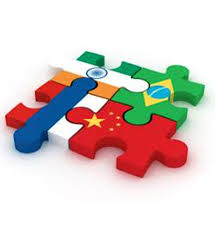
brics2The Interfax Information Services Group and the Quacquarelli Symonds (QS) company, a renowned leader in the sphere of academic rankings, have launched a project to create the BRICS University Rankings (Brazil, Russia, India, China and South Africa).

Interfax faces a rather ambitious task which is to create a ranking system that would comply not only with the Berlin principles, the key rules for any international academic rankings, but also be recognized all over the world. The ranking system is based on criteria recommended to the Russian Education and Science Ministry in autumn of 2012 by Russia‘s leading universities. These criteria are divided into three groups: educational activity, research activity and international activity, and then the categories are expanded for a more accurate collection of data from all universities in the BRICS countries.

The methodology of forming the rankings is similar to the existing methodology of assessing the world‘s largest universities developed by QS that has been making global (QS World Universities Rankings, www.topuniversities.com) and regional (QS University Rankings: Asia, QS University Rankings: Latin America) university rankings for many years.

The methodology of assessing universities in the future may be updated and extended on the basis of recommendations of the Russian academic community and Interfax, which has extensive expertise in creating national ranking systems for universities (www.univer-rating.ru).

“We hope that the participation of Russian universities in the new international rankings will help increase the competiveness of Russian universities in the global educational and research areas and their transparency to external assessments,” Interfax Deputy Director General Alexei Gorshkov said.

“Russian universities are still not well represented in international rankings although achievements of many of them look quite decent on a global level. The creation of the BRICS University Rankings will help to compare comparable educational systems and increase the recognition of universities of these countries both in the academic community and among students and employers all over the world,” QS Regional Director for Eastern Europe Zoya Zaitseva said.

“Our main goal is to reflect the situation in the sphere of higher education in the BRICS countries as accurately and fully as possible, and I hope that jointly we will achieve with this,” she said.

It is expected that results of the BRICS University Rankings will be publicized at an international conference in Moscow in 2013.

The methodology of the BRICS University Rankings is based on three indicators: educational activity, research activity and international activity.

The educational activity includes reputational assessments by a panel of international academic experts, reputational assessments by a panel of international employers and recruiters, the ratio of students per one professor, and the share of professors with an advanced academic degree.

The research activity brings together the publication productivity of researchers and professors of a university (the number of scientific articles per one researcher or professor over the past five years), and the quality of scientific publications of a university (the number of citations of one scientific article over the past five years) according to the Scopus bibliographic database.

The international activity comprises the share of foreign professors and researchers at a university and the share of foreign students at a university.

Moreover, it is expected that additional information indices of a university activity will be collected in order to assess it. It is also expected to improve qualitative and quantitative characteristics of international expert panels.

The Interfax Information Services Group is the largest diversified information group in the CIS. Since the early 1990s Interfax has been a key source of information on Russia and the former Soviet Union for the international community. Today Interfax provides political and economic news, fundamental and exchange information, professional solutions for risk management, marketing, investor relations and PR.

Quacquarelli Symonds (QS) founded in 1990 has become one of the world‘s leading providers of information for students and young professionals who choose to pursue further educational programs including bachelor, master, post-graduate and business schools. The company created world‘s best QS World University Rankings and offers new forms of interaction between university colleagues and enrollees from all over the world through online portals, research projects, events and guides.

The QS World University Ranking has become a key guide for many people since it was first introduced in 2004. The rankings developed in close cooperation between the QS research center and the QS academic council is well known to large number of current and future students, university staff, companies, and governments throughout the world. The goal of the rankings is to present the university as a multilateral organization that meets the career needs of its students. The rankings are based on four core parameters: research and educational activity, opinion of employers on graduates and the level of internationalization.

The QS rankings uses the Scopus bibliographic database by Elsevier, which is the world‘s largest bibliographic database of excerpts and citations from scientific literature and electronic sources. The database has excerpts and citations from more than 18,000 articles from more than 5,000 international editions, thus providing the broadest interdisciplinary coverage. Scopus is a trusted source of bibliographic data and is widely used by many organizations, including the Organization for Economic Cooperation and Development (OECD), Australian Research Council (ARC), Institute for Research Information and Quality Assurance (iFQ, Germany), and others. – Interfax

Schoolboy stabbed to death

Crossroads
Crossroads

A black 17-year-old Grade 8 pupil was stabbed to death, allegedly by fellow black pupils, at New Eisleben High school in Lower Crossroads on Thursday, shortly after morning assembly.

Anele Mhawuli died at the Nyanga Day Hospital after he was stabbed multiple times.

Police spokesman Captain FC van Wyk said a murder case had been opened and no arrests had been made. Police said three pupils had been identified as suspects.

The Department of Education said reports indicated that the incident was gang-related.

“This is a senseless and tragic loss of life and our thoughts and prayers are with his friends and family during this difficult time,” said the department’s spokeswoman Bronagh Casey.

“The school does have 24-hour security, but it is not yet clear how the weapon was brought into the school. The WCED Safe Schools directorate is currently assessing the security measures at the school,” said Casey.

It is alleged that the incident occurred minutes after assembly was adjourned as the pupils were about to head to class for their first period.

“Three boys headed towards Anele and his friend, and they started talking. The boys then slapped Anele and he then took out a knife, they kicked him and he fell and that’s when they started stabbing him repeatedly,” said a pupil who saw the stabbing.

According to pupils, Anele had been in a fight the day before with the same group of pupils. The fight was because Anele and the perpetrators belonged to rival gangs, the Vuras and the Vatos, the pupils said.

Anele’s sister, Nosiseko, 32, said her brother had been in her care since 2009 and their parents were in the Eastern Cape.

“I got a call and was told to come to the school because my brother had been hurt. When I got there I was told he was at the day hospital. I wasn’t allowed to see him at the hospital because the doctors were busy with him. Minutes later I was told he was dead,” she said.

Nosiseko described her brother as a good boy who dreamt of being a pilot and loved “spaza” rap, a local form of underground hip hop music.

“Even if they arrest the perpetrators, what good will it be because my brother is no longer living and they are still alive?” she said.

Education MEC Donald Grant visited the family on Thursday and counselling was provided for pupils who had been traumatised by the incident.

Earlier this year, at least three pupils were stabbed and one was shot at school.

Ned Doman pupil Uviwe Mzingelwa, 18, was stabbed to death in March on a bus after an altercation with a fellow pupil.

In the same month, a Grade 9 pupil at Oscar Mpetha High School, in Khayelitsha, was stabbed after a playground fight.

Four pupils were apprehended for the incident.

In May, 17-year-old Enrico Martin was shot in the head and later died at Groote Schuur hospital. Martin was approached by gunmen as he was entering the school premises. The incident was allegedly gang-related.

Last month, a 16-year-old Northpine Technical High School pupil was taken to hospital after being stabbed at school. A 17-year-old was arrested and released into his parents’ custody.

A white teacher tried to committ suicide on Thursday after she was punched in the face by a black 14-year old schoolboy earlier this week. She had asked him to respect the rules concerning schooluniforms. – IOL/Beeld

Obama okays military aid to countries with child soldiers

childsoldierAmid the hoopla of the government shutdown, the White House quietly passed a bill Monday that overrides a law banning military aid to countries that use child soldiers.

The Child Soldiers Prevention Act of 2008 prohibits the U.S. government from providing military assistance to countries that directly use, or support the use of, child soldiers. Built into the law is an option allowing the U.S. president to override the ban if he/she deems it necessary.

On Monday, President Obama issued complete waivers to Yemen, Chad, and South Sudan, opening up those countries to U.S. military aid despite their known use of child soldiers, declaring in a written memorandum it is “in the national interest of the United States” to override the ban.

Obama also granted partial waivers to the Democratic Republic of the Congo and Somalia to allow “International Military Education and Training” and “nonlethal” defense for both countries and “provision of assistance under the Peacekeeping Operations authority for logistical support and troop stipends” in Somalia. According to Think Progress writer Hayes Brown, these waivers open the door for military aid for ongoing “peacekeeping” operations in both these countries.

“Obama is becoming an expert at waiving human rights laws,” writes Ken Hanly in Digital Journal. “He waived part of a law last month that banned the US from supplying lethal aid to terrorist groups so he could send aid to Syrian rebels. In the case of Egypt, Obama has refused to call the coup by the armed forces a coup and by doing so does not run afoul of a law that would ban aid to a country where there had been a military coup.”

“Human rights are to be promoted but only insofar as they do not conflict with US national interest as understood by the president,” he added.

Meanwhile, the U.S. government has come under criticism for filling its own military ranks with hundreds of thousands of teenagers, including 17-year-olds who can enlist with parental consent. – wakeupfromyourslumber.com