The United States (US) has reiterated its long held position that any easing or lifting of sanctions against Zimbabwe would happen only in the context of a credible election.
At the weekend, Secretary of State John Kerry issued a statement that in light of substantial irregularities they did not consider the election to be a credible expression of the will of Zimbabweans.
While at the United Nations (UN) in New York, there were no words of congratulations, only to say they are watching developments closely. There has been no ringing endorsement of President Robert Mugabe’s electoral victory, not from the US or UN.
UN Secretary General Ban Ki-moon’s spokesperson, Martin Nesirky says: “Obviously the SG continues to follow this closely and as we said at the time and it still holds true, and concerns that have been raised about certain aspects of the electoral process should be pursued through established channels and these concerns should then be considered transparently and fairly.”
The US State Department hinted that lifting of sanctions were unlikely. Spokesperson Marie Harf says: “We do not believe the results announced represent a credible expression of the will of the Zimbabwean people in light of the substantive electoral irregularities reported by domestic and regional observers.”
She says voter rolls had some irregularities in them that were not credible as stated by preliminary reports from the African Union and Southern African Development Community. Harf says: “Domestic observer missions also noted some serious concerns, so we’ve been clear that any easing of sanctions will only occur in the context of credible, transparent and peaceful elections.”
“So I don’t want to get ahead of the process here but the Secretary made clear that we do not believe that these were a credible expression of the will of the Zimbabwean people,” she says.
While the UN is waiting and watching to see how opposition concerns are handled by the ‘established channels’, the US has been absolutely frank that it does not accept the poll results placing it at odds with President Jacob Zuma who endorsed the process and has long held that sanctions be lifted against Zimbabwe, something that now seems increasingly unlikely.
The Zimbabwe Stock Exchange’s top index fell 11 percent on Monday, the first day of trading after the results of disputed elections which enabled Robert Mugabe to extend his 33-year rule.
Several foreign-owned stocks registered steep losses, with South Africa-based clothing chain Edgars and hotel group African Sun losing more than 25 percent.
Amid fears foreign banks could become the next target for Mugabe’s indigenisation efforts, Barclays local listing had fallen by 15 percent on Friday, but the fall was arrested in Monday trading.
“This is indicative of the widespread concern that the election results are not going to inspire the anticipated economic recovery,” said Eric Bloch, an economist based in the second city of Bulawayo.
Zimbabwe’s electoral commission declared Mugabe winner with 61 percent of the vote while his long-time rival Morgan Tsvangirai garnered 34 percent.
Tsvangirai has dismissed the elections as a “farce”.
The elections were to end a shaky power-sharing government formed four years ago by Mugabe and Tsvangirai.
The compromise government was meant to stop a tip into conflict following a bloody presidential run-off election in 2008 and revive the country’s economy but its work was hampered by frequent haggling and charges of rights abuses. – AFP
The Rural Development and Land Reform Department says the signing of the Spatial Planning and Land Use Management Bill into law will ensure that municipalities develop their own policies in line with government’s objectives.
President Jacob Zuma signed the Act into law on Monday. The Department’s Director-General Mdu Shabane says it took 10 years to finalise the legislation, which is aimed at doing away with the previous apartheid segregated spatial planning of land which separated black and white South Africans.
“We are very excited because there is a big void right now in various parts of the country as there is currently no framework legislation,” Shabane says. He says the new law will also speed up land redress.
“So this act comes at a good time where we are marking the centenary of the 1913 Natives Land Act which created spatial apartheid. The act will assist the local and provincial spheres of government to develop their land use management skills to reintegrate society,” Shabene says.
The SA Revenue Service has denied it had a “secret meeting” with Economic Freedom Fighters leader Julius Malema.
“Sars does not conduct secret meetings with any taxpayer,” spokesman Adrian Lackay said.
“Any taxpayer has the right to seek remedies from Sars when a tax dispute arises between the taxpayer and Sars, as well as the right to meet with Sars with suitably qualified legal or other representatives.”
Malema said in a statement on Sunday that he, his lawyer and accountant met with Sars officials when he was still president of the ANC Youth League.
“In this meeting, my personal tax matters were briefly discussed in the presence of all. My lawyer and accountant, together with Mr Van Loggerenberg [a Sars official] were then requested by the commissioner to excuse themselves from the meeting and an indication was given on their departure that Mr Van Loggerenberg will be helping us to resolve my issues.”
He said he remained behind with the Sars commissioner and his deputy.
“In this closed session between the three of us, the details of the ‘intelligence dossier’ were discussed, and in what looked like their defence I was told that [President] Jacob Zuma had a similar Sars problem and they helped him with it,” Malema alleged.
“…They both offered to help me with my tax matters because they have done it before with Mr Zuma and other comrades.
“[The then Sars deputy commissioner Ivan] Pillay added that they would do this also because both of them are comrades and that he in particular was from exile.”
Malema claimed to have an “intelligence dossier” which, in his view, proved Sars had a special unit focusing on him and other persons because of their association with and support for Zuma.
Lackey said Sars did not provide preferential treatment.
“Taxpayer behaviour determines what course of action Sars institutes,” he said.
“If the taxpayers needs assistance and is willing to comply with his or her obligations, Sars will provide assistance. If the taxpayer demonstrates no willingness to contest or rectify instances of non-compliance, Sars takes stronger punitive actions.”
He said the matter with Zuma had gone to court and Zuma’s tax affairs were regularised.
“This is all on public record.”
Sars said on Friday Malema had failed to “refrain from making false public statements about the state of his tax affairs and his engagements with Sars”.
As a result it invoked section 67(5) of the Tax Administration Act and revealed a history of Malema’s interaction with it. The act allows it to disclose taxpayer information that would otherwise be confidential.
According to Sars, Malema ultimately accepted that he owed it R16 million in tax. He did not offer to convert any of his assets to pay his tax debt and never asked for any form of payment arrangement.
Sars attached some of Malema’s properties to recoup the R16 million debt.
In May, his incomplete mansion in Sandton, Johannesburg, was sold on auction for R5.9 million.
His farm in Limpopo fetched R2.5 million at an auction in June. Several of his household goods were also auctioned off earlier this year. – Sapa
Former SA president Thabo Mbeki says Zimbabweans should be allowed to determine their own future. His statement comes after the recent disputed elections in Zimbabwe.
Addressing the students of the Thabo Mbeki African Leadership Institute in Pretoria, Mbeki said it was worrying that long before the Zimbabwean elections, some forces sought to discredit them.
Meanwhile, Zimbabwe’s opposition, Movement for Democratic Change (MDC), says it is ready to challenge the election results.
This after President Robert Mugabe won the presidential poll with over 61 % of the vote, while his Zanu-PF party obtained a two-thirds majority in parliamentary elections.
Both the United States and Britain have expressed doubts over the credibility of the presidential and parliamentary elections. US American Secretary of State, John Kerry, says he does not believe the official results represent a credible expression of the will of the people.
President Jacob Zuma has congratulated President Robert Mugabe and his Zanu-PF on their election success.
MDC spokesperson, Douglas Mwonzora says they party has serious concerns.
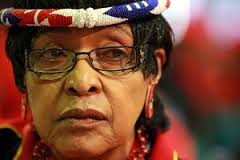
Winnie Madikizela-Mandela — she changed her last name from simply Mandela after her divorce from Mr. Mandela in 1996 — is very ostentatiously trying to re-enter politics.
Madikizela-Mandela is eager to claim part of the Mandela legacy. “Nobody knows him better than I do,” she told Britain’s ITN network.
And this move comes after years of political eclipse and a long slide, beginning in the 1980s, from her previous status as the most famous of South Africa’s female freedom fighters after her involvement in the murder of a follower.
“She has always wanted to be close to the action in the Mandela household,” said Justice Malala, a political commentator and former publisher of The Sowetan newspaper. He said a recent Soweto news conference and her subsequent interview with British television “showed that, once again, she is trying to do that. The question is whether there is any legitimacy to that, or whether she is a spent force.”
Of all the major figures who came to global prominence during the South African liberation struggle, Ms. Madikizela-Mandela was also the most outspoken revolutionary and anti-white, which explains her fall from grace.
For many of the years just before Nelson Mandela’s release from 27 years in prison, she was his public face, bringing word of his thoughts and his state of mind.
Rumors however circulated even back then of thuggish behavior by a club she had formed for young Soweto men — the Mandela United Football Club — and these whispered accusations came back to haunt her shortly after her husband’s release in 1990.
The following year she was convicted of kidnapping and assaulting a minor, a 14-year-old, James Seipei, who went by the name Stompie Moeketsi. The authorities said he had been fatally beaten by members of her football club, on her orders, because he was suspected of being an informant. She received a six-year sentence that was later reduced to a fine.
The next year, though, she and Mr. Mandela separated.
While she was given a role in the Mandela government, after Mr. Mandela was named president in 1994, she had little power. She was deputy minister of arts, culture, science and technology, but was later fired by Mr. Mandela after a series of incendiary comments and accusations of financial mismanagement.
She has retained her popularity, especially among some young and radical township residents.
“She has, over the past 19 years, attached herself to a sort of radical fringe in the ANC,” Mr. Malala said, referring to the governing African National Congress. “She always attached herself to whatever seemed to be the radical idea of the day, but nothing ever came of it.”
Her public troubles did not end with the Stompie Moeketsi case, though.
In 2003, she was convicted of theft and fraud for her role in a bank swindle in which ANC stationery was used to obtain loans for nonexistent employees. That sentence, too, was suspended.
In March, the police exhumed what they believe might be the bodies of two young Soweto activists who disappeared in 1989, shortly after the father of one of the activists saw them in a vehicle with Ms. Madikizela-Mandela and members of her football club. The father said she had told him that his son was “an apartheid spy.” That case is still under investigation.
Not long after the exhumations, the police showed up on her doorstep in Soweto — trailed by local journalists — to confiscate some of her artwork and possessions to pay a debt of about $5,000 to a private school that had admitted her grandniece. No one answered the door, and the debt was quickly paid by her lawyer.
In recent weeks, though, she gingerly reasserted herself on the public stage, showing up several times to visit her ailing former husband in the hospital in the capital, Pretoria, where he had been clinging to life. That recent Soweto news conference was widely seen as a declaration that she intended to claim her share of the Mandela legacy, as did the interview with ITN.
“When it suits the media, I am a murderer,” she told the British interviewer, while insisting that all the charges against her were “manufactured by the system I was fighting against.”
There is much skepticism here about whether she will be able to pull off yet another political resurrection after her ex-husband’s death.
“She has always felt that she played a major role in the Mandela story,” said William Gumede, a professor of public management at the University of Witwatersrand in Johannesburg.
“Winnie has argued that she played 80 percent of the role in elevating his status while he was in prison,” Mr. Gumede said. “What she wants now is not so much political power as a place in the Mandela family. But then, they all want a slice of Mandela now.”
Despite evidence showing the Benghazi attack was staged by a State Department hired jihadist security outfit in connection with an arms transfer to al-Qaeda mercenaries in Syria, the US MSM is pretending it does not know what happened in Libya on September 11, 2012.
The corporate media has yet to point out that the Obama administration attempted to cover-up the real reason for the murder of ambassador Stevens – U.N. Ambassador Susan Rice and the State Department initially pointing to a lame anti-Muslim video – and has consistently downplayed the incident and characterized it as a non-event not requiring congressional investigation and the impeachment of President Obama.
A number of guests appearing on the Alex Jones Show following the attack have built an indisputable case that the CIA was shipping arms from U.S.-controlled facilities located at the U.S. mission in Benghazi to its mercenaries in Syria and the murder of ambassador Stevens was carried out by an al-Qaeda affiliated group as part of a turf war between the CIA and elements in the Pentagon.
In May, former government insider Steve Pieczenik explained how a Pentagon effort to derail a CIA operation may have occurred.
All the evidence points to the Pentagon doing nothing to stop the attack on the compound. Martin Dempsey, chairman of Joint Chiefs of Staff, admitted during a Senate hearing in June that highly trained Special Forces were stationed a few hours away from Benghazi on the night of the attacks but were not deployed.
This contradicts comments made by Gregory Hicks, the former top U.S. diplomat in Benghazi, who told Congress in May that officials from Special Operations Command-Africa ordered the units to stand down.
In May, Infowars.com posted an article reporting the fact the Benghazi attack and the murder of ambassador Stevens had nothing to do with an absurd anti-Islam video, as the establishment media and the Obama administration insisted, but was directly connected to the shipment of arms from Libya to the mercenaries in Syria.
Lt. Col. Tony Shaffer, appearing on the same show, alleged that Turkey partnered with the CIA to take down Bashar al-Assad in Syria and, hours before the compound was attacked and Stevens and others lost their lives, the Turkish Consul General Ali Sait Akin met with the U.S. ambassador.
According to Egyptian security officials, Stevens was instrumental in recruiting jihadists for the CIA’s war in Syria and “served as a key contact with the Saudis to coordinate the recruitment by Saudi Arabia of Islamic fighters from North Africa and Libya. The jihadists were sent to Syria via Turkey to attack Assad’s forces,” writes Aaron Klein.
It has been widely reported that the Syrian mercenaries belong to the al-Nusra Front, an al-Qaeda affiliate.
It was learned after the attack that the February 17th Martyrs Brigade was paid by the State Department to protect the U.S. diplomatic mission in Benghazi. The group had “clear al-Qaida sympathies, and had prominently displayed the al-Qaida flag on a Facebook page for months before the deadly attack,” Max Rosenthal reported for Newsmax in May. The February 17th Martyrs Brigade, it was latter learned during a House Oversight and Government Reform Committee hearing, are in league with Ansar al-Sharia, said to be linked to al-Qaeda in the Islamic Maghreb.
Part of the operation involving Stevens included sending surface-to-air missiles to al-Qaeda in Syria. “Speculation on Capitol Hill has included the possibility the U.S. agencies operating in Benghazi were secretly helping to move surface-to-air missiles out of Libya, through Turkey, and into the hands of Syrian rebels,” CNN also reported late last week.
The Obama administration announced in late September that “it planned to expand a program to secure and destroy Libya’s huge stockpile of dangerous surface-to-air missiles” and that “the U.S. State Department has one official on the ground in Libya, as well as five contractors who specialize in ‘explosive ordinance disposal,’ all working with the rebel Transitional National Council to find the looted missiles,” ABC News reported.
In fact, the State Department, under the guidance of ambassador Stevens, was moving to round up the missiles and send them to al-Qaeda in Syria. Prior to this, in December, 2011, the U.S. claimed to have secured 5,000 surface-to-air missiles and destroyed them outside of the village of Sidi Bin Nur in Libya. Doubtless, instead, they became part of the CIA’s cache destined for Syria.
The City of Johannesburg has confirmed to eNCA that a pre-termination notice claiming arrears of over R6,000 was incorrectly delivered to Nelson Mandela’s house.
The notice, addressed to a house in the Johannesburg suburb of Oaklands, was attached to Mandela house during the weekend.
According to Kgamanyane Stanley Maphologela, Director of Communications and Customer Relations for the City of Johannesburg, the notice was incorrectly delivered.
“The address and account number belongs to another address. The City wants to convey an apology to the Mandela family for any inconvenience.”
The City has sent officials to the Nelson Mandela Children’s Fund to apologise for any inconvenience and will launch a full investigation into how the error occurred.
Maphologela pointed out that a pre-termination notice is not a cut-off notice, but rather a legal requirement informing customers that their power will be terminated if they fail to make payment.
He said that a pre-termination notice is automatically sent to all customers if they are 30 days in arrears and is delivered by the City’s contractors. – eNCA
The armed conflict in Syria could be over in a few months if the local population actively helps government troops to restore peace and prevent violence, President Bashar Assad said in an interview broadcast throughout the Arab world.
According to Assad, the anti-terror campaigns are most successful in those regions with strong public support for the army.
He also said that some of the rebels are continuing to surrender to government forces to try and return to peaceful life or join the fight on the government’s side.
Since the armed conflict began in Syria in March 2011 over 100,000 people have been killed according to UN estimates.
Besides the internal opposition the government forces are fighting a large number of radical Islamist groups such as al-Nusra Front and increasing numbers of foreign mercenarie.
Al-Assad issued a decree Sunday banning the use of foreign currency in commercial transactions, state news agency SANA said.
“It is prohibited to make payments, reimbursements, commercial transactions and any other commercial operation in foreign currency or in precious stones,” SANA quoted the decree as saying.
“The Syrian lira is the only currency” allowed in business and commerce, it added.
Those breaking the law risk jail sentences from between six months to 10 years of hard labour, depending on the sum involved, and will be fined.
The US dollar is the preferred foreign currency in Syria where the lira has lost three quarters of its value against the greenback since the outbreak of the anti-regime uprising more than two years ago.
At the start of the conflict in March 2011 one dollar fetched 50 liras. while a dollar today is worth more than 200 liras.
Dollars have been used in the sale of land, namely in the upscale Damascus suburbs, and by importers who trade in goods such as rice, sugar, textile and electronic equipment.
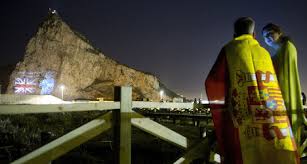
Spain is acting like North Korea and “sabre rattling” the chief minister of Gibraltar has warned in a further escalation of the row over the British territory.
Fabian Picardo accused the Spanish government of behaving like they did during Franco’s regime and vowed that ‘hell will freeze over’ before the authorities in Gibraltar remove a disputed artificial reef created to bar Spanish fishing boats.
Mr Picardo said Spanish foreign minister Jose Garcia-Margallo was being belligerent when he suggested that a 50 euro (£43.40) fee could be imposed on every vehicle entering or leaving the British Mediterranean outpost through its border with Spain.
Today the Foreign Office moved to calm tensions over the British territory by saying the row would be resolved by political means not “disproportionate” measures.
The statement follows the move by Spanish authorities to increase border checks causing delays last weekend and the statement yesterday that a vehicle fee and closing Spanish airspace to Gibraltar flights was being considered.
In an interview with Spanish newspaper ABC published yesterday Foreign Minister Jose Manuel Garcia-Margallo had suggested that :
Spanish tax authorities could investigate the properties owned by 6,000 Gibraltarians in neighbouring parts of Spain.
– Spanish airspace could be closed to flights en route to Gibraltar.
– Stop concrete and materials used to build an artificial reef being brought over the border.
– Changing the law so online gaming companies in Gibraltar have to use Spanish servers and thus pay tax to Spain.
The suggestions in the article prompted an immediate response from the Foreign Office yesterday who said they were “concerned” by the comments and would “not compromise on our sovereignty over Gibraltar, nor our commitment to its people. We continue to use all necessary measures to safeguard British sovereignty.”
A spokesman made clear that the UK expects Madrid to live up to the commitments it made in the 2006 Cordoba Agreement, which included deals on issues like border crossings and access for flights, as well as establishing a tripartite forum for regular dialogue between Britain, Spain and Gibraltar.
Speaking on the BBC Radio 4 Today programme the chief minister of Gibraltar, Fabian Picardo said: “What we have seen this weekend is sabre-rattling of the sort that we haven’t seen for some time.
“The things that Mr Garcia-Margallo has said are more reminiscent of the type of statement you’d hear from North Korea than from an EU partner.
“We’ve seen it before during Franco’s time during the 1960s but I think all of us hoped that those politics were never going to come back and that the much more enlightened politics of Mr Moratinos (Miguel Angel Moratinos), who was the previous but one foreign minister of Spain, would prevail, which talked about people working together and creating economic benefits for the citizens on both sides of the frontier rather than the belligerence we are seeing now.”
Spain claims sovereignty over the Rock, which stands on the southernmost tip of the Iberian peninsula but has been a British Overseas Territory since the Treaty of Utrecht in 1713.
But the UK Government has made clear that it will not negotiate over sovereignty as long as Gibraltar’s people want to remain British.
Foreign Secretary William Hague last month phoned Mr Garcia-Margallo to complain about Spain ramping up border checks, which forced drivers to wait for up to seven hours in searing heat.
The Foreign Office yesterday summoned the Spanish ambassador to demand assurances that there would be no repeat of the excessive checks.
David Cameron is “seriously concerned” about events at the Spanish border but proposals for fees or airspace restrictions have not been raised with the UK by the authorities in Madrid, the Prime Minister’s spokesman said.
“Clearly, we remain seriously concerned by the events at the Spain/Gibraltar border,” he said.
“Specifically on this issue of border fees, the Spanish have not raised the prospect of introducing border fees with us. We are seeking an explanation from them regarding reports that they might target Gibraltar with further measures.”
The Government is in “close contact” with the Spanish about the issue, but the spokesman refused to give further details about what the next steps might be.
The Prime Minister last spoke to his counterpart, Mariano Rajoy, about the issue at a European Council in June, before the latest escalation of tensions at the border. – Press Association
A Dutch scientist is offering the world’s first cultivated beef made of stem cells to taste. He believes the lab-grown meat will feed the world and help save the environment. The tasting event happens amid UN calls to invest more in food innovation.
The 5-ounce burger which costs $332,000 to produce will be fried in a pan and tasted by volunteers at an event in London on Monday, Bloomberg quotes the creator of the burger scientist Mark Post of Maastricht University. The research has been funded by an anonymous individual, he said.
The muscle stem cells, taken by a harmless biopsy of living cows, are fed and nurtured so they multiply to create muscle tissue, Bloomberg quotes the scientist as saying. One sample of cells is enough to create up to 20,000 tons of meat in the lab, he said.
“People might think this is a crazy way to produce meat. But it’s inevitable. Because the way we produce meat right now from livestock is not sustainable. It is not good for the environment, it is not good for animals, and we actually are not going to produce,” Prof Mark Post said in an interview to BBC.
Commercial production could begin in a decade or two, Bloomberg quotes Post, whose work on cultured beef began in 2008. The cost is currently the main obstacle to mass production, Bloomberg quotes experts.
“For it to succeed it has to look, feel and hopefully taste like the real thing,” Post says, adding that any association with genetically modified foods is unwarranted.
“Cultured beef is normal beef,” Bloomberg quotes the professor. “It consists of cow cells.”
Post is among scientists who believe lab-grown meat is an alternative to raising livestock, which contributes to 18 percent of greenhouse gas emissions and uses 30 percent of the world’s ice-free land, Bloomberg quotes an Oxford University study. – RT
Frack gag: No discussion about water contamination
The 7- and 10-year-old children of a Pennsylvania couple that reached a settlement following a lawsuit involving health issues brought on by fracking have been barred from discussing details of the case for the rest of their lives.
Though a gag order is not unusual in itself when large corporations reach a settlement with plaintiffs in court, the August 2011 case of a family that went to court with Range Resources Corporation, Williams Gas/Laurel Mountain Midstream, and Markwest Energy due to the environmental and health impact caused by gas fracking operations has raised eyebrows for its inclusion of the couple’s young children.
The Pennsylvania family reached a $750,000 settlement with the gas companies, and have used the award to relocate. In exchange, however, Chris and Stephanie Hallowich agreed that no member of their family could comment on the case “in any fashion whatsoever.”
Details of the case only emerged recently when the Pittsburgh Post-Gazette managed to get court transcripts released. The paper’s reporters were originally barred from attending the settlement hearing, and had to wait until a three-judge panel of the Pennsylvania Superior Court ruled that a lower court had erred in blocking the unsealing of the records.
Court records, which should have included details of the settlement but did not, paint a confusing picture for Chris and Stephanie Hallowich as they tackled the significance of their gag order.
“We know we’re signing for silence forever, but how is this taking away our children’s rights being minors?” Stephanie Hallowich asked the judge.
“I mean, my daughter is turning 7 today, my son is 10.”
According to the transcripts, Judge Polonsky, who oversaw the case, was unable to clarify. The family’s attorney, Peter Villari, questioned whether the order would be enforceable.
“I, frankly, your Honor, as an attorney, to be honest with you, I don’t know if that’s possible that you can give up the First Amendment rights of a child,” stated Villari.
Along with the gas companies, the Hallowich family also sued the state’s Department of Environmental Protection. In its ruling to unseal court records, the superior court also noted that the August 2011 hearing during which the record was sealed was held three days prior to schedule, without an official notification of the change of date, reports the New York Times.
According to Bruce Baizel, Energy Program Director at Earthworks, which focuses on mineral and energy development, the motives behind restrictive gag orders post-settlements is to conceal any evidence of adverse environmental impact from hydraulic fracturing, or fracking.
“The refrain in the industry is, this is a safe process. There’s no record of contamination. That whole claim would be undermined if these things were public,” Baizel told ClimateProgress.
Moreover, attempts to measure the number of settlements with non-disclosure agreements have failed.
“They don’t have to be registered, they don’t have to be filed. It’s kind of a black hole,” says Baizel.
Prior to the settlement the Hallowichs said that nearby gas drilling had caused “burning eyes, sore throats, headaches and earaches, and contaminated their water supply.”
Once the settlement was reached and the gag order enacted, however, a spokesman for Range Resources stated that the family had “never produced evidence of any health impacts,” and that the Hallowichs primary motive for moving was instead due to “an unusual amount of activity around them.” – RT
Imagine the government passed a law requiring all citizens to carry a tracking device. Such a law would immediately be found unconstitutional. Yet we all carry mobile phones.
If the National Security Agency required us to notify it whenever we made a new friend, the nation would rebel. Yet we notify Facebook Inc. If the Federal Bureau of Investigation demanded copies of all our conversations and correspondence, it would be laughed at. Yet we provide copies of our e-mail to Google Inc., Microsoft Corp. or whoever our mail host is; we provide copies of our text messages to Verizon Communications Inc., AT&T Inc. and Sprint Corp.; and we provide copies of other conversations to Twitter Inc., Facebook, LinkedIn Corp. or whatever other site is hosting them.
The primary business model of the Internet is built on mass surveillance, and our government’s intelligence-gathering agencies have become addicted to that data. Understanding how we got here is critical to understanding how we undo the damage.
Computers and networks inherently produce data, and our constant interactions with them allow corporations to collect an enormous amount of intensely personal data about us as we go about our daily lives. Sometimes we produce this data inadvertently simply by using our phones, credit cards, computers and other devices. Sometimes we give corporations this data directly on Google, Facebook, Apple Inc.’s iCloud and so on in exchange for whatever free or cheap service we receive from the Internet in return.
The NSA is also in the business of spying on everyone, and it has realized it’s far easier to collect all the data from these corporations rather than from us directly. In some cases, the NSA asks for this data nicely. In other cases, it makes use of subtle threats or overt pressure. If that doesn’t work, it uses tools like national security letters.
The result is a corporate-government surveillance partnership, one that allows both the government and corporations to get away with things they couldn’t otherwise.
There are two types of laws in the U.S., each designed to constrain a different type of power: constitutional law, which places limitations on government, and regulatory law, which constrains corporations. Historically, these two areas have largely remained separate, but today each group has learned how to use the other’s laws to bypass their own restrictions. The government uses corporations to get around its limits, and corporations use the government to get around their limits.
This partnership manifests itself in various ways. The government uses corporations to circumvent its prohibitions against eavesdropping domestically on its citizens. Corporations rely on the government to ensure that they have unfettered use of the data they collect.
Here’s an example: It would be reasonable for our government to debate the circumstances under which corporations can collect and use our data, and to provide for protections against misuse. But if the government is using that very data for its own surveillance purposes, it has an incentive to oppose any laws to limit data collection. And because corporations see no need to give consumers any choice in this matter — because it would only reduce their profits — the market isn’t going to protect consumers, either.
Our elected officials are often supported, endorsed and funded by these corporations as well, setting up an incestuous relationship between corporations, lawmakers and the intelligence community.
The losers are us, the people, who are left with no one to stand up for our interests. Our elected government, which is supposed to be responsible to us, is not. And corporations, which in a market economy are supposed to be responsive to our needs, are not. What we have now is death to privacy — and that’s very dangerous to democracy and liberty.
The simple answer is to blame consumers, who shouldn’t use mobile phones, credit cards, banks or the Internet if they don’t want to be tracked. But that argument deliberately ignores the reality of today’s world. Everything we do involves computers, even if we’re not using them directly. And by their nature, computers produce tracking data. We can’t go back to a world where we don’t use computers, the Internet or social networking. We have no choice but to share our personal information with these corporations, because that’s how our world works today.
Curbing the power of the corporate-private surveillance partnership requires limitations on both what corporations can do with the data we choose to give them and restrictions on how and when the government can demand access to that data. Because both of these changes go against the interests of corporations and the government, we have to demand them as citizens and voters. We can lobby our government to operate more transparently — disclosing the opinions of the Foreign Intelligence Surveillance Court would be a good start — and hold our lawmakers accountable when it doesn’t. But it’s not going to be easy. There are strong interests doing their best to ensure that the steady stream of data keeps flowing.
Bruce Schneier is a computer security technologist. – Bloomberg
This website uses cookies to improve your experience. We'll assume you're ok with this, but you can opt-out if you wish. Cookie settingsACCEPT
Privacy & Cookies Policy
Privacy Overview
This website uses cookies to improve your experience while you navigate through the website. Out of these cookies, the cookies that are categorized as necessary are stored on your browser as they are essential for the working of basic functionalities of the website. We also use third-party cookies that help us analyze and understand how you use this website. These cookies will be stored in your browser only with your consent. You also have the option to opt-out of these cookies. But opting out of some of these cookies may have an effect on your browsing experience.
Necessary cookies are absolutely essential for the website to function properly. This category only includes cookies that ensures basic functionalities and security features of the website. These cookies do not store any personal information.
Any cookies that may not be particularly necessary for the website to function and is used specifically to collect user personal data via analytics, ads, other embedded contents are termed as non-necessary cookies. It is mandatory to procure user consent prior to running these cookies on your website.