Copper theft increases

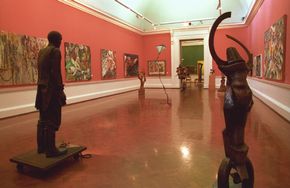
Johannesburg Art Gallery

Copper theft increased to a level of R11.1 million in June, the SA Chamber of Commerce and Industry said on Monday.

According to the Sacci Copper Theft Barometer, copper theft stood R9 million in May and R9.9 million in April.

Sacci said the June increase was the first since September 2012.

The increase was 38% lower than a year before, indicating a long-term decrease in the level of copper theft.

The Copper Theft Volume Indicator increased to a level of 158 metric tons in June from 132 metric tons in May.

One of the bronze sculptures stolen from the Johannesburg Art Gallery a while ago is worth about $16,000. Curators fear thieves sold it to a scrap dealer for a mere $250.

“I understand that art will be stolen,” said Noah Charney, who founded a think tank called the Association for Research into Crimes Against Art. “But I get very upset when art is destroyed … that is an irrevocable attack on beauty, culture and civilisation.”

Bronze sculptures are only the latest target in South Africa: When U2 played at a stadium in Johannesburg, officials blamed copper thieves for power problems at the venue. Cable theft has led to service interruptions on the Gautrain, a sleek new South African light rail service.

At the Johannesburg Art Gallery, home to Picassos, van Goghs and Rodins, thieves stole a figure of a woman in mourning by South African master sculptor Sydney Kumalo. The Kumalo is one of a total of four bronzes taken in a robbery in January and another in September at the city-owned gallery.

A small bronze titled “A chair, a boat and a vase” by well-known South African sculptor Barend De Wet was wrenched from the facade of the national art museum in Cape Town in May.

“There’s a lot of very sophisticated (security) systems internationally that, unfortunately, we just can’t afford,” said Antoinette Murdoch, chief curator of the Johannesburg Art Gallery.

Murdoch said the city has promised her 1 million rand (about $125,000) to upgrade security, and she is seeking more from donors.

Bernard Maguire, spokesman for the Metal Recyclers Association, said his industry group alerts scrap dealers across South Africa when a theft, whether of copper wire or a bronze statue, is reported.

“If they are caught with it, they can’t say that they didn’t know,” he said.

He said the members code of conduct also makes it clear that “if you do suspect something is stolen, you’re duty bound to communicate that to police.” But he said some items are cut up before they even reach dealers.

“It’s all about bronze and about the copper in bronze,” Tom Cremers, former head of security at Amsterdam’s Rijksmuseum, said in a telephone interview. “Very few thefts of sculptures are solved. I think it’s less than 5 percent. They damage the sculpture right away. Within a day, the sculpture disappears. That makes it very difficult to solve these cases.”

Cremers recommends that steel skeletons be built inside larger bronzes to make it harder for thieves to cut them into pieces and cart them away. Smaller pieces can be fitted with electronic devices, the same strategy boutiques use to keep shoplifters from walking off with clothing. He acknowledges, though, that such fixes might be beyond the budgets of museums in poor countries.

Gordon Massie, managing director of a Johannesburg company that specialises in ensuring fine art, said the true extent of the problem may never be known because private collectors who have lost bronzes don’t want to invite attention. And some government galleries refuse to list losses on their site for fear they’ll be accused of failing to care for their nation’s heritage.

Two years ago, Massie said, a registry of thefts he makes public in an effort to ensure pieces are recovered listed no stolen bronzes. Last year, there was one. This year, there have been five – four alone from the Johannesburg gallery and the one from the national gallery.

The Johannesburg Art Gallery is not a client, but Massie listed its losses because he wanted to help. The cash-strapped gallery has had to cut back on gardeners and can’t afford a badly needed new roof and air conditioning system.

“They’re in a woeful position of holding the nation’s treasures and having no budget,” Massie said. “One has to have a lot of empathy with the directors and curators. It’s not their choice to have poor security.”

The international spot price of copper dropped to a monthly average, to date, of US$6919 (about R67 875) per metric ton in July 2013, from US$7003 (about R68 699) in June and US$7237 (about R70 994) in May.

This was 8.8% lower than a year before and the first time the average monthly price had breached the US7000 (about R68 670) level in almost two years.

Copper waste exports increased to US36.8 million (about R361 million) in February, from US35.1 million (about R344 million) in January.

The February figure was 15% less than a year before.

Sacci CEO Neren Rau said the outlook on copper theft remained positive over the short to medium-term despite the “unfortunate increase in June”.

He said this was due to the downward trend in the international copper price.

“Although there is a relationship between the copper price and theft levels, it is not perfectly correlated. Short-term structural factors like the effectiveness of law enforcement in combating copper theft also impacts substantially on theft levels,” he said. – Sapa

Tlokwe mayor remains unseated

tlokwemayor
Unseated

The High Court in Pretoria has dismissed an application to nullify the council meeting at which Tlokwe mayor Maphetle Maphetle was unseated.

Judge Neil Tuchten found on Monday that the meeting and the election of Democratic Alliance councillor Annette Combrink as mayor was lawful.

He also found that Maphetle’s occupation of the mayoral office was unlawful.

On July 2, Combrink was voted in as the new mayor for the second time since November, unseating Maphetle.

The application by Maphetle and Tlokwe speaker Barei Segotso sought to have the meeting at which Combrink was voted in as mayor nullified. – Sapa

Initiates promised penises will grow back

initiatesThis is a grim time of year for a hospital in the Eastern Cape, where mattresses are laid on floors to cope with the stream of young men with severe injuries from botched circumcisions at initiation ceremonies.

Some patients with amputations, a doctor says, were told by their handlers that their genitals would grow back, reflecting a fog of misinformation that makes it hard to stop what has become an annual health crisis.

The traditional ritual, which goes back centuries, is meant to usher youths into manhood, inculcating them with the responsibilities to become valued members of their community.

Former president Nelson Mandela wrote about the spiritual meaning of his own circumcision in the same province where the Holy Cross Hospital is struggling to handle the influx of injured males.

At least 60 males have died at initiation schools in the Eastern Cape since the start of the initiation season in May, health officials confirmed.

Thirty of them died in the last six weeks, and 300 others were hospitalised with injuries.

Dingeman Rijken, a doctor at Holy Cross Hospital, says “It is becoming a psychological issue.” Rijken has treated 140 initiates in the last year and admitted another 150 for serious injuries.

“I have had to tell eight boys this season that they’ve lost their glans or parts of their penis, so it is a health problem. We can’t run away from it, we need to address it.”

He said nurses struggle to keep up with the overflow of more than 68 initiates who were admitted in the last two weeks with badly infected genitals, dehydration or other serious injuries.

The worst of the injuries occurred after botched circumcisions performed by inexperienced traditional nurses, who use the same spear on multiple initiates without protecting against the spread of infections, then cover up wounds with tightly wrapped bandaging that cuts off blood supply to the area.

After about 10 hours the genitals can become gangrenous and in some cases permanently damaged, but many initiates do not seek hospital treatment for another five to 10 days, Rijken said.

By this time very little can be done. Doctors cannot perform surgery because initiates suffer from sleep deprivation and dehydration and are not in a condition to give consent.

In minor cases, Rijken cleans off loose gangrenes around the affected area, bandages it and treats it with antibiotics, which eventually may result in a partial amputation of the penis. In more serious incidents, boys wait a period of one to six weeks until the entire organ falls off, he says.

Initiations are mostly practiced, though not exclusively, by the Xhosa. Young males participate in the ritual as a formal preparation for adulthood, usually undergoing circumcision and survival tests in secluded sites.

Most of the deaths in the Eastern Cape were in Pondoland, where the practice was banned in the 1820s by its then ruler, and then reintroduced in the last three decades as men who left their communities to work in mine fields were ostracised because they were not considered men if they were not circumcised, Rijken said, citing his research of its history.

Government legislation stipulates that participants should be at least 18, but parents can sign a consent allowing younger boys to participate.

Rijken has monitored more than 60 ceremonies and rescued several injured boys, and says he sees initiates mostly between ages 14 and 17, but has treated boys as young as 12 who are too young to understand the implications of losing their male organ.

He said initiates rarely complain about pain because they fear being beaten by nurses and ridiculed by peers for not properly observing a tradition that encourages initiates to develop a tough demeanor.

One patient had part of his injured penis “yanked off” as punishment for complaining, and those who suffer penile amputations are frequently told by handlers that their penises would grow back, Rijken said.

“But that’s why we need to involve the community, to tell them it won’t grow back,” he said. – AP

Former minister followed from airport and robbed

A less than friendly welcome

The former deputy minister of finance, Mr Jabu Moleketi, was allegedly followed from the airport and robbed outside his home in Observatory on July 20.

The former minister was with his son when the incident occurred.

Two suspects jumped out of a vehicle and went to Mr Moleketis vehicle with firearms. Mr Moleketi managed to run to the house and called the police, said Constable Thabo Malatji from the Yeoville SAPS.

The men took cellular phones and luggage from the vehicle and fled the scene. This robbery is one of several incidents reported to SAPS where people were followed from the airport and robbed either at their homes or local hotels.

Some of the recent cases that were reported include the vice-consul of Angola and the delegation he was with, who were robbed at a hotel in Bruma.

The latest incident took place on Monday last week. A security guard was shot during a robbery at another hotel in Bruma. Constable Mpho Mashakane, Cleveland SAPS communications officer, said a man and his friend left the OR Tambo Airport to go to the hotel they were booked in. They drove into the premises and parked the car.

While offloading their luggage three men approached them and demanded their belongings.

When the robbers tried to exit the building, the security guard refused to open the boom gate. They shot him in the thigh and fled.

Looklocal also reported on several incidents of people being followed from the airport. At least two incidents are reported to police every week.

Provincial SAPS spokesperson, Brigadier Neville Malila, said that there is a task team investigating these crimes. Yet they continue to occur.

Mr Malila was contacted for comment and he referred looklocal to Lieutenant Colonel Lungelo Dlamini, spokesperson for the Gauteng SAPS.

At this stage it is not clear whether the former minister was followed from the airport but police will investigate that possibility. Investigations in the case of the former minister are continuing and no arrests have been made, said Lt Col Dlamini.

He said members of the Hawks investigate all cases involving people who are followed from the airport.

Several people were arrested in the past, he said. Looklocal asked him if syndicates are involved in these incidents. At this stage this office is not aware of a syndicate operating from the airport, explained Lt Col Dlamini.

He said cases that were investigated in the past involved foreign nationals who alleged they were followed from the airport. There are police vehicles that are static on all major highways in the province. Therefore, police will respond to those incidents quicker, said Lt Col Dlamini. – looklocal.co.za

Malema: I’m persecuted by Indians and Afrikaners

Julius Malema
Julius Malema

Julius Malema has alleged that the tax case against him is a politically motivated conspiracy run by a group of Indians ‘in bed’ with Afrikaners.The Economic Freedom Fighters leader alleged this in a report by the Sunday Times.

“I’m subjected to political persecution by political leadership led by [Finance Minister] Pravin [Gordhan], with his group of Indians,” Malema was quoted as telling the newspaper.

“It’s a small clique of Indians who are in bed with a group of Afrikaners in [the SA Revenue Service (Sars)], and Afrikaners in the law fraternity.”

He reportedly claimed the “small group of Indians” had a “political programme” against him.

“The Afrikaner are [sic] pursuing a racial hatred against Julius and what he advocates for,” he was quoted as saying.

On Tuesday, Malema’s Polokwane house was auctioned.

Sars attached the property to recoup Malema’s R16-million tax debt.

In May, Malema’s incomplete mansion in Sandton, Johannesburg, was sold at auction for R5.9-million. His farm in Limpopo fetched R2.5-milolion at auction in June. Several of his household goods were also auctioned earlier in the year.

Malema also faces corruption charges in the Polokwane Magistrate’s Court. He is accused of making nearly R4 million from corrupt activities, and is out on bail of R10 000. – Sapa

Australia’s immigration prisons

ausfullAustralia’s immigration and detention policies aren’t particularly humane. People caught arriving illegally on small boats are being held in dire conditions in offshore detention centres and some have put themselves on hunger strike or attempted suicide to protest against their treatment.

Many Australians who condemn asylum seekers however, agree with even harsher measures to keep dark-skinned people out. They feel no sympathy for example, for the 98 bodies that were found dumped in the water recently.

For whatever reason, the irony of a country made up almost entirely of boat people being fearful of boat people seems to have escaped those with a more conservative viewpoint, leading them to carry on politicising, and therefore dehumanising, the boat people. According to Greens Senator Sarah Hanson Young, that process has led to the asylum seekers being treated more “like animals” than human beings – the Australian government only concerned with finding the best place to crowbar them out of sight and out of mind.

According to Pamela Curr from Asylum Seeker Refugee Centre Australia, it’s a resentful fear that the asylum seekers will come along and, “take [Australian citizens’] jobs and houses”.

Since 2007, more than 33,000 of those people have arrived illegally in Australia by boat, including Hazaras from Afghanistan, Shias from Pakistan, Iranians, Iraqis, Kurds and now the Rohingyas, the stateless people from Burma. Up to 300 people a week arrive in Jakarta on one-way tickets, most likely with the intention to make the crossing to Australia and escape war, terror, oppression and marginalisation in their homelands.

People pay into the thousands – members on a recent Afghan-run boat recently paid up to $5,500 each – to be smuggled across the sea, perfectly aware that they’re risking death. Dead bodies are found on a weekly basis, reportedly after dying of starvation and dehydration en route to Australia.

The UN has now declared the Indian Ocean as one of the “deadliest stretches of water in the world” for people fleeing their country, and the Australian government reintroduced the policy of offshore detention to deal with asylum seekers last August, but the fear of being killed or persecuted in their homelands is obviously enough to override both of those risks.

Conveniently, the offshore detention centres are located on the Micronesian islands of Nauru and Manus, which allows the Australian government to dump the asylum seekers in the hands of the islands’ governments – institutions that barely have the right facilities to process their own refugee claims. Once they’re out of Australia, they’re essentially forgotten about. Because, by law, Australian immigration can detain someone for as long as they want, plenty of people have described the detention camps as a method of making an example out of anyone who illegally travels to the land down under.

Three hundred and seventy seven people have been sent to Nauru and over 200 to Manus after the decision was passed last year. According to Pamela – who was present at Parliament when the decisions were made – there was no “selection criteria”; these people were simply selected at random and “dumped in a prison-like environment with no judicial review and no access to the court”.

Nobody from the press is allowed to visit the islands, so there’s been little coverage of what life there is like. The reality is that the detention centres are near enough prisons, albeit ones situated on tropical islands. Pamela put me in touch with some detainees on the island via email – an exclusive access point to find out what people there are really going through. Hediye, an 18-year old asylum seeker currently being held on Manus, described to me how each living area is surrounded by fences, so “they can lock you up in your block”. The rooms are apparently tiny with no air conditioning, just a small fan, bunk beds, two windows and a screen door, leaving detainees completely exposed and making them feel like they’re constantly “on show”.

If you’re a single man and not lucky enough to be afforded the luxury of one of these rooms, you’ll be crammed into tents with up to 13 other people. Sounds great, huh? It gets better – because of the island’s location in the tropics, as well as the sweltering sun basically turning the tents into furnaces, the heat is complemented by torrential rainfall that floods the tents. Pamela told me a story of her friend on the island who had witnessed a man recovering from a suicide attempt in a medical tent that was “knee-deep with water”.

Aria, a 29-year-old Iranian refugee being held on Manus, described it as “a nightmare that we think is never going to end”. Aria left Iran because he wanted to play drums in a metal band – a genre that Iran classifies as “evil music” and therefore isn’t particularly supportive of – and thought that he might be able to follow his dreams in Australia. Instead, he fears that he and other detainees are losing their youth in detention by just “waiting, waiting, waiting” on the island.

Understandably, that extended period of waiting can lead to desperation, and suicide attempts are on the rise. On the 27th of February, a man tried to hang himself on Nauru. Pamela recounted to me how he was found just in time to save his life, transferred to a psychiatric hospital in Brisbane and, as soon as he was half-way back on his feet, the government “put him on a plane and sent him back – it’s really just ghastly”.

A drawing by 10-year-old Melika, who is currently being held in the Manus detention centre, sent to the author by Pamela Curr. The “BLL23” is Melika’s ID number. All people arriving by boat are registered with the first three letters of the name of the boat they came in on and a number, another method of dehumanising the detainees.

Conditions on the island also appear to be getting worse. Water shortages have begun, meaning people have had to go days without showers or functioning toilets, dropping the cherry on top of a cake made out of shit. And it’s not just the “seven days without water” that are an issue, Hadiye explained to me, but the fact that “the power goes out for at least eight hours a week”.

Protest letters from detainees on the islands directly address the Australian parliament, questioning whether their detention is fair justice and pleading for them to not “destroy our future or make us crazy” because they would “prefer to die instead of living in Nauru”. Hemat and Khadijeh, a young Kurdish couple who were trying to escape Iran before being caught and held on Manus, confirmed that: “It feels like we’re at the end of the world,” they told me. “We’re thinking this isn’t life; death is better than existing like this.”

A UN report on the conditions of Nauru Island declared how the ongoing delays and confusion in the processing of asylum seekers will have a “significant and detrimental impact” on their “mental and physical health”. A similar UN report on Manus island confirmed the inadequacies in the transfer, treatment and processing of asylum seekers, and declared how it is arbitrary detention, making it “inconsistent with the obligations of Australia and Papa New Guinea under international human rights law”.

New laws are currenly being pushed through Parliament, ones that seek to make sure refugees won’t have any work rights if they do make it to Australia. “It is a tough policy”, Australian Environmental Minster Tony Burke admits, but Australia doesn’t “want to see [the refugees] drowning”.

The new legislation means that any asylum seeker, including those who actually make it to the sandy shores of Oz, will be treated the same as those found offshore. As mentioned, they will have no work rights, limited accommodation and financial support and could be sent to one of the offshore detention centres at any point. Basically, the rights of the refugee will be completely undercut.

The Australian government released figures last year that highlighted how 90 percent of the cases processed found the asylum seekers to be genuine refugees, so why the prison-like detainment and not a better form of assistance? On top of those figures, the people keep coming in by sea, despite the fact the prospects for them in Australia are getting increasingly worse – so, the detention deterrent clearly isn’t working. Unfortunately, the priority of sealing the vote seems to to have put humanity and morality at the bottom of the pile for Australia’s competing politicians.

As Zohreh Yousefian, an Iranian refugee being held on Manus, told me, “My brother and I risked our lives in the hope of having freedom, safety, tranquillity and living in peace. Just remember, I’m a human like you, and I have my own rights in such a short life to live free.” Unfortunately for Zohreh and the hundreds of other refugees trying to make a better life for themselves in Australia, the government there are doing just about everything they can to make sure that will never be possible. – vice.com

Not white enough for Oz

Australian Prime Minister Kevin Rudd on Sunday said he made “absolutely no apology” for his hardline new policy on asylum-seekers under which they are sent to Papua New Guinea.

Rudd quickly moved to announce a radically reshaped immigration plan under which boatpeople could be resettled in PNG, sent home, or to a third country but not Australia. His new stance reinforces the notion that Australia wants to remain a white country.

Not white enough for Oz

Under the directive, those who pay people-smugglers to arrive on unauthorised boats will be sent to the poor Pacific nation for processing and resettled there even if found to be genuine refugees.

“On the question of asylum-seekers… we’ve had to adjust our policy over time and I make absolutely no apology whatsoever for our current policy settings because the world around us has changed,” Rudd told Channel Ten.

Rudd, who was last month reinstalled as prime minister by his Labour colleagues to help turn around dire polls in an election year, had previously softened some of the former conservative government’s policies.

The plan has worried the United Nations refugee agency which said on Friday that conditions at Papua New Guinea’s Manus Island facility currently failed to adequately protect refugees.

“UNHCR is troubled by the current absence of adequate protection standards and safeguards for asylum-seekers and refugees in Papua New Guinea,” it said in its first assessment of the policy.

Australia resumed sending asylum-seekers to Manus Island and the Pacific state of Nauru in 2012 in a bid to deter record numbers of migrants arriving by boat, hundreds of whom drowned en route.

Rudd has said the new PNG policy will take some time to deter asylum-seekers, but since he announced the change just over a week ago more than 1 300 have arrived on boats.

‘You will not be settled in Australia’

“It is the implementation of that policy direction over time, resolutely, which will yield results,” he told Network Ten’s Bolt Report.

“In the interim, people smugglers will test your resolve.”

Asylum-seekers are a sensitive issue in Australia, and one set to feature prominently in the election due this year.

Rudd said while people-smugglers, who make thousands of dollars bringing asylum-seekers to Australia, would test the government’s resolve “we are not for turning”.

“Our policy is very clear… you will not be settled in Australia,” Rudd said. AFP

Nursing sisters send baby to sangoma

African medicine
African medicine

Two nursing sisters at a rural health clinic in KwaZulu-Natal allegedly referred a sick 5-month-old baby to a sangoma, a health official said on Friday.

The two nurses at the clinic near Dundee were being investigated, said Dundee provincial hospital spokespersonn Mbali Ntshingila.

She confirmed that a complaint had been received from a local white commercial farmer, but declined to elaborate.

“We are still investigating and cannot disclose anything. The investigation is at an early stage.”

The two sisters were still working, and it was not standard procedure to refer patients to sangomas, she said.

It was not known whether both nursing sisters had been involved in the referral.

The farmer, Paul Theunissen, said one of his employees last week told him of the baby being referred to a sangoma.

He said he had been told that the woman was informed by one of the nursing sisters that she had to take the baby to a sangoma because “the ancestors were cross with her”.

“We went out to collect the baby – who was covered in some kind of muti and was sicker than before – but the sangoma was reluctant to let her go,” he said.

“Eventually we managed to take the baby to a private doctor, who diagnosed bronchitis,” said Theunissen.

Theunissen said he lodged a complaint with the hospital. – Sapa

Americans against Congress: Over 80% dissaprove

US Capitol
US Capitol

Record-breaking numbers of Americans have lost support for Congress, according to a survey. Eighty-three per cent of respondents said they disapprove of the job its doing, while 57 per cent said they would replace every member of Congress if they could.

The poll (link to poll), conducted jointly by NBC News and the Wall Street Journal, has illustrated new heights of vehement public distaste for the actions of the US government.

“There is a palpable unhappiness with Washington,” Republican pollster Peter D. Hart said upon learning the poll’s results. His Democratic counterpart concurred that “now is the summer of our discontent.”

At the same time, President Barack Obama has seen his approval rating slump to 45 per cent – down from 48 per cent last month. This marks his lowest rating since August 2011, when nearly every US politician suffered a blow on account of the debt-ceiling crisis, when Obama became embroiled in a heated debate with House Speaker John Boehner (R-Ohio) and other Republicans in Congress.

The reasons cited for the lack of support for Congress included the government ignoring the middle-class, gridlock, the inability for lawmakers to produce any tangible results, and President Obama’s policies and leadership in general.

However, these reasons invariably fall into different camps, with Republicans and Democrats citing different primary reasons. Democrats and independents are irritated with congressional gridlock and governmental inactivity, while Republicans are anti-Obama.

The poll used a cross section of 1,000 adults – including 300 cell phone only respondents – and was conducted between July 17-21.

Similar polls surrounding Obama’s popularity, conducted in recent weeks, seem to corroborate the results. A Gallup report released Monday revealed that Obama averaged a 47.9 per cent approval rating over the course of the past three months. A McClatchy-Marist national survey placed Obama’s overall approval rating closer to 41 per cent.- RT

Neocons threaten life on earth with nuclear war

Dr Paul Craig Roberts

Amitai Etzioni has raised an important question: “Who authorized preparations for war with China?”  Etzioni says that the war plan is not the sort of contingency plan that might be on hand for an improbable event. Etzioni also reports that the Pentagon’s war plan was not ordered by, and has not been reviewed by, US civilian authorities. We are confronted with a neoconized US military out of control endangering Americans and the rest of the world.

Etzioni is correct that this is a momentous decision made by a neoconized military. China is obviously aware that Washington is preparing for war with China. If the Yale Journal knows it, China knows it. If the Chinese government is realistic, the government is aware that Washington is planning a pre-emptive nuclear attack against China. No other kind of war makes any sense from Washington’s standpoint. The “superpower” was never able to occupy Baghdad, and after 11 years of war has been defeated in Afghanistan by a few thousand lightly armed Taliban. It would be curtains for Washington to get into a conventional war with China.

When China was a primitive third world country, it fought the US military to a stalemate in Korea. Today China has the world’s second largest economy and is rapidly overtaking the failing US economy destroyed by jobs offshoring, bankster fraud, and corporate and congressional treason.

The Pentagon’s war plan for China is called “AirSea Battle.” The plan describes itself as “interoperable air and naval forces that can execute networked, integrated attacks-in-depth to disrupt, destroy, and defeat enemy anti-access area denial capabilities.”

Yes, what does that mean? It means many billions of dollars of more profits for the military/security complex while the 99 percent are ground under the boot. It is also clear that this nonsensical jargon cannot defeat a Chinese army. But this kind of saber-rattling can lead to war, and if the Washington morons get a war going, the only way Washington can prevail is with nuclear weapons. The radiation, of course, will kill Americans and most of the rest of the world as well.

Nuclear war is on Washington’s agenda. The rise of the Neocon Nazis has negated the nuclear disarmament agreements that Reagan and Gorbachev made. The extraordinary, mainly truthful 2012 book, The Untold History of the United States by Oliver Stone and Peter Kuznick, describes the post-Reagan breakout of preemptive nuclear attack as Washington’s first option.

During the Cold War nuclear weapons had a defensive purpose. The purpose was to prevent nuclear war by the US and USSR each having sufficient retaliatory power to ensure “mutually assured destruction.” MAD, as it was known, meant that nuclear weapons had no offensive advantage for either side.

The Soviet collapse and China’s focus on its economy instead of its military have resulted in Washington’s advantage in nuclear weaponry that, according to two US Dr. Strangeglove characters, Keir Lieber and Daryl Press, gives Washington first-strike capability. Lieber and Press write that the “precipitous decline of Russia’s arsenal, and the glacial pace of modernization of China’s nuclear forces,” have created a situation in which neither Russia nor China could retaliate to Washington’s first strike.

The Pentagon’s “AirSea Battle” and Lieber and Press’ article in Foreign Affairs have informed China and Russia that Washington is contemplating pre-emptive nuclear attack on both countries. To ensure Russia’s inability to retaliate, Washington is placing anti-ballistic missiles on Russia’s borders in violation of the US-USSR agreement.

Because the American press is a corrupt government propaganda ministry, the American people have no idea that neoconized Washington is planning nuclear war. Americans are no more aware of this than they are of former President Jimmy Carter’s recent statement, reported only in Germany, that the United States no longer has a functioning democracy.

The possibility that the United States would initiate nuclear war was given reality eleven years ago when President George W. Bush, at the urging of Dick Cheney and the neocons that dominated his regime, signed off on the 2002 Nuclear Posture Review.

This neocon document, signed off on by America’s most moronic president, resulted in consternation and condemnation from the rest of the world and launched a new arms race. Russian President Putin immediately announced that Russia would spend all necessary sums to maintain Russia’s retaliatory nuclear capability. The Chinese displayed their prowess by knocking a satellite out of space with a missile. The mayor of Hiroshima, recipient city of a vast American war crime, stated: “The nuclear Non-Proliferation Treaty, the central international agreement guiding the elimination of nuclear weapons, is on the verge of collapse. The chief cause is US nuclear policy that, by openly declaring the possibility of a pre-emptive nuclear first strike and calling for resumed research into mini-nukes and other so-called ‘useable nuclear weapons,’ appears to worship nuclear weapons as God.”

The Neocons do not accept any accountability whatsoever to international law, to human rights, to the Geneva Conventions, or to any statutory law.

The post World War II wars originate in the so-called “free world”. Other countries do not have imperial expansionary ambitions. The Chinese government has not seized Taiwan, which China could do at will. The Russian government has not seized former constituent parts of Russia, such as Georgia, which, provoked by Washington to launch an attack, was instantly overwhelmed by the Russian Army. Putin could have hung Washington’s Georgian puppet and reincorporated Georgia into Russia, where it resided for several centuries and where many believe it belongs.

For the past 68 years, most military aggression can be sourced to the “superpower”.Washington has drafted a war plan based on nuclear first strike, a direct threat to life on earth.

Paul Craig Roberts was Assistant Secretary of the Treasury for Economic Policy under Ronald Reagan and associate editor of the Wall Street Journal.

SA’s nuclear war heats up

Koeberg
Koeberg

Government denied on Friday that a nuclear committee was restructured to remove Deputy President Kgalema Motlanthe.

“Government has noted misleading allegations by the Mail & Guardian on the restructuring of the National Nuclear Energy Executive Co-ordinating Committee (NNEECC), and dismisses the statements as devoid of truth,” acting government spokesperson Phumla Williams said.

According to a report in the publication President Jacob Zuma “quietly” replaced Motlanthe and took over as the body’s chair.

This was “further downgrading” Motlanthe after he lost his bid for the ANC presidency last year.

The article reads: “Zuma is now firmly directing what is expected to be the largest, most complex tender process in South African history. At stake is the development of new nuclear power plants, potentially worth up to a trillion rand.”

Zuma was “courting” the Russians with meetings where nuclear co-operation was high on the agenda, it said.

Williams said the NNEECC was set up in 2008 to lead, monitor, and ensure oversight of implementation of the country’s nuclear energy policy.

It had been restructured to improve effectiveness. In April Cabinet approved further restructuring, with the support of the Nuclear Energy Technical Committee.

The revised committee was chaired by Zuma and comprised the ministries of energy, public enterprises, finance, state security, defence, and international relations. The committee was reduced to strengthen its efficiency in decision-making.

“Government dismisses suggestions that the restructuring was an attempt to remove the deputy president from the structure,” she said.

It was mischievous to suggest that diplomatic relations between South Africa and Russia were linked to the country’s energy plans.

“Such an allegation is baseless, as South Africa is a member of the [Brazil, Russia, India, China, South Africa] bloc and is bound to have meetings with its counterparts as and when it is required,” Williams said.

The review of Cabinet committees was an ongoing process and attempts to read anything into them was “pure mischief”. – Sapa

Apartheid and Black Consciousness: An unexplored angle

verwoerdseël

by Joseph Secrève

The late 50’s and 60’s were interesting times worldwide. Dramatic shifts took place and people of various nations and convictions were busy experimenting with new identities and freedoms. An important milestone was the progressive decolonisation of Africa, and Africans themselves, some gleefully and others dauntingly, waited to see what would happen next.

Many sub-Saharan nations unfortunately fell into disarray shortly afterwards, marked by tribal war, mistrust, and virtual anarchy that followed after the abandonment of colonial rule. African tribesmen scrambled to lay their hands on industries left behind by their former colonial masters, and in no small measure were rival tribes killed off by the new black rulers, while often being hailed in the West as great liberators. Robert Mugabe’s killing spree of tens of thousands of Ndebeles serves as a case in point, albeit in the 1980’s.

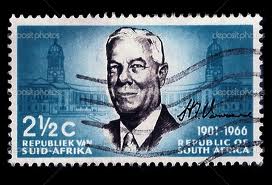
Due to the unique history of the Afrikaners, South Africa did not follow the same route. Especially under National Party rule when Verwoerd became Prime Minister in 1958, the country took a turn for the better, becoming the second fastest growing economy in the world. This obviously did not go unnoticed and British journalist Lord William Deedes enviously remarked how Africa became poorer while South Africa – against all expectations – worked its way up the ladder to rank amongst formidable world powers.

Yet, regardless of all these developments, South Africa was not free from underlying skirmishes. Black liberation elsewhere inspired many black youths in South Africa to challenge white authority, and a foremost activist and founder of the black Consciousness Movement Stephen Bantu Biko was to become its martyr thanks to Helen Zille’s efforts.

A closer look at the works of Biko and especially his spiritual father, the Antillean psychiatrist Frantz Fanon, reveals a surprising peculiarity though. Fanon’s prime objective was to help blacks rediscover their true identity, which was alienated from them when they were caught up under colonial rule. To Fanon it was important that contact with whites should be avoided, as white influence had psychologically “emptied blacks out” and filled the void with white stereotypes of them; either the “good negro”, always obedient and smiling, or the “bad negro” being unpredictable and dangerous. Regardless of whether whites acted racist or altruistically towards blacks, both actions stem from a sense of white superiority, filling Africans with feelings of inferiority and apathy, reinforcing the notion that they are in a constant state of servitude with no authentic identity. This analysis by Fanon later led to Biko’s well-known slogan that the most potent weapon of the oppressor is the mind of the oppressed. This explains why Biko openly scoffed white liberals in his collected essays I Write What I Like, claiming their insincere love of Africans originates from enmity of their own fellow whites and not from a true understanding of the African. Liberals, Biko claimed, cared for Africans only if their own (white) interests weren’t at stake.

In his essay Black Skin White Masks, Fanon more fully expounded his weariness of interracial contact between blacks and whites, claiming that a woman of colour seen with a white man shows contempt for her own race, while a man of colour seen with a white woman longs to be white and seen as their equal. Either way, a healthy development of the African identity is compromised.

As one probably has surmised, there is not much difference between the thoughts expressed by the founders of Black Consciousness and those expressed by the New World Order’s public enemy number one, Hendrik Verwoerd.

Verwoerd’s speech which arguably had the most damning effect on him was his claim that there was no place for the Bantu in the European Community above the level of certain forms of labour. A quote that has been taken completely out of context. In his next sentence, he continued that within their own communities however, all doors were open. Verwoerd argued that a European education for the African would show him the green pastures of Europe but prohibit him from grazing there.

The “green pastures” part is often misunderstood, but could be explained by means of an analogue: Imagine, after years of dismal failure in a certain fictitious country’s educational system, a conscientious educator returns from a foreign nation with impeccable standards in education. Let’s say this latter country is Japan. Enthused by what he saw, he now eagerly wants to copy the Japanese model and educate his nation in the same way. This entails that pupils are to be taught in Japanese, their writing, language, literature and mathematical system. As one would expect, this would lead to a high dropout rate due to the completely alien education that has no bearing on the daily lives and surroundings of the pupils involved. Not to mention the fact that the parents are incapable of lending their necessary guidance. On the other hand, let’s further assume that there are a scant few learners who did manage to do exceptionally well. In fact, they performed so well that the Japanese government offers them a stipend to study and work in Japan. Once they set foot over there, they will notice that the Japanese on the streets, the business culture, street culture, youth culture, university culture etc. are, regardless of their learned knowledge of local customs, foreign to them. They are confronted with a whole barrage of unspoken rules and codes which have traditions dating from long ago. Where they prefer to kick a football around in their spare time, the Japanese would rather play handball and computer games. Where they would laugh at certain acts of foolishness, the Japanese would be grossly offended. Where they would be offended by being pushed into crowded trains by station masters, the Japanese would consider it polite to allow more passengers on board. Throughout their stay, they’ll notice how the slight differences in customs could be a source of major frustration in their daily routine. Because of this, their performance, albeit well-meant, would simply not measure up to Japanese standards. Their whole understanding of Japanese language and customs would amount to no more than acting, since their real life cultivation lies elsewhere. Their authentic self-expression is not appreciated as they are accustomed to, causing them to become jaded, apathetic and at a loss, lowering their involvement with society even further. At the end of the day this whole ambitious plan to educate in Japanese has not borne much fruit, both for the dropouts as well as the excellent. It has taught them the ways of the Japanese, but by the very nature of cultures themselves, prohibited them from becoming full participants. From here onward, complaints of discrimination would become the norm, including various psychological illnesses. In a real life example, the suicide rate amongst black South Africans has trebled since the demise of apartheid. For those unfortunate souls, the struggle to fully imbibe Western norms and customs came at too costly a price.

Says Fanon: “Overnight the Negro has been given two frames of reference within which he has had to place himself. His metaphysics, or, less pretentiously his customs and the sources on which they were based, were wiped out because they were in conflict with a civilisation that he did not know and that imposed itself on him.”

Instead of permanent servitude, Verwoerd gave them the opportunity they were eagerly waiting for, i.e. a place of their own that they could fill in and develop according to their own cultural guidelines while slowly modernising them in ways that they could absorb. By limiting the African in white areas, he intended to heighten the attractiveness of the homelands where Africans were freer to hone their skills in accordance with their culture.

Afrikaner anthropologist Werner Eiselen, who served as educational advisor to Verwoerd, compiled a report as to the best route to take to educate the African within his own culture, and one recommendation was to educate Africans in their mother tongue, at least throughout their primary school years. These findings were strikingly similar to Fanon’s opinion wherein he stated that he “…should like nothing more nor less than the establishment of children’s magazines especially for Negroes, the creation of songs for Negro children, and, ultimately, the publication of history texts especially for them, at least through the grammar-school grades. For, until there is evidence to the contrary, I believe that if there is a traumatism it occurs during those years.”

This helps explain why only in exceptional cases were Africans allowed to study at white institutions. The intention was to take their education back to their own people to help them further along. In 1955, during National Party rule, the first black doctor graduated at the University of the Witwatersrand. The general argument that apartheid outright deprived Africans of privileges, especially under Verwoerd, does not hold water. A fuller understanding of the ideal that they wanted to achieve would undoubtedly have helped to ease racial tensions.

Another rationale for segregated education was demonstrated in 1986 when a small group of white students enrolled at the Medical University of South Africa, located in the former homeland of Bophuthatswana to study medicine. This did not go down well with the African students. Even though the whites were outnumbered by far, their fellow African students refused point blank to share lectures with white students, openly protesting their presence on campus.

For many years the notion has been held that the ideals behind apartheid were completely at variance with the ideals behind African liberation. These abovementioned quotes and occurrences however demonstrate that the ideals pursued by Verwoerd and many Afrikaner nationalists were much more in step than is generally assumed. After all, Afrikaners, who have no other country to turn to, certainly have no interest in stirring animosity amongst a majority of the country’s people. The formation of the homelands was South Africa’s response to decolonised Africans elsewhere who had started claiming a piece of land for themselves as a protective measure against future invasion. Not to mention the creation of homogeneous groups for Africans where they could live their own culture and develop stable identities.

In short, South Africa had a choice between either the formation of stable and homogeneous units, or to abandon this project wholesale and flood the cities with large numbers of low skilled African labourers, creating a Brazilian style ghetto where crime, disease and xenophobia run rampant. Due to demographic factors, pressure from within and outside, and the gravitational pull of the cities, the grand apartheid plan had finally caved in, along with years of vicious propaganda stating that Afrikaners are the chief cause of this mayhem. In reality, all their efforts were designed to prevent the current level of national decline.

Ultimately, the abolition of apartheid had little to do with the liberation of blacks. Destroying the Afrikaner power base was the primary concern for the Afrikaner’s traditional enemies, i.e. the British elite and international banking cartel. Where Africans had homelands to escape to, Afrikaners today have no choice but to flee abroad or to accept second class citizenship in the country of their birth. As Verwoerd stated fifty years ago, ethnic integration has no added value and only leads to situations where various groups become locked in constant competition for political power. This is where a major difference between Verwoerd and Biko came to the fore: Where Biko argued that a complete ethnic integration was possible and minorities would become non-existent, Verwoerd went the other way, claiming that ethnic tensions would never be abolished entirely, and whites were the ones who really needed protection.

If one considers how affirmative action, black economic empowerment and various attempts to bar whites from the job market are still the norm today almost twenty years into ANC rule, one could only conclude that Verwoerd’s prediction was more accurate. In fact, not only whites are targeted, but other non-white groups are next in line to be overwhelmed, judging by the way Africans are bussed into the Western Cape to swamp the local coloured population, who form one of the last ramparts against total ANC domination.

In the end, post-apartheid South Africa has never lead to non-racialism, but only served to escalate racial tensions further.  With an approximate 80 thousand Afrikaners murdered since political takeover – much more than the 1,5 to two thousand blacks killed by the erstwhile security forces, the situation has indeed become atrocious for them, yet, to no-one’s surprise, hardly a whisper from the leftist press is ever heard about this.

Little doubt exists as to the ANC’s sanctimonious embodiment of black consciousness. They have in fact not only betrayed the whites, but the true believers amongst the blacks as well; the irony being that Verwoerd supported their legacy more than Zuma and his ilk ever did.

To quote Verwoerd’s son Wilhelm, the keeper of his father’s legacy: “There were discriminatory aspects but they were also intended for the benefit of the black people. He [Verwoerd] had a lot of support among the blacks. It’s only these ANC types who are now in power who were trying not only to take a piece of the cake but the whole cake. They of course didn’t support him, but the more traditional people who attached value to their chiefs and customs – they found him to be the best minister that they’d ever had.”

And this constitutes the legacy of a true nation builder.

Joseph Secreve lives in Amsterdam, and is a regular columnist for PRAAG.

Set pieces will determine outcome for Bulls: Potgieter

Dewald Potgieter giving the thumbs-up sign

Bulls captain Dewald Potgieter says his side will be looking for set-piece domination against the Brumbies in their Super Rugby semi-final at Loftus Versfeld, Pretoria on Saturday.

“The Brumbies play total rugby which is similar to the type of rugby we play and, given that it is a semi-final, the greatest aspect of play would be the set pieces,” Potgieter said.

“The team that dominates the set pieces will control possession and will play in the right areas for most of the match.”

Despite the Bulls’ home-ground advantage, there is little to choose between the two sides with the match likely to go down to the wire.

The stadium has done justice to its reputation as ‘Fort Loftus’, with the Bulls not losing a match there, so far, this year.

The three-time Super Rugby champions have also never lost a semi-final at their base and will be looking to win their fourth semi-final.

The Brumbies have lost their last three matches against the Bulls at Loftus with their last victory in the capital dating back to 2006.

Potgieter said the Bulls needed to be accurate at the breakdown area against the two-time champion Brumbies.

“They are a world class team in terms of the breakdowns as they do not only have one or two players committing to this area, but every single player attacks the breakdowns,” he said.

“It is important for us to secure the ball and enable guys like Hougie (Francois Hougaard) and Jano Vermaak to control the ball behind the breakdown and set pieces.”

While the Bulls have introduced a few rookies this season, the side has a sufficient number of seasoned campaigners with the experience of playing knockout matches.

Potgieter said the core of senior players within the team brought some calm, ahead of the match, which made his task as captain slightly easier.

“The fact that it is a semi-final makes my job easier and the magnitude of the occasion is not lost on the players,” he said.

“It is almost more important to remain calm in everything you say, and through the way you execute everything, because the youngsters look up to you.

“We are fortunate to have senior players who know you have to bring the energy when it matters. It doesn’t help to make a big deal out of it at the beginning of the week.”

The Brumbies, coached by former Springbok coach Jake White, have not played in a Super Rugby final in nine years and the Australians would be determined to ensure a final berth.

White is a wily tactician and would have done all his homework ahead of the match, and the Bulls will have to be spot-on in the execution of their game plan.

Bulls flyhalf Morne Steyn is pivotal in that plan and his performance on Saturday could — as often is the case — be a deciding factor.

“When one talks about the territory game, Morne is the guy you want at number 10 to lead the charge,” Potgieter said.

“He knows exactly what the team’s strengths are and how to bring them out in a match.

“It is important for your number nine and 10 to make the decisions and Morne is one of the best in the world in that department.”

The teams:

Bulls team: Zane Kirchner, Akona Ndungane, JJ Engelbrecht, Jan Serfontein, Bjorn Basson, Morne Steyn, Francois Hougaard, Dewald Potgieter (captain), Jacques Potgieter, Deon Stegmann, Grant Hattingh, Flip van der Merwe, Werner Kruger, Chiliboy Ralepelle, Dean Greyling. Replacements: Callie Visagie, Frik Kirsten, Morne Mellett, Paul Willemse, Jono Ross, Jano Vermaak, Jürgen Visser.

Brumbies team: Jesse Mogg, Henry Speight, Tevita Kuridrani, Christian Lealiifano, Clyde Rathbone, Matt Toomua, Nic White, Ben Mowen (captain), George Smith, Peter Kimlin, Scott Fardy, Sam Carter, Ben Alexander, Stephen Moore, Scott Sio. Replacements: Siliva Siliva, Ruan Smith, Fotu Auelua, Colby Faingaa, Ian Prior, Andrew Smith, Joseph Tomane. – Sapa

‘Libertarians are dangerous’

Chris Christie
Chris Christie

New Jersey Gov. Chris Christie (R) on Thursday offered a clear broadside against Republicans drifting toward a more libertarian view of foreign policy, lumping Sen. Rand Paul (R-Ky.) in with them and suggesting they explain their position to victims of the Sept. 11, 2001, attacks.

The House earlier this week narrowly voted against a reduction in funding for the National Security Agency, as libertarian-leaning members from both sides joined together to vote for the amendment.

“As a former prosecutor who was appointed by President George W. Bush on Sept. 10, 2001, I just want us to be really cautious, because this strain of libertarianism that’s going through both parties right now and making big headlines, I think, is a very dangerous thought,” Christie said.

Asked whether he includes Paul — a fellow potential 2016 presidential candidate — in his criticism, Christie didn’t back down.

“You can name any one of them that’s engaged in this,” he said. “I want them to come to New Jersey and sit across from the widows and the orphans and have that conversation. … I’m very nervous about the direction this is moving in.”

Christie acknowledged that there will always be mistakes when it comes to national security and protecting privacy, but said Americans need to stay focused on what’s at stake.

He dismissed some of the current privacy/national security debates as “esoteric.”

“I think what we as a country have to decide is: Do we have amnesia? Because I don’t,” he said. “And I remember what we felt like on Sept. 12, 2001.”

Christie also praised the national security strategies of both President Obama and George W. Bush.

“I want to say that I think both the way President Bush conducted himself and the way President Obama has conducted himself in the main on those types of decisions hasn’t been different because they were right and because we haven’t had another one of those attacks that cost thousands and thousands of lives,” Christie said.

Christie appeared alongside Wisconsin Gov. Scott Walker (R), Louisiana Gov. Bobby Jindal (R) and Indiana Gov. Mike Pence (R). The four GOP governors appeared side-by-side at a session hosted by the nonpartisan Aspen Institute.

The four of them are all considered among the GOP’s top potential presidential candidates in 2016, with each of them ranking on The Fix’s most recent list of the top 10 likeliest nominees.

The Republican Governors Association was holding its summer meeting in the mountainous resort town.

North Carolina Gov. Pat McCrory (R), who was slated to appear, had to stay in his home state with the state legislature moving on legislation — including new abortion restrictions. – Washington Post